
lovethailand home >Northeastern Travel Attractions >Sakon Nakhon Travel Attractions >Warit Chaphum >Kho Khieow > Wat Tham Phra Phuttha Saiyat
TL;DR: Wat Tham Phra Phuttha Saiyat is located at Ban Khok Tat Thong, Village No. 5, Khok Khiao Subdistrict, Waritchaphum District, Sakon Nakhon Province, open Daily, hours 06.00 – 18.00.
Wat Tham Phra Phuttha Saiyat
Open Days: Daily
Opening Hours: 06.00 – 18.00
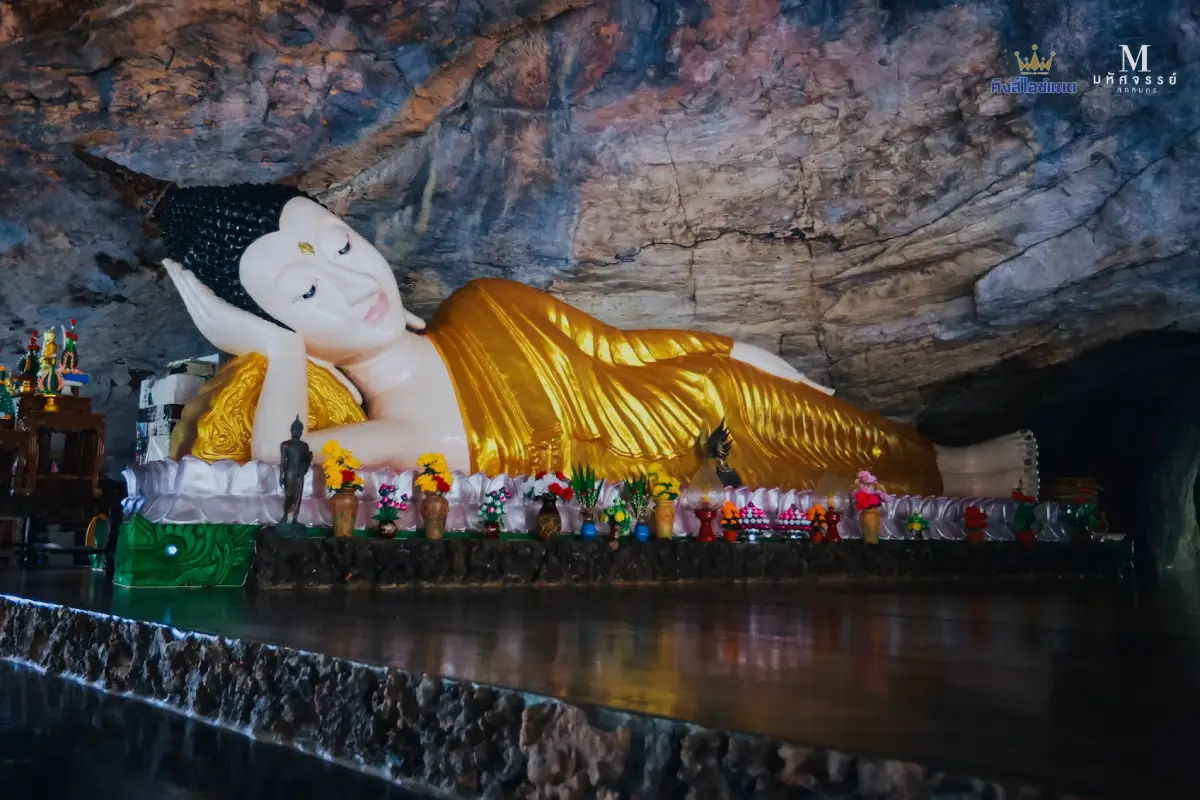
Wat Tham Phra Phuttha Saiyat, also known as Wat Tham Phra Thong or Phu Pha Thong Cave, is a mountain cave temple in Khok Khiao Subdistrict, Waritchaphum District, Sakon Nakhon Province. It is known for its reclining Buddha, ancient carved Buddha images, Khmer-script inscription, quiet forest setting, and strong role as a meditation and pilgrimage site.
Wat Tham Phra Phuttha Saiyat is located at Ban Khok Tat Thong, Village No. 5, Khok Khiao Subdistrict, Waritchaphum District, Sakon Nakhon Province. The temple stands on a hillside in a peaceful natural setting connected with the Phu Phan mountain range. It is about 16 km west of Waritchaphum District Office and around 2,800 meters from Ban Khok Tat Thong village. The road leading to the temple passes through rural scenery, local farmland, trees, and mountain views, making the journey part of the experience. This is a suitable destination for travelers who want to visit a quiet Buddhist temple, pay respect to sacred images, learn about ancient cave art, and spend time in a calm forest atmosphere.
The temple’s present name refers to the reclining Buddha image enshrined within the cave. In earlier times, the place was widely known as Tham Phra Thong, or the Cave of the Golden Buddha. The old name is connected with local accounts of sacred Buddha images and valuable religious objects once kept in the cave, including images associated with gold, silver, and bronze. Today, the name Wat Tham Phra Phuttha Saiyat highlights the reclining Buddha as the spiritual center of the temple, while the older names Tham Phra Thong and Phu Pha Thong remain part of the cultural memory of the site.
The main character of Wat Tham Phra Phuttha Saiyat lies in the way the temple uses a natural rock shelter and cave as a sacred Buddhist space. The cave and rock formation have been adapted into a place for worship, meditation, and religious activities without losing their natural atmosphere. Inside and around the cave, visitors can see the reclining Buddha, carved Buddha images on the rock wall, old Buddha images, a Naga-protected Buddha image, and an ancient inscription. These features make the temple not only a religious destination but also an important cultural and archaeological site in Waritchaphum District.
One of the most valuable features of the temple is the ancient Khmer-script inscription and the carved Buddha image on sandstone. The high-relief Buddha carving on the cave wall shows that the site had religious importance long before it became a modern travel destination. These remains reflect the movement of Buddhist communities, the use of caves as sacred places, and the cultural links across the wider Mekong and Phu Phan region. For travelers interested in cultural history, this temple offers more than a beautiful setting; it provides a direct encounter with traces of older Buddhist practice in northeastern Thailand.
Wat Tham Phra Phuttha Saiyat was established before 1941 and has continued to develop through the devotion of monks and local villagers. The temple is located on Phu Pha Thong, surrounded by forested hills and a calm rural landscape. Its atmosphere is closer to a forest meditation temple than a busy urban monastery. The sense of stillness is one of the reasons why the temple has long been suitable for Buddhist practice, contemplation, and quiet visits.
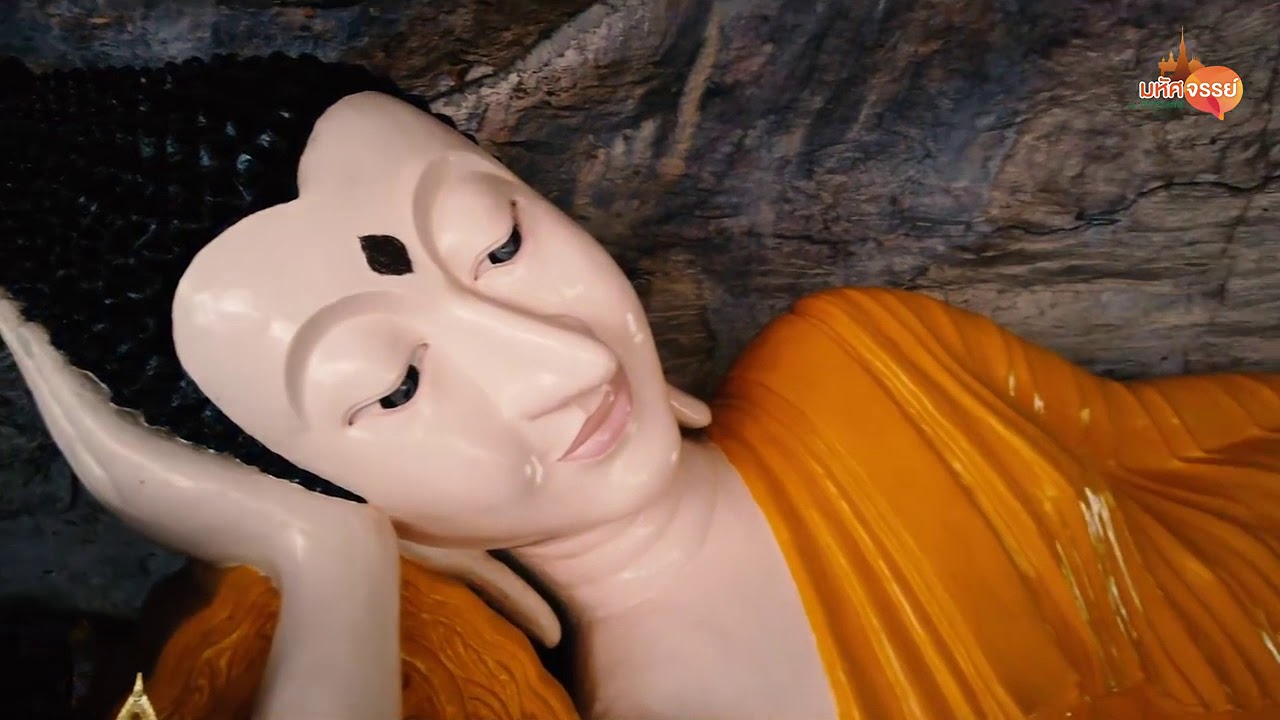
The reclining Buddha is the principal image that draws pilgrims and travelers to the cave. In Buddhist meaning, the reclining posture represents peace, release, and the final passing of the Buddha into parinirvana. Inside a mountain cave, this image creates a powerful sense of serenity. Visitors often spend time paying respect, sitting quietly, and observing the relationship between the Buddha image, the cave wall, the natural stone, and the dimly lit sacred space.
The cave also shows how local Buddhist communities adapted nature for religious use. Instead of building a large separate structure, the natural rock shelter became part of the temple itself. This gives Wat Tham Phra Phuttha Saiyat a distinctive identity. The sacred space does not stand apart from the landscape; it grows out of the mountain. The temple therefore allows visitors to see how faith, architecture, and nature can exist together in a single place.
In local memory, the temple was also connected with farming life and seasonal rituals. During Visakha Bucha, villagers would climb the hill with flowers, incense, candles, and scented water to honor the sacred images in the cave. The ritual was linked with prayers for rain, fertile fields, and the well-being of the community. This relationship between Buddhism, agriculture, and the mountain landscape helps explain why Tham Phra Thong has been meaningful to local people for generations.
A key figure in the revival of the temple was Phra Khru Kamphi Panyakom, who chose the cave as a place for meditation and played an important role in restoring the temple together with local villagers. Later, the large reclining Buddha was built as a major sacred image for the community. This development shifted the identity of the place from an ancient cave remembered for lost treasures to a living Buddhist temple centered on the reclining Buddha.
At present, Wat Tham Phra Phuttha Saiyat is under the care of Phra Maha Sakchai Amaro, the abbot of the temple. The site continues to serve monks, lay practitioners, pilgrims, and visitors who come for merit-making, meditation, and peaceful travel. Facilities within the temple grounds include a sermon hall, monks’ residences, kitchen area, multipurpose hall, guest facilities for pilgrims, and basic spaces for religious activities. The overall character of the temple remains simple, calm, and closely connected with nature.
Visitors should take time to observe the carved Buddha images and the ancient inscription carefully. These are important cultural remains and should be treated with respect. The temple should be visited quietly, without touching ancient objects, climbing on rocks, or moving anything inside the cave area. The best way to appreciate the site is to move slowly, observe the details, and respect the sacred nature of the space.
The atmosphere of the temple is suitable for slow travel. Visitors do not need to rush through the site. Walking up to the cave, paying respect to the reclining Buddha, looking at the stone walls, and resting around the open temple grounds all form part of the experience. After visiting the cave, the surrounding area offers fresh air, greenery, and views of the forested hills. This is one of the most appealing aspects of the temple for travelers who prefer peaceful, less crowded destinations.
For travelers interested in caves and natural rock formations, Wat Tham Phra Phuttha Saiyat also offers unusual stone scenery near the cave. The surrounding rocks and hillside setting create a strong sense of place. Nature travelers can appreciate the rock shelter, the cave walls, and the forest environment, while cultural travelers can focus on the reclining Buddha, the ancient inscription, and the long use of the cave as a Buddhist site.
The temple is suitable for several types of travelers. Families can visit to introduce children to Buddhist cave temples and natural landscapes. Cultural travelers can study ancient religious remains and local history. Pilgrims and meditation practitioners can enjoy the quiet atmosphere. Travelers exploring secondary destinations in Sakon Nakhon can combine the temple with nearby attractions such as Pha Dong Ko, Phu Pha Lek National Park, Namtok Kao Chan, Phra That Si Mongkhon, and Hat Suan Hin at Nam Un Dam.
Getting There is easiest by private car or rental car. From downtown Sakon Nakhon, drive toward Waritchaphum District, then continue to Khok Khiao Subdistrict and Ban Khok Tat Thong. The temple is located on a hill about 16 km from Waritchaphum District Office. Because the site is in a rural mountain area, visitors should plan to arrive during daylight hours. The road into the temple area passes through countryside and natural surroundings, so careful driving is recommended, especially during the rainy season.
Travelers starting from Sakon Nakhon city should allow enough time for the journey. The drive takes about 90 minutes from the city area. A morning departure is ideal, as it allows time to visit the cave, pay respect to the Buddha images, enjoy the temple grounds, and continue to nearby attractions. Those who prefer a slower trip can stay overnight in Waritchaphum District or nearby areas before exploring more of western Sakon Nakhon.
The best time to visit is from morning to late afternoon, when natural light makes it easier to see the cave, the Buddha images, and the surrounding landscape. Visitors should return before dark because the temple is located in a hill area and some roads are rural. Modest clothing is required for temple visits. Comfortable walking shoes, drinking water, and respectful behavior are strongly recommended. Visitors should keep noise low, especially around meditation areas.
There is no admission fee to visit Wat Tham Phra Phuttha Saiyat. Visitors may make donations according to their faith to support temple maintenance and preservation. Donations should be made respectfully and without disturbing monks or people practicing meditation.
A visit to Wat Tham Phra Phuttha Saiyat can be combined with nearby destinations in Waritchaphum District and the Phu Phan mountain area. Pha Dong Ko, Phu Pha Lek National Park, Namtok Kao Chan, Phra That Si Mongkhon, Chao Pu Mahesak Shrine, and Hat Suan Hin at Nam Un Dam can create a varied travel route that includes temples, caves, forests, waterfalls, local culture, and lakeside scenery.
The appeal of Wat Tham Phra Phuttha Saiyat comes from the balance between sacredness and nature. In one place, travelers can pay respect to the reclining Buddha, observe ancient Buddhist art, learn about a Khmer-script inscription, walk through a natural rock shelter, and rest in a quiet forest temple. This combination makes the temple one of the meaningful cultural attractions of Sakon Nakhon Province, especially for travelers seeking peaceful and story-rich places beyond the main tourist route.
For international travelers unfamiliar with cave temples in northeastern Thailand, Wat Tham Phra Phuttha Saiyat is a strong example of how natural landscapes are used as sacred Buddhist spaces. The temple does not rely on grand architecture alone. Its power comes from the relationship between mountain, cave, Buddha images, inscription, forest, and living Buddhist practice. Visitors should approach the place with patience and respect, allowing the quiet atmosphere to shape the experience.
Wat Tham Phra Phuttha Saiyat is therefore more than a hilltop temple in Waritchaphum District. It is a sacred site where past and present meet through the cave, the reclining Buddha, ancient inscriptions, local rituals, and the natural environment of Phu Pha Thong. A visit here offers spiritual calm, cultural depth, and a distinctive travel experience in one of Sakon Nakhon’s lesser-known but highly meaningful destinations.
| Name | Wat Tham Phra Phuttha Saiyat, also known as Tham Phra Thong / Phu Pha Thong Cave |
| Location | Ban Khok Tat Thong, Village No. 5, Khok Khiao Subdistrict, Waritchaphum District, Sakon Nakhon Province |
| Address | Village No. 5, Ban Khok Tat Thong, Khok Khiao Subdistrict, Waritchaphum District, Sakon Nakhon 47150, Thailand |
| Coordinates | Latitude 17.255013, Longitude 103.503882 |
| Highlights | Reclining Buddha inside the cave, carved Buddha image on the rock wall, ancient Khmer-script inscription, Naga-protected Buddha image, and peaceful mountain cave atmosphere |
| History | The temple was established before 1941 and preserves ancient Buddhist art and inscriptions that show the religious importance of the cave in earlier periods |
| Name Origin | The present name refers to the reclining Buddha in the cave, while the older names Tham Phra Thong and Phu Pha Thong are connected with local stories and the mountain setting |
| Distinctive Features | A natural rock shelter adapted into a Buddhist worship and meditation space, surrounded by forest and mountain scenery |
| Travel Information | From Sakon Nakhon city, drive to Waritchaphum District, then continue to Khok Khiao Subdistrict and Ban Khok Tat Thong. The temple is about 16 km from Waritchaphum District Office and is best reached by private car or rental car |
| Current Status | Open to visitors and still used as a place for Buddhist practice by monks, lay practitioners, pilgrims, and travelers |
| Open Days | Daily |
| Opening Hours | 06.00 – 18.00 |
| Fees | Free Admission |
| Facilities | Sermon hall, monks’ residences, kitchen area, multipurpose hall, guest facilities for pilgrims, and temple rest areas |
| Main Areas / Zones | Cave area, reclining Buddha, carved Buddha image on the cave wall, ancient inscription, Naga-protected Buddha image, sermon hall, and natural temple grounds |
| Abbot / Caretaker | Phra Maha Sakchai Amaro |
| Tourism Contact Number | 0 4251 3490-1 |
| Nearby Tourist Attractions | 1. Pha Dong Ko, about 5 km 2. Phu Pha Lek National Park, about 5 km 3. Namtok Kao Chan, Phu Pha Lek National Park, about 6 km 4. Phra That Si Mongkhon, about 18 km 5. Chao Pu Mahesak Shrine, Waritchaphum District, about 18 km 6. Hat Suan Hin at Nam Un Dam, about 28 km |
| Nearby Restaurants | 1. Zab Esan, about 17 km, Tel. 061-113-5019 2. Som Tam Zab Phu Thai, about 17 km, Tel. 080-186-9343 3. Heng 9 Korean BBQ, about 17 km, Tel. 086-239-6590, 081-060-1578 4. ROCK IN CAFE x Sakon Nakhon, about 17 km, Tel. 096-769-4038 5. ICHI SHABU @ Waritchaphum, about 18 km, Tel. 088-628-2326 |
| Nearby Accommodations | 1. Talay Thong Resort, about 17 km, Tel. 081-739-7506, 084-955-1376 2. Tawan Resort, about 17 km, Tel. 086-226-5518 3. Chai Thung Grand Resort, about 18 km, Tel. 042-781-224, 087-218-5448, 089-843-4582 4. Rachawadee Resort, about 18 km, Tel. 087-856-3230 5. Ruean Peek Mai Resort, about 18 km, Tel. 090-279-1495 6. Aphawat Place Resort, about 18 km, Tel. 081-853-9177 |
Frequently Asked Questions (FAQ)
Q: Where is Wat Tham Phra Phuttha Saiyat located?
A: Wat Tham Phra Phuttha Saiyat is located at Ban Khok Tat Thong, Village No. 5, Khok Khiao Subdistrict, Waritchaphum District, Sakon Nakhon Province, about 16 km from Waritchaphum District Office.
Q: What are the opening days and hours?
A: The temple is open daily from 06.00 to 18.00. Daytime visits are recommended because the temple is located in a hill and cave area.
Q: Is there an admission fee?
A: No. Admission is free, but visitors may make donations according to their faith.
Q: What is the main highlight of the temple?
A: The main highlights are the reclining Buddha inside the cave, carved Buddha images on the rock wall, the ancient Khmer-script inscription, the Naga-protected Buddha image, and the peaceful mountain cave atmosphere.
Q: Who is the current abbot of Wat Tham Phra Phuttha Saiyat?
A: The current abbot is Phra Maha Sakchai Amaro.
Q: How can travelers get to the temple?
A: Travelers can drive from Sakon Nakhon city to Waritchaphum District, then continue to Khok Khiao Subdistrict and Ban Khok Tat Thong. A private car or rental car is the most convenient option.
Q: What should visitors wear?
A: Visitors should wear modest clothing suitable for a Buddhist temple, choose comfortable walking shoes, keep noise low, and avoid touching ancient objects inside the cave.
Q: What nearby places can be visited on the same trip?
A: Nearby places include Pha Dong Ko, Phu Pha Lek National Park, Namtok Kao Chan, Phra That Si Mongkhon, Chao Pu Mahesak Shrine, and Hat Suan Hin at Nam Un Dam.
 Category: ●Places of Worship
 Group: ●Temple
Last Update : 3 MonthAgo
 Last Update : 3 MonthAgo
 Click to Access the Navigation Map GPS
Wat Tham Phra Phuttha Saiyat Map
Recommend

 Art, Culture and Heritage
 Historical Sites and Monuments(9)
 Landmarks and Memorials(2)
 Royal Palace(1)
 Art, Craft Centres, Tradition(8)
 Museums(3)
 Educational Places
 Educational Gardens, Farm(2)
Temple(18)
 Church(2)
 Other Sacred Sites(4)
 Research and Development
 Royal Project(3)
 Suburban Living
 Village, Community(7)
 Nature and Wildlife
 National Parks and Marine Reserves(4)
 Mountain (Doi)(3)
 Dam, Reservoir, Lake(14)
 Waterfalls(4)
 Caves(4)
 River, Canal(9)
 Bays and Beaches(1)
 Islands(1)
 Other natural attractions(5)
 Entertainment and Agricultural
 Zoos and Aquariums(1)
 Farms, Parks and Ecotourism(4)
 Outdoor and Adventure Activities(1)
 Travel Articles, Recipes
 Travel Review, Food Review(1)


