
lovethailand home >Northeastern Travel Attractions >Sakon Nakhon Travel Attractions >Charoen Sin >Charoen Sin > Ban Kut Na Kham Support Arts and Crafts Centre
TL;DR: Ban Kut Na Kham Support Arts and Crafts Centre, Sakon Nakhon attractions : Research and Development, Royal Project.

Ban Kut Na Kham Support Arts and Crafts Centre
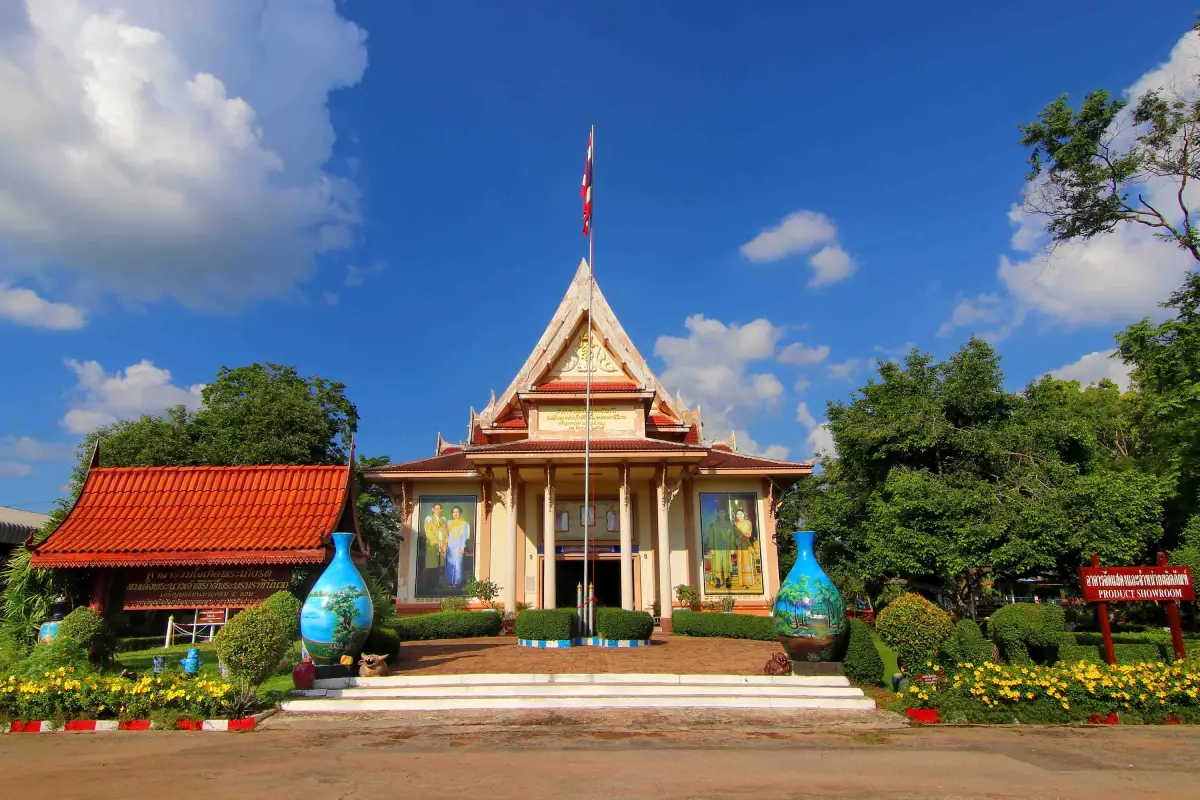
Open Days: Ceramic Sales Zone Opens Daily / Demonstration Zone Opens Tuesday–Saturday
Opening Hours: 08.00 – 16.30
Ban Kut Na Kham Support Arts and Crafts Centre in Sakon Nakhon is located at 79 Village No. 9, Ban Kut Na Kham, Charoen Sin Subdistrict, Charoen Sin District, Sakon Nakhon Province. It is one of the most important royal craft and community livelihood centres in upper northeastern Thailand. The centre was established under the royal initiative to create supplementary occupations for villagers, reduce migration for wage labor, and preserve local artistic knowledge through craft production. It is best known for pottery and hand-painted ceramics, but it also produces wood carving, silk weaving, cotton weaving, embroidery, khon costume embroidery, artificial flowers, garment sewing, blacksmithing, furniture, and other community handicrafts. The ceramic sales zone opens daily from 08.00 to 16.30, while the demonstration zone opens Tuesday to Saturday from 08.00 to 16.30.
Ban Kut Na Kham Support Arts and Crafts Centre is a major craft production and learning centre in Charoen Sin District, Sakon Nakhon Province. Located in Ban Kut Na Kham, Village No. 9, Charoen Sin Subdistrict, the centre represents a direct connection between royal development, rural livelihood improvement, and local craftsmanship. Its strongest identity is pottery and hand-painted ceramics, which are made with distinctive design, careful production, and a clear local character. Unlike commercial ceramic factories that began mainly as private industry, Ban Kut Na Kham was created to provide villagers with sustainable work and supplementary income in a rural area that had faced farming difficulties, floods, drought, and labor migration.
Ban Kut Na Kham is closely connected with the royal initiatives of King Bhumibol Adulyadej and Queen Sirikit The Queen Mother. In the past, villagers faced serious agricultural problems. The land did not produce well, the rainy season brought flooding, the dry season brought water shortage, and farming income was unstable. Many villagers had to leave home to work as hired laborers in other provinces. These hardships led the community to seek royal assistance, and the development of Huai Nok Khao Reservoir later became an important water source for household use and agriculture.
On 25 December 1982, Queen Sirikit visited the people of Ban Kut Na Kham. She saw both the poverty of the village and the strong unity of its residents. She encouraged the villagers to plant trees and protect the forest. The village committee offered 43 rai, 3 ngan, and 32 square wah of public land for the Pa Rak Nam, or Forest Loves Water, project. Villagers joined together to plant fast-growing and valuable trees such as pradu, phayung, eucalyptus, and other species. This collective action became the foundation for a development path that combined environmental care, community unity, and occupational support.
On 1 May 1983, Queen Sirikit returned to visit the Pa Rak Nam project at Ban Kut Na Kham. At that time, the construction of Huai Nok Khao Reservoir affected some families whose land was flooded. These families were assigned to help protect the forest and received royal support for a period of time. Teachers were also brought in to provide vocational training according to the villagers’ abilities. This was the beginning of the idea that villagers should have supplementary occupations after the rice-farming season and should be able to remain in their homeland rather than migrate to work elsewhere.
The most important beginning of Ban Kut Na Kham Support Arts and Crafts Centre was the royal instruction to establish a pottery workshop in the village. The area had soil resources, village labor, local skills, and a strong need for new livelihood opportunities. The first building began construction on 29 October 1983, and this became the start of the first support arts and crafts centre in upper northeastern Thailand. Over time, the centre expanded into many craft fields, including pottery, wood carving, stone carving, furniture, bamboo weaving, blacksmithing, silk weaving, cotton weaving, embroidery, khon costume embroidery, garment sewing, and artificial flowers.
Pottery and ceramics are the heart of Ban Kut Na Kham. The ceramic work is known for shaping, forming, painting, and pattern design that reflects northeastern Thai cultural life. The royal concept behind the pottery work encouraged artisans to remember the pottery heritage of Ban Chiang, a major prehistoric cultural site in the same broad region, and to express local Isan culture and ways of life through ceramic products. As a result, the ceramics are not only useful or decorative objects. They are also visual records of local identity, translated into clay, color, line, and form.
The ceramic products are divided into functional ware and decorative ware. Functional items include tableware, tea sets, coffee sets, serving sets, jars, pots, vases, and other household ceramics. Decorative items include painted jars, Benjarong-style ceramics, ornamental vases, and art pieces that display design and painting skill. Each item passes through several steps: clay preparation, forming, drying, firing, coloring, painting, and quality checking. This makes each ceramic piece a product of time, technical knowledge, and hand skill.
The uniqueness of Ban Kut Na Kham ceramics lies in the combination of craft and local storytelling. Many patterns draw inspiration from nature, belief, Isan ways of life, and archaeological heritage in the region. Painted designs do not merely decorate the surface. They turn the object into a cultural medium. Buyers receive not only a bowl, vase, or decorative object, but also a handmade piece connected with the village, the artisans, and the history behind the centre.
In addition to ceramics, the centre has an artificial flower department that creates delicate products from fabric. Artificial flowers require careful cutting, shaping, sewing, color arrangement, and assembly. Lotus and rose designs are among the well-known products of this department. This type of craft is suitable for members with fine hand skills and can generate income without requiring large work space. It also broadens the centre’s product range beyond pottery and textiles.
The embroidery and khon costume embroidery departments demonstrate another refined side of the centre. Embroidery work includes animal motifs, literary figures, flowers, and decorative designs on various textiles. Products may be used as hand towels, curtains, bag components, and other decorative or functional items. Khon costume embroidery requires precision, consistency, and respect for traditional Thai design patterns. These departments show the ability of craft members to produce detailed work that requires concentration and artistic discipline.
The silk and cotton weaving departments connect Ban Kut Na Kham with the textile heritage of Sakon Nakhon. Silk and cotton products require a long chain of work: mulberry cultivation, sericulture, thread preparation, dyeing, pattern planning, loom setting, and weaving. Textile work at the centre is therefore not merely a secondary activity beside ceramics. It is another important branch of the craft livelihood system, allowing villagers to earn from fibre-based knowledge and weaving skills.
The garment-sewing department adds value to woven textiles by turning cloth into usable products. Silk, cotton, and decorated fabrics can be made into garments, accessories, and functional items. This department extends the value chain of textile work beyond the woven cloth itself and supports higher product value. It also links craft production with practical use, making handmade textiles more adaptable to different markets.
The blacksmithing and furniture departments represent the practical craft skills of local artisans. Blacksmithing is connected with tools such as hoes, spades, knives, and agricultural implements. Furniture and wood carving involve design, structure, durability, surface finishing, and aesthetic detail. The presence of these departments alongside ceramics and textiles shows that Ban Kut Na Kham is not a single-product craft centre, but a broad rural craft institution combining soft materials, hard materials, utility, and artistic expression.
The wood-carving department displays skill in form, pattern, tool control, and material understanding. Wood carving requires knowledge of grain direction, pressure, knife movement, and design proportion. Each carved piece reflects the decisions of the artisan at every step. This makes the work highly individual and deeply connected with local craft intelligence. Wood carving at the centre stands as a bridge between art, patience, and rural craftsmanship.
The centre also functions as a gathering point for craft members from several communities. Members have come from Charoen Sin, Wanon Niwat, Sawang Daen Din, and nearby areas. This gives the centre a wider community role beyond Ban Kut Na Kham village alone. Many members were selected under royal craft and royal development programmes. Through group participation, the centre generates income, pride, and social connection among rural communities.
The internal layout of the centre includes Sala Ruam Jai Thoet Phra Kiat, a central building used for product display, sales, visitor reception, and important activities. In the past, it was also associated with royal visits and contains a small royal pavilion inside. Other important buildings include Ruean Duang Duean, the royal working hall, the pottery department buildings, welfare shop, artificial flower building, operation office, silk-weaving building, garment-sewing building, packaging building, blacksmithing building, furniture and wood-carving building, embroidery and khon costume embroidery building, and silkworm-rearing house.
Sala Ruam Jai Thoet Phra Kiat serves as the central presentation area of the centre. Visitors can see and purchase products from many departments in one place, including painted ceramics, household ware, decorative objects, artificial flowers, silk, cotton, embroidered items, sewn products, and other handmade works. This area gives visitors the clearest overview of the centre because it brings together the results of different craft departments into one visible product space.
The pottery zone is the production heart of the centre. It shows the transformation from clay into useful vessels or decorative objects. Shaping, forming, surface finishing, painting, and firing are all part of the process. The display area for forming and painting allows visitors to understand the relationship between the artisan’s hand and the finished object. The beauty of the product becomes deeper when its process is visible.
The demonstration zone is a living learning space where craft members work on actual production steps. It opens from Tuesday to Saturday, 08.00 to 16.30. This zone makes a visit more meaningful than product shopping alone because visitors can see people working, tools in use, production stages, and the skills behind each item. A product on display becomes more valuable when its human process is understood.
The ceramic sales zone opens daily from 08.00 to 16.30. It is the most accessible part of the centre for visitors who want to view or purchase ceramic works. Ban Kut Na Kham ceramics are well known among people who appreciate Thai handmade products because they combine beauty, function, hand painting, and local design identity. The daily opening of this zone keeps the centre active as an important craft destination in Charoen Sin District.
The centre is not only a production and sales site. It is also a learning place for village development, supplementary livelihood, cultural preservation, and community pride. Its objectives include providing villagers with work after the farming season, increasing income, building skills in chosen occupations, conserving the environment, preserving local culture through products, creating a model village for other communities, and promoting local tourism. These objectives explain why the centre has long-term cultural and social significance.
The current status of Ban Kut Na Kham Support Arts and Crafts Centre remains active as a learning centre and product site. Contemporary learning and tourism information provides clear details on opening hours, contact number, and activities inside the centre. Study visits and workshop-style activities in the demonstration zone are handled through prior coordination, while the ceramic sales zone remains open daily during operating hours.
Getting There from Sakon Nakhon city follows the route toward Sawang Daen Din District and then Charoen Sin District. Learning-centre information describes the route along Highway 22 for about 84 km to Sawang Daen Din, then turning right onto Highway 2091 and left onto Highway 2280 toward Charoen Sin for another 23 km. From Charoen Sin, continue to Ban Kut Na Kham, Village No. 9. Private car, rental car, or chartered van is the most practical transportation because the centre is far from the provincial city.
The wider context of Charoen Sin District adds meaning to the centre. The district identity is associated with Nong Thung Mon, Kut Na Kham, Luang Pho Ong Kham, fine silk, dairy products, and rural cultural life. This shows that the centre belongs to an area with water landscapes, village craft, local belief, agriculture, and community-based livelihoods. A visit to the centre therefore connects with the broader identity of the district, not only with one craft building.
Nearby places linked with Ban Kut Na Kham include the Pa Rak Nam project, Huai Nok Khao Reservoir, Ban Kut Na Kham community, Wat Pa Kut Na Kham, Nong Thung Mon, Charoen Sin Lake, Charoen Sin town area, and Sawang Daen Din District. This route gives visitors a combination of royal craft, water-resource development, village life, and rural northern Sakon Nakhon travel.
Food options in Charoen Sin District include local restaurants and cafés such as Kuai Tiao Rot Det Charoen Sin, Phor Dee Kham Moo Kratha, P Nuea Yang, Khit Hod Lai Cafe, Khun Ying Korean-style Grilled Meat, and local eateries around Charoen Sin town. These places serve travelers moving between Ban Kut Na Kham and the district centre. Visitors who need more services can continue to Sawang Daen Din District, which has a wider range of restaurants and accommodation.
Accommodation near the route includes Nicha Resort Sakon Nakhon and Pongcharoen Resort in Charoen Sin District. Sawang Daen Din District offers more accommodation choices, including Pretty Hotel, Nong Khu Resort, Huai Sai Ban Phak Resort, Sirikan Hotel, Mulan Resort, Non Sawan Resort, and Prakaithong Hotel branch in Sawang Daen Din. Staying in Charoen Sin gives the closest access to the centre, while staying in Sawang Daen Din provides more services and transport connections.
For families, students, and craft learners, Ban Kut Na Kham Support Arts and Crafts Centre is an effective place to understand how community skill becomes livelihood. Young visitors can see that a product is not created instantly. It passes through training, design, trial, correction, production, and quality control. The centre teaches patience, precision, and the value of handmade labor through real objects and real production spaces.
For international visitors, Ban Kut Na Kham clearly explains Thai royal craft initiative, ceramic craft, community livelihood, rural craft training, textile heritage, and local design identity. Thai handicrafts do not exist only in museums or souvenir shops in major cities. They are rooted in villages, artisans, training systems, and development projects that allow local people to generate income from their own skills.
Ban Kut Na Kham Support Arts and Crafts Centre in Sakon Nakhon is therefore an important destination for art, culture, community livelihood, and rural development history. Within one site, visitors can encounter pottery, hand-painted ceramics, wood carving, silk weaving, cotton weaving, artificial flowers, embroidery, khon costume embroidery, sewing, blacksmithing, furniture, royal commemorative buildings, working halls, and a product-sales area. The centre shows how craft can become occupation, cultural record, and community development tool at the same time.
| Name | Ban Kut Na Kham Support Arts And Crafts Centre |
| Thai Name | ศูนย์ศิลปาชีพบ้านกุดนาขาม |
| Related Names | Ban Kut Na Kham Handicraft Center / Ban Kut Na Kham Craft Promotion Centre / Ban Kut Na Kham Royal Craft Centre |
| Location | 79 Village No. 9, Ban Kut Na Kham, Charoen Sin Subdistrict, Charoen Sin District, Sakon Nakhon Province 47290 |
| Place Type | Support Arts And Crafts Centre / Ceramic Production Centre / Community Craft Learning Site / Cultural And Community-Based Destination |
| Royal Initiative | Queen Sirikit The Queen Mother |
| First Building Construction | 1983 |
| Care / Contact | Ban Kut Na Kham Support Arts And Crafts Centre, Tel. 042-709-162 |
| Significance | The First Support Arts And Crafts Centre In Upper Northeastern Thailand, Created To Provide Supplementary Livelihoods, Reduce Migration, And Preserve Local Culture Through Handicraft Products |
| Key Products | Pottery, Hand-Painted Ceramics, Vases, Jars, Benjarong-Style Pieces, Tea Sets, Coffee Sets, Artificial Flowers, Wood Carving, Embroidery, Khon Costume Embroidery, Garments, Silk, Cotton, Blacksmithing Products, And Furniture |
| Ceramic Identity | Pottery Shaping, Hand Painting, Pattern Design, And The Expression Of Isan Local Culture And Way Of Life Through Ceramic Products |
| Main Areas / Zones | Sala Ruam Jai Thoet Phra Kiat Building, Ruean Duang Duean, Royal Working Hall, Pottery Department Buildings, Welfare Shop, Artificial Flower Building, Operation Office, Silk-Weaving Building, Garment-Sewing Building, Packaging Building, Blacksmithing Building, Furniture And Wood-Carving Building, Embroidery And Khon Costume Embroidery Building, Silkworm-Rearing House, Ceramic Sales Zone, And Craft Demonstration Zone |
| Current Status | Open As A Craft Learning Centre, Ceramic Production Site, Product-Sales Centre, And Community Handicraft Destination In Charoen Sin District |
| Open Days | Ceramic Sales Zone Opens Daily / Demonstration Zone Opens Tuesday–Saturday |
| Opening Hours | 08.00 – 16.30 |
| Study Visits / Workshops | Study Visits And Hands-On Activities In The Demonstration Zone Are Coordinated In Advance With The Centre |
| Travel Information | From Sakon Nakhon city, take Highway 22 to Sawang Daen Din for about 84 km, then continue via Highway 2091 and Highway 2280 toward Charoen Sin for about 23 km. Continue to Ban Kut Na Kham, Village No. 9, Charoen Sin Subdistrict |
| Facilities | Reception Building, Product Display Area, Product-Sales Area, Craft Demonstration Zone, Welfare Shop, Occupational Training Areas, Department Buildings, And Parking Area According To Site Conditions |
| Visitor Etiquette | The Visit Is Based On Respect For Working Craft Areas, Modest Dress, Moderate Voice Level, Staying Within Open Visitor Areas, No Handling Of Tools Or Unfinished Works Without Permission, And Cleanliness |
| Contact Number | 042-709-162 |
| Nearby Tourist Attractions | 1. Pa Rak Nam Ban Kut Na Kham Project, About 1 Km 2. Ban Kut Na Kham Community Area, About 0–2 Km 3. Huai Nok Khao Reservoir, About 5 Km 4. Wat Pa Kut Na Kham, About 2 Km 5. Nong Thung Mon / Charoen Sin Lake, About 15 Km 6. Charoen Sin District Town Area, About 15 Km 7. Sawang Daen Din District, About 25–30 Km 8. Ban Chiang, Udon Thani Province, About 45–55 Km |
| Nearby Restaurants | 1. Kuai Tiao Rot Det Charoen Sin, About 15 Km 2. Phor Dee Kham Moo Kratha, Charoen Sin District, About 15 Km, Tel. 098-894-8313 3. P Nuea Yang, Charoen Sin District, About 15 Km, Tel. 086-461-0306 4. Khit Hod Lai Cafe, Charoen Sin District, About 15 Km, Tel. 099-502-7999 5. Khun Ying Korean-Style Grilled Meat, Charoen Sin District, About 15 Km, Tel. 061-166-6816 6. Local Restaurants Around Charoen Sin District Town, About 15 Km |
| Nearby Accommodations | 1. Nicha Resort Sakon Nakhon, Thung Kae Subdistrict, Charoen Sin District, About 18 Km 2. Pongcharoen Resort, Thung Kae Subdistrict, Charoen Sin District, About 18 Km, Tel. 088-346-7366 3. Pretty Hotel, Sawang Daen Din District, About 35 Km, Tel. 087-954-2991 4. Nong Khu Resort, Sawang Daen Din District, About 35 Km, Tel. 084-798-1214 5. Huai Sai Ban Phak Resort, Sawang Daen Din District, About 35 Km, Tel. 088-728-5979 6. Sirikan Hotel, Sawang Daen Din District, About 35 Km, Tel. 042-721-651, 081-380-4203 7. Mulan Resort, Sawang Daen Din District, About 35 Km, Tel. 087-949-0763 |
Frequently Asked Questions (FAQ)
Q: Where Is Ban Kut Na Kham Support Arts And Crafts Centre Located?
A: It is located at 79 Village No. 9, Ban Kut Na Kham, Charoen Sin Subdistrict, Charoen Sin District, Sakon Nakhon Province 47290.
Q: What Are The Opening Days And Hours?
A: The ceramic sales zone opens daily from 08.00 to 16.30. The demonstration zone opens Tuesday to Saturday from 08.00 to 16.30.
Q: What Are The Main Products Of The Centre?
A: The main products are pottery and hand-painted ceramics. Other products include artificial flowers, wood carving, embroidery, khon costume embroidery, garments, silk, cotton, blacksmithing products, and furniture.
Q: Why Is Ban Kut Na Kham Support Arts And Crafts Centre Important?
A: It is the first support arts and crafts centre in upper northeastern Thailand, created to provide supplementary livelihoods, reduce migration, and preserve local culture through handmade craft products.
Q: What Are The Main Zones Inside The Centre?
A: The main zones include Sala Ruam Jai Thoet Phra Kiat, the royal working hall, pottery zone, ceramic sales zone, demonstration zone, silk-weaving building, garment-sewing building, blacksmithing building, furniture and wood-carving building, embroidery and khon costume embroidery building, and silkworm-rearing house.
Q: What Is The Contact Number?
A: The contact number is 042-709-162.
Q: How Can Travelers Get There From Sakon Nakhon City?
A: From Sakon Nakhon city, take Highway 22 to Sawang Daen Din, then continue via Highway 2091 and Highway 2280 toward Charoen Sin District. From there, continue to Ban Kut Na Kham, Village No. 9.
Q: What Nearby Places Can Be Visited On The Same Trip?
A: Nearby places include Pa Rak Nam Ban Kut Na Kham Project, Huai Nok Khao Reservoir, Wat Pa Kut Na Kham, Nong Thung Mon, Charoen Sin Lake, Charoen Sin town area, Sawang Daen Din District, and Ban Chiang in Udon Thani Province.
 Category: ●Research and Development
 Group: ●Royal Project
Last Update : 3 MonthAgo
 Last Update : 3 MonthAgo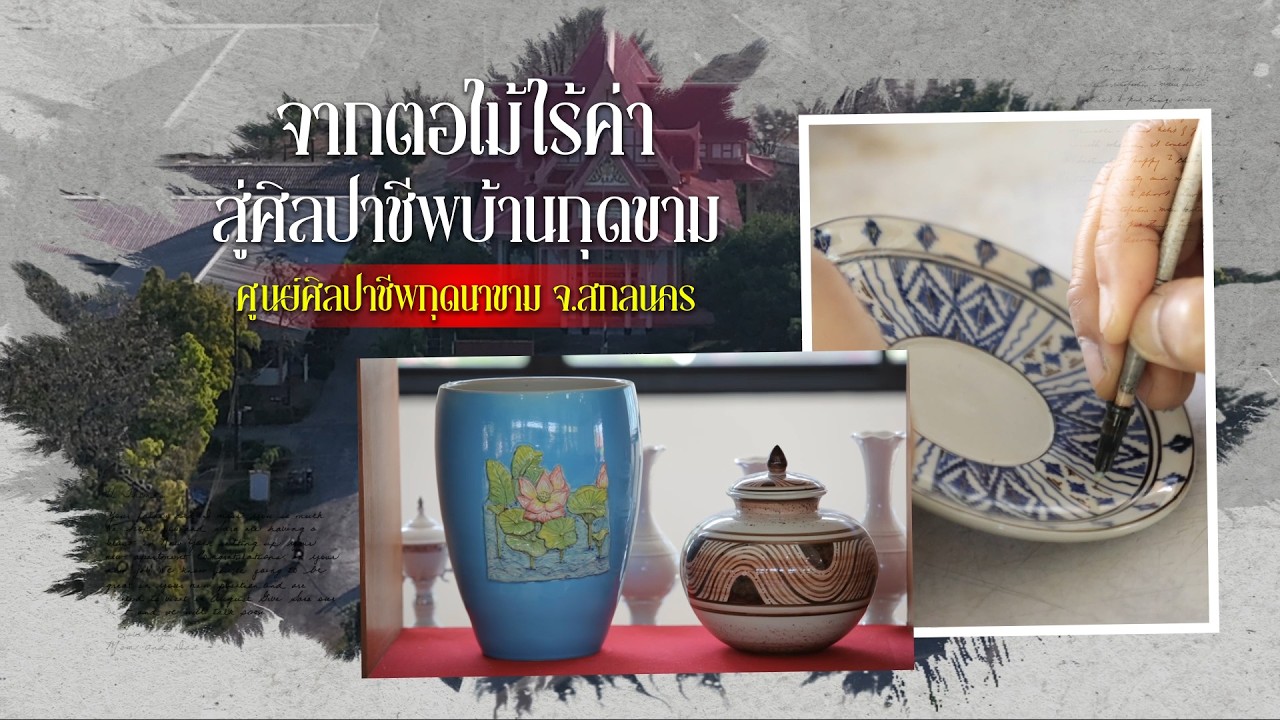
 Click to Access the Navigation Map GPS
Ban Kut Na Kham Support Arts and Crafts Centre Map
Recommend

 Art, Culture and Heritage
 Historical Sites and Monuments(9)
 Landmarks and Memorials(2)
 Royal Palace(1)
 Art, Craft Centres, Tradition(8)
 Museums(3)
 Educational Places
 Educational Gardens, Farm(2)
 Places of Worship
 Temple(18)
 Church(2)
 Other Sacred Sites(4)
Royal Project(3)
Other Sacred Sites(4)
Royal Project(3)
 Suburban Living
 Village, Community(7)
 Nature and Wildlife
 National Parks and Marine Reserves(4)
 Mountain (Doi)(3)
 Dam, Reservoir, Lake(14)
 Waterfalls(4)
 Caves(4)
 River, Canal(9)
 Bays and Beaches(1)
 Islands(1)
 Other natural attractions(5)
 Entertainment and Agricultural
 Zoos and Aquariums(1)
 Farms, Parks and Ecotourism(4)
 Outdoor and Adventure Activities(1)
 Travel Articles, Recipes
 Travel Review, Food Review(1)


