
lovethailand home >Northeastern Travel Attractions >Roi Et Travel Attractions >Muang Roi Et >Nuea Muang > Roi Et Agricultural Research and Development Cente..
TL;DR: Roi Et Agricultural Research and Development Center is located at Nuea Mueang Subdistrict, Mueang Roi Et District, Roi Et Province, open Monday – Friday, hours 08.00 – 17.00.

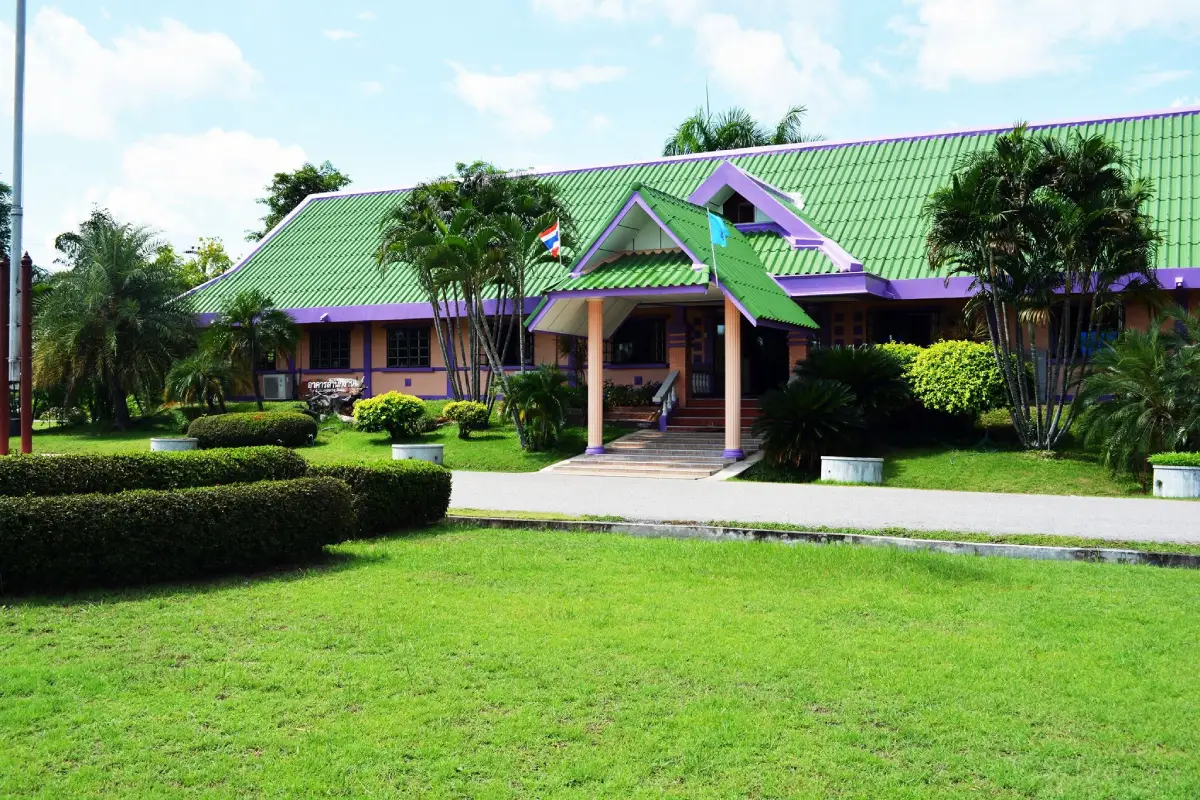
Roi Et Agricultural Research and Development Center
Open Days: Monday – Friday
Opening Hours: 08.00 – 17.00
Roi Et Agricultural Research and Development Center is an important agricultural research and field-learning site in Roi Et Province. Located at 401 Moo 16, Chaeng Sanit Road, Nuea Mueang Subdistrict, Mueang Roi Et District, Roi Et 45000, the center operates under the Office of Agricultural Research and Development Region 4, Department of Agriculture. It plays a key role in crop research, field trials, integrated agricultural development demonstrations, crop technology transfer, and the study of plant varieties suitable for the environmental conditions of Roi Et. For foreign visitors who want to understand Roi Et beyond temples, city landmarks, and festivals, this center offers a practical view of how Thai agricultural knowledge is developed and applied in real farming landscapes.
Roi Et is deeply connected with agriculture. Rice fields, field crops, sugarcane cultivation, seasonal farming, and rural production systems remain important parts of local life and the provincial economy. Because of this, a field-based agricultural research center in Roi Et is highly meaningful. It connects scientific research with the conditions farmers actually face: soil, water, rainfall, crop varieties, production costs, pests, diseases, labor, and market uncertainty. The center is not a conventional tourist attraction; it is a working research area where agricultural knowledge is tested, demonstrated, and transferred to farmers and learners.
The most important idea behind the center is that agricultural development should be based on evidence and local conditions. A farming method that works well in one province may not work in another if the soil, rainfall, water availability, pest pressure, or production system is different. Roi Et Agricultural Research and Development Center helps adapt agricultural knowledge to the province by testing crops and production methods in local field conditions. This makes the center a bridge between national agricultural science and real farms in Roi Et.
One of the center’s main highlights is its experimental field plots. These plots allow visitors to see agriculture as a research process rather than only as food production. A plot may be used to compare crop varieties, test planting distance, study fertilizer management, evaluate water use, observe plant disease resistance, monitor pest control, or demonstrate a production technology. In a normal farm, the goal is mainly harvest. In an experimental plot, the goal is reliable knowledge. This distinction makes the site especially valuable for students, farmers, researchers, and educational groups.
Rice trial plots are especially relevant in Roi Et because rice is central to Isan life. Rice is food, culture, economy, household security, and local identity. Experimental rice cultivation allows learners to see the complete process from land preparation, seed selection, seedling management, planting, water control, weed control, pest and disease observation, and yield evaluation. Compared with a general rice field, an experimental plot is more systematic because each step is connected with observation, data collection, and practical conclusions that can support future recommendations.
The center also works with field crops that suit the environmental conditions of Roi Et. Sugarcane research and development plots are a strong example. Sugarcane is a major economic crop related to sugar production, energy, industrial processing, and farmer income. Research on sugarcane can involve variety suitability, plant growth, stalk weight, sugar content, disease resistance, soil management, fertilizer use, irrigation, and harvesting cycles. Seeing a sugarcane research plot helps visitors understand that a commercial crop depends on much more than planting and cutting. It requires careful field knowledge and long-term management.
Integrated agricultural development demonstrations are another important part of the center. Agriculture is not only about one crop. A farm is a system that includes soil, water, crops, labor, tools, input costs, pest management, post-harvest handling, and market decisions. Integrated demonstrations show how these factors work together. They help farmers and learners understand how to reduce risk, improve efficiency, manage resources responsibly, and choose production methods suited to local conditions.
The research of plant varieties suitable for Roi Et’s environment is directly useful to farmers. A crop variety that performs well in a research station far away may not perform equally well in local farms if the climate, soil, rainfall pattern, or disease pressure is different. Testing varieties in Roi Et helps determine which plants can adapt to the province and which management methods are most appropriate. This makes local field research essential before recommending a crop or production system to farmers.
The Department of Agriculture has national responsibilities related to plant research and development, agricultural machinery, production inputs, technology transfer, testing, certification, and technical advice on soil, water, fertilizers, crops, agricultural materials, produce, and plant products. Roi Et Agricultural Research and Development Center brings these responsibilities into the local context. It allows farmers, schools, and agencies in Roi Et to access agricultural expertise closer to the real production area.
For farmers, the center is useful because it reduces the distance between research and practice. Farmers make decisions under real risk: seed cost, fertilizer cost, weather, pests, labor, water availability, and market price. A research center can test methods before farmers adopt them widely. Training, field demonstrations, and technical services help farmers learn from evidence rather than relying only on trial and error. This is especially important when introducing new varieties, production techniques, biological control methods, or crop management systems.
For students and young learners, the center turns agriculture into a living science classroom. A field may look simple from a distance, but it contains biology, chemistry, ecology, soil science, water management, plant pathology, entomology, meteorology, economics, and data analysis. When students see real plants at different growth stages, they can understand textbook knowledge more clearly. They also learn that modern farming requires observation, measurement, planning, and technology.
For educational travelers, the center helps complete the picture of Roi Et. The province is often introduced through Bueng Phlan Chai, Ho Wot 101 Tower, Wat Buraphaphiram, Roi Et National Museum, and cultural festivals such as Bun Phawet. These places show the urban, religious, historical, and cultural sides of Roi Et. Roi Et Agricultural Research and Development Center shows another essential side: the agricultural landscape that supports communities, livelihoods, food production, and local resilience.
The center contains several working zones, including the office and staff contact area, rice trial plots, field crop experimental plots, sugarcane research and development areas, integrated agricultural demonstration plots, training and knowledge-transfer areas, technical service areas for soil, fertilizer, crops, and production inputs, and agency guesthouse facilities. These zones show that the center is not only a collection of fields. It is a functioning agricultural knowledge system that combines research, training, service, and field practice.
The guesthouse facilities support the center’s role as a working field station and official agricultural service area. Agricultural research often requires repeated observation, field visits, training events, and coordination between staff, researchers, and visiting groups. The presence of guesthouse facilities reflects the practical nature of the site. This is a place where agricultural work happens over time, not a place designed only for short sightseeing.
The sugarcane research area is a useful example of how science supports economic crops. Sugarcane production involves variety selection, soil preparation, plant spacing, fertilizer management, water availability, weed control, pest and disease management, ratoon crop management, harvesting, and processing quality. A research plot allows these factors to be observed and compared under local conditions. For visitors, it shows that agricultural improvement is a continuous process of testing, learning, and refining.
Other field crop plots help explain the diversity of Isan agriculture. Some crops are suitable after rice. Some help farmers earn additional income between seasons. Some support livestock feed, soil improvement, or crop rotation. Studying field crops in this context helps visitors see how integrated agricultural planning works. It is not only about choosing one crop with a high market price; it is about matching crop type, soil, rainfall, labor, cost, and risk.
Technology transfer is one of the center’s most important functions. Research has limited value if it never reaches farmers. Training courses, field demonstrations, mobile service activities, and technical guidance help move knowledge from research plots into real farms. The center’s activities may involve crop production suited to local conditions, seed production, mushroom production, biological control, pest management, safe use of production inputs, and improved farm efficiency.
The center also supports technical services related to agricultural inputs. Fertilizers, seeds, agricultural chemicals, biological products, and other inputs affect productivity, cost, safety, and the environment. Local technical services and guidance help farmers make better decisions and reduce problems caused by unsuitable or incorrect input use. This role is important for both farm income and consumer safety.
The best time to visit depends on crop cycles. During the growing season, visitors may see green fields, young plants, active crop growth, and field management activities. Near harvest time, it may be easier to observe yield differences, plant height, crop condition, grain or stalk quality, and the results of different field practices. Groups should coordinate with the center before visiting so that the visit matches active plots or available training activities.
Getting There is convenient from Roi Et city center. Travel along Chaeng Sanit Road toward Nuea Mueang Subdistrict. Visitors can navigate directly to Roi Et Agricultural Research and Development Center or use the coordinates 16.070388, 103.602516. The center is close enough to the city to combine with other central Roi Et attractions such as Bueng Phlan Chai, Ho Wot 101 Tower, Roi Et National Museum, Saket Nakhon Gate, and Somdet Phra Srinagarindra Park Roi Et.
Private cars or group vehicles are the most practical way to reach the center. Visitors without private transport can first travel to Roi Et city center and then continue by local taxi or hired local transport. Study groups should contact the center in advance at 043-624161 to coordinate visiting time, staff guidance, parking, and suitable learning activities. Because this is a working government and research area, advance coordination helps make the visit more useful and orderly.
Visitors should follow proper behavior in a research area. Do not enter field plots without permission, do not step on experimental plots, do not pick leaves, seeds, or plant samples, and do not touch research equipment. Experimental plots may contain data that depends on controlled field conditions. Even small disturbances can affect the quality of research and observation.
The atmosphere of the center is different from a city park or tourist landmark. It is a practical working site with office buildings, field plots, demonstration areas, training spaces, technical service functions, and agricultural activities. Visitors who enjoy real learning places will find the site valuable because it shows how knowledge is produced before being transferred to farms and communities.
After visiting the center, travelers can continue to Roi Et city attractions. Bueng Phlan Chai, Ho Wot 101 Tower, Saket Nakhon Gate, Roi Et National Museum, Somdet Phra Srinagarindra Park Roi Et, and Wat Buraphaphiram are all practical places to combine with the trip. This route gives visitors a balanced view of Roi Et through agriculture, education, public space, history, religion, and city landmarks.
Food options are available along Chaeng Sanit Road and in Roi Et city center. Nearby restaurants can serve as convenient stops after a study visit, while city-center restaurants are suitable for travelers continuing toward Bueng Phlan Chai or Ho Wot 101 Tower. Accommodation is available both along the main road network and in central Roi Et. Staying in the city center is convenient for travelers who want to combine the agricultural learning site with the province’s main attractions.
For foreign travelers interested in Thai agriculture, Roi Et Agricultural Research and Development Center offers a deeper view of Isan. It shows that Thai farming is not only traditional rural life. It also involves scientific research, government technical services, field trials, crop improvement, technology transfer, and local adaptation. This makes the center a meaningful educational stop for visitors who want to understand how food production and rural development are supported in Thailand.
The center also shows that Roi Et agriculture is not frozen in the past. Farmers and agencies must respond to production costs, drought, flooding, plant diseases, labor changes, market shifts, and climate change. Local agricultural research helps the province adapt. Field trials and integrated demonstrations are part of the process of building more resilient farming systems for the future.
Overall, Roi Et Agricultural Research and Development Center is valuable as a government agricultural research agency, a field-learning destination, an integrated agricultural demonstration site, a crop variety research area, and a knowledge-transfer center for the province. It gives visitors a clearer understanding of the agricultural foundation of Roi Et and the scientific work behind farming. For anyone who wants to know Roi Et through agriculture, this center is one of the most meaningful educational places to include in a study route.
| Name | Roi Et Agricultural Research and Development Center |
| Former / Related Name | Department of Agriculture Field Crop Experiment Station, Roi Et |
| Location | Nuea Mueang Subdistrict, Mueang Roi Et District, Roi Et Province |
| Address | 401 Moo 16, Chaeng Sanit Road, Nuea Mueang Subdistrict, Mueang Roi Et District, Roi Et 45000, Thailand |
| Coordinates | 16.070388, 103.602516 |
| Highlights | Agricultural learning site, integrated agricultural development demonstrations, rice trial plots, field crop experimental plots, sugarcane research and development plots, and research on crop varieties suited to Roi Et’s local environment |
| History / Role | A provincial agricultural research and development agency responsible for crop research, field trials, demonstration, technical services, and technology transfer suited to local farming conditions in Roi Et Province |
| Name Origin | The name reflects the center’s role as Roi Et Province’s agricultural research and development agency under the Department of Agriculture |
| Distinctive Features | A field-based academic and study-visit site focused on real experimental plots, crop production technology demonstrations, and the connection between agricultural research and local farmers |
| Travel Information | From Roi Et city center, travel along Chaeng Sanit Road toward Nuea Mueang Subdistrict. Visitors can navigate to Roi Et Agricultural Research and Development Center or use the coordinates 16.070388, 103.602516. |
| Current Status | Open as an active agricultural research, development, technical service, and crop technology transfer agency in Roi Et Province |
| Open Days | Monday – Friday |
| Closed Days | Saturday And Sunday |
| Opening Hours | 08.00 – 17.00 |
| Facilities | Office building, staff contact area, experimental plots, demonstration plots, training areas, technical service areas, agency guesthouse facilities, and spaces for study groups according to official operations |
| Main Areas / Zones | 1. Office And Staff Contact Area 2. Rice Trial Plots 3. Field Crop Experimental Plots 4. Sugarcane Research And Development Plots 5. Integrated Agricultural Development Demonstration Plots 6. Training And Knowledge Transfer Area 7. Technical Service Area For Soil, Fertilizer, Crops, And Production Inputs 8. Agency Guesthouse Facilities |
| Key Learning Topics | Experimental rice cultivation, crop variety research suited to local conditions, sugarcane research and development, soil and fertilizer management, pest control, water management, proper seed use, production cost reduction, and agricultural technology transfer to farmers |
| Caretaker / Responsible Agency | Roi Et Agricultural Research and Development Center, Office of Agricultural Research and Development Region 4, Department of Agriculture |
| Director | Mrs. Phornsuli Isarangkun Na Ayudhya |
| Main Contact Number | 043-624161 |
| Fax | 043-624162 |
| Official Website / Official Page | oard4.doa.go.th/roiet, Facebook: Roi Et Agricultural Research and Development Center |
| Nearby Tourist Attractions | 1. Bueng Phlan Chai, about 6 km 2. Ho Wot 101 Tower, about 6 km, Tel. 043-511222 3. Saket Nakhon Gate, about 6 km 4. Roi Et National Museum, about 6 km, Tel. 043-514456 Ext. 101 5. Somdet Phra Srinagarindra Park Roi Et, about 6 km 6. Wat Buraphaphiram, about 7 km |
| Nearby Restaurants | 1. Krua Hia Prai 1, about 1 km, Tel. 098-301-2004 2. Afternoon Walk / Afternoon Bar & Bistro, about 1 km, Tel. 086-656-6112 3. Chan Mueang Restaurant, Chaeng Sanit Road, about 2 km, Tel. 043-514-776 4. Tom Tam Chaeng Sanit, about 3 km 5. Lakeview Restaurant, about 6 km, Tel. 093-320-8126 6. Nai Chui Vintage Pork Noodle, about 6 km, Tel. 093-638-8323 |
| Nearby Accommodations | 1. Boonbundal Hotel, about 5 km, Tel. 043-624-624 2. Le Park 23 Boutique Resort, about 5 km, Tel. 043-513-444 3. The Bed Hotel 101, about 6 km, Tel. 043-032-142 4. 101 Hotel, about 6 km, Tel. 043-513-999, 065-119-6999 5. HOP INN Roi Et, about 7 km, Tel. 02-080-2222 6. Rueanrimnam Hotel, about 7 km, Tel. 043-518-967 |
Frequently Asked Questions (FAQ)
Q: Where is Roi Et Agricultural Research and Development Center located?
A: It is located at 401 Moo 16, Chaeng Sanit Road, Nuea Mueang Subdistrict, Mueang Roi Et District, Roi Et 45000, Thailand.
Q: What are the opening days and hours?
A: The center is open Monday to Friday from 08.00 to 17.00 and is closed on Saturday and Sunday.
Q: Is there an admission fee?
A: Visitors should contact the center directly before arranging a study visit because it is a government research and fieldwork area, not a ticketed tourist attraction.
Q: What is the main highlight of the center?
A: Its highlights include integrated agricultural development demonstrations, rice trial plots, field crop experimental plots, sugarcane research and development plots, and research on plant varieties suited to Roi Et’s local environment.
Q: Who should visit this center?
A: It is suitable for farmers, students, teachers, researchers, agricultural agencies, study groups, and visitors interested in crop research, field learning, and agricultural development.
Q: What areas can visitors learn from inside the center?
A: Key areas include the office and staff contact area, rice trial plots, field crop plots, sugarcane research plots, integrated agricultural demonstration plots, training areas, technical service areas, and agency guesthouse facilities.
Q: Should visitors contact the center before a study visit?
A: Yes. Visitors should contact the center in advance at 043-624161 to coordinate visiting time, staff guidance, access areas, and suitable activities for the group.
Q: What nearby attractions can be combined with a visit?
A: Nearby attractions include Bueng Phlan Chai, Ho Wot 101 Tower, Saket Nakhon Gate, Roi Et National Museum, Somdet Phra Srinagarindra Park Roi Et, and Wat Buraphaphiram.
 Category: ●Educational Places
 Group: ●Educational Gardens, Farm
Last Update : 2 MonthAgo
 Last Update : 2 MonthAgo
 Click to Access the Navigation Map GPS
Roi Et Agricultural Research and Development Center Map
Recommend

 Art, Culture and Heritage
 Historical Sites and Monuments(3)
 Landmarks and Memorials(5)
 Art, Craft Centres, Tradition(2)
 Museums(1)
Educational Gardens, Farm(3)
Museums(1)
Educational Gardens, Farm(3)
 Places of Worship
 Temple(35)
 Other Sacred Sites(6)
 Suburban Living
 Village, Community(1)
 Local Market(1)
 Nature and Wildlife
 National Parks and Marine Reserves(1)
 Mountain (Doi)(2)
 Dam, Reservoir, Lake(8)
 Waterfalls(1)
 Flower Field(1)
 River, Canal(4)
 Entertainment and Agricultural
 Zoos and Aquariums(1)
 Stadium(1)
 Farms, Parks and Ecotourism(5)
 Shopping
 Shopping and Night Market(1)


