
lovethailand home >Northeastern Travel Attractions >Roi Et Travel Attractions >Muang Roi Et >Nong Waeng > Department of Agriculture Field Crop Experiment St..
TL;DR: Department of Agriculture Field Crop Experiment Station is located at Nuea Mueang Subdistrict, Mueang Roi Et District, Roi Et Province, open Daily, hours 08.00 – 17.00.

Department of Agriculture Field Crop Experiment Station
Open Days: Daily
Opening Hours: 08.00 – 17.00
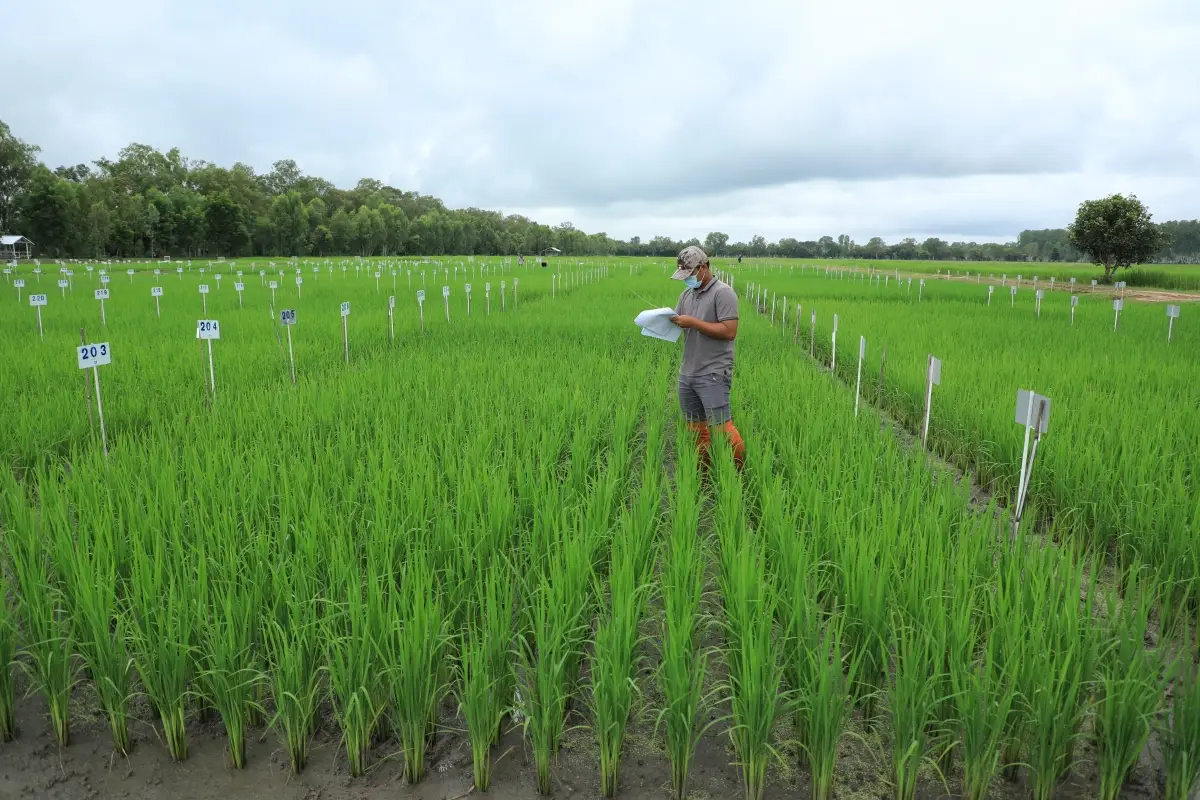
The Department of Agriculture Field Crop Experiment Station in Roi Et is an educational agricultural learning site that reflects the importance of Roi Et Province as one of northeastern Thailand’s agricultural areas. The site is associated with experimental field plots, rice cultivation trials, field crop research, plant development, and the transfer of agricultural knowledge to farmers, students, teachers, researchers, and visitors interested in practical agriculture. Unlike a typical sightseeing attraction, this place is valuable because it shows the working process behind crop production, field testing, plant improvement, and agricultural technology in a real local environment.
Roi Et has a long connection with farming, especially rice cultivation and field crops. For this reason, an agricultural experiment station or research and development center in the province plays an important role. It helps connect scientific knowledge with local conditions such as soil, rainfall, climate, water availability, crop varieties, pests, and production methods. A field experiment station is not simply a farm; it is a place where knowledge is tested, measured, compared, and refined before being transferred to farmers and communities.
The main value of the Roi Et field crop experiment site is that it allows visitors to see agriculture as a research process. In a normal farm, the main goal is production. In an experimental plot, the goal is knowledge. Each plot may be used to compare crop varieties, planting methods, spacing, fertilizer management, water management, pest control, or harvesting results. This makes the site especially useful for learners who want to understand why scientific testing matters in agriculture.
Rice cultivation in experimental plots is particularly meaningful in Roi Et because rice is central to Isan life. It is food, livelihood, culture, and economy at the same time. In an experimental rice plot, visitors can learn about soil preparation, seed selection, planting, seedling growth, water management, plant care, pest and disease monitoring, and yield evaluation. This shows that rice farming is not only inherited local wisdom, but also a knowledge system supported by observation, data, field trials, and scientific methods.
For children and young learners, a visit to the experiment station can change the way they see farming. A rice field may look simple from a distance, but at the research level it contains biology, chemistry, soil science, water management, meteorology, insects, plant diseases, machinery, and data collection. Seeing real plots helps science become more concrete. Students can understand that agriculture requires both local experience and modern knowledge.
For farmers, experimental plots can help reduce risk. New crop varieties, production methods, or input management techniques should be tested before being widely recommended. A research station provides the space for repeated trials, comparison, and practical evaluation. Farmers who visit or attend training can learn from tested results before adapting the ideas to their own fields. This is why agricultural research stations are important for improving productivity, reducing costs, and solving local farming problems.
The role of the Department of Agriculture is closely connected with research, testing, plant development, technical services, and the transfer of agricultural technology. The current official agency associated with the area is Roi Et Agricultural Research and Development Center under the Office of Agricultural Research and Development Region 4, Department of Agriculture. Its responsibilities include research and development related to crops, technical services, plant production advice, input regulation, and the transfer of knowledge to farmers and related organizations.
The name of Roi Et Field Crop Experiment Station also appears in the history of crop variety development. For example, Roi Et 1 white sesame was selected and tested through the field crop experiment system before being recognized as an improved variety. This shows that the agricultural research work connected with Roi Et has significance beyond the local area. Experimental plots in the province have contributed to plant development and crop knowledge at a wider level.
Visitors should look at the site as a living classroom. A row of plants may represent a variety comparison. A rice plot may show a water management trial. A field crop plot may test planting distance or fertilizer response. A training activity may connect directly with technology transfer to farmers. Understanding this context makes the visit more meaningful because every part of the landscape may be connected with a research question.
The present agricultural research and development center in Roi Et continues to work with farmers and communities. Its activities include training, mobile agricultural service, information sharing, and technical guidance on production inputs such as fertilizers, agricultural chemicals, regulated seeds, and crop production technologies suited to local conditions. This continuing work shows that the site is not only a historical name but part of an active agricultural knowledge system in the province.
Having an agricultural research center in Roi Et helps local farming become more responsive to real conditions. Agricultural problems are rarely identical in every province. Soil types, rainfall, pest pressure, and farming practices differ from place to place. Local field research allows recommendations to be adapted to the area instead of being based only on general information. This is especially important for a province where many communities depend on rice fields and crop production.
For educational travelers, the Department of Agriculture Field Crop Experiment Station in Roi Et provides a valuable way to understand the province through agriculture. Roi Et is often introduced through Bueng Phlan Chai, Ho Wot 101 Tower, temples, festivals, and museums, but its agricultural landscape is just as important. A learning trip to an experimental farm reveals the scientific and practical work behind food production, seed development, crop improvement, and farmer support.
The site is suitable for schools, colleges, universities, farmer groups, agricultural agencies, and visitors interested in modern farming. A study visit can connect many subjects: biology, environmental science, geography, local economy, food security, rural life, and agricultural technology. Students can learn how a seed becomes a crop, how a field becomes a trial site, and how research results can eventually support farming communities.
The best season to observe experimental plots depends on crop cycles. During the rainy season, rice fields and field crop plots may look green and active, making it easier to learn about plant growth and field management. Near harvest time, visitors may see yield differences, seed characteristics, plant height, grain condition, and the results of different production methods. Group visitors should coordinate with the center before visiting so that the trip matches active field conditions or available training activities.
Getting There is convenient from Roi Et city. The current official contact point is Roi Et Agricultural Research and Development Center at 401 Moo 16, Chaeng Sanit Road, Nuea Mueang Subdistrict, Mueang Roi Et District, Roi Et 45000. Travelers can drive from the city center along Chaeng Sanit Road toward Nuea Mueang. Visitors may use Bueng Phlan Chai or Ho Wot 101 Tower as city reference points before continuing to the center.
Private cars are the most convenient way to reach the site. Visitors without private transport can first travel to Roi Et city center and then continue by local taxi or local transport. School groups and study groups should contact the center in advance to coordinate visiting time, access to demonstration areas, parking, and educational activities.
Because this is a working research and government area, visitors should behave carefully. Do not enter experimental plots without permission, do not step on planted areas, do not collect plant samples, do not touch research tools, and follow staff instructions. Experimental plots may contain data that depends on careful field conditions, so even small disturbances can affect the accuracy of research results.
The atmosphere differs from central city attractions such as Bueng Phlan Chai or Ho Wot 101 Tower. This site is not designed mainly for leisure. Its identity comes from real agricultural work: office areas, field plots, demonstration areas, training spaces, and practical field activities. Visitors who enjoy learning from real places will find the site valuable because it shows how agricultural knowledge is produced and shared.
After visiting the field crop experiment station or agricultural research center, travelers can continue to key attractions in Roi Et city, such as Bueng Phlan Chai, Ho Wot 101 Tower, Saket Nakhon Gate, Roi Et National Museum, Somdet Phra Srinagarindra Park Roi Et, and Wat Buraphaphiram. This creates a balanced route combining agriculture, education, culture, and city landmarks in one day.
Nearby food options can be found along Chaeng Sanit Road and in Roi Et city center. Accommodation is available both along the main road network and in the city center. Staying in the city center is convenient for travelers who want to combine the agricultural learning site with central attractions, while hotels near the Chaeng Sanit route can be practical for study groups beginning the day at the research center.
Overall, the Department of Agriculture Field Crop Experiment Station in Roi Et is important as an agricultural learning site rather than a conventional tourist attraction. It helps visitors see the research behind farming, the role of agricultural scientists, the relationship between experimental plots and farmers’ fields, and the way local knowledge connects with science and technology. For travelers who want to understand Roi Et through agriculture, this site offers a meaningful educational perspective on the province.
| Name | Department of Agriculture Field Crop Experiment Station, Roi Et |
| Current Related Agency | Roi Et Agricultural Research and Development Center, Office of Agricultural Research and Development Region 4, Department of Agriculture |
| Location | Nuea Mueang Subdistrict, Mueang Roi Et District, Roi Et Province |
| Address | 401 Moo 16, Chaeng Sanit Road, Nuea Mueang Subdistrict, Mueang Roi Et District, Roi Et 45000, Thailand |
| Highlights | Field crop experiment plots, rice trial plots, crop research and development, production technology demonstrations, and agricultural knowledge transfer for farmers and learners |
| History / Role | An agricultural experiment and learning site connected with the Department of Agriculture’s work in field crop research, crop testing, plant development, and technology transfer suited to local production conditions in Roi Et |
| Name Origin | The name reflects the site’s role as a Department of Agriculture field crop experiment station where field plots are used for agricultural testing, research, and development |
| Distinctive Features | An educational agricultural garden and field learning site suitable for studying rice trials, field crops, seed development, plot management, and practical agricultural technology |
| Travel Information | From Roi Et city center, travel along Chaeng Sanit Road toward Nuea Mueang Subdistrict. Visitors can navigate to Roi Et Agricultural Research and Development Center or use Bueng Phlan Chai and Ho Wot 101 Tower as city reference points before continuing to the site. |
| Current Status | Open as an agricultural learning site and active research, development, technical service, and crop technology transfer agency in Roi Et Province |
| Open Days | Daily |
| Opening Hours | 08.00 – 17.00 |
| Facilities | Office building, experimental plots, demonstration plots, training areas, staff contact point, technical service areas, and field activity areas for farmers and study groups |
| Main Areas / Zones | 1. Office And Staff Contact Area 2. Rice Trial Plots 3. Field Crop Experimental Plots 4. Crop Production Technology Demonstration Plots 5. Training And Knowledge Transfer Area 6. Technical Service Area For Soil, Fertilizer, Crops, And Agricultural Inputs 7. Field Activity Area For Farmers And Study Groups |
| Key Learning Topics | Experimental rice cultivation, crop variety comparison, water management in rice fields, soil and fertilizer management, pest control, proper seed use, production cost reduction, and agricultural technology transfer to farmers |
| Caretaker / Responsible Agency | Roi Et Agricultural Research and Development Center, Office of Agricultural Research and Development Region 4, Department of Agriculture |
| Director | Mrs. Phornsuli Isarangkun Na Ayudhya |
| Main Contact Number | 043-624161 |
| Fax | 043-624162 |
| Official Website / Official Page | oard4.doa.go.th/roiet, Facebook: Roi Et Agricultural Research and Development Center |
| Nearby Tourist Attractions | 1. Bueng Phlan Chai, about 6 km 2. Ho Wot 101 Tower, about 6 km, Tel. 043-511222 3. Saket Nakhon Gate, about 6 km 4. Roi Et National Museum, about 6 km, Tel. 043-514456 Ext. 101 5. Wat Buraphaphiram, about 7 km 6. Somdet Phra Srinagarindra Park Roi Et, about 6 km |
| Nearby Restaurants | 1. Krua Hia Prai 1, about 1 km, Tel. 098-301-2004 2. Afternoon Walk / Afternoon Bar & Bistro, about 1 km, Tel. 086-656-6112 3. Chan Mueang Restaurant, Chaeng Sanit Road, about 2 km, Tel. 043-514-776 4. Tom Tam Chaeng Sanit, about 3 km, Tel. 096-363-0527 5. Lakeview Restaurant, about 6 km, Tel. 093-320-8126 6. Nai Chui Vintage Pork Noodle, about 6 km, Tel. 093-638-8323 |
| Nearby Accommodations | 1. Boonbundal Hotel, about 5 km, Tel. 043-624-624 2. Le Park 23 Boutique Resort, about 5 km, Tel. 043-513-444 3. The Bed Hotel 101, about 6 km, Tel. 043-032-142 4. 101 Hotel, about 6 km, Tel. 043-513-999, 065-119-6999 5. HOP INN Roi Et, about 7 km, Tel. 02-080-2222 6. Rueanrimnam Hotel, about 7 km, Tel. 043-518-967 |
Frequently Asked Questions (FAQ)
Q: Where is the Department of Agriculture Field Crop Experiment Station in Roi Et located?
A: It is located in Mueang Roi Et District, Roi Et Province. The current related official agency is Roi Et Agricultural Research and Development Center at 401 Moo 16, Chaeng Sanit Road, Nuea Mueang Subdistrict, Mueang Roi Et District, Roi Et 45000.
Q: What are the opening hours?
A: The site is open daily from 08.00 to 17.00.
Q: What is the main highlight of this agricultural experiment station?
A: Its highlights include rice trial plots, field crop experimental plots, crop production demonstrations, plant variety research, and agricultural knowledge transfer for farmers, students, and interested visitors.
Q: Who should visit this site?
A: It is suitable for farmers, schools, colleges, universities, students, researchers, agricultural agencies, and visitors interested in rice cultivation, field crops, and crop production technology.
Q: How can visitors arrange a study visit?
A: Visitors can contact Roi Et Agricultural Research and Development Center at 043-624161 to ask about study visits, field learning activities, and agricultural knowledge transfer programs.
Q: What zones can visitors learn from inside the site?
A: Key areas include the office and staff contact area, rice trial plots, field crop plots, crop production demonstration areas, training spaces, and technical service areas for soil, fertilizer, crops, and agricultural inputs.
Q: What attractions are near the site?
A: Nearby attractions include Bueng Phlan Chai, Ho Wot 101 Tower, Saket Nakhon Gate, Roi Et National Museum, Wat Buraphaphiram, and Somdet Phra Srinagarindra Park Roi Et.
Q: What should visitors be careful about during a visit?
A: Visitors should walk only in permitted areas, avoid stepping into experimental plots, avoid collecting plant samples, avoid touching research tools, and follow staff instructions because the plots are used for agricultural data and research.
 Category: ●Educational Places
 Group: ●Educational Gardens, Farm
Last Update : 2 MonthAgo
 Last Update : 2 MonthAgo
 Click to Access the Navigation Map GPS
Department of Agriculture Field Crop Experiment Station Map
Recommend

 Art, Culture and Heritage
 Historical Sites and Monuments(3)
 Landmarks and Memorials(5)
 Art, Craft Centres, Tradition(2)
 Museums(1)
Educational Gardens, Farm(3)
Museums(1)
Educational Gardens, Farm(3)
 Places of Worship
 Temple(35)
 Other Sacred Sites(6)
 Suburban Living
 Village, Community(1)
 Local Market(1)
 Nature and Wildlife
 National Parks and Marine Reserves(1)
 Mountain (Doi)(2)
 Dam, Reservoir, Lake(8)
 Waterfalls(1)
 Flower Field(1)
 River, Canal(4)
 Entertainment and Agricultural
 Zoos and Aquariums(1)
 Stadium(1)
 Farms, Parks and Ecotourism(5)
 Shopping
 Shopping and Night Market(1)


