
lovethailand home >Northeastern Travel Attractions >Roi Et Travel Attractions >Muang Suang >Muang Suang > Wat Mueang Suang Yai
TL;DR: Wat Mueang Suang Yai is located at Ban Mueang Suang Yai, Moo 5, Mueang Suang Subdistrict, Mueang Suang District, Roi Et Province, open Daily, hours 08.00 – 17.00.
Wat Mueang Suang Yai
Open Days: Daily
Opening Hours: 08.00 – 17.00
Wat Mueang Suang Yai in Roi Et Province is a public Buddhist monastery belonging to the Mahanikaya order. It is located at Ban Mueang Suang Yai, Moo 5, Mueang Suang Subdistrict, Mueang Suang District, Roi Et Province. The monastery serves as a center of Buddhism for the local community, a venue for formal monastic ceremonies, a learning site for local history, and an important cultural attraction in Mueang Suang District. Its principal sacred features include Phra That Chedi Si Mueang Suang, which contains relics of the Buddha brought from India, Phra Si Sakyamuni or Luang Pho Suk Jai, the Thao Khattiyanam Monument, the pavilion of Phra Upagupta, the Three Village Pillars, and a sacred Bodhi tree originating from India.
Wat Mueang Suang Yai remains an active monastery with resident monks, regular Buddhist ceremonies, and community activities throughout the year. Visitors can enter the grounds, make merit, worship the Buddha relics, pay respect to Luang Pho Suk Jai, visit the Thao Khattiyanam Monument, and explore the principal areas of the temple every day from 08.00 to 17.00. There is no admission fee. Voluntary donations support monastic activities, maintenance of religious buildings, and care of the public areas within the compound.
The monastery is known as both Wat Mueang Suang Yai and Wat Ban Mueang Suang Yai. The first name is commonly used in religious and cultural-site records, while the second emphasizes the temple’s close relationship with the community that developed around an old pond. The monastery stands near the center of Mueang Suang District, within convenient reach of local government offices, residential areas, markets, restaurants, and roads connecting the district with Roi Et city.
Two documentary traditions give slightly different dates for the temple’s foundation. Community history places its establishment at approximately B.E. 2320, corresponding to 1777, under the religious leadership of Luang Pu Champa. The formal temple register records B.E. 2330, or 1787. Both dates place the origin of the monastery near the transition from the late Thonburi period to the early Rattanakosin era and confirm that Wat Mueang Suang Yai has been associated with the first generations of the local settlement for more than two centuries.
The community foundation story identifies Pho Yai Inthamat and Mae Yai Thongsi as early settlers who brought their descendants to establish homes near a pond. The water source later became known as Nong Sim and lies in front of the monastery. As the settlement expanded, residents required a place for merit-making, Dhamma teaching, ceremonies, and common spiritual support. Pho Yai Inthamat and his relatives consequently invited Luang Pu Champa to lead the construction of a monastery, which was named after Ban Mueang Suang Yai.
Nong Sim was more than a convenient source of water. In Isan culture, the word sim refers to an ordination hall or consecrated monastic space. The pond preserves the memory of community foundation and the development of Buddhist institutions around the settlement. Water supported domestic use, agriculture, livestock, and seasonal ceremonies. Establishing a monastery near a dependable water source was common across northeastern Thailand because water allowed both the village and its religious center to develop securely.
The period in which Wat Mueang Suang Yai emerged was marked by the expansion of Tai-Lao communities across the Chi and Mun river basins and the Thung Kula Rong Hai plain. A Buddhist monastery was normally founded together with a village because it functioned as a religious center, school, meeting place, and ceremonial setting for every stage of life. Birth celebrations, ordination, marriage-related merit, ancestral rites, and funerals all depended on the monastery. Wat Mueang Suang Yai consequently developed together with a social landscape in which village, temple, and water source were closely connected.
The temple register states that Wat Mueang Suang Yai received a royal grant of consecrated boundary on 23 February B.E. 2336, corresponding to 1793. The boundary measured approximately 10 meters wide and 20 meters long. Known as a wisungkhamsima, this officially designated area allows monks to perform formal acts of the Sangha, including ordination and recitation of the monastic discipline. The grant confirms the temple’s fully established religious status within the administrative system of Thai Buddhism.
The registered temple land covers approximately 9 rai and 40 square wah. Two additional monastic land plots total approximately 6 rai, 3 ngan, and 73 square wah. The compound has developed into a Buddhist sacred zone, a monastic residential zone, public community areas, and spaces containing important sacred monuments. Registered buildings include an ordination hall measuring approximately 5 by 11 meters, constructed in B.E. 2516 or 1973; a preaching hall measuring approximately 15 by 21 meters, constructed in B.E. 2528 or 1985; and a multipurpose pavilion measuring approximately 9 by 17.50 meters, constructed in B.E. 2536 or 1993.
Buildings added during different periods reflect the growth of the local community. The ordination hall supports formal monastic ceremonies. The preaching hall is used for sermons, chanting, and major events attended by large numbers of residents. The multipurpose pavilion accommodates meetings, food preparation, community projects, and educational activities. Monks’ residences and a merit-making hall support daily religious life and family ceremonies.
Wat Mueang Suang Yai is classified as a public or community-supported monastery rather than a royal temple. It belongs to the Mahanikaya, the largest monastic order in Thailand. Its administration forms part of the national Sangha hierarchy, beginning with the abbot and extending through subdistrict, district, and provincial ecclesiastical authorities to the Sangha Supreme Council. The temple therefore performs a local community role while remaining integrated into the wider administration of Thai Buddhism.
The current abbot is Phra Khru Siri Thammaprachot, whose registered personal and monastic name is Wachira Chutipanyo. He has completed the fifth level of the Pali studies examination and also serves as the ecclesiastical chief of Mueang Suang Subdistrict. His responsibilities include supervision of resident monks and novices, observance of the monastic discipline, administration of temple property, organization of ceremonies, and coordination with other monasteries, local government, schools, and residents.
Leadership at a major district monastery involves responsibilities extending beyond ordinary building maintenance. The abbot supervises annual traditions, the relic stupa, education, donations, monastic discipline, and public use of the temple grounds. Because the compound contains a relic monument, a large Buddha image, a community hero monument, and open festival spaces, it attracts visitors from outside the immediate village. Administration must consequently maintain both the contemplative character of a monastery and the practical requirements of a public cultural site.
Former abbots recorded in the temple register include Phra Khru Thao, Phra Khru Hemmasathan Thammachari, Phra Athikan Bao, Phra Athikan Lun, Phra Athikan Sing, and Phra Palat Samri Thitawiso. Their succession represents the continuity of monastic administration across different generations. Although complete biographical details have not survived for every abbot, their work allowed Buddhist education, ceremonies, property management, and community service to continue into the present.
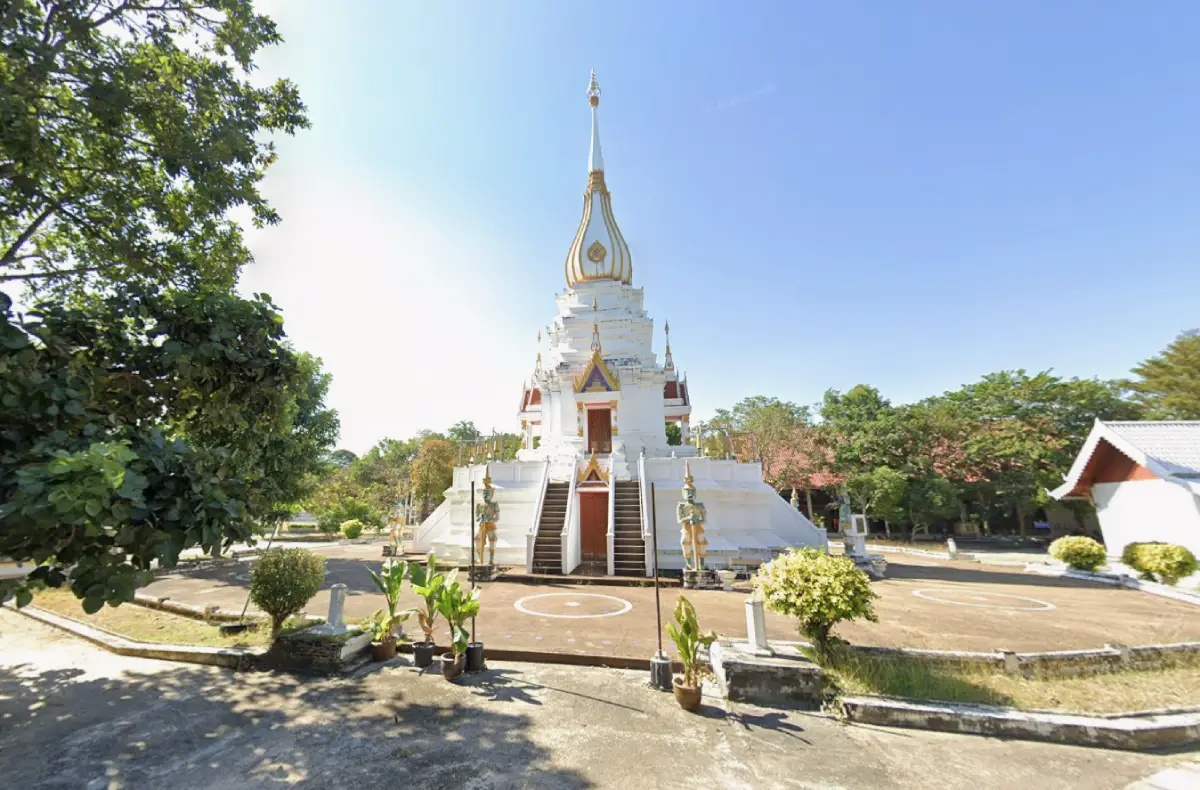
The most important sacred monument in the compound is Phra That Chedi Si Mueang Suang. The chedi contains relics of the Buddha brought from India. In Buddhist understanding, such relics are physically and spiritually associated with the historical Buddha. Enshrining them within a stupa creates a major center of devotion where monks and laypeople recall the Buddha, cultivate mindfulness of his qualities, and strengthen their commitment to ethical and spiritual practice.
Phra That Chedi Si Mueang Suang was created in a contemporary Buddhist architectural style rather than as a direct reproduction of a specific ancient stupa. Its prominent form can be seen from several areas of the monastery and has become a landmark of Mueang Suang District. The title “Si Mueang Suang” connects the sanctity of the relic monument with the identity of the town, allowing the chedi to function as both a Buddhist symbol and a visual emblem of the community.
The arrival of Buddha relics from India connects the monastery with the land in which Buddhism originated. India contains the principal sites associated with the Buddha’s birth, enlightenment, first sermon, and passing into final Nirvana. The relics at Mueang Suang allow local worshippers to experience a direct symbolic relationship with Buddhist history even though the district lies thousands of kilometers from the sacred sites of northern India.
The open area around the chedi is used for worship, clockwise circumambulation, candlelight processions, and important temple ceremonies. On ordinary days, it offers a quiet setting for contemplation. During annual festivals and Buddhist holy days, large numbers of residents gather around the monument. The open layout allows processions to move around the chedi and gives worshippers clear views from several directions.
A large Buddha image stands prominently in front of the chedi. The image is known as Phra Si Sakyamuni or Luang Pho Suk Jai. The formal name refers to the Buddha as the sage of the Sakya clan, while the popular name Luang Pho Suk Jai expresses the peace and emotional well-being associated with worship at the site. The image creates a recognizable focal point at the front of the monastery.
Luang Pho Suk Jai receives offerings and prayers from residents and travelers. The name refers not merely to requests for material success but to happiness grounded in a peaceful mind, good conduct, and remembrance of the Dhamma. Many visitors begin their exploration of the temple at the Buddha courtyard before proceeding toward the relic stupa and other areas.
The Thao Khattiyanam Monument gives Wat Mueang Suang Yai a distinctive local character. Thao Khattiyanam is remembered as a hero in the traditional narrative of Mueang Suang. The story credits him with helping the town survive a disaster involving dangerous creatures known in local tradition as Ma Suang and Ngu Chuang. Through generations of oral transmission, he became a symbol of courage, protection, and collective unity.
The story belongs to the sphere of local legend rather than formal documentary history, yet it remains culturally important. Legends express how communities understand leadership, danger, sacrifice, and the moral qualities expected of a protector. The monument gives physical form to a story that was formerly transmitted through speech and allows younger generations to encounter a distinctive part of Mueang Suang identity.
Placing the Thao Khattiyanam Monument within the same compound as the relic stupa and Buddha images demonstrates the coexistence of Buddhism and local historical memory. The monastery gathers together what residents regard as spiritually and culturally important. Buddha relics, a sacred Bodhi tree, Phra Upagupta, and a legendary hero share the same landscape without performing identical religious functions.
The Three Village Pillars represent settlement, stability, and collective identity. Village pillars commonly express the relationship between residents and the place in which their ancestors established a community. Their presence at the monastery links civic identity with the sacred landscape and provides another point through which the history of Mueang Suang can be interpreted.
The water pavilion of Phra Upagupta connects Buddhist devotion with the symbolism of water. Phra Upagupta is a highly respected monk in the Buddhist cultures of the Mekong region and northeastern Thailand. Local traditions associate him with protection from obstacles, control of disruptive forces, and the successful completion of large ceremonies. He is frequently imagined as dwelling in the ocean or at its center, making a water pavilion an appropriate architectural setting.
Phra Upagupta plays a role in many Isan merit-making traditions, particularly those involving large public gatherings. Some communities ceremonially invite him before an event so that the proceedings remain peaceful. The belief provides confidence and auspicious meaning while existing within the wider framework of Buddhist merit and moral conduct.
A sacred Bodhi tree brought from India was planted within the monastery in B.E. 2521, corresponding to 1978. The Bodhi tree is central to Buddhism because the Buddha attained enlightenment beneath a tree of the same species at Bodh Gaya. The tree at Wat Mueang Suang Yai is therefore more than a source of shade. It recalls enlightenment and creates another symbolic connection between the district and the Buddhist homeland of India.
Over the decades, the Bodhi tree has become part of the physical landscape and collective memory of the monastery. Residents who saw it when it was young have witnessed its growth. Its development resembles the transmission of Buddhism and community life from one generation to the next. The shade beneath the tree also creates a setting for quiet rest, Dhamma teaching, and reflection.
The various components of the monastery form a Buddhist cultural landscape composed of buildings, water, trees, statues, a relic stupa, and public courtyards. Walking through the grounds introduces several historical periods, from the community foundation in the late eighteenth century to twentieth-century halls, the arrival of the Bodhi tree and relics from India, and current public landscape projects.
The principal annual tradition is the worship festival of Phra That Chedi Si Mueang Suang, held from 13 to 15 April. The dates coincide with Songkran, the traditional Thai New Year, when people working in other provinces commonly return to their home communities. The festival combines worship of the relics, Buddhist merit-making, remembrance of ancestors, cultural activities, and family reunion.
The three-day event transforms the chedi into the ceremonial center of Mueang Suang. Residents clean the temple, arrange offerings, prepare food, and receive visitors. Monks conduct chanting and merit ceremonies, while laypeople worship the relics, bathe Buddha images, and meet relatives. The festival keeps devotion to the chedi connected with the annual rhythm of community life.
Songkran at the monastery carries meanings beyond recreational water activities. It is a period for honoring older family members, dedicating merit to deceased relatives, cleaning homes and religious spaces, and entering the new year with an auspicious state of mind. Combining Songkran with the relic festival gives the celebration a clear Buddhist and community-centered focus.
The monastery also holds Dhamma and moral-training activities during the first week of February. Monks, young people, students, and residents study Buddhist principles, practice meditation, hear teachings, and reflect upon daily conduct. The relic stupa, Buddha image, Bodhi tree, and quiet grounds provide an environment substantially different from an ordinary classroom.
Other annual activities follow the Buddhist calendar, including Makha Bucha, Visakha Bucha, Asalha Bucha, the beginning and end of Buddhist Lent, Kathin, robe offerings, and family merit ceremonies. These events ensure that the temple remains active throughout the year rather than only during the relic festival.
Kathin is held after the completion of the rains retreat. Lay Buddhists present robes, necessities, and donations to monks who have remained in residence throughout the required period. The event attracts residents and former villagers now living elsewhere. Community members prepare food, receive guests, and organize the ceremony, while donations support monastic education, religious work, and maintenance.
Wat Mueang Suang Yai has a history of formal Buddhist education. A Dhamma school was opened in B.E. 2520, corresponding to 1977. Study for the Nak Tham examinations introduces monks and novices to doctrine, monastic discipline, the life of the Buddha, and formal Dhamma writing. The school supports the continuity of knowledgeable monastic personnel within the district.
Before modern public education, village monasteries were the principal schools for boys. Monks taught reading, writing, local religious scripts, chanting, and social conduct. Although state schools now provide general education, the monastery continues to teach ethics, culture, community history, and Buddhist practice through ceremonies and place-based learning.
The temple has also received recognition for environmental health and public well-being. In B.E. 2548, or 2005, it received regional recognition as a health-promoting monastery and participated in a cleanliness and community well-being program. Such programs address waste, drinking water, restrooms, food hygiene during festivals, and healthy behavior among monks and visitors.
Development of the monastery includes landscape care, tree management, cleaning, and cooperation with local authorities. On 24 February 2026, Mueang Suang Subdistrict Municipality organized a volunteer landscape-improvement activity within the temple. The project demonstrates that the monastery remains active and is regarded as an important public place by both officials and residents.
Volunteer activity provides practical maintenance and strengthens a sense of shared ownership. Residents collect waste, clean public areas, manage vegetation, and prepare the grounds for ceremonies. Participation also teaches younger generations that care of the monastery is a collective responsibility rather than a duty belonging exclusively to monks.
The ordination hall, constructed in 1973, measures approximately 5 by 11 meters. It supports formal acts of the Sangha within the consecrated boundary. Its construction reflects twentieth-century community temple development and increasing use of modern building material. Public access during ceremonies remains under monastic supervision.
The preaching hall, constructed in 1985, measures approximately 15 by 21 meters and accommodates substantially more people than the ordination hall. It is used for sermons, chanting, festivals, meetings, and communal meals. During the relic festival and Kathin, the hall becomes one of the principal spaces for ceremony and hospitality.
The multipurpose pavilion, constructed in 1993, measures approximately 9 by 17.50 meters. It supports training sessions, exhibitions, small meetings, youth programs, and supplementary festival activities. Multiple halls distribute visitors across the compound and allow religious and community functions to take place simultaneously.
The monastic residential zone contains monks’ quarters and daily living areas. It requires greater privacy and quiet than the relic courtyard. Visitors remain on public routes and do not enter residences or rear service areas without permission. Separation between sacred public space and monastic residence allows tourism and merit-making to occur without interrupting study, chanting, or rest.
Public areas include the relic courtyard, Buddha courtyard, monument zone, activity grounds, walkways, shaded pavilions, and parking. They can accommodate both ordinary daily visits and large annual gatherings. Trees and sheltered areas reduce heat, while open sightlines allow the principal sacred structures to remain visible.
A visit can begin at the large Buddha courtyard before proceeding to Phra That Chedi Si Mueang Suang, the Thao Khattiyanam Monument, the Three Village Pillars, the Phra Upagupta pavilion, and the Bodhi tree. This sequence introduces Buddhist devotion, community history, and local legend before visitors reach the functional monastic buildings.
The relic zone is used for worship and clockwise circumambulation. Offerings are placed at designated points, and the base and decorative surfaces of the chedi are treated as sacred architectural elements rather than seating or storage areas. The monument contains relics of the Buddha and consequently receives the highest level of respect.
The Luang Pho Suk Jai zone provides space for worship and quiet sitting. The scale of the Buddha allows it to be recognized from a distance and establishes the visual axis of the front courtyard. The open ground accommodates individual worshippers as well as organized groups.
The Thao Khattiyanam zone introduces visitors to the local narrative of Mueang Suang. The monument converts oral memory into visible public heritage. It can also be used to teach the difference between documentary evidence, legend, and collective memory.
The Phra Upagupta pavilion is distinguished by its relationship with water. Reflections of the structure and surrounding environment create a calm visual setting. The location is connected with the traditional image of Phra Upagupta dwelling in the ocean and therefore has symbolic as well as decorative meaning.
The sacred Bodhi tree zone combines natural and religious value. Protecting the root area and maintaining adequate drainage allow the tree to continue growing. Its heart-shaped leaves with long pointed tips move in very light wind and are widely associated with mindfulness, awakening, and the impermanence of conditions.
Temple clothing covers the shoulders and knees. Shoes and headwear are removed before entering Buddhist interiors. Conversation remains quiet near monks and worshippers, and feet are not directed toward Buddha images. These practices preserve the religious character of the monastery.
Photography is possible in public exterior areas when ceremonies are not disturbed. The front courtyard provides views combining Luang Pho Suk Jai and the relic stupa, while the water pavilion offers reflections and landscape compositions. Interior photography and photography during ceremonies require permission, and flash or large equipment is not used near chanting monks or worshippers.
The monastery is a learning site through which the history of Mueang Suang can be interpreted from physical features. The relic stupa explains Buddhist relic devotion, the monument introduces Thao Khattiyanam, the Bodhi tree recalls enlightenment, Phra Upagupta represents Mekong Buddhist tradition, and Nong Sim explains the geography of settlement.
Students can begin by mapping the temple and identifying the functions of each building. They can then compare the community foundation date of 1777 with the registered date of 1787. Community history preserves the memory of founders, while the official register records information through an administrative system. Studying both sources provides a broader understanding than relying on only one.
For Buddhist studies, the monastery demonstrates the different functions of relics, Buddha images, the Bodhi tree, and Phra Upagupta. Relics represent the physical presence and memory of the Buddha, images recall his qualities, the Bodhi tree refers to enlightenment, and Phra Upagupta reflects regional traditions concerning an important elder monk.
For social history, the monastery records cooperation among monks, residents, and local government. Buildings, festivals, Kathin, the Bodhi tree, the hero monument, and volunteer activities all required collective participation. The temple is therefore involved in education, culture, public health, and community relationships as well as religious worship.
Mueang Suang identity is connected with its name, local legends, and sacred places. Phra That Chedi Si Mueang Suang functions as a symbol of the town rather than merely the property of one monastery. Thao Khattiyanam represents a protective hero, while the annual relic festival gathers residents from several communities.
The monastery is closely related to Ku Mueang Suang at Wat Mueang Suang Kao. The archaeological monument preserves evidence of occupation extending from prehistoric communities to Khmer culture during approximately the sixteenth to eighteenth Buddhist centuries. The proximity of the ancient monument and Wat Mueang Suang Yai reveals a much longer sacred history than the two-century record of the present monastery.
Ku Mueang Suang retains laterite and brick foundations of an earlier monument. The community continues to hold the Bun Chao Mueang ceremony on the full moon of the fifth lunar month. The site lies approximately 2.5 kilometers from Wat Mueang Suang Yai, allowing both places to be visited in one local route.
Wat Ban Lao Hok, also known as Wat Pho Chetiyaram, lies approximately 2.5 kilometers away. It preserves an old Isan sim, a vernacular stupa, and stucco decoration influenced by regional and Vietnamese craftsmanship. Visiting both monasteries demonstrates the contrast between a large district religious center and a smaller temple preserving historic village architecture.
Wat Tha Sawang in Nong Phue Subdistrict lies approximately 4.5 kilometers away and remains an active community monastery. The route passes through agricultural land and villages, presenting the rural landscape of Mueang Suang District and the way Buddhist monasteries connect individual settlements.
Wang I Phui Phonthep Bridge lies approximately 12 kilometers away and provides views across the rural landscape, particularly in late afternoon. It adds a natural and recreational element to a route centered on temples and historical places.
Wat Sa Ket in Suwannaphum District lies approximately 20 kilometers away and is known for its paired traditional Isan sims. Wat Traiphum Khanachan, approximately 22 kilometers away, preserves an old sim, mural paintings, and regional Buddha images. Ku Phra Kona, approximately 36 kilometers away, is an ancient Khmer sanctuary about 1,000 years old.
Restaurants are concentrated in central Mueang Suang and Nong Phue Subdistrict. Mueang Suang Cafe is approximately 1.5 kilometers away. Salayte Hashery and Café Amazon are approximately 3 kilometers away. Heng Heng Mookata Mueang Suang is approximately 3.5 kilometers away, Scottish Cafe approximately 4 kilometers, and Krua Kru Aen approximately 5 kilometers.
Nearby accommodation consists mainly of small resorts and homestays. Pieng Din Resort is approximately 3 kilometers away, Coffee & Homestay 568 Branch 2 approximately 4 kilometers, and Coffee Homestay 568 approximately 5 kilometers. Additional options include Im Em Resort in Chaturaphak Phiman District, approximately 21 kilometers away, and 101 Hotel in Roi Et city, approximately 31 kilometers away.
Staying in Mueang Suang allows an early visit to the monastery followed by Wat Ban Lao Hok, Ku Mueang Suang, and Wat Tha Sawang without returning to Roi Et city. Staying in Roi Et provides a wider selection of hotels, restaurants, and transport services for travelers visiting several districts.
Getting There from Roi Et city involves following Highway 215 south toward Mueang Suang District and continuing through local roads to Ban Mueang Suang Yai, Moo 5. The road distance is approximately 29–30 kilometers and the journey normally takes 35–45 minutes. The coordinates are 15.817500523687, 103.73429238507. Digital maps can be searched using “Wat Mueang Suang Yai” or “Phra That Chedi Si Mueang Suang.”
Travelers from Suwannaphum District can connect with roads leading toward Highway 215 and central Mueang Suang. Those arriving from Chaturaphak Phiman approach from the west. A private car or rental vehicle provides the most practical access and allows several cultural sites to be included in the same journey.
Public transport users can travel to central Mueang Suang and arrange a local vehicle to the monastery. The district center is close, although local vehicles may not remain at the temple entrance throughout the day. Organized groups can arrange transport from Roi Et city for a combined route through Wat Mueang Suang Yai, Ku Mueang Suang, and Wat Ban Lao Hok.
The period from 08.00 to 10.00 offers cooler temperatures and quiet conditions for worship and exploration. From approximately 15.00 to 17.00, afternoon light creates stronger visual depth on the Buddha, chedi, and monument. Midday temperatures can be high from March to May, although trees and pavilions provide shade.
The cool season from November to February is comfortable for visiting several places in one day. The rainy season produces green rice fields and vegetation around the district. April brings the relic festival and Songkran, creating the busiest community atmosphere, while ordinary weekdays provide quieter conditions for detailed observation.
Facilities include parking, a preaching hall, multipurpose pavilion, shaded resting areas, merit-making points, and basic temple service buildings. The Buddha and relic courtyards are accessible from level ground, while several religious buildings have stairs. Older visitors can view most principal features from the public courtyards without entering elevated structures.
Conservation involves buildings, the relic stupa, Buddha images, monument, Bodhi tree, water features, and public landscape. Sunlight, rain, moisture, and continued use affect construction material, while trees require careful management that retains shade. Cleanliness and waste management become especially important during major festivals.
Care of the relic chedi must preserve both structural stability and religious dignity. Repairs to surfaces, lighting, paint, and the base need compatible material and respect for the original design. Temporary festival equipment must not strike, cover, or damage the sacred monument.
The Bodhi tree requires protection of its roots, drainage, and branches near buildings. Its importance lies in its natural life, its documented origin in India, and its association with enlightenment. Maintaining the tree is therefore an important part of preserving the temple’s cultural heritage.
The significance of Wat Mueang Suang Yai does not depend on a single monument. It results from the combination of Buddha relics, a large Buddha image, a legendary hero, the Bodhi tree, Phra Upagupta, monastic buildings, and annual community traditions. The relics connect the district with India, Thao Khattiyanam represents local memory, Nong Sim explains settlement geography, and the festival demonstrates continuing cultural practice.
The monastery is living heritage rather than a collection of objects from the past. Monks continue to chant, study, and serve the community. Residents make merit, organize Kathin, hear teachings, and use the grounds for family ceremonies. Young people attend moral activities, while local authorities participate in volunteer landscape projects.
For cultural travelers, Wat Mueang Suang Yai provides an introduction to the district before visits to Ku Mueang Suang, the old sim at Wat Ban Lao Hok, and surrounding rural landscapes. The route demonstrates that Roi Et heritage extends far beyond the provincial capital and includes communities with distinctive legends, sacred monuments, and annual traditions.
Phra That Chedi Si Mueang Suang establishes the monastery as a pilgrimage destination. Luang Pho Suk Jai creates an atmosphere of calm, the Thao Khattiyanam Monument introduces local heroic memory, and the Phra Upagupta pavilion and Bodhi tree connect Isan Buddhist tradition with the Indian Buddhist homeland.
Wat Mueang Suang Yai is therefore an important destination for travelers interested in Roi Et temples, northeastern Thai relic stupas, Mueang Suang history, cultural travel, and community Buddhism. Daily access without an admission fee allows the site to remain open to residents and travelers, while respectful conduct protects the sacred and communal character of the monastery.
| Name | Wat Mueang Suang Yai |
| Alternative Name | Wat Ban Mueang Suang Yai |
| Temple Type | Public Community-Supported Buddhist Monastery |
| Monastic Order | Mahanikaya |
| Location | Ban Mueang Suang Yai, Moo 5, Mueang Suang Subdistrict, Mueang Suang District, Roi Et Province |
| Address | Moo 5, Mueang Suang, Mueang Suang District, Roi Et 45220, Thailand |
| Coordinates | 15.817500523687, 103.73429238507 |
| Current Status | An Active Buddhist Monastery with Resident Monks, Religious Ceremonies, and Public Access |
| Open Days | Daily |
| Opening Hours | 08.00 – 17.00 |
| Admission Fee | Free Admission; Voluntary Temple Donations Are Welcome |
| Abbot | Phra Khru Siri Thammaprachot, Wachira Chutipanyo, Pali Grade 5; Ecclesiastical Chief of Mueang Suang Subdistrict |
| Foundation | Community History Records Approximately B.E. 2320 (1777); the Temple Register Records B.E. 2330 (1787) |
| Community Founders | Luang Pu Champa, Pho Yai Inthamat, Mae Yai Thongsi, and the Ban Mueang Suang Yai Community |
| Consecrated Boundary | Granted on 23 February B.E. 2336 (1793); Approximately 10 × 20 Meters |
| Temple Land | Approximately 9 Rai and 40 Square Wah, with Two Additional Monastic Land Plots Totaling Approximately 6 Rai, 3 Ngan, and 73 Square Wah |
| Main Highlights | Phra That Chedi Si Mueang Suang, Luang Pho Suk Jai, the Thao Khattiyanam Monument, Three Village Pillars, the Phra Upagupta Water Pavilion, and a Sacred Bodhi Tree from India |
| Phra That Chedi Si Mueang Suang | A Contemporary Buddhist Stupa Enshrining Relics of the Buddha Brought from India |
| Important Buddha Image | Phra Si Sakyamuni, Popularly Known as Luang Pho Suk Jai |
| Sacred Bodhi Tree | Brought from India and Planted at the Monastery in B.E. 2521 (1978) |
| Annual Tradition | Phra That Chedi Si Mueang Suang Worship Festival, Held Annually from 13 to 15 April |
| Other Activities | February Dhamma Training, Songkran, Buddhist Lent, End of Lent, Kathin, Robe Offerings, and Major Buddhist Holy Days |
| Buddhist Education | A Formal Dhamma School Has Operated since B.E. 2520 (1977) |
| Ordination Hall | Approximately 5 × 11 Meters, Constructed in B.E. 2516 (1973) |
| Preaching Hall | Approximately 15 × 21 Meters, Constructed in B.E. 2528 (1985) |
| Multipurpose Pavilion | Approximately 9 × 17.50 Meters, Constructed in B.E. 2536 (1993) |
| Main Areas and Zones | 1. Phra That Chedi Si Mueang Suang 2. Luang Pho Suk Jai Courtyard 3. Thao Khattiyanam Monument 4. Three Village Pillars 5. Phra Upagupta Water Pavilion 6. Sacred Bodhi Tree from India 7. Ordination Hall and Buddhist Sacred Zone 8. Preaching and Multipurpose Halls 9. Monastic Residential Zone 10. Festival Courtyard, Community Space, and Parking |
| Facilities | Parking, Preaching Hall, Multipurpose Pavilion, Shaded Resting Areas, Merit-Making Points, and Basic Temple Service Buildings |
| Getting There | Follow Highway 215 South from Roi Et City toward Mueang Suang District and Continue to Ban Mueang Suang Yai, Moo 5; Approximately 29–30 km or 35–45 Minutes |
| Local Information | Mueang Suang Subdistrict Municipality, Tel. 043-597-069; Mueang Suang District Public Library, Tel. 043-597-284 |
| Nearby Tourist Attractions | 1. Ku Mueang Suang at Wat Mueang Suang Kao, Approximately 2.5 km, Local Information Tel. 043-597-069 2. Wat Ban Lao Hok or Wat Pho Chetiyaram, Approximately 2.5 km, Local Information Tel. 043-597-069 3. Wat Tha Sawang, Nong Phue Subdistrict, Approximately 4.5 km 4. Wang I Phui Phonthep Bridge, Approximately 12 km, Local Information Tel. 043-597-069 5. Wat Sa Ket, Suwannaphum District, Approximately 20 km 6. Wat Traiphum Khanachan, Suwannaphum District, Approximately 22 km 7. Ku Phra Kona, Suwannaphum District, Approximately 36 km |
| Nearby Restaurants | 1. Mueang Suang Cafe, Approximately 1.5 km, Tel. 063-727-9449 2. Salayte Hashery, Approximately 3 km, Tel. 043-030-088 3. Café Amazon DD2717 Mueang Suang, Approximately 3 km, Tel. 088-551-3356 4. Heng Heng Mookata Mueang Suang, Approximately 3.5 km, Tel. 062-671-0754 5. Scottish Cafe, Approximately 4 km, Tel. 088-562-4390 6. Krua Kru Aen, Approximately 5 km, Tel. 096-494-4245 |
| Nearby Accommodations | 1. Pieng Din Resort, Approximately 3 km, Tel. 087-218-5669 2. Coffee & Homestay 568 Branch 2, Approximately 4 km, Tel. 093-584-7998 3. Coffee Homestay 568, Approximately 5 km, Tel. 064-247-3645 4. Im Em Resort, Chaturaphak Phiman District, Approximately 21 km, Tel. 085-057-5754 5. 101 Hotel, Roi Et City, Approximately 31 km, Tel. 043-513-999, 065-119-6999 |
Frequently Asked Questions (FAQ)
Q: Is Wat Mueang Suang Yai currently open?
A: Yes. It remains an active monastery with resident monks and is open to visitors every day from 08.00 to 17.00.
Q: Is there an admission fee?
A: Admission is free. Visitors may make voluntary donations to support the monastery and its religious activities.
Q: Who is the current abbot?
A: The current abbot is Phra Khru Siri Thammaprachot, also known as Wachira Chutipanyo, Pali Grade 5. He also serves as the ecclesiastical chief of Mueang Suang Subdistrict.
Q: Why is Phra That Chedi Si Mueang Suang important?
A: The chedi enshrines relics of the Buddha brought from India and serves as a major spiritual center for the people of Mueang Suang District.
Q: What are the main attractions inside the monastery?
A: Principal features include Phra That Chedi Si Mueang Suang, Luang Pho Suk Jai, the Thao Khattiyanam Monument, the Three Village Pillars, the Phra Upagupta Water Pavilion, and the sacred Bodhi tree from India.
Q: Who was Thao Khattiyanam?
A: Thao Khattiyanam is a legendary local hero remembered for protecting Mueang Suang from danger and destructive creatures in the traditional community narrative.
Q: When is the annual relic festival held?
A: The Phra That Chedi Si Mueang Suang worship festival is held from 13 to 15 April each year during the Songkran period.
Q: How can travelers reach Wat Mueang Suang Yai from Roi Et city?
A: Follow Highway 215 south toward Mueang Suang District and continue to Ban Mueang Suang Yai, Moo 5. The road distance is approximately 29–30 km and the drive normally takes 35–45 minutes.
 Category: ●Places of Worship
 Group: ●Temple
Last Update : 4 WeekAgo
 Last Update : 4 WeekAgo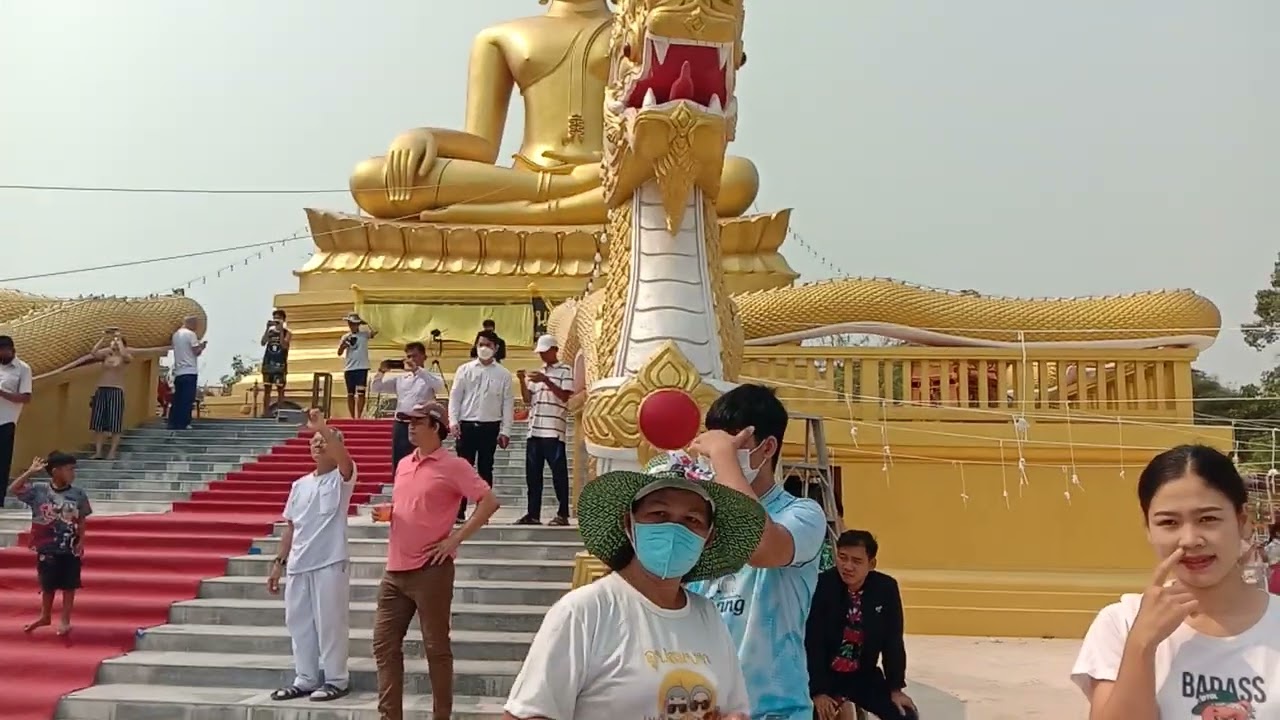
 Click to Access the Navigation Map GPS
Wat Mueang Suang Yai Map
Recommend

 Art, Culture and Heritage
 Historical Sites and Monuments(3)
 Landmarks and Memorials(5)
 Art, Craft Centres, Tradition(2)
 Museums(1)
 Educational Places
 Educational Gardens, Farm(3)
Temple(35)
Educational Gardens, Farm(3)
Temple(35)
 Other Sacred Sites(6)
 Suburban Living
 Village, Community(1)
 Local Market(1)
 Nature and Wildlife
 National Parks and Marine Reserves(1)
 Mountain (Doi)(2)
 Dam, Reservoir, Lake(8)
 Waterfalls(1)
 Flower Field(1)
 River, Canal(4)
 Entertainment and Agricultural
 Zoos and Aquariums(1)
 Stadium(1)
 Farms, Parks and Ecotourism(5)
 Shopping
 Shopping and Night Market(1)


