
lovethailand home >Northeastern Travel Attractions >Roi Et Travel Attractions >Muang Roi Et >Nai Muang > Wat Nuea
TL;DR: Wat Nuea is located at Phadung Phanit Road, Nai Mueang Subdistrict, Mueang Roi Et District, Roi Et Province, open Daily, hours 08.00 – 17.00.
Wat Nuea
Open Days: Daily
Opening Hours: 08.00 – 17.00
Wat Nuea in Roi Et is located on Phadung Phanit Road in Nai Mueang Subdistrict, Mueang Roi Et District, Roi Et Province. It is one of the oldest and most historically meaningful temples in Roi Et. The temple stands in the old quarter of the city, on a raised mound known as Non Wat Nuea. This location is important because the area contains evidence suggesting that it may once have been an early center of an ancient community before Roi Et developed into the later historic city. Wat Nuea is therefore not only a place of Buddhist worship; it is also a cultural landscape that preserves ancient inscriptions, boundary stones, an old stupa, an Isan-style sim, and the memory of the city’s earliest settlement.
Local people in Roi Et have long repeated the saying “Wat Nuea Phrom Ban, Wat Klang Phrom Mueang,” often understood as “Wat Nuea was with the village, Wat Klang was with the city.” Another common form is “Wat Nuea Khu Ban, Wat Klang Khu Mueang,” meaning Wat Nuea belongs to the village and Wat Klang belongs to the city. This saying is important because it places Wat Nuea in the earliest phase of local settlement, when Roi Et was still a small village known as Ban Kum Hang. Wat Klang Ming Mueang, by contrast, is associated with the later period when the settlement had grown into the more developed city of Saket Nakhon.
The temple’s position on a high mound gives it special historical significance. In old communities, elevated ground was often important because it was safer from flooding, easier to identify, and suitable for sacred or public use. Wat Nuea’s position on Non Wat Nuea suggests that this area may have served as an important center in the early settlement of Roi Et. When combined with archaeological and artistic evidence found in and around the temple, the site becomes highly valuable for understanding the roots of Roi Et city.
Temple records identify Wat Nuea as having been established in 1805. However, local memory and archaeological evidence indicate that the area had religious and cultural importance before that date. Ancient stone objects, Dvaravati-style boundary stones, and laterite or stone evidence suggest deeper layers of history. This means that Wat Nuea should be understood as a layered site, where ancient community belief, Dvaravati Buddhist culture, Lan Xang influence, and modern temple life all exist together in one place.
One of the most important objects associated with Wat Nuea is an ancient stone pillar discovered on August 29, 1985, near Khum Sa Hang on Sena Roem Khit Road. The pillar is made of laterite or stone, with an octagonal form and a height of about 1.5 meters. Its form has been compared with a linga-like object in Brahmanical tradition, while its base has lotus-like molding. The pillar bears an inscription in Pallava script from southern India, linked with the Dvaravati period in Thailand. The inscription contains a term connected with merit, indicating a sacred or meritorious construction.
This stone pillar is extremely important because it reveals the older cultural world behind Roi Et. The presence of Pallava script shows that the region received religious and cultural influence from the Indianized world and from early Buddhist networks. It also suggests that the area was part of a broader pattern of sacred-space marking in ancient northeastern Thailand. For visitors interested in history, the stone pillar at Wat Nuea is not just an isolated object; it is evidence of Roi Et’s connection with early Southeast Asian civilization.
Behind the temple’s ordination hall stands a large stupa with a square lotus-bud form influenced by Lan Xang or Lao art. It is estimated to date to around the 24th–25th Buddhist centuries. The stupa is made of brick. The inner section uses larger bricks, while the outer section uses smaller bricks and was later covered with plaster. The present form has been repaired and altered over time, but the stupa remains an important sign of continuing Buddhist faith at the site.
In the past, during the Bun Bang Fai rocket festival, Roi Et townspeople brought ceremonial rocket processions to circumambulate the stupa at Wat Nuea for auspiciousness. This custom shows the relationship between Buddhism, agricultural belief, rain-seeking ritual, and community life in Isan. Bun Bang Fai was not only a festive event. It was connected with fertility, rain, farming, and sacred power. The procession around the stupa placed Wat Nuea at the center of local ritual life.
Another important set of evidence is the Dvaravati-style sandstone boundary stones that were found buried around the stupa. In Buddhist culture, boundary stones mark sacred space and are associated with religious practice and monastic ceremony. Their presence around the stupa suggests that the Wat Nuea area was already sacred in ancient times. These stones connect the present temple with the Dvaravati Buddhist tradition and make the site valuable for the study of ancient Buddhist communities in northeastern Thailand.
Wat Nuea also preserves an old Isan-style sim, or ordination hall, estimated to be about 200 years old and influenced by Lan Xang art. A sim is the local Isan term for an ordination hall. The sim at Wat Nuea is described as a maha-ut type, meaning a closed form with low proportions, solid walls, and closed windows. This style is now rare because many temples have replaced older ordination halls with modern buildings. The survival of the sim at Wat Nuea makes the temple especially valuable for the study of local Buddhist architecture.
The maha-ut sim has both architectural and symbolic value. Its closed walls and compact form create a quiet, inward atmosphere suitable for sacred ritual. Unlike large modern ubosot buildings, an old Isan sim is closer to human scale and reflects the needs of a local community. Its modest proportions reveal the practical and spiritual world of village Buddhist architecture. Visitors should look carefully at its form, mass, and relationship with the surrounding temple space.
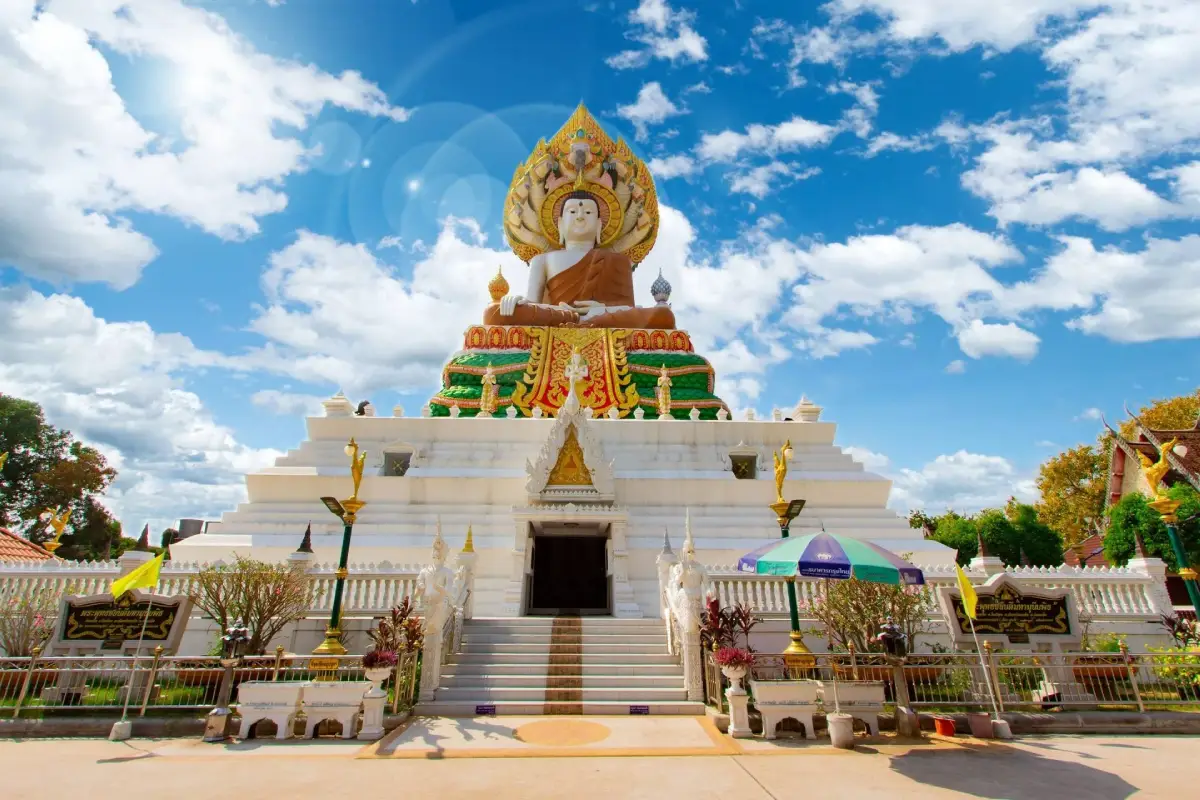
Inside the temple grounds, visitors can also see Buddhist images, temple halls, a courtyard, and spaces for worship. One notable feature is the Buddha image in the naga-protected posture within the temple area. The ancient stone pillar is also displayed for study. Together with the old sim and stupa, these features make Wat Nuea a walkable heritage site where visitors can learn through direct observation rather than only reading about history.
Artistically, Wat Nuea brings together several layers of cultural influence. Dvaravati culture appears through the inscription and boundary stones. Lan Xang influence appears through the stupa and the old sim. Local Isan Buddhist tradition appears through the temple layout, ritual memory, and community use. The temple is therefore not a single-period monument. It is a place where many historical layers remain visible in one small city site.
The temple’s location on Phadung Phanit Road is also important. This road passes through the old part of Roi Et city and connects Wat Nuea with several key attractions, including Wat Buraphaphiram, Wat Sra Thong, Wat Klang Ming Mueang, Bueng Phlan Chai, and Ho Wot 101 Tower. Because of this location, Wat Nuea is an excellent starting point for travelers who want to understand Roi Et from its historical roots before continuing to later temples and modern landmarks.
Wat Nuea is suitable for visitors interested in local history, Isan architecture, archaeology, and the relationship between temples and old urban communities. A short visit may be enough for ordinary worship, but travelers interested in cultural detail should take more time. The ancient stone pillar, the old sim, the Lan Xang-style stupa, and the temple’s raised position all deserve careful attention. Slow observation reveals why Wat Nuea is more than an old temple; it is a key to understanding early Roi Et.
The saying about Wat Nuea and Wat Klang remains an important part of local historical memory. It is not only a phrase. It is a way for Roi Et people to explain how their city developed. Wat Nuea represents the earlier village stage, while Wat Klang Ming Mueang represents the later city stage. Visiting both temples gives travelers a clear sense of how local memory organizes the history of Roi Et from settlement to city.
Wat Nuea is also an important conservation site. Ancient objects such as the stone pillar, inscription, boundary stones, stupa, and old sim have survived for a long time and require careful treatment. Visitors should not touch, scratch, lean on, climb, or place objects on ancient remains. The temple is a living Buddhist place and a heritage site at the same time. Respectful behavior helps preserve it for local people and future visitors.
The temple is open daily from 08.00 to 17.00. Morning and early afternoon are the most suitable times to visit because the weather is more comfortable and the outdoor heritage features are easier to view. Since Wat Nuea is located in the city, it can easily be combined with nearby attractions in a half-day itinerary. Visitors can walk or take local transport between several old city temples and landmarks.
Getting There is convenient because Wat Nuea is located on Phadung Phanit Road in central Roi Et. Visitors with private cars can navigate directly to Wat Nuea or use Wat Buraphaphiram, Bueng Phlan Chai, and Phadung Phanit Road as nearby reference points. Travelers arriving at Roi Et Bus Terminal can continue by tuk-tuk, local taxi, or city transport. The temple is close to several major attractions, making it practical for a connected city route.
A useful cultural route can begin at Wat Nuea to understand the early roots of Roi Et, then continue to Wat Buraphaphiram to worship Luang Pho Yai, Wat Sra Thong to pay respect to Luang Pho Phra Sangkachai, Wat Klang Ming Mueang for old temple art and city memory, Bueng Phlan Chai for the central lake, Ho Wot 101 Tower for city views, and Roi Et National Museum for a broader historical overview. This route gives visitors a balanced picture of Roi Et through ancient evidence, Buddhist faith, civic memory, and modern identity.
There is no ticketed admission system for Wat Nuea. Visitors can enter the temple during opening hours, pay respect, walk around the main areas, and make merit according to personal faith. Because the temple contains ancient evidence, visitors should dress respectfully, remain quiet, and avoid touching old objects. The stone pillar, boundary stones, old sim, and stupa are especially important and should be treated with care.
For families and students, Wat Nuea is a valuable outdoor classroom. Children can learn how Roi Et grew from an early community, what a stone inscription is, what boundary stones mean, why a stupa matters, and how old temples preserve local memory. Learning at the actual site makes history easier to understand than studying it only from books. The temple allows visitors to see ancient objects, Buddhist architecture, and urban history in one place.
For foreign travelers, Wat Nuea is a strong example of an old Isan city temple with deeper historical layers than its modest appearance might suggest. It shows that Buddhist sacred spaces in Thailand often developed through many cultural periods. Dvaravati evidence, Pallava script, Lan Xang artistic influence, local Isan architecture, and modern community Buddhism all remain connected here. For travelers interested in Thai culture beyond large landmarks, Wat Nuea is one of Roi Et’s most meaningful places.
Overall, Wat Nuea in Roi Et is an essential cultural and historical temple in the old city area. Its main highlights include its role as one of Roi Et’s oldest temples, its raised location on Non Wat Nuea, the ancient Pallava-script stone pillar, Dvaravati boundary stones, Lan Xang-style lotus-bud stupa, old maha-ut Isan sim, and the local saying that Wat Nuea belonged to the village while Wat Klang belonged to the city. The temple tells the story of Roi Et through faith, archaeology, architecture, landscape, and local memory.
| Name | Wat Nuea, Roi Et |
| Temple Type | Local Buddhist Temple In The Old City Area And Important Conserved Art Site Of Roi Et Province |
| Location | Phadung Phanit Road, Nai Mueang Subdistrict, Mueang Roi Et District, Roi Et Province |
| Address | Wat Nuea, Phadung Phanit Road, Nai Mueang Subdistrict, Mueang Roi Et District, Roi Et 45000, Thailand |
| Highlights | Old temple in Roi Et’s historic quarter, Non Wat Nuea mound, ancient Pallava-script stone pillar, Dvaravati boundary stones, Lan Xang-style lotus-bud stupa, old maha-ut Isan sim, and the local saying that Wat Nuea belonged to the village while Wat Klang belonged to the city |
| History | Wat Nuea is an old temple of Roi Et located on a high mound in the old city area. Local memory connects it with the early village stage of Roi Et, known as Ban Kum Hang, before the later development of Saket Nakhon. |
| Recorded Establishment Year | 1805 |
| Name And Local Meaning | The temple name is connected with its position in the old city landscape. Local tradition places Wat Nuea in the early village phase of Roi Et, before Wat Klang emerged in the more developed city phase. |
| Key Archaeological Evidence | An octagonal ancient stone pillar with Pallava script from southern India, associated with the Dvaravati period, and Dvaravati-style sandstone boundary stones found around the stupa |
| Important Stupa | A large lotus-bud stupa behind the ordination hall, influenced by Lan Xang art and estimated to date to around the 24th–25th Buddhist centuries |
| Old Sim / Ubosot | An old Isan-style sim, about 200 years old, influenced by Lan Xang art. It is a maha-ut type with low proportions, solid walls, and closed windows. |
| Historical Importance | A site that reflects the early roots of Roi Et, from Ban Kum Hang and Dvaravati evidence to Lan Xang influence and the later development of Saket Nakhon |
| Artistic Value | Important for Isan sim architecture, Lan Xang-style stupa art, Dvaravati boundary stones, ancient inscription evidence, and the old temple landscape of Roi Et |
| Temple Area | About 9 rai |
| Travel Information | Located on Phadung Phanit Road in central Roi Et. Visitors can travel by private car, tuk-tuk, local taxi, or city transport from Roi Et Bus Terminal. |
| Current Status | Open as a community Buddhist temple, worship site, and learning place for Roi Et old-city history, Isan sim architecture, Lan Xang stupa art, and archaeological evidence |
| Open Days | Daily |
| Opening Hours | 08.00 – 17.00 |
| Facilities | Temple courtyard, parking area, worship areas, ordination hall, vihara, stupa, ancient stone pillar, old sim study area, and nearby restaurants along Phadung Phanit Road and central Roi Et |
| Main Areas / Zones | 1. Non Wat Nuea Mound 2. Ordination Hall And Worship Area 3. Old Maha-Ut Isan Sim 4. Ancient Pallava-Script Stone Pillar 5. Lan Xang-Style Lotus-Bud Stupa 6. Dvaravati Boundary Stone Area 7. Buddha Image In The Naga-Protected Posture 8. Gallery Walkway And Temple Courtyard 9. Monastic And Religious Activity Area 10. Old City Route Connected With Phadung Phanit Road |
| Related Traditions / Beliefs | In the past, during the Bun Bang Fai rocket festival, Roi Et townspeople brought rocket processions to circumambulate the stupa at Wat Nuea for auspiciousness. |
| Caretaker / Responsible Body | Wat Nuea, Nai Mueang Subdistrict, Mueang Roi Et District, Roi Et Province |
| Public Contact Number | 098-653-3749 |
| Nearby Tourist Attractions | 1. Wat Buraphaphiram, about 0.5 km, Tel. 043-511374 2. Wat Sra Thong, about 0.8 km 3. Wat Klang Ming Mueang, about 1 km, Tel. 043-512400 4. Bueng Phlan Chai, about 1 km 5. Ho Wot 101 Tower, about 1 km, Tel. 043-511222 6. Roi Et National Museum, about 1.2 km, Tel. 043-514456 Ext. 101 7. Wat Bueng Phra Lan Chai, about 1.5 km, Tel. 043-511190 8. Roi Et City Pillar Shrine, about 1.5 km |
| Nearby Restaurants | 1. Natsha Pla Kai Yang Chao Kao Na Wat Nuea, about 0.1 km, Tel. 096-791-6455 2. Poon Cafe, Phadung Phanit Road, about 0.5 km, Tel. 085-885-1609 3. Zaep Laeo No, Phadung Phanit Soi 10, about 0.8 km, Tel. 080-618-6428, 099-468-1672 4. Sathani Yam Zaep, Phadung Phanit Road, about 1 km, Tel. 091-741-7128, 065-123-9165 5. Bible Khao Niao Kho Mu Yang, Thewapiban Soi 15, about 1.5 km, Tel. 095-336-6457, 080-838-1121 6. Lakeview Restaurant, about 2 km, Tel. 093-320-8126 |
| Nearby Accommodations | 1. Rueanrimnam Hotel, about 0.8 km, Tel. 043-518-967 2. 101 Hotel Roi Et, about 1 km, Tel. 043-513-999, 065-119-6999 3. The Bed Hotel 101, about 1.5 km, Tel. 043-032-142 4. HOP INN Roi Et, about 2 km, Tel. 02-080-2222 5. The Rice Hotel, about 3 km, Tel. 043-519-999 6. Le Park 23 Boutique Resort, about 3 km, Tel. 043-513-444 |
Frequently Asked Questions (FAQ)
Q: Where is Wat Nuea located?
A: Wat Nuea is located on Phadung Phanit Road in Nai Mueang Subdistrict, Mueang Roi Et District, Roi Et Province. It is in Roi Et’s old city area, near Wat Buraphaphiram, Bueng Phlan Chai, Ho Wot 101 Tower, and Wat Klang Ming Mueang.
Q: What are the opening days and hours?
A: Wat Nuea is open daily from 08.00 to 17.00.
Q: Is there an admission fee?
A: There is no ticketed admission system. Visitors can enter the temple, pay respect, and walk around the main areas during opening hours. Merit-making can be done according to personal faith.
Q: What is the main highlight of Wat Nuea?
A: The main highlights are its status as an old temple of Roi Et, the ancient Pallava-script stone pillar, Dvaravati boundary stones, Lan Xang-style lotus-bud stupa, and old maha-ut Isan sim.
Q: What does the saying about Wat Nuea and Wat Klang mean?
A: It means that Wat Nuea is associated with the early village phase of Roi Et, known as Ban Kum Hang, while Wat Klang is associated with the later city phase of Saket Nakhon.
Q: Why is the ancient stone pillar at Wat Nuea important?
A: The stone pillar is important because it bears Pallava script linked with the Dvaravati period and reflects the area’s role as an ancient sacred space connected with early Buddhist and Indianized cultural influence.
Q: What areas should visitors see inside the temple?
A: Visitors should see the ordination hall, old maha-ut Isan sim, ancient stone pillar, Lan Xang-style stupa, Dvaravati boundary stone area, naga-protected Buddha image, gallery walkway, and temple courtyard.
Q: What nearby attractions can be combined with a visit?
A: Nearby attractions include Wat Buraphaphiram, Wat Sra Thong, Wat Klang Ming Mueang, Bueng Phlan Chai, Ho Wot 101 Tower, Roi Et National Museum, Wat Bueng Phra Lan Chai, and Roi Et City Pillar Shrine.
 Category: ●Places of Worship
 Group: ●Temple
Last Update : 4 WeekAgo
 Last Update : 4 WeekAgo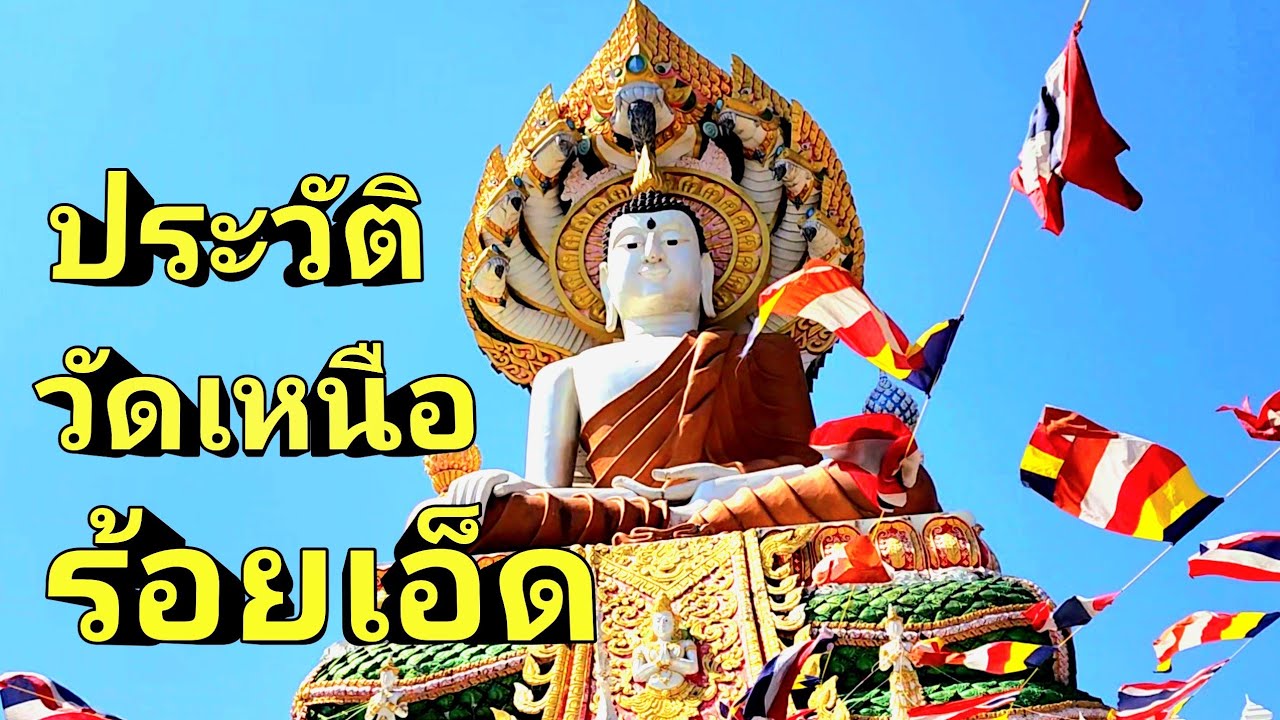
 Click to Access the Navigation Map GPS
 Art, Culture and Heritage
 Historical Sites and Monuments(3)
 Landmarks and Memorials(5)
 Art, Craft Centres, Tradition(2)
 Museums(1)
 Educational Places
 Educational Gardens, Farm(3)
Temple(35)
Educational Gardens, Farm(3)
Temple(35)
 Other Sacred Sites(6)
 Suburban Living
 Village, Community(1)
 Local Market(1)
 Nature and Wildlife
 National Parks and Marine Reserves(1)
 Mountain (Doi)(2)
 Dam, Reservoir, Lake(8)
 Waterfalls(1)
 Flower Field(1)
 River, Canal(4)
 Entertainment and Agricultural
 Zoos and Aquariums(1)
 Stadium(1)
 Farms, Parks and Ecotourism(5)
 Shopping
 Shopping and Night Market(1)


