
lovethailand home >Northeastern Travel Attractions >Roi Et Travel Attractions >Thawatshaburi >Ni Wet > Wat Pratu Chai (Ban Kham Hai)
TL;DR: Wat Pratu Chai (Ban Kham Hai) is located at Ban Pratu Chai, Chaeng Sanit Road, Moo 7, Niwet Subdistrict, Thawat Buri District, Roi Et Province, open Daily, hours 08.00 – 17.00.
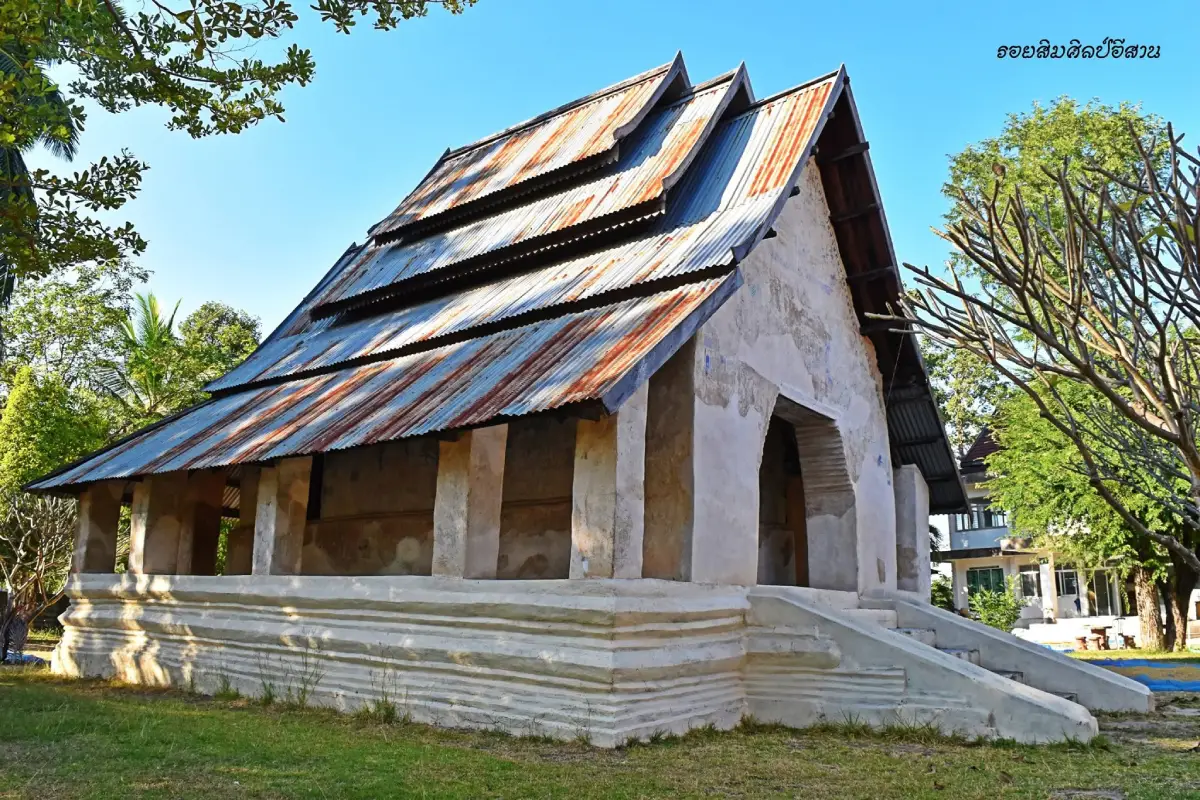
Wat Pratu Chai (Ban Kham Hai)
Open Days: Daily
Opening Hours: 08.00 – 17.00
Wat Pratu Chai (Ban Kham Hai) in Roi Et is located in Ban Pratu Chai, along Chaeng Sanit Road, Moo 7, Niwet Subdistrict, Thawat Buri District, Roi Et Province. It is a local Buddhist temple under the Maha Nikaya order and one of the most important heritage temples for understanding traditional Isan architecture and mural painting in Roi Et. The temple was formerly known as Wat Ban Kham Hai. It was established around 1898 and received its consecrated boundary on June 10, 1982. Its greatest highlight is the historic sim, or Isan-style ordination hall, which has been registered as a national ancient monument and preserves murals on both exterior and interior walls.
Wat Pratu Chai is more than an ordinary village temple. Its old sim is a major example of local Isan craftsmanship from the early twentieth century. The building is not large, but its value comes from its form, high base, surrounding veranda, layered roof, local Buddha image, and extensive murals. Visitors who come here can see how a village temple served as a place of worship, a moral classroom, a space for storytelling, and a record of community imagination. For travelers interested in Thai art beyond large royal temples, Wat Pratu Chai is a deeply meaningful destination.
The temple name Pratu Chai means Gate of Victory and is connected with Ban Pratu Chai village. Its former name, Wat Ban Kham Hai, preserves the older identity of the local community. This change of name reflects the development of the village and the temple over time. The temple therefore helps visitors understand the connection between settlement, road networks, village identity, and Buddhism in the area around Roi Et city. It is a community temple that carries both religious and historical memory.
The temple is located on Chaeng Sanit Road, an important route connecting Roi Et city with Thawat Buri District and nearby communities. Niwet Subdistrict is about 7–8 kilometers from Roi Et city and about 4 kilometers from Thawat Buri District center. This makes Wat Pratu Chai convenient for a half-day cultural trip from central Roi Et. It can be combined with other heritage sites, especially those related to Isan sim architecture and mural painting, such as Wat Klang Ming Mueang, Wat Khon Kaen Nuea, Wat Nuea, and Wat Traiphum Khanachan.
The temple land covers 7 rai, 3 ngan, and 20 square wah, with an additional monastic land plot of 1 ngan and 60 square wah. Within the compound are religious and community structures such as the old sim, ubosot area, sermon hall, monks’ residence, funeral hall, temple courtyard, and merit-making spaces. This shows that Wat Pratu Chai continues to function as a living temple while also preserving a protected historic monument. It serves monks, laypeople, visitors, and students of local art at the same time.
The history of the sim is especially important. The original sim is believed to have been built of wood. Around 1918, it was rebuilt as a brick-and-mortar structure on a high base, with a surrounding walkway and a layered gabled roof. The original roofing material was wooden shingles, locally known as paen klet, before it was later replaced with corrugated metal. This change in roofing material shows how the building adapted over time while keeping the main structure and character of a traditional Isan sim.
The sim of Wat Pratu Chai is a local Isan-style building constructed in a rectangular plan and facing east. It stands on a high base and is divided into 2 main functional areas: the inner room housing the Buddha image and the surrounding veranda. The Buddha-image room is rectangular and divided into 2 bays, with 2 windows on each side. The entrance is at the center of the eastern wall, approached by steps from outside. This raised plan gives the building a sense of sacred separation from ordinary ground level.
The central part of the building uses walls and pillars to support a three-tiered gabled roof, while the veranda uses square pillars to support side roofing that extends over three sides, except the west. The form creates a compact but elegant silhouette. The high base, layered roof, veranda, and east-facing entrance make the sim visually distinctive within the temple compound. Its architecture expresses both practical building technique and religious dignity in a local Isan idiom.
The principal Buddha image inside the sim is in the posture of subduing Mara. It is made of molded plaster in a local Isan artisan style and is enshrined on a raised altar base. The image has a rounded face, small pointed hair curls resembling jackfruit thorns, a tall conical flame, large ears, open eyes, connected arched eyebrows, a broad nose, thick lips with a gentle smile, and a robe worn in the hom dong style. These features reflect a local devotional aesthetic rather than formal court-style realism.
The posture of subduing Mara is highly meaningful in Buddhism. It represents the Buddha’s victory over temptation and inner obstacles before enlightenment. In Wat Pratu Chai, this meaning resonates with the word chai, or victory, in the temple name. Visitors can understand victory here not as military success, but as the spiritual victory of mindfulness, wisdom, moral strength, and perseverance. The principal Buddha image therefore gives the sim both artistic and doctrinal depth.
The most famous feature of Wat Pratu Chai is its mural painting, or hup taem, which covers both exterior and interior walls. The exterior murals include the Vessantara Jataka, the local literary story of Sinxay, the Buddhist cosmology of Traiphum, Phra Malai, and other Buddhist narratives. The interior murals include rows of former Buddhas, Maitreya, and standing Buddha images behind the principal Buddha image. Together, the murals turn the sim into a complete visual scripture of village Buddhism.
The exterior murals are especially important because they made religious stories visible to everyone in the community. Unlike murals painted only inside a hall, exterior hup taem allowed villagers to learn Buddhist stories even without entering the building. In the past, when literacy was not universal, temple wall paintings served as a public classroom. People could learn about merit, sin, generosity, rebirth, heaven, hell, and moral conduct through images on the sim wall.
The Vessantara Jataka is one of the key stories in the murals. It tells of the Buddha-to-be in his final birth before becoming Gautama Buddha, emphasizing the perfection of generosity. In Isan culture, this story is strongly connected with Bun Phawet, or the Mahachat merit-making tradition. Its presence on the walls of Wat Pratu Chai links the temple directly with local ritual life. The murals therefore connect scripture, annual festival, and community morality.
The story of Sinxay, also known as Sangkha Sinxay, gives the murals a distinctly Isan and Lao cultural identity. Sinxay is an important local literary work in the Mekong cultural world, involving virtue, courage, adventure, and the restoration of justice. Its appearance on the temple wall shows that local literature and Buddhism were not separated. Sacred Buddhist themes and local storytelling could exist together in the same religious space, creating a visual world that villagers understood deeply.
The Traiphum scenes explain the Buddhist universe through images of different realms connected with karma. Such images helped people understand the consequences of good and bad actions. They made abstract ideas such as rebirth, heaven, hell, and moral causality visible. In a village temple, this was a powerful teaching tool. The wall itself became a form of Dhamma instruction.
The Phra Malai story also appears in the mural tradition of the sim. Phra Malai is a Buddhist literary figure who travels to hell and heaven and reports the consequences of karma. The story was popular in Thai and Isan Buddhist culture because it encouraged people to make merit, avoid wrongdoing, and remember the impermanence of life. At Wat Pratu Chai, the Phra Malai scenes help the murals function as moral teaching for the community.
Inside the sim, the murals depict former Buddhas and Maitreya seated in 2 rows. Behind the principal Buddha image are 4 standing Buddha images. These scenes expand the Buddhist time scale beyond the present Buddha. They remind visitors of past Buddhas and the future Buddha, suggesting the continuity of Dhamma across time. This gives the interior space a contemplative atmosphere focused on faith, memory, and future hope.
The front gable contains a painting of deities paying homage to 2 relic stupas. This image is symbolic and powerful. Relics represent the presence and memory of the Buddha after his passing into final nirvana. Deities honoring relics show that the Buddha is revered not only by humans but also by celestial beings. The gable image prepares visitors to enter a sacred space before they step into the sim.
The mural painters are recorded as Nai Si Samut and Nai Sui Sumamat, who painted the murals in 1918. The presence of named painters is important because it allows the community to remember the local artisans who created this heritage. Isan mural painting was not anonymous in spirit; it came from skilled local painters who knew Buddhist stories, village literature, composition, and the visual language of the community. Their work remains central to the temple’s identity.
The murals of Wat Pratu Chai belong to the broader group of Isan mural paintings created before 1957, in the same cultural period as murals at Wat Klang Ming Mueang, Wat Traiphum Khanachan, Wat Chakkrawan Phum Phinit, Wat Khon Kaen Nuea, and Wat Malaphirom. These murals show the real character of local Isan art: direct storytelling, lively figures, local humor, strong color, and a close connection between Buddhist narrative and everyday village imagination.
The Fine Arts Department registered and designated the protected ancient monument area of Wat Pratu Chai in the Royal Gazette on January 14, 1998. The protected ancient monument area covers about 1 rai, 2 ngan, and 92.13 square wah. This registration confirms the national importance of the sim. It also means that damage, encroachment, or destruction of the ancient monument is a legal offense. The temple is therefore both a community sacred space and a protected national heritage site.
The sim underwent significant restoration after registration, during 2001–2002. Restoration was necessary to preserve the structure, murals, and architectural character. Restoring a mural-covered sim requires great care because inappropriate changes to surface, material, color, roof, or wall treatment can damage original heritage value. Wat Pratu Chai reminds visitors that old temples need continuous care, not only admiration.
Another important cultural object at the temple is the hong hot, a carved wooden naga-shaped water channel used in the ritual bathing of monks. Water is poured through the channel and flows toward the body of the monk during the ceremony. The lower stand is carved in the form of a crouching lion. This object reflects local Isan ritual culture, where water, naga symbolism, monastic respect, and seasonal ceremonies are connected.
The naga form of the hong hot is significant in Isan and Mekong Buddhist culture. The naga is linked with water, fertility, sacred protection, and the guardianship of Buddhism. Carving the water channel as a naga gives ritual water a sacred visual identity. The hong hot at Wat Pratu Chai is therefore not merely a utilitarian object. It is a ritual artifact that deserves attention alongside the sim and mural paintings.
The sermon hall measures about 15 meters wide and 32 meters long and was built in 1987. It supports Dhamma listening, merit-making, funerals, community meetings, and Buddhist activities. This hall shows that Wat Pratu Chai is not only a place to preserve an old sim. It remains an active temple serving the religious and social needs of the Ban Pratu Chai community and Niwet Subdistrict.
The monks’ residence and funeral hall also reflect the temple’s community role. The monks’ residence supports monastic life, while the funeral hall supports families during important life-cycle rituals. Thai community temples serve people throughout life, from ordinary merit-making and annual festivals to funerals and memorial ceremonies. Wat Pratu Chai continues to perform this role while preserving its nationally important ancient monument.
Wat Pratu Chai remains active today. Recent temple activity information records about 5 resident monks and identifies Phra Khru Palat Warakon Pariyattimedhi as the abbot. This confirms that the temple is not an abandoned heritage site. It is a living monastery where monks reside, Buddhist ceremonies are performed, laypeople make merit, and visitors come to study the historic sim and murals.
A meaningful visit should focus first on the old sim. Visitors should walk slowly around the building, observing the high base, surrounding veranda, entrance steps, layered roof, and exterior murals. After that, they should consider the relationship between exterior stories and interior paintings. This approach helps visitors understand the sim as architecture, religious space, storytelling surface, and protected ancient monument all at once.
Visitors interested in mural painting should take enough time to observe each subject carefully: the Vessantara Jataka, Sinxay, Traiphum, Phra Malai, former Buddhas, Maitreya, and deities paying homage to relic stupas. These murals should be read not only as religious stories but also as visual records of local imagination. Isan painters often inserted human gestures, local feeling, costume, and village humor into sacred stories, making the murals lively and accessible.
Wat Pratu Chai is especially suitable for comparison with other mural and sim heritage sites in Roi Et. Wat Klang Ming Mueang is known for its old ubosot and city memory. Wat Khon Kaen Nuea is known for a compact Isan sim and Tai Noi inscription. Wat Nuea preserves ancient community evidence and an old sim. Wat Pratu Chai stands out because of its extensive exterior and interior murals, including religious stories and local literature. Together, these temples form an important Roi Et art route.
Niwet Subdistrict and Thawat Buri District offer a useful context for understanding the temple. The area is near Roi Et city but still has the atmosphere of a surrounding local community. A trip from Roi Et city to Wat Pratu Chai allows visitors to see the transition from urban landmarks to village heritage along Chaeng Sanit Road. This makes the temple suitable for slow cultural travel rather than hurried sightseeing.
Getting There from Roi Et city is convenient. Travel along Chaeng Sanit Road toward Thawat Buri District, then enter Niwet Subdistrict and Ban Pratu Chai. The temple is about 10–12 kilometers from the Bueng Phlan Chai and Ho Wot 101 area by road. Visitors can use the coordinates 16.0428961036, 103.744682829 as a navigation reference. Private car travel is the most convenient option, especially for combining the temple with Prang Ku Thawat Buri, Wat Traiphum Khanachan, and central Roi Et attractions.
Visitors without private vehicles can travel from Roi Et Bus Terminal or central Roi Et by hired local transport, tuk-tuk, or taxi to Ban Pratu Chai in Niwet Subdistrict. Hired transport is practical because the driver can wait and return visitors to the city or continue to other nearby sites in Thawat Buri District. From the temple, travelers can return to Bueng Phlan Chai, Ho Wot 101 Tower, Wat Buraphaphiram, or Roi Et National Museum without difficulty.
The best time to visit is in the morning or early afternoon, when natural light makes the murals and architecture easier to view. The temple is open daily from 08.00 to 17.00. Visitors should allow at least 1 hour for a careful visit. Students, art historians, architects, and travelers interested in Isan mural painting should allow more time to read the images and observe the architectural details.
There is no ticketed admission system. Visitors can enter during opening hours, pay respect, walk around the temple, and make donations according to personal faith. Because the sim is a registered ancient monument, visitors should dress respectfully, remain quiet, avoid touching mural surfaces, avoid leaning on the walls, avoid close flash photography, and never move objects inside the sim or ancient monument area.
The most important rule is to treat the sim as protected heritage. Scratching, writing, touching, or damaging the structure or murals is both disrespectful and legally serious. Families with children should explain that the walls and paintings are more than 100 years old and must not be touched. Careful behavior helps preserve the site for the Ban Pratu Chai community and future visitors.
For families, Wat Pratu Chai is an excellent outdoor classroom. Children can learn what an Isan sim is, how mural painting teaches Buddhist stories, why the Vessantara Jataka is important, what the story of Sinxay means, and why the Fine Arts Department protects ancient monuments. Learning at the real site makes art, religion, and local history clearer than learning from books alone.
For foreign travelers, Wat Pratu Chai is a strong example of a small community temple with major artistic value. The sim is modest in size, but it contains architecture, murals, literature, ritual objects, and community memory in one space. It shows that Thai Buddhist heritage is not found only in large golden temples or famous city landmarks. Sometimes the most meaningful heritage survives in village monasteries with painted walls and deeply local stories.
Overall, Wat Pratu Chai (Ban Kham Hai) is one of Roi Et’s essential destinations for cultural and religious travel. Its main highlights include the Isan-style sim rebuilt in brick and mortar around 1918, extensive interior and exterior murals of the Vessantara Jataka, Sinxay, Traiphum, Phra Malai, former Buddhas, Maitreya, and deities worshipping relic stupas, the registration of the ancient monument on January 14, 1998, and the temple’s continuing role as the spiritual center of Ban Pratu Chai. The temple tells the story of Roi Et through architecture, mural painting, local literature, Buddhist ritual, and heritage conservation.
| Name | Wat Pratu Chai (Ban Kham Hai), Roi Et |
| Former Name | Wat Ban Kham Hai |
| Temple Type | Local Buddhist Temple, Maha Nikaya Order, And Registered National Ancient Monument With An Isan-Style Sim |
| Location | Ban Pratu Chai, Chaeng Sanit Road, Moo 7, Niwet Subdistrict, Thawat Buri District, Roi Et Province |
| Address | Wat Pratu Chai, Ban Pratu Chai, Chaeng Sanit Road, Moo 7, Niwet Subdistrict, Thawat Buri District, Roi Et 45170, Thailand |
| Coordinates | 16.0428961036, 103.744682829 |
| Highlights | Isan-style sim, interior and exterior hup taem murals, Vessantara Jataka, Sinxay, Traiphum, Phra Malai, former Buddhas, Maitreya, local Isan-style Buddha image in the posture of subduing Mara, and a carved naga-shaped hong hot ritual water channel |
| History | Established around 1898 under the former name Wat Ban Kham Hai. The temple received its consecrated boundary on June 10, 1982. The original sim is believed to have been wooden before being rebuilt as a brick-and-mortar structure around 1918. |
| Temple Area | 7 rai, 3 ngan, and 20 square wah, with 1 additional monastic land plot of 1 ngan and 60 square wah |
| Consecrated Boundary | 20 meters wide and 40 meters long |
| Important Sim / Ancient Monument | A local Isan-style brick-and-mortar sim in a rectangular plan, facing east, standing on a high base, with a surrounding veranda, a three-tiered gabled central roof, and an original wooden-shingle roof tradition |
| Ancient Monument Registration | The Fine Arts Department registered and designated the ancient monument boundary of Wat Pratu Chai in the Royal Gazette on January 14, 1998. The protected area covers about 1 rai, 2 ngan, and 92.13 square wah. |
| Restoration | The sim underwent significant restoration during 2001–2002 after its ancient monument registration, preserving the Isan-style structure and mural paintings. |
| Principal Buddha Image | A local Isan-style molded plaster Buddha image in the posture of subduing Mara, enshrined on the altar base inside the sim |
| Murals / Hup Taem | Interior and exterior walls are fully painted with local Isan-style murals by Nai Si Samut and Nai Sui Sumamat in 1918. Exterior subjects include Vessantara Jataka, Phra Malai, Sangkha Sinxay, Traiphum, and Buddhist stories. Interior subjects include former Buddhas, Maitreya, and standing Buddha images. |
| Gable Painting | The gable depicts deities paying homage to 2 relic stupas, symbolizing reverence for the Buddha and sacred relics. |
| Important Cultural Object | Hong hot, a carved wooden naga-shaped water channel used in ritual bathing of monks, with a crouching lion form at the lower support |
| Important Structures | Historic sim, ubosot area, sermon hall, monks’ residence, funeral hall, temple courtyard, and community merit-making areas |
| Sermon Hall | About 15 meters wide and 32 meters long, built in 1987 for Dhamma listening, merit-making, and community activities |
| Artistic Importance | An important example of Isan sim architecture, pre-1957 local mural painting, village craftsmanship, Sinxay literature, Vessantara Jataka, Traiphum cosmology, Phra Malai tradition, and visual Buddhist storytelling on temple walls |
| Travel Information | From Roi Et city, travel along Chaeng Sanit Road toward Thawat Buri District, then enter Niwet Subdistrict and Ban Pratu Chai. The temple is about 10–12 km from the Bueng Phlan Chai and Ho Wot 101 area by road. Coordinates: 16.0428961036, 103.744682829. |
| Current Status | Open as a community Buddhist temple, registered ancient monument, learning site for Isan sim architecture and mural painting, and spiritual center of Ban Pratu Chai community |
| Open Days | Daily |
| Opening Hours | 08.00 – 17.00 |
| Facilities | Temple courtyard, parking area, historic sim, sermon hall, funeral hall, monks’ residence, merit-making area, and nearby restaurants in Niwet Subdistrict and Roi Et city |
| Main Areas / Zones | 1. Wat Pratu Chai Historic Sim 2. High Base And Surrounding Veranda 3. Principal Buddha Image In The Posture Of Subduing Mara 4. Exterior Murals Of Vessantara, Sinxay, Traiphum, And Phra Malai 5. Interior Murals Of Former Buddhas And Maitreya 6. Gable Painting Of Deities Worshipping Relic Stupas 7. Carved Naga-Shaped Hong Hot 8. Sermon Hall 9. Monks’ Residence Area 10. Temple Courtyard And Religious Activity Area 11. Ban Pratu Chai Community Area Around The Temple |
| Related Traditions / Activities | Kathin ceremony, Buddhist holy day merit-making, alms-giving, offerings to monks, community Buddhist activities, and ritual bathing of monks connected with the hong hot tradition |
| Caretaker / Responsible Body | Wat Pratu Chai, Ban Pratu Chai, Niwet Subdistrict, Thawat Buri District, Roi Et Province, Maha Nikaya Order, with Fine Arts Department protection for the registered ancient monument |
| Abbot | Phra Khru Palat Warakon Pariyattimedhi |
| Resident Monks | About 5 monks |
| Recorded Abbot History | 1. Phra Somngam 2. Phra La 3. Phra Phon 4. Phra Chuen 5. Phra Niam 6. Phra Sim 7. Phra Than 8. Phra Khen 9. Phra Sing 10. Phra Khai 11. Phra Tha 12. Phra Khen 13. Phra La Silawanto 14. Phra Palat Sai Thammawaro, 1988 – 1991 15. Phra Athikan Bunchuai Katapunyo, from 1992 |
| Nearby Tourist Attractions | 1. Prang Ku Thawat Buri, about 2 km 2. Niwet Subdistrict Municipality / Ban Nikhom Community, about 4 km, Tel. 043-569167 3. Thawat Buri District Area / Thawat Buri Market Area, about 5 km 4. Sukjai Land Roi Et 101, about 8 km 5. Wat Buraphaphiram, about 9 km, Tel. 043-511374 6. Bueng Phlan Chai, about 10 km 7. Ho Wot 101 Tower, about 10 km, Tel. 043-511222 8. Roi Et National Museum, about 10 km, Tel. 043-514456 Ext. 101 9. Wat Klang Ming Mueang, about 11 km, Tel. 043-512400 10. Wat Bueng Phra Lan Chai, about 11 km, Tel. 043-511190 |
| Nearby Restaurants | 1. Khanom Thai Thawat Buri, Niwet Subdistrict, about 3 km, Tel. 066-041-4433 2. Nutcha Coffee, Niwet Subdistrict, about 4 km, Tel. 094-265-5912 3. Krua Erawan 101, Erawan Square Market, Niwet Subdistrict, about 5 km, Tel. 092-804-1429 4. Krua Rabiang Suan Thawat Buri, about 6 km, Tel. 082-889-1430 5. Itim Kathi Sot Thawat Buri, about 6 km, Tel. 089-536-4718 6. Rim Chi Ta Kap Yai Ban Hua Non Restaurant, about 10 km, Tel. 062-435-3831 7. Country Hut Coffee & Burgers, about 10 km, Tel. 043-034-981 |
| Nearby Accommodations | 1. Relax Hotel, Niwet Subdistrict, Thawat Buri District, about 4 km 2. Boonbundal Hotel, about 9 km, Tel. 043-624-624 3. The Rice Hotel, about 10 km, Tel. 043-519-999 4. Le Park 23 Boutique Resort, about 10 km, Tel. 043-513-444 5. 101 Hotel Roi Et, about 10 km, Tel. 043-513-999, 065-119-6999 6. The Bed Hotel 101, about 11 km, Tel. 043-032-142 7. HOP INN Roi Et, about 11 km, Tel. 02-080-2222 |
Frequently Asked Questions (FAQ)
Q: Where is Wat Pratu Chai (Ban Kham Hai) located?
A: Wat Pratu Chai is located in Ban Pratu Chai, Chaeng Sanit Road, Moo 7, Niwet Subdistrict, Thawat Buri District, Roi Et Province, about 10–12 km from the Bueng Phlan Chai and Ho Wot 101 area by road.
Q: What are the opening days and hours?
A: The temple is open daily from 08.00 to 17.00.
Q: Is there an admission fee?
A: There is no ticketed admission system. Visitors can enter the temple, worship, and view the temple areas during opening hours. Donations can be made according to personal faith.
Q: What is the main highlight of Wat Pratu Chai?
A: The main highlight is the registered Isan-style sim with interior and exterior murals depicting the Vessantara Jataka, Sinxay, Traiphum, Phra Malai, former Buddhas, and Maitreya.
Q: When was the sim of Wat Pratu Chai registered as an ancient monument?
A: The Fine Arts Department registered and designated the ancient monument area of Wat Pratu Chai in the Royal Gazette on January 14, 1998.
Q: Who painted the murals at Wat Pratu Chai?
A: The murals were painted by Nai Si Samut and Nai Sui Sumamat in 1918. They are important examples of local Isan mural painting.
Q: Who is the abbot of Wat Pratu Chai?
A: The abbot of Wat Pratu Chai is Phra Khru Palat Warakon Pariyattimedhi.
Q: What nearby attractions can be combined with a visit?
A: Nearby places include Prang Ku Thawat Buri, Sukjai Land Roi Et 101, Wat Buraphaphiram, Bueng Phlan Chai, Ho Wot 101 Tower, Roi Et National Museum, Wat Klang Ming Mueang, and Wat Bueng Phra Lan Chai.
 Category: ●Places of Worship
 Group: ●Temple
Last Update : 4 WeekAgo
 Last Update : 4 WeekAgo
 Click to Access the Navigation Map GPS
Wat Pratu Chai (Ban Kham Hai) Map
Recommend

 Art, Culture and Heritage
 Historical Sites and Monuments(3)
 Landmarks and Memorials(5)
 Art, Craft Centres, Tradition(2)
 Museums(1)
 Educational Places
 Educational Gardens, Farm(3)
Temple(35)
Educational Gardens, Farm(3)
Temple(35)
 Other Sacred Sites(6)
 Suburban Living
 Village, Community(1)
 Local Market(1)
 Nature and Wildlife
 National Parks and Marine Reserves(1)
 Mountain (Doi)(2)
 Dam, Reservoir, Lake(8)
 Waterfalls(1)
 Flower Field(1)
 River, Canal(4)
 Entertainment and Agricultural
 Zoos and Aquariums(1)
 Stadium(1)
 Farms, Parks and Ecotourism(5)
 Shopping
 Shopping and Night Market(1)


