
lovethailand home >Northeastern Travel Attractions >Roi Et Travel Attractions >Muang Roi Et >Nai Muang > Wat Bueng Pan Chai
TL;DR: Wat Bueng Pan Chai is located at Pracha Tham Rak Road, Nai Mueang Subdistrict, Mueang Roi Et District, Roi Et Province, open Daily, hours 08.00 – 17.00.
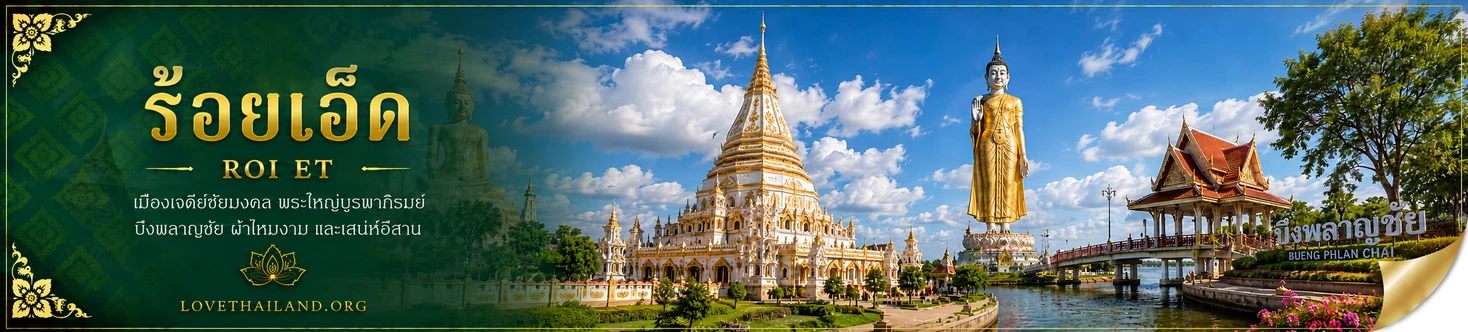
Wat Bueng Pan Chai
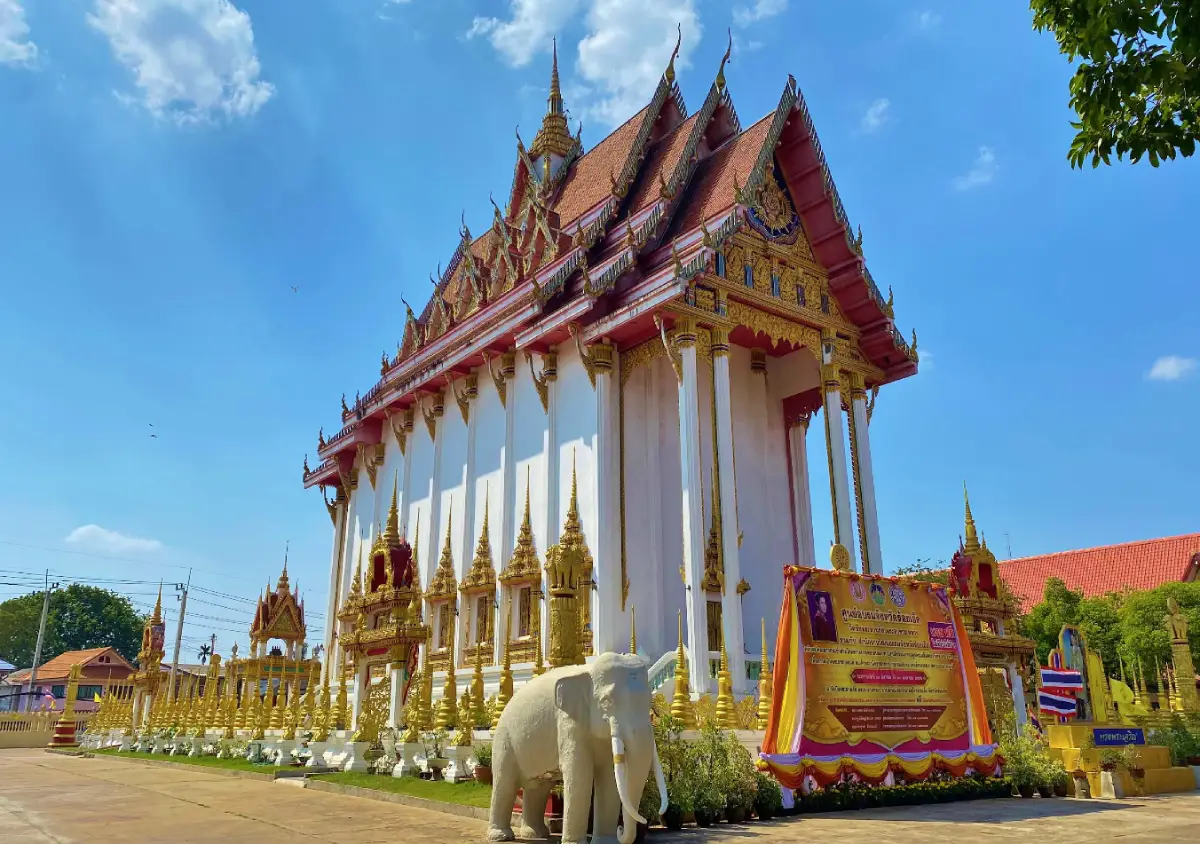
Open Days: Daily
Opening Hours: 08.00 – 17.00
Wat Bueng Phra Lan Chai in Roi Et, locally known as Wat Bueng, is an old royal Buddhist temple located at 116 Pracha Tham Rak Road in Nai Mueang Subdistrict, Mueang Roi Et District, Roi Et Province. It is often associated with nearby Bueng Phlan Chai, the central lake and landmark of Roi Et city. The temple is an important cultural, religious, ceremonial, and educational site because it preserves sacred water traditions, ancient boundary stones, laterite remains, a sacred pond called Sra Chai Mongkhon, and a scripture hall standing in the middle of the pond. For foreign travelers, this temple is one of the best places to understand how Buddhism, sacred water, civic ceremonies, education, and local history are connected in northeastern Thailand.
The official name of the temple is Wat Bueng Phra Lan Chai. Some visitors may confuse the name with Bueng Phlan Chai because the temple is located close to the lake and is locally called Wat Bueng. The lake and the temple are closely connected in the city landscape, but they are not the same place. Bueng Phlan Chai is the well-known city lake, while Wat Bueng Phra Lan Chai is the royal temple with Sra Chai Mongkhon, ancient remains, and a long ceremonial history. Understanding this distinction helps visitors navigate Roi Et city more accurately.
Wat Bueng Phra Lan Chai is a third-class royal temple of ordinary type under the Dhammayut order. This official status reflects the temple’s importance in religious and civic life. It is not merely a neighborhood temple. It has served as a ceremonial site, a sacred water source, a monastic learning center, and a place of public spiritual significance for Roi Et. The temple continues to function as an active monastery, where monks reside, ceremonies are performed, merit-making takes place, and visitors come to pay respect.
The temple has deep historical roots. Before its restoration, the area was an ancient abandoned temple site covered with forest, grass, ruins, laterite, old boundary stones, and sacred water. In 1775, Phraya Khattiya Wongsa (Thon), the ruler of Roi Et, invited officials, merchants, and local people to clear the overgrown area and restore it as a Buddhist temple. The restored temple was named Wat Bueng Phra Lan Chai. This restoration was more than construction work; it was an act of reviving a sacred place and returning it to the life of the city.
In 1887, Luang Songkran Wisit, supported by Phraya Khattiya Wongsa (Phao Thon Silangkun), led officials, merchants, residents, and prisoners to clear the land, open the area, and restore the ancient temple again. This second major restoration helped bring the temple back into active use and strengthened its role as a central sacred place of Roi Et. The cooperation of many groups shows that the temple belonged to the whole city, not only to one small community.
The name Wat Bueng Phra Lan Chai carries several layers of meaning. The area was considered sacred because it was an ancient temple site. It was located close to Bueng Phlan Chai. The land formed a high and attractive mound, suitable for a temple. It was also associated with ceremonies celebrating victory after military campaigns in the past. The word bueng refers to a water landscape, phra lan suggests a sacred ceremonial ground, and chai means victory or auspicious success. The temple name therefore preserves the memory of water, sacred space, and victory.
The most important feature of the temple is Sra Chai Mongkhon, the sacred pond inside the temple grounds. This old natural pond is revered by the people of Roi Et as a sacred water source of the city. It is described as a square pond about 25 meters wide, 25 meters long, and about 5 meters deep. Water from Sra Chai Mongkhon has been used in auspicious, official, and sacred ceremonies, including important royal and provincial rites. This makes the pond one of the most meaningful sacred water sites in Roi Et.
Sra Chai Mongkhon is not simply a pond. It connects water with loyalty, truth, blessing, and civic order. In the past, the temple was used for the Ceremony of Drinking the Water of Allegiance. In this ceremony, officials and people in positions of responsibility swore loyalty and honesty before sacred authority. Water from a sacred source became a medium of moral commitment. This connection makes the temple important not only in religious terms but also in the history of public duty and governance.
In the middle of Sra Chai Mongkhon stands the scripture hall, often referred to as Ho Phra Trai Ming Mueang or the scripture hall in the pond. In Thai Buddhist tradition, a scripture hall is connected with the preservation of Buddhist texts and sacred knowledge. Its location in the middle of the sacred pond gives the structure strong symbolic meaning. It presents an image of Dhamma, wisdom, and sacred memory protected by water. This is one of the most distinctive visual and spiritual features of the temple.
The temple also preserves ancient Dvaravati-period boundary stones. In Buddhist culture, boundary stones mark sacred space and are associated with the consecrated area of religious practice. Their presence at Wat Bueng Phra Lan Chai shows that the area had Buddhist significance long before the documented restorations of the eighteenth and nineteenth centuries. For visitors interested in archaeology, these stones connect present-day Roi Et with ancient Buddhist communities in northeastern Thailand.
Ancient laterite remains also appear at the temple. Laterite was widely used in old religious and settlement structures across northeastern Thailand. Its presence suggests historical connections with older cultural landscapes, including ancient city networks in the region. Together with the boundary stones, the laterite evidence makes Wat Bueng Phra Lan Chai an important place for understanding the layered history of Roi Et. The temple is not only a living monastery; it is also a site of archaeological memory.
The ubosot, or ordination hall, is the main monastic ceremony space of the temple. Inside is a principal Buddha image in the posture of subduing Mara. Visitors can pay respect to the Buddha image and observe the calm atmosphere of an active Buddhist temple. The ubosot represents the continuing religious function of the temple. While Sra Chai Mongkhon and the ancient remains speak of sacred history, the ubosot shows that Buddhist practice is still alive at the site today.
Wat Bueng Phra Lan Chai is also highly significant as a center of Buddhist education. It is associated with the origin of Buddhist scriptural education in both Dhamma and Pali studies in Roi Et Province. Monks, novices, and learners used the temple as a place to study Buddhist teachings, monastic discipline, language, and religious knowledge. This role reflects the traditional function of Thai temples as schools and learning centers, especially before modern educational institutions became widespread.
The temple is also connected with Thai-language learning, vocational learning, and traditional medicine in Roi Et. In earlier Thai society, temples often functioned as centers for literacy, moral education, practical skills, and local medical knowledge. Wat Bueng Phra Lan Chai therefore has social importance beyond worship. It helped support learning and community development in the province, showing how temples served both spiritual and practical needs.
Another major role of the temple is its connection with training Buddhist preachers in the northeastern region. Buddhist preachers, or Phra Thammakathuek, must be able to explain Dhamma clearly and make Buddhist teachings understandable to ordinary people. As a center for such training, Wat Bueng Phra Lan Chai has contributed to the spread of Buddhist learning not only in Roi Et but also in the wider northeastern region. This makes the temple important in the religious communication network of Isan.
The temple has also served as a youth training center and a mental development center for Roi Et. These roles are still relevant today. Temples in Thailand continue to provide spaces for moral education, meditation, public ceremonies, and community support. Wat Bueng Phra Lan Chai remains a place where people can make merit, listen to Dhamma, join ceremonies, and find calmness within the city. Its role as a spiritual center keeps the temple meaningful in everyday life, not only in history.
Wat Bueng Phra Lan Chai has been used for official ceremonies across many periods. Its association with sacred water and civic rites made it suitable for important public rituals. In Thai culture, religious authority, civic order, and sacred water are often connected in ceremonial contexts. This temple shows that connection clearly. It is a place where Buddhist faith, provincial identity, and official ceremonies have met for generations.
A meaningful visit should begin at the ubosot, where visitors can pay respect to the principal Buddha image. From there, they should continue to Sra Chai Mongkhon and the scripture hall in the middle of the pond. This is the ritual and symbolic heart of the temple. Visitors should then observe the old boundary stones and laterite remains with care, recognizing them as fragile evidence of the past. Walking around the temple courtyard and education areas helps complete the picture of the temple as both a historic and living religious place.
The temple atmosphere is calm and shaded, with a pond, open areas, trees, and religious buildings. It feels different from a modern tourist attraction because its value comes from sacred continuity rather than entertainment. Visitors who take time to walk slowly will understand the temple better. The pond, scripture hall, boundary stones, laterite remains, ubosot, and monastic areas all tell different parts of the same story: the story of Roi Et through water, faith, history, and learning.
Getting There is easy because the temple is in central Roi Et on Pracha Tham Rak Road, close to Bueng Phlan Chai and Ho Wot 101 Tower. Visitors with private cars can navigate directly to Wat Bueng Phra Lan Chai or use Bueng Phlan Chai as a nearby reference point. Travelers arriving by bus can get off at Roi Et Bus Terminal and continue by tuk-tuk, local taxi, songthaew, or other city transport. The temple is convenient to include in a city cultural route.
Wat Bueng Phra Lan Chai can be combined with nearby attractions such as Bueng Phlan Chai, Ho Wot 101 Tower, Roi Et National Museum, Wat Klang Ming Mueang, Wat Buraphaphiram, Wat Sra Thong, Somdet Phra Srinagarindra Park Roi Et, and Roi Et City Pillar Shrine. These places are close to one another and help visitors understand different layers of Roi Et: sacred water, city history, Buddhist art, royal temples, civic landmarks, and public urban space.
The temple is open daily from 08.00 to 17.00. Morning and early afternoon are suitable times to visit because the weather is more comfortable and the light is good for viewing the pond and the scripture hall. There is no ticketed admission system. Visitors can enter the temple, pay respect, walk around the main areas, and make donations or offerings according to personal faith at the areas arranged by the temple.
Visitors should dress respectfully and behave quietly because the temple is an active Buddhist monastery and a sacred water site. They should avoid touching boundary stones, laterite remains, sacred objects, old structures, or items related to the pond without permission. The area around Sra Chai Mongkhon should be treated with particular respect because it is deeply meaningful to the people of Roi Et and remains connected with sacred ceremonies.
For families and students, Wat Bueng Phra Lan Chai can serve as a useful outdoor classroom. Children can learn what sacred water means, how boundary stones mark Buddhist sacred space, why laterite remains are historically important, and how temples supported education in Thai society. Learning at the actual site makes these topics clearer because water, ritual, architecture, and history can be seen together.
For foreign travelers, the temple explains a central idea about Thai culture: a temple can be a monastery, a school, a sacred water source, a ceremonial ground, an archaeological site, and a community spiritual center at the same time. Wat Bueng Phra Lan Chai demonstrates all of these roles in one place. It allows visitors to understand Roi Et not only through landmarks but through the deeper cultural systems that shaped the city.
Overall, Wat Bueng Phra Lan Chai is one of the most important historic temples in Roi Et city. Its value comes from its royal temple status, Sra Chai Mongkhon sacred pond, scripture hall in the middle of the pond, Water of Allegiance tradition, Dvaravati boundary stones, ancient laterite remains, ubosot, and long educational role in Buddhist studies. For travelers who want to understand Roi Et through Buddhism, sacred water, civic ceremony, education, and local memory, this temple is an essential stop in the city center.
| Name | Wat Bueng Phra Lan Chai, Roi Et |
| Local Name | Wat Bueng |
| Name Note | The official temple name is Wat Bueng Phra Lan Chai. Bueng Phlan Chai is the important lake located near the temple. |
| Temple Type | Third-Class Royal Temple, Ordinary Type, Dhammayut Order |
| Location | Pracha Tham Rak Road, Nai Mueang Subdistrict, Mueang Roi Et District, Roi Et Province |
| Address | 116 Pracha Tham Rak Road, Nai Mueang Subdistrict, Mueang Roi Et District, Roi Et 45000, Thailand |
| Highlights | Sra Chai Mongkhon sacred pond, scripture hall in the middle of the pond, ubosot, Dvaravati boundary stones, ancient laterite remains, Water of Allegiance ceremony tradition, and the temple’s historic role in Buddhist education in Roi Et |
| History | In 1775, Phraya Khattiya Wongsa (Thon), the ruler of Roi Et, restored the ancient abandoned temple site. In 1887, Luang Songkran Wisit, supported by Phraya Khattiya Wongsa (Phao Thon Silangkun), led officials, merchants, residents, and prisoners to clear and restore the temple again. |
| Name Origin | The name is connected with an ancient sacred temple site, its location near Bueng Phlan Chai, its raised and attractive landscape, and its association with old victory-celebration ceremonies. |
| Important Sacred Objects | Principal Buddha image in the posture of subduing Mara, Ho Phra Trai Ming Mueang, and sacred objects associated with Sra Chai Mongkhon |
| Historical Importance | The temple is associated with official ceremonies across many periods, the Ceremony of Drinking the Water of Allegiance, and the use of water from Sra Chai Mongkhon in auspicious and official rites. |
| Archaeological Evidence | Ancient Dvaravati-period boundary stones, laterite remains, and traces of old sacred structures that reflect the temple’s deep historical role in Roi Et |
| Educational Role | A historic center of Buddhist scriptural education in Dhamma and Pali studies in Roi Et, a regional Buddhist preacher training center, a youth training center, and a mental development center for the province |
| Travel Information | Located in Roi Et city on Pracha Tham Rak Road near Bueng Phlan Chai and Ho Wot 101 Tower. Visitors can travel by private car, tuk-tuk, local taxi, songthaew, or city transport from Roi Et Bus Terminal. |
| Current Status | Open as a royal temple, sacred water site, historic Buddhist learning center, and important ceremonial temple of Roi Et city |
| Open Days | Daily |
| Opening Hours | 08.00 – 17.00 |
| Facilities | Ubosot, temple courtyard, Sra Chai Mongkhon sacred pond, scripture hall in the pond, worship areas, merit-making areas, monks’ residences, Buddhist education areas, parking space, and nearby restaurants in central Roi Et |
| Main Areas / Zones | 1. Ubosot 2. Principal Buddha Image In The Posture Of Subduing Mara 3. Sra Chai Mongkhon Sacred Pond 4. Scripture Hall In The Middle Of Sra Chai Mongkhon 5. Dvaravati Boundary Stone Area 6. Ancient Laterite Remains Area 7. Buddhist Scriptural Education Area 8. Temple Courtyard And Religious Activity Area 9. Merit-Making And Offering Area 10. Area Connected With Bueng Phlan Chai Route |
| Related Traditions / Activities | Water of Allegiance ceremony tradition, sacred water drawing from Sra Chai Mongkhon, provincial religious ceremonies, Buddhist merit-making, Buddhist scriptural education, youth training, preacher training, and mental development activities |
| Caretaker / Responsible Body | Wat Bueng Phra Lan Chai Royal Temple, Dhammayut Order |
| Abbot | Phra Phrom Wachira Sophon |
| Main Contact Number | 043-511190 |
| Online Channel | Facebook: Wat Bueng Phra Lan Chai Royal Temple, Roi Et |
| Nearby Tourist Attractions | 1. Bueng Phlan Chai, about 0.1 km 2. Ho Wot 101 Tower, about 0.8 km, Tel. 043-511222 3. Somdet Phra Srinagarindra Park Roi Et, about 0.8 km 4. Roi Et City Pillar Shrine, about 1 km 5. Roi Et National Museum, about 1 km, Tel. 043-514456 Ext. 101 6. Wat Klang Ming Mueang, about 1 km, Tel. 043-512400 7. Wat Buraphaphiram, about 1.5 km, Tel. 043-511374 8. Wat Sra Thong, about 1.5 km |
| Nearby Restaurants | 1. Cozy Cafe’ & Bistro, about 0.2 km, Tel. 094-310-0504 2. Lakeview Restaurant, about 0.5 km, Tel. 093-320-8126 3. Sit Rim, about 0.8 km, Tel. 098-278-4482 4. Her Studio Roi Et, about 1 km, Tel. 083-871-0824 5. 4U For You, Phloen Chit Road, about 1 km, Tel. 065-649-1999 6. Nai Chui Vintage Pork Noodle, about 1 km |
| Nearby Accommodations | 1. Saket Nakhon Hotel, about 0.8 km, Tel. 043-511-741 2. Rueanrimnam Hotel, about 1 km, Tel. 043-518-967 3. The Premium Residence, about 1.5 km, Tel. 043-518-655 4. 101 Hotel, about 1.5 km, Tel. 043-513-999, 065-119-6999 5. HOP INN Roi Et, about 2 km, Tel. 02-080-2222 6. The Rice Hotel, about 3 km, Tel. 043-519-999 |
Frequently Asked Questions (FAQ)
Q: Where is Wat Bueng Phra Lan Chai located?
A: Wat Bueng Phra Lan Chai is located at 116 Pracha Tham Rak Road, Nai Mueang Subdistrict, Mueang Roi Et District, Roi Et 45000, Thailand. It is near Bueng Phlan Chai, Ho Wot 101 Tower, and the central Roi Et tourist area.
Q: Are Wat Bueng Phra Lan Chai and Bueng Phlan Chai the same place?
A: No. Wat Bueng Phra Lan Chai is the official temple name. Bueng Phlan Chai is the important lake located near the temple. Local people often call the temple Wat Bueng.
Q: What are the opening days and hours?
A: The temple is open daily from 08.00 to 17.00.
Q: Is there an admission fee?
A: There is no ticketed admission system. Visitors can enter the temple, worship the principal Buddha image, view Sra Chai Mongkhon, the scripture hall, and the main temple areas during opening hours.
Q: Why is Sra Chai Mongkhon important?
A: Sra Chai Mongkhon is the sacred pond of Roi Et. Its water was associated with the Ceremony of Drinking the Water of Allegiance and other auspicious and official sacred water ceremonies.
Q: Who is the abbot of Wat Bueng Phra Lan Chai?
A: The abbot of Wat Bueng Phra Lan Chai is Phra Phrom Wachira Sophon.
Q: What should visitors see inside the temple?
A: Important areas include the ubosot, principal Buddha image, Sra Chai Mongkhon sacred pond, scripture hall in the pond, Dvaravati boundary stones, laterite remains, and Buddhist education areas.
Q: What nearby attractions can be combined with a visit?
A: Nearby places include Bueng Phlan Chai, Ho Wot 101 Tower, Somdet Phra Srinagarindra Park Roi Et, Roi Et City Pillar Shrine, Roi Et National Museum, Wat Klang Ming Mueang, Wat Buraphaphiram, and Wat Sra Thong.
 Category: ●Places of Worship
 Group: ●Temple
Last Update : 4 WeekAgo
 Last Update : 4 WeekAgo
 Click to Access the Navigation Map GPS
Wat Bueng Pan Chai Map
Recommend

 Art, Culture and Heritage
 Historical Sites and Monuments(3)
 Landmarks and Memorials(5)
 Art, Craft Centres, Tradition(2)
 Museums(1)
 Educational Places
 Educational Gardens, Farm(3)
Temple(35)
Educational Gardens, Farm(3)
Temple(35)
 Other Sacred Sites(6)
 Suburban Living
 Village, Community(1)
 Local Market(1)
 Nature and Wildlife
 National Parks and Marine Reserves(1)
 Mountain (Doi)(2)
 Dam, Reservoir, Lake(8)
 Waterfalls(1)
 Flower Field(1)
 River, Canal(4)
 Entertainment and Agricultural
 Zoos and Aquariums(1)
 Stadium(1)
 Farms, Parks and Ecotourism(5)
 Shopping
 Shopping and Night Market(1)


