
lovethailand home >Northeastern Travel Attractions >Roi Et Travel Attractions >Pho Chai >Kham Phaung > Wat Pa Tham Phu Muai
TL;DR: Wat Pa Tham Phu Muai is located at Ban Na Ngam, Moo 11, Kham Phaung Subdistrict, Pho Chai District, Roi Et Province, open Daily, hours 08.00 – 17.00.
Wat Pa Tham Phu Muai
Open Days: Daily
Opening Hours: 08.00 – 17.00
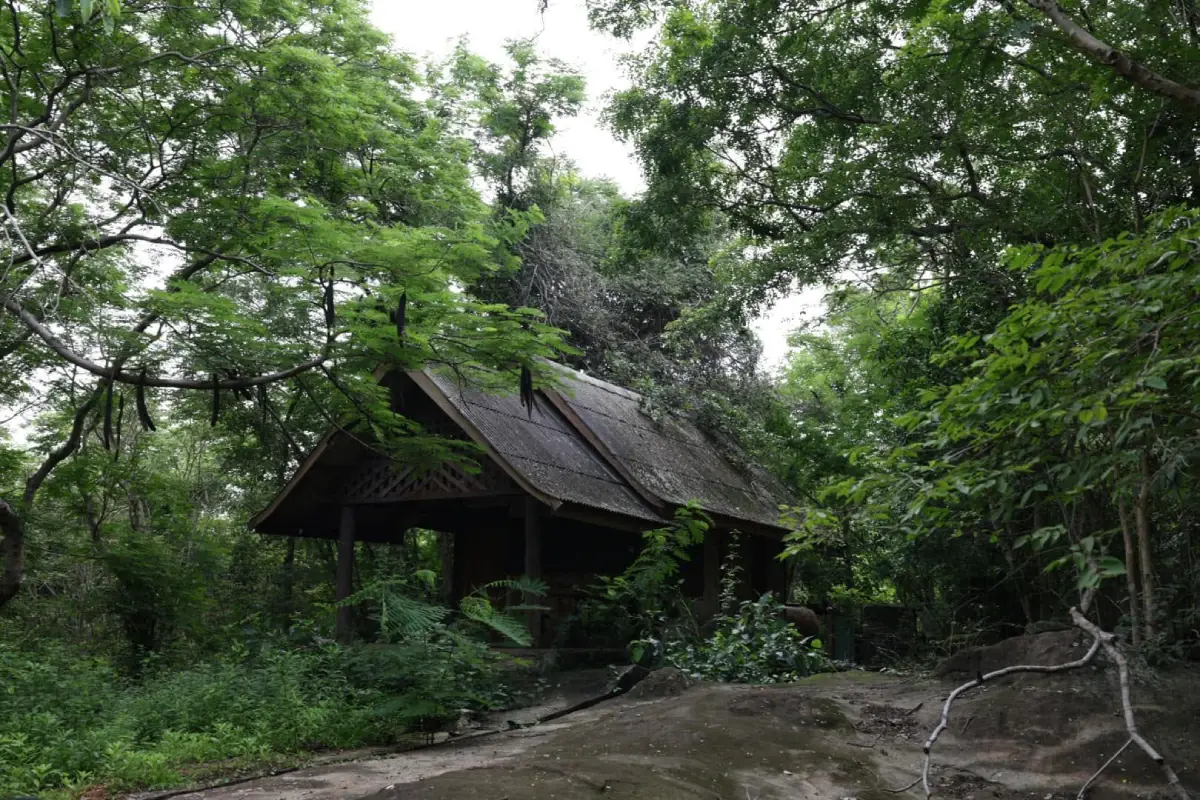
Wat Pa Tham Phu Muai in Roi Et is a forest temple and natural cave attraction located in Ban Na Ngam, Moo 11, Kham Phaung Subdistrict, Pho Chai District, Roi Et Province. The site is known for its hilltop setting, natural cave formations, layered rocks, deep hollow spaces, small valleys, streams, Buddha images, and quiet forest-temple atmosphere. For travelers looking for a peaceful Roi Et destination beyond the city center, Wat Pa Tham Phu Muai offers a distinctive mix of Buddhist calm, rural landscape, and local natural heritage.
The temple sits in a rural part of northern Roi Et where the landscape changes from open farmland to low hills, rocky formations, caves, and streams. Tham Phu Muai, the cave associated with the temple, is made up of complex rock formations and deep natural hollows. Some sections are narrow enough for only one person to pass through, while others form overhanging rock shapes that look like natural roofs. This raw and simple landscape gives the site a strong sense of place, especially for travelers who enjoy quiet temples and less-commercial nature spots.
The name “Tham Phu Muai” comes from a local story. The cave was originally known as “Tham Phu Noi.” In the past, the area had many trees used by local villagers to make a traditional sticky-rice steamer known as “muai.” Because villagers often came to this area to cut the wood used for making these steamers, the place gradually became known as “Tham Phu Muai.” The name therefore reflects the relationship between the landscape, local plants, and the everyday wisdom of Isan rural life.
Wat Pa Tham Phu Muai is also meaningful because of the history of the surrounding area. The site was once remembered as part of a so-called pink area in the past before gradually becoming a peaceful forest-temple and community nature destination. This transformation gives the temple more depth than an ordinary scenic viewpoint. It is not only a place to see caves and rocks, but also a place where local memory, Buddhist practice, and nature-based tourism now exist together.
On arrival, visitors immediately feel that this is not a large urban temple built for crowds. It is a forest temple shaped by the surrounding hill, trees, rocks, cave passages, and quiet rural setting. The atmosphere is calm, modest, and contemplative. Visitors can pay respect to Buddha images, walk slowly through the natural surroundings, and spend time observing how the temple blends into the rocky landscape. The experience is best enjoyed at an unhurried pace.
The cave is the main highlight of the area. Its layered rocks, hollow spaces, narrow passages, and natural textures make it attractive for both nature lovers and photographers. Some rock surfaces show unusual curves and recesses that look as though they were slowly shaped by natural erosion over a long period of time. The cave area is not a theme-park-style attraction, so visitors should walk carefully, avoid risky climbing, and pay close attention to slippery surfaces, especially during or after rain.
Wat Pa Tham Phu Muai is suitable for a half-day trip for travelers staying in Phon Thong, Pho Chai, or northern Roi Et. The site is especially suitable for those who appreciate quiet places, local stories, forest temples, rural roads, and natural rock formations. It is not a place built around restaurants, shops, or entertainment. Visitors should prepare as they would for a rural temple and cave visit: dress modestly, wear practical walking shoes, carry drinking water, and respect the temple environment.
The wider Kham Phaung area gives this trip additional value. Around the subdistrict, travelers can connect Wat Pa Tham Phu Muai with community-based tourism sites, natural viewpoints, caves, and geological learning areas. Kham Phaung is associated with attractions such as Pha Ham Hot, Tham Hin So, Phu Kum Khao, and ancient freshwater bivalve fossils estimated at around 125–130 million years old. This makes the area interesting not only for sightseeing, but also for travelers who enjoy geology, local ecology, and cultural landscapes.
Pha Ham Hot is one of the nearby natural sites that helps explain the rugged landscape of Kham Phaung. It is known for its steep cliff and wide views of forested hills and nearby water bodies. The place is scenic but demands caution because the cliff area is not developed like a fully controlled tourist viewpoint. Travelers who combine Pha Ham Hot with Wat Pa Tham Phu Muai should avoid walking near the edge, avoid risky photo poses, and visit only when the weather is clear.
Phu Kum Khao adds another layer to a visit in this part of Roi Et. It is connected with community learning, local natural resources, and fossil heritage. When included in the same route as Wat Pa Tham Phu Muai, it helps visitors understand that Kham Phaung is more than a quiet rural subdistrict. It is a landscape of caves, cliffs, fossil sites, seasonal plants, local food culture, and community knowledge. This makes the journey more complete for travelers who want meaningful experiences rather than quick photo stops.
From a cultural perspective, Wat Pa Tham Phu Muai reflects the character of a northeastern Thai forest temple. Such temples often use the surrounding forest, hill, cave, and silence as part of their spiritual atmosphere. Visitors do not come only to see an attraction; they enter a space where natural stillness supports Buddhist reflection. Proper behavior is therefore important. Travelers should speak softly, avoid disturbing monks or local visitors, dress respectfully, and leave no waste behind.
What makes Wat Pa Tham Phu Muai different from many ordinary cave attractions is the way the cave and temple belong to the same setting. The cave is not only a physical formation; it is also part of a sacred and community-recognized place. Walking through the area gives visitors two impressions at once: the excitement of seeing natural rock formations and the quiet feeling of being in a Buddhist forest temple. This combination makes the site memorable for travelers who prefer authentic and understated destinations.
The best time to visit is during daylight, especially in the morning or early afternoon. Morning visits are cooler and quieter, making them suitable for paying respect and walking slowly around the temple. Afternoon light can make the cave rocks and hill landscape more photogenic, but travelers should leave enough time to return before dark. Because the temple is in a rural area, driving unfamiliar local roads after sunset is not recommended for most visitors.
The rainy season brings greener scenery, fuller streams, and a fresher forest atmosphere. At the same time, wet rocks and soil make walking more difficult. Travelers visiting during the rainy season should choose footwear with good grip and avoid entering narrow or slippery sections. The cool season and dry season are generally more convenient for walking and photography. A clear day offers the safest and most comfortable experience for those visiting the cave and nearby nature sites.
Families traveling with children or elderly visitors should assess the ground conditions before walking into the cave or rocky sections. Some areas are better viewed from a safe distance rather than explored closely. Children should be supervised at all times, and elderly visitors should not be encouraged to walk into narrow, uneven, or slippery parts of the cave. A safe visit does not require reaching every point; it requires choosing the right areas for each traveler’s physical condition.
For photographers, Wat Pa Tham Phu Muai offers interesting subjects: rock textures, cave openings, natural shadows, Buddha images, rural temple architecture, and forested surroundings. Wide shots can show how the temple sits within the hill landscape, while close-up photos can capture the distinctive shapes of the rocks. Photography should be done respectfully, especially near religious areas. Avoid loud behavior, intrusive posing, and any action that could damage the rocks or disturb the temple environment.
Travelers who want to build a broader itinerary can use Wat Pa Tham Phu Muai as the main stop and connect it with Pha Ham Hot, Tham Hin So, Phu Kum Khao, and other Kham Phaung nature sites. This route works best with a private car or rental car because public transport is limited in rural areas. Having your own vehicle makes it easier to manage time, stop for food, adjust the plan according to weather, and return safely before evening.
Food and accommodation should be planned before entering the rural area. The closest practical cluster of restaurants and hotels is around Phon Thong, where travelers can find restaurants, cafes, small hotels, resorts, and guesthouses. Visitors who are not familiar with rural Roi Et should eat before the cave trip or plan to return to Phon Thong after the visit. Carrying drinking water and basic supplies makes the trip more comfortable.
In the wider context of Roi Et tourism, Wat Pa Tham Phu Muai expands the image of the province beyond well-known urban landmarks such as Bueng Phlan Chai, Roi Et Tower, Wat Burapha Phiram, and Phra Maha Chedi Chai Mongkhon. It shows another side of Roi Et: quiet hills, rural communities, caves, forest temples, and natural learning routes. This makes the temple a valuable destination for travelers who want to see the province beyond the standard city itinerary.
The peaceful atmosphere of Wat Pa Tham Phu Muai is its greatest strength. It is not designed for quick entertainment. It rewards travelers who move slowly, observe carefully, and appreciate small details: the silence of the hill, the shape of the rocks, the meaning of the cave name, and the way local faith has grown within the landscape. For foreign travelers, this is a chance to experience a quieter and more local side of northeastern Thailand.
Conservation is essential for places like this. Visitors should never write on rocks, remove stones, damage plants, leave trash, or disturb small animals around the cave and stream. Responsible travel protects both the natural formations and the sacred character of the temple. By visiting with care, travelers help preserve Wat Pa Tham Phu Muai for local people, monks, and future visitors.
Getting There is easiest by private car or rental car. From Roi Et city, drive toward Phon Thong or Pho Chai District, then continue to Kham Phaung Subdistrict and Ban Na Ngam, Moo 11, using a navigation map. Some sections are rural local roads, so visitors should travel during daylight, check the vehicle condition, and keep enough fuel before entering the area. Setting the destination as Wat Pa Tham Phu Muai or Tham Phu Muai is the most practical option.
In summary, Wat Pa Tham Phu Muai is a peaceful forest-temple and cave destination in Roi Et for travelers who enjoy Buddhist sites, natural rock formations, local stories, and slow rural travel. Its strength lies in the combination of cave landscape, forest-temple atmosphere, hilltop setting, and community identity. With proper preparation, respectful behavior, and enough time, a visit to Wat Pa Tham Phu Muai can become one of the most meaningful nature-and-culture experiences in Roi Et Province.
| Name | Wat Pa Tham Phu Muai |
| Location | Ban Na Ngam, Moo 11, Kham Phaung Subdistrict, Pho Chai District, Roi Et Province |
| Address | Ban Na Ngam Area, Moo 11, Kham Phaung Subdistrict, Pho Chai District, Roi Et Province, Thailand |
| Highlights | Hilltop forest temple with natural caves, hollow rock formations, small valleys, streams, Buddha images, and a peaceful rural atmosphere |
| History | The area has a meaningful local history and was formerly remembered as a pink area before becoming a peaceful forest-temple and natural attraction of the community |
| Name Origin | The cave was formerly called Tham Phu Noi. It later became known as Tham Phu Muai because local trees used for making traditional sticky-rice steamers called “muai” grew densely in the area |
| Distinctive Features | Layered rocks, deep cave hollows, narrow stone passages, overhanging rock forms, streams, and a quiet forest-temple setting |
| Travel Information | Best reached by private car or rental car from Roi Et city toward Phon Thong or Pho Chai District, then onward to Kham Phaung Subdistrict and Ban Na Ngam |
| Current Status | Open as a forest temple and natural attraction in Kham Phaung Subdistrict |
| Open Days | Daily |
| Opening Hours | 08.00 – 17.00 |
| Facilities | Temple grounds, Buddha image worship area, access to cave and natural rock areas, and parking area inside or near the temple grounds |
| Main Areas / Zones | Hilltop forest-temple area Natural cave and hollow rock formations Buddha image and worship area Valley, stream, and natural surroundings around the temple |
| Nearby Tourist Attractions | 1. Tham Phu Muai Cave And Natural Rock Formations, about 0 km 2. Nam Chak, Ban Na Ngam, about 3 km 3. Pha Ham Hot, Kham Phaung Subdistrict, about 9 km 4. Tham Hin So, Kham Phaung Subdistrict, about 12 km 5. Phu Kum Khao And Kham Phaung Geological Learning Area, about 16 km |
| Nearby Restaurants | 1. QPizza Phon Thong, about 38 km, Tel. 094-495-4770 2. Nai Sor Phon Thong Restaurant, about 37 km, Tel. 085-394-2716 3. Sushi Fa Shabu Buffet Phon Thong, about 38 km, Tel. 092-349-2373 4. M & J’s Poolside Bar & Restaurant, about 42 km, Tel. 092-594-6489 5. On Son Cake Phon Thong, about 37 km, Tel. 093-449-0889 |
| Nearby Accommodations | 1. Yello Block Hotel Phon Thong, about 39 km, Tel. 043-030426, 098-4945426 2. Rimnam Resort Phon Thong, about 39 km, Tel. 093-104-0159 3. PR Home Phon Thong, about 38 km, Tel. 081-547-2501 4. Phon Thong Grand Villa Resort, about 38 km, Tel. 043-501-893 5. Isaan Perazim Park, about 45 km, Tel. 068-342-1107 |
Frequently Asked Questions (FAQ)
Q: Where is Wat Pa Tham Phu Muai located?
A: Wat Pa Tham Phu Muai is located in Ban Na Ngam, Moo 11, Kham Phaung Subdistrict, Pho Chai District, Roi Et Province. It is a forest temple and natural cave attraction.
Q: What are the opening hours of Wat Pa Tham Phu Muai?
A: The temple is open daily from 08.00 to 17.00. Daytime visits are recommended for safer walking around the cave and natural rock areas.
Q: What makes Wat Pa Tham Phu Muai special?
A: Its highlights are the natural cave, layered rock formations, deep hollows, narrow passages, streams, Buddha images, and peaceful forest-temple atmosphere.
Q: What does the name Tham Phu Muai mean?
A: The cave was once called Tham Phu Noi. It later became known as Tham Phu Muai because local trees used for making traditional sticky-rice steamers called “muai” grew densely in the area.
Q: How should visitors prepare for the trip?
A: Visitors should dress modestly, wear shoes suitable for walking on rocks, carry drinking water, walk carefully, and respect the quiet temple environment.
Q: Is Wat Pa Tham Phu Muai suitable for children and elderly travelers?
A: The temple area is suitable for worship and sightseeing, but some cave and rock sections require caution. Children and elderly travelers should be closely supervised.
Q: What attractions can be visited near Wat Pa Tham Phu Muai?
A: Nearby places include Pha Ham Hot, Tham Hin So, Nam Chak, and Phu Kum Khao, which can be combined into a nature and community route in Kham Phaung.
Q: What is the best way to get to Wat Pa Tham Phu Muai?
A: A private car or rental car is the most practical option because the temple is in a rural area of Pho Chai District and public transport is limited.
 Category: ●Places of Worship
 Group: ●Temple
Last Update : 4 WeekAgo
 Last Update : 4 WeekAgo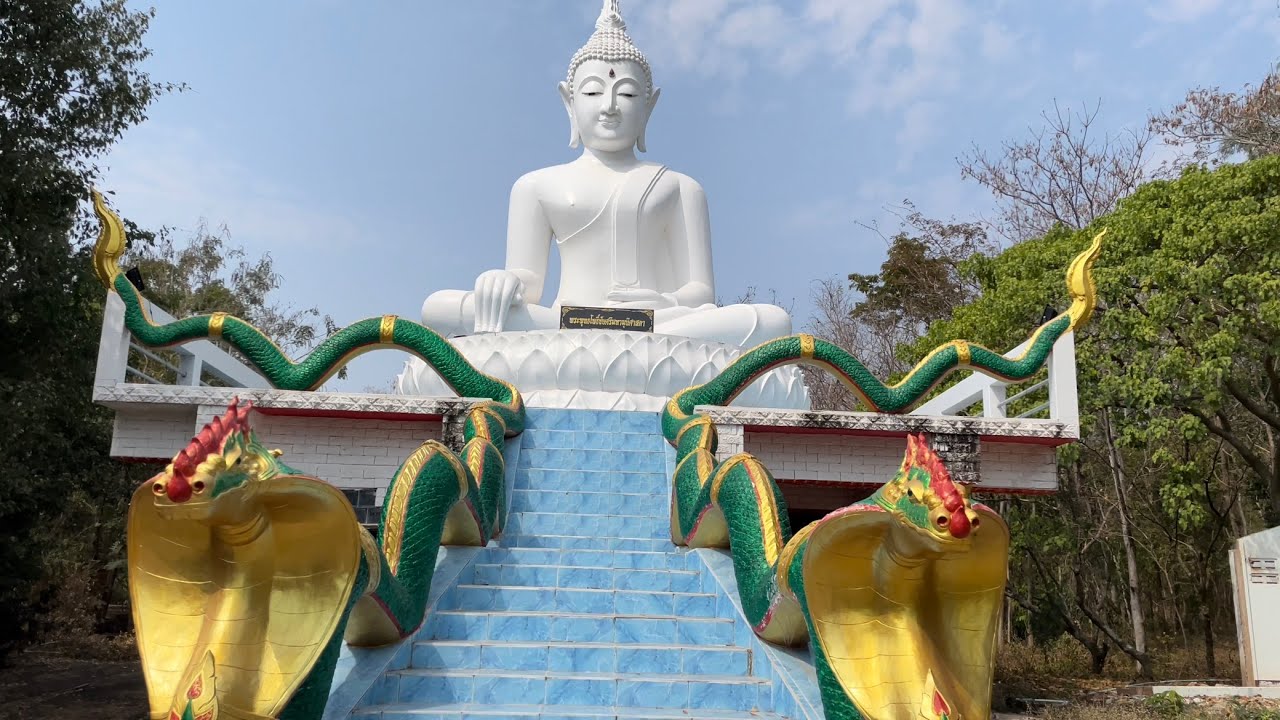
 Click to Access the Navigation Map GPS
Wat Pa Tham Phu Muai Map
Recommend

 Art, Culture and Heritage
 Historical Sites and Monuments(3)
 Landmarks and Memorials(5)
 Art, Craft Centres, Tradition(2)
 Museums(1)
 Educational Places
 Educational Gardens, Farm(3)
Temple(35)
Educational Gardens, Farm(3)
Temple(35)
 Other Sacred Sites(6)
 Suburban Living
 Village, Community(1)
 Local Market(1)
 Nature and Wildlife
 National Parks and Marine Reserves(1)
 Mountain (Doi)(2)
 Dam, Reservoir, Lake(8)
 Waterfalls(1)
 Flower Field(1)
 River, Canal(4)
 Entertainment and Agricultural
 Zoos and Aquariums(1)
 Stadium(1)
 Farms, Parks and Ecotourism(5)
 Shopping
 Shopping and Night Market(1)


