
lovethailand home >Northeastern Travel Attractions >Roi Et Travel Attractions >Muang Roi Et >Nong Waeng > Wat Ban Fang
TL;DR: Wat Ban Fang is located at Moo 12, Nong Waeng Subdistrict, Mueang Roi Et District, Roi Et Province, open Daily, hours 08.00 – 17.00.
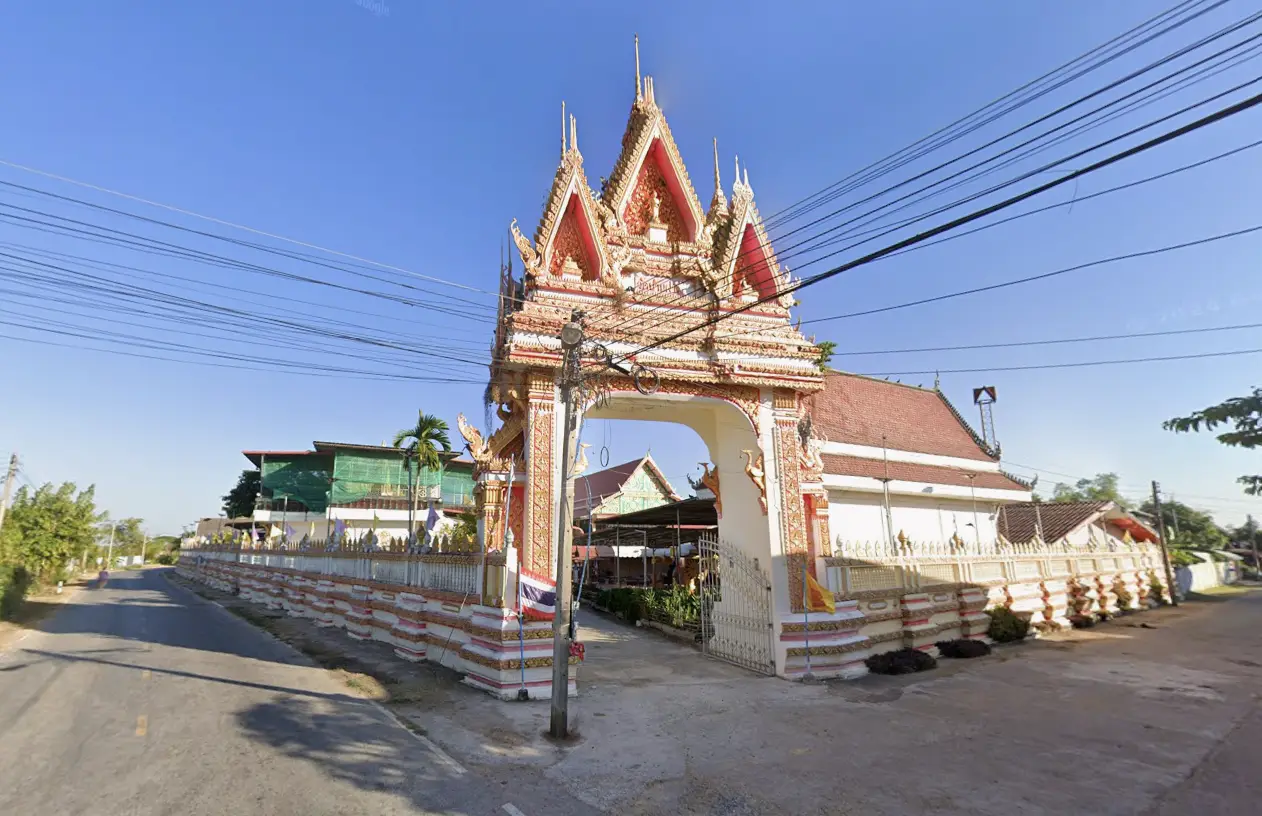
Wat Ban Fang
Open Days: Daily
Opening Hours: 08.00 – 17.00
Wat Ban Fang in Roi Et is a local Buddhist temple located in Ban Fang, Moo 12, Nong Waeng Subdistrict, Mueang Roi Et District, Roi Et Province. It is a Maha Nikaya community temple with a history dating to the early twentieth century. Temple records identify its establishment as either 1916 or 1918, while local travel information commonly gives 1918. The temple received its consecrated boundary on October 24, 1978. Although it is not a large city landmark like Wat Buraphaphiram or Ho Wot 101 Tower, Wat Ban Fang is meaningful because it shows the living relationship between Buddhism, village education, child development, local leadership, and community faith in Roi Et.
The temple is best known for its replica of the Buddha’s footprint, which is enshrined inside the Ho Phra Bat, or Buddha Footprint Hall. The temple also has a pre-school child training center within its grounds and covers an area of a little more than 5 rai. These features make Wat Ban Fang more than a place of worship. It is a temple that serves daily community life. It supports religious ceremonies, merit-making, moral education, child development, and the continuity of local Buddhist identity in Nong Waeng Subdistrict.
The name Wat Ban Fang reflects its close connection with Ban Fang village. In many Thai communities, temples are named after the village they serve. This is significant because it shows that the temple is not separate from the community. It grew as part of the village and continues to function as a shared spiritual and social center. Local people come here to make merit, listen to Dhamma, join community activities, support temple education, and participate in important life-cycle ceremonies.
Wat Ban Fang was established during a period when village temples remained central to rural life in northeastern Thailand. In the early twentieth century, temples were often the most important public institutions in a community. They were places of worship, learning, gathering, moral instruction, and social support. Wat Ban Fang therefore belongs to a wider tradition of Isan community temples that developed alongside villages and helped shape local identity.
The granting of the temple’s consecrated boundary in 1978 was an important milestone. A consecrated boundary allows a temple to conduct formal monastic rites in accordance with Buddhist discipline. It confirms the temple’s ability to function as a complete religious institution. For visitors, this helps explain why the temple is not only a small village shrine. It is a recognized Buddhist temple with a proper ritual center for monastic ceremonies and community religious practice.
The most important worship point at Wat Ban Fang is the Ho Phra Bat, which houses the replica Buddha footprint. In Buddhist culture, a Buddha footprint is a powerful symbol of remembrance. It represents the path of the Buddha and the idea of following the Dhamma. Worshipping the footprint is not only an act of devotion; it is also a reminder to live according to Buddhist principles such as morality, mindfulness, generosity, and wisdom.
The Buddha footprint at Wat Ban Fang gives visitors a clear and meaningful focus for worship. Local people can come to pay respect, make wishes, offer flowers, and sit quietly in reflection. The footprint also gives the temple an educational dimension because it can be used to explain Buddhist symbolism to children and visitors. A footprint is simple to understand visually, yet deep in meaning. It turns the idea of following the Buddha’s way into something people can see and remember.
Another important feature of the temple is its child training center. This reflects the traditional role of Thai temples as learning spaces. In the past, temples were often the first places where children learned reading, writing, manners, discipline, and religious values. At Wat Ban Fang, this role continues through the pre-school child training center within the temple area. It shows that the temple remains involved in shaping the next generation of the community.
The child training center is important because it connects the temple with family life. Children who grow up around the temple learn more than basic care. They become familiar with respectful behavior, Buddhist atmosphere, community cooperation, and the presence of monks as moral figures. This early exposure helps Buddhist values become part of daily life rather than something separate from it.
The current abbot, Phra Khru Udom Kitti Prayut, is an important figure in the temple’s identity. He is also associated with the ecclesiastical role of chief monk of Nong Waeng Subdistrict. In 2001, he received the Golden Sema Dhammachakra Award from Her Royal Highness Princess Maha Chakri Sirindhorn for his service to Buddhism in the field of Sunday Buddhist schools. This honor reflects his contribution to Buddhist education, youth development, and the strengthening of religious learning in the community.
Sunday Buddhist schools are important in Thai society because they allow children and youth to study Buddhist teachings outside ordinary school hours. These schools teach morality, respect, basic Dhamma, social responsibility, Thai manners, and the value of doing good. The abbot’s recognition in this field shows that Wat Ban Fang has a strong connection with educational work and the formation of young people’s character.
Wat Ban Fang should therefore be understood as a temple of human development as well as worship. Its value lies in the way it connects a sacred object, a village temple, a child training center, and Buddhist education. It may not have the scale of a royal temple or the visibility of a major tourist landmark, but its contribution to local life is substantial. It helps maintain faith, ethics, and community ties across generations.
The temple is also associated with monks and novices who reside there and maintain religious life. Historical local information mentions 2 monks and 3 novices, reflecting the character of a small community temple. The exact number may vary over time, but the presence of monks and novices shows that the temple is a living monastery, not simply an empty religious site. Daily monastic presence allows the temple to continue serving villagers through blessings, ceremonies, advice, and religious practice.
Community respect for Wat Ban Fang is connected with both the temple itself and the abbot’s work. Village leaders and local people regard the temple as a center of faith and moral support. This is typical of Isan community temples, where the temple is involved in merit-making, ordination ceremonies, funeral rites, annual festivals, children’s education, and village meetings. The temple accompanies people through many stages of life.
The atmosphere of Wat Ban Fang is modest and community-based. Visitors should not expect a large tourist complex. Instead, they will see a temple that serves practical religious and social functions. Its key areas include the Buddha Footprint Hall, the replica Buddha footprint, the ordination area, monks’ residences, temple courtyard, merit-making spaces, and the child training center. These areas together show how the temple works in daily village life.
For visitors interested in local history, Wat Ban Fang helps explain how villages around Roi Et city developed their own religious centers. The establishment of a temple gave the community a place for ceremonies, Buddhist learning, and social organization. In this sense, the temple is part of the historical infrastructure of the village. It is as important to local life as a school, community hall, or local administrative office.
For cultural travelers, Wat Ban Fang offers a quieter view of Roi Et. Many visitors focus on central city landmarks such as Bueng Phlan Chai, Ho Wot 101 Tower, Wat Buraphaphiram, Wat Klang Ming Mueang, Wat Sra Thong, and Roi Et National Museum. Wat Ban Fang offers a different perspective: the role of a village temple near the city, where faith and education are still woven into community life.
The best time to visit is in the morning or early afternoon. The temple is open daily from 08.00 to 17.00. These hours are suitable for paying respect to the Buddha footprint, walking around the temple grounds, and observing the community atmosphere. If a school or child training activity is taking place, visitors should remain quiet and avoid entering learning areas without permission.
There is no verified ticketed admission system for Wat Ban Fang. Visitors can enter the temple during opening hours, worship at the Buddha Footprint Hall, and walk around the main temple areas. Donations, offerings, and merit-making can be done according to personal faith at areas arranged by the temple. As with all active temples, visitors should remember that the space belongs first to monks and the local community.
Getting There from Roi Et city is convenient by private car. Travel toward Nong Waeng Subdistrict in Mueang Roi Et District and use the coordinates 16.11889, 103.61115 as a navigation reference. The temple is about 8 kilometers from the Bueng Phlan Chai and Ho Wot 101 area. Visitors without private vehicles can use a local taxi or hired transport from Roi Et city to Nong Waeng Subdistrict.
A practical cultural route can begin with Wat Ban Fang in the morning, then continue back toward Roi Et city center for Bueng Phlan Chai, Ho Wot 101 Tower, Roi Et National Museum, Wat Klang Ming Mueang, Wat Sra Thong, and Wat Buraphaphiram. This route allows visitors to compare a local community temple with the better-known historic and royal temples in the city center.
Restaurants along Chaeng Sanit Road and in central Roi Et are convenient for visitors traveling to or from the temple. Hotels in central Roi Et are also practical because they allow visitors to combine Wat Ban Fang with other city attractions. Staying near the city center gives easier access to temples, museums, restaurants, transport, and evening activities around Roi Et.
Visitors should dress respectfully and behave quietly. They should avoid touching the Buddha footprint inappropriately, entering monks’ areas without permission, disturbing children’s learning spaces, or taking intrusive photographs. A small community temple requires special respect because it is used closely by local people. Polite behavior helps visitors experience the temple properly and supports harmony with the community.
For families, Wat Ban Fang can be a useful learning stop. Children can learn what a Buddha footprint means, how a temple serves a village, and why Buddhist education matters. They can also see that temples in Thailand may include child development centers and community learning spaces. This helps them understand that Buddhism in Thailand is not only about worship, but also about education, manners, and community care.
For foreign travelers, Wat Ban Fang is a clear example of a local Thai Buddhist temple near a provincial city. It shows that temples are not all monumental or tourist-oriented. Many temples are modest places that support the daily life of a community. Wat Ban Fang demonstrates how Buddhism, child education, village identity, and local leadership can be connected within one temple compound.
Overall, Wat Ban Fang in Roi Et is valuable as a community Buddhist temple with a long local history, a replica Buddha footprint, a child training center, and a strong record of Buddhist education through the work of Phra Khru Udom Kitti Prayut. The temple may not be a major landmark, but it offers a meaningful view of local religious life in Nong Waeng Subdistrict. For travelers who want to understand Roi Et beyond the city’s main attractions, Wat Ban Fang is a worthwhile cultural and spiritual stop.
| Name | Wat Ban Fang, Roi Et |
| Temple Type | Local Buddhist Temple, Maha Nikaya Order |
| Location | Moo 12, Nong Waeng Subdistrict, Mueang Roi Et District, Roi Et Province |
| Address | Wat Ban Fang, Ban Fang, Moo 12, Nong Waeng Subdistrict, Mueang Roi Et District, Roi Et 45000, Thailand |
| Coordinates | 16.11889, 103.61115 |
| Highlights | Replica Buddha footprint inside the Buddha Footprint Hall, child training center within the temple, long community-temple history in Nong Waeng Subdistrict, and the Buddhist education work of Phra Khru Udom Kitti Prayut, recipient of the Golden Sema Dhammachakra Award in 2001 |
| History | The temple was established in 1916 or 1918 as a local community temple of Ban Fang, Nong Waeng Subdistrict. It received its consecrated boundary on October 24, 1978. |
| Name Origin | The temple is named after Ban Fang village, reflecting its role as the main Buddhist temple of the local community. |
| Important Sacred Object | Replica Buddha footprint enshrined inside the Ho Phra Bat, or Buddha Footprint Hall |
| Religious Importance | A community temple used for merit-making, Dhamma listening, annual village ceremonies, ordination, funerals, and Buddhist activities of Ban Fang and Nong Waeng Subdistrict |
| Educational Role | The temple has a pre-school child training center and is associated with Sunday Buddhist school work through the achievements of Phra Khru Udom Kitti Prayut. |
| Temple Area | A little more than 5 rai |
| Travel Information | From Roi Et city, travel toward Nong Waeng Subdistrict, Mueang Roi Et District. Visitors can use the coordinates 16.11889, 103.61115 as a navigation reference. The temple is about 8 km from Bueng Phlan Chai and Ho Wot 101 Tower. |
| Current Status | Open as a community Buddhist temple, worship site for the replica Buddha footprint, and local child-learning area in Nong Waeng Subdistrict |
| Open Days | Daily |
| Opening Hours | 08.00 – 17.00 |
| Facilities | Buddha Footprint Hall, ubosot, temple courtyard, monks’ residences, merit-making area, pre-school child training center, and parking space around the temple |
| Main Areas / Zones | 1. Buddha Footprint Hall 2. Replica Buddha Footprint 3. Ubosot And Consecrated Boundary Area 4. Temple Courtyard And Religious Activity Area 5. Monks’ Residence Area 6. Pre-School Child Training Center 7. Merit-Making And Offering Area 8. Community Activity Area |
| Activities / Current Role | Worshipping the replica Buddha footprint, merit-making, listening to Dhamma, robe and alms offerings, village Buddhist activities, pre-school child training, and Sunday Buddhist school-related educational work |
| Caretaker / Responsible Body | Wat Ban Fang, Nong Waeng Subdistrict, Mueang Roi Et District, Roi Et Province, Maha Nikaya Order |
| Abbot | Phra Khru Udom Kitti Prayut |
| Important Honor Of The Abbot | Received the Golden Sema Dhammachakra Award in 2001 for service to Buddhism in the field of Sunday Buddhist schools |
| Nearby Tourist Attractions | 1. Roi Et Agricultural Research And Development Center, about 6 km, Tel. 043-624161 2. Bueng Phlan Chai, about 8 km 3. Ho Wot 101 Tower, about 8 km, Tel. 043-511222 4. Roi Et National Museum, about 8 km, Tel. 043-514456 Ext. 101 5. Wat Klang Ming Mueang, about 8 km, Tel. 043-512400 6. Wat Buraphaphiram, about 9 km, Tel. 043-511374 7. Wat Sra Thong, about 8 km 8. Wat Bueng Phra Lan Chai, about 8 km |
| Nearby Restaurants | 1. Som Tam Ying Zaep Roi Et, Chaeng Sanit Road, Nong Waeng, about 4 km, Tel. 083-889-6246 2. Boo Boo, Chaeng Sanit Road, Nong Waeng, about 5 km, Tel. 082-064-1271 3. Arpaporn Zaep Nua, Chaeng Sanit Road, Nong Waeng, about 5 km, Tel. 065-916-8397 4. Tom Tam Chaeng Sanit, about 6 km, Tel. 096-363-0527 5. Chan Mueang Restaurant, Chaeng Sanit Road, about 7 km, Tel. 043-514-776 6. Je Ni Ahan Tam Sang, Chaeng Sanit Road, about 8 km, Tel. 096-674-5341 |
| Nearby Accommodations | 1. Roi Et Resort Phannanadda, Chaeng Sanit Road, about 7 km, Tel. 043-624-240 2. The Bed Hotel 101, about 8 km, Tel. 043-032-142 3. 101 Hotel Roi Et, about 8 km, Tel. 043-513-999, 065-119-6999 4. Boonbundal Hotel, about 8 km, Tel. 043-624-624 5. Le Park 23 Boutique Resort, about 9 km, Tel. 043-513-444 6. HOP INN Roi Et, about 9 km, Tel. 02-080-2222 |
Frequently Asked Questions (FAQ)
Q: Where is Wat Ban Fang located?
A: Wat Ban Fang is located in Ban Fang, Moo 12, Nong Waeng Subdistrict, Mueang Roi Et District, Roi Et Province, about 8 km from the Bueng Phlan Chai and Ho Wot 101 Tower area.
Q: What are the opening days and hours?
A: Wat Ban Fang is open daily from 08.00 to 17.00.
Q: Is there an admission fee?
A: Wat Ban Fang is a community Buddhist temple. Visitors can enter the temple, worship, and walk around the main areas during opening hours. Merit-making can be done according to personal faith.
Q: What is the main highlight of Wat Ban Fang?
A: The main highlight is the replica Buddha footprint enshrined inside the Buddha Footprint Hall, together with the temple’s child training center and its role in Buddhist education for the local community.
Q: Who is the abbot of Wat Ban Fang?
A: The abbot of Wat Ban Fang is Phra Khru Udom Kitti Prayut, who is also associated with the ecclesiastical role of chief monk of Nong Waeng Subdistrict.
Q: What important honor did the abbot receive?
A: Phra Khru Udom Kitti Prayut received the Golden Sema Dhammachakra Award in 2001 for service to Buddhism in the field of Sunday Buddhist schools.
Q: What areas should visitors see inside the temple?
A: Visitors should see the Buddha Footprint Hall, the replica Buddha footprint, the ubosot, temple courtyard, merit-making area, monks’ residence area, and the pre-school child training center area.
Q: What nearby attractions can be combined with a visit?
A: Nearby places include Roi Et Agricultural Research and Development Center, Bueng Phlan Chai, Ho Wot 101 Tower, Roi Et National Museum, Wat Klang Ming Mueang, Wat Buraphaphiram, Wat Sra Thong, and Wat Bueng Phra Lan Chai.
 Category: ●Places of Worship
 Group: ●Temple
Last Update : 4 WeekAgo
 Last Update : 4 WeekAgo
 Click to Access the Navigation Map GPS
 Art, Culture and Heritage
 Historical Sites and Monuments(3)
 Landmarks and Memorials(5)
 Art, Craft Centres, Tradition(2)
 Museums(1)
 Educational Places
 Educational Gardens, Farm(3)
Temple(35)
Educational Gardens, Farm(3)
Temple(35)
 Other Sacred Sites(6)
 Suburban Living
 Village, Community(1)
 Local Market(1)
 Nature and Wildlife
 National Parks and Marine Reserves(1)
 Mountain (Doi)(2)
 Dam, Reservoir, Lake(8)
 Waterfalls(1)
 Flower Field(1)
 River, Canal(4)
 Entertainment and Agricultural
 Zoos and Aquariums(1)
 Stadium(1)
 Farms, Parks and Ecotourism(5)
 Shopping
 Shopping and Night Market(1)


