
lovethailand home >Northeastern Travel Attractions >Roi Et Travel Attractions >Muang Roi Et >Nai Muang > Phra Khattiyawongsa (Thon) Monument
TL;DR: Phra Khattiyawongsa (Thon) Monument is located at Sai Nam Phueng five-way roundabout near Roi Et College of Dramatic Arts, Nai Mueang Subdistrict, Mueang Roi Et District, Roi Et Province, open Daily, hours 06.00 – 18.00.
Phra Khattiyawongsa (Thon) Monument
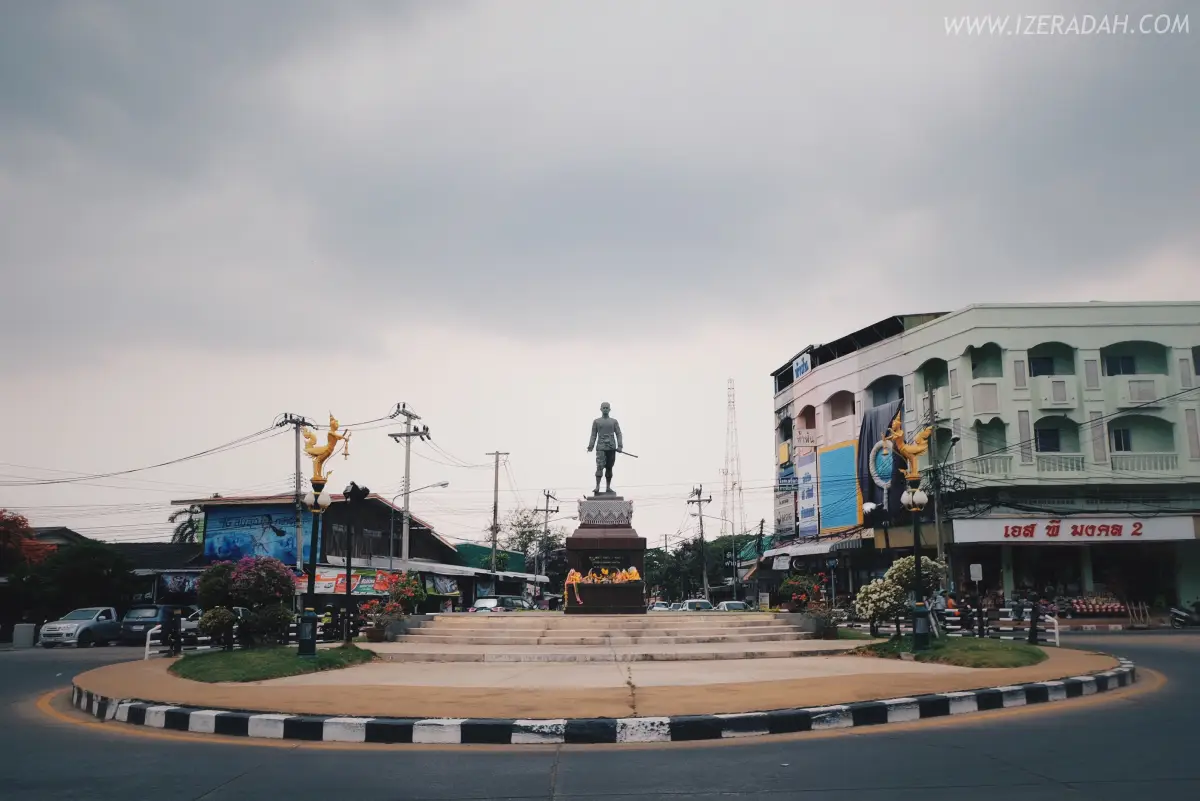
Open Days: Daily
Opening Hours: 06.00 – 18.00
Phra Khattiyawongsa (Thon) Monument in Roi Et is one of the most meaningful landmarks in the heart of Roi Et city. Standing at the Sai Nam Phueng five-way roundabout near Roi Et College of Dramatic Arts, in Nai Mueang Subdistrict, Mueang Roi Et District, Roi Et Province, the monument honors Phra Khattiyawongsa (Thon), the first ruler of Roi Et. For travelers, this monument is more than a statue at a traffic roundabout. It is a historical marker that connects the founding of the city, local identity, civic memory, and the continuing respect that Roi Et people have for the leader who helped rebuild and strengthen the early city.
For first-time visitors to Roi Et, this monument provides a concise but powerful introduction to the province’s history. Phra Khattiyawongsa (Thon), son of Thao Chan Kaeo, was appointed the first ruler of Roi Et in 1775 during the reign of King Taksin the Great. This was a period of political restoration and community rebuilding in Siam. In this historical setting, Phra Khattiyawongsa (Thon) played an important role in gathering people, leading migration from Mueang Thong, and settling them at the abandoned settlement known as Mueang Kum Rang, which later developed into Roi Et.
The story of Phra Khattiyawongsa (Thon) is central to understanding Roi Et as a city. Roi Et did not emerge only from administrative planning. It grew through movement, settlement, reconstruction, and the ability of local leadership to bring people together. Phra Khattiyawongsa (Thon) is remembered as a capable ruler who helped restore a deserted settlement, organize communities, and lay the foundation for Roi Et to become a stable and prosperous town. The monument therefore should not be seen only as a bronze statue, but as a symbol of the city’s beginning and the collective memory of its people.
The monument is located in an active urban area. Sai Nam Phueng five-way roundabout connects several routes within Roi Et city, making the statue highly visible to people passing through the city center. The surrounding area includes shops, local businesses, educational institutions, and roads leading to major attractions such as Bueng Phlan Chai, Roi Et Tower 101, Wat Buraphaphiram, Roi Et National Museum, and the Roi Et Municipal Aquarium. Because of this central location, the monument is a convenient starting point for a cultural walk or a short city tour.
The monument features a bronze figure of Phra Khattiyawongsa (Thon) standing on an elevated memorial base. The figure is larger than life, giving the monument a dignified and commanding presence. The standing posture represents leadership, firmness, and civic authority. The base of the monument is also used as a respectful area for garlands, flowers, and ceremonial offerings during important local occasions. Placing the statue at the center of a roundabout creates a strong visual message: the city’s history remains present within everyday urban life.
The construction of the monument involved Roi Et Municipality, Roi Et Province, local citizens, and the Fine Arts Department. The municipality, with the support of the province and the local community, allocated the budget to build a monument and memorial site for the first ruler of Roi Et. Permission was requested from the Fine Arts Department, and the monument was constructed according to the approved design. The work was completed on September 3, 1999. These details give the monument value not only as a local landmark but also as a public memorial created through formal cultural and civic processes.
Phra Khattiyawongsa (Thon) is important because he represents the founding leadership of Roi Et. He is remembered as a ruler with strong administrative ability, capable of gathering people, restoring settlement, and building stability. Rebuilding a town in that era required more than authority. It required courage, knowledge of people, management of resources, and the ability to secure daily life for a new community. The migration from Mueang Thong to Mueang Kum Rang involved housing, water sources, agriculture, security, and social order. Roi Et’s development therefore reflects a foundation built through practical leadership and community cooperation.
The name “Phra Khattiyawongsa” carries the meaning of official rank and honor, while the name “Thon” preserves the personal identity remembered by local people. The full name “Phra Khattiyawongsa (Thon)” combines formal history with local memory. For Roi Et people, the name is not merely a figure from the past. It represents the beginning of the city, the restoration of an abandoned settlement, and the pride of a community that remembers its roots.
Geographically, the monument stands in Nai Mueang, the central subdistrict of Mueang Roi Et District. This makes it especially suitable for travelers who want a quick but meaningful stop before continuing to other attractions. Visitors can begin at the monument, then continue to Bueng Phlan Chai for a relaxing walk, Roi Et Tower 101 for a panoramic city view, Wat Buraphaphiram for Buddhist heritage, and Roi Et National Museum for a broader understanding of local history and culture. A route designed around the monument gives travelers a balanced view of Roi Et as a historical, religious, cultural, and modern urban destination.
The atmosphere around the monument is different from a temple or park. It is an urban memorial situated in a traffic circle. Visitors should approach the area with attention to road safety. The best activities here are paying respect, taking photos from safe spots, and using the site as a historical reference point before exploring the city. It is not a place for long walks around the monument itself, because the immediate surroundings are shaped by traffic movement. Morning and late afternoon are the best times to visit because the light is softer and the temperature is more comfortable.
Culturally, the monument remains active in public ceremonies. It is used as one of the important places for paying respect and performing ceremonial offerings during Roi Et’s major tradition known as “Somma Nam Khuen Pheng Seng Prathip,” an important Loy Krathong-related festival of the province. Provincial officials, Roi Et Municipality, schools, government agencies, and local residents gather at the monument during ceremonial occasions. This shows that the monument is still part of Roi Et’s living cultural life, not only a static historical object.
The Somma Nam Khuen Pheng Seng Prathip festival gives strong context to the role of the monument. During this period, Roi Et city becomes lively with water-related rituals, cultural performances, candlelight traditions, and public ceremonies. The monument of Phra Khattiyawongsa (Thon) is one of the places connected to the city’s ceremonial landscape. Travelers visiting during the festival can see how Roi Et connects historical respect, local belief, and contemporary civic identity in one cultural event.
Travelers interested in local history should read the background of Phra Khattiyawongsa (Thon) before visiting. Without this context, the monument may appear to be a quick roadside photo spot. With the context, however, it becomes a doorway into the story of Roi Et itself. Understanding his role in migration, settlement, and urban restoration helps visitors see the city not only as a place with temples and attractions, but as a community built through leadership, movement, and memory.
For photography, the monument is best captured in the early morning or late afternoon. Morning light usually gives a clearer view of the statue and the memorial base, while evening brings a more urban atmosphere with street activity and city lights. Visitors should take photos only from safe pedestrian areas or appropriate roadside points. Standing on the road surface or in risky traffic areas is not recommended, because the monument is located in the middle of a functioning roundabout.
Paying respect at the monument can be done simply and politely. Visitors may offer garlands or flowers, or simply wai in respect. It is important not to climb onto the base, place objects in inappropriate positions, or block traffic. The most suitable way to visit is brief, respectful, and orderly. This is especially important for groups, because the area is a public urban space used by many people throughout the day.
The monument is also useful for educational visits. It serves as a case study in how cities preserve the memory of important local figures through public monuments. Teachers, students, and cultural groups can use this site as a starting point before visiting Roi Et National Museum, Wat Klang Ming Mueang, Wat Buraphaphiram, or Bueng Phlan Chai. Together, these places help explain the relationship between history, religion, community life, and urban development in Roi Et.
As a city attraction, Phra Khattiyawongsa (Thon) Monument does not require a long visit, but it offers high cultural value. It fits well into a half-day itinerary in central Roi Et. A good route begins with the monument in the morning, continues to Bueng Phlan Chai, visits Roi Et Tower 101, stops for lunch near the lake or in the city center, and then continues to Roi Et National Museum or Wat Buraphaphiram. In the evening, visitors can return to the Bueng Phlan Chai area for a relaxed walk and dinner.
The closest and most recommended attraction to combine with the monument is Bueng Phlan Chai, a major public lake and leisure area in the center of Roi Et. The area is suitable for walking, photography, relaxation, and observing local city life. Roi Et Tower 101 is another important nearby landmark, representing the modern identity of the province. Combining the historical monument with the modern tower gives visitors a clear contrast between the founding history and contemporary symbolism of Roi Et.
Wat Buraphaphiram is another meaningful stop near the monument. The temple is known for its large standing Buddha image and its role as an important urban Buddhist site. Roi Et National Museum is ideal for those who want a deeper look at the province’s history, archaeology, and culture. The Roi Et Municipal Aquarium is suitable for families and travelers with children. Wat Nuea and Wat Klang Ming Mueang add further context to the religious and old-town atmosphere of Roi Et. Together, these attractions form a compact and informative city route.
Food options around central Roi Et are varied. Travelers can find breakfast shops, noodle restaurants, local food, cafés, steak restaurants, shabu restaurants, and lakeside dining near Bueng Phlan Chai. Streets such as Sunthon Thep Road, Thewaphiban Road, Prem Pracha Rat Road, and areas around Bueng Phlan Chai are convenient for meals before or after visiting the monument. For a relaxed evening, the lakeside area is especially suitable because it allows visitors to combine food with a walk around the public space.
For accommodation, staying in central Roi Et is the most practical choice. Hotels near Bueng Phlan Chai, Roi Et Tower 101, Haisok Road, or Thewaphiban Road make it easier to reach the monument and other city attractions. Options range from budget hotels to business hotels and boutique-style stays. Staying in the city center helps reduce travel time and is convenient for travelers who plan to continue to other districts of Roi Et the next day.
Getting There is straightforward. Visitors can travel by private car, rental car, local taxi, or public transport into Roi Et city. From Roi Et Bus Terminal, local transport can take visitors to the Sai Nam Phueng five-way roundabout. From Roi Et Airport, travelers should allow additional travel time to reach the city center. Once in the city, the monument can be used as a clear reference point for continuing to Bueng Phlan Chai, Roi Et Tower 101, restaurants, and hotels.
Drivers should check the route before arrival because the monument stands at a roundabout rather than inside a large parking area. Parking should be done only in allowed areas nearby. Stopping suddenly in traffic for photos is unsafe and should be avoided. Travelers using navigation apps can search for “Phra Khattiyawongsa (Thon) Monument” or “Sai Nam Phueng five-way roundabout, Roi Et” to reach the correct area.
The best time to visit is early morning or late afternoon, when the weather is more comfortable and the light is better for photography. Since the site is outdoors, visitors should prepare sun protection during hot hours. During the rainy season, allow extra travel time and be careful on wet surfaces. During major festival periods, especially around the Somma Nam Khuen Pheng Seng Prathip festival, traffic in the city center can become heavier, so planning ahead is recommended.
What makes Phra Khattiyawongsa (Thon) Monument different from an ordinary check-in spot is its meaning. It tells visitors that a city is not created only by roads, buildings, and government offices. A city is built by leaders, communities, cooperation, and the ability to organize social life. Phra Khattiyawongsa (Thon) represents this foundational effort. The monument is therefore a civic symbol of gratitude toward the leader who helped shape Roi Et at its beginning.
For local residents, the monument is part of everyday memory. Many people pass it regularly, seeing the statue at the center of the roundabout throughout different stages of life. During important ceremonies, people return to pay respect. When travelers ask about Roi Et, this monument is often one of the places that helps explain the city’s historical foundation. This emotional connection gives the monument a living quality beyond its physical form.
For foreign travelers, the monument can be understood as a memorial to the founding ruler of Roi Et in the late Thonburi period. It reflects the role of local leadership in rebuilding settlements and establishing provincial identity. It also shows that travel in Thailand’s secondary cities is not limited to temples and natural attractions. Local monuments like this reveal stories of migration, governance, memory, and community identity that make each province distinctive.
A visit to this monument suits history lovers, cultural travelers, students, families, photographers, and visitors attending local festivals. Although the visit itself may be brief, the site helps frame the rest of the Roi Et journey. With good planning, the monument becomes not just a photo stop, but the beginning of a deeper reading of the city.
Phra Khattiyawongsa (Thon) Monument also clearly connects past and present. Phra Khattiyawongsa (Thon) belongs to the historical period of Roi Et’s founding, while the monument completed in 1999 represents a modern act of remembrance. Its continuing role in civic ceremonies shows that history is not kept only in books. It remains present through rituals, public space, and collective respect.
Compared with other landmarks in Roi Et, Roi Et Tower 101 represents modern creativity, Bueng Phlan Chai represents public life and relaxation, Wat Buraphaphiram represents Buddhist devotion, and Phra Khattiyawongsa (Thon) Monument represents the city’s historical and administrative roots. Visiting these places together gives travelers a fuller understanding of Roi Et as a city of history, belief, culture, and everyday life.
If time is limited, allow around 10 – 20 minutes for the monument. This is enough time to pay respect, take photos, and understand the basic history before continuing to nearby attractions. If visiting in the morning, combine the stop with breakfast and Roi Et National Museum. If visiting in the evening, continue to Bueng Phlan Chai or nearby restaurants. This makes the visit efficient while still meaningful.
In summary, Phra Khattiyawongsa (Thon) Monument is an essential stop in Roi Et city. It is centrally located, easy to visit, free to access, and rich in historical meaning. The monument connects the story of Roi Et’s founding ruler with the living identity of the modern city. Travelers who want to understand Roi Et beyond surface-level sightseeing should include this landmark in their itinerary, because it offers a clear and memorable introduction to the roots of the province.
| Name | Phra Khattiyawongsa (Thon) Monument |
| Location | Sai Nam Phueng five-way roundabout near Roi Et College of Dramatic Arts, Nai Mueang Subdistrict, Mueang Roi Et District, Roi Et Province |
| Address | Nai Mueang Subdistrict, Mueang Roi Et District, Roi Et Province 45000, Thailand |
| Highlights | Monument honoring Roi Et’s first ruler, standing prominently at Sai Nam Phueng five-way roundabout in the city center |
| History | Phra Khattiyawongsa (Thon) was appointed the first ruler of Roi Et in 1775 during the reign of King Taksin the Great. The monument was completed on September 3, 1999. |
| Name Origin | Named after Phra Khattiyawongsa (Thon), son of Thao Chan Kaeo, remembered as the first ruler and founding leader of Roi Et |
| Distinctive Features | Large bronze standing statue on an elevated memorial base at a central urban roundabout |
| Travel Information | Accessible by private car, rental car, local taxi, or public transport into Roi Et city, then onward to Sai Nam Phueng five-way roundabout |
| Current Status | Open as a public city landmark and still used as a ceremonial site during important provincial traditions |
| Open Days | Daily |
| Opening Hours | 06.00 – 18.00 |
| Fees | No admission fee |
| Main Areas / Zones | Bronze statue area, memorial base for offerings, surrounding Sai Nam Phueng roundabout area |
| Caretaker / Related Authority | Roi Et Municipality and related Roi Et provincial agencies involved in ceremonial use of the site |
| Main Contact Number | Roi Et Municipality Office, Tel. 043-511222 |
| Official Website / Official Page | Roi Et Municipality website |
| Nearby Tourist Attractions | 1. Bueng Phlan Chai, about 1 km 2. Roi Et Tower 101, about 1 km 3. Wat Buraphaphiram, about 2 km 4. Roi Et National Museum, about 2 km 5. Roi Et Municipal Aquarium, about 2 km 6. Wat Klang Ming Mueang, about 2 km 7. Wat Nuea Roi Et, about 2 km |
| Nearby Restaurants | 1. Pak Mor Phu Phan, about 1 km, Tel. 09 9782 8223 2. Fish Noodle Soi 17, about 1 km, Tel. 08 5485 3980 3. Kinn’s The Buta, about 1 km, Tel. 09 0783 2351 4. Cham Suk, about 1 km, Tel. 08 4263 9853 5. Lucky Singapore Chicken Rice, about 1 km, Tel. 09 8842 4222 6. Nai Chui Vintage Pork Noodles, about 2 km, Tel. 09 3638 8323 7. Cozy Cafe & Bistro, about 2 km, Tel. 08 5852 9237 8. Sit Rim, about 2 km, Tel. 098 278 4482 |
| Nearby Accommodations | 1. M Grand Hotel Roi Et, about 1 km, Tel. 061 021 4848 2. Roi-Et City Hotel, about 1 km, Tel. 043 520387 3. HOP INN Roi Et, about 2 km, Tel. 02 080 2222 4. The Hi Place, about 3 km, Tel. 083 148 8515 5. Le Park 23 Boutique Resort, about 3 km, Tel. 043 513444 |
Frequently Asked Questions (FAQ)
Q: Where is Phra Khattiyawongsa (Thon) Monument located?
A: It is located at Sai Nam Phueng five-way roundabout near Roi Et College of Dramatic Arts in Nai Mueang Subdistrict, Mueang Roi Et District, Roi Et Province.
Q: Who was Phra Khattiyawongsa (Thon)?
A: Phra Khattiyawongsa (Thon) was the first ruler of Roi Et, appointed in 1775 during the reign of King Taksin the Great.
Q: What are the opening hours of Phra Khattiyawongsa (Thon) Monument?
A: The monument is open daily from 06.00 to 18.00.
Q: Is there an admission fee?
A: No. There is no admission fee because it is a public city monument.
Q: What kind of visit is this monument suitable for?
A: It is suitable for paying respect, taking photos, learning about Roi Et’s founding history, and beginning a short cultural route through the city center.
Q: When is the best time to visit?
A: Early morning and late afternoon are the best times because the weather is more comfortable and the light is better for photography.
Q: What attractions are near Phra Khattiyawongsa (Thon) Monument?
A: Nearby attractions include Bueng Phlan Chai, Roi Et Tower 101, Wat Buraphaphiram, Roi Et National Museum, Roi Et Municipal Aquarium, Wat Klang Ming Mueang, and Wat Nuea Roi Et.
Q: How can travelers get to the monument?
A: Travelers can reach Roi Et city by car, bus, or local transport, then continue to Sai Nam Phueng five-way roundabout by private car, taxi, or local vehicle.
 Category: ●Art, Culture and Heritage
 Group: ●Landmarks and Memorials
Last Update : 2 MonthAgo
 Last Update : 2 MonthAgo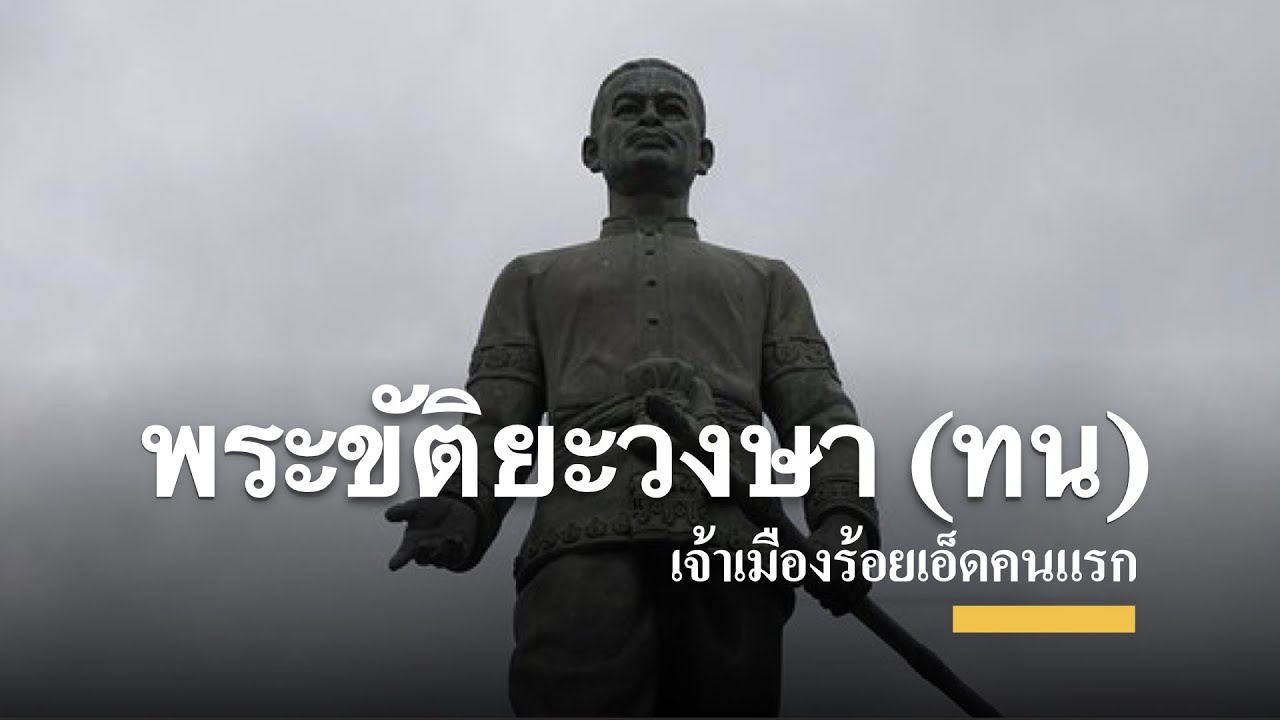
 Click to Access the Navigation Map GPS
Phra Khattiyawongsa (Thon) Monument Map
Recommend

 Historical Sites and Monuments(3)
Landmarks and Memorials(5)
Historical Sites and Monuments(3)
Landmarks and Memorials(5)
 Art, Craft Centres, Tradition(2)
 Museums(1)
 Educational Places
 Educational Gardens, Farm(3)
 Places of Worship
 Temple(35)
 Other Sacred Sites(6)
 Suburban Living
 Village, Community(1)
 Local Market(1)
 Nature and Wildlife
 National Parks and Marine Reserves(1)
 Mountain (Doi)(2)
 Dam, Reservoir, Lake(8)
 Waterfalls(1)
 Flower Field(1)
 River, Canal(4)
 Entertainment and Agricultural
 Zoos and Aquariums(1)
 Stadium(1)
 Farms, Parks and Ecotourism(5)
 Shopping
 Shopping and Night Market(1)


