
lovethailand home >Northeastern Travel Attractions >Roi Et Travel Attractions >Nong Hi >Den Rat > Bo Phan Khan Rattana Sophon
TL;DR: Bo Phan Khan Rattana Sophon is located at Ban Nong Khun, Den Rat Subdistrict, Nong Hi District, Roi Et Province, open Daily, hours 07.00 – 17.00.
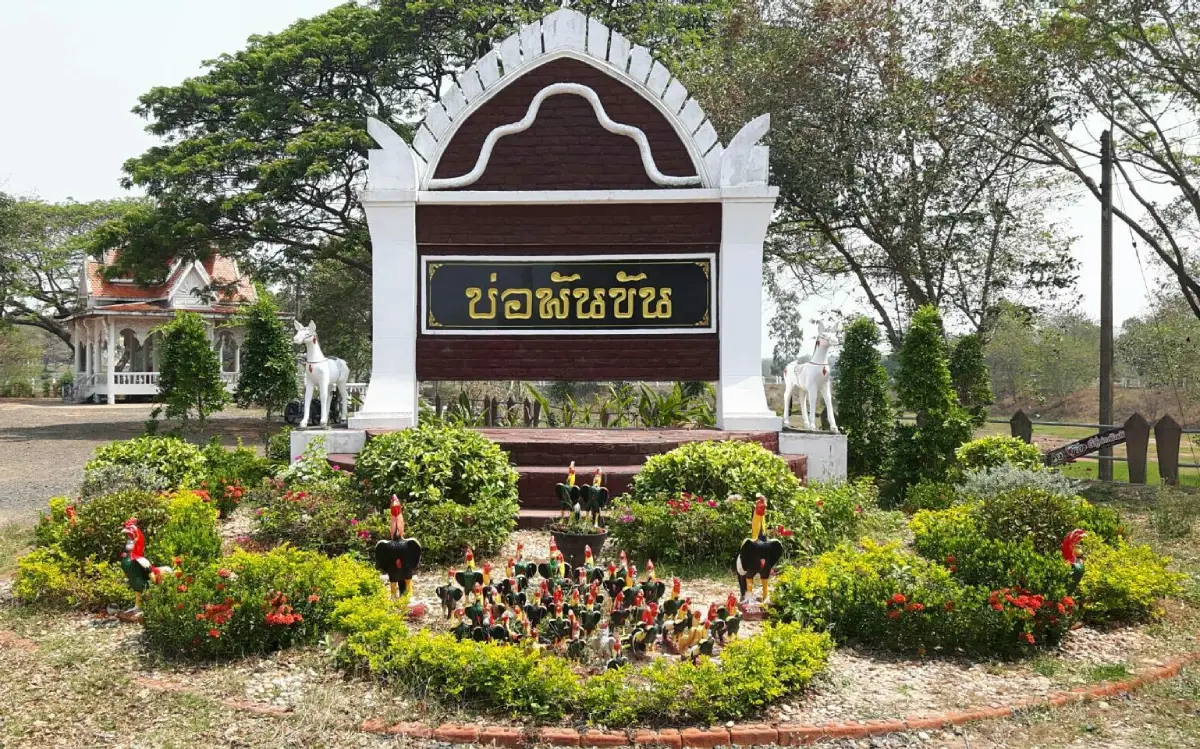
Bo Phan Khan Rattana Sophon
Open Days: Daily
Opening Hours: 07.00 – 17.00
Bo Phan Khan Rattana Sophon in Roi Et is located within Wat Ko Bo Phan Khan Rattana Sophon in Ban Nong Khun, Den Rat Subdistrict, Nong Hi District, Roi Et Province. It is one of the province’s most distinctive cultural and spiritual sites because it combines a natural freshwater spring, red sandstone ground, ancient rock-salt heritage, local beliefs, a Buddhist temple, and an educational park in one landscape. For foreign travelers, this is not a typical city attraction. It is a place where the natural environment of the Thung Kula Rong Hai region meets Buddhist faith, community memory, and local wisdom.
The name Bo Phan Khan is connected with a local belief about a small natural freshwater spring that never runs dry. The word “phan khan” refers to a thousand bowls or water scoops. Local people say that even if water is taken from the spring a thousand times, it will not be exhausted. The spring is also known locally as Nam Sang Khrok because its shape resembles a traditional rice-pounding mortar. This small spring is especially remarkable because it appears in an area associated with salty soil and natural salt traces.
The landscape around Bo Phan Khan is characterized by red sandstone, saline soil, Huai Khem, and seasonal water conditions. In the dry season, visitors can see the texture of the rock surface and white salt traces more clearly. In wetter periods, parts of the area connect with the reservoir and wetland environment. This changing landscape shows how nature, water, salt, and community use have shaped the area over time.
Historically, Bo Phan Khan was strongly connected with rock-salt production. Local communities used the natural salt resources for household consumption and for trade with nearby regions. Salt was not only a natural resource. It was also a foundation of local economy, food preservation, and community identity. This makes Bo Phan Khan an important place for understanding the older livelihood systems of the Thung Kula Rong Hai region.
Wat Ko Bo Phan Khan Rattana Sophon gives the site its strong Buddhist and educational dimension. The temple area was once an old abandoned temple site associated with communities that produced salt. It was later restored and developed into a religious and community learning space. This transformation allowed Bo Phan Khan to become more than a natural attraction; it became a place where local faith, Buddhist practice, heritage conservation, and public learning meet.
The most important Buddhist image at the temple is Phra Phuttha Sahatsakhan Maha Muni Nat. This large Buddha image is deeply respected by local people and visitors. It is connected with the identity of Bo Phan Khan and stands as a spiritual center of the temple. The image is admired not only for its size and beauty, but also for its connection with the local story of sacred water and the development of the temple as a learning park.
Phra Phuttha Sahatsakhan Maha Muni Nat is known as a Buddha image in a seated posture associated with sprinkling holy water from Bo Phan Khan. The image enshrines sacred relics brought from Sri Lanka. It has a lap width of about 9 meters and a height of about 21 meters. The area is also used for monastic ceremonies, while the lower part has been associated with meditation practice and the use of a three-metal gong, which later became one of the notable features of the site.
Another important element is the belief in Chao Pu Phan Phuwong, a local sacred guardian figure. The shrine of Chao Pu Phan is a spiritual center for the community and is closely tied to the identity of Bo Phan Khan. Many visitors come to pay respect at the shrine, visit the freshwater spring, and worship the large Buddha image during the same trip. This combination of Buddhism and local guardian belief is common in many Isan communities and gives the site a rich cultural atmosphere.
In recent years, Bo Phan Khan has been promoted as a cultural and conservation tourism destination in Roi Et. Activities such as the Bo Phan Khan Mahatsachan Thung Kula cultural market bring together local food, cultural performance, traditional salt knowledge, community products, environmental learning, and local faith. These activities help the site function not only as a place to visit, but also as a community-based cultural economy and a living learning area.
The area also reflects a major environmental transition. Parts of the former salt-production landscape later became connected with the Bo Phan Khan reservoir. The reservoir changed local livelihoods by creating a new wetland and fishery environment. As a result, the area preserves traces of the past while also supporting present-day community life. Visitors can therefore read the landscape as a history of water, salt, labor, belief, and adaptation.
A visit to Bo Phan Khan reveals several layers of meaning. The first layer is natural: the freshwater spring, sandstone ground, and saline landscape. The second is historical: the old rock-salt production area and trade memory. The third is spiritual: the shrine of Chao Pu Phan and the large Buddha image. The fourth is educational: the royal commemorative learning park and local cultural activities. Together, these layers make Bo Phan Khan a compact but meaningful heritage site.
The site is also suitable for travelers interested in community-based tourism. Around Bo Phan Khan, local cultural assets include traditional food, matmi textiles, salt-related knowledge, local storytelling, wetland life, and community rituals. Visiting the area is therefore not only about seeing a spring or a temple. It is about understanding how people have lived with water, salt, faith, and the landscape for generations.
The best time to visit is from morning to late afternoon because the site is generally open from 07.00 to 17.00. Morning is suitable for walking around the temple, visiting the spring, and worshipping the Buddha image in a calmer atmosphere. Afternoon is suitable for natural-light photography around the temple grounds and reservoir area. During the rainy season or when water levels are high, visitors should be careful around wet sandstone and waterside areas.
Visitors should dress respectfully because the main area is within a Buddhist temple. Quiet behavior is appropriate around the Buddha image, shrine, and monastic area. Visitors should not step on the natural spring, climb on sacred structures, touch offerings unnecessarily, or leave litter. Respectful behavior helps preserve both the sacred atmosphere and the fragile natural-cultural landscape of Bo Phan Khan.
Getting There from Roi Et city is done by taking the Roi Et – Phanom Phrai route toward Nong Hi District, then continuing to Den Rat Subdistrict and Ban Nong Khun. The site is about 85 kilometers from Roi Et city. Private car travel is the most convenient option. Visitors can navigate to Wat Ko Bo Phan Khan Rattana Sophon or Bo Phan Khan Rattana Sophon directly.
Travelers without private transport can first reach Nong Hi or a nearby district and then continue by local hired transport. Groups, educational visitors, or community-tourism travelers should coordinate ahead of time if they want to learn about traditional salt production, the reservoir, cultural-market activities, or local rituals. Some activities depend on community scheduling and seasonal conditions.
Bo Phan Khan is better suited to a half-day or full-day trip than a very short stop because it is located far from Roi Et city center. Visitors can spend time at the freshwater spring, worship Phra Phuttha Sahatsakhan Maha Muni Nat, pay respect at Chao Pu Phan Shrine, walk around the reservoir, learn about rock salt, and then have a meal in Nong Hi or Phanom Phrai before returning or staying overnight in a nearby district.
For families, the site can serve as an outdoor classroom. Children can learn why a freshwater spring appears in a salty landscape, how communities produced rock salt, and how local belief is connected with geography. This makes the visit more than a temple stop or a photo opportunity. It becomes a lesson in nature, history, Buddhism, and Isan culture.
For cultural travelers, Bo Phan Khan offers a deeper view of Roi Et. The province is often known for Bueng Phlan Chai, Ho Wot 101 Tower, temples in the city, and major festivals. Bo Phan Khan presents another side of Roi Et: the rural heritage of Thung Kula Rong Hai, where salt, freshwater, sandstone, local guardians, Buddhism, and community life come together.
Overall, Bo Phan Khan Rattana Sophon is valuable as a natural wonder, a historic salt-production landscape, a community learning area, a Buddhist temple site, and a cultural tourism destination. It tells the story of Roi Et through water, salt, stone, faith, and people. For travelers who want to understand Roi Et beyond the city center, this is one of the province’s most meaningful places to include in a cultural route.
| Name | Bo Phan Khan Rattana Sophon, Roi Et |
| Temple Name | Wat Ko Bo Phan Khan Rattana Sophon |
| Location | Ban Nong Khun, Den Rat Subdistrict, Nong Hi District, Roi Et Province |
| Address | Wat Ko Bo Phan Khan Rattana Sophon, Den Rat Subdistrict, Nong Hi District, Roi Et 45140, Thailand |
| Coordinates | 15.57395, 103.94477 |
| Highlights | Natural freshwater spring in a saline landscape, red sandstone ground, ancient rock-salt heritage, Chao Pu Phan Shrine, royal commemorative learning park, and Phra Phuttha Sahatsakhan Maha Muni Nat |
| History | Bo Phan Khan is an old cultural area of the Thung Kula Rong Hai region, known for its freshwater spring, rock-salt production, local belief, and community life. The temple area was later restored and developed into a royal commemorative educational park within Wat Ko Bo Phan Khan Rattana Sophon. |
| Name Origin | The name refers to a natural spring whose water is believed not to run dry even after being scooped a thousand times. The spring is also known locally as Nam Sang Khrok because it resembles a rice-pounding mortar. |
| Natural Features | A wide red sandstone area near Huai Khem, with a natural freshwater spring in a salty soil landscape and visible traces of natural salt during the dry season |
| Religious Features | Home to Phra Phuttha Sahatsakhan Maha Muni Nat, a seated Buddha image associated with holy water from Bo Phan Khan and sacred relics from Sri Lanka |
| Travel Information | From Roi Et city, take the Roi Et – Phanom Phrai route toward Nong Hi District, then continue to Den Rat Subdistrict. The site is about 85 km from Roi Et city. |
| Current Status | Open as a religious, natural, cultural, and community learning attraction |
| Open Days | Daily |
| Opening Hours | 07.00 – 17.00 |
| Facilities | Temple area, Buddha worship area, Bo Phan Khan learning area, reservoir area, community activity space, photo spots, parking area, and restaurants in Nong Hi or nearby districts |
| Main Areas / Zones | 1. Bo Phan Khan / Nam Sang Khrok Spring 2. Red Sandstone And Saline Ground Area 3. Bo Phan Khan Reservoir / Bueng Phan Khan 4. Phra Phuttha Sahatsakhan Maha Muni Nat 5. Chao Pu Phan Phuwong Shrine 6. Bo Phan Khan Naga Sculpture 7. Royal Commemorative Educational Park 8. Cultural Market And Community Learning Area |
| Related Traditions / Activities | Bo Phan Khan Chao Pu Phan worship activities, Bo Phan Khan Mahatsachan Thung Kula cultural market, cloth-offering activities for the large Buddha image, and learning activities about rock salt, local life, and Thung Kula Rong Hai culture |
| Caretaker / Responsible Group | Wat Ko Bo Phan Khan Rattana Sophon, Ban Nong Khun community, Den Rat Subdistrict community, and local agencies in Nong Hi District |
| Abbot | Dr. Phra Palat Khao Kuttadhammo |
| Online Channel | Facebook: Wat Ko Bo Phan Khan Rattana Sophon |
| Nearby Tourist Attractions | 1. Bo Phan Khan / Nam Sang Khrok Spring, about 0 km 2. Phra Phuttha Sahatsakhan Maha Muni Nat, about 0.1 km 3. Chao Pu Phan Phuwong Shrine, about 0.1 km 4. Bo Phan Khan Reservoir / Bueng Phan Khan, about 0.5 km 5. Bo Phan Khan Naga Sculpture, about 0.5 km 6. Ku Phra Kona, Suwannaphum District, about 35 km 7. Ku Ka Sing, Kaset Wisai District, about 50 km |
| Nearby Restaurants | 1. Thai101, Nong Hi District, about 12 km, Tel. 093-629-6844 2. Krua Nong Hi, about 12 km, Tel. 096-654-4676 3. Laem Khao Pun Sao, about 15 km, Tel. 082-117-0254 4. L.Kor Hor Shabu Phanom Phrai, about 25 km, Tel. 097-945-4546 5. Bua Luang Restaurant, Phanom Phrai, about 25 km, Tel. 073-230-046 |
| Nearby Accommodations | 1. Baan Pa Fun, Phanom Phrai District, about 25 km, Tel. 087-542-7426 2. Sanshine Place, Phanom Phrai District, about 25 km 3. PK Garden Hotel, Phanom Phrai District, about 25 km 4. Supattra Hotel, Suwannaphum District, about 35 km, Tel. 081-682-4679 5. Wanmanee Resort Suwannaphum, about 35 km, Tel. 089-948-1677 6. PPN Garden Resort, Suwannaphum District, about 35 km, Tel. 096-174-8405 |
Frequently Asked Questions (FAQ)
Q: Where is Bo Phan Khan Rattana Sophon located?
A: It is located within Wat Ko Bo Phan Khan Rattana Sophon in Ban Nong Khun, Den Rat Subdistrict, Nong Hi District, Roi Et Province.
Q: What are the opening days and hours?
A: The site is open daily from 07.00 to 17.00.
Q: What is the main highlight of Bo Phan Khan?
A: The main highlight is a natural freshwater spring in a salty landscape, together with red sandstone ground, ancient rock-salt heritage, Chao Pu Phan Shrine, and Phra Phuttha Sahatsakhan Maha Muni Nat.
Q: Why is it called Bo Phan Khan?
A: The name comes from the belief that the freshwater spring does not run dry even when water is scooped from it a thousand times. Locals also call it Nam Sang Khrok because it resembles a rice-pounding mortar.
Q: What is Phra Phuttha Sahatsakhan Maha Muni Nat?
A: It is an important Buddha image at Wat Ko Bo Phan Khan Rattana Sophon, associated with holy water from Bo Phan Khan and enshrining sacred relics from Sri Lanka.
Q: How can visitors travel from Roi Et city to Bo Phan Khan?
A: From Roi Et city, take the Roi Et – Phanom Phrai route toward Nong Hi District, then continue to Den Rat Subdistrict. The distance from Roi Et city is about 85 km.
Q: How should visitors dress and behave at the site?
A: Visitors should dress respectfully because the main area is within a Buddhist temple. They should behave quietly around sacred areas and avoid stepping on or touching the natural spring inappropriately.
Q: What nearby places can be combined with a visit?
A: Nearby places include Bo Phan Khan Reservoir, Chao Pu Phan Shrine, the Bo Phan Khan Naga sculpture, Ku Phra Kona in Suwannaphum District, and Ku Ka Sing in Kaset Wisai District.
 Category: ●Educational Places
 Group: ●Educational Gardens, Farm
Last Update : 2 MonthAgo
 Last Update : 2 MonthAgo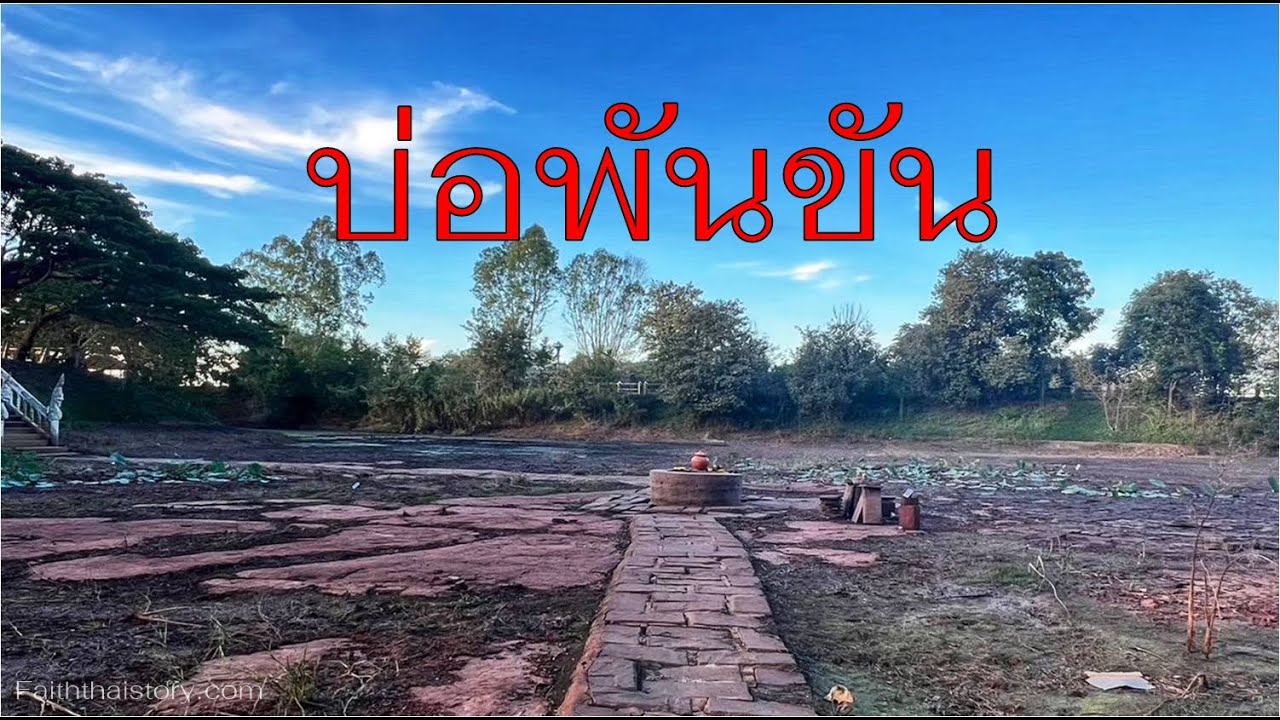
 Click to Access the Navigation Map GPS
Bo Phan Khan Rattana Sophon Map
Recommend

 Art, Culture and Heritage
 Historical Sites and Monuments(3)
 Landmarks and Memorials(5)
 Art, Craft Centres, Tradition(2)
 Museums(1)
Educational Gardens, Farm(3)
Museums(1)
Educational Gardens, Farm(3)
 Places of Worship
 Temple(35)
 Other Sacred Sites(6)
 Suburban Living
 Village, Community(1)
 Local Market(1)
 Nature and Wildlife
 National Parks and Marine Reserves(1)
 Mountain (Doi)(2)
 Dam, Reservoir, Lake(8)
 Waterfalls(1)
 Flower Field(1)
 River, Canal(4)
 Entertainment and Agricultural
 Zoos and Aquariums(1)
 Stadium(1)
 Farms, Parks and Ecotourism(5)
 Shopping
 Shopping and Night Market(1)


