
lovethailand home >Northeastern Travel Attractions >Nong Khai Travel Attractions >Muang Nongkhai >Nai Muang > Luang Pho Phra Sai Songkran Festival
TL;DR: Luang Pho Phra Sai Songkran Festival is located at Wat Pho Chai Phra Aram Luang, Nai Mueang Subdistrict, Mueang Nong Khai District, Nong Khai Province, open Daily, hours Wat Pho Chai Phra Aram Luang 08.00 – 16.30 / Annual Songkran activities follow.
Luang Pho Phra Sai Songkran Festival
Open Days: Daily
Opening Hours: Wat Pho Chai Phra Aram Luang 08.00 – 16.30 / Annual Songkran activities follow the official festival schedule
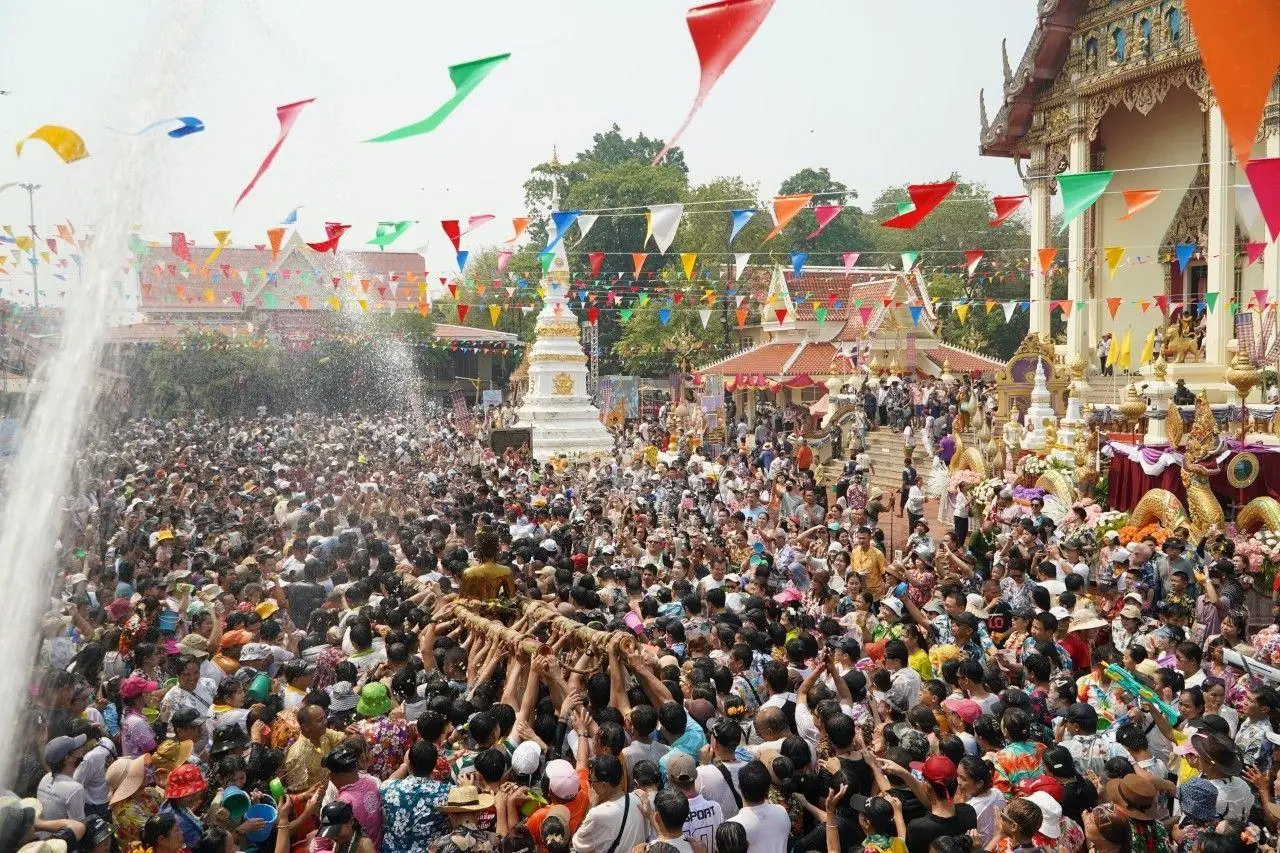
The Luang Pho Phra Sai Songkran Festival at Wat Pho Chai in Nong Khai is one of the most important Thai New Year traditions in northeastern Thailand. Held around the Songkran period, the festival centers on Luang Pho Phra Sai, the sacred Buddha image enshrined at Wat Pho Chai Phra Aram Luang in Mueang Nong Khai District. The main ritual is the ceremonial invitation of Luang Pho Phra Sai from the ordination hall, placing the sacred image on a decorated procession vehicle, and carrying it through the city so that local people and visitors can pour scented water over the image for blessings. This festival combines Buddhist devotion, Thai New Year merit-making, community unity, Isan cultural identity, and the lively atmosphere of a Mekong riverside city.
This festival is far more than a general water-splashing event. Luang Pho Phra Sai is one of the most revered Buddha images in Nong Khai Province and is deeply respected as the spiritual heart of the city. Every April, Wat Pho Chai and the surrounding streets become filled with worshippers, local families, returning residents, pilgrims, and tourists who come to make merit, pay respect, pour scented water, and take part in the procession. Many people wear floral shirts, traditional Isan clothing, or pha khao ma cloth, creating a distinctive local atmosphere that reflects the connection between Songkran, Buddhism, and the identity of Nong Khai.
The roots of the festival are connected with the traditional Thai Songkran period. In Thailand, 13 April is known as Maha Songkran Day, 14 April as Wan Nao, and 15 April as Wan Thaloeng Sok, marking the traditional Thai New Year. Across the country, Songkran is associated with merit-making, bathing Buddha images, pouring water over elders’ hands, remembering ancestors, and beginning the new year with a clean and peaceful mind. In Nong Khai, this national tradition is enriched by the special ritual of bringing Luang Pho Phra Sai out from the ordination hall for public water-pouring, making the local festival one of the most memorable Songkran traditions in the Isan region.
Wat Pho Chai Phra Aram Luang is the main temple of the festival. Located on Prachak Silapakhom Road in the city center of Nong Khai, the temple was once known as Wat Phi Phiu before being restored and renamed Wat Pho Chai. It is now a third-class royal temple of the common type under the Mahanikaya order and is open to visitors daily. The temple is both a place of worship and a cultural landmark. Its most important sacred object is Luang Pho Phra Sai, enshrined inside the ordination hall and regarded as the principal Buddha image of Nong Khai.
Luang Pho Phra Sai is a seated Buddha image in the Mara Vijaya posture, associated with Lao-Lan Xang artistic tradition. The image is admired for its graceful proportions, serene expression, and deep spiritual presence. Local legend connects Luang Pho Phra Sai with 3 important Buddha images: Phra Suk, Phra Soem, and Phra Sai. These images are believed to have been created by royal daughters of a Lan Xang king. During the historical movement of Buddha images from Laos to Thailand, Phra Sai was said to have shown miraculous signs when attempts were made to move it onward. The image eventually remained at Wat Pho Chai, where it has been venerated by the people of Nong Khai ever since.
The deep devotion to Luang Pho Phra Sai gives the Songkran festival its spiritual power. Pouring scented water over the sacred image during the Thai New Year is believed to bring blessings, peace, prosperity, and protection. People come with flowers, candles, incense, scented water, and offerings. Some come to pray for family happiness, career success, health, study, travel safety, or a new beginning. The ritual is not only personal; it is also communal. It brings together the whole city in a shared act of reverence and renewal.
According to the traditional pattern of the festival, merit-making and almsgiving are held in the morning from 13 to 15 April. The ceremony then proceeds with the invitation of Luang Pho Phra Sai from the ordination hall. The image is placed on a ceremonial vehicle and carried around the ordination hall 3 times before the public water-pouring begins. Traditional activities may include local sports, bird and fish release, merit-making, offering robes and necessities to monks, and community events. Provincial leaders, local authorities, merchants, residents, and Buddhist devotees all take part in the occasion.
In the afternoon, the procession of Luang Pho Phra Sai moves through the city streets of Nong Khai. It is accompanied by Buddha images from local communities and temples, decorated vehicles, traditional dance groups, pha khao ma processions, cultural performances, and large numbers of people waiting along the route. The sight of worshippers gently pouring scented water over Luang Pho Phra Sai as the procession passes is the defining image of Nong Khai Songkran. It shows that the heart of the festival is not uncontrolled water play, but respectful water-pouring as an act of blessing and devotion.
In the evening, candlelight circumambulation around the ordination hall and festive performances create a different atmosphere. Wat Pho Chai becomes both sacred and lively. Visitors come to make merit, listen to music, watch cultural performances, and spend time with family. In some years, the festival extends over several days. Activities may include pouring water over Luang Pho Phra Sai, making merit for good fortune, tak bat 108, donating land-related merit, offering robes and necessities, presenting flowers, candles, scented water, and perfumes, wrapping cloth around the Phra That Arahant relic monument, and enjoying traditional performances.
The most recent published schedule for 2026 used the name “Mahasongkran Isan Nong Khai 2026: Songkran Pha Khao Ma Som Ma Luang Pho Phra Sai.” It was scheduled from 12 to 17 April 2026 at Wat Pho Chai Phra Aram Luang. On 12 April, the schedule included a devotional dance offering to Luang Pho Phra Sai and a cultural performance. On 13 April, Luang Pho Phra Sai was invited down from the ordination hall and carried around the city for public water-pouring. On 18 April, the sacred image was returned to the ordination hall. This extended schedule allows more residents and travelers to participate and makes Wat Pho Chai the clear center of Songkran in Nong Khai.
The word “som ma” in the festival name reflects an Isan cultural value connected with apology, respect, and humble renewal. Songkran Pha Khao Ma Som Ma Luang Pho Phra Sai is therefore not simply a water festival. It is a ritual of asking forgiveness, showing gratitude, and beginning again with a calm heart. The pha khao ma, a traditional multipurpose cloth widely used in Isan daily life, adds a strong local identity to the festival. When it appears in processions and community activities, it makes the event visually and culturally distinctive.
The festival also preserves traditional Thai and Isan cultural practices. Its purpose is to continue the ancient Thai Songkran custom and to keep local games, folk activities, and community traditions alive. In traditional communities, Songkran was never separated from local play, merit-making, elder respect, temple rituals, and public gathering. At Wat Pho Chai, these elements remain visible. The temple, families, schools, government agencies, merchants, and residents all participate in keeping the tradition meaningful for younger generations.
Socially, the procession of Luang Pho Phra Sai brings people together across generations. Many Nong Khai residents who live elsewhere return home during Songkran to pay respect to the sacred image, make merit, and meet family. Elderly people reconnect with a tradition they have known for decades, while children and young people learn how to behave respectfully in a Buddhist ritual. They see the difference between bathing a Buddha image for blessings and playful water splashing for fun. The festival becomes a living cultural classroom in the middle of the city.
For tourism, the Luang Pho Phra Sai Songkran Festival is one of the strongest reasons to visit Nong Khai in April. Visitors can experience a major royal temple, witness the procession of the province’s sacred Buddha image, participate in respectful water-pouring, and continue to nearby attractions such as Tha Sadet Market, the Mekong riverside Naga landmark, Wat Lamduan, Prap Ho Monument, Sala Keoku, and the First Thai–Lao Friendship Bridge. During Songkran, Nong Khai offers both a spiritual festival and the relaxed charm of a Mekong border town.
Inside Wat Pho Chai, several important areas are used during the festival. The ordination hall is the sacred heart of the temple and the normal home of Luang Pho Phra Sai. The courtyard in front of the hall is used for ceremonies and public gathering. The water-pouring area allows worshippers to pour scented water respectfully. Other areas support merit-making, tak bat 108, offerings, candle and flower worship, robe offering, and cloth-wrapping ceremonies at the Phra That Arahant. The procession route connects the temple with the streets of Nong Khai, while performance zones host cultural shows according to the annual schedule.
Visitors who want to participate should prepare respectfully. Clothing should be modest and suitable for entering a temple. Light, comfortable clothing is useful because April is hot, but it should still be appropriate for a religious site. Visitors should bring drinking water, sun protection, and only necessary belongings. During the procession, water should be used gently and respectfully. Visitors should not climb onto ceremonial vehicles, block the procession route, push into restricted areas, or splash water aggressively near religious objects, monks, elders, or officials.
Getting to Wat Pho Chai is convenient because the temple is located in Nong Khai city center. Travelers arriving by private car can enter the city via Mittraphap Road and continue to Prachak Silapakhom Road. During Songkran, extra time should be allowed for traffic and parking because the area around the temple becomes crowded. From Nong Khai Railway Station or the bus terminal, visitors can use local tuk-tuks, motorized tricycles, taxis, or local transport. Travelers staying near the Mekong riverside or Tha Sadet Market can also include Wat Pho Chai in a short city route.
Getting There is best planned together with nearby attractions in central Nong Khai. Visitors can begin at Wat Pho Chai to pay respect to Luang Pho Phra Sai, continue to Tha Sadet Market and the Mekong riverside, visit the Naga landmark near Wat Lamduan, or stop at Prap Ho Monument. With more time, the route can include Sala Keoku and the First Thai–Lao Friendship Bridge. Those who want to watch the procession should arrive early, choose a respectful viewing point, and avoid blocking the ceremonial route.
Food is another part of the Nong Khai experience. Around Wat Pho Chai and the city center, visitors can find Vietnamese restaurants, Isan eateries, riverside Thai restaurants, local cafes, and family-friendly dining spots. Nong Khai is especially known for naem nueang, Vietnamese-style dishes, Mekong fish, papaya salad, grilled chicken, larb, nam tok, and northeastern Thai food. During the festival, popular restaurants can be busy, so travelers should plan meal times carefully or reserve in advance where possible.
Accommodation near Wat Pho Chai ranges from riverside guesthouses and hostels to city hotels and mid-range properties. Staying in central Nong Khai is convenient for visitors who want to join the festival over several days, walk around Tha Sadet Market, explore the Mekong riverside, or move easily between the temple and nearby attractions. Travelers planning to continue to the First Thai–Lao Friendship Bridge or Nong Khai Railway Station should choose hotels with easy access to main roads or local transport.
The Luang Pho Phra Sai Songkran Festival also reflects the long relationship between Buddhism and the Mekong cultural landscape. Nong Khai is a border city connected with Thailand, Laos, and the broader Mekong world. Luang Pho Phra Sai itself is associated with Lan Xang legend and cross-border Buddhist history. The procession of the sacred image through Nong Khai is therefore both a Buddhist ritual and a public expression of the city’s cultural identity.
For foreign travelers, this festival offers a deeper understanding of Songkran than the well-known image of street water fights. Here, water is used as a symbol of cleansing, blessing, respect, and renewal. Visitors can see how local people pay respect to a sacred Buddha image, how a temple becomes the center of civic life, how families return home, and how a whole city participates in a shared tradition. It is a strong example of Thai Songkran as living heritage rather than just seasonal entertainment.
Overall, the Luang Pho Phra Sai Songkran Festival at Wat Pho Chai is one of the most meaningful cultural events in Nong Khai. It offers sacred atmosphere, a historic Buddha image, a moving procession, Thai New Year rituals, Isan identity, local food, and the charm of a Mekong riverside city. For anyone visiting Nong Khai in April, this festival is a rare opportunity to experience Songkran through faith, culture, community, and place.
| Name / Place | Luang Pho Phra Sai Songkran Festival at Wat Pho Chai, Nong Khai |
| Thai Name | ประเพณีตรุษสงกรานต์หลวงพ่อพระใส วัดโพธิ์ชัย จังหวัดหนองคาย |
| Location | Wat Pho Chai Phra Aram Luang, Nai Mueang Subdistrict, Mueang Nong Khai District, Nong Khai Province |
| Address | Prachak Silapakhom Road, Nai Mueang Subdistrict, Mueang Nong Khai District, Nong Khai 43000, Thailand |
| Coordinates | Plus Code: VQP4+6HM, Nai Mueang, Mueang Nong Khai District, Nong Khai |
| Highlights | Ceremonial invitation of Luang Pho Phra Sai from the ordination hall, city procession for public water-pouring, merit-making, devotional dance, tak bat 108, Isan cultural activities, and Thai New Year rituals by the Mekong River |
| History | A long-standing Nong Khai Songkran tradition centered on Luang Pho Phra Sai, the sacred Buddha image enshrined at Wat Pho Chai Phra Aram Luang, with historical links to Lan Xang, Nong Khai, and Mekong Buddhist culture |
| Name Origin | The festival is named after the Songkran ritual of bathing and paying respect to Luang Pho Phra Sai. The recent event title “Songkran Pha Khao Ma Som Ma Luang Pho Phra Sai” reflects Isan respect culture, apology, renewal, and devotion to the city’s sacred Buddha image. |
| Distinctive Features | A faith-centered Songkran festival with a sacred Buddha procession around Nong Khai city, respectful water-pouring, community merit-making, and cultural activities linking temple, city, and people |
| Travel Information | From Mittraphap Road, enter Nong Khai city and continue along Prachak Silapakhom Road to Wat Pho Chai. Visitors can travel by private car, local tuk-tuk, motorized tricycle, taxi, or local transport from Nong Khai Railway Station or the bus terminal. |
| Current Status | Wat Pho Chai is open for normal worship and tourism, and the Luang Pho Phra Sai Songkran Festival remains an important annual event of Nong Khai Province. |
| Open Days | Wat Pho Chai is open daily / The main Songkran period is 13–15 April every year |
| Opening Hours | Wat Pho Chai Phra Aram Luang: 08.00 – 16.30 / Annual festival activities follow the official schedule announced by the province and the temple |
| Latest Published Festival Schedule | In 2026, the festival was scheduled from 12–17 April at Wat Pho Chai Phra Aram Luang, with the ceremony to return Luang Pho Phra Sai to the ordination hall on 18 April |
| Fees | No admission fee / Festival performances listed in the published schedule are free to watch |
| Facilities | Parking areas around the temple and nearby streets, restrooms, worship areas, flower and incense offering points, scented water offering points, festival stalls, cultural activity areas, and local transport services in the city |
| Main Areas / Zones | 1. Ordination hall enshrining Luang Pho Phra Sai 2. Courtyard in front of the ordination hall and ceremonial invitation area 3. Water-pouring zone for Luang Pho Phra Sai and Buddha images 4. Merit-making, tak bat 108, offering, and blessing areas 5. Phra That Arahant and cloth-wrapping activity area 6. City procession route around Nong Khai 7. Cultural performance and festival activity areas according to the annual schedule |
| Abbot / Caretaker | Phra Ratcharattanalongkon, Abbot of Wat Pho Chai Phra Aram Luang / Nong Khai Province, Wat Pho Chai Phra Aram Luang, Nong Khai Municipality, and related agencies jointly manage the annual festival |
| Main Contact Number | Wat Pho Chai Tel. 042-461123 / Nong Khai Tourism Information Center Tel. 042-421326 |
| Official Website / Official Page | Wat Pho Chai Phra Aram Luang Nong Khai, Nong Khai Provincial Office of Tourism and Sports, Nong Khai Tourism Information Center, Nong Khai Provincial Office of Buddhism |
| Nearby Tourist Attractions | 1. Pho Chai Market, about 0.5 km 2. Phra That Klang Nam / Phra That La Nong, about 1 km 3. Tha Sadet Market, about 1 km 4. Mekong Naga Landmark in front of Wat Lamduan, about 2 km 5. Prap Ho Monument, about 2 km 6. First Thai–Lao Friendship Bridge, about 5 km 7. Sala Keoku, about 5 km 8. Nong Khai Aquarium, about 13 km, Tel. 042-415623 |
| Nearby Restaurants | 1. Macky’s Riverside Kitchen, about 1 km, Tel. 097-109-1022 2. Daeng Namnuang Nong Khai, about 1 km, Tel. 042-411-961, 042-411-234 3. Chai Khong Restaurant, about 1 km, Tel. 042-412-308 4. Krua Wun Duean Phen, about 2 km, Tel. 042-465-264, 095-653-9393 5. Nomu.ya Nong Khai, about 2 km, Tel. 061-026-7531 |
| Nearby Accommodations | 1. Mut Mee Garden Guest House, about 1 km, Tel. 042-460-717 2. Na Rim Khong River View, about 1 km, Tel. 042-412-077, 064-313-6999 3. Amanta Hotel Nongkhai, about 2 km, Tel. 042-412-899 4. Asawann Hotel Nong Khai, about 3 km, Tel. 042-464-514, 088-557-8482 5. Royal Nakhara Hotel & Convention Centre Nongkhai, about 4 km, Tel. 042-422-889 6. HOP INN Nong Khai, about 4 km, Tel. 042-413-599 |
Frequently Asked Questions (FAQ)
Q: Where is the Luang Pho Phra Sai Songkran Festival held?
A: It is held at Wat Pho Chai Phra Aram Luang in Nai Mueang Subdistrict, Mueang Nong Khai District, Nong Khai Province, with the main rituals centered on Luang Pho Phra Sai.
Q: When does the Luang Pho Phra Sai Songkran Festival take place?
A: The main Songkran period is 13–15 April every year. The annual festival schedule may extend over several days depending on the announcement by the province and the temple, such as the 2026 schedule from 12–17 April with the return ceremony on 18 April.
Q: What are the opening hours of Wat Pho Chai?
A: Wat Pho Chai Phra Aram Luang is open daily from 08.00 to 16.30. During the annual festival, activities follow the official event schedule.
Q: Is there an admission fee for the festival?
A: No. There is no admission fee for entering the temple or paying respect. Merit-making, flowers, scented water, candles, and other offerings are optional and based on personal faith.
Q: What is the main highlight of the festival?
A: The main highlight is the ceremonial invitation of Luang Pho Phra Sai from the ordination hall and the procession around Nong Khai city, allowing people to pour scented water over the sacred Buddha image for Thai New Year blessings.
Q: Can foreign travelers join the festival?
A: Yes. The festival is suitable for foreign travelers who want to experience Songkran through Buddhist water-pouring rituals, Isan cultural identity, and a major Mekong riverside community tradition.
Q: What should visitors wear to the festival?
A: Visitors should dress modestly and respectfully because the festival takes place at a royal temple. Comfortable clothing is useful in the April heat, but it should still be appropriate for a religious site.
Q: What nearby places can be visited after the festival?
A: Nearby places include Tha Sadet Market, Phra That Klang Nam, the Mekong Naga Landmark, Prap Ho Monument, Sala Keoku, and the First Thai–Lao Friendship Bridge.
 Category: ●Art, Culture and Heritage
 Group: ●Art, Craft Centres, Tradition
Last Update : 2 MonthAgo
 Last Update : 2 MonthAgo
Recommend

 Historical Sites and Monuments(1)
 Landmarks and Memorials(2)
Art, Craft Centres, Tradition(1)
Landmarks and Memorials(2)
Art, Craft Centres, Tradition(1)
 Educational Places
 Educational Gardens, Farm(1)
 Places of Worship
 Temple(16)
 Mosque(1)
 Other Sacred Sites(8)
 Suburban Living
 Village, Community(3)
 Local Market(4)
 Nature and Wildlife
 National Parks and Marine Reserves(2)
 Dam, Reservoir, Lake(2)
 Waterfalls(4)
 River, Canal(8)
 Bays and Beaches(1)
 Entertainment and Agricultural
 Farms, Parks and Ecotourism(2)
 Shopping
 Shopping and Night Market(1)


