
lovethailand home >Northeastern Travel Attractions >Nong Khai Travel Attractions >Art, Culture and Heritage > Art, Craft Centres, Tradition
TL;DR: Art, Craft Centres, Tradition of Northeastern in Nong Khai
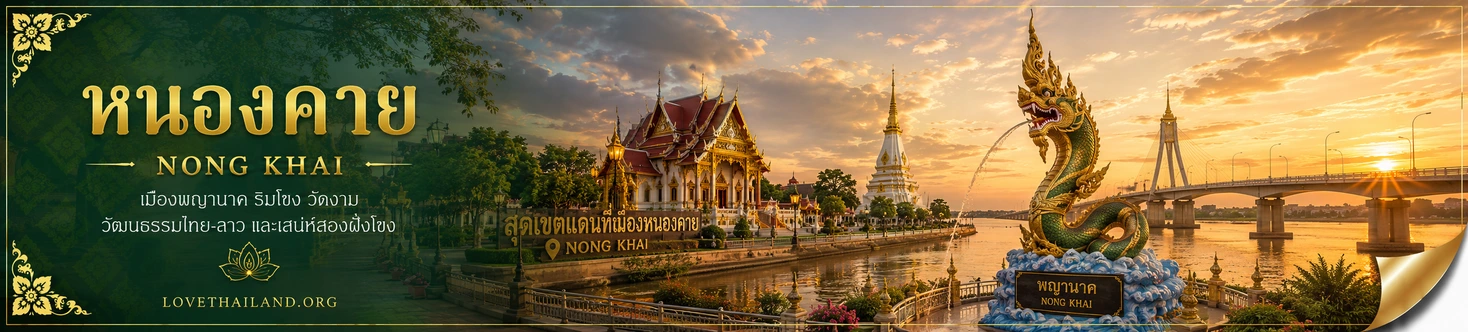

Art, Culture and Heritage
Art, Craft Centres, Tradition
 Art, Craft Centres, Tradition
Thai Culture and Traditions are fundamental foundations that reflect the identity, way of life, and national character of Thai people from the past to the present. They are not merely forms of activities or rituals, but also systems of thought, beliefs, and patterns of living that have been passed down through generations. These elements shape social order, unity, and shared understanding within Thai society.
The word “culture” originates from Pali and Sanskrit. The term “Vaddhana” means growth or prosperity, while “Dharma” refers to goodness. When combined, they signify a form of goodness that leads to systematic development. In English, the term “Culture” represents a way of life that reflects progress, morality, and social unity.
Meanwhile, “tradition” refers to practices or rules that are collectively accepted within a society, such as etiquette, respect for elders, dress codes, and religious rituals. Therefore, tradition is a tangible part of culture, expressed through everyday human behavior.
Thai culture has been influenced by multiple factors, especially Buddhism, which plays a central role in shaping Thai thought and lifestyle. Temples, art, and various traditions all reflect deep faith and connection to religion. Additionally, Thai culture has been influenced by Brahmanism, Hinduism, neighboring cultures, and international trade.
The Thai language is another essential component of culture. It was developed during the reign of King Ramkhamhaeng and has evolved continuously. Thai has unique characteristics, such as its five-tone system and vocabulary influenced by Pali, Sanskrit, Chinese, and English, reflecting the adaptability and openness of Thai society.
Geography has also played a significant role in shaping Thai culture. Thailand is a fertile river basin with abundant waterways, leading to a lifestyle closely connected to water. This is reflected in traditions such as Loy Krathong and boat racing, which symbolize the relationship between humans and nature.
Moreover, Thai society has long been based on agriculture, resulting in traditions related to farming, such as rain-invoking ceremonies, communal rice harvesting, and rice blessing rituals. These activities highlight cooperation and unity within communities.
Culture also influences human behavior, including greetings, expressions of respect, and social interactions, which vary across societies. Thus, culture serves as a mechanism for maintaining social order and harmony.
When examining different regions of Thailand, it becomes clear that traditions vary and possess unique identities. The North features the novice ordination ceremony reflecting Tai Yai culture, the Northeast has the Rocket Festival linked to rain beliefs, the Central region highlights rice-related rituals, and the South presents traditions tied closely to religion.
Thai traditions are closely tied to the calendar and seasons. For example, January marks post-harvest merit-making, April is Songkran (Thai New Year), November is Loy Krathong, and October is the Kathin ceremony. These traditions reflect a lifestyle deeply connected to nature and religion.
In tourism, Thai culture and traditions are key attractions that draw visitors from around the world. Festivals such as Songkran, Loy Krathong, and local ceremonies help generate income and enhance Thailand’s global image.
However, preserving culture and traditions is essential. Social and technological changes may cause some traditions to disappear. Therefore, promoting knowledge and encouraging participation among younger generations is crucial for sustaining cultural heritage.
In conclusion, Thai culture and traditions form the foundation of society and reflect national identity. Understanding and valuing these elements not only preserves the past but also guides sustainable development for the future.
| Main Category | In-Depth Expert Details |
| Definition of Culture | A system of thoughts, beliefs, and ways of life passed down through generations, including both intangible aspects (beliefs, values, religion, language) and tangible aspects (architecture, art, food, clothing). |
| Definition of Tradition | Practices or rituals consistently followed within a society, often related to religion, beliefs, or lifestyle, such as ceremonies, agricultural traditions, and annual festivals. |
| Landmark & Monument | Places or structures of historical, cultural, or social importance, such as monuments, palaces, and memorial sites, often serving as centers for learning and tourism. |
| Royal Palace and Palace | Residences of kings, viceroys, and high-ranking royals. The term “Royal Palace” is officially designated by royal command, while “Palace” refers to residences of royal family members without formal designation. |
| Structure of Thai Culture | 1. Religion – Buddhism as the core 2. Language – Thai as the main communication system 3. Arts – Performing arts, music, visual arts 4. Values – Respect, hierarchy, gratitude 5. Beliefs – Spirits, karma, and supernatural elements |
| Factors Shaping Thai Culture | - Geography: Fertile river basins - Agriculture: Rice farming lifestyle - Religion: Buddhism and Brahmanism - Trade: Influences from India, China, and the West - Politics: Historical kingdoms and governance systems |
| Northern Region (Lanna) | Main Provinces: Chiang Mai, Chiang Rai, Mae Hong Son, Lampang Characteristics: Peaceful, simple, religion-oriented Key Traditions: 1. Yi Peng Lantern Festival 2. Poy Sang Long (Novice Ordination) 3. Bodhi Tree Support Ceremony Arts: Lanna temple architecture Food: Khao Soi, Nam Prik Noom Soft Power: World-famous lantern festivals |
| Northeastern Region (Isan) | Main Provinces: Ubon Ratchathani, Khon Kaen, Yasothon Characteristics: Strong ties to agriculture and spiritual beliefs Key Traditions: 1. Rocket Festival (Bun Bang Fai) 2. Bun Phawet Festival 3. Rice Offering Ceremony Arts: Mor Lam music, Pong Lang Food: Som Tam, Larb Insight: Deep connection to seasonal farming cycles |
| Central Region | Main Provinces: Bangkok, Ayutthaya, Suphan Buri Characteristics: Royal and administrative center Key Traditions: 1. Loy Krathong Festival 2. Songkran Festival 3. Rice Blessing Ceremony Arts: Khon, classical dance Food: Tom Yum, Pad Thai Soft Power: Royal Thai culture |
| Southern Region | Main Provinces: Nakhon Si Thammarat, Songkhla, Phuket Characteristics: Cultural diversity (Buddhist & Muslim) Key Traditions: 1. Hae Pha Khuen That Festival 2. Chak Phra Festival 3. Sart Month Ten Festival Arts: Shadow puppetry, Manora dance Food: Gaeng Som, Kua Kling Insight: Coastal culture and trade influence |
| Regional Comparison | North: Religion and tranquility Northeast: Agriculture and spiritual beliefs Central: Royal traditions and ceremonies South: Cultural diversity and trade influence |
| Thai Cultural Calendar (12 Months) | January – Post-harvest merit-making February – Makha Bucha Day March – Traditional New Year rituals April – Songkran Festival May – Visakha Bucha Day June – Candle Festival July – Buddhist Lent August – Traditional ceremonies September – Sart Festival October – Kathin Ceremony November – Loy Krathong Festival December – Local festivals |
| Economic Role | - Promotes cultural tourism - Generates local income - Supports creative economy - Enhances Thailand’s Soft Power |
| Global Role | - Represents Thailand’s identity - Builds international image - Attracts global tourists - Expands cultural influence |
| Future Trends | - Digital Culture & Virtual Tourism - Cultural Experience Tourism - AI-driven Cultural Promotion - Sustainable Cultural Preservation |
Frequently Asked Questions (FAQ)
Q: What is Thai culture?
A: Thai culture refers to the way of life, beliefs, values, and traditions that have been passed down through generations, including religion, language, arts, and social practices.
Q: Why are Thai traditions important?
A: Thai traditions help preserve national identity, promote social harmony, and pass down cultural values from one generation to another.
Q: How does Thai culture differ across regions?
A: Each region has unique characteristics. The North emphasizes Lanna traditions, the Northeast focuses on agricultural and spiritual beliefs, the Central region reflects royal culture, and the South shows a mix of religious and cultural influences.
Q: What are the most famous Thai festivals?
A: Popular festivals include Songkran (Thai New Year), Loy Krathong, Yi Peng Lantern Festival, and the Rocket Festival, all of which attract international visitors.
Q: What is the difference between a landmark and a monument?
A: A landmark is a well-known location representing an area, while a monument is built to commemorate important people or historical events.
Q: What is the difference between a Royal Palace and a palace?
A: A Royal Palace is officially designated by royal command, while a palace refers to a residence of royal family members without formal royal designation.
Q: How is Thai culture connected to religion?
A: Thai culture is deeply rooted in Buddhism, influencing rituals, merit-making activities, and values such as respect, gratitude, and compassion.
Q: What is the Thai cultural calendar?
A: It is a yearly cycle of festivals and traditions, such as Songkran in April and Loy Krathong in November, reflecting seasonal and religious practices.
Q: How does Thai culture support tourism?
A: Thai culture attracts tourists through festivals, traditions, and local experiences, generating income and promoting Thailand’s global image.
Q: What is Thailand’s soft power?
A: It refers to cultural influence such as Thai food, festivals, arts, and traditions that gain international popularity and recognition.
Q: How can Thai culture be preserved?
A: Preservation can be achieved through education, cultural promotion, community participation, and the use of digital technology.
Q: Why does Thai culture remain relevant in the digital age?
A: Because it adapts to modern platforms, such as online media and digital tourism experiences, making it accessible to younger generations and global audiences.

 Muang Nongkhai(


