
lovethailand home >Northeastern Travel Attractions >Nong Khai Travel Attractions >Ratana Wapi >Ratana Wapi > Nong Khai Agricultural Research and Development Ce..
TL;DR: Nong Khai Agricultural Research and Development Center is located at Rattanawapi Subdistrict, Rattanawapi District, Nong Khai Province, open Daily, hours 09.00 – 16.00.
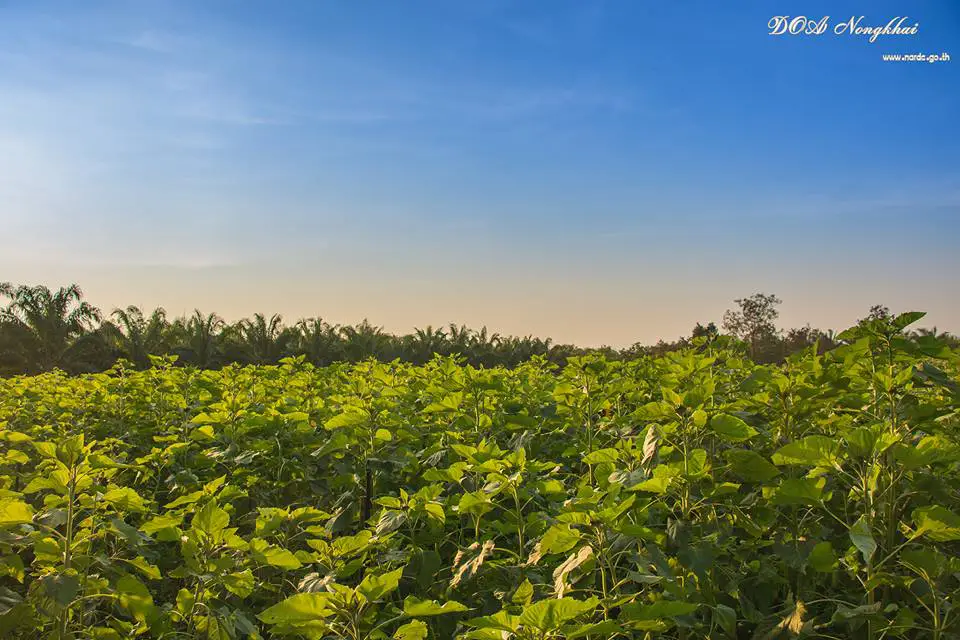
Nong Khai Agricultural Research and Development Center
Open Days: Daily
Opening Hours: 09.00 – 16.00
Nong Khai Agricultural Research and Development Center, also known to many travelers as the Nong Khai Horticultural Research Center, is an agritourism and plant-learning destination in Rattanawapi District, Nong Khai Province. The center is located at 191 Moo 9, Rattanawapi Subdistrict, Rattanawapi District, Nong Khai 43120, along the Nong Khai-Bueng Kan route on Highway 212. Because the area is relatively close to the Mekong River, the local environment has a notable level of humidity that supports a wide variety of plant trials, collections, and demonstration plots. For travelers who want to see another side of Nong Khai beyond temples, river views, markets, and border crossings, this center offers a calm and informative experience focused on fruit trees, local edible plants, fragrant plants, herbs, and seasonal flowers.
The value of this center is not limited to its greenery. It functions as a research, testing, conservation, and knowledge-transfer site for agriculture in the upper northeastern region of Thailand. Visitors can walk through different plant zones and observe how horticultural crops are studied and grown in the local environment. The center is especially suitable for families, students, agricultural groups, teachers, researchers, farmers, and travelers interested in sustainable agriculture, local food plants, and botanical diversity in the Mekong region.
One of the main highlights is the fruit-tree demonstration area. The center includes fruit crops such as durian, mangosteen, longkong, and cashew nut. These crops are often associated with southern or eastern Thailand, so seeing them grown in Nong Khai helps visitors understand how climate, humidity, soil, water, and local growing conditions influence plant adaptation. For agricultural learners, this area demonstrates that plant cultivation is not only about planting trees, but also about observing suitability, growth behavior, and local environmental response.
The center also plays an important role in conserving local plant varieties. One notable example is makiang, a local fruit tree used for processing into products such as makiang wine and makiang juice. This plant reflects the connection between local biodiversity, food culture, community products, and value-added agriculture. For visitors, seeing makiang and other local plants in a research setting helps explain why traditional plants remain important in rural economies and local food systems.
Another important zone is the local vegetable plot. This area features edible plants commonly used in northeastern Thai cuisine, especially vegetables eaten with chili dips, larb, koi, and other spicy Isan dishes. Examples include krachiao, pak kat ya, som mong, and wild pak wan. These vegetables are more than side dishes. They represent a food culture that relies on seasonal plants, local knowledge, and balanced flavors. Some vegetables provide sourness, others bitterness, fragrance, softness, or crisp texture. Together, they help define the taste of Isan food.
The fragrant-plant collection is one of the most distinctive parts of the center. More than 100 types of fragrant plants have been gathered here, making it an interesting place for people who enjoy botanical gardens, traditional Thai gardening, and aromatic plants. Fragrant plants are connected with Thai homes, temples, rituals, food, herbal knowledge, and perfumery. Walking through this area allows visitors to notice how different plants produce different kinds of fragrance, from gentle sweetness to refreshing herbal notes. It is a quiet but memorable zone for travelers who appreciate subtle sensory experiences.
The herb zone adds another layer of cultural and practical knowledge. Northeastern Thailand has a long tradition of using local herbs as food, drinks, household remedies, and ingredients in community practices. Seeing these plants in a living collection helps visitors understand them more clearly than simply reading their names in a book. Leaves, flowers, stems, fruits, seasons, and growing conditions all matter. The herb plots also show how plant conservation is linked to community health knowledge and everyday life.
During the cool season, the center becomes more colorful with cool-climate ornamental flowers. This seasonal display gives the site a more scenic and relaxing atmosphere, especially for visitors who enjoy photography or gentle outdoor walks. The cool season is also one of the most comfortable times to explore the open-air plots, as the weather is milder and the walking experience is easier than during the hot season.
Nong Khai Agricultural Research and Development Center also helps visitors see the relationship between the Mekong River environment and agriculture. The Mekong region has long supported farming, fishing, local vegetables, medicinal plants, and riverside livelihoods. The center’s location on the Nong Khai-Bueng Kan route places it within a landscape shaped by humidity, seasonal change, community agriculture, and cross-provincial travel. In this sense, the center is part of the wider agricultural and cultural geography of the Mekong basin.
For general travelers, the experience here is different from visiting a temple, market, or riverside viewpoint. This is not a place designed mainly for entertainment. It is a working agricultural learning site, and its appeal lies in observation. Visitors can walk slowly, read plant labels, compare leaves, flowers, fruits, and planting patterns, and notice how different crops are organized. The atmosphere is simple and natural, making it suitable for slow travel and educational visits.
For schools and study groups, the center is especially valuable because it offers real outdoor learning. Students can see fruit trees, local vegetables, fragrant plants, and herbs in actual plots. They can compare commercial crops with local plants and understand how agricultural development depends on research, testing, plant selection, local adaptation, and knowledge transfer. This makes the center useful for both casual visits and more formal educational trips.
As a travel stop, the center fits well into a route through Rattanawapi, Phon Phisai, and the upper Mekong side of Nong Khai Province. Travelers can visit the center in the morning, then continue to cultural and riverside sites such as Na Hong Na Sing Buddha Footprint, the International Buddhist Park of Nong Khai, Ban Nong Khon community tourism area, Lan Naka Boek Fa in Phon Phisai, or Naga fireball viewing areas during the appropriate season. This route gives visitors a deeper view of Nong Khai beyond the main city center.
What makes the center interesting is the way many plant stories are brought together in one place. The fruit plots explain crop potential. The local vegetable plots explain food culture. The fragrant plants introduce beauty and scent. The herb plots show traditional health knowledge. The seasonal flowers add visual charm. Walking through these areas is like reading the story of northeastern agriculture through living plants.
Visitors interested in economic crops can learn from the fruit-tree plots, which include durian, mangosteen, longkong, and cashew nut. Some of these crops are better known in other regions of Thailand, but trial planting in Nong Khai shows how research helps evaluate crop potential in different environmental conditions. This kind of work is important because agricultural decisions must be based on local climate, soil, water, humidity, and long-term growth results.
Visitors interested in local food will find the vegetable plots particularly meaningful. Many Isan vegetables are not easily found in large city supermarkets, and seeing the actual plants helps explain where local flavors come from. Krachiao, pak kat ya, som mong, wild pak wan, and other edible plants contribute flavor, fragrance, nutrition, and cultural identity to northeastern meals. They also show how communities traditionally relied on nearby plants and seasonal availability.
For photography, the center offers simple but appealing natural scenes. Good subjects include the entrance sign, green plant plots, flower displays, fragrant plant collections, fruit trees, and walking paths. The photos may not look like grand landmark images, but they convey an agritourism mood: quiet, educational, local, and close to nature. The cool season and early morning provide especially pleasant light for photography.
The best time to visit is in the morning or early afternoon, when the weather is not too hot and visitors have enough time to explore the plots. The rainy season gives the area a lush and green feeling, while the cool season is best for enjoying seasonal flowers and comfortable walking conditions. During the hot season, the visit is still possible, but travelers should bring drinking water, a hat, and sun protection.
There is no admission fee, making the center a useful and affordable learning destination. However, visitors should remember that this is a research and government agricultural facility. Plants should not be picked, cut, damaged, or removed from plots. Visitors should not step into experimental plots, disturb growing areas, or ignore staff instructions. Groups planning study visits should coordinate respectfully with the center.
The main areas of the center include the entrance and office area, fruit-tree plots, local plant conservation plots, local vegetable plots, fragrant plant collection, northeastern herb plots, seasonal ornamental flower areas, and agricultural research or demonstration plots. Each area has a different purpose. Some are visually attractive, some are educational, some support conservation, and others reflect technical agricultural work.
The center’s role is also connected to local farmers and agricultural development. Institutions like this study, test, and transfer plant-related knowledge suitable for their responsible areas. Having such a center in Rattanawapi District helps farmers, agencies, and learners in Nong Khai and nearby provinces access practical agricultural knowledge more easily. The site therefore has meaning not only for tourism, but also for the agricultural future of the province.
Traveling to the center is straightforward by private car. From Nong Khai city, take Highway 212 on the Nong Khai-Bueng Kan route for about 63 km. Around the Ban Na Yang / Ban Yang Na area, follow the sign and turn into the access road for about 200 meters. From Rattanawapi District, use Highway 212 toward Mueang Nong Khai for about 10 km before turning into the center. Private vehicles or rental cars are the most convenient option because the center is located along an inter-district route where public transport to the exact entrance is limited.
Getting There is best planned as part of a route along Highway 212. Travelers can begin from Nong Khai city, visit the agricultural research center, continue to Rattanawapi or Phon Phisai for lunch, and then explore Mekong-side attractions. During the Buddhist Lent period and the Naga fireball season, this route can also connect with Phon Phisai’s riverside viewing areas. Travelers who plan to stay overnight can choose accommodation in Rattanawapi, Phon Phisai, or Nong Khai city depending on their onward route.
The center is suitable for many types of visitors. Nature lovers can enjoy the green surroundings. Plant enthusiasts can observe experimental and conservation plots. Food travelers can learn about vegetables used in Isan cuisine. Herbal-plant learners can explore local medicinal plants. Families can use the visit to help children understand where food plants come from. The center turns agriculture into a visible, walkable, and approachable experience.
Compared with the main tourist sites in Nong Khai city, this center offers a quieter and more educational experience. Visitors looking for a busy market may prefer Tha Sadet Market, while those interested in temples may go to Wat Pho Chai. However, travelers who want to understand a deeper layer of Nong Khai should include this center in their itinerary. It shows that Nong Khai is not only a Mekong border province, but also a place with agricultural knowledge, plant diversity, and local food heritage.
Overall, Nong Khai Agricultural Research and Development Center is a meaningful agritourism destination. It combines horticultural research, local plant conservation, Isan vegetable knowledge, fragrant-plant collections, herbal learning, and seasonal flower displays. Visitors can enjoy a peaceful environment while learning about real plants and their connection to food, culture, agriculture, and community life in northeastern Thailand.
For travelers seeking a deeper Nong Khai experience, this center is worth visiting. Its charm lies in its simplicity and knowledge. Each plot tells a small part of a larger story: experimentation, conservation, local wisdom, and the relationship between people and plants in the Mekong region. A visit here offers a quiet but substantial understanding of agricultural life in Rattanawapi District.
| Name | Nong Khai Agricultural Research and Development Center / Nong Khai Horticultural Research Center |
| Thai Name | ศูนย์วิจัยและพัฒนาการเกษตรหนองคาย / ศูนย์วิจัยพืชสวนหนองคาย |
| Location | Rattanawapi Subdistrict, Rattanawapi District, Nong Khai Province |
| Address | 191 Moo 9, Rattanawapi Subdistrict, Rattanawapi District, Nong Khai 43120, Thailand |
| Coordinates | Located along the Nong Khai-Bueng Kan route, Highway 212, near the Ban Na Yang / Ban Yang Na area in Rattanawapi District, Nong Khai Province |
| Highlights | An agritourism learning center with fruit-tree plots, local plant conservation areas, Isan vegetable plots, more than 100 fragrant plants, local herbs, and seasonal cool-climate ornamental flowers |
| History / Role | A research, trial, plant collection, and agricultural knowledge-transfer center serving Nong Khai Province and the upper northeastern region of Thailand |
| Name Origin | The current official name is Nong Khai Agricultural Research and Development Center. The name Nong Khai Horticultural Research Center is widely used in travel information because of the center’s strong horticultural role. |
| Distinctive Features | A humid Mekong-influenced agricultural site with diverse trial plants, local plant collections, and outdoor learning plots suitable for walking, study visits, and agritourism |
| Travel Information | From Nong Khai city, take Highway 212 toward Bueng Kan for about 63 km. Near Ban Na Yang / Ban Yang Na, follow the sign and turn into the access road for about 200 meters. From Rattanawapi District, take Highway 212 toward Mueang Nong Khai for about 10 km. |
| Current Status | Open as an agritourism and horticultural learning destination in Nong Khai Province |
| Open Days | Daily |
| Opening Hours | 09.00 – 16.00 |
| Fees | No admission fee |
| Facilities | Parking area, office building, walking areas through plant plots, outdoor learning plots, study-visit areas, and staff on duty during operating hours |
| Main Areas / Zones | 1. Entrance sign and office area 2. Fruit-tree plots such as durian, mangosteen, longkong, and cashew nut 3. Local plant and makiang conservation plots 4. Isan local vegetable plots such as krachiao, pak kat ya, som mong, and wild pak wan 5. Collection of more than 100 fragrant plants 6. Northeastern local herb plots 7. Seasonal cool-climate ornamental flower plots 8. Agricultural research and knowledge-transfer areas |
| Caretaker | Nong Khai Agricultural Research and Development Center, under Office of Agricultural Research and Development Region 3, Department of Agriculture, Ministry of Agriculture and Cooperatives / Center Director: Mr. Saksit Janyakorn |
| Main Contact Number | 042-490-935, 042-490-936 |
| Official Website / Official Page | Nong Khai Agricultural Research and Development Center / Office of Agricultural Research and Development Region 3, Department of Agriculture |
| Nearby Tourist Attractions | 1. Na Hong Na Sing Buddha Footprint, about 12 km 2. International Buddhist Park of Nong Khai, about 16 km 3. Ban Nong Khon Mekong Community Tourism Area, about 18 km 4. Lan Naka Boek Fa, Phon Phisai, about 24 km 5. Naga Fireball Viewing Area, Phon Phisai, about 25 km 6. Nong Kung Beach, Phon Phisai, about 28 km 7. Wat Phra That Bang Phuan, about 50 km |
| Nearby Restaurants | 1. Big Sato Southern Curry, Rattanawapi, about 10 km, Tel. 097-308-3084, 084-787-3177, 089-710-1081 2. Gardenia Haus / Gardenia Café, Rattanawapi, about 12 km, Tel. 084-400-7750 3. Vientiane-Style Noodle Restaurant, Rattanawapi, about 12 km 4. Khong View Restaurant, Phon Phisai, about 26 km, Tel. 095-241-9754, 092-659-6040 5. Mekong View Restaurant, Phon Phisai, about 26 km |
| Nearby Accommodations | 1. Thep In Daeng Resort, Rattanawapi, about 12 km, Tel. 081-954-0948 2. Baan Keerawan Rim Khong, Phon Phisai, about 25 km 3. PUBPUENG Resort, Phon Phisai, about 25 km 4. Boontawee Hotel, Phon Phisai, about 26 km 5. The Grand Paradise Hotel, Nong Khai-Phon Phisai Road, about 55 km 6. HOP INN Nong Khai, Mueang Nong Khai District, about 65 km, Tel. 042-413-599 |
Frequently Asked Questions (FAQ)
Q: Is Nong Khai Agricultural Research and Development Center open to visitors?
A: Yes. It is open daily as an agritourism and horticultural learning destination in Nong Khai Province.
Q: What are the opening hours?
A: The general visiting hours are 09.00 to 16.00.
Q: Is there an admission fee?
A: No. There is no admission fee for visiting the center.
Q: What can visitors see inside the center?
A: Visitors can see fruit-tree plots, makiang and other local plants, Isan vegetable plots, more than 100 fragrant plants, local herbs, and seasonal ornamental flowers during the cool season.
Q: Is the center suitable for children and student groups?
A: Yes. It is suitable for children, students, teachers, and study groups because it provides real outdoor learning about plants, agriculture, local vegetables, herbs, and horticulture.
Q: How do visitors get to the center?
A: From Nong Khai city, take Highway 212 toward Bueng Kan for about 63 km. Near Ban Na Yang / Ban Yang Na, follow the sign and turn into the access road for about 200 meters.
Q: When is the best time to visit?
A: Morning is best for walking through the plant plots because the weather is cooler. The cool season is especially pleasant because seasonal ornamental flowers are grown at the center.
Q: What nearby places can be visited after the center?
A: Nearby places include Na Hong Na Sing Buddha Footprint, the International Buddhist Park of Nong Khai, Ban Nong Khon community tourism area, Lan Naka Boek Fa, and the Naga Fireball viewing areas in Phon Phisai.
 Category: ●Educational Places
 Group: ●Educational Gardens, Farm
Last Update : 2 MonthAgo
 Last Update : 2 MonthAgo
 Click to Access the Navigation Map GPS
Nong Khai Agricultural Research and Development Center Map
Recommend

 Art, Culture and Heritage
 Historical Sites and Monuments(1)
 Landmarks and Memorials(2)
 Art, Craft Centres, Tradition(1)
Educational Gardens, Farm(1)
Art, Craft Centres, Tradition(1)
Educational Gardens, Farm(1)
 Places of Worship
 Temple(16)
 Mosque(1)
 Other Sacred Sites(8)
 Suburban Living
 Village, Community(3)
 Local Market(4)
 Nature and Wildlife
 National Parks and Marine Reserves(2)
 Dam, Reservoir, Lake(2)
 Waterfalls(4)
 River, Canal(8)
 Bays and Beaches(1)
 Entertainment and Agricultural
 Farms, Parks and Ecotourism(2)
 Shopping
 Shopping and Night Market(1)


