
lovethailand home >Northeastern Travel Attractions >Nong Bua Lamphu Travel Attractions >Non Sang >Nikhom Phatthana > Ho Sawan
TL;DR: Ho Sawan is located at Phu Kao-Phu Phan Kham National Park, Non Sang District, Nong Bua Lamphu Province, open Daily, hours 08.00 – 17.00.

Ho Sawan
Open Days: Daily
Opening Hours: 08.00 – 17.00
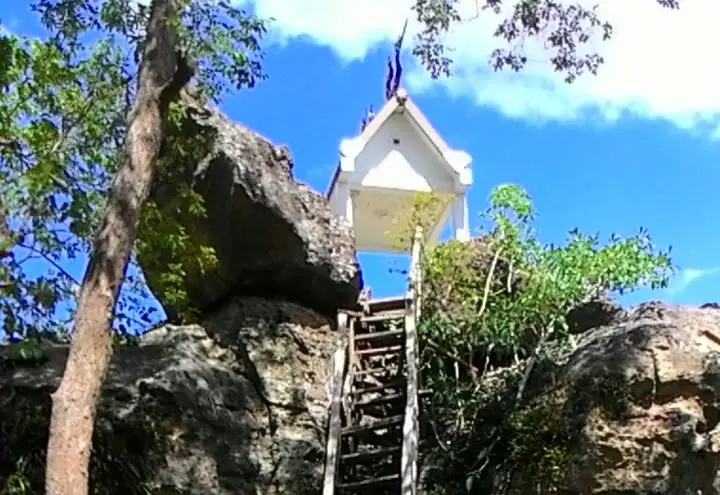
Ho Sawan in Nong Bua Lamphu is one of the most distinctive viewpoints in Phu Kao-Phu Phan Kham National Park. Located in the Phu Kao area of Non Sang District, this viewpoint is known for a large rock standing beside a cliff, with a wooden stairway rising from the cliff area to a small pavilion on top. The stairway is about 12 meters high, while the rock sits beside a cliff of about 30 meters. From the top, visitors can see the landscape of Non Sang District, the forested hills of the national park, the direction of Khon Kaen Province, and, in clear conditions, the wider reservoir scenery connected with Ubolratana Dam. Ho Sawan is therefore a compact but memorable place where rock, cliff, forest, height, and panoramic views meet in one natural setting.
The name Ho Sawan means a heavenly tower or heavenly pavilion. It does not refer to a modern urban tower, but to the feeling of climbing above a large rock and standing at a high natural viewpoint. From below, the wooden stairway appears to lead upward toward a small pavilion sitting on the stone. From above, the view opens outward over forest, hills, plains, and distant water. The name fits the place well because the experience is not only about reaching a viewpoint, but about rising from the rock terrace to a quiet elevated point that feels separate from the ordinary ground below.
Ho Sawan is part of Phu Kao, a sandstone mountain landscape in Nong Bua Lamphu. Phu Kao is known for rock terraces, caves, cliffs, dry dipterocarp forest, prehistoric evidence, dinosaur footprints, and unusual natural formations. Attractions such as Sao Hin Ham Tang, Tham Muem, Tham Puem, Tham Achan Sim, Phu Wat dinosaur footprints, and Ho Sawan all belong to this wider landscape. The large rock of Ho Sawan is not an isolated feature; it is part of the sandstone character that gives Phu Kao its strong geological identity.
The most recognizable element of Ho Sawan is the huge rock at the cliff edge. The rock surface is rough, weathered, and shaped by a long natural process. Rain, wind, sunlight, temperature change, and time have gradually created cracks, textures, and uneven surfaces. When a stairway and pavilion were added, this natural rock became a viewpoint with a strong visual identity. Visitors now remember Ho Sawan not only as a place with a good view, but as a viewpoint built directly on a dramatic natural stone formation.
The wooden stairway is an important part of the experience. It connects the lower cliff area with the pavilion above the rock. The climb is not a long trek, but it is steep enough to require attention. Visitors should hold the handrail, walk slowly, avoid rushing, and allow people to move up and down safely. The stairway gives the visit a sense of progression. Each step raises the view a little higher until the landscape finally opens at the top.
The small pavilion at the summit is the main viewing point. It is not a large structure, so visitors should use the space carefully and avoid crowding. The pavilion allows people to rest briefly, enjoy the wind, and look across the surrounding landscape. From this position, the view includes forested parts of the national park, the wider Non Sang area, and distant scenery toward Khon Kaen and Ubolratana Reservoir. The elevated setting makes Ho Sawan one of the most memorable natural viewpoints in the park.
The view from Ho Sawan reveals the connection between Nong Bua Lamphu and Khon Kaen through the same landscape. On one side, visitors see the Phu Kao forest and Non Sang countryside. On the other side, the broader direction connects with Phu Phan Kham and the Ubolratana Reservoir area. This makes the viewpoint more meaningful than a simple photo stop. It helps visitors understand how forest, mountains, reservoir, villages, and provincial boundaries meet in the upper northeastern landscape.
Phu Kao-Phu Phan Kham National Park is a large protected area with two major landscape characters. Phu Kao on the Nong Bua Lamphu side is a rugged sandstone mountain zone with caves, rock formations, and prehistoric evidence. Phu Phan Kham on the Khon Kaen side is closely connected with the Ubolratana Reservoir landscape. Ho Sawan belongs to the Phu Kao side, but its view helps visitors understand both parts of the park in one experience.
The Phu Kao area is associated with nine mountains: Phu Fang, Phu Khum Pun, Phu Han, Phu Moei, Phu Kho Mo, Phu Chan, Phu Phro, Phu Luak, and Phu Wat. This mountain group creates a complex natural landscape of stone, forest, caves, and viewpoints. Standing at Ho Sawan gives travelers a sense of this complexity. The view is not just a wide scene; it is a glimpse into a layered natural system that includes geology, ecology, history, and local travel routes.
From a geological perspective, Ho Sawan reflects the sandstone nature of Phu Kao. Sandstone landscapes often weather into rock terraces, cliffs, shelters, pillars, and unusual shapes. Different layers of stone erode at different speeds, while cracks expand slowly over time. The large rock at Ho Sawan, the surrounding stone surfaces, and the cliff form all show how natural forces can create impressive landforms without human carving. The viewpoint is therefore also an outdoor lesson in geological time.
The area around Ho Sawan remains strongly natural. Visitors may walk over rock surfaces, forest paths, and uneven ground before reaching the viewpoint. After rain, some areas may become slippery. Visitors should wear shoes with good grip, avoid walking too close to cliff edges, and stay within safe walking areas. The viewpoint is beautiful because it is high and open, but the same height also requires careful movement.
The best time of day to visit is morning or late afternoon. Morning offers cooler air, softer light, and clearer views over rock and forest. Late afternoon can also be beautiful because the light becomes warmer over the hills and reservoir direction, but visitors should leave enough time to descend before evening. Midday visits are possible, but the exposed rock and cliff areas can become hot, especially in the dry season.
The most comfortable season is from the late rainy season into the cool season. During this period, the forest looks fresh, the air is more pleasant, and the view is often clear. The rainy season brings greener scenery, but wet stairs and rocks require more caution. The hot season gives dry and open views, but visitors should prepare water, a hat, and sun protection. Ho Sawan can be visited throughout the year, but the experience changes with the season.
Preparation should focus on safety and comfort. Visitors should wear proper shoes, bring drinking water, use a hat or sun protection, and carry only light belongings. A phone or camera is useful for photographs, but it should be held securely while climbing the stairway. Families with children should supervise them closely on the stairs and at the viewpoint. Senior travelers should take their time and avoid climbing if they feel uncomfortable with height.
Ho Sawan is suitable for many types of travelers: viewpoint lovers, nature photographers, families, visitors interested in national parks, and travelers who want to see the wider Phu Kao landscape without a long hike. The route is not a difficult trekking route, but it still includes stairs, rocks, and a cliffside position. Visitors who are afraid of heights can still enjoy the surrounding area from below without climbing to the top pavilion.
Important photo spots include the wooden stairway, the pavilion on the rock, the large cliffside stone, the view over Non Sang District, the forest of the national park, and the distant reservoir landscape. The best photographs usually include both the rock and the surrounding view, because the identity of Ho Sawan comes from the relationship between natural stone and wide scenery. Visitors should take photos from stable ground and avoid risky positions near cliff edges.
Ho Sawan is also a good place to observe seasonal forest change. The Phu Kao forest includes dry dipterocarp and mixed forest characteristics that change through the year. In the rainy season, the forest looks green and dense. In the cool season, the air is clearer and leaves in some areas begin to change tone. In the dry season, the forest can become more open, making the rock formations stand out more clearly. This seasonal variation makes the viewpoint worth revisiting at different times of year.
The wider Phu Kao area also has archaeological and cultural value. Caves such as Tham Achan Sim, Tham Muem, and Tham Puem contain evidence of ancient human activity, including rock art and symbolic markings. Phu Wat is associated with dinosaur footprints, while Wat Phra Phutthabat Phu Kao adds a Buddhist and local belief dimension to the landscape. Ho Sawan itself is a natural viewpoint, but it stands within a park landscape that is rich in both nature and history.
Tham Achan Sim and Wat Phra Phutthabat Phu Kao are suitable nearby stops for travelers who want to add religious and archaeological context to a visit. The temple and cave area helps visitors understand how Phu Kao has been used and interpreted by local people across time. A trip that combines Ho Sawan with these sites becomes more than a scenic drive; it becomes a route through natural, spiritual, and historical layers of Nong Bua Lamphu.
Sao Hin Ham Tang is another nearby natural feature for travelers who appreciate unusual rock formations. It is known for stacked sandstone rocks that resemble mushroom-like pillars. While Ho Sawan is a rock-and-cliff viewpoint, Sao Hin Ham Tang is more of a natural rock sculpture. Visiting both helps travelers see the variety of sandstone forms in the Phu Kao landscape.
Chong Khao Khat Viewpoint pairs well with Ho Sawan because it offers another broad view over the Ubolratana Reservoir landscape. Ho Sawan presents the feeling of a high rock pavilion in the Phu Kao area, while Chong Khao Khat gives a wide reservoir panorama. Together, they create a more complete viewpoint route within Phu Kao-Phu Phan Kham National Park.
Hat Non Yao, also known as Pattaya 3, is a relaxing lakeside destination that works well after a visit to Ho Sawan. After climbing the viewpoint and exploring the park, travelers can continue to the freshwater beach for food, lakeside seating, and views of Ubolratana Reservoir. This combination is suitable for a full-day itinerary: viewpoint and forest in the morning, reservoir and local food in the afternoon.
Ubolratana Dam and Wat Phra Bat Phu Phan Kham can also be connected with Ho Sawan. The dam helps visitors understand the large water body seen from several park viewpoints, while Wat Phra Bat Phu Phan Kham offers a Buddhist mountain setting on the Khon Kaen side. Combining these places gives travelers a varied route of forest, viewpoint, reservoir, and hilltop temple.
Food options are mainly found in Non Sang District, Ban Kho, and the Ubolratana side rather than directly at Ho Sawan itself. Visitors should plan meals before entering the viewpoint area or after leaving the national park. Practical choices include Khrua Isan Restaurant, made-to-order food and coconut smoothie shops in Ban Kho, local noodle restaurants, Café Amazon Branch 2 Non Sang, and Varee Valley Resort and Restaurant near the Ubolratana area.
Accommodation options include national park lodging and camping areas, local accommodation in Non Sang, resorts on the Ubolratana side, and hotels in Nong Bua Lamphu town. Travelers focusing on the national park can contact Phu Kao-Phu Phan Kham National Park directly. Those who want restaurants and local services nearby may stay in Non Sang. Travelers who prefer more town facilities can stay in Nong Bua Lamphu town, while those continuing around Ubolratana Reservoir may choose accommodation on the Ubolratana side.
Traveling to Ho Sawan from Nong Bua Lamphu town is most convenient by private car. Drive toward Non Sang District, then use Highway 2146 to enter the Phu Kao-Phu Phan Kham National Park area before continuing to the Ho Sawan viewpoint. Since attractions within the national park are spread across different routes, having a private vehicle makes it easier to connect Ho Sawan with Chong Khao Khat, Hat Non Yao, Wat Phra Phutthabat Phu Kao, Tham Achan Sim, Sao Hin Ham Tang, and other nearby sites.
Travelers coming from Khon Kaen can approach through Ubolratana District, Ubolratana Dam, and Highway 2146. This route is suitable for a reservoir-and-viewpoint itinerary. Visitors can begin with Wat Phra Bat Phu Phan Kham or Ubolratana Dam, continue to Chong Khao Khat, visit Ho Sawan, and end the day at Hat Non Yao or another lakeside restaurant. The route shows how closely connected the Nong Bua Lamphu and Khon Kaen sides of the park are.
Visitor conduct is important. People should not climb outside the safe route, shake or damage the stairway or handrails, scratch the rock surface, litter, make excessive noise, or take risky photos near the cliff. Since the site is both a natural viewpoint and part of a protected national park, every visitor has a responsibility to keep the area clean, quiet, and safe for others.
For international travelers, Ho Sawan offers a view of Thailand that is different from beaches, major city temples, and northern mountain towns. It shows the sandstone cliffs, forest viewpoints, archaeological landscape, and freshwater reservoir scenery of upper northeastern Thailand. The site is compact, but it gives a clear sense of the region’s natural character. It is especially suitable for travelers who want to understand Nong Bua Lamphu through a scenic and accessible national park viewpoint.
Overall, Ho Sawan in Nong Bua Lamphu is one of the most memorable viewpoints in Phu Kao-Phu Phan Kham National Park. Its key features are the huge rock at the cliff edge, the wooden stairway rising about 12 meters from the cliff area, the small pavilion on top, the approximately 30-meter cliff setting, and wide views of Non Sang District, Khon Kaen, forest, mountains, and the Ubolratana Reservoir landscape. For travelers exploring Non Sang District and the Phu Kao area, Ho Sawan is a strong place to include on the route.
Getting There from Nong Bua Lamphu town, travel toward Non Sang District and continue on Highway 2146 into the Phu Kao-Phu Phan Kham National Park area. From there, follow the local route to Ho Sawan Viewpoint in the Phu Kao zone. A private car is the most practical option because the viewpoint can be combined with Chong Khao Khat Viewpoint, Hat Non Yao, Wat Phra Phutthabat Phu Kao, Tham Achan Sim, Sao Hin Ham Tang, Ubolratana Dam, and other attractions around the national park and reservoir.
| Name | Ho Sawan / Ho Sawan Viewpoint |
| Location | Phu Kao-Phu Phan Kham National Park, Non Sang District, Nong Bua Lamphu Province |
| Address | Ho Sawan Viewpoint, Phu Kao Zone, Phu Kao-Phu Phan Kham National Park, Non Sang District, Nong Bua Lamphu Province 39140 |
| Coordinates | 16.927300, 102.516200 |
| Highlights | Large cliffside rock, wooden stairway rising about 12 meters, small pavilion on the rock, approximately 30-meter cliff setting, and wide views of Non Sang District, Khon Kaen, forest, mountains, and Ubolratana Reservoir |
| History | A viewpoint in the Phu Kao area of Phu Kao-Phu Phan Kham National Park, a sandstone mountain landscape known for rock terraces, caves, rock formations, waterfalls, prehistoric evidence, and scenic viewpoints |
| Name Origin | The name Ho Sawan reflects the elevated rock pavilion and stairway that create the feeling of climbing to a heavenly natural viewpoint above the cliff |
| Distinctive Features | A viewpoint on a huge natural rock beside a cliff, with a wooden stairway and summit pavilion overlooking the forested Phu Kao landscape and the Ubolratana Reservoir direction |
| Travel Information | From Nong Bua Lamphu town, travel toward Non Sang District, then use Highway 2146 into Phu Kao-Phu Phan Kham National Park before continuing to Ho Sawan Viewpoint |
| Current Status | Open as a viewpoint in Phu Kao-Phu Phan Kham National Park and one of the important scenic points in the Phu Kao area |
| Open Days | Daily |
| Opening Hours | Viewpoint 08.00 – 17.00 / National Park Service Hours 08.30 – 16.30 |
| Admission Fee | Phu Kao-Phu Phan Kham National Park entrance fee: Thai adult 20 baht, Thai child 10 baht / foreign adult 100 baht, foreign child 50 baht |
| Facilities | Parking area, toilets, shops, food services, national park service area, nature route, stairway to the viewpoint, pavilion on the rock, and scenic viewing area |
| Main Areas / Zones | 1. National park entrance and visitor-service zone 2. Access route into the Phu Kao area 3. Rock terrace and forest zone around the viewpoint 4. Cliffside rock zone 5. Wooden stairway to Ho Sawan zone 6. Summit pavilion zone 7. Scenic-view zone overlooking Non Sang, Khon Kaen, forest, and Ubolratana Reservoir |
| Caretaker / Related Organization | Phu Kao-Phu Phan Kham National Park, Department of National Parks, Wildlife and Plant Conservation, together with local authorities in Non Sang District, Nong Bua Lamphu Province |
| Main Contact Number | Phu Kao-Phu Phan Kham National Park, Tel. 063-648-4821, 042-315-837 |
| Visitor Conduct | Hold the stairway handrail, do not climb outside safe areas, do not stand close to cliff edges, do not scratch or write on rocks, do not litter, and leave the viewpoint before dark |
| Nearby Tourist Attractions | 1. Tham Achan Sim / Wat Phra Phutthabat Phu Kao, about 9 km 2. Tham Muem / Tham Puem Prehistoric Rock-Art Site, about 10 km 3. Phu Wat Dinosaur Footprints, about 13 km 4. Sao Hin Ham Tang, about 15 km 5. Chong Khao Khat Viewpoint, about 25 km 6. Hat Non Yao / Pattaya 3, about 30 km 7. Ubolratana Dam, about 35 km 8. Wat Phra Bat Phu Phan Kham, about 38 km |
| Nearby Restaurants | 1. Khrua Isan Restaurant, Non Sang, about 30 km, Tel. 042-375-004 2. Made-To-Order Food & Coconut Smoothie Restaurant, Ban Kho, Non Sang, about 30 km, Tel. 082-609-8064 3. Kuai Tiao Kai Mara Nong Tun, Kut Du, about 32 km, Tel. 083-459-8955 4. Café Amazon Branch 2 Non Sang, about 33 km, Tel. 081-380-1665 5. Varee Valley Resort and Restaurant, Ubolratana, about 35 km, Tel. 089-777-1400 6. Phung Kang Nong Bua Lamphu, about 55 km, Tel. 097-318-7088, 088-052-1334 |
| Nearby Accommodations | 1. Phu Kao-Phu Phan Kham National Park Lodging and Camping Area, about 25 km, Tel. 063-648-4821 2. Muji House Resort, Non Sang, about 30 km, Tel. 083-218-2749 3. Oranee Resort, Non Sang, about 32 km, Tel. 081-871-5373 4. Varee Valley Resort and Restaurant, Ubolratana, about 35 km, Tel. 089-777-1400 5. Ruean Chor Fah Hotel, Nong Bua Lamphu, about 60 km, Tel. 095-658-5544, 042-311-139 6. Rungrod Grand Hotel, Nong Bua Lamphu, about 60 km, Tel. 093-321-1199 |
Frequently Asked Questions (FAQ)
Q: Where is Ho Sawan located?
A: Ho Sawan is located in Phu Kao-Phu Phan Kham National Park, Non Sang District, Nong Bua Lamphu Province. It is an important viewpoint in the Phu Kao area.
Q: What are the opening hours of Ho Sawan?
A: The viewpoint is open daily from 08.00 to 17.00, while the national park service hours are 08.30 to 16.30.
Q: Is there an admission fee?
A: Yes. The Phu Kao-Phu Phan Kham National Park entrance fee is 20 baht for Thai adults, 10 baht for Thai children, 100 baht for foreign adults, and 50 baht for foreign children.
Q: What is the main highlight of Ho Sawan?
A: The main highlight is the huge rock beside a cliff, the wooden stairway rising about 12 meters, the summit pavilion, and the wide view over Non Sang District, Khon Kaen, forest, mountains, and Ubolratana Reservoir.
Q: Is Ho Sawan difficult to walk?
A: The route is suitable for beginners, but visitors should be careful on the wooden stairway, rock surfaces, and cliffside area. Shoes with good grip are recommended.
Q: When is the best time to visit Ho Sawan?
A: Morning, late rainy season, early cool season, and the cool season are the best times because the weather is more comfortable and the views are often clearer.
Q: How can travelers get to Ho Sawan?
A: From Nong Bua Lamphu town, travel toward Non Sang District, then use Highway 2146 into Phu Kao-Phu Phan Kham National Park and continue to Ho Sawan Viewpoint.
Q: What nearby attractions can be visited with Ho Sawan?
A: Nearby attractions include Tham Achan Sim, Wat Phra Phutthabat Phu Kao, Tham Muem, Tham Puem, Phu Wat Dinosaur Footprints, Sao Hin Ham Tang, Chong Khao Khat Viewpoint, Hat Non Yao, Ubolratana Dam, and Wat Phra Bat Phu Phan Kham.
 Category: ●Nature and Wildlife
 Group: ●Other natural attractions
Last Update : 9 HourAgo
 Last Update : 9 HourAgo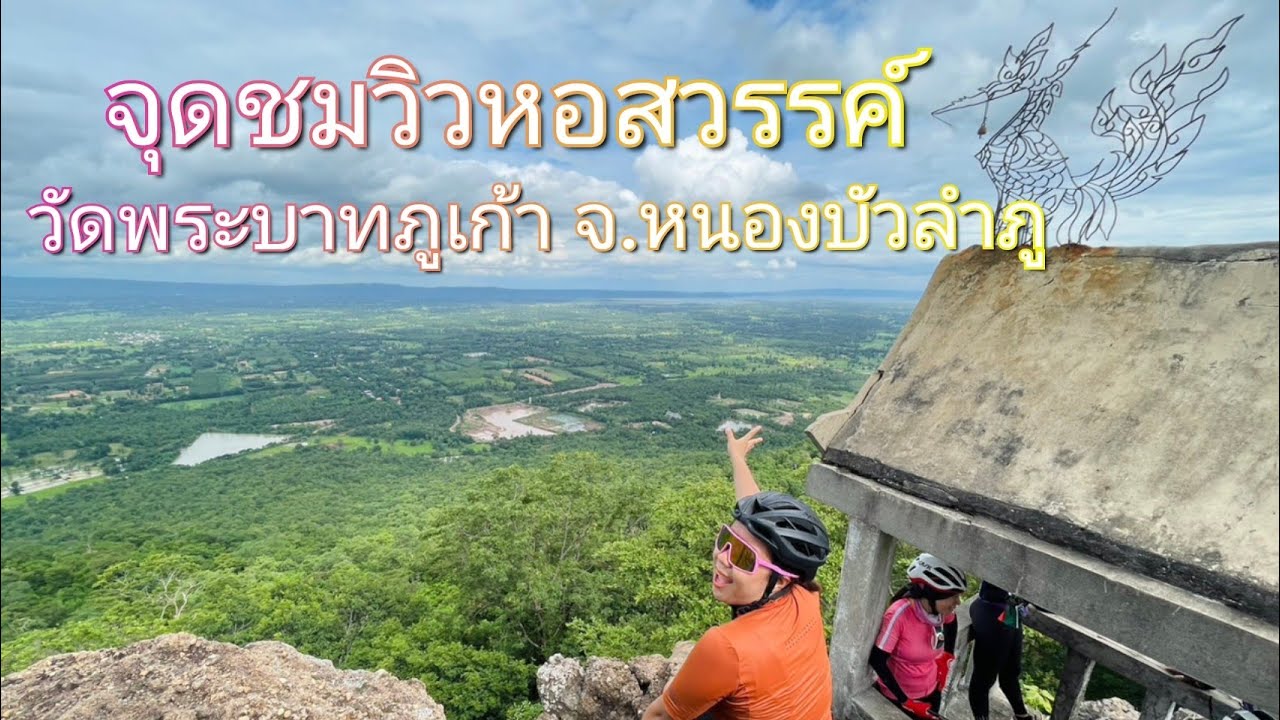

 Art, Culture and Heritage
 Historical Sites and Monuments(4)
 Landmarks and Memorials(1)
 Art, Craft Centres, Tradition(1)
 Museums(3)
 Places of Worship
 Temple(10)
 Other Sacred Sites(6)
 Suburban Living
 Village, Community(3)
 National Parks and Marine Reserves(3)
 Mountain (Doi)(5)
 Dam, Reservoir, Lake(5)
 Waterfalls(1)
 Caves(6)
 River, Canal(2)
 Bays and Beaches(1)
Other natural attractions(3)
Bays and Beaches(1)
Other natural attractions(3)


