
lovethailand home >Northeastern Travel Attractions >Nong Bua Lamphu Travel Attractions >Non Sang >Non Muang > Wat Pa Phrom Wihan
TL;DR: Wat Pa Phrom Wihan is located at Ban Phu Din Thong, Moo 7, Non Mueang Subdistrict, Non Sang District, Nong Bua Lam Phu Province, open Daily, hours 08.00 – 17.00.
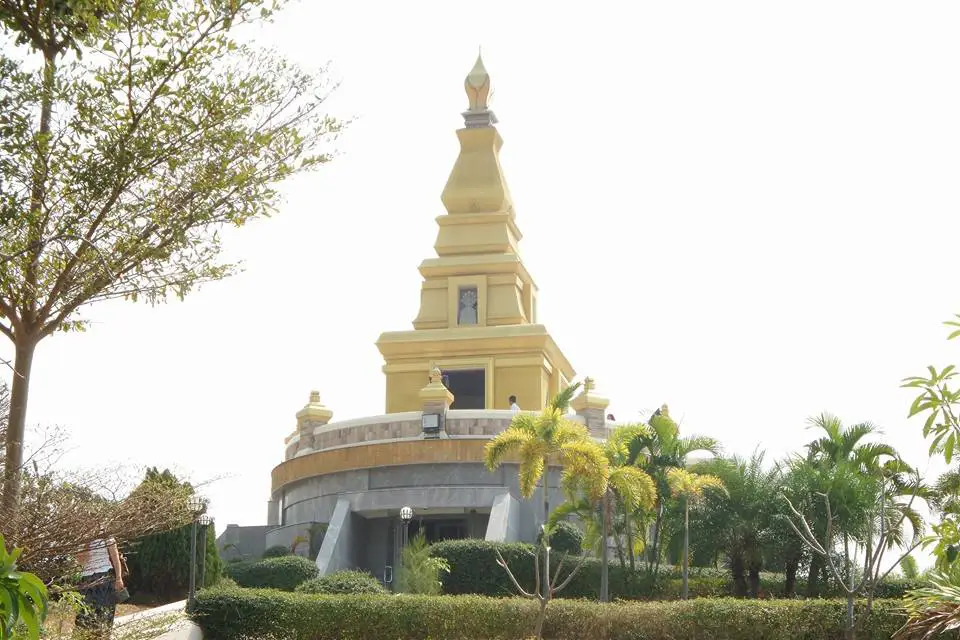
Wat Pa Phrom Wihan
Open Days: Daily
Opening Hours: 08.00 – 17.00
Wat Pa Phrom Wihan in Nong Bua Lam Phu Province is a peaceful Dhammayut forest temple in Ban Phu Din Thong, Non Mueang Subdistrict, Non Sang District. The temple is known for its shaded natural atmosphere, rich variety of trees, quiet temple grounds, and strong connection with the Thai forest meditation tradition. It follows the spiritual lineage associated with Luang Pu Khao Analayo and Luang Ta Maha Bua Yannasampanno. Wat Pa Phrom Wihan is also closely linked with Luang Pu Sai Khemathammo, also known as Phra Khru Khemasarn Suthee, a respected former abbot and forest monk deeply revered by local villagers and devotees. The temple is open daily from 08.00 to 17.00 and is suitable for merit-making, meditation, quiet reflection, and learning about the forest-temple tradition of northeastern Thailand.
Wat Pa Phrom Wihan is located in Ban Phu Din Thong, Moo 7, Non Mueang Subdistrict, Non Sang District, Nong Bua Lam Phu Province. The temple covers about 23 rai and belongs to the Dhammayut monastic order. It is not designed as a busy tourist attraction. Instead, its identity lies in stillness, shade, simplicity, and religious practice. Visitors come here to pay respect, make merit, sit quietly, observe the forest-temple environment, and experience the calm rhythm of a meditation temple in rural Isan.
The temple’s forest setting is central to its value. Trees, shade, open temple grounds, and quiet paths create an atmosphere that supports mindfulness. A forest temple is different from a large city temple. It does not rely on crowded activity or grand display. Its strength is the way the environment helps visitors slow down. At Wat Pa Phrom Wihan, the natural setting encourages people to walk gently, speak softly, and turn attention inward. This makes the temple meaningful not only as a place of worship, but also as a place for mental rest.
The name “Phrom Wihan” refers to the 4 Brahmavihara qualities in Buddhist teaching: loving-kindness, compassion, sympathetic joy, and equanimity. Loving-kindness means goodwill toward others. Compassion means the wish to help others be free from suffering. Sympathetic joy means rejoicing in the happiness and success of others. Equanimity means balanced understanding and wise acceptance. The temple name therefore carries a direct Dhamma meaning. It reflects an ideal of training the heart to become peaceful, gentle, and balanced.
Wat Pa Phrom Wihan is especially meaningful for people interested in the Thai forest meditation tradition. The temple is connected with the path of forest monks who emphasize discipline, simplicity, meditation, and direct practice. In northeastern Thailand, many forest temples are associated with the wider lineage of Luang Pu Man Bhuridatto and his disciples. Wat Pa Phrom Wihan expresses that atmosphere through its natural grounds, quiet character, and the legacy of Luang Pu Sai Khemathammo.
Luang Pu Sai Khemathammo, or Phra Khru Khemasarn Suthee, was a deeply respected former abbot of Wat Pa Phrom Wihan. He was known as a forest monk in the meditation lineage of Luang Pu Man and had strong respect for Luang Ta Maha Bua Yannasampanno of Wat Pa Ban Tat. His life and teaching helped shape the temple into a place of faith and practice. The devotion that villagers and disciples have for him comes not from outward grandeur, but from his discipline, conduct, and commitment to Dhamma practice.
Even after Luang Pu Sai passed away, Wat Pa Phrom Wihan remains a place where devotees come to remember his practice and teachings. One of the temple’s most important structures is Phrom Wihan Chedi, also known as Khematham Theranusorn. The chedi was built to enshrine Buddha relics and a statue of Luang Pu Sai Khemathammo. This makes it a major point of worship and remembrance within the temple. Visitors should approach the chedi respectfully and spend time there with quiet attention.
Phrom Wihan Chedi is more than an architectural feature. It brings together 3 important elements: reverence for the Buddha through the relics, remembrance of a forest meditation teacher through the statue of Luang Pu Sai, and the faith of the local community that continues to maintain the temple. For visitors, the chedi offers a clear focal point for reflection. It reminds people that the heart of a forest temple is not luxury, but practice, gratitude, and continuity of faith.
The temple atmosphere is best experienced slowly. Visitors can begin by paying respect in the worship area, then continue to Phrom Wihan Chedi, the temple courtyard, shaded tree areas, and quiet spaces suitable for reflection. A visit should not be rushed. The meaning of the temple emerges through silence, shade, and simplicity. Even a short stop can become meaningful when visitors move with awareness and respect the calmness of the place.
Wat Pa Phrom Wihan is also a useful place for understanding the role of forest temples in Isan society. A forest temple can be a spiritual refuge for local people, a place for merit-making, a center for Dhamma teaching, and a natural green area at the same time. It is not separated from community life. Villagers come to the temple for religious activities, remembrance of teachers, and moments of quiet support. The temple therefore serves both personal spiritual practice and community faith.
Visitors should follow proper temple etiquette. Modest clothing is important. Shirts with sleeves and appropriate trousers or skirts are recommended. Visitors should keep their voices low, avoid loud music, avoid disturbing monks or practitioners, and ask permission before taking close photographs of people. Littering is inappropriate, and every visitor should help preserve the quiet forest atmosphere. Because the temple functions as a practice space, respectful behavior is part of the visit itself.
The main areas of the temple include the entrance and courtyard, the sermon hall, the worship area, Phrom Wihan Chedi, shaded walking areas, and spaces for quiet practice. The chedi is the most important point for those who want to pay respect to Buddha relics and remember Luang Pu Sai. The shaded areas are suitable for slow walking and quiet rest. Visitors who come for meditation should use the space carefully and avoid disturbing the regular rhythm of monastic life.
Wat Pa Phrom Wihan can be included in a broader Non Sang travel route. Those interested in Buddhist sites can continue to Wat Phra Phutthabat Phu Kao. Those interested in local history can visit Non Wat Pa. Nature-oriented travelers can continue to Phu Kao – Phu Phan Kham National Park, Non Yao Beach, or Phu Aen Skywalk. This makes the temple a calm beginning or meaningful stop within a larger journey through Nong Bua Lam Phu’s cultural and natural landscape.
Getting There is convenient by private car from Mueang Nong Bua Lam Phu. Travelers can drive toward Non Sang District, enter Non Mueang Subdistrict, and continue to Ban Phu Din Thong, Moo 7. The temple coordinates are 16.8560679, 102.4335801. A private car is the most convenient option because it allows visitors to connect the temple with other nearby attractions. Travelers without a private vehicle should arrange local transport from Non Sang or Mueang Nong Bua Lam Phu and set a clear return time.
The best times to visit are morning and late afternoon. Morning gives the temple a especially peaceful atmosphere, suitable for worship and quiet reflection. Late afternoon offers softer light and a cooler feeling under the trees. Midday visits are possible, but the heat can be stronger. During the rainy season, visitors should be careful with damp ground and slippery shaded areas. During the hot season, drinking water and light but modest clothing are useful.
There is no publicly stated general admission fee for ordinary temple visits. Visitors may make donations according to personal faith. Preparation for a visit should focus on respectful conduct rather than expense. The most important things to bring are modest clothing, calm behavior, sufficient time, and awareness that this is a forest temple and a place of practice.
For people interested in Luang Pu Sai Khemathammo, visiting Wat Pa Phrom Wihan makes his story more tangible. Reading about a teacher is one thing, but standing in the temple he shaped gives a different feeling. The quiet grounds, the chedi, and the atmosphere of practice help visitors understand why local people and disciples continue to hold him in high regard. The temple preserves his memory through place, not only through words.
Families can also visit the temple meaningfully. Children and young people can learn basic temple manners, the meaning of the Brahmavihara qualities, and the importance of protecting quiet religious spaces. A visit to a forest temple teaches that going to a temple is not only about making merit. It is also about respecting silence, nature, monks, practitioners, and community faith.
For photography, Wat Pa Phrom Wihan offers simple and peaceful scenes. Suitable subjects include shaded paths, the chedi, temple grounds, trees, and quiet corners. Photography should be discreet and respectful. The most appropriate images are those that show calmness, shade, and the atmosphere of a forest temple, rather than staged poses that conflict with the religious setting.
A half-day route can begin at Wat Pa Phrom Wihan in the morning. Visitors may spend about 1 hour paying respect, walking around Phrom Wihan Chedi, and resting under the trees. After that, they can continue to Non Wat Pa or Non Sang town for food. With more time, the route can extend to Wat Phra Phutthabat Phu Kao, Non Yao Beach, or Phu Kao – Phu Phan Kham National Park. This creates a balanced experience of meditation temple, archaeology, nature, and local scenery.
A full-day route around Non Sang District can use Wat Pa Phrom Wihan as a peaceful first stop. From there, travelers can continue to Wat Phra Phutthabat Phu Kao to pay respect to the Buddha footprint and learn about local legend, then visit Non Yao Beach or Phu Aen Skywalk for reservoir views. The route offers a good combination of Buddhist faith, forest atmosphere, local culture, and natural scenery.
The importance of Wat Pa Phrom Wihan lies in how it brings together faith, nature, and the legacy of a meditation teacher. The trees and shaded setting make the temple calm. Phrom Wihan Chedi provides a sacred point of worship. The memory of Luang Pu Sai gives the place spiritual depth. Together, these elements make the temple meaningful for merit-makers, meditation practitioners, devotees of the Thai forest tradition, and travelers seeking a quiet place in Nong Bua Lam Phu.
In summary, Wat Pa Phrom Wihan is an important Dhammayut forest temple in Non Sang District, Nong Bua Lam Phu Province. It is known for its shaded natural environment, rich variety of trees, peaceful atmosphere, Phrom Wihan Chedi, and connection with Luang Pu Sai Khemathammo, a respected former abbot and forest meditation monk. Visitors who come here will find a temple suited to worship, reflection, and learning about the forest-temple tradition of Isan. It is a calm and meaningful stop that can be combined with nearby cultural and natural attractions in Non Sang District.
| Name | Wat Pa Phrom Wihan |
| Location | Ban Phu Din Thong, Moo 7, Non Mueang Subdistrict, Non Sang District, Nong Bua Lam Phu Province |
| Address | Ban Phu Din Thong, Moo 7, Non Mueang Subdistrict, Non Sang District, Nong Bua Lam Phu 39140, Thailand |
| Coordinates | 16.8560679, 102.4335801 |
| Highlights | Dhammayut forest temple in the lineage of Luang Pu Khao and Luang Ta Maha Bua, shaded natural setting, rich variety of trees, Phrom Wihan Chedi, and the legacy of Luang Pu Sai Khemathammo |
| Distinctive Features | A quiet forest temple focused on meditation, simplicity, natural shade, and a calm environment suitable for Dhamma practice |
| Monastic Order | Dhammayut |
| Temple Area | About 23 Rai |
| Important Teacher / Former Abbot | Phra Khru Khemasarn Suthee, also known as Luang Pu Sai Khemathammo, a respected former abbot and forest meditation monk revered by villagers and devotees |
| Important Elements Inside The Temple | 1. Phrom Wihan Chedi Or Khematham Theranusorn 2. Buddha Relics 3. Statue Of Luang Pu Sai Khemathammo 4. Sermon Hall 5. Shaded Forest-Temple Area For Meditation |
| Travel Information | Travel from Mueang Nong Bua Lam Phu toward Non Sang District, then enter Non Mueang Subdistrict and Ban Phu Din Thong, Moo 7. Use coordinates 16.8560679, 102.4335801 for navigation |
| Current Status | An active forest temple, sacred place, and meditation site in Non Sang District, Nong Bua Lam Phu Province |
| Open Days | Daily |
| Opening Hours | 08.00 – 17.00 |
| Facilities | Worship area, sermon hall, temple courtyard, shaded tree areas, meditation area, and parking space around the temple |
| Main Areas / Zones | 1. Entrance And Temple Courtyard 2. Sermon Hall 3. Worship And Merit-Making Area 4. Phrom Wihan Chedi Or Khematham Theranusorn 5. Shaded Walking Areas Inside The Temple 6. Meditation And Quiet Resting Area |
| Visitor Guidelines | Dress modestly, behave quietly, avoid disturbing monks or practitioners, do not litter, and use the temple space respectfully |
| Nearby Tourist Attractions | 1. Non Wat Pa, about 8 km 2. Wat Phra Phutthabat Phu Kao, about 18 km 3. Phu Kao – Phu Phan Kham National Park, about 24 km 4. Non Yao Beach By Ubol Ratana Dam, about 27 km 5. Phu Aen Non Sang Skywalk, about 31 km 6. Tat Hai Community Tourism Area, about 32 km |
| Nearby Restaurants | 1. Route 88 Café, Non Sang, about 18 km, Tel. 095-176-6662, 091-724-4942 2. Mi Cafe, Ban Kho Subdistrict, about 20 km, Tel. 090-924-9229 3. Forest Fire Coffee, Phu Kao – Phu Phan Kham, about 24 km 4. Dee Tae Moo Kratha, Non Sang Branch, about 18 km 5. Restaurants In Non Sang Municipality Area, about 18 km 6. Restaurants Around Non Yao Beach, about 27 km |
| Nearby Accommodations | 1. Muji House & Café / Muji House Resort Non Sang, about 18 km, Tel. 083-218-2749, 095-668-1813 2. Sabaidee @Home Nonsang, about 19 km, Tel. 095-668-7171, 063-053-3797 3. Palm Resort Non Sang, about 18 km, Tel. 096-901-6185 4. Phu Kao – Phu Phan Kham National Park Accommodation And Camping Area, about 24 km 5. Local Accommodations Around Non Yao Beach And Non Sang District, about 27 km |
Frequently Asked Questions (FAQ)
Q: Where is Wat Pa Phrom Wihan located?
A: Wat Pa Phrom Wihan is located in Ban Phu Din Thong, Moo 7, Non Mueang Subdistrict, Non Sang District, Nong Bua Lam Phu Province.
Q: What are the opening days and hours of Wat Pa Phrom Wihan?
A: The temple is open daily from 08.00 to 17.00.
Q: What is the main highlight of Wat Pa Phrom Wihan?
A: The main highlights are its peaceful Dhammayut forest-temple atmosphere, shaded natural environment, Phrom Wihan Chedi, and its connection with Luang Pu Sai Khemathammo.
Q: How is Luang Pu Sai Khemathammo connected with Wat Pa Phrom Wihan?
A: Luang Pu Sai Khemathammo, also known as Phra Khru Khemasarn Suthee, was a respected former abbot of Wat Pa Phrom Wihan and a forest meditation monk deeply revered by local villagers and devotees.
Q: What important features can visitors see inside the temple?
A: Important features include Phrom Wihan Chedi or Khematham Theranusorn, Buddha relics, a statue of Luang Pu Sai, the sermon hall, and shaded areas suitable for quiet practice.
Q: Who is Wat Pa Phrom Wihan suitable for?
A: The temple is suitable for merit-making visitors, meditation practitioners, people interested in Thai forest monks, nature-oriented travelers, and anyone seeking a calm place in Non Sang District.
Q: What should visitors wear when visiting Wat Pa Phrom Wihan?
A: Visitors should dress modestly, wear shirts with sleeves and appropriate trousers or skirts, behave quietly, and respect the temple as a meditation and religious space.
Q: What nearby places can be visited together with Wat Pa Phrom Wihan?
A: Nearby places include Non Wat Pa, Wat Phra Phutthabat Phu Kao, Phu Kao – Phu Phan Kham National Park, Non Yao Beach, Phu Aen Non Sang Skywalk, and Tat Hai Community Tourism Area.
 Category: ●Places of Worship
 Group: ●Temple
Last Update : 2 MonthAgo
 Last Update : 2 MonthAgo
 Click to Access the Navigation Map GPS
Wat Pa Phrom Wihan Map

 Art, Culture and Heritage
 Historical Sites and Monuments(4)
 Landmarks and Memorials(1)
 Art, Craft Centres, Tradition(1)
 Museums(3)
Temple(10)
Museums(3)
Temple(10)
 Other Sacred Sites(6)
 Suburban Living
 Village, Community(3)
 Nature and Wildlife
 National Parks and Marine Reserves(3)
 Mountain (Doi)(5)
 Dam, Reservoir, Lake(5)
 Waterfalls(1)
 Caves(6)
 River, Canal(2)
 Bays and Beaches(1)
 Other natural attractions(3)


