
lovethailand home >Northeastern Travel Attractions >Nong Bua Lamphu Travel Attractions >Si Bun Ruang >Si Bun Ruang > Kratip Ton Khla Basketry Handicraft Village
TL;DR: Kratip Ton Khla Basketry Handicraft Village is located at Huai Huak, Chom Thong, and Na Fai Communities, Si Bun Rueang Subdistrict, Si Bun Rueang District, Nong Bua Lam Phu Province, open Daily, hours 08.00 – 17.00.

Kratip Ton Khla Basketry Handicraft Village
Open Days: Daily
Opening Hours: 08.00 – 17.00
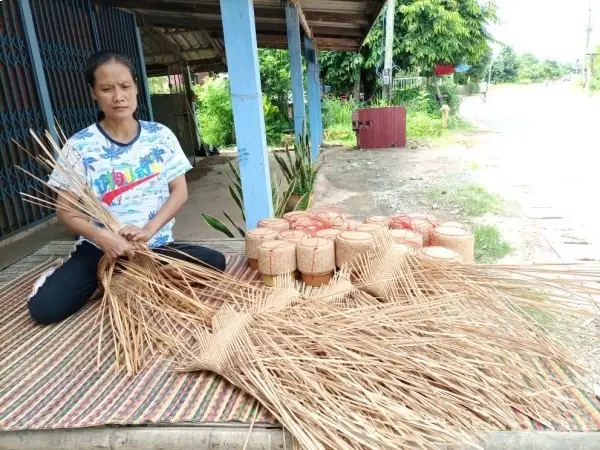
Ban Huai Huak – Chom Thong – Na Fai Kla Sticky Rice Basket Craft Village in Nong Bua Lam Phu Province is a local handicraft destination in Si Bun Rueang District, known for handmade sticky rice baskets woven from kla, a durable native plant fiber. These baskets are deeply connected with the Isan way of life, where sticky rice is an everyday staple. A kla sticky rice basket is not merely a container; it is a practical design created from local knowledge, natural materials, and the long experience of villagers who understand how to keep steamed sticky rice warm, soft, and pleasant to eat for longer periods.
The village is located along the Si Bun Rueang – Phu Wiang route, around kilometer marker 8, in the community area of Huai Huak, Chom Thong, and Na Fai, Si Bun Rueang District, Nong Bua Lam Phu Province. It is best visited by private car or rental car, especially for travelers who want to combine community-based tourism with nearby temples, caves, local restaurants, and natural attractions. A visit here gives travelers the opportunity to buy handmade sticky rice baskets directly from the source and to understand how a simple everyday object carries cultural meaning, design intelligence, and community livelihood.
The main material used here is kla, a plant with long, flexible stems that grow well in the local environment of Si Bun Rueang District. Kla fibers are small, flat, smooth, strong, flexible, and naturally glossy. These qualities make them suitable for weaving into household objects, especially sticky rice baskets. When woven properly, a kla basket is firm but lightweight, breathable but protective, and able to maintain the quality of steamed sticky rice without making it too wet or too dry. This balance is the reason why kla baskets remain useful even in the age of modern containers.
The craft begins with careful selection of the kla stems. Villagers choose stems of suitable age and strength, then prepare them through several stages before weaving. The stems are cut, cleaned, split into narrow strips, dried, soaked, scraped, dried again, and flattened into weaving strips. Each step requires experience. If the strips are too moist, they are difficult to store and weave. If they are too dry, they may become stiff and hard to handle. The quality of the finished basket therefore begins long before the actual weaving starts.
Weaving a sticky rice basket from kla requires steady hands and good control of tension. The weaver begins by forming the base and gradually builds the cylindrical shape. The strips must be crossed tightly enough to create strength, but not so tightly that the basket twists out of shape. The lid, rim, base, and finishing details are then added carefully. A good basket should have even weaving, a balanced shape, a smooth rim, and practical strength. When used for sticky rice, it should allow the steam to settle properly while keeping the rice soft and warm.
Traditional and adapted patterns are both found in Si Bun Rueang kla products. Local patterns include lai khrup, lai khru, lai kon ling, lai song, and lai sam, while adapted patterns include flower-inspired designs, curved motifs, and khit-style patterns. These patterns do more than decorate the surface. They also influence the structure, density, and character of the woven object. Skilled weavers choose patterns according to the intended use of the product, whether it is a daily sticky rice basket, a decorative basket, a small souvenir, a bag, or a contemporary lifestyle item.
Although sticky rice baskets are the best-known product, kla weaving in Si Bun Rueang has expanded into many other items. Visitors may find baskets, handbags, trays, gift baskets, placemats, coasters, and small household goods made from kla fiber. This development allows traditional craft knowledge to remain relevant in modern life. The same material once used mainly for food containers can now be transformed into lifestyle products for homes, cafés, restaurants, and cultural souvenir markets.
The reputation of Si Bun Rueang kla products comes from the fineness of the strips and the firmness of the weaving. A well-made kla product has a smooth surface, a natural sheen, consistent strip width, and a firm structure. For sticky rice baskets, these features are practical rather than merely decorative. They help the basket preserve sticky rice texture, release excess moisture, and remain durable over time. This explains why many people still prefer traditional woven baskets for sticky rice rather than plastic or metal containers.
The craft village also plays an important role in the local economy. Many villagers use time outside farming and household work to weave kla products. The craft creates supplementary income and, for some families, a major source of livelihood. Group-based production also helps organize product collection, sales, and knowledge transfer. In this sense, kla basket weaving is not only a craft but also a community economic system that helps keep local skills alive.
The Huai Huak, Chom Thong, and Na Fai community is associated with the Kla Sticky Rice Basket Weaving Group, with Ms. Thitsanammadee Si Nongmek serving as group leader and key contact. The group name reflects cooperation among neighboring communities that share similar weaving knowledge. This cooperation helps maintain continuity in production and allows visitors to recognize the area as a distinctive source of Si Bun Rueang kla handicrafts.
For travelers, visiting the village is different from buying a basket in a city shop. Here, the product is connected to its place of origin. Visitors can observe the texture of the woven strips, compare shapes and sizes, choose suitable products, and learn why the material matters. Buying directly from the community also supports local households and helps preserve the weaving tradition. For those interested in meaningful souvenirs, a kla sticky rice basket is both beautiful and useful.
When choosing a sticky rice basket, visitors should look at the firmness of the weave, the smoothness of the rim, the balance of the shape, the weight, and the overall neatness of the strips. A basket for daily use should be strong, easy to open and close, and suitable for the amount of sticky rice normally served. A basket for souvenirs may be smaller or more decorative. Visitors can also choose other kla products such as bags, trays, or small woven items that are easier to carry when traveling.
Caring for a kla basket is simple but important. After use, the basket should be cleaned gently and dried in a well-ventilated area. It should not be stored in a damp place for long periods. Although kla is known for durability and resistance to common problems found in some other natural materials, proper care helps maintain its shape and natural beauty. For regular sticky rice use, the basket should be completely dry before storage.
The village is suitable for family travel because it turns a familiar household object into a learning experience. Children can see how a plant becomes a functional object. Adults can learn about the relationship between agriculture, craft, food culture, and local income. This kind of visit helps travelers understand that Thai handicrafts are not only decorative objects but also practical solutions developed from everyday life.
For designers and craft lovers, kla products are excellent examples of local material innovation. The natural tone and texture of kla fit well with rustic, tropical, and contemporary interiors. Bags, trays, baskets, and small woven items can be used in cafés, restaurants, homes, and cultural displays. The craft keeps its traditional roots while adapting to modern taste, which makes it relevant for both local buyers and international travelers.
In cultural terms, the sticky rice basket is one of the most important objects in Isan food culture. It appears in homes, fields, merit-making events, travel meals, and everyday dining. Because sticky rice is central to northeastern Thai cuisine, the basket that holds it also becomes part of the region’s identity. A kla basket from Si Bun Rueang carries an even stronger sense of place because both the material and the weaving knowledge come from the same local landscape.
A visit to this craft village also reveals how local resources can become valuable community products. Kla is not treated as an ordinary plant but as a material with economic and cultural potential. Through knowledge, labor, and design, it becomes a recognized product of Nong Bua Lam Phu Province. This transformation shows how rural communities can create value from what they already have around them.
The atmosphere of the village is simple, warm, and community-based. It is not a large tourist complex, but that simplicity gives the place authenticity. Visitors can meet local people, see real products, and buy handmade goods that are part of daily life. For Thai travelers, it is a meaningful local souvenir stop. For foreign travelers, it is an accessible introduction to Isan sticky rice culture and traditional Thai basketry.
The village can be combined with other attractions in Si Bun Rueang District and nearby areas. Travelers may visit Wat Thep Photharam, Wat Chan Prasit and its ancient well, Tham Pha Cho, Wat Tham Erawan, or continue toward Phu Wiang in Khon Kaen Province. This allows a trip to include handicraft, local culture, temples, caves, and nature in one route.
The best time to visit is during daytime opening hours when there is enough natural light to see the texture, color, and patterns of the woven products. Visitors who want to browse carefully should allow around 45 minutes to 1 hour. Groups or travelers who want a deeper craft-learning experience should contact the community in advance so that the visit can match the working schedule of local weavers.
Good manners are important when visiting a working village. Visitors should ask before taking photos of people or private working areas. Unfinished products should not be touched without permission. Woven items should be handled carefully so they do not lose shape. Polite conversation and direct support through purchases are meaningful ways to respect the community and help preserve the craft.
For international visitors, the kla sticky rice basket is a useful object for understanding Isan food culture. It is designed for steamed sticky rice, which needs warmth, gentle ventilation, and protection from excess moisture. The basket structure solves these needs naturally. This shows that Thai local objects often contain thoughtful design even when they look simple at first glance.
Preserving the craft matters because basket weaving depends on real skills passed from one generation to another. If younger people do not learn how to prepare kla, split the strips, control moisture, and weave balanced forms, much of this knowledge may gradually disappear. Tourism, direct purchase, and respectful storytelling can help keep the craft relevant in the present while honoring the knowledge of older generations.
Getting There to Ban Huai Huak – Chom Thong – Na Fai Kla Sticky Rice Basket Craft Village is most convenient by private car or rental car. Use the Si Bun Rueang – Phu Wiang road and look for the community area around kilometer marker 8. Travelers coming from Si Bun Rueang town should head toward Phu Wiang in Khon Kaen Province. Those coming from Nong Bua Lam Phu town should allow enough travel time to reach Si Bun Rueang District before continuing to the village.
In summary, Ban Huai Huak – Chom Thong – Na Fai Kla Sticky Rice Basket Craft Village is a worthwhile cultural stop in Nong Bua Lam Phu Province. It brings together local plant knowledge, sticky rice culture, handmade basketry, community livelihood, and meaningful souvenirs. Visitors can come daily from 08.00 to 17.00 to buy quality kla sticky rice baskets, learn about local weaving knowledge, and experience the warm hospitality of the Huai Huak, Chom Thong, and Na Fai communities.
| Name | Ban Huai Huak – Chom Thong – Na Fai Kla Sticky Rice Basket Craft Village |
| Location | Huai Huak, Chom Thong, and Na Fai Communities, Si Bun Rueang Subdistrict, Si Bun Rueang District, Nong Bua Lam Phu Province |
| Address | Kla Sticky Rice Basket Weaving Group, Huai Huak – Chom Thong – Na Fai Community, Chom Thong Municipality, No. 999 Moo 9, Si Bun Rueang Subdistrict, Si Bun Rueang District, Nong Bua Lam Phu Province 39180, Thailand |
| Highlights | A local craft village known for handmade kla sticky rice baskets that help keep steamed sticky rice soft and warm |
| History | Kla weaving in Si Bun Rueang District has been passed down for more than 40 years and has become a recognized local product of Nong Bua Lam Phu Province |
| Name Origin | The name comes from the community’s main craft: splitting kla stems into weaving strips and making sticky rice baskets by hand |
| Distinctive Features | Kla fibers are smooth, flat, flexible, strong, naturally glossy, and suitable for weaving durable sticky rice baskets and household items |
| Main Products | Kla sticky rice baskets, baskets, bags, trays, placemats, coasters, and woven household goods |
| Signature Patterns | Lai Khrup, Lai Khru, Lai Kon Ling, Lai Song, Lai Sam, flower-inspired motifs, curved motifs, and khit-style patterns |
| Travel Information | Located around kilometer marker 8 on the Si Bun Rueang – Phu Wiang route; private car or rental car is recommended |
| Current Status | Open for visitors to view and buy kla woven products |
| Open Days | Daily |
| Opening Hours | 08.00 – 17.00 |
| Facilities | Product browsing area, craft learning area, community work area, and parking space depending on local conditions |
| Main Areas / Zones | Kla basket sales area, woven product display area, kla strip preparation learning area, local weaving area, and community souvenir area |
| Caretaker / Group Leader | Ms. Thitsanammadee Si Nongmek |
| Main Contact Number | 09-3381-5573 |
| Official Website / Official Page | Nong Bua Lam Phu tourism information and official documentation on Si Bun Rueang Product of Kla |
| Nearby Tourist Attractions | 1. Wat Thep Photharam, about 11 km 2. Wat Chan Prasit And Ban Sang Sian Ancient Well, about 13 km 3. Tham Pha Cho, about 18 km 4. Wat Tham Erawan, about 25 km 5. Tat Fa Waterfall, Phu Wiang National Park, about 45 km |
| Nearby Restaurants | 1. Sawan Baan Na, about 10 km, Tel. 084-787-4847, 064-748-0781 2. Khun Chai Pha Phloen, about 11 km, Tel. 093-421-5757 3. Winnie Coffee, about 12 km 4. Thung Kwian, about 12 km 5. Ber Rer Shabu Phan Tae Roi Et Si Bun Rueang Branch, about 13 km |
| Nearby Accommodations | 1. P2 Garden View Hotel Sriboonruang, about 10 km, Tel. 061-079-7136 2. TonLiw Hotel Si Bun Rueang, about 11 km 3. Bansuan Inn Resort Si Bun Rueang, about 11 km 4. Sri Buree Resort, about 12 km, Tel. 080-010-3530, 082-103-5048 5. Hi Creek Resort & Campsite, about 14 km, Tel. 082-570-5925 |
Frequently Asked Questions (FAQ)
Q: Where is the Kla Sticky Rice Basket Craft Village located?
A: It is located in the Huai Huak, Chom Thong, and Na Fai community area of Si Bun Rueang District, Nong Bua Lam Phu Province, around kilometer marker 8 on the Si Bun Rueang – Phu Wiang route.
Q: What are the opening days and hours?
A: The village is open daily from 08.00 to 17.00.
Q: Why are kla sticky rice baskets special?
A: Kla fibers are strong, flexible, smooth, and durable. When woven into sticky rice baskets, they help keep steamed sticky rice soft and warm without making it too wet.
Q: What products can visitors buy?
A: Visitors can buy kla sticky rice baskets, baskets, bags, trays, placemats, coasters, and other woven household products.
Q: How should visitors choose a good kla sticky rice basket?
A: Look for firm weaving, a smooth rim, balanced shape, suitable weight, even strips, and a size that matches real use.
Q: How do travelers get there?
A: Use the Si Bun Rueang – Phu Wiang road and look for the community around kilometer marker 8. Private car or rental car is the most convenient option.
Q: How long should visitors spend at the village?
A: Most visitors should allow around 45 minutes to 1 hour for browsing products, seeing patterns, and talking with local people or the group leader.
Q: Who is this village suitable for?
A: It is suitable for travelers interested in handicrafts, Isan community life, natural fiber products, cultural souvenirs, family learning trips, and foreign visitors who want to understand Thai sticky rice culture.
 Category: ●Suburban Living
 Group: ●Village, Community
Last Update : 2 MonthAgo
 Last Update : 2 MonthAgo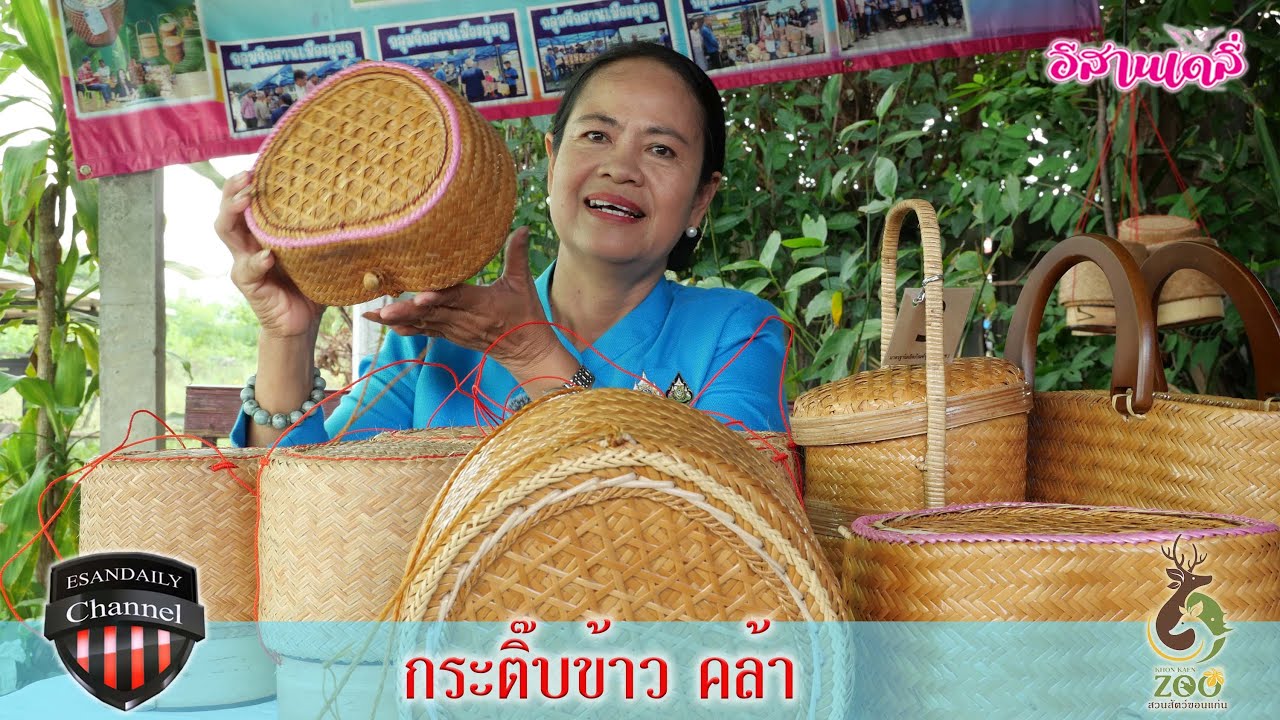
 Click to Access the Navigation Map GPS
Kratip Ton Khla Basketry Handicraft Village Map

 Art, Culture and Heritage
 Historical Sites and Monuments(4)
 Landmarks and Memorials(1)
 Art, Craft Centres, Tradition(1)
 Museums(3)
 Places of Worship
 Temple(10)
 Other Sacred Sites(6)
Village, Community(3)
Other Sacred Sites(6)
Village, Community(3)
 Nature and Wildlife
 National Parks and Marine Reserves(3)
 Mountain (Doi)(5)
 Dam, Reservoir, Lake(5)
 Waterfalls(1)
 Caves(6)
 River, Canal(2)
 Bays and Beaches(1)
 Other natural attractions(3)


