
lovethailand home >Northeastern Travel Attractions >Nong Bua Lamphu Travel Attractions >Na Klang >Dong Sawan > Huai Rai Reservoir
TL;DR: Huai Rai Reservoir is located at Moo 9, Ban Sa Kaeo, Dong Sawan Subdistrict, Na Klang District, Nong Bua Lam Phu Province, open Daily, hours 08.00 – 17.00.
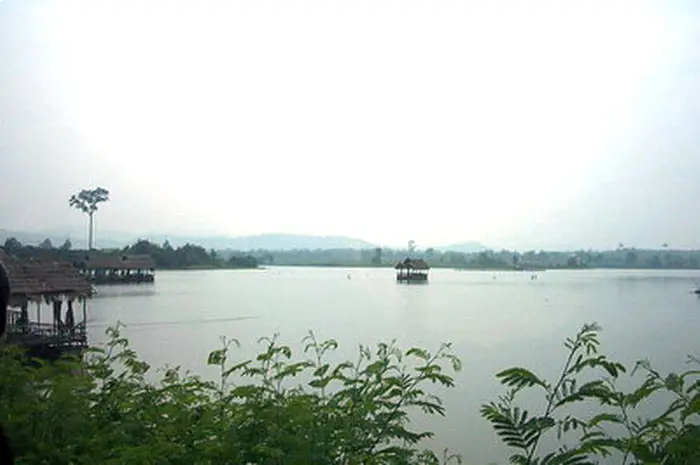
Huai Rai Reservoir
Open Days: Daily
Opening Hours: 08.00 – 17.00
Huai Rai Reservoir in Nong Bua Lam Phu Province is a medium-sized reservoir located at Ban Sa Kaeo, Dong Sawan Subdistrict, Na Klang District. It is both a local water resource and a community-based leisure destination known for its calm waterside atmosphere, seasonal sunn hemp flower fields, floating food rafts, and a distinctive local raft system with a steering wheel. Unlike a large commercial resort or a major dam, Huai Rai Reservoir offers a more grounded and local experience. Visitors come here to sit on rafts, eat Isan food, enjoy grilled fish, take photos, relax with family and friends, and experience a simple form of lakeside tourism shaped by the people of the community.
The charm of Huai Rai Reservoir lies in its modest scale and authentic atmosphere. The reservoir is surrounded by rural scenery, local roads, farmland, and village life. It is not a heavily built-up attraction, and that is exactly why many travelers find it appealing. Sitting beside the water or on a floating raft, visitors can feel the slower rhythm of rural Nong Bua Lam Phu: the breeze over the reservoir, the sound of people talking over food, the sight of local operators preparing rafts, and the quiet relationship between water, agriculture, and community life.
The reservoir plays several roles for the area. As a water body, it supports local agriculture, fisheries, and community use. As a tourism site, it provides a place where local people can generate income through food rafts, floating services, and seasonal activities. As a cultural landscape, it shows how a simple water resource can become a place of recreation through local creativity. The steering-wheel raft is one of the clearest examples of this creativity. It turns an ordinary raft ride into a memorable community experience.
The floating rafts are the heart of the Huai Rai Reservoir experience. These rafts are not designed to be luxurious. They are practical, friendly, and suitable for group relaxation. Families, groups of friends, and local travelers can sit together on a raft, order food, enjoy the open view, and spend time in a shared space. The mood is relaxed rather than formal. For many visitors, the pleasure is not only in the food or scenery but in the feeling of being on the water with people they know, moving slowly and enjoying the day without rushing.
The steering-wheel raft gives the reservoir a special identity. Visitors often remember Huai Rai Reservoir because the raft experience feels interactive. Instead of simply sitting on a stationary platform, travelers can feel the raft move on the water and enjoy the sense of taking part in the journey. The system is simple, but it reflects local problem-solving and community-based design. This kind of experience is difficult to recreate in a conventional restaurant because it depends on the reservoir, local skills, and the atmosphere of Ban Sa Kaeo itself.
Food is another major reason people visit the reservoir. The floating food raft experience fits naturally with Isan cuisine. Dishes such as grilled fish, som tam, spicy local dishes, and Thai family-style food feel even more enjoyable when eaten over the water. The food does not need to be elaborate to be memorable. What makes the meal special is the setting: open air, water views, casual conversation, and the sense of being away from the usual roadside or town-center restaurant.
In winter, the area becomes especially attractive because local people plant sunn hemp flowers around the reservoir. When the flowers bloom, the yellow fields brighten the landscape and create a strong seasonal identity. The yellow flowers contrast beautifully with the water, sky, and surrounding farmland. For photographers, this is one of the best times to visit. The flowering period depends on the season and local planting schedule, so visitors who want to see the fields should plan around the cool season.
The atmosphere of the reservoir changes throughout the day. Morning is calm, with softer light and fewer crowds. Midday is suitable for raft dining and group activities. Late afternoon brings cooler air and more comfortable waterside relaxation. Travelers who want good photos should visit in the morning or late afternoon, when natural light gives more depth to the water, rafts, and flower fields. A slow visit is better than a rushed stop because the place is meant for sitting, eating, talking, and letting time pass by the water.
Huai Rai Reservoir is suitable for family travel. Adults can relax, eat, and enjoy the view, while children can learn about reservoirs, local rafts, water-based recreation, and rural community life. Safety must always come first around water. Children should be closely supervised on rafts and near the reservoir edge. If swimming or water play is allowed by the local operators, life jackets should be used and all instructions should be followed carefully.
For groups of friends, the reservoir is a convenient place for a shared meal and a relaxed afternoon. The raft setting keeps everyone together in one space, making it suitable for conversation, group photos, and casual celebration. The experience is simple but memorable because it combines food, water, and local character. During the cool season, the sunn hemp fields add an extra visual highlight to the trip.
For photographers, Huai Rai Reservoir offers several kinds of images: floating rafts, food on the water, yellow sunn hemp fields, rural reservoir scenery, groups of people relaxing, and reflections on the water. Morning light is good for gentle landscape shots, while late afternoon light gives warmer tones. Photographers should respect local farmland and avoid stepping into cultivated fields without permission, especially during the flowering season.
Ecologically, the reservoir is part of the freshwater landscape of the community. It supports fish, local livelihoods, agriculture, and recreation. Activities such as fish stocking in the area show that the reservoir is not only a tourist stop but also a community water resource that requires ongoing care. Clean water, responsible use, and careful tourism are important for maintaining the value of the reservoir for both local residents and visitors.
Visitors should help protect the area by keeping the water clean, not throwing food waste or plastic into the reservoir, using bins or taking trash back out, avoiding loud behavior that disturbs other groups, and respecting the farms around the reservoir. During the sunn hemp season, the flower fields should be enjoyed without damaging the plants. Responsible travel keeps the place pleasant for the community and for future visitors.
Huai Rai Reservoir is also an example of community-based tourism using existing local resources. A water body originally important for local use has become a leisure site through raft services, local food, and seasonal agricultural scenery. This approach allows the community to create value without turning the area into a large artificial attraction. The reservoir remains connected to village life, agriculture, water use, and small local businesses.
Ban Sa Kaeo and Dong Sawan Subdistrict provide the broader context for the reservoir. Dong Sawan is a rural subdistrict in Na Klang District, with agriculture and upland terrain playing important roles in local life. Crops such as sugarcane, cassava, corn, rubber, and other field crops are part of the landscape. When visitors come to Huai Rai Reservoir, they are not only seeing water and rafts; they are seeing how tourism, agriculture, and community life meet in one rural area of Nong Bua Lam Phu.
The sunn hemp fields are one of the strongest seasonal features. Their bright yellow color gives the reservoir a different identity in winter. They make the landscape feel warmer, livelier, and more photogenic. The flowers also remind visitors that tourism here is closely connected with agriculture. The fields are not just decoration; they are part of the local land-use rhythm. Visitors should appreciate them respectfully and avoid damaging the planted areas.
A simple day trip can begin in the late morning, with visitors arriving at the reservoir, choosing a raft, ordering lunch, and spending a few hours by the water. In the afternoon, travelers can continue to Na Klang town, Wat Phra That Mueang Phin, Wat Tham Phu Pha Ya, Huai Pha Wang Reservoir, Wat Tham Suwannakhuha, or Tham Pha Cho according to their route. Those who prefer slow travel can simply stay longer at the reservoir and make the raft experience the main activity of the day.
Older visitors can enjoy Huai Rai Reservoir comfortably by choosing light activities such as raft dining, waterside seating, and photography. Care should be taken when stepping on and off rafts, especially if the platform or walkway is wet. Morning and late afternoon are more comfortable than hot midday hours. Families traveling with older members should help them board safely and choose stable seating areas.
For international travelers, Huai Rai Reservoir offers an authentic view of local Isan recreation. It is not a luxury lake resort and not a formal tourist complex. It is a real community place where people eat, relax, sit on rafts, and spend time together by the water. Foreign visitors can experience local food culture, community raft design, rural reservoir scenery, and seasonal agricultural beauty in a way that feels natural and unforced.
Popular activities include raft dining, taking photos of the reservoir, viewing the sunn hemp fields in winter, learning about the steering-wheel raft, relaxing with family or friends, observing local waterside life, and tasting Isan dishes from community operators. If time allows, visitors can ask local people about nearby routes, because Na Klang District and surrounding areas have several natural and religious sites that can be combined with a reservoir trip.
Safety should be taken seriously. Visitors should use life jackets when entering the water or when advised by raft operators. Children must be supervised at all times. Visitors should avoid jumping into water without knowing the depth, avoid risky behavior on rafts, and choose operators with stable rafts and clear safety guidance. A relaxed trip is best when everyone treats the water with proper caution.
Traveling to Huai Rai Reservoir is most convenient by private car, pickup truck, motorcycle, or rental vehicle. The site is located in Ban Sa Kaeo, Dong Sawan Subdistrict, which is a rural area of Na Klang District. Public transport is not as frequent as in town areas. Travelers should check the route before departure, especially during the rainy season when some rural roads may be wet or slippery. From Nong Bua Lam Phu town, travel toward Na Klang District, then continue to Dong Sawan Subdistrict and Ban Sa Kaeo.
Useful items to bring include comfortable clothes, a hat or umbrella, drinking water, a camera or fully charged phone, a personal trash bag, cash for food and raft services, and life-jacket rental if water play is planned. In the cool season, a light jacket may be useful in the late afternoon. Those visiting for the sunn hemp fields should plan around the flowering period and arrive when the light is suitable for photography.
Huai Rai Reservoir should be experienced slowly. Its value is not in checking in and leaving quickly, but in sitting on the raft, sharing food, feeling the wind over the water, watching the rural landscape, and spending time with people. At least a half-day visit allows travelers to understand the charm of the place better than a short stop.
Overall, Huai Rai Reservoir in Nong Bua Lam Phu is a community-based waterside destination with a clear local identity. The reservoir, floating food rafts, steering-wheel raft system, seasonal sunn hemp fields, Isan food, and rural Ban Sa Kaeo atmosphere make it different from many other attractions. It is open daily from 08.00 to 17.00 and is suitable for families, groups of friends, photographers, food lovers, and travelers who want to experience a simple and authentic local leisure spot in Na Klang District.
Getting There to Huai Rai Reservoir from Nong Bua Lam Phu town, travel toward Na Klang District, then continue to Dong Sawan Subdistrict and Ban Sa Kaeo, where the reservoir and Phae Dong Sawan raft area are located. A private car or rental vehicle is the most convenient option because the site is in a rural community area and can be combined with nearby attractions in Na Klang, Suwannakhuha, and Na Wang districts. From Na Klang town, the route to Dong Sawan Subdistrict is about 31 km. Daytime travel is recommended for easier navigation and safer parking.
In summary, Huai Rai Reservoir at Ban Sa Kaeo, Dong Sawan Subdistrict, Na Klang District, Nong Bua Lam Phu Province is a local water resource and community tourism site known for floating food rafts, a steering-wheel raft system, Isan food, winter sunn hemp flower fields, and a relaxed rural lakeside atmosphere. It is a suitable destination for travelers who want to slow down, eat on the water, enjoy nature, support local community services, and experience a distinctive part of Nong Bua Lam Phu beyond the usual city and temple routes.
| Name | Huai Rai Reservoir / Phae Dong Sawan |
| Location | Moo 9, Ban Sa Kaeo, Dong Sawan Subdistrict, Na Klang District, Nong Bua Lam Phu Province |
| Address | Huai Rai Reservoir, Ban Sa Kaeo, Dong Sawan Subdistrict, Na Klang District, Nong Bua Lam Phu Province 39350, Thailand |
| Highlights | Medium-sized reservoir, floating food rafts, steering-wheel raft system, Isan food, grilled fish, waterside scenery, and seasonal yellow sunn hemp fields in winter |
| History / Significance | A local water resource for Ban Sa Kaeo and Dong Sawan Subdistrict, supporting water use, agriculture, local fisheries, recreation, and community tourism through raft services |
| Name Origin | The name Huai Rai is linked with the local stream and agricultural landscape of Ban Sa Kaeo, while Phae Dong Sawan is associated with the Dong Sawan community raft area |
| Distinctive Features | Open water scenery, rural atmosphere, several local raft operators, group-friendly floating rafts, local food, water recreation under operator guidance, and winter flower-field views |
| Travel Information | From Nong Bua Lam Phu town, travel toward Na Klang District, then continue to Dong Sawan Subdistrict and Ban Sa Kaeo. From Na Klang town, the route to Dong Sawan Subdistrict is about 31 km |
| Current Status | Open for relaxation, raft dining, floating raft activities, photography, waterside recreation, and community-based tourism services |
| Open Days | Daily |
| Opening Hours | 08.00 – 17.00 |
| Facilities | Floating food rafts, tourist rafts, resting areas, photo spots, parking depending on site conditions, food and drink from community operators, and life jackets depending on each raft service |
| Main Areas / Zones | Reservoir Zone, Phae Dong Sawan Zone, Floating Food Raft Zone, Steering-Wheel Raft Zone, Winter Sunn Hemp Field Zone, Operator-Guided Water Play Zone, Waterside Photo Zone, Ban Sa Kaeo Community Zone |
| Caretaker / Responsible Agency | Dong Sawan Subdistrict Administrative Organization, local agencies in Na Klang District, and the Phae Dong Sawan community raft operators at Ban Sa Kaeo |
| Main Contact Number | Dong Sawan Subdistrict Administrative Organization 042-315972 |
| Official Website / Official Page | Dong Sawan Subdistrict Administrative Organization and Nong Bua Lam Phu tourism information sources |
| Nearby Tourist Attractions | 1. Phae Dong Sawan, about 0 km 2. Ban Sa Kaeo Sunn Hemp Fields, about 1 km 3. Wat Phra That Mueang Phin, Na Klang District, about 28 km 4. Na Klang Town, about 31 km 5. Wat Tham Phu Pha Ya, Suwannakhuha District, about 35 km 6. Huai Pha Wang Reservoir, Na Wang District, about 40 km 7. Wat Tham Suwannakhuha, about 45 km 8. Tham Pha Cho, Na Wang District, about 48 km |
| Nearby Restaurants | 1. Phae Dong Sawan At Huai Rai Reservoir, about 0 km 2. Marda Na Klang, about 31 km, Tel. 096-319-4954 3. Ao Thai Na Klang Seafood, about 32 km, Tel. 089-002-1717 4. Racha Bamee Kwangtung Na Klang Branch, about 32 km, Tel. 093-328-8779 5. Khao Man Kai Na Klang, about 32 km, Tel. 080-061-3677 6. Por Piang Cafe Na Klang, about 33 km, Tel. 089-896-9487 |
| Nearby Accommodations | 1. Sabai Dee Resort Na Klang, about 31 km, Tel. 083-407-4953 2. Sakaethong Resort Na Klang, about 32 km, Tel. 089-861-4433, 083-328-6744 3. Ruean Phet Resort Na Klang, about 32 km, Tel. 089-574-9575 4. Ton Tan Resort Na Klang, about 32 km 5. Nongbua Garden Ville, Nong Bua Lam Phu Town, about 55 km, Tel. 089-499-5657 6. 39000 Resort, Nong Bua Lam Phu Town, about 55 km, Tel. 042-313-109 |
Frequently Asked Questions (FAQ)
Q: Where is Huai Rai Reservoir located?
A: Huai Rai Reservoir is located at Moo 9, Ban Sa Kaeo, Dong Sawan Subdistrict, Na Klang District, Nong Bua Lam Phu Province. It is also known for the Phae Dong Sawan raft area.
Q: What are the opening days and hours?
A: Huai Rai Reservoir is open daily from 08.00 to 17.00.
Q: What makes Huai Rai Reservoir special?
A: Its highlights include floating food rafts, a steering-wheel raft system, local Isan food, grilled fish, rural reservoir scenery, and seasonal yellow sunn hemp fields in winter.
Q: Who is Huai Rai Reservoir suitable for?
A: It is suitable for families, groups of friends, photographers, food lovers, and travelers who want a relaxed community-based waterside experience in Na Klang District.
Q: Are there floating food rafts at Huai Rai Reservoir?
A: Yes. Community raft operators provide floating food rafts and tourist rafts. Popular food includes Isan dishes, grilled fish, som tam, and local Thai food served in a casual waterside setting.
Q: When is the best time to visit Huai Rai Reservoir?
A: Winter is the best season because the weather is cooler and the sunn hemp flowers around the reservoir create bright yellow scenery for photography.
Q: What should visitors be careful about?
A: Visitors should supervise children closely, use life jackets when entering the water, avoid unsafe swimming areas, and keep the reservoir clean by not throwing trash or food waste into the water.
Q: What nearby attractions can be visited on the same trip?
A: Nearby places include the Ban Sa Kaeo sunn hemp fields, Wat Phra That Mueang Phin, Wat Tham Phu Pha Ya, Huai Pha Wang Reservoir, Wat Tham Suwannakhuha, and Tham Pha Cho.
 Category: ●Nature and Wildlife
 Group: ●Dam, Reservoir, Lake
Last Update : 1 MonthAgo
 Last Update : 1 MonthAgo
 Click to Access the Navigation Map GPS
 Art, Culture and Heritage
 Historical Sites and Monuments(4)
 Landmarks and Memorials(1)
 Art, Craft Centres, Tradition(1)
 Museums(3)
 Places of Worship
 Temple(10)
 Other Sacred Sites(6)
 Suburban Living
 Village, Community(3)
 National Parks and Marine Reserves(3)
 Mountain (Doi)(5)
Dam, Reservoir, Lake(5)
Mountain (Doi)(5)
Dam, Reservoir, Lake(5)
 Waterfalls(1)
 Caves(6)
 River, Canal(2)
 Bays and Beaches(1)
 Other natural attractions(3)


