
lovethailand home >Northeastern Travel Attractions >Nakhon Ratchasima Travel Attractions >Si Da >Si Da > Wat Phra Prang Sida
TL;DR: Wat Phra Prang Sida is located at Moo 1, Ban Sida, Sida Subdistrict, Sida District, Nakhon Ratchasima Province 30430, open Daily, hours 08.00 – 17.00.
Wat Phra Prang Sida
Open Days: Daily
Opening Hours: 08.00 – 17.00
Wat Phra Prang Sida is located in Moo 1, Ban Sida, Sida Subdistrict, Sida District, Nakhon Ratchasima Province 30430. It is a local Buddhist temple under the Maha Nikaya order and an important cultural site because it stands within the same compound as the ancient Phra Prang Sida. The temple is open daily from 08.00 to 17.00 and is suitable for visitors who want to pay respect, make merit, explore a historic temple, and learn about the old community landscape of northern Nakhon Ratchasima. Its most distinctive feature is the old laterite prang, an ancient monument that connects the present temple with earlier layers of local history, belief, and architecture.
Wat Phra Prang Sida is valuable because it brings together several important dimensions in one place. It is a working Buddhist temple used by local people for religious activities. It is also the site of an ancient monument that gives the temple a strong historical identity. Visitors will find not only a temple for worship, but also a place where Buddhism, archaeology, village memory, and community rituals exist together in a meaningful way.
The temple was established in 1922. Originally, the temple stood on the eastern side of the village in an area locally known as Nong Wat. Later, it was moved to the area of the old prang north of the village. Because the new site contained an ancient prang, the temple became known as Wat Phra Prang Sida. This move gave the temple a distinctive identity, making it both a Buddhist religious place and a location associated with ancient architecture.
The temple was formerly known as Wat Ban Sida, a name connected with the village of Ban Sida. After the temple moved to the area of the old prang, the name Wat Phra Prang Sida became more appropriate because it reflected the most important landmark in the compound. The name combines the ancient prang and the local village identity, giving the temple a clear sense of place.
Wat Phra Prang Sida received its royal grant of consecrated boundary on 2 April 1994. This consecrated boundary is important in Thai Buddhism because it allows the temple to use a proper sacred area for formal monastic acts. This recognition confirms the temple’s religious role and its status as an established Buddhist temple serving the local community.
The temple covers an area of 20 rai, 1 ngan, and 44 square wah, with an additional 2 rai of monastic land. This area allows the temple to support several functions, including worship, monastic residences, community ceremonies, religious education, and the preservation of the ancient prang. Important temple structures include the ordination hall, sermon hall, and monks’ residences. These buildings show that the temple continues to function as a religious center for the people of Sida.
Phra Prang Sida is the heart of the temple and the main reason the site is historically significant. The prang stands inside the temple compound and is built from laterite. It faces east and is closed on all four sides. The structure is surrounded by a boundary wall, and traces of decorative stucco can still be associated with the monument. The form of the prang reflects ancient architectural traditions found in parts of northeastern Thailand, especially in areas influenced by earlier cultural and artistic networks.
Phra Prang Sida is regarded as one of the important sacred objects of the area. Local information describes the monument as older than Phimai Historical Park by 125 years. This local memory gives the prang a significance that goes beyond its physical remains. It stands as a symbol of the deep past of Sida and helps connect the modern community with an older historical landscape.
The prang has similarities with small ancient sanctuaries found in the northeastern region. Laterite was used as the main building material, a common material in many ancient structures of the region because of its strength and availability. When viewed closely, the laterite surface shows age, texture, and the passage of time. Visitors should spend time observing the structure slowly, paying attention to its form, material, orientation, and surrounding atmosphere.
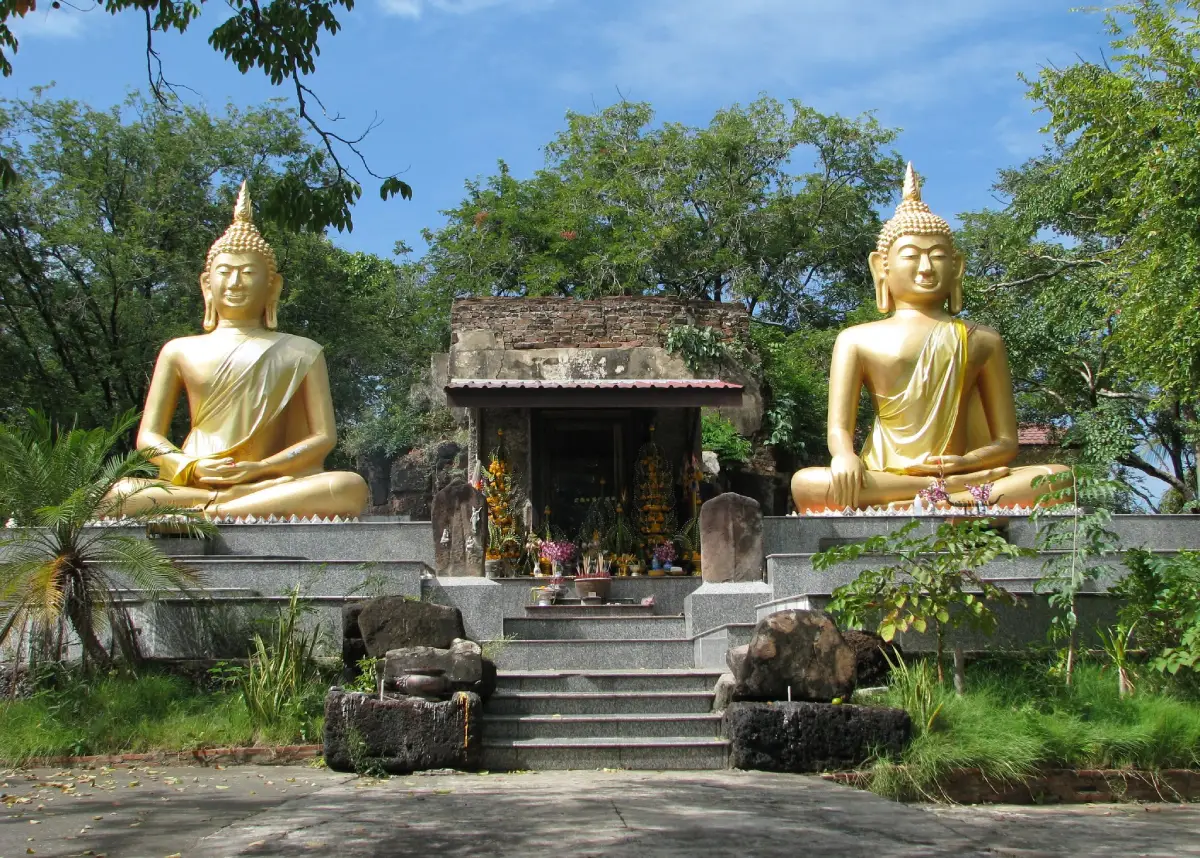
Within the temple, there are also 2 important Buddha images. These sacred images add a Buddhist devotional dimension to the site, while the prang adds a historical and architectural dimension. Visitors can therefore pay respect, make merit, and view the ancient monument within one temple compound. This layered character is what makes Wat Phra Prang Sida especially meaningful for cultural travelers.
The temple began serious restoration and development in 1981 during the period of Phra Khru Siri Piyatham as abbot. This phase was important because it helped revive the temple area and strengthen the role of the old prang within the community. Wat Phra Prang Sida has not been left as an isolated ruin; it has continued to be cared for, developed, and used as a religious center for local people.
The current abbot of Wat Phra Prang Sida is Phra Athikan Somphong Yanawaro. The temple remains a local Buddhist temple in Sida Subdistrict and continues to support religious activities for the community. Its ongoing use makes the site a living temple rather than a historical place separated from daily life. People still come here to make merit, join ceremonies, and take part in annual events.
The temple has important annual activities. The Parivasa practice is held from 20 to 30 January every year. The ceremony honoring Phra Prang Sida is held on the Wednesday of the third week of May every year. These events show the temple’s role as both a Buddhist religious center and a place of local belief connected with the ancient prang. The continuation of these events keeps the temple culturally active and meaningful for the people of Sida.
The Parivasa practice is a Buddhist activity connected with discipline, monastic practice, and merit-making. During this period, the temple becomes a place of stronger religious activity, with monks and laypeople gathering in a more focused atmosphere. Visitors who come during this time can see the living role of Buddhism in the local community.
The annual ceremony honoring Phra Prang Sida reflects the close relationship between the community and the ancient monument. The ceremony is not only a yearly event; it is an expression of respect for a historic site that has long stood as part of local memory. The atmosphere combines faith, local belief, and community pride. For travelers interested in local culture, this event gives a deeper view of the temple beyond an ordinary visit.
The temple is also connected with Buddhist education. It has a Dhamma and Pali study school and a Sunday Buddhist study center. This educational role makes the temple more than a place for rituals. It supports religious learning for monks, novices, young people, and local Buddhists. The presence of both an ancient monument and Buddhist education gives Wat Phra Prang Sida value across past, present, and future generations.
For visitors interested in art history and archaeology, Wat Phra Prang Sida is worth visiting because the ancient monument can be studied within an active temple setting. The prang may not be as large as Phimai Historical Park, but it has strong value as a community-based ancient site. It shows that important historical remains are not found only in large historical parks; they also exist within villages and temples that remain part of daily life.
The temple atmosphere is quiet and suitable for slow cultural travel. Important areas to see include Phra Prang Sida, the ordination hall, the sermon hall, monks’ residences, and areas used for religious activities. Exploring the temple slowly helps visitors understand that the site serves several roles at once: temple, ancient monument, education center, and community gathering place.
Visitors should walk around the prang with care. Climbing, touching fragile surfaces, or moving any objects should be avoided. Laterite and old stucco are vulnerable to time and weather. Respectful viewing helps preserve the monument for the local community and future visitors. Photography is welcome when done with respect for the temple, monks, worshippers, and restricted areas.
Temple etiquette is important at Wat Phra Prang Sida. Visitors should dress modestly, covering shoulders and knees, speak softly, and respect monastic areas. If monks or novices are present, visitors should avoid disturbing them. The temple is still a religious place used by local people for merit-making and ceremonies, so respectful behavior is essential.
Getting There is easiest by private car. From Nakhon Ratchasima city, take Highway 2, the Nakhon Ratchasima–Khon Kaen route, for about 84–85 km to Sida Intersection. Turn right toward Prathai District on Highway 202 for about 1.5 km, then turn left into the road leading to Wat Phra Prang Sida for about 1–2 km. This route connects Nakhon Ratchasima city with Sida District and Prathai District.
From Bangkok, travelers can drive toward Nakhon Ratchasima and continue on Mittraphap Road to Sida Intersection. From there, turn toward Prathai and follow the local road to the temple. Travelers without a private car can reach Nakhon Ratchasima or a point along the route to Sida, then continue by local transport. A private car is the most convenient option for visiting the temple and nearby attractions in the same day.
A typical visit takes about 45 minutes to 1.5 hours. This is enough time to pay respect, see Phra Prang Sida, take photographs, and walk around the main areas of the temple. During annual events such as the Parivasa practice or the ceremony honoring Phra Prang Sida, visitors should allow more time because the temple becomes more active and there are more cultural details to observe.
The best time to visit is in the morning or late afternoon. Morning is comfortable for worship and walking around the prang before the weather becomes hot. Late afternoon is suitable for photography, as the softer light can reveal the texture of the laterite and the shape of the ancient structure more clearly. In the hot season, visitors should bring drinking water, a hat, or an umbrella.
Wat Phra Prang Sida can be included in a cultural and historical route through northern Nakhon Ratchasima. Travelers interested in ancient sites can combine it with Prang Ban Prang, Sai Ngam in Phimai, Phimai Historical Park, and Ban Prasat Archaeological Site. This route shows the variety of historical places in the province, from small community monuments to major historical parks.
Prang Ban Prang in Khong District is another ancient site connected with old architecture in the northern part of Korat. Phimai Historical Park is a major destination for visitors who want to study a large Khmer-style stone sanctuary and an ancient urban layout. Ban Prasat Archaeological Site is suitable for those interested in prehistoric communities, while Sai Ngam offers a natural resting point near Phimai. Together with Wat Phra Prang Sida, these places create a route that combines temples, ancient remains, community heritage, and nature.
Restaurants around Sida District include local eateries, cafés, noodle shops, and restaurants near main roads or petrol stations. Visitors should choose meal stops according to their route. Those who want convenience can eat near Sida Intersection or Phon Thong Subdistrict, while those who want a longer rest can choose a café or restaurant near a hotel or service station.
Accommodation near Wat Phra Prang Sida includes hotels in Sida District and nearby Bua Yai District. Travelers who want to stay close to the temple can choose hotels in Sida, such as CHILL CHILL HOTEL or Crystal Place Sida. Those who want more town facilities, restaurants, rail access, and services can stay in Bua Yai and visit the temple in the morning. The best choice depends on the next day’s travel route.
For families, Wat Phra Prang Sida is a good place for children and young travelers to learn about temples, ancient monuments, and local communities in one place. Parents can show children the old prang, explain the use of laterite, describe the move from the old Nong Wat area to the current temple site, and introduce the annual ceremonies that keep local traditions alive. Learning from a real place makes local history easier to understand.
For photography, the temple offers a combination of an ancient monument and a peaceful local temple atmosphere. Good subjects include the front of the east-facing prang, laterite textures, the boundary wall, and the surrounding temple grounds. Photography should be done respectfully, without inappropriate posing, without disturbing worshippers, and without entering restricted areas.
A weekday visit offers a quieter atmosphere for observing the monument in detail. A visit during an annual event shows the temple’s active role in community ritual life. Both experiences have different value. Ordinary days are suitable for peaceful study of the ancient structure, while festival days show the strength of local faith and cultural continuity.
Overall, Wat Phra Prang Sida is an old temple in Sida District with religious, historical, artistic, and community value. Its highlights include the ancient laterite prang, 2 important Buddha images, the royal consecrated boundary, the temple’s role in local life, and annual ceremonies that remain part of the community calendar. A visit to this temple reveals a deeper side of Nakhon Ratchasima, where Buddhist worship, ancient architecture, and local heritage exist together in one meaningful place.
| Name | Wat Phra Prang Sida |
| Location | Moo 1, Ban Sida, Sida Subdistrict, Sida District, Nakhon Ratchasima Province 30430 |
| Address | Ban Sida, Moo 1, Sida Subdistrict, Sida District, Nakhon Ratchasima Province 30430 |
| Highlights | Phra Prang Sida, an ancient laterite monument, 2 important Buddha images, an old temple of Sida District, and annual community religious events |
| History | Established in 1922. The temple originally stood east of the village in an area called Nong Wat, then moved to the old prang area north of the village. It received its royal consecrated boundary on 2 April 1994 |
| Name Origin | Formerly known as Wat Ban Sida. After moving to the old prang area, it became known as Wat Phra Prang Sida |
| Distinctive Features | An old laterite prang, closed on all four sides, facing east, surrounded by a boundary wall, with traces of stucco decoration |
| Important Sacred Objects | The old prang and 2 Buddha images |
| Travel Information | From Nakhon Ratchasima city, take Highway 2 for about 84–85 km to Sida Intersection, turn right toward Prathai on Highway 202 for about 1.5 km, then turn left into the temple road for about 1–2 km |
| Current Status | Open for worship, temple visits, and viewing the old prang within the temple compound |
| Open Days | Daily |
| Opening Hours | 08.00 – 17.00 |
| Facilities | Ordination hall, sermon hall, monks’ residences, worship area, religious activity area, and parking area |
| Main Areas / Zones | Phra Prang Sida, ordination hall, sermon hall, monks’ residences, worship area, Buddhist studies school, and Sunday Buddhist study center |
| Annual Events | Parivasa practice from 20–30 January every year and the ceremony honoring Phra Prang Sida on the Wednesday of the third week of May every year |
| Abbot / Caretaker | Phra Athikan Somphong Yanawaro |
| Official Website / Official Page | Facebook / YouTube: Wat Phra Prang Sida |
| Nearby Tourist Attractions | 1. Phra Prang Sida – inside Wat Phra Prang Sida 2. Prang Ban Prang, Khong District – about 25 km 3. Sai Ngam, Phimai – about 36 km 4. Phimai Historical Park – about 38 km 5. Ban Prasat Archaeological Site – about 50 km |
| Nearby Restaurants | 1. chillchill chillchill – about 1 km – Tel. 061-310-7377 2. Krua Sida By Chao Khiao – about 2 km – Tel. 061-343-8031 3. Sida Cafe – about 4 km – Tel. 081-528-7805 4. Jungle Cafe, Sida Nakhon Ratchasima Branch – about 7 km – Tel. 098-203-4240 5. Chai Si PTT Sida – about 8 km – Tel. 089-896-9295 |
| Nearby Accommodations | 1. CHILL CHILL HOTEL – about 1 km – Tel. 044-461-588 2. Crystal Place Sida – about 8 km – Tel. 080-001-0021 3. Bua Yai Hotel – about 22 km – Tel. 086-720-4470 4. Bua Yai Resort Hotel – about 24 km – Tel. 081-997-2366 5. Ban Suan Hiso Accommodation, Bua Yai – about 25 km – Tel. 081-966-0499 |
Frequently Asked Questions (FAQ)
Q: Where is Wat Phra Prang Sida located?
A: Wat Phra Prang Sida is located in Moo 1, Ban Sida, Sida Subdistrict, Sida District, Nakhon Ratchasima Province 30430.
Q: What are the opening days and hours of Wat Phra Prang Sida?
A: The temple is open daily from 08.00 to 17.00.
Q: What is the main highlight of Wat Phra Prang Sida?
A: The main highlight is Phra Prang Sida, an ancient laterite monument located inside the temple compound, together with 2 important Buddha images and annual community religious events.
Q: What was the former name of Wat Phra Prang Sida?
A: The temple was formerly known as Wat Ban Sida. The old temple area east of the village was locally called Nong Wat before the temple moved to the old prang site and became known as Wat Phra Prang Sida.
Q: What annual events are held at Wat Phra Prang Sida?
A: The main annual events are the Parivasa practice from 20–30 January every year and the ceremony honoring Phra Prang Sida on the Wednesday of the third week of May every year.
Q: How can travelers get to Wat Phra Prang Sida?
A: From Nakhon Ratchasima city, take Highway 2 to Sida Intersection, turn right toward Prathai on Highway 202 for about 1.5 km, then turn left into the temple road for about 1–2 km.
Q: How long should visitors spend at Wat Phra Prang Sida?
A: A general visit usually takes about 45 minutes to 1.5 hours for worship, viewing the prang, photography, and walking around the main temple areas. Visitors should allow more time during annual events.
 Category: ●Places of Worship
 Group: ●Temple
Last Update : 1 MonthAgo
 Last Update : 1 MonthAgo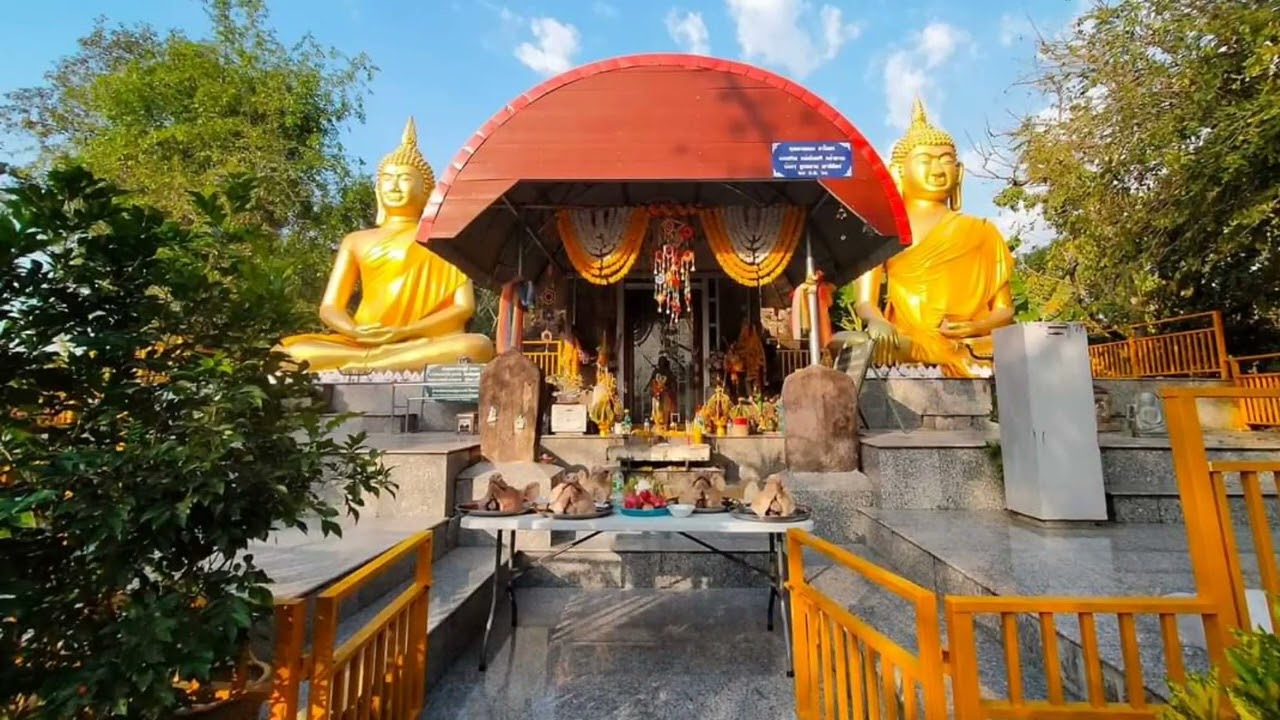
 Click to Access the Navigation Map GPS
Wat Phra Prang Sida Map
Recommend

 Art, Culture and Heritage
 Historical Sites and Monuments(20)
 Landmarks and Memorials(5)
 Art, Craft Centres, Tradition(7)
 Museums(6)
 Art Gallery(1)
 Educational Places
 Educational Gardens, Farm(4)
Temple(29)
Educational Gardens, Farm(4)
Temple(29)
 Mosque(1)
 Other Sacred Sites(6)
 Research and Development
 Royal Project(3)
 Suburban Living
 Village, Community(6)
 Local Market(4)
 Floating Market(1)
 Nature and Wildlife
 National Parks and Marine Reserves(3)
 Mountain (Doi)(5)
 Dam, Reservoir, Lake(8)
 Waterfalls(9)
 Hot Springs(1)
 Caves(2)
 Flower Field(1)
 River, Canal(8)
 Bays and Beaches(2)
 Other natural attractions(3)
 Entertainment and Agricultural
 Zoos and Aquariums(1)
 Animal camps and shows(1)
 Farms, Parks and Ecotourism(21)
 Waterpark(2)
 Outdoor and Adventure Activities(6)
 Shopping
 Shopping and Night Market(2)
 Travel Articles, Recipes
 Travel Review, Food Review(5)


