
lovethailand home >Northeastern Travel Attractions >Nakhon Ratchasima Travel Attractions >Sung Noen >Ma Kluea Mai > Wat Pa Phu Pha Sung
TL;DR: Wat Pa Phu Pha Sung is located at Ban Dong Mafai, Makluea Mai Subdistrict, Sung Noen District, Nakhon Ratchasima Province, open Daily, hours 08.00 – 17.00.
Wat Pa Phu Pha Sung
Open Days: Daily
Opening Hours: 08.00 – 17.00
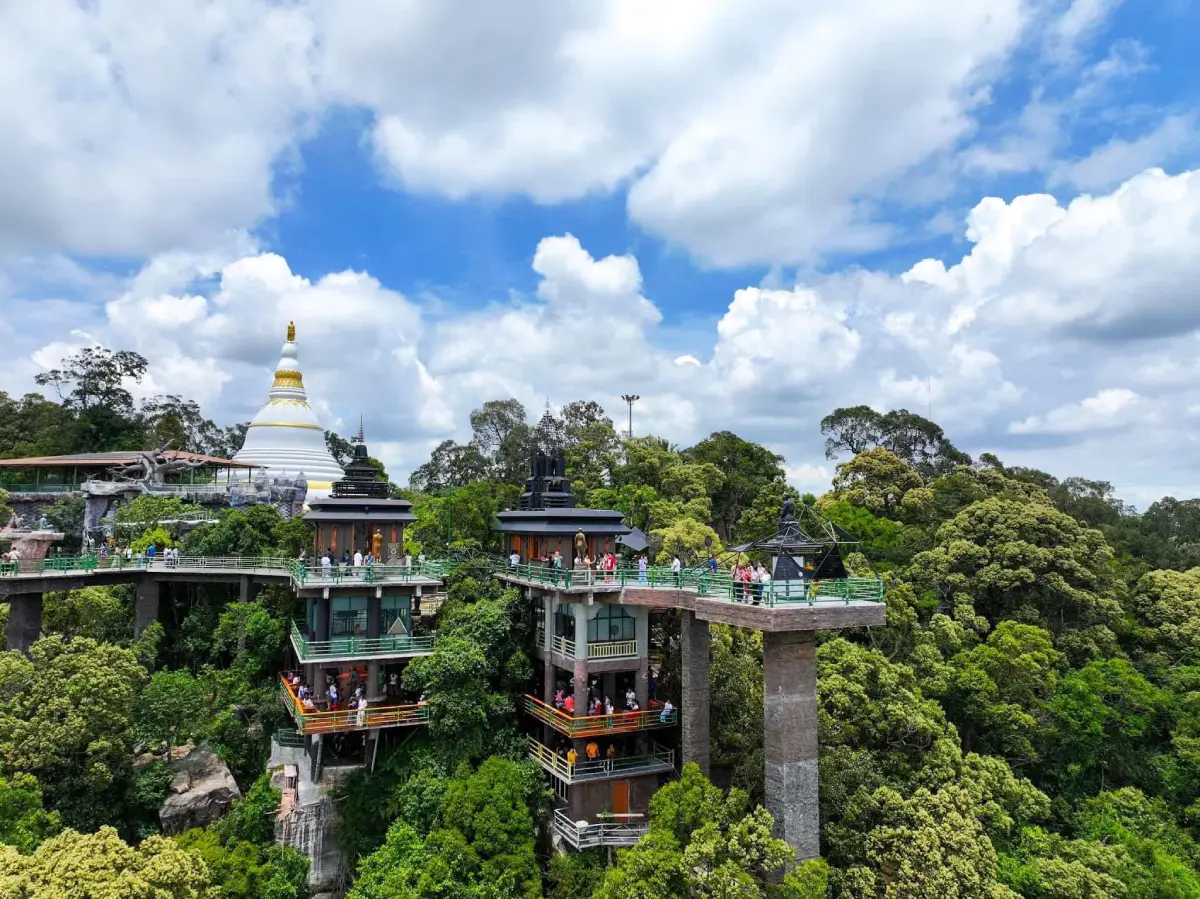
Wat Pa Phu Pha Sung, also known as Wat Phra Borom That Chedi Sri Phu Pha Sung, is located around Ban Dong Mafai, Mu 8, Makluea Mai Subdistrict, Sung Noen District, Nakhon Ratchasima Province. This forest temple and meditation center is one of the most distinctive spiritual destinations in the mountainous landscape of Korat. It is known for its complete forest environment, high cliff viewpoints, peaceful monastic atmosphere, white stupa called Phra That Chom Pha or Phra Borom That Chedi Sri Phu Pha Sung, and its role as a meditation center in the forest tradition of Ajahn Mun Bhuridatto. Set on Khao Chang Luang in the Phu Luang mountain range, the temple rises to about 760 meters above sea level and offers wide views toward Sung Noen, Pak Thong Chai, Pak Chong, and surrounding mountain valleys.
For foreign travelers, Wat Pa Phu Pha Sung is best understood as both a sacred Buddhist forest monastery and a scenic mountain destination. It is not a temple designed mainly for entertainment or commercial tourism. Its deepest value lies in silence, discipline, forest preservation, meditation, and reverence for the Buddha’s relics. Visitors come to pay respect at the stupa, walk through the forested temple grounds, observe the views from the cliff, and experience the calm atmosphere of a Thai forest temple. The place should therefore be visited with modest dress, quiet behavior, and respect for monks, practitioners, wildlife, and the natural environment.
The history of Wat Pa Phu Pha Sung is closely connected with the Thai forest meditation tradition. During the period around 1985–1987, disciples in the lineage of Luang Pho Phut Thaniyo came to practice in the Phu Pha Sung area. The landscape was remote, quiet, and suitable for meditation, but the forest had also been affected by logging and human disturbance. Later, Phra Maha Theeranat Aggadhiro stayed at Phu Pha Sung and became an important figure in preserving the area, developing the monastic community, and protecting the forest. The temple was eventually established officially in 2009, while still maintaining the atmosphere and discipline of a forest monastery.
The temple area covers about 2,800 rai and is located in a dry evergreen forest environment. The site is known in military maps as Khao Chang Luang of the Phu Luang range, while local villagers have also known the area as Khao Chao Pho. The mountain acts as a watershed feeding natural water systems such as Wa Phu Kaeo Waterfall, Hin Phloeng Waterfall, and Sap Pradu Reservoir. This gives the temple ecological importance in addition to its religious role. Visitors who come here are not only entering a place of worship, but also a forested mountain environment that supports streams, wildlife, and surrounding communities.
The most important sacred structure is Phra Borom That Chedi Sri Phu Pha Sung, also known as Phra That Chom Pha. This white stupa stands prominently on the high mountain landscape and enshrines Buddha relics and arahant relics. It was built through the faith and physical effort of many Buddhist devotees. The stupa is therefore not merely an architectural landmark; it is a religious monument shaped by collective devotion. For Thai Buddhists, paying respect here is an act of reverence toward the Buddha, the Dhamma, the Sangha, and the lineage of noble practitioners.
The journey up to Phra That Chom Pha is part of the experience. Visitors move through a mountain path, forest scenery, wind, birdsong, and the stillness of the temple before reaching the stupa. When arriving at the stupa area, the wide sky, cliff edge, and surrounding forest create a powerful sense of space. The white stupa set among the trees gives the temple a distinctive visual identity. The act of climbing upward toward the relic stupa also has symbolic meaning: it feels like moving from ordinary concerns toward calmness and spiritual attention.
The viewpoint area is another major highlight. From the cliff and open areas near the stupa, visitors can see wide views over farmland, forested hills, and distant mountain lines. On clear days, the scenery stretches toward several districts, including Sung Noen, Pak Thong Chai, and Pak Chong. During the rainy and cool seasons, mist may appear over the hills, making the landscape even more atmospheric. These viewpoints are suitable for quiet appreciation and photography, but visitors should avoid loud behavior or risky poses near the cliff.
Inside the temple grounds, important areas include the path to Phra That Chom Pha, the stupa entrance, cliff viewpoints, Lan Asok, monks’ residences, the contemplation pavilion, the alms waiting area, forest paths, and the natural zones where white squirrels can often be seen. These areas reflect the structure of a forest temple rather than a city temple. The buildings are placed in relation to the mountain and forest, and movement through the temple requires awareness. Visitors should walk carefully, especially on slopes, stairs, and viewpoints.
Wat Pa Phu Pha Sung is famous for its white squirrels. These animals have become one of the memorable features of the temple, representing the richness of the forest environment and the non-harming spirit of a Buddhist sanctuary. Visitors should observe wildlife quietly and respectfully. Do not chase, touch, frighten, or feed animals inappropriate food. Seeing white squirrels in a forest temple should encourage a sense of compassion and ecological awareness, not turn wildlife into entertainment.
The temple has a strong conservation meaning because its forest protects water sources and supports surrounding communities. Trees, waterfalls, streams, wildlife, and meditation spaces are all part of one interconnected landscape. This is one of the important lessons of Wat Pa Phu Pha Sung: Dhamma practice and environmental care are not separate. A quiet forest makes meditation possible, while Buddhist values help protect the forest from harm. Visitors can support this value simply by not littering, not damaging plants, not disturbing wildlife, and staying on appropriate paths.
The temple is suitable for meditation because it is quiet, natural, and removed from urban distraction. Those who come for Dhamma practice will find a setting shaped by forest, wind, mountain, and simplicity. Even short-term visitors can benefit by sitting quietly, walking slowly, and observing the atmosphere without rushing. This kind of travel is different from ordinary sightseeing. It asks the visitor to be still enough to notice silence, shade, light, distance, and the mind itself.
Wat Pa Phu Pha Sung is also a meaningful place for travelers interested in the Thai forest tradition. Forest monasteries are not defined by luxury or decoration. Their power comes from restraint, simplicity, discipline, and the use of nature as a support for practice. At Wat Pa Phu Pha Sung, the mountain teaches humility, the forest teaches interdependence, the wind teaches impermanence, and the stupa directs the mind toward the Triple Gem. This makes the temple valuable not only as a scenic viewpoint, but also as a cultural and spiritual learning site.
A typical visit can begin with worship at Phra That Chom Pha, followed by a slow walk around the stupa area and viewpoints. After that, visitors may spend time quietly observing the forest, the cliff scenery, and the temple zones. Those who want a deeper experience should allow at least 1 to 2 hours rather than stopping briefly for photographs. The temple rewards patience more than speed. Its most memorable quality is not only the view, but the calmness created by the combination of mountain, stupa, forest, and meditation atmosphere.
The road to the temple is a mountain route, so visitors should prepare their vehicles properly. Check brakes, tires, fuel, and weather conditions before traveling. Drive slowly and carefully, especially after rain or during misty conditions. Parking should be done only in designated areas so that temple traffic and local access are not blocked. On weekends or religious occasions, more visitors may arrive, so extra time and patience are recommended.
Getting There from Nakhon Ratchasima city is easiest by private car or rental vehicle. Take Mittraphap Road or Highway 2 toward Sung Noen District, then connect to Highway 24 toward Pak Thong Chai. Continue toward the Makluea Mai–Wa Phu Kaeo Waterfall route and Ban Dong Mafai to reach the mountain road leading to Wat Pa Phu Pha Sung. Travelers coming from Pak Chong or Pak Thong Chai can also connect to the Makluea Mai area, as the temple lies in a mountain zone linking several districts.
The best times to visit are morning and late afternoon. Morning offers cooler air, softer light, and a quieter atmosphere for worship and meditation. Late afternoon provides gentler light for viewing the landscape. During the rainy and cool seasons, mist and green forest scenery can make the temple especially beautiful, but visitors should check weather conditions because mountain roads may become slippery or visibility may be reduced.
Visitors should dress appropriately for a Buddhist temple and mountain environment. Modest clothing, comfortable walking shoes, and careful movement are recommended. Bring drinking water, but do not leave any waste behind. When entering sacred areas, remove shoes where required and keep the voice low. Photography should be respectful, especially near the stupa, Buddha images, monks, and meditation spaces. Responsible photography means preserving the dignity of the place while recording its beauty.
For families with children, Wat Pa Phu Pha Sung can be an excellent place to teach Buddhist manners, nature appreciation, and safety in mountain areas. Children can learn about a forest temple, a relic stupa, wildlife, viewpoints, and the need to respect sacred places. Adults should supervise children closely near cliffs, steps, slopes, and wildlife areas. The temple is beautiful, but its mountain setting requires attention and caution.
The temple can be combined with nearby natural and cultural attractions. A short trip may focus only on worship and viewpoints at Wat Pa Phu Pha Sung. A full-day trip can include Wa Phu Kaeo Waterfall, Hin Phloeng Waterfall, Sap Pradu Reservoir, Wat Wa Phu Kaeo, Khao Yai Thiang, or nearby attractions in Sung Noen and Pak Chong. Because the temple is located in a mountain and forest area, visitors should plan meals, fuel, and accommodation in advance rather than expecting dense tourist services immediately around the temple.
For those who want to understand the essence of the temple, the key is not to treat Wat Pa Phu Pha Sung as only a viewpoint. Its true identity is the unity of forest, cliff, stupa, meditation, and community faith. The beauty of the temple comes from its natural setting as much as from its sacred architecture. The white stupa is powerful because it stands within the forest. The viewpoint is meaningful because it is reached through a place of practice. The wildlife is memorable because it lives under the protection of a Buddhist sanctuary.
Overall, Wat Pa Phu Pha Sung is one of the most meaningful Buddhist and nature destinations in Nakhon Ratchasima. It offers mountain views, forest calm, a sacred relic stupa, meditation atmosphere, ecological value, and a strong connection with the Thai forest tradition. Travelers who come with respect will find more than a beautiful view. They will encounter a place where Buddhist practice and forest conservation support one another, and where the quietness of the mountain can become a form of inner rest.
| Name | Wat Pa Phu Pha Sung / Wat Phra Borom That Chedi Sri Phu Pha Sung |
| Location | Ban Dong Mafai, Makluea Mai Subdistrict, Sung Noen District, Nakhon Ratchasima Province |
| Address | No. 9, Mu 8, Ban Dong Mafai, Makluea Mai Subdistrict, Sung Noen District, Nakhon Ratchasima 30170, Thailand |
| Geographical Setting | Khao Chang Luang in the Phu Luang mountain range, also locally known as Khao Chao Pho, about 760 meters above sea level |
| Highlights | Phra Borom That Chedi Sri Phu Pha Sung or Phra That Chom Pha, cliff viewpoints, preserved dry evergreen forest, white squirrels, and a meditation center in the Ajahn Mun forest tradition |
| History | Forest meditation monks began practicing in the Phu Pha Sung area around 1985–1987. Phra Maha Theeranat Aggadhiro later stayed and developed the site as a forest monastery. The temple was officially established in 2009 |
| Name Origin | The name refers to the high cliff and elevated mountain landscape of Khao Chang Luang in the Phu Luang range |
| Distinctive Features | A mountain forest temple covering about 2,800 rai, located in a watershed forest and offering panoramic views toward Sung Noen, Pak Thong Chai, Pak Chong, and surrounding mountains |
| Travel Information | From Nakhon Ratchasima city, take Mittraphap Road or Highway 2 toward Sung Noen, connect to Highway 24 toward Pak Thong Chai, then continue via the Makluea Mai–Wa Phu Kaeo Waterfall route and Ban Dong Mafai to reach the temple |
| Current Status | Open for worship at Phra That Chom Pha, scenic viewing, meditation, and nature visits, with proper respect for the forest monastery atmosphere |
| Open Days | Daily |
| Opening Hours | 08.00 – 17.00 |
| Fees | No admission fee |
| Facilities | Worship area, stupa pathway, viewpoint area, rest pavilions, alms waiting area, monks’ residences, temple courtyard, nature paths, and designated parking areas |
| Main Areas / Zones | Phra Borom That Chedi Sri Phu Pha Sung or Phra That Chom Pha, path to the stupa, stupa entrance, cliff viewpoints, Lan Asok, monks’ residence area, contemplation pavilion, alms waiting area, forest paths, and white squirrel areas |
| Abbot / Caretaker | Phra Maha Theeranat Aggadhiro |
| Temple Contact Number | 081-623-9846, 081-623-9847 |
| Local Administrative Contact | Makluea Mai Subdistrict Administrative Organization, Tel. 044-002-162, 044-984-336 |
| Nearby Tourist Attractions | 1. Wa Phu Kaeo Waterfall, about 9 km 2. Hin Phloeng Waterfall, about 12 km 3. Sap Pradu Reservoir, about 22 km 4. Wat Wa Phu Kaeo, about 24 km 5. Khao Yai Thiang and Lam Takhong Upper Reservoir, about 38 km 6. Prasat Mueang Khaek, about 40 km |
| Nearby Restaurants | 1. Ban Phrai Phruek Restaurant, about 18 km, Tel. 086-366-4548 2. Khao Kaeng Mueang Ya, about 19 km, Tel. 085-777-3921 3. Malong Cafe’, about 24 km, Tel. 093-329-0226 4. Isaan Country Roadhouse, about 28 km, Tel. 093-530-7009 5. Kang Plu Eatery, about 31 km, Tel. 088-050-9093 6. Ban Rai Plai Noen Khao Yai Thiang, about 38 km, Tel. 044-756-915, 081-552-5069 |
| Nearby Accommodations | 1. Sweet Mango Resort Sung Noen, about 30 km, Tel. 086-089-2131 2. Chawalee Place, about 31 km, Tel. 065-394-2453 3. Sema Nakhon Hotel, about 31 km, Tel. 086-262-7985 4. The High Hill Fresh Resort, about 36 km, Tel. 081-777-1712 5. Green Ville Laguna, about 45 km, Tel. 044-000-222 |
Frequently Asked Questions (FAQ)
Q: Where is Wat Pa Phu Pha Sung located?
A: Wat Pa Phu Pha Sung is located around Ban Dong Mafai, Makluea Mai Subdistrict, Sung Noen District, Nakhon Ratchasima Province, on Khao Chang Luang in the Phu Luang mountain range.
Q: What are the opening hours of Wat Pa Phu Pha Sung?
A: The temple is open daily from 08.00 to 17.00.
Q: Is there an admission fee?
A: No. Wat Pa Phu Pha Sung does not charge an admission fee. Visitors may make merit according to their faith.
Q: What is the main highlight of Wat Pa Phu Pha Sung?
A: The main highlight is Phra Borom That Chedi Sri Phu Pha Sung, also known as Phra That Chom Pha, together with the cliff viewpoints, preserved forest, white squirrels, and forest meditation atmosphere.
Q: Is Wat Pa Phu Pha Sung suitable for meditation practice?
A: Yes. The temple is a forest meditation center in the Ajahn Mun tradition and offers a quiet mountain setting suitable for mindfulness, meditation, and respectful Dhamma practice.
Q: What views can visitors see from Wat Pa Phu Pha Sung?
A: Visitors can see wide mountain and valley views toward Sung Noen, Pak Thong Chai, Pak Chong, and the surrounding landscape, especially from the cliff and stupa areas.
Q: How can travelers get to Wat Pa Phu Pha Sung?
A: From Nakhon Ratchasima city, take Mittraphap Road or Highway 2 toward Sung Noen, connect to Highway 24 toward Pak Thong Chai, then continue via the Makluea Mai–Wa Phu Kaeo Waterfall route and Ban Dong Mafai.
Q: What nearby places can be visited on the same trip?
A: Nearby places include Wa Phu Kaeo Waterfall, Hin Phloeng Waterfall, Sap Pradu Reservoir, Wat Wa Phu Kaeo, Khao Yai Thiang, and Prasat Mueang Khaek.
 Category: ●Places of Worship
 Group: ●Temple
Last Update : 2 MonthAgo
 Last Update : 2 MonthAgo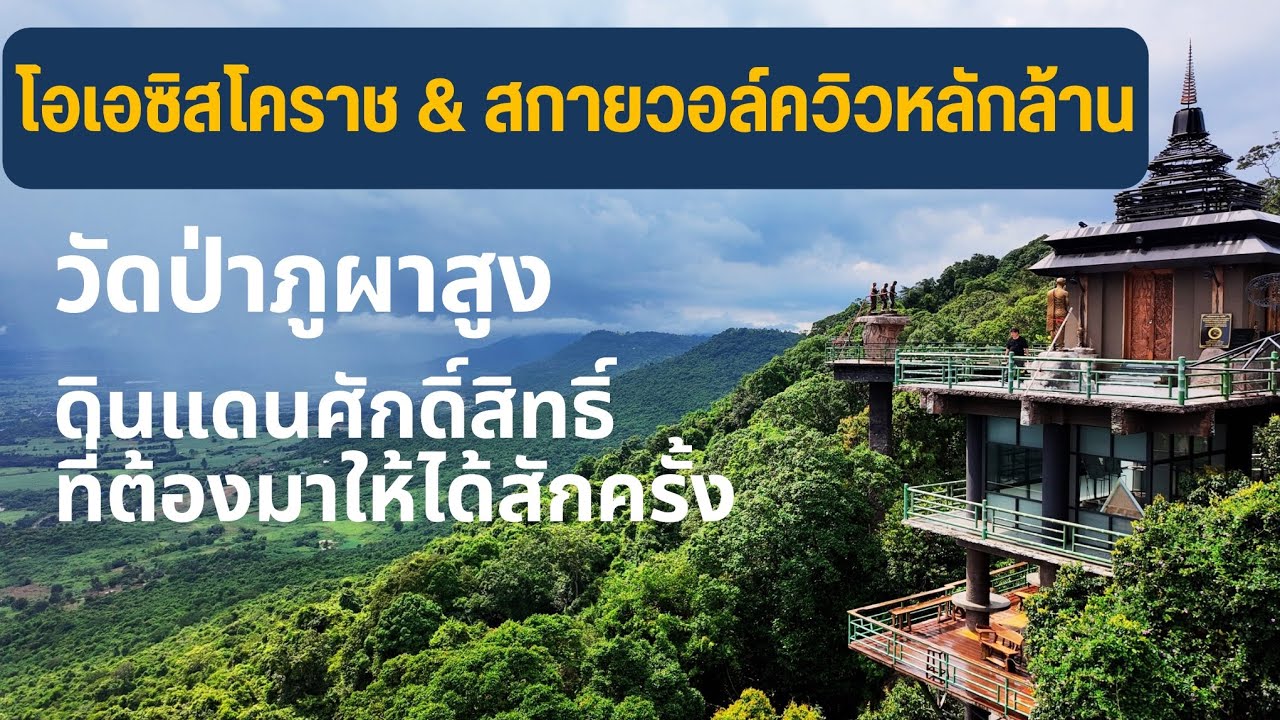
 Click to Access the Navigation Map GPS
Wat Pa Phu Pha Sung Map
Recommend

 Art, Culture and Heritage
 Historical Sites and Monuments(20)
 Landmarks and Memorials(5)
 Art, Craft Centres, Tradition(7)
 Museums(6)
 Art Gallery(1)
 Educational Places
 Educational Gardens, Farm(4)
Temple(29)
Educational Gardens, Farm(4)
Temple(29)
 Mosque(1)
 Other Sacred Sites(6)
 Research and Development
 Royal Project(3)
 Suburban Living
 Village, Community(6)
 Local Market(4)
 Floating Market(1)
 Nature and Wildlife
 National Parks and Marine Reserves(3)
 Mountain (Doi)(5)
 Dam, Reservoir, Lake(8)
 Waterfalls(9)
 Hot Springs(1)
 Caves(2)
 Flower Field(1)
 River, Canal(8)
 Bays and Beaches(2)
 Other natural attractions(3)
 Entertainment and Agricultural
 Zoos and Aquariums(1)
 Animal camps and shows(1)
 Farms, Parks and Ecotourism(21)
 Waterpark(2)
 Outdoor and Adventure Activities(6)
 Shopping
 Shopping and Night Market(2)
 Travel Articles, Recipes
 Travel Review, Food Review(5)


