
lovethailand home >Northeastern Travel Attractions >Nakhon Ratchasima Travel Attractions >Chakarat >Thonglang > Lam Takut Thong Lang
TL;DR: Lam Takut Thong Lang is located at Thonglang Subdistrict, Chakkarat District, Nakhon Ratchasima Province, Thailand, open Daily, hours Daytime Visit Recommended.
Lam Takut Thong Lang
Open Days: Daily
Opening Hours: Daytime Visit Recommended
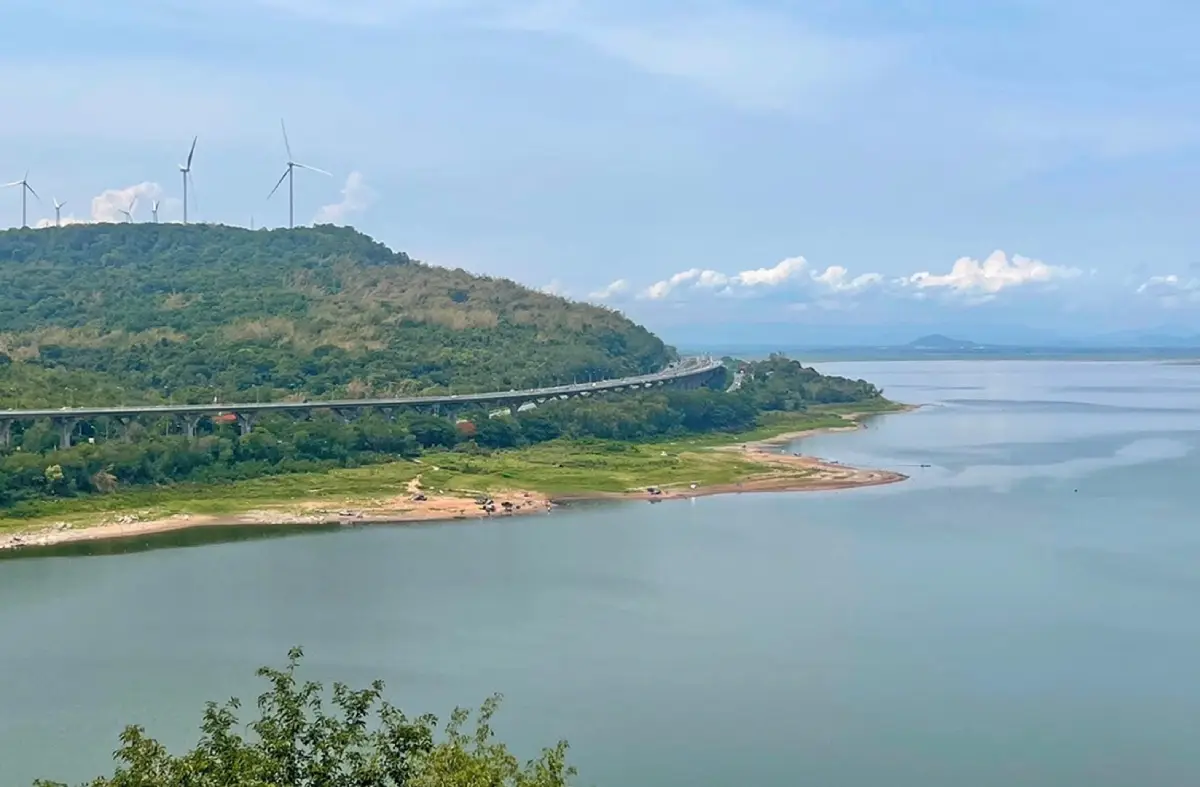
Lam Takut Thonglang in Nakhon Ratchasima Province is a quiet natural attraction in Thonglang Subdistrict, Chakkarat District. Its main feature is a “lam khut,” or an old watercourse formed when the Mun River shifted its flow and left behind a clean, calm stream surrounded by rural farmland. The area is known for clear water, simple natural scenery, and agricultural plots where local villagers grow chilies, vegetables, and other crops along the water. For travelers looking for a peaceful community-based destination in Korat, Lam Takut Thonglang offers a meaningful look at the relationship between water, land, farming, and rural life in northeastern Thailand.
This is not a large commercial attraction with amusement facilities or heavy infrastructure. Its value lies in the real character of the landscape. A lam khut is usually an old water channel or a separated stream left behind when a main river changes direction. In the case of Lam Takut Thonglang, the water is connected with the broader Mun River landscape, one of the most important river systems in the Northeast. The result is a calm natural water area that supports plants, soil moisture, farming activity, and the everyday life of the surrounding community.
Thonglang Subdistrict is a flatland area connected with the Mun River. The river has long shaped settlement, agriculture, local routes, and the way people live in this part of Nakhon Ratchasima. Lam Takut Thonglang reflects that relationship clearly. When the river changed its course, the old water channel did not lose its meaning. It became a useful local water source, a green landscape, a place for small-scale farming, and eventually a natural attraction that helps visitors understand the geography and lifestyle of the community.
The most memorable image of Lam Takut Thonglang is the combination of clean water and farmland. Visitors can see chili and vegetable plots around the water, showing how villagers use the natural moisture of the area for cultivation. This makes the place more than a scenic waterway. It is also a living agricultural landscape where nature and livelihood exist together. Travelers interested in agritourism, rural photography, or local ecology will find the area especially interesting because the scenery is not staged; it is part of daily life.
The overall atmosphere is calm and simple. Lam Takut Thonglang is suitable for walking slowly, observing the water, taking photographs, and enjoying the rural setting. The charm of the place comes from small details: the curve of the old stream, the green of the vegetable plots, the open farmland, the quietness of the water, and the local surroundings of Thonglang village. Travelers familiar with major Nakhon Ratchasima destinations such as Khao Yai, Phimai, or Lam Takhong Dam will experience a different side of the province here. This is a smaller, quieter, and more local form of travel.
From a geographical point of view, Lam Takut Thonglang helps visitors understand how river landscapes change over time. When a river flows across a flat plain, it bends, erodes its banks, deposits sediment, and gradually changes course. Old channels can become separated from the main river and remain as ponds, canals, or calm watercourses. These places often become important for local ecology and farming. Lam Takut Thonglang is valuable because it shows this process in a form that visitors can easily see and understand.
The best time to visit is in the morning or late afternoon. Morning offers fresh air, soft light, and a calm view over the water and farming plots. Late afternoon is good for photography and relaxed walking, as the heat becomes less intense. During the rainy season and after the rains, the area is greener and the soil around the stream is more moist. In the dry season, visitors can see the shape of the old watercourse and the riverbank more clearly. Each season gives the site a different character.
Lam Takut Thonglang is suitable for travelers who prefer quiet places with local meaning. It is not a crowded tourist zone, so visitors should treat it as both a natural site and a working community landscape. Walk carefully, do not enter vegetable plots without permission, and avoid stepping on farmland. The water, land, and crops are part of people’s livelihoods. Responsible travel here means keeping the area clean, not throwing rubbish into the water, and respecting the privacy and daily life of local residents.
The attraction is best understood as a living landscape. Around the old stream, local farmers grow chilies and vegetables according to the season. These crops give the area color and movement, while also showing the practical value of water in rural life. The stream supports farming, and farming keeps the surrounding landscape active and green. For visitors interested in how rural communities use natural resources, Lam Takut Thonglang provides a simple but clear example.
Thonglang Subdistrict itself adds cultural background to the visit. The name “Thonglang” is linked with the thonglang tree and local stories about the long-established village. The subdistrict is part of Chakkarat District and is connected by Highway 226, the Nakhon Ratchasima–Chakkarat road. The northeastern railway line also passes through the area, with Ban Nong Manorom Station serving as an important railway point in the subdistrict. These routes help connect Lam Takut Thonglang with nearby temples, community areas, restaurants, and accommodation options in Chakkarat District.
From a community tourism perspective, Lam Takut Thonglang is part of the wider effort to recognize and promote local attractions in Thonglang Subdistrict. It has value as both a natural attraction and an outdoor learning site. Students, families, and travelers interested in local ecology can use the area to learn about old river channels, agricultural land near water, and the way rural communities live with natural resources. The site is not only for sightseeing; it is also a place that encourages visitors to understand the local environment.
The meaning of nature at Lam Takut Thonglang is different from dramatic forests, waterfalls, or mountains. Here, nature appears as an old stream, cultivated land, vegetable plots, and a quiet flatland landscape. Its beauty is not grand, but it is honest. When visitors see chilies and vegetables growing beside the water, they see how people rely on the land in practical ways. This makes the site valuable for travelers who want to understand local life rather than only take photographs of famous landmarks.
For photography, Lam Takut Thonglang offers rural landscape scenes, farming details, and natural water views. Good angles include the old stream curving through the land, vegetable plots near the water, green crops contrasting with the surface of the stream, and wide shots of the surrounding countryside. Photographers should avoid disturbing farmers, entering private land without permission, or damaging crops. Respectful photography helps visitors capture meaningful images while maintaining a good relationship with the local community.
The agricultural setting around the stream is one of the most important features of the place. Growing chilies and vegetables beside the water reflects local knowledge of soil, moisture, sunlight, and seasons. Farmland close to a natural water source often has better moisture than land farther away, making it useful for certain crops. These fields are therefore not only scenic. They also show how local people use small plots of land wisely and productively.
Visitors can combine Lam Takut Thonglang with nearby cultural sites in Chakkarat District. Wat Thonglang, Wat Nong Manorom, Wat Ban Tum, Wat Nong Bua Tabaeng, and Wat Pa Chakkarat are among the local temples that can add a cultural dimension to the trip. These temples reflect the spiritual life of the community and help visitors understand that rural villages in Thailand are often shaped by three elements: water sources, farmland, and Buddhist temples.
Food and accommodation are more available in the wider Chakkarat area than directly beside Lam Takut Thonglang. Travelers can visit the natural site first, then continue to restaurants and cafés in Thonglang or Chakkarat town. Those who want to stay overnight can choose accommodation in Chakkarat District or Nakhon Ratchasima city, depending on their travel plan. Since Lam Takut Thonglang is a local natural attraction rather than a hotel zone, planning ahead makes the trip smoother.
Getting There is easiest by private car. From Nakhon Ratchasima city, take Highway 226 toward Chakkarat District, then continue into Thonglang Subdistrict. When using a navigation app, search for “Lam Takut Thonglang” together with “Thonglang Subdistrict, Chakkarat District, Nakhon Ratchasima” to avoid confusion with similarly named places in other districts or provinces. Private transport is the most convenient option because the site is located within a community and farming landscape.
Travelers using the railway can take the northeastern line that passes through Thonglang Subdistrict. Ban Nong Manorom Station is an important local station in the area. From there, visitors still need local transport, a hired vehicle, or coordination with local residents to reach the stream area. Public transportation therefore requires more planning than driving, especially because the natural site is not directly attached to a major transport terminal.
Preparation should be simple but practical. Wear comfortable shoes, choose clothing suitable for outdoor weather, bring drinking water, and carry your own rubbish bag. During the rainy season, some ground surfaces may be wet or muddy, so visitors should walk carefully. Children and elderly travelers should avoid getting too close to the water’s edge. Lam Takut Thonglang is a natural community area, not a heavily managed commercial tourist site, so visitors should be responsible for their own safety.
A short visit of 30 to 60 minutes is enough for walking, taking photographs, and enjoying the natural atmosphere. For a more complete trip, half a day is better. Visitors can combine the stream with nearby temples, restaurants, and cafés in Chakkarat District. This gives a broader understanding of the area because the trip includes nature, agriculture, local communities, food, and culture in one route.
For families, Lam Takut Thonglang can be a useful outdoor learning space. Children can see how rivers change course, how old water channels remain in the landscape, and how farming uses water from natural surroundings. Parents can also teach children about cleanliness, respecting farmland, not throwing rubbish into water, and understanding how communities depend on natural resources. In this way, the visit becomes both a relaxing trip and an environmental lesson.
For cultural travelers, Lam Takut Thonglang offers an understated but meaningful view of Thonglang Subdistrict. The name of the community, its connection with the Mun River, the long-standing settlement history, local temples, and farming life all come together around the stream. Visitors do not need a large museum to understand the place. The landscape itself tells the story through water, soil, crops, and local life.
The beauty of Lam Takut Thonglang is found in its modest scale. It is a place that asks visitors to slow down and look carefully. The still water, farmland, old watercourse, and village setting may appear ordinary at first, but together they show the identity of rural Chakkarat. This is the kind of destination that rewards travelers who appreciate quiet places and local details.
During the planting season, the area around the stream becomes more colorful with chilies and vegetables. Chilies are strongly connected with Isan food culture, while vegetables represent everyday food production in the community. The farmland around Lam Takut Thonglang therefore points back to local cuisine, ingredients, and household-level agricultural knowledge. Travelers interested in food culture can see part of the origin of local ingredients in the landscape itself.
Visitors should follow the principles of respectful community travel. Do not block village roads with parked vehicles, do not enter private farmland without permission, and avoid making loud noise. A natural attraction inside a living community is different from a controlled tourist park. The place people visit is also the place where local residents live and work. Good manners help keep the site welcoming and sustainable.
Overall, Lam Takut Thonglang is a natural attraction in Nakhon Ratchasima for travelers looking for quiet scenery, local farming life, and the landscape of the Mun River basin. Its value comes from the old stream formed by the changing river, the agricultural plots around the water, and the role of Thonglang community in living with the natural environment. Visitors who appreciate simplicity will find that this small rural site offers a clear and memorable picture of the relationship between people and water in northeastern Thailand.
| Name | Lam Takut Thonglang |
| Location | Thonglang Subdistrict, Chakkarat District, Nakhon Ratchasima Province, Thailand |
| Address | Thonglang Subdistrict, Chakkarat District, Nakhon Ratchasima 30230, Thailand |
| Highlights | An old watercourse formed by the Mun River changing direction, with clean water, natural scenery, chili plots, vegetable fields, and rural farmland around the stream |
| History | Connected with the Mun River basin and Thonglang community, a long-established rural area on flatland near the Mun River |
| Name Origin | “Lam Takut” refers to an old or separated watercourse created by a changing river channel, while “Thonglang” is the name of the local community and subdistrict |
| Distinctive Features | Natural waterway beside farmland, suitable for nature observation, photography, learning about old river channels, and seeing local agricultural life |
| Travel Information | From Nakhon Ratchasima city, take Highway 226 toward Chakkarat District, then continue into Thonglang Subdistrict; private car is the most convenient option |
| Current Status | A natural community attraction in Thonglang Subdistrict, Chakkarat District, Nakhon Ratchasima Province |
| Open Days | Daily |
| Opening Hours | Daytime visit recommended |
| Facilities | Natural stream area, riverside scenery, community routes, and restaurants or accommodations in Chakkarat District and nearby areas |
| Main Areas / Zones | Old watercourse area, old Mun River stream landscape, chili and vegetable plots, riverside nature-viewing points, and community routes in Thonglang Subdistrict |
| Caretaker / Community Coordinator | Thonglang Subdistrict Administrative Organization, Chakkarat District, Nakhon Ratchasima Province |
| Main Contact Number | Thonglang Subdistrict Administrative Organization, Tel. 0-4400-1905 |
| Official Website / Official Page | Thonglang Subdistrict Administrative Organization, Chakkarat District, Nakhon Ratchasima Province |
| Nearby Tourist Attractions | 1. Wat Thonglang, about 2 km 2. Wat Nong Manorom, about 4 km 3. Wat Ban Tum, about 5 km 4. Wat Nong Bua Tabaeng, about 6 km 5. Wat Pa Chakkarat, about 15 km |
| Nearby Restaurants | 1. Ban Rao Cafe Korat, Thonglang Subdistrict, about 4 km, Tel. 065-975-6444 2. Kai Yang Khao Suan Kwang Chakkarat, about 15 km, Tel. 092-987-4199 3. Suan Ahan Ban Thung Chakkarat, about 17 km, Tel. 044-300-940 4. Big Bear Cafe Chakkarat, about 17 km, Tel. 044-399-840 5. Ban Ai Coffee Drip Chakkarat, about 15 km, Tel. 089-500-7216 |
| Nearby Accommodations | 1. Dream Resort & Apartment Chakkarat, about 15 km, Tel. 081-730-7129 2. Plai Na Resort Chakkarat, about 17 km, Tel. 085-858-0633 3. Chakri Mansion Resort, about 28 km, Tel. 081-718-3429 4. Muangthongthani Resort Nakhon Ratchasima, about 32 km 5. Accommodation In Nakhon Ratchasima City, about 35 km |
Frequently Asked Questions (FAQ)
Q: Where is Lam Takut Thonglang located?
A: Lam Takut Thonglang is located in Thonglang Subdistrict, Chakkarat District, Nakhon Ratchasima Province, Thailand.
Q: What is special about Lam Takut Thonglang?
A: It is an old watercourse created by the changing flow of the Mun River, with clean water, natural scenery, chili and vegetable plots, and rural farmland around the stream.
Q: Is Lam Takut Thonglang open every day?
A: Yes. It is a natural community attraction that can be visited daily, with daytime visits recommended.
Q: When is the best time to visit Lam Takut Thonglang?
A: Morning and late afternoon are the best times to visit because the weather is more comfortable and the light is better for photography.
Q: How can travelers get to Lam Takut Thonglang?
A: From Nakhon Ratchasima city, take Highway 226 toward Chakkarat District, then continue into Thonglang Subdistrict. Traveling by private car is the most convenient option.
Q: Who is Lam Takut Thonglang suitable for?
A: It is suitable for travelers who enjoy nature, community-based tourism, rural farming landscapes, the Mun River basin, and slow travel.
Q: What nearby attractions can be combined with Lam Takut Thonglang?
A: Nearby places include Wat Thonglang, Wat Nong Manorom, Wat Ban Tum, Wat Nong Bua Tabaeng, and Wat Pa Chakkarat.
Q: Are there restaurants and accommodations near Lam Takut Thonglang?
A: Yes. Restaurants and accommodations are available in Thonglang Subdistrict, Chakkarat District, and nearby areas. Travelers should plan the route and contact restaurants or accommodations before visiting.
 Category: ●Nature and Wildlife
 Group: ●River, Canal
Last Update : 3 WeekAgo
 Last Update : 3 WeekAgo
Recommend

 Art, Culture and Heritage
 Historical Sites and Monuments(20)
 Landmarks and Memorials(5)
 Art, Craft Centres, Tradition(7)
 Museums(6)
 Art Gallery(1)
 Educational Places
 Educational Gardens, Farm(4)
 Places of Worship
 Temple(29)
 Mosque(1)
 Other Sacred Sites(6)
 Research and Development
 Royal Project(3)
 Suburban Living
 Village, Community(6)
 Local Market(4)
 Floating Market(1)
 National Parks and Marine Reserves(3)
 Mountain (Doi)(5)
 Dam, Reservoir, Lake(8)
 Waterfalls(9)
 Hot Springs(1)
 Caves(2)
 Flower Field(1)
River, Canal(8)
Flower Field(1)
River, Canal(8)
 Bays and Beaches(2)
 Other natural attractions(3)
 Entertainment and Agricultural
 Zoos and Aquariums(1)
 Animal camps and shows(1)
 Farms, Parks and Ecotourism(21)
 Waterpark(2)
 Outdoor and Adventure Activities(6)
 Shopping
 Shopping and Night Market(2)
 Travel Articles, Recipes
 Travel Review, Food Review(5)


