
lovethailand home >Northeastern Travel Attractions >Nakhon Ratchasima Travel Attractions >Pak Chong >Mu Si > Haew Suwat Waterfall
TL;DR: Haew Suwat Waterfall is located at Khao Yai National Park, Pak Chong District, Nakhon Ratchasima Province, Thailand, open Daily, hours 06.00 – 18.00.

Haew Suwat Waterfall
Open Days: Daily
Opening Hours: 06.00 – 18.00
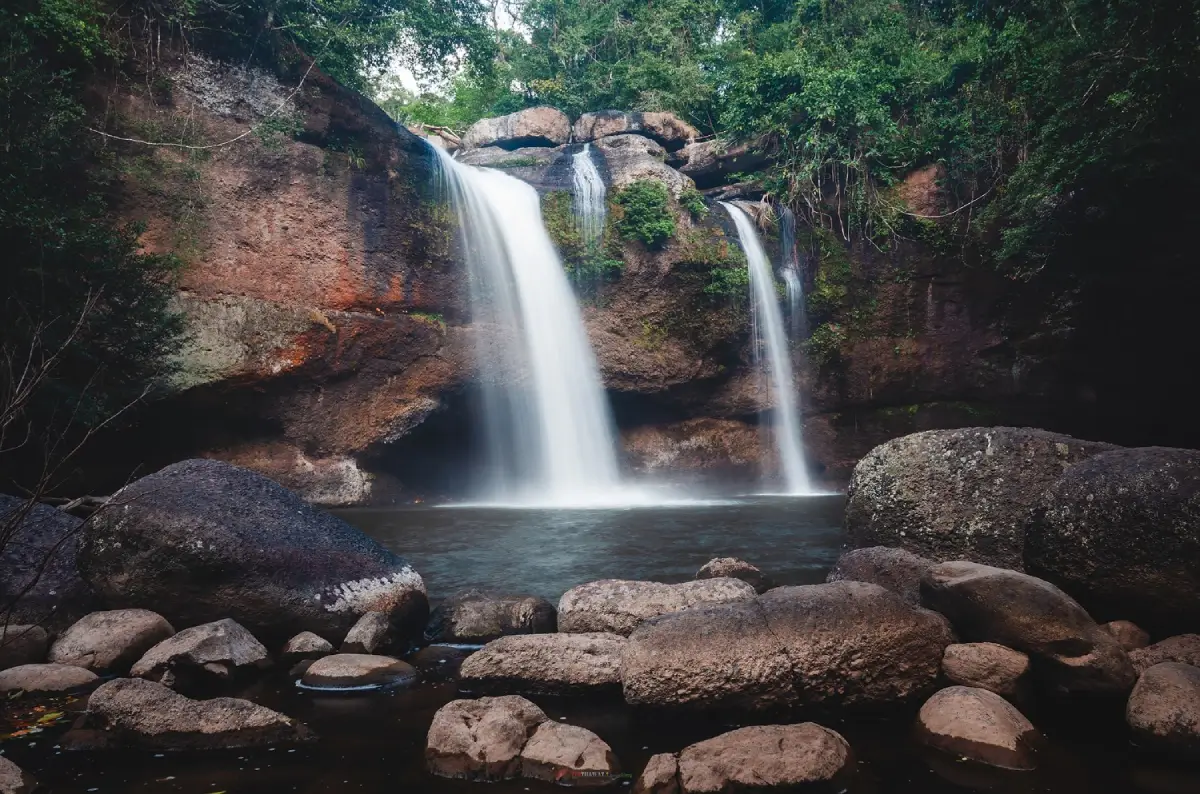
Haew Suwat Waterfall in Nakhon Ratchasima is one of the most famous waterfalls in Khao Yai National Park. Located near the end of Thanarat Road in Pak Chong District, it is easily reached by car, followed by a short walk of about 100 meters from the parking area. The waterfall is formed by Lam Takhong Stream, which drops from a volcanic rock cliff about 25 meters high into a broad pool below. Visitors can enjoy an upper viewpoint through the trees, walk down toward the lower pool area, or continue on the 3 km nature trail from Pha Kluai Mai Waterfall. It is a scenic destination for photography, short nature walks, rainforest scenery, and a classic Khao Yai experience, but swimming is not permitted.
Haew Suwat Waterfall is one of the most recognizable natural attractions in Khao Yai National Park, Nakhon Ratchasima Province. It is located at the far end of Thanarat Road in Pak Chong District and is one of the easiest major waterfalls in the park to reach. Visitors can drive directly to the parking area and then walk only about 100 meters to the main viewing zone. This accessibility makes Haew Suwat a popular stop for first-time visitors, families, photographers, and international travelers who want to experience a real waterfall inside one of Thailand’s most important protected forests without needing a long or difficult trek.
The waterfall is formed by Lam Takhong Stream, the same stream system associated with Pha Kluai Mai Waterfall and Kong Kaeo Waterfall. At Haew Suwat, the water drops from a volcanic rock cliff approximately 25 meters high into a wide pool below. During the rainy season and early cool season, the waterfall becomes especially powerful, with a bright white curtain of water falling into the basin and sending cool mist into the surrounding air. During drier months, the water volume becomes lower, revealing more of the rock structure, the cliff face, and the cave-like hollow behind the waterfall.
The beauty of Haew Suwat lies not only in the falling water, but also in its surrounding landscape. The waterfall is framed by dense forest, large trees, boulders, rock walls, and streamside plants that thrive in moist conditions. The sound of the waterfall echoes through the small gorge, while the cool air around the lower basin contrasts strongly with the warmer forest trail above. For many visitors, this combination of easy access and a dramatic natural setting is what makes Haew Suwat one of the essential stops in Khao Yai National Park.
One of the most useful viewing areas is the upper viewpoint, where visitors can look through the trees and see the whole waterfall from a higher angle. This viewpoint is suitable for travelers who want a broad view of the cliff, the falling stream, and the pool below without walking all the way down to the lower area. The upper perspective also helps visitors understand the shape of the waterfall more clearly: the cliff wall, the stream channel, the plunge line, the rock basin, and the surrounding forest all appear together in one frame.
Visitors who want to get closer to the waterfall can follow the walking route down toward the lower pool area. This path allows travelers to experience the cool mist, the sound of the falling water, and the scale of the cliff more directly. The lower area is especially attractive for photography because the waterfall appears taller and more powerful from below. However, the path can be damp, and the rocks near the stream may be slippery. Travelers should use shoes with good grip, stay on designated paths, and avoid climbing over barriers or stepping onto unsafe rocks.
Behind the waterfall is a natural hollow in the rock wall. During the dry season or when the water volume is low, this cave-like space can be seen more clearly from certain angles. This feature adds depth to the waterfall and gives Haew Suwat a distinctive character compared with many other waterfalls in the park. In the rainy season, however, the water flow becomes much stronger, the mist becomes heavier, and the lower area can be more hazardous. Travelers should always prioritize safety and follow all national park instructions.
Swimming is not permitted at Haew Suwat Waterfall. This rule is important because the waterfall basin can be dangerous due to changing water levels, strong currents, slippery rocks, and sudden increases in flow after rainfall. Haew Suwat should be understood as a sightseeing, photography, and nature-walking destination rather than a swimming waterfall. Respecting this rule protects visitors from accidents and helps preserve the natural condition of the waterfall area.
The route to Haew Suwat is straightforward. From the Khao Yai Visitor Center, visitors drive approximately 10 km along the internal park road to the waterfall parking area. The drive passes through forest and wildlife habitat, so vehicles should move slowly and follow the national park speed regulations. Wildlife may cross the road, especially in the early morning, late afternoon, and after rain. If animals appear on the road, visitors should stop at a safe distance, avoid honking, avoid flash photography, and never leave the vehicle to approach wild animals.
Getting There from Bangkok or Central Thailand usually involves traveling to Pak Chong District, Nakhon Ratchasima, then entering Khao Yai National Park through the Chao Por Khao Yai Shrine Gate on Thanarat Road. After paying the entrance fee at the gate, continue along the park road toward the visitor center and then onward to Haew Suwat Waterfall. A private car or rental car is the most convenient option because public transportation inside the national park does not cover all attractions. Travelers arriving by train or bus at Pak Chong should arrange local transport before entering the park.
Haew Suwat can also be reached on foot from Pha Kluai Mai Waterfall via a nature trail of about 3 km. This trail connects two important waterfalls in the Lam Takhong Stream system and gives visitors a more immersive experience of the forest. Instead of seeing Haew Suwat as a simple roadside stop, travelers who take this route walk through shaded forest, streamside vegetation, moist earth, exposed roots, and the changing sound of flowing water. The trail is suitable for visitors who enjoy short hikes and have enough time, water, and suitable footwear.
The Pha Kluai Mai – Haew Suwat route offers a different experience from driving directly to the parking lot. The trail reveals the continuity of the stream before it reaches the larger waterfall. Along the way, visitors can observe forest plants, small wildlife, birds, insects, and the natural rhythm of the stream. Some sections may be damp or uneven, so the route should not be started too late in the day. Travelers should allow enough time to complete the walk safely and plan transport at the end of the trail if they do not intend to walk back.
For a short visit, Haew Suwat can be enjoyed in 30 minutes to 1 hour. This is enough time to walk from the parking area, see the upper viewpoint, take photographs, and return. For a more complete visit, travelers should allow 1.5 to 2 hours to include the lower viewing area, the forest around the parking zone, and a slower walk back. Visitors who combine Haew Suwat with the trail from Pha Kluai Mai should plan for at least half a day, including walking time, rest stops, weather conditions, and return logistics.
The best season depends on the type of experience travelers prefer. The rainy season to early cool season is ideal for seeing the waterfall at its strongest, with a fuller flow and lush green forest. This is also the period when the surrounding vegetation looks fresh and the waterfall feels most dramatic. The dry season provides a quieter experience, with lower water volume and clearer views of the rock face and the hollow behind the waterfall. Both seasons have value, but visitors who want a powerful waterfall image should visit after sustained rainfall while avoiding days of heavy rain or unsafe conditions.
The streamside ecology around Haew Suwat is especially interesting. The lower area supports plants adapted to flooding, fast-flowing water, and constant moisture. Trees and plants such as streamside figs and other water-tolerant species help stabilize the banks, provide shade, and create habitat for small animals and insects. While most visitors focus on the waterfall itself, the plants around the pool are part of the same living system. Observing them helps travelers understand that a waterfall is not just a scenic backdrop, but an active ecological zone.
Haew Suwat is also a good place to appreciate the geology of Khao Yai. The official park information describes the waterfall as a volcanic rock waterfall with a special rock character known as volcanic conglomerate. Over time, water from Lam Takhong Stream has eroded rock layers, cracks, and weak points, shaping the cliff, plunge pool, and hollow behind the falling water. Looking closely at the cliff and surrounding stones helps visitors see how water, rock, and time have worked together to create the landscape.
For photography, Haew Suwat offers several strong compositions. The upper viewpoint works well for wide shots showing the entire waterfall through forest greenery. The lower area gives a more dramatic view of the falling water, boulders, mist, and pool. Morning light and soft overcast conditions are especially useful because they reduce harsh reflections and help preserve the green tone of the forest. After rain, the waterfall becomes more powerful, but paths and rocks also become more slippery, so photographers should never leave safe areas just to find a better angle.
For families, Haew Suwat is one of the more accessible waterfall experiences in Khao Yai, but it still requires care. The short distance from the parking area can make the destination feel easy, yet the natural conditions remain real: wet stairs, slippery surfaces, exposed rocks, and changing water flow. Children should be supervised closely at all times, especially near the lower path and pool area. Parents can turn the visit into a simple nature-learning experience by pointing out the stream, plants, rock layers, safety signs, and national park rules.
International travelers often appreciate Haew Suwat because it offers a clear and memorable view of Khao Yai’s rainforest landscape without requiring advanced hiking skills. It is a place where visitors can see water, volcanic rock, forest, streamside plants, and protected national park management in one compact location. For travelers with limited time, Haew Suwat provides a strong introduction to the natural character of Khao Yai. For those with more time, it becomes a gateway to deeper exploration through nearby trails and other waterfalls.
The Khao Yai Visitor Center is an important stop before visiting Haew Suwat, especially for travelers who are unfamiliar with the park. At the visitor center, visitors can ask about trail conditions, weather, wildlife safety, park rules, and current access information. The center also provides exhibitions and useful background on the history, forest ecology, and conservation importance of Khao Yai. Starting the trip there helps visitors understand the park better and reduces the risk of entering natural areas without up-to-date information.
Facilities around Haew Suwat include toilets, parking, drink shops, restaurants, convenience-store services, and official visitor service points in designated areas. These facilities make the waterfall convenient for day visitors, but the area should not be treated as an ordinary picnic site. Food should not be taken down into sensitive natural zones, and visitors must never feed wildlife. All waste should be disposed of only in designated areas. These simple actions help protect the waterfall and reduce human impact on the forest.
A good one-day itinerary inside Khao Yai can include the Km. 30 Viewpoint, the Khao Yai Visitor Center, Sai Sorn Reservoir, Haew Suwat Waterfall, and Nong Phak Chi Wildlife Watchtower. This combination allows travelers to experience viewpoints, learning areas, water scenery, forest trails, and wildlife observation within the same day. Those who want to focus on waterfalls can combine Pha Kluai Mai, Haew Suwat, and Kong Kaeo Waterfall, gaining a clearer picture of how Lam Takhong Stream connects several attractions in the park.
Travelers who want to stay overnight can choose between official national park accommodation and hotels or resorts outside the park. Inside the park, options include campsites and bungalows available through the official booking system. Staying inside or near the park is useful for early morning birdwatching, short nature walks, and faster access to park attractions. Outside the park, the Mu Si, Pak Chong, and Thanarat Road areas offer more restaurants, cafes, hotels, and resorts. The best choice depends on whether the traveler values closeness to nature or comfort and dining variety.
Camping in Khao Yai requires following national park rules. Visitors should keep noise low at night, use lights only when necessary, store food properly, avoid leaving scraps, and never approach wildlife that may pass through camping areas. The forest at night has its own atmosphere: cool air, insect sounds, bird calls at dawn, and the occasional movement of animals. This experience can be memorable, but it should be enjoyed responsibly and within park regulations.
Responsible travel is essential at Haew Suwat because the site receives many visitors throughout the year. Litter, loud noise, feeding animals, touching plants, or stepping outside designated paths can create cumulative damage. The best way to visit is to walk quietly, stay on marked routes, avoid disturbing wildlife, take only photographs, and leave no waste behind. Khao Yai is not only a tourist destination; it is a protected habitat for many species of plants and animals.
One of the strongest qualities of Haew Suwat is that it is easy to reach yet still deeply connected to a large natural system. A quick visitor can see the waterfall and take beautiful photographs in a short time. A slower visitor can notice much more: the stream that feeds the fall, the volcanic rock cliff, the plants adapted to flooding, the forest shade, the safety management, and the trail linking the waterfall to Pha Kluai Mai. The more carefully travelers observe, the richer the experience becomes.
In conclusion, Haew Suwat Waterfall is an essential destination in Khao Yai National Park for both Thai and international travelers. It combines accessibility, dramatic waterfall scenery, volcanic geology, forest atmosphere, useful facilities, and a link to one of the park’s short nature trails. With proper timing, safe behavior, and respect for national park rules, Haew Suwat offers one of the clearest and most memorable encounters with the natural beauty of Khao Yai.
| Name | Haew Suwat Waterfall |
| Location | Khao Yai National Park, Pak Chong District, Nakhon Ratchasima Province, Thailand |
| Address | Khao Yai National Park, P.O. Box 9, Pak Chong Post Office, Mu Si Subdistrict, Pak Chong District, Nakhon Ratchasima 30130, Thailand |
| Highlights | Famous Khao Yai waterfall formed by Lam Takhong Stream, dropping from a volcanic rock cliff about 25 meters high, with an upper viewpoint, lower pool access, and a 3 km nature trail from Pha Kluai Mai Waterfall |
| History / Importance | An important waterfall within the Lam Takhong Stream system of Khao Yai National Park and one of the best-known natural attractions in Nakhon Ratchasima Province |
| Name Origin | The name Haew Suwat is associated with the gorge-like landscape and the waterfall dropping into the basin below; it has long been used for the well-known waterfall at the end of Thanarat Road |
| Distinctive Features | Volcanic conglomerate waterfall with a broad water curtain, a wide lower pool, forest-framed viewpoints, and a cave-like hollow behind the waterfall visible during low-water periods |
| Travel Information | About 10 km from the Khao Yai Visitor Center by car. From the parking area, walk about 100 meters to the waterfall viewing area, or hike about 3 km from Pha Kluai Mai Waterfall via the nature trail. |
| Current Status | Open for visits during Khao Yai National Park operating hours. All activities and trail use must follow national park regulations. |
| Open Days | Daily |
| Opening Hours | Park gate access 06.00 – 18.00 / Visitor information 08.30 – 16.30 |
| Fees | Khao Yai National Park entrance fee: Thai adults 40 baht, Thai children 20 baht / Foreign adults entering through Pak Chong or Noen Hom gates 400 baht, foreign children 200 baht / Motorcycle 20 baht, 4-wheel car 30 baht, 6-wheel vehicle 100 baht, vehicle over 6 wheels but not over 10 wheels 200 baht |
| Camping Fee In The Park | Adults 30 baht/person/night and children 10 baht/person/night for campsite areas officially opened by the national park booking system |
| Facilities | Toilets, parking, drink shops, restaurants, convenience-store services, and official visitor service points in designated areas |
| Main Areas / Zones | Upper viewpoint through the forest Walking route down to the lower pool area Cliff and waterfall curtain zone Cave-like hollow behind the waterfall during low-water periods Parking, toilets, restaurant, and convenience-store zone Pha Kluai Mai – Haew Suwat Nature Trail, about 3 km |
| Caretaker | Khao Yai National Park, Department of National Parks, Wildlife and Plant Conservation / Head of Khao Yai National Park: Mr. Chaiya Huaihongthong |
| Main Contact Number | Khao Yai National Park Office Tel. 086-092-6527 / Visitor Center Tel. 086-092-6529 / 24-hour emergency contact Tel. 086-092-6527, 086-092-6529 |
| Official Website / Official Page | khaoyainationalpark.com / Khao Yai National Park Official Page |
| Nearby Tourist Attractions | 1. Pha Kluai Mai – Haew Suwat Nature Trail, about 3 km, Visitor Center Tel. 086-092-6529 2. Pha Kluai Mai Waterfall, about 3 km, Visitor Center Tel. 086-092-6529 3. Khao Yai Visitor Center, about 10 km, Tel. 086-092-6529 4. Kong Kaeo Waterfall, about 10 km, Visitor Center Tel. 086-092-6529 5. Sai Sorn Reservoir, about 12 km, Visitor Center Tel. 086-092-6529 6. Nong Phak Chi Wildlife Watchtower, about 16 km, Visitor Center Tel. 086-092-6529 7. Km. 30 Viewpoint, about 18 km, Visitor Center Tel. 086-092-6529 |
| Nearby Restaurants | 1. Restaurants And Drink Shops At Haew Suwat Waterfall Area, about 0 km, Visitor Center Tel. 086-092-6529 2. Restaurants Around Khao Yai Visitor Center, about 10 km, Tel. 086-092-6529 3. The Chocolate Factory Khao Yai, about 30 km, Tel. 092-443-8881 4. Krua Khao Yai Restaurant, about 31 km, Tel. 086-865-9263 5. Midwinter Khao Yai, about 35 km, Tel. 082-452-8888 6. Kuni Kuni At dusitD2 Khao Yai, about 38 km, Tel. 044-003-000 7. Bucolic Khaoyai, about 40 km, Tel. 065-669-5497 |
| Nearby Accommodations | 1. Lam Takhong Campsite, Khao Yai National Park, about 7 km, Visitor Center Tel. 086-092-6529 2. Khao Yai National Park Bungalows Around Visitor Center / Kong Kaeo Camp Zone, about 10 km, Tel. 086-092-6529 3. Kirimaya / Muthi Maya Khao Yai, about 34 km, Tel. 044-426-000 4. Thames Valley Khao Yai, about 37 km, Tel. 044-009-999 5. dusitD2 Khao Yai, about 38 km, Tel. 044-003-000 6. Lacol Khao Yai - A Chatrium Collection, about 38 km, Tel. 044-001-896 |
Frequently Asked Questions (FAQ)
Q: Where is Haew Suwat Waterfall located?
A: Haew Suwat Waterfall is located inside Khao Yai National Park in Pak Chong District, Nakhon Ratchasima Province, about 10 km from the Khao Yai Visitor Center.
Q: Is Haew Suwat Waterfall open every day?
A: Yes. It is open during Khao Yai National Park gate hours, from 06.00 to 18.00 daily, with all activities subject to national park regulations.
Q: Is there an entrance fee for Haew Suwat Waterfall?
A: The waterfall is inside Khao Yai National Park, so visitors pay the national park entrance fee. Thai adults pay 40 baht and Thai children pay 20 baht. Foreign adults entering through Pak Chong or Noen Hom gates pay 400 baht and foreign children pay 200 baht. Vehicle fees are charged separately.
Q: How far is Haew Suwat Waterfall from the parking area?
A: The main viewing area is about 100 meters from the parking area. The walk is short, but the lower path can be damp and slippery, so visitors should walk carefully.
Q: Can travelers hike from Pha Kluai Mai Waterfall to Haew Suwat Waterfall?
A: Yes. The Pha Kluai Mai – Haew Suwat Nature Trail is about 3 km and is suitable for travelers who want a short forest walk along the Lam Takhong Stream system.
Q: Is swimming allowed at Haew Suwat Waterfall?
A: No. Swimming is not permitted. Haew Suwat is intended for sightseeing, photography, and nature walking because the lower pool area can be dangerous due to slippery rocks, strong flow, and changing water levels.
Q: When is the best time to visit Haew Suwat Waterfall?
A: The rainy season to early cool season is best for strong water flow and lush forest scenery. The dry season has less water but offers clearer views of the rock wall and the hollow behind the waterfall.
Q: Who should visit Haew Suwat Waterfall?
A: It is ideal for general travelers, families, nature photographers, short-hike enthusiasts, and foreign visitors who want an accessible but impressive waterfall experience in Khao Yai National Park.
 Category: ●Nature and Wildlife
 Group: ●Waterfalls
Last Update : 4 WeekAgo
 Last Update : 4 WeekAgo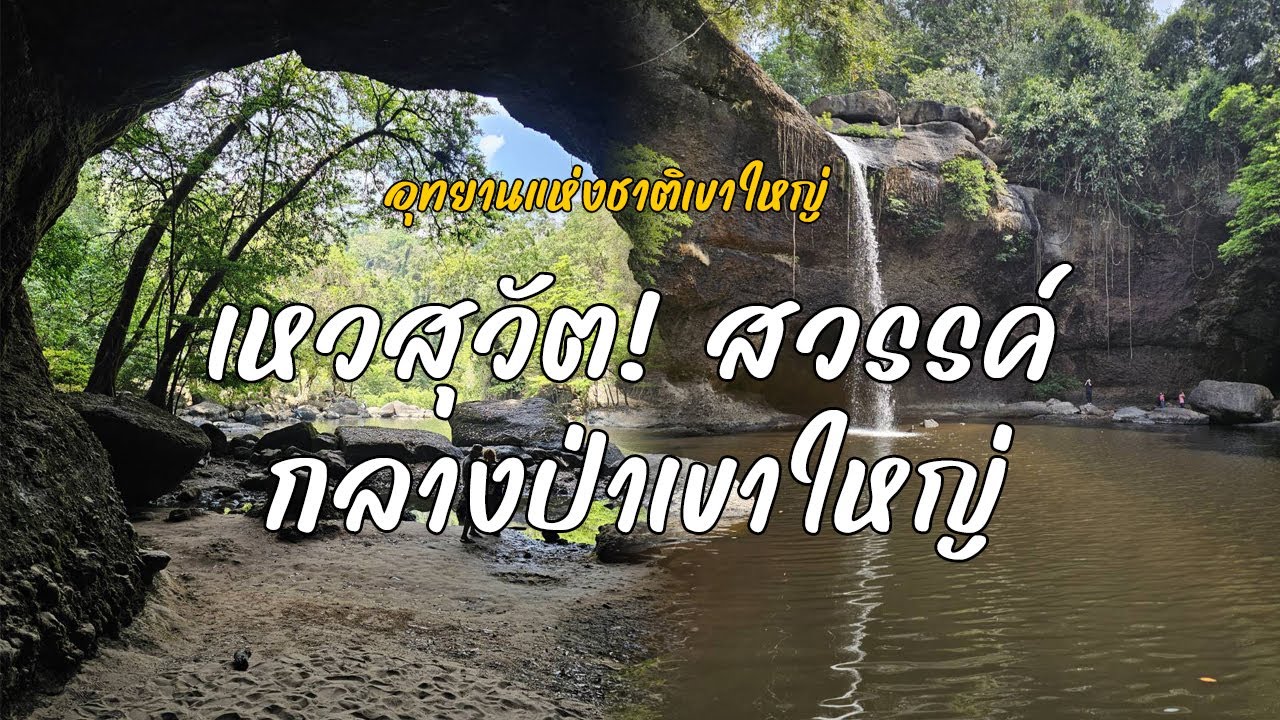
 Click to Access the Navigation Map GPS
Haew Suwat Waterfall Map
Recommend

 Art, Culture and Heritage
 Historical Sites and Monuments(20)
 Landmarks and Memorials(5)
 Art, Craft Centres, Tradition(7)
 Museums(6)
 Art Gallery(1)
 Educational Places
 Educational Gardens, Farm(4)
 Places of Worship
 Temple(29)
 Mosque(1)
 Other Sacred Sites(6)
 Research and Development
 Royal Project(3)
 Suburban Living
 Village, Community(6)
 Local Market(4)
 Floating Market(1)
 National Parks and Marine Reserves(3)
 Mountain (Doi)(5)
 Dam, Reservoir, Lake(8)
Waterfalls(9)
Dam, Reservoir, Lake(8)
Waterfalls(9)
 Hot Springs(1)
 Caves(2)
 Flower Field(1)
 River, Canal(8)
 Bays and Beaches(2)
 Other natural attractions(3)
 Entertainment and Agricultural
 Zoos and Aquariums(1)
 Animal camps and shows(1)
 Farms, Parks and Ecotourism(21)
 Waterpark(2)
 Outdoor and Adventure Activities(6)
 Shopping
 Shopping and Night Market(2)
 Travel Articles, Recipes
 Travel Review, Food Review(5)


