
lovethailand home >Northeastern Travel Attractions >Nakhon Ratchasima Travel Attractions >Muang Nakhon Ratchasima >Khok Sung > Thao Suranari Heroic Deeds Exhibition Building
TL;DR: Thao Suranari Heroic Deeds Exhibition Building is located at Chumphon Road, Thao Suranari Memorial Park Area, Near Thao Suranari Monument And Chumphon Gate, Mueang Nakhon Ratchasima District, Nakhon, open Tuesday – Sunday, hours 09.00 – 18.00.
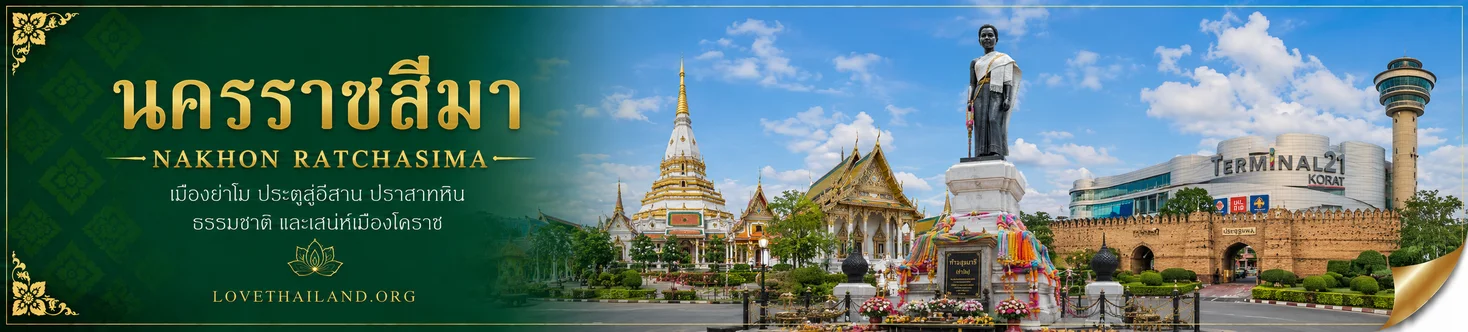
Thao Suranari Heroic Deeds Exhibition Building
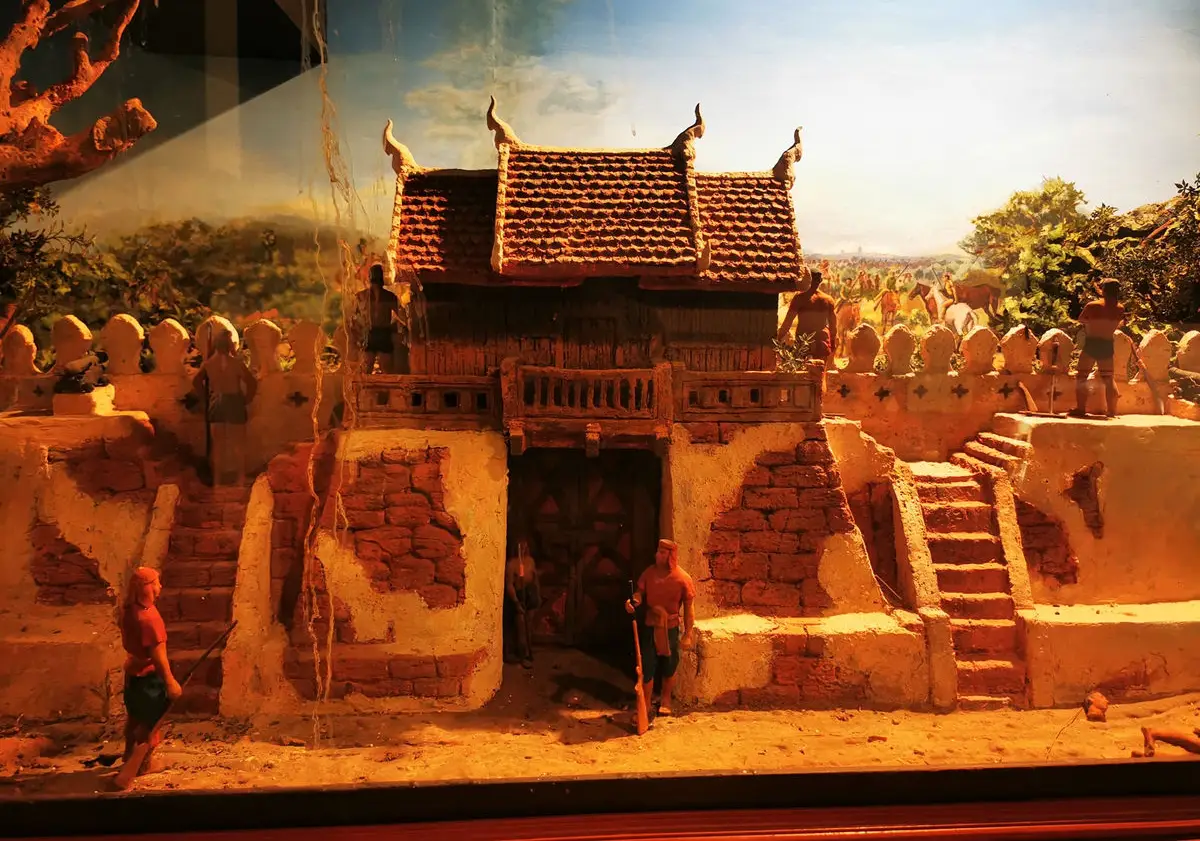
Open Days: Tuesday – Sunday
Opening Hours: 09.00 – 18.00
The Thao Suranari Heroic Deeds Exhibition Building in Nakhon Ratchasima is an important historical learning site located on Chumphon Road within the Thao Suranari Memorial Park area, near the Thao Suranari Monument, Chumphon Gate, and the old urban core of Korat. The building was created to commemorate the bravery of Thao Suranari, also known as Khunying Mo or Ya Mo, and the people of Nakhon Ratchasima who defended their homeland during the conflict with Chao Anouvong of Vientiane in 1826. Inside the building, the story is presented through a light-and-sound system, staged scenes, and historical interpretation designed to help visitors imagine the courage, hardship, and unity of Korat’s ancestors. The exhibition takes about 15 minutes to view and is suitable for travelers, students, families, and anyone who wants to understand the deeper meaning behind the city’s most revered heroine.
The building is more than a small exhibition venue in the center of the city. It is part of a wider memory landscape that includes the Ya Mo Monument, Chumphon Gate, Suan Suranari, the Thao Suranari Memorial Park, and the annual Thao Suranari Victory Celebration. If the Ya Mo Monument is the spiritual heart of Korat, this exhibition building helps explain why local people continue to respect her so deeply. It shows what happened during the 1826 conflict, why Khunying Mo was later honored with the title Thao Suranari, and how this history became a central part of Korat’s identity.
The location of the building is especially meaningful. It stands within walking distance of the Thao Suranari Monument and Chumphon Gate, the surviving historic western gate of the old city. Visitors can begin by paying respect at the Ya Mo Monument, then walk to Chumphon Gate to see a remaining part of the fortified city, and continue to the exhibition building to learn the story behind Korat’s heroic memory. This compact area allows travelers to understand several layers of local history in one visit: the old fortified city, the heroine of the early Rattanakosin period, the memory of local resistance, and the continuing public rituals of modern Nakhon Ratchasima.
The idea to build the Thao Suranari Heroic Deeds Memorial came from a shared resolution among civil servants, police, military officers, merchants, and local people of Nakhon Ratchasima. They agreed that the province should have a dedicated place to remember the bravery of Thao Suranari and the ancestors of Korat. For this reason, the building reflects public participation, not only administrative planning. It was created from gratitude, local pride, and the desire to pass historical memory to younger generations.
The foundation stone ceremony was held on March 23, 1990, with General Chatichai Choonhavan, the Prime Minister at that time, presiding over the ceremony. March 23 is a significant date because it marks the beginning of the annual Thao Suranari Victory Celebration period, which is held every year from March 23 to April 3. The choice of this date strengthened the symbolic role of the building as part of Korat’s annual culture of remembrance and devotion to Ya Mo.
The construction budget was approximately 30 million baht. The province raised funds and invited public donations to support the project. This gives the building a special meaning because it was not only a structure funded through official channels. It also carried the faith and contribution of local people who wanted to participate in honoring Ya Mo and their ancestors. The act of public donation reflects the strong emotional relationship between Korat people and the memory of those who sacrificed for the city.
The Fine Arts Department played an important role in the project. Officials were assigned to inspect the site and discuss the details of the construction. The design work was entrusted to Prawet Limparangsi, a Fine Arts Department expert in art-object restoration and a National Artist. His involvement gave the building historical, artistic, and cultural weight. It was not designed merely as a functional exhibition hall, but as a memorial space that had to respect the dignity of the story being told.
The building was designed to tell a heroic story rather than to function as a conventional museum of objects. Inside, a light-and-sound system creates an atmosphere that helps visitors visualize the past. The presentation includes scenes of old Korat life, the arrival of Chao Anouvong’s army, the gathering of local people, the leadership of Thao Suranari, and the struggle to protect the Thai nation’s independence. Through sound, lighting, models, and staged scenes, the story becomes easier to understand, especially for children, students, and foreign visitors who may not already know the details of the 1826 event.
The central figure of the exhibition is Thao Suranari, formerly known as Khunying Mo, the wife of the deputy governor of Nakhon Ratchasima. During the conflict with Chao Anouvong, many people of Korat were taken from the city. Khunying Mo used intelligence, courage, and leadership to gather the people and encourage resistance. Their collective action helped stop the opposing army from advancing toward Bangkok. In recognition of her bravery, King Rama III granted Khunying Mo the noble title Thao Suranari.
The importance of the exhibition building is that it helps visitors understand Ya Mo beyond the act of worship. Many travelers know that she is Korat’s heroine, but the exhibition makes the historical background clearer. It shows how her actions were connected to the defense of the city, how local people participated, and why this memory became part of Korat’s identity. The building therefore works as a bridge between faith and knowledge, ritual and history, the external monument and the story behind it.
The exhibition also invites visitors to remember the ancestors of Korat who joined the defense of the city. The 1826 struggle was not the work of one person alone. It involved ordinary people, villagers, men, women, and local heroes whose names may not all appear in major historical accounts. By presenting this broader story, the building helps visitors see that the phrase “City of Ya Mo” refers not only to one statue or one heroine, but also to the shared courage of an entire community.
The story of Miss Bunluea, or Ya Luea, is also closely connected with Korat’s heroic memory. She is remembered as another important heroine in the Thung Samrit event, where local accounts describe her role in using fire to destroy the enemy’s gunpowder or ammunition carts. Her sacrifice became an important symbol of female courage in Korat history. Understanding Thao Suranari’s story together with Miss Bunluea and the heroes of Thung Samrit gives visitors a more complete view of how Nakhon Ratchasima remembers the defense of the city.
The light-and-sound presentation takes about 15 minutes, making it suitable for visitors with limited time in the city center. It can be viewed before or after paying respect at the Ya Mo Monument. For school groups or study groups, the building is a useful starting point for learning about Korat history because the story is concise, visual, and easy to connect with other sites such as Chumphon Gate, the Ya Mo Monument, the Miss Bunluea Memorial, and the Thung Samrit Heroic Deeds Memorial in Phimai District.
Today, the building is under the care of Nakhon Ratchasima Municipality. This means it is managed by the local authority responsible for the city area. The municipality’s role includes not only the building itself, but also the surrounding public space, the memorial park, visitor access, and city activities during the annual celebration. The building is therefore part of a wider cultural landscape in central Korat rather than an isolated attraction.
Suan Suranari, or Suan Rak, around the building is also meaningful to the people of Korat. It is close to the Ya Mo Monument and Chumphon Gate, and it has long served as a place for walking, resting, public activity, and cultural gatherings. In the evening, the area often becomes lively with local movement, shops, food, and visitors. During the annual Victory Celebration, this public space becomes a major activity area filled with performances, stalls, ceremonies, and the visible devotion of Korat people to Ya Mo.
The annual Thao Suranari Victory Celebration is held from March 23 to April 3 every year. It is one of the most important provincial events in Nakhon Ratchasima. The celebration includes worship ceremonies, dance offerings, parades, cultural performances, local products, OTOP goods, government exhibitions, public activities, and light-and-sound performances telling the story of Thao Suranari. During this period, the area around the exhibition building becomes especially significant because it is physically and symbolically connected with the story being commemorated.
In 2026, Nakhon Ratchasima marked the 200th anniversary of the heroic deed of Thao Suranari. The light-and-sound performance was organized under the theme “Ya Chan Than Chue Mo: Sanya Kao 200 Pi,” or “My Grandmother’s Name Is Mo: A 200-Year-Old Promise.” The performance presented historical memory, courage, faith, and the long emotional bond between Korat people and their heroine through contemporary stage techniques. This anniversary showed that the story of Ya Mo continues to be reinterpreted and passed to new generations through public art and performance.
Visitors who come during the annual celebration will experience a much more energetic atmosphere than on ordinary days. Suan Suranari, the Ya Mo Monument area, and nearby streets become filled with lights, performances, shops, food stalls, and crowds. Visiting the exhibition building during this period can help travelers understand the meaning of the celebration more clearly. However, they should allow extra time for traffic, parking, and crowds. Visitors who prefer quiet reading and reflection may prefer a regular weekday visit.
The building is ideal for a half-day or one-day old-town Korat itinerary. A practical route can begin at the Thao Suranari Monument, continue to Chumphon Gate, then visit the exhibition building, and afterward proceed to Wat Phayap, Maha Weerawong National Museum, the Nakhon Ratchasima City Pillar Shrine, and Wat Phra Narai Maharat. This route allows travelers to see Korat through faith, old city architecture, historical memory, religious places, and local urban life.
Getting There from Bangkok is straightforward. Take Highway 1 through Saraburi, then continue on Highway 2, also known as Mittraphap Road, toward Nakhon Ratchasima. Once inside the city, follow signs to the Thao Suranari Monument or Chumphon Gate. The exhibition building is located on Chumphon Road within the Thao Suranari Memorial Park area near the Ya Mo Monument. Travelers arriving by train can get off at Nakhon Ratchasima Railway Station and continue by local transport, taxi, or ride-hailing service to the monument area.
Visitors driving private cars should allow extra time for city traffic, especially in the evening, on weekends, and during the annual Victory Celebration. The area around the Ya Mo Monument, Ratchadamnoen Road, Chumphon Road, and Suan Suranari is a busy old-town zone. Parking may be available along permitted streets, in private parking areas, and around nearby commercial areas. Travelers staying in central Korat can often reach the building on foot or by short local transport.
The best time to visit is from morning to afternoon, when the building is open and visitors can continue to nearby attractions without rushing. Late afternoon is suitable for taking exterior photographs and enjoying the atmosphere of the surrounding park. Visitors who want a calm experience should avoid major festival days, while those interested in living culture may find the annual celebration period especially meaningful.
Visitors should behave respectfully because the building is both a historical learning site and a memorial to people who sacrificed for the city. They should keep noise at an appropriate level, avoid touching or damaging displays, avoid climbing on staged elements, dispose of rubbish properly, and follow staff instructions. Groups should remain orderly so that all visitors can view the light-and-sound presentation without disturbance.
For families with children, the building is a useful educational stop. The use of light, sound, and visual scenes helps make history easier to understand. Children can see how old Korat people lived, how communities worked together, and why courage and unity were important in defending the city. Parents can use the visit to explain bravery, sacrifice, public responsibility, and gratitude toward ancestors through a real place rather than through textbooks alone.
For foreign travelers, the Thao Suranari Heroic Deeds Exhibition Building gives an accessible introduction to local Thai history. Many visitors may see the Ya Mo Monument and local worship without fully understanding the historical event behind it. This building helps explain the Chao Anouvong conflict, the role of women in Thai historical memory, the importance of frontier cities, and the relationship between local remembrance and provincial identity. It makes the cultural heart of Korat easier to understand.
The building is also a good example of using modern presentation methods to preserve local history. Instead of relying only on written panels, it uses light, sound, scenes, and timing to create an immersive experience. Although the presentation is short, it creates a strong memory and encourages visitors to continue learning from other related places in the province. In this way, the building works as both an introduction and an emotional gateway to Korat history.
Symbolically, the building is powerful because it stands in an area where many elements of Korat identity are concentrated. Within a short walk, visitors can see a public park, an old city gate, a heroine’s monument, local restaurants, cafes, hotels, and annual festival spaces. This shows how history and everyday life coexist in Nakhon Ratchasima. People can pay respect to Ya Mo, eat local food, walk through the old city gate, and learn about heroic deeds within one compact urban area.
A complete visit should place the building at the center of the “City of Ya Mo” route. Begin with the Thao Suranari Monument to understand local devotion, continue to the exhibition building to learn the historical story, walk to Chumphon Gate to see the old city structure, and finish with local food or a nearby cafe. This order gives visitors knowledge, respect, and a balanced experience of Korat’s old town.
In summary, the Thao Suranari Heroic Deeds Exhibition Building is an important stop in central Nakhon Ratchasima. It explains the history behind the deep devotion that Korat people have for Ya Mo. The building combines history, heroism, cultural memory, modern presentation, and the old-town setting in one place. Visitors will understand that Thao Suranari is not only a statue in the city center, but a symbol of courage, unity, and sacrifice. Visiting this building makes the experience of paying respect to Ya Mo more meaningful and offers a clearer understanding of the heart of Korat.
| Name | Thao Suranari Heroic Deeds Exhibition Building / Thao Suranari Light And Sound Exhibition Building |
| Location | Chumphon Road, Thao Suranari Memorial Park Area, Near Thao Suranari Monument And Chumphon Gate, Mueang Nakhon Ratchasima District, Nakhon Ratchasima Province |
| Address | Chumphon Road, Nai Mueang Subdistrict, Mueang Nakhon Ratchasima District, Nakhon Ratchasima 30000, Thailand |
| Highlights | A light-and-sound exhibition building presenting the heroic deeds of Thao Suranari and Korat’s ancestors, taking about 15 minutes to view, located near the Ya Mo Monument and Chumphon Gate |
| History | The foundation stone ceremony was held on March 23, 1990, with General Chatichai Choonhavan, the Prime Minister at that time, presiding over the ceremony. The building was created to commemorate Thao Suranari and the Korat heroes of the 1826 event |
| Name Origin | The name reflects the building’s function as an exhibition space presenting the heroic deeds of Thao Suranari, or Ya Mo, the revered heroine of Nakhon Ratchasima |
| Distinctive Features | Designed by Prawet Limparangsi, a Fine Arts Department restoration expert and National Artist, with interior scenes, light, sound, and storytelling about Thao Suranari’s heroic deeds |
| Main Areas / Zones | Entrance Hall Light And Sound Viewing Area Old Korat Life Scene Thao Suranari Heroic Deeds Scene Korat Ancestors Story Area Surrounding Thao Suranari Memorial Park Walking Connection To Thao Suranari Monument And Chumphon Gate |
| Caretaker | Nakhon Ratchasima Municipality |
| Traditions / Related Rituals | The annual Thao Suranari Victory Celebration is held from March 23 to April 3 every year around the Thao Suranari Monument, Suan Suranari, the former provincial hall area, and nearby streets |
| Travel Information | From Bangkok, take Mittraphap Road into Nakhon Ratchasima city and head to the Thao Suranari Monument. The building is on Chumphon Road within the Thao Suranari Memorial Park area near Chumphon Gate. It can be reached by private car, train with local transfer, taxi, or ride-hailing service. |
| Current Status | Open to visitors as a historical and cultural learning site in central Nakhon Ratchasima |
| Open Days | Tuesday – Sunday |
| Opening Hours | 09.00 – 18.00 |
| Fees | No Admission Fee Was Found In The Main Verified Sources |
| Estimated Viewing Time | About 15 Minutes |
| Facilities | Light-and-sound exhibition building, surrounding public park, photo spots, walking connection to the Ya Mo Monument and Chumphon Gate, nearby restaurants and cafes, nearby parking areas, and city transport access |
| Main Contact Number | Nakhon Ratchasima Municipality Tel. 044-234600 |
| Nearby Tourist Attractions | 1. Thao Suranari Monument, about 0.1 km 2. Chumphon Gate, about 0.1 km 3. Wat Phayap, about 0.6 km 4. Maha Weerawong National Museum, about 0.7 km 5. Nakhon Ratchasima City Pillar Shrine, about 0.8 km 6. Wat Phra Narai Maharat, about 1 km 7. Terminal 21 Korat, about 1.5 km |
| Nearby Restaurants | 1. Chumphon Chicken Rice, about 0.1 km, Tel. 085-860-7778 2. Jompol Boutique Cafe, about 0.1 km, Tel. 064-462-8787 3. CLASS Cafe' Chalermwattana Ya Mo, about 0.2 km, Tel. 065-240-1811 4. Yim Yim Traditional Oyster Omelet, about 0.2 km, Tel. 064-061-1640 5. Ming Tao Vegetarian Restaurant, about 0.2 km, Tel. 044-241718 |
| Nearby Accommodations | 1. Romyen Garden Place, about 0.8 km, Tel. 098-105-7978 2. Korat Hotel, about 0.8 km, Tel. 044-341-345 3. Urban-Bamboo, about 1 km, Tel. 044-268800, 081-444-4213 4. Sansabai House Hotel, about 1.2 km, Tel. 044-255144, 081-547-3066 5. Fortune Hotel Korat, about 1.5 km, Tel. 044-079-900 |
Frequently Asked Questions (FAQ)
Q: Where is the Thao Suranari Heroic Deeds Exhibition Building located?
A: It is located on Chumphon Road within the Thao Suranari Memorial Park area, near the Thao Suranari Monument and Chumphon Gate in central Nakhon Ratchasima.
Q: Why is the building important?
A: The building was created to commemorate the heroic deeds of Thao Suranari and the people of Korat who defended Nakhon Ratchasima during the 1826 conflict with Chao Anouvong.
Q: What can visitors see inside the building?
A: Visitors can see a light-and-sound presentation with staged scenes and storytelling about Thao Suranari, old Korat life, and the bravery of Korat’s ancestors.
Q: What days is the building open?
A: It is open from Tuesday to Sunday.
Q: What are the opening hours?
A: The building is open from 09.00 to 18.00. The exhibition takes about 15 minutes to view.
Q: Is there an admission fee?
A: No admission fee was found in the main verified sources. Visitors who need the latest day-of-visit information may contact Nakhon Ratchasima Municipality before traveling.
Q: Who takes care of the building?
A: The building is under the care of Nakhon Ratchasima Municipality.
Q: What nearby attractions can be visited with the building?
A: Nearby attractions include the Thao Suranari Monument, Chumphon Gate, Wat Phayap, Maha Weerawong National Museum, Nakhon Ratchasima City Pillar Shrine, and Wat Phra Narai Maharat.
 Category: ●Art, Culture and Heritage
 Group: ●Art, Craft Centres, Tradition
Last Update : 2 MonthAgo
 Last Update : 2 MonthAgo
 Click to Access the Navigation Map GPS
Thao Suranari Heroic Deeds Exhibition Building Map
Recommend

 Historical Sites and Monuments(20)
 Landmarks and Memorials(5)
Art, Craft Centres, Tradition(7)
Landmarks and Memorials(5)
Art, Craft Centres, Tradition(7)
 Museums(6)
 Art Gallery(1)
 Educational Places
 Educational Gardens, Farm(4)
 Places of Worship
 Temple(29)
 Mosque(1)
 Other Sacred Sites(6)
 Research and Development
 Royal Project(3)
 Suburban Living
 Village, Community(6)
 Local Market(4)
 Floating Market(1)
 Nature and Wildlife
 National Parks and Marine Reserves(3)
 Mountain (Doi)(5)
 Dam, Reservoir, Lake(8)
 Waterfalls(9)
 Hot Springs(1)
 Caves(2)
 Flower Field(1)
 River, Canal(8)
 Bays and Beaches(2)
 Other natural attractions(3)
 Entertainment and Agricultural
 Zoos and Aquariums(1)
 Animal camps and shows(1)
 Farms, Parks and Ecotourism(21)
 Waterpark(2)
 Outdoor and Adventure Activities(6)
 Shopping
 Shopping and Night Market(2)
 Travel Articles, Recipes
 Travel Review, Food Review(6)


