
lovethailand home >Northeastern Travel Attractions >Nakhon Ratchasima Travel Attractions >Muang Nakhon Ratchasima >Nai Muang > Nakhon Ratchasima City Museum
TL;DR: Nakhon Ratchasima City Museum is located at Building 10, 2nd Floor, Office Of Arts And Culture, Nakhon Ratchasima Rajabhat University, Suranarai Road, Nai Mueang Subdistrict, Mueang, open Monday – Friday, hours 09.00 – 15.30.
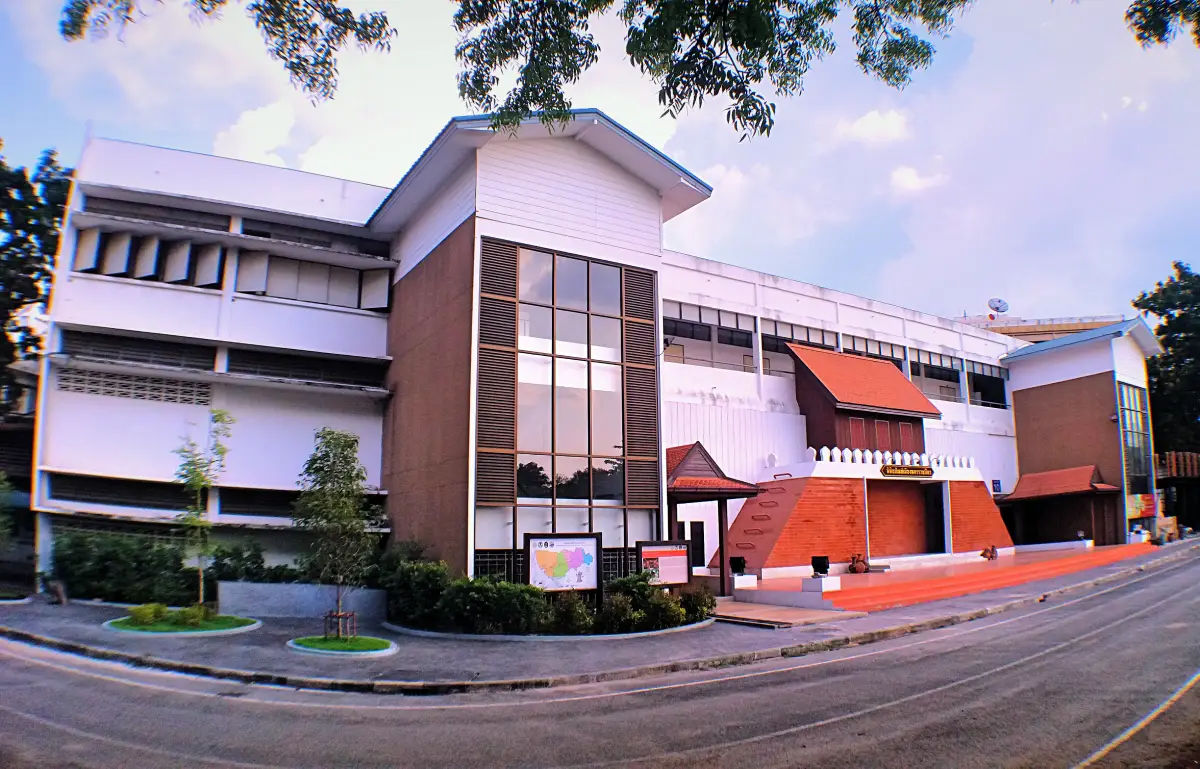
Nakhon Ratchasima City Museum
Open Days: Monday – Friday
Opening Hours: 09.00 – 15.30
The Former Cultural Center of Nakhon Ratchasima Rajabhat Institute, now known as Korat Museum or Nakhon Ratchasima City Museum, is an important cultural learning center located inside Nakhon Ratchasima Rajabhat University on Suranarai Road, Nai Mueang Subdistrict, Mueang Nakhon Ratchasima District. Today, the museum is housed on the 2nd floor of Building 10 under the Office of Arts and Culture of Nakhon Ratchasima Rajabhat University. It preserves and presents the history, cultural identity, local wisdom, traditional objects, old documents, folk occupations, textiles, music, and everyday life of Korat people and northeastern Thai communities.
For foreign visitors who want to understand Nakhon Ratchasima beyond the famous Thao Suranari Monument, Chumphon Gate, or modern shopping districts, Korat Museum is one of the most useful places to begin. The museum explains the province through a long historical timeline, from prehistoric settlement in the upper Mun River basin to Dvaravati, Lopburi, Ayutthaya, Rattanakosin, and modern Korat as a major city of northeastern Thailand. It does not focus only on ancient objects. Instead, it connects artifacts with people, routes, warfare, trade, education, folk performance, architecture, food, language, and local identity.
The original name, Cultural Center of Nakhon Ratchasima Rajabhat Institute, reflects its earlier role as a place for collecting, preserving, and studying cultural materials. These included tools, household objects, documents, ancient artifacts, Thai cultural objects, and evidence of daily life among people in Korat and the wider Isan region. As the institution developed into Nakhon Ratchasima Rajabhat University, the cultural center also evolved into a more systematic museum. The current name, Korat Museum or Nakhon Ratchasima City Museum, clearly expresses its role as a museum dedicated to the story of the city and province.
Visitors entering Nakhon Ratchasima Rajabhat University should look for signs leading to the Office of Arts and Culture and Building 10. Some people who knew the older cultural center may remember the two-storey wooden house and the Korat-style house used for exhibitions and learning activities. These ideas continue today through the museum and Ruean Korat, or the Korat House, which is preserved as an outdoor cultural learning space. The result is a university museum that does not separate academic knowledge from community memory. It brings together architecture, old objects, local stories, and the living cultural identity of Korat.
The development of the museum began in 1980, when the cultural hall was founded under the Arts and Culture Center of Nakhon Ratchasima Teachers College. In its early period, Rooms 514 and 515 were used to collect and preserve antiquities, art objects, and cultural items trusted to the institution by local communities. Later, the display spaces were moved and improved several times to support teaching, public learning, and cultural conservation. The original cultural hall gradually became a more important learning center for both the university and the province.
In 1986, the office of the cultural center and the cultural hall moved to Building 2, an original wooden building of the institution. The larger space allowed the displays to be divided into several thematic rooms, including an office room, cultural document room, exhibition and demonstration room, training room, dance room, Korat specialties room, Thai identity room, folk occupations room, and antiquities room. This early layout is close to the description of the old cultural center as a place that organized exhibitions by topics such as Korat city, ancient documents, folk occupations, Isan textiles, Korat specialties, music, and respected people of Korat.
In 1995, Buildings 1 and 2 were moved and reorganized into a cultural hall building. The display was later improved into several rooms, with the Korat City Room as the main section presenting the history of Nakhon Ratchasima from an art-historical perspective. Other exhibition topics included Buddhism, ethics, music, art, institutional history, Korat houses, the Korat song museum, and other cultural subjects. This marked a shift from simply storing old objects toward interpreting the history and culture of the city in a more structured way.
When the university changed the use of the former cultural hall area in 2012, the old hall was removed. In 2013, the university approved a project to design and establish a new cultural hall in Building 10, a former building of the Faculty of Science and Technology that had been in use since 1972. The earlier exhibition concept was used as a foundation, but the content was expanded and connected more closely with displayed artifacts. The new museum was completed in April 2014 and officially developed as Nakhon Ratchasima City Museum under the concept of “a nostalgic atmosphere for contemplating Nakhon Ratchasima.”
The exhibition is arranged in a way that allows visitors to follow the historical development of Korat. The introductory room presents the overall concept of the museum and the role of the Office of Arts and Culture. The Origin of Civilization Room introduces prehistoric evidence from the upper Mun River basin, especially archaeological sites in Nakhon Ratchasima. These materials show settlement, tool production, resource use, and the growth of ancient communities before the historical periods represented in the Dvaravati, Lopburi, Ayutthaya, and Rattanakosin rooms.
The Dvaravati Room helps visitors understand early historic communities in Nakhon Ratchasima, especially the context of ancient Muang Sema and the reception of Indian cultural influence through Buddhism and Brahmanism. It also shows how older beliefs continued alongside new religious ideas, including burial practices and offerings to the dead. The Lopburi Room presents Khmer cultural influence in northeastern Thailand, including religious architecture, stone sanctuaries, barays, city planning, ceramics, and belief systems that shaped the historical landscape of Nakhon Ratchasima.
The Ayutthaya Room explains the founding and importance of Nakhon Ratchasima as a second-class city and strategic frontier town of the Ayutthaya Kingdom. Korat served as a defensive buffer against threats from Cambodia, Laos, and Vietnam, and became an important center for controlling frontier territories in the northeast. Through this room, visitors can understand why the city had fortified walls, gates, a planned urban layout, and a military role greater than many ordinary towns. The Rattanakosin Room continues the story into the period of Thao Suranari, the Thung Samrit heroic deeds, and Korat’s rise as a major provincial center.
Beyond the period rooms, the museum also includes the Metropolis of Isan Room and the Korat Specialties Room. The Metropolis of Isan Room shows Nakhon Ratchasima as a center of transport, military administration, education, economy, and regional connection. The Korat Specialties Room highlights local identity through food, dialect, Korat song, textiles, crafts, Dan Kwian ceramics, Pak Thong Chai silk, folk products, and other cultural assets that make Korat distinct within northeastern Thailand.
Ruean Korat, or the Korat House, is another essential part of the visit. It is a learning space for local architecture and the wisdom of Korat people. The house, also known as Ruean Pho Khong, originally belonged to Pho Khong Chotinok in Ban Takhro, Mueang Khong Subdistrict, Khong District, Nakhon Ratchasima. It was built in 1905 and later moved and reconstructed inside Nakhon Ratchasima Rajabhat University. Its form is distinctive: a paired-house structure with two sleeping houses placed parallel to each other and a central open platform or hall between them. This unusual layout reflects local building knowledge, structural skill, and the practical use of space in Korat households.
The value of Ruean Korat is not only its age. It functions as a “teaching house” that allows visitors to understand how Korat people lived in the past. The house reveals the use of timber, raised-floor construction, orientation, sleeping spaces, shared platforms, reception areas, ventilation, and the relationship between home life, climate, agriculture, and extended families. Seeing the actual structure helps visitors understand local architecture more clearly than written explanation alone. The joints, beams, posts, floor levels, and proportions all reflect the practical wisdom of local builders.
Ruean Korat received an Outstanding Architectural Conservation Award in 2018 from the Association of Siamese Architects under Royal Patronage in the category of institutional and public buildings. In 2019, the project to develop Ruean Pho Khong as a national learning source for Thai Korat ethnic vernacular architecture was also recognized by the Department of Cultural Promotion as an outstanding project in preserving intangible cultural heritage. These recognitions show that Ruean Korat is not merely an old house moved into a university. It is a respected body of cultural knowledge and a model for preserving local architecture.
Visitors interested in local culture should allow at least 1 to 2 hours for the museum. This gives enough time to read the exhibition panels, observe the objects, and walk through the Korat House area. School groups, university groups, or official groups should contact the museum in advance if they need a guided visit. A guide can help explain the timeline of Korat history, the role of the upper Mun River basin, the meaning of the frontier city, and the relationship between displayed objects and the communities that preserved them.
One of the strengths of Korat Museum is that it is a university museum. This gives it both academic and community-based qualities. On one side, it supports teaching, research, and cultural conservation. On the other, it welcomes the public as a cultural attraction and learning center. The atmosphere is different from many large state museums because it remains closely connected with students, lecturers, researchers, community networks, and alumni who contributed to cultural preservation projects such as Ruean Korat.
Inside the museum, objects and stories are organized by theme. Visitors can see traditional tools, old photographs, cultural documents, folk occupation materials, textiles, musical instruments, local performance information, stories of respected Korat people, and important products of the province. These objects are important because they show everyday life, not only rare or highly decorative artifacts. Pots, jars, weaving tools, farming implements, musical instruments, local documents, and household objects all reveal that the history of Korat was created by the work, creativity, and daily lives of many ordinary people.
The cultural document room and cultural library are useful for visitors who want to study further. These spaces gather books, documents, and cultural information related to local arts and traditions. The presence of a library next to the museum makes the site useful for both general visitors and researchers. Students, writers, and travelers who want to understand Korat can begin here with key topics such as frontier city history, Ya Mo, Korat song, Korat dialect, Pak Thong Chai silk, Dan Kwian ceramics, and Korat vernacular houses.
As a travel experience, Korat Museum is best for visitors who enjoy quiet learning, reading, and slow observation. It should not be rushed. Important details are often found in captions, maps, old photographs, and small objects. If time allows, visitors should see both the indoor exhibitions and Ruean Korat. The actual house helps make the museum’s explanations of folk life, domestic architecture, and local wisdom more concrete and memorable.
The museum can also be combined with other attractions in central Nakhon Ratchasima. It is located on Suranarai Road near Nakhon Ratchasima Rajabhat University, Wat Sala Loi, Wat Isan, Wat Bueng, the Nakhon Ratchasima City Pillar Shrine, the Thao Suranari Monument, Chumphon Gate, and many restaurants near the university area. A practical half-day itinerary can begin at Korat Museum in the morning, continue to Wat Sala Loi, stop for lunch near the university, and then continue to the Ya Mo Monument and Chumphon Gate in the old city center.
Getting There is convenient from the city center. Travel along Suranarai Road to Nakhon Ratchasima Rajabhat University. After entering the university area, follow signs for the Office of Arts and Culture or Korat Museum and continue to Building 10. From Bangkok, visitors can drive via Mittraphap Road into Nakhon Ratchasima city, then continue to Suranarai Road. Travelers arriving by train can get off at Nakhon Ratchasima Railway Station and take a local vehicle, taxi, or ride-hailing service to the university.
Because the museum is located inside a university, visitors should respect the rules of the educational institution. Dress politely, avoid loud noise, do not bring food or drinks into the exhibition area, do not smoke inside the building, do not bring pets into the museum, and do not touch or move any objects without permission. Photography is allowed according to museum rules, but tripods should not block other visitors. The site is both a learning center and a university workplace, so respectful behavior is important.
For foreign visitors, Korat Museum provides a clear introduction to the identity of Nakhon Ratchasima. Korat is often seen as the gateway to Isan, a city of Ya Mo, a transport hub, an education center, and a large modern province. The museum shows that behind these modern images is a much longer story of archaeology, frontier administration, local language, folk performance, community knowledge, architecture, and cultural adaptation. It helps visitors see Korat as more than a transit point on the way to Khao Yai or the upper northeast.
From a cultural perspective, the museum also explains Korat as a meeting point between central Thai and northeastern Thai worlds. Korat dialect has its own character, local food combines several influences, Korat song is a distinctive performance tradition, and Korat houses differ from many other Thai regional houses. These displays are valuable for anyone interested in local identity, cultural transition, and how communities in a major provincial city preserve their own memory.
The Korat House and cultural courtyard are also good places for cultural photography. The wooden architecture, green setting, outdoor activity space, and university environment create images that feel different from commercial tourist sites. They show a learning space that is still alive, with students, visitors, staff, and cultural events appearing from time to time. Visitors should take photographs respectfully and avoid disturbing classes, university activities, or museum work.
What makes the former cultural center and the present Korat Museum especially valuable is the continuity of its conservation mission. It began by collecting cultural objects from communities, developed exhibitions in the old cultural hall, transformed Building 10 into a city museum, moved and preserved Ruean Korat as a learning site, and later expanded toward digital records and modern museum management. This long development shows that cultural conservation is not a one-time action. It requires adaptation to time, technology, visitors, and society.
In summary, the former Cultural Center of Nakhon Ratchasima Rajabhat Institute, now Korat Museum, is one of the best places to understand Korat in depth. It brings together city history, archaeological evidence, old documents, folk occupations, Isan textiles, Korat song, local specialties, vernacular architecture, and the lives of local people in one accessible space. With free admission, a central location, and many nearby attractions, the museum is suitable for travelers, families, students, researchers, and foreign visitors who want to understand Nakhon Ratchasima as a province with a long past and a strong living cultural identity.
| Name | Former Cultural Center Of Nakhon Ratchasima Rajabhat Institute / Nakhon Ratchasima City Museum : Korat Museum |
| Location | Building 10, 2nd Floor, Office Of Arts And Culture, Nakhon Ratchasima Rajabhat University, Suranarai Road, Nai Mueang Subdistrict, Mueang Nakhon Ratchasima District, Nakhon Ratchasima Province |
| Address | 340 Suranarai Road, Nai Mueang Subdistrict, Mueang Nakhon Ratchasima District, Nakhon Ratchasima 30000, Thailand |
| Highlights | A cultural learning center presenting Korat history, archaeological objects, cultural documents, folk occupations, Isan textiles, Korat song, local specialties, and Ruean Korat within Nakhon Ratchasima Rajabhat University |
| History | Developed from the cultural hall of Nakhon Ratchasima Teachers College, founded in 1980, and later transformed into Nakhon Ratchasima City Museum in Building 10, with the modern exhibition completed in 2014 |
| Name Origin | The former name reflected its role as a cultural center of the Rajabhat Institute. The current name, Korat Museum, emphasizes its function as a city museum telling the history and identity of Nakhon Ratchasima |
| Distinctive Features | The museum is organized by historical periods and cultural themes, with indoor exhibitions, Ruean Korat, a cultural library, a cultural courtyard, and learning spaces for local wisdom |
| Main Areas / Zones | Introductory Room Origin Of Civilization Room Dvaravati Period Room Lopburi Period Room Ayutthaya Period Room Rattanakosin Period Room Metropolis Of Isan Room Korat Specialties Room Ruean Korat / Ruean Pho Khong Cultural Library Cultural Courtyard In Front Of Building 10 |
| Caretaker | Office Of Arts And Culture, Nakhon Ratchasima Rajabhat University |
| Travel Information | From central Nakhon Ratchasima, take Suranarai Road to Nakhon Ratchasima Rajabhat University. After entering the campus, follow signs for the Office of Arts and Culture or Korat Museum to Building 10 |
| Current Status | Open to visitors as a city museum and cultural learning center of Nakhon Ratchasima Rajabhat University |
| Open Days | Monday – Friday, closed on Saturday, Sunday, and university holidays |
| Opening Hours | 09.00 – 15.30 |
| Fees | No Admission Fee |
| Facilities | Permanent exhibitions, guided service for groups with advance notice, cultural library, cultural courtyard, Ruean Korat, resting areas, photo spots, and parking within the university |
| Main Contact Number | 044-253097, 044-009009 ext. 1011 |
| Nearby Tourist Attractions | 1. Wat Sala Loi, about 0.5 km 2. Wat Isan, about 1.5 km 3. Thao Suranari Monument, about 2 km 4. Chumphon Gate, about 2 km 5. Nakhon Ratchasima City Pillar Shrine, about 2.5 km 6. Wat Phra Narai Maharat, about 2.5 km 7. Terminal 21 Korat, about 3 km |
| Nearby Restaurants | 1. VT Namnueng Near Rajabhat, about 0.5 km, Tel. 082-414-2111 2. Small Bowl Boat Noodles Ancient Recipe, Branch 1 Near Wat Sala Loi Entrance, about 0.4 km, Tel. 064-710-2285 3. Khao Tom Cho Duang Chai, Branch 2, about 0.5 km, Tel. 065-694-1565 4. 382 SPACE COFFEE & BAKERY, about 0.7 km, Tel. 095-609-3082 5. Tum Thai Baan E-san, about 0.9 km, Tel. 095-610-6599, 085-494-4903 |
| Nearby Accommodations | 1. Korapura Resort, about 1 km, Tel. 044-293-001 2. The Imperial Hotel And Convention Centre Korat, about 1.3 km, Tel. 044-256-629 3. Centara Korat, about 1.6 km, Tel. 044-251-234 4. MtriO Hotel Korat, about 2 km, Tel. 080-419-9544 5. The Zenith Residence Hotel, about 3 km, Tel. 044-247-788, 093-323-7096 |
Frequently Asked Questions (FAQ)
Q: What is the former Cultural Center of Nakhon Ratchasima Rajabhat Institute called today?
A: It is now commonly presented as Nakhon Ratchasima City Museum, or Korat Museum, located on the 2nd floor of Building 10 under the Office of Arts and Culture, Nakhon Ratchasima Rajabhat University.
Q: What does Korat Museum display?
A: The museum displays the history of Nakhon Ratchasima, archaeological materials, cultural documents, folk occupations, Isan textiles, Korat song, local specialties, Ruean Korat, and the development of the city from prehistoric times to the present.
Q: What days is Korat Museum open?
A: It is open from Monday to Friday and closed on Saturday, Sunday, and university holidays.
Q: What are the opening hours?
A: The museum is open from 09.00 to 15.30.
Q: Is there an admission fee?
A: No. Admission is free. Groups should contact the museum in advance if they need guided service.
Q: Why is Ruean Korat important?
A: Ruean Korat is a preserved Korat vernacular house originally built in 1905. It is used as a learning site for local architecture, household life, timber construction, and the wisdom of Korat people.
Q: How can travelers get to Korat Museum?
A: From central Nakhon Ratchasima, take Suranarai Road to Nakhon Ratchasima Rajabhat University, then follow signs to the Office of Arts and Culture or Korat Museum at Building 10.
Q: What nearby attractions can be visited with Korat Museum?
A: Nearby attractions include Wat Sala Loi, Thao Suranari Monument, Chumphon Gate, Nakhon Ratchasima City Pillar Shrine, Wat Phra Narai Maharat, and Terminal 21 Korat.
Tel : 044253097
 Tel : 044253097
Fax : 044244739
 Fax : 044244739
 Category: ●Art, Culture and Heritage
 Group: ●Art, Craft Centres, Tradition
Last Update : 1 MonthAgo
 Last Update : 1 MonthAgo
 Click to Access the Navigation Map GPS
Nakhon Ratchasima City Museum Map
Recommend

 Historical Sites and Monuments(20)
 Landmarks and Memorials(5)
Art, Craft Centres, Tradition(7)
Landmarks and Memorials(5)
Art, Craft Centres, Tradition(7)
 Museums(6)
 Art Gallery(1)
 Educational Places
 Educational Gardens, Farm(4)
 Places of Worship
 Temple(29)
 Mosque(1)
 Other Sacred Sites(6)
 Research and Development
 Royal Project(3)
 Suburban Living
 Village, Community(6)
 Local Market(4)
 Floating Market(1)
 Nature and Wildlife
 National Parks and Marine Reserves(3)
 Mountain (Doi)(5)
 Dam, Reservoir, Lake(8)
 Waterfalls(9)
 Hot Springs(1)
 Caves(2)
 Flower Field(1)
 River, Canal(8)
 Bays and Beaches(2)
 Other natural attractions(3)
 Entertainment and Agricultural
 Zoos and Aquariums(1)
 Animal camps and shows(1)
 Farms, Parks and Ecotourism(21)
 Waterpark(2)
 Outdoor and Adventure Activities(6)
 Shopping
 Shopping and Night Market(2)
 Travel Articles, Recipes
 Travel Review, Food Review(5)


