
lovethailand home >Northeastern Travel Attractions >Nakhon Ratchasima Travel Attractions >Muang Nakhon Ratchasima >Hua Thale > Wat Sala Thong
TL;DR: Wat Sala Thong is located at Soi Bencharong, Nai Mueang Subdistrict, Mueang Nakhon Ratchasima District, Nakhon Ratchasima Province, open Daily, hours 08.00 – 17.00.
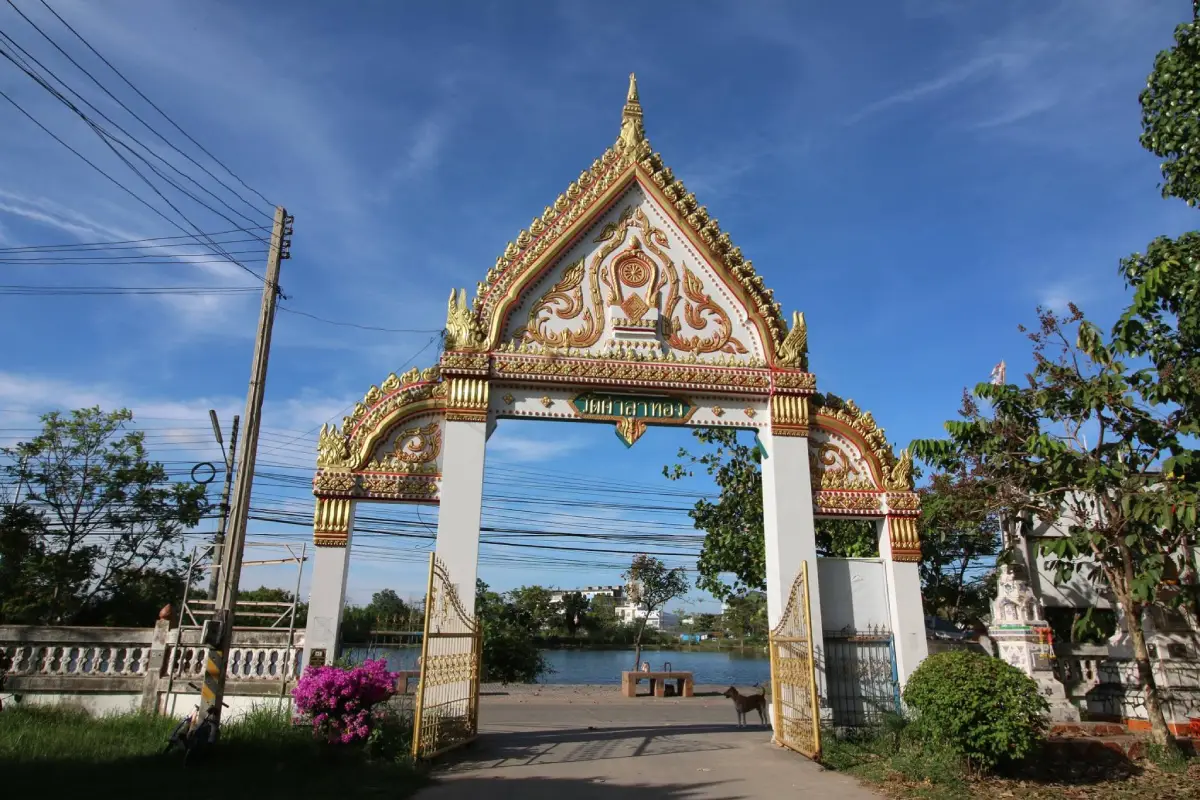
Wat Sala Thong
Open Days: Daily
Opening Hours: 08.00 – 17.00
Wat Sala Thong in Nakhon Ratchasima is a historic Dhammayut Buddhist temple in the city of Korat, ideal for travelers who want to visit a peaceful local temple, pay respect to an important Buddha image, and understand the cultural layers of Nakhon Ratchasima beyond its better-known landmarks. The temple is best known for its large seated Buddha image in the Pa Lelai posture, locally revered as Luang Pho Yai, and for Phra Samphuttha Chedi Si Singhanat, a prominent white stupa associated with the enshrinement of Buddha relics. Located close to the city center, Wat Sala Thong can easily be combined with Korat City Pillar Shrine, Maha Weerawong National Museum, Chumphon Gate, Thao Suranari Monument, and Wat Sala Loi in a half-day cultural route.
Wat Sala Thong is located on Soi Bencharong in Nai Mueang Subdistrict, Mueang Nakhon Ratchasima District, Nakhon Ratchasima Province. Older local travel references also connect the temple with the Hua Thale community, reflecting its historical relationship with the southeastern side of Korat city. Today, map data places the temple within the urban area of Nai Mueang, only a short distance from the city center. For foreign travelers, this makes Wat Sala Thong an accessible temple that does not require a long trip outside town. It is especially suitable for those who want to experience a real local temple rather than a heavily commercialized tourist attraction.
The value of Wat Sala Thong lies not only in its religious structures but also in its continuity as a living temple. It is tied to local faith, community memory, and the history of Korat. The temple grounds were once described as a dense forest area where a large stone Buddha image in the Pa Lelai posture stood in the open air. Later, an ordination hall was built around the image to preserve it and to establish the site as a proper Buddhist temple. This development reflects a common pattern in Thai religious history, where sacred objects or older religious traces gradually became the center of temple communities.
According to local tradition, Wat Sala Thong is an old temple dating back to the period when Khmer cultural influence was strong in this region. The temple was originally known as Wat Pa Lelai, later became Wat Pa Lelai Thong, and eventually received the name Wat Sala Thong during the period associated with King Narai the Great and the establishment of Khorakhapura, the historical name linked to Korat. This layered naming history makes the temple more than a place of worship; it is also a cultural marker that reflects changes in local settlement, political geography, and Buddhist practice in Nakhon Ratchasima.
Inside the temple, the main ordination hall houses the large Buddha image in the Pa Lelai posture, the spiritual heart of Wat Sala Thong. This posture refers to an episode in Buddhist tradition in which the Buddha stayed in the forest and was attended by an elephant and a monkey. The image therefore carries symbolic meanings of solitude, peace, humility, and sincere devotion. For travelers unfamiliar with Thai Buddhist iconography, this is an excellent opportunity to learn that different Buddha postures are not merely artistic variations; each one carries a story and a moral lesson.
Luang Pho Yai at Wat Sala Thong is particularly meaningful to local devotees. The image is not presented as a decorative object but as a revered sacred presence. Visitors should approach the ordination hall respectfully, remove their shoes before entering sacred areas, keep their voices low, and avoid touching Buddha images. Modest clothing is recommended for all visitors. Shoulders and knees should be covered, and hats should be removed inside religious buildings. These practices are not formalities; they are part of the etiquette that allows travelers to enter a living Buddhist space with cultural sensitivity.
Another major feature of Wat Sala Thong is Phra Samphuttha Chedi Si Singhanat, the large white stupa built over an earlier relic stupa. The structure is visually striking, but its importance is deeper than its appearance. The larger stupa is approximately 32.60 meters high and was constructed to cover a smaller inner stupa of about 7.20 meters. The stupa is connected with the enshrinement of Buddha relics, which gives the temple a wider religious significance beyond the local community. For Thai Buddhists, relic stupas are places of profound reverence because they represent the presence and memory of the Buddha.
The history of Phra Samphuttha Chedi Si Singhanat is linked with events in the mid-20th century. The foundation ceremony took place on 22 September 1946, and ceremonies related to the Buddha relics followed in the early 1950s. Local accounts describe the discovery of relics in Phayao and the later enshrinement of a portion at Wat Sala Thong in Nakhon Ratchasima. This history connects the temple with Buddhist devotion, military history, and the symbolic creation of a sacred center for people in the Isan region. For travelers interested in religious heritage, this makes the stupa one of the most important areas to observe carefully.
The white stupa is also one of the best places in the temple for photography, especially in the morning or late afternoon when the light is softer. Its clean white form, quiet surroundings, and tree-framed setting create a calm visual impression. However, visitors should remember that this is a sacred relic site. Climbing fences, entering restricted areas, posing in disrespectful ways, or making loud noise around the stupa should be avoided. The best way to experience the site is to walk slowly, observe the details, and allow the stillness of the temple to shape the visit.
Wat Sala Thong differs from large and highly promoted temple attractions. It has the atmosphere of an urban community temple rather than a staged tourist destination. The grounds still function as a place for monks, laypeople, religious ceremonies, merit-making, and community gatherings. This gives foreign travelers a more authentic view of how Buddhist temples operate in everyday Thai life. Temples in Thailand are not only architectural landmarks; they are social, educational, spiritual, and communal spaces.
One of the most important annual traditions at Wat Sala Thong takes place during the Thai New Year or Songkran period. Every year, local Buddhists come to pay respect to Luang Pho Yai, offer flowers, incense, candles, and gold leaf, and participate in rites connected with bathing the Buddha image. For Thai people, Songkran is not only a water festival; it is also a time for merit-making, respect for elders, purification, and renewal. At Wat Sala Thong, this tradition strengthens the relationship between the temple and the community.
Travelers visiting during Songkran should expect the temple to be busier than usual. The atmosphere can be meaningful and lively, but visitors should give priority to local worshippers who come for religious purposes. Arriving in the morning is usually more comfortable because the weather is cooler and the temple is less crowded. If travelers plan to take photographs during ceremonies, they should do so discreetly and avoid blocking worshippers. Respectful observation is the best approach when visiting a Thai temple during an active religious festival.
Local belief around Luang Pho Yai remains an important part of Wat Sala Thong’s identity. People come to the temple to pray for peace of mind, family well-being, personal strength, and good fortune. Some local stories also mention making vows or seeking moral clarity before the main Buddha image. Whether visitors personally share these beliefs or not, understanding them helps explain why the temple continues to matter to local people. Sacred places are not only defined by architecture; they are sustained by generations of faith.
A good visit to Wat Sala Thong should begin at the ordination hall, where travelers can pay respect to Luang Pho Yai. After that, visitors can walk to Phra Samphuttha Chedi Si Singhanat and spend time observing the stupa. Those interested in history should read about the former names of the temple, the Pa Lelai Buddha image, and the relic stupa. This transforms a short temple stop into a meaningful cultural experience. Even if the visit lasts only 30 minutes to 1 hour, the temple offers more depth than its modest scale may first suggest.
Wat Sala Thong is suitable for several types of travelers. Devotional visitors can come for merit-making and prayer. Cultural travelers can study the temple’s history and its connection with Korat’s urban development. Architecture enthusiasts can observe the ordination hall, stupa, and sacred spatial layout. Foreign visitors can use the temple as an introduction to how local Buddhist sites function outside Thailand’s most famous tourist cities. Because it is near the city center, it fits easily into a wider Korat itinerary.
Temple etiquette is essential. Visitors should dress modestly, speak softly, keep the temple clean, and avoid public displays of disrespect. Do not climb onto platforms, touch sacred objects, or photograph monks and worshippers at close range without permission. When entering the ordination hall, remove shoes and step carefully. These gestures help maintain the dignity of the temple and make the visit more meaningful for both locals and guests.
For families, Wat Sala Thong can also be an educational stop. Children and young travelers can learn about different Buddha postures, the meaning of relic stupas, and the role of temples in Thai communities. The Pa Lelai posture offers a clear story involving the Buddha, an elephant, and a monkey, making it easier for younger visitors to understand Buddhist symbolism. A visit here can therefore become more than sightseeing; it can be a practical lesson in Thai culture, religion, and respectful travel.
In terms of trip planning, Wat Sala Thong usually requires about 30 minutes to 1 hour for a calm visit. A recommended route is to start at the temple in the morning, then continue to Korat City Pillar Shrine, Chumphon Gate, Thao Suranari Monument, and Maha Weerawong National Museum. Later in the day, travelers can visit Wat Sala Loi, another important temple in Nakhon Ratchasima. This route provides a balanced view of faith, history, local identity, and urban culture in Korat.
Getting There is straightforward. Wat Sala Thong is easily reached by private car, taxi, local transport, or ride-hailing service. From the area around Thao Suranari Monument or the city center, head toward Soi Bencharong. Under normal traffic conditions, the journey is short. Travelers arriving by train can continue from Thanon Chira Junction railway station or Nakhon Ratchasima railway station by taxi or ride-hailing service, with Thanon Chira Junction generally closer to the temple.
Drivers should enter Wat Sala Thong or วัดศาลาทอง นครราชสีมา into their navigation app and confirm that the destination is on Soi Bencharong in Nai Mueang, Mueang Nakhon Ratchasima. This helps avoid confusion with similarly named temples elsewhere in Thailand. As the temple is in an urban area, travelers should allow extra time during morning and evening traffic. After visiting, it is easy to continue to nearby restaurants or hotels in the city.
As a cultural destination, Wat Sala Thong adds depth to a trip to Nakhon Ratchasima. Korat is often known for Thao Suranari Monument, Chumphon Gate, shopping centers, and access to wider Isan routes, but the city also contains old temples and religious stories that reveal its deeper identity. Wat Sala Thong helps visitors see Korat as a place shaped by faith, history, community life, and regional memory.
For photography, the temple offers several quiet angles, especially around the white stupa and the ordination hall. The atmosphere is more contemplative than dramatic, which makes it suitable for travelers who appreciate subtle cultural details. Photographs should be taken respectfully. Avoid playful or exaggerated poses in front of sacred objects, and do not use flash or intrusive equipment near worshippers. Responsible photography allows travelers to preserve memories without diminishing the sanctity of the place.
For foreign travelers who have already visited major temples in Bangkok or Chiang Mai, Wat Sala Thong offers a different perspective. It is not a grand royal temple or a high-profile tourist site, but a living local temple with its own sacred image, relic stupa, annual tradition, and community presence. This makes the visit valuable for anyone who wants to understand Thai Buddhism beyond the most photographed landmarks.
The temple’s urban setting also reveals how Buddhism remains woven into everyday life in modern Thailand. The city moves around the temple, but the temple preserves a space of calm within the city. Local people may come before work, during religious days, during family occasions, or during Songkran. This continuity shows that Wat Sala Thong is not simply an old site; it remains part of the living cultural fabric of Nakhon Ratchasima.
There is no commercial-style admission ticket for Wat Sala Thong. Visitors can enter to pay respect and explore the temple during visiting hours. Donations may be made voluntarily at designated points. This distinction is useful for foreign travelers: many Thai temples are primarily religious spaces rather than fee-based attractions. A donation is not an entrance fee; it is an act of merit-making and support for the temple according to personal faith.
The best time to visit is in the morning or late afternoon, when the weather is more comfortable and the light is suitable for viewing the white stupa. Travelers seeking a quiet atmosphere should avoid major festival periods, while those interested in local tradition may find Songkran especially meaningful. During festival visits, respect for worshippers and temple procedures should always come first.
In summary, Wat Sala Thong in Nakhon Ratchasima is a worthwhile cultural and spiritual stop in Korat city. Its main highlights include Luang Pho Yai in the Pa Lelai posture, Phra Samphuttha Chedi Si Singhanat, the enshrined Buddha relics, its historical association with earlier names such as Wat Pa Lelai and Wat Pa Lelai Thong, and its annual Songkran worship tradition. The temple is easy to reach, does not require a long visit, and offers a calm, authentic view of Buddhist heritage in northeastern Thailand.
| Name | Wat Sala Thong, Nakhon Ratchasima |
| Location | Soi Bencharong, Nai Mueang Subdistrict, Mueang Nakhon Ratchasima District, Nakhon Ratchasima Province |
| Address | 12 Soi Bencharong, Nai Mueang, Mueang Nakhon Ratchasima, Nakhon Ratchasima 30000, Thailand |
| Coordinates | 14.96494, 102.10934 |
| Highlights | Luang Pho Yai in the Pa Lelai posture, Phra Samphuttha Chedi Si Singhanat, Buddha relics, and a historic Dhammayut temple in Korat city |
| History | An old temple associated with the period of Khmer cultural influence; formerly known as Wat Pa Lelai and Wat Pa Lelai Thong before becoming Wat Sala Thong during the period linked with King Narai the Great and the development of Korat |
| Name Origin | The present name is connected with the temple’s former name, Wat Pa Lelai Thong, and its renaming during the development of Khorakhapura or Korat |
| Distinctive Features | The ordination hall houses a large Buddha image in the Pa Lelai posture, while the large white stupa covers an older relic stupa containing Buddha relics |
| Travel Information | Located about 1 km southeast of central Nakhon Ratchasima. Accessible by private car, taxi, ride-hailing service, or local transport. Train travelers can continue from Thanon Chira Junction or Nakhon Ratchasima railway station |
| Current Status | Active temple and provincial meditation practice center in Nakhon Ratchasima city |
| Open Days | Daily |
| Opening Hours | 08.00 – 17.00 |
| Fees | No admission fee; voluntary donations may be made according to personal faith |
| Facilities | Ordination hall, stupa, worship areas, temple halls, merit-making areas, and parking space within the temple grounds |
| Main Areas / Zones | Ordination hall with Luang Pho Yai in the Pa Lelai posture Phra Samphuttha Chedi Si Singhanat Buddha relic worship area Temple halls and religious activity areas Temple grounds and surrounding community area |
| Abbot / Caretaker | Phra Khru Suwan Chediyanukun |
| Main Contact Number | 084-302-8465 |
| Official Website / Official Page | Wat Sala Thong Nakhon Ratchasima |
| Nearby Tourist Attractions | 1. Korat City Pillar Shrine, about 1.2 km 2. Maha Weerawong National Museum, about 1.5 km 3. Chumphon Gate, about 1.6 km 4. Thao Suranari Monument, about 1.7 km 5. Wat Sala Loi, about 1.9 km 6. Art and Culture Center, Nakhon Ratchasima Rajabhat University, about 2.5 km |
| Nearby Restaurants | 1. Krua Khru Pom, about 1.0 km, Tel. 044-285-304 2. Reuanmanee Thai 4 Regions Restaurant, about 1.3 km, Tel. 090-234-4991 3. Khorat Buri Restaurant, about 1.4 km, Tel. 044-269-108, 044-269-109 4. Jojo Phet Yang Phimai, about 1.7 km, Tel. 044-267-347, 092-239-9246 5. Hom Ocha, about 1.7 km, Tel. 044-244-866 |
| Nearby Accommodations | 1. Punjadara Hotel, about 0.6 km, Tel. 044-257-567, 063-038-8996 2. Hermitage Resort & Spa, about 0.8 km, Tel. 099-856-5551, 098-151-9565 3. Korat Hotel, about 1.5 km, Tel. 044-341-345 4. Chaophaya Inn, about 1.7 km, Tel. 044-260-555 5. Thai Inter Hotel, about 1.4 km, Tel. 044-247-700, 044-248-577 |
Frequently Asked Questions (FAQ)
Q: Where is Wat Sala Thong located?
A: Wat Sala Thong is located on Soi Bencharong in Nai Mueang Subdistrict, Mueang Nakhon Ratchasima District, Nakhon Ratchasima Province, close to central Korat and the Hua Thale community area.
Q: What are the opening days and hours of Wat Sala Thong?
A: Wat Sala Thong is open daily from 08.00 to 17.00. Morning and late afternoon are the most comfortable times to visit.
Q: Is there an admission fee at Wat Sala Thong?
A: There is no admission fee. Visitors may make voluntary donations according to personal faith.
Q: What are the main highlights of Wat Sala Thong?
A: The main highlights are Luang Pho Yai in the Pa Lelai posture, the ordination hall, Phra Samphuttha Chedi Si Singhanat, and the Buddha relic worship area.
Q: Why is Wat Sala Thong important during Songkran?
A: During the Thai New Year period, local Buddhists come to worship and bathe the Buddha image, especially Luang Pho Yai, as an act of merit-making and renewal.
Q: How can travelers get to Wat Sala Thong?
A: The temple is easily reached by private car, taxi, ride-hailing service, or local transport. Train travelers can continue from Thanon Chira Junction or Nakhon Ratchasima railway station.
Q: What nearby attractions can be visited with Wat Sala Thong?
A: Nearby attractions include Korat City Pillar Shrine, Maha Weerawong National Museum, Chumphon Gate, Thao Suranari Monument, and Wat Sala Loi.
Q: What should foreign travelers know before visiting Wat Sala Thong?
A: Visitors should dress modestly, remove shoes before entering sacred areas, keep their voices low, avoid touching Buddha images, and respect monks and local worshippers.
 Category: ●Places of Worship
 Group: ●Temple
Last Update : 2 MonthAgo
 Last Update : 2 MonthAgo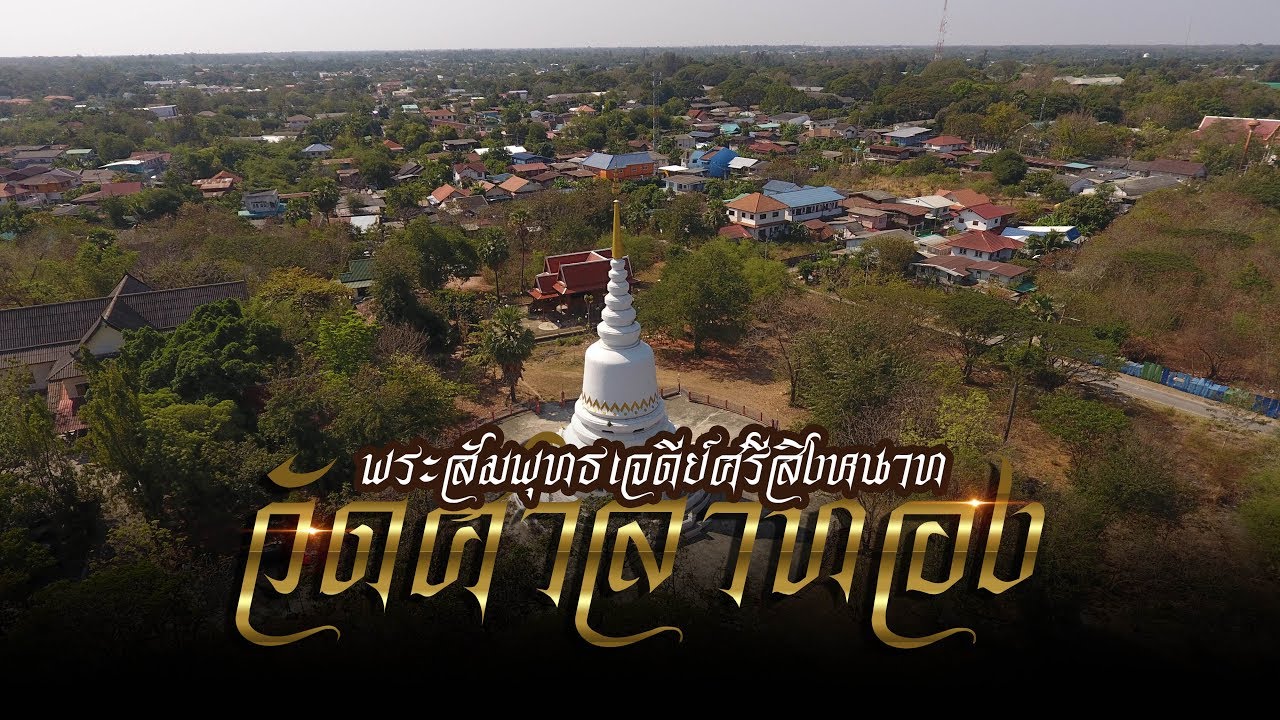
 Click to Access the Navigation Map GPS
Wat Sala Thong Map
Recommend

 Art, Culture and Heritage
 Historical Sites and Monuments(20)
 Landmarks and Memorials(5)
 Art, Craft Centres, Tradition(7)
 Museums(6)
 Art Gallery(1)
 Educational Places
 Educational Gardens, Farm(4)
Temple(29)
Educational Gardens, Farm(4)
Temple(29)
 Mosque(1)
 Other Sacred Sites(6)
 Research and Development
 Royal Project(3)
 Suburban Living
 Village, Community(6)
 Local Market(4)
 Floating Market(1)
 Nature and Wildlife
 National Parks and Marine Reserves(3)
 Mountain (Doi)(5)
 Dam, Reservoir, Lake(8)
 Waterfalls(9)
 Hot Springs(1)
 Caves(2)
 Flower Field(1)
 River, Canal(8)
 Bays and Beaches(2)
 Other natural attractions(3)
 Entertainment and Agricultural
 Zoos and Aquariums(1)
 Animal camps and shows(1)
 Farms, Parks and Ecotourism(21)
 Waterpark(2)
 Outdoor and Adventure Activities(6)
 Shopping
 Shopping and Night Market(2)
 Travel Articles, Recipes
 Travel Review, Food Review(5)


