
lovethailand home >Northeastern Travel Attractions >Nakhon Ratchasima Travel Attractions >Phi Mai >Nai Muang > Phimai National Museum
TL;DR: Phimai National Museum is located at Tha Songkran Road, Nai Mueang Subdistrict, Phimai District, Nakhon Ratchasima Province, open Wednesday – Sunday, hours 09.00 – 16.00.
Phimai National Museum
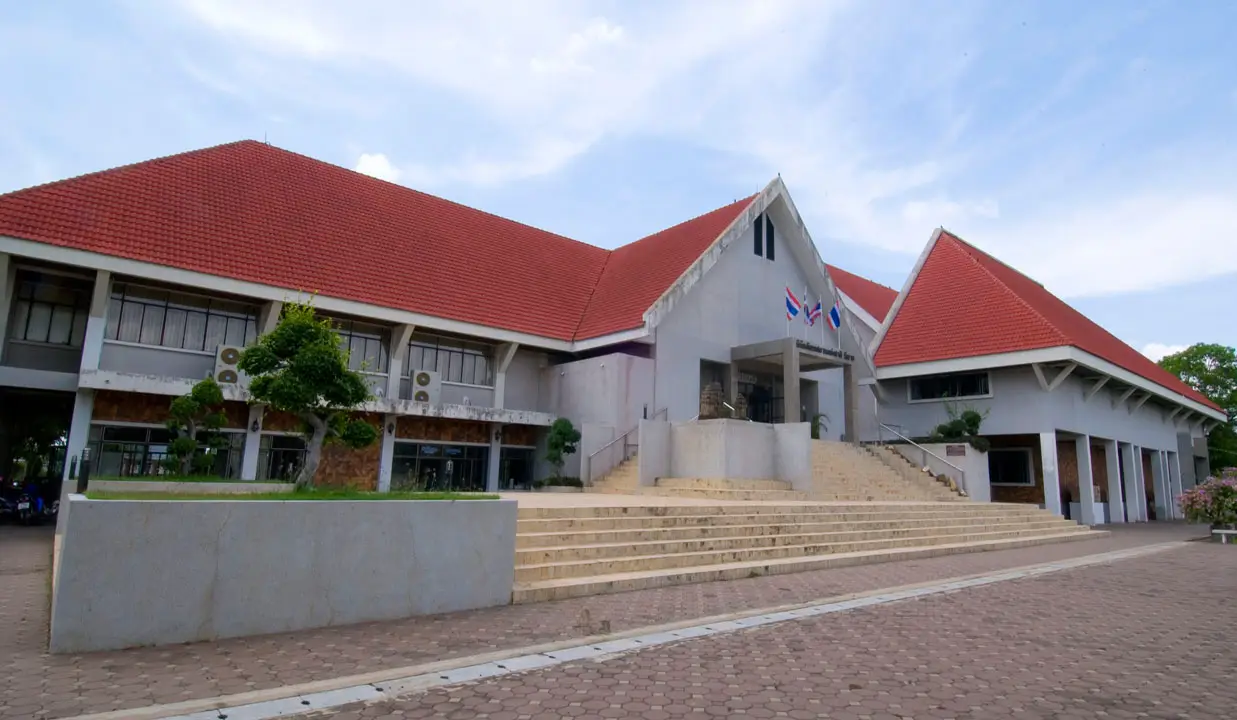
Open Days: Wednesday – Sunday
Opening Hours: 09.00 – 16.00
Phimai National Museum in Nakhon Ratchasima Province is one of the most important national museums in the lower Northeastern region of Thailand. Located at 8 Moo 2, Tha Songkran Road, Nai Mueang Subdistrict, Phimai District, Nakhon Ratchasima, the museum stands close to Phimai Historical Park and the Mun River. It preserves and presents archaeological objects, art objects, architectural fragments, lintels, carved stone elements, and historical evidence that explain the long development of communities, ancient towns, religious beliefs, and Khmer-influenced civilization in the Khorat Basin. For travelers who want to understand Phimai beyond the famous stone sanctuary, this museum is the essential starting point.
Phimai National Museum works almost like an interpretive gateway to the ancient city. Visitors who begin here before entering Phimai Historical Park will gain a much clearer understanding of the stone temple, its carved decorations, its religious meaning, and its place in regional history. The museum shows that Phimai was not important only because of its large Khmer sanctuary. It was part of a much wider cultural landscape shaped by prehistoric communities, early historic settlements, Dvaravati culture, ancient Khmer influence, religious networks, water systems, trade routes, and the Mun River basin. The museum helps visitors see Phimai as a layered historical city rather than a single monument.
The origin of the museum goes back to the area once used by Fine Arts Unit 6. In 1964, when the Fine Arts Department began excavation and restoration work at Prasat Hin Phimai, this area was used to store antiquities discovered during the restoration. It also received archaeological objects from other provinces under the unit’s responsibility in the lower Northeast. As the number of objects increased, the site developed into an open-air museum named Phimai National Museum. In 1975, it was transferred to the National Museums Division, marking its development into an official national museum for the region.
The museum later became a major repository of knowledge for the lower Northeastern region, especially Nakhon Ratchasima, Chaiyaphum, and Buriram. These provinces are closely connected through archaeology, ancient settlement patterns, Dvaravati sites, Khmer sanctuaries, and cultural networks along the Mun and Chi river systems. Phimai National Museum therefore does not tell only the story of one town. It presents the broader historical foundation of the lower Northeast, from prehistoric human occupation to the rise of early states and the flourishing of ancient Khmer culture in the Khorat Basin.
In 1989, the Fine Arts Department proposed a major museum improvement project under the royal initiative known as the Isan Khiao project. The purpose was to develop Phimai National Museum according to proper museum standards, including exhibition buildings, offices, meeting rooms, and permanent exhibitions. After the permanent display was completed, Her Royal Highness Princess Maha Chakri Sirindhorn presided over the official opening ceremony on 4 August 1993. This marked a major step in transforming the museum from a storage and display site into a national-level learning center for archaeology, art history, and regional heritage.
In recent years, the museum has undergone its largest renovation since opening to the public in 1993. The renovation project continued from 2023 to 2026, and the museum fully reopened to visitors on 27 May 2026. The updated exhibitions present more current academic information, a clearer display structure, improved interpretation, and a more modern visitor experience. New service areas, including a Co-Working Space and areas for rotating exhibitions or public presentations, have also expanded the role of the museum beyond preservation and display. It now functions as a lifelong learning center for local residents, students, researchers, and travelers.
The current museum is organized around 2 main buildings: the main exhibition building and the carved stone building. The main exhibition building presents the story of Phimai through archaeological evidence in a chronological and thematic sequence. The carved stone building serves as a repository and exhibition space for architectural elements discovered through archaeological work in the lower Northeastern region. These include lintels, doorframe columns, sandstone carvings, and other architectural fragments once associated with religious monuments. Together, the 2 buildings allow visitors to understand both the historical story of Phimai and the artistic craftsmanship of ancient stone architecture.
The first exhibition room, Geography and Prehistoric Ways of Life in Northeastern Thailand, introduces the environmental setting of the Khorat Basin. It explains how the landscape, river systems, soil, sediment, and natural routes supported human settlement. The Mun River basin and surrounding plains provided resources for farming, hunting, gathering, toolmaking, and community development. This room is important because it shows that the history of Phimai did not begin with stone temples. It began much earlier, with human communities that learned to live with the geography of the region and gradually developed more complex ways of life.
The second exhibition room, Beliefs and Rituals in the Prehistoric Khorat Basin, focuses on the spiritual life of ancient communities. Archaeological evidence such as pottery, tools, ornaments, and burial traces shows that prehistoric people were concerned not only with survival but also with death, ritual, identity, and the relationship between the living and the dead. Grave goods and burial customs help explain early systems of belief before the arrival of major organized religions. This room gives visitors a deeper appreciation of the human emotions, ideas, and rituals that existed in the region long before written history.
The third exhibition room, From Community to State: Early Historic Dvaravati Culture, presents the transition from local communities to more complex early towns. Dvaravati culture brought stronger religious, artistic, and social influences into the region, especially through Buddhism, stone sculpture, sema stones, inscriptions, and urban settlement patterns. This section helps visitors understand that the lower Northeast was not isolated. It was connected to wider cultural networks in Southeast Asia through religion, trade, language, art, and political development. Phimai’s later importance can be better understood when seen against this early historical background.
The fourth exhibition room, Early Ancient Khmer Culture in the Khorat Basin, introduces the beginning of Khmer cultural influence in the region. This room connects visitors to the world of stone sanctuaries, religious architecture, sandstone carving, and planned sacred landscapes. It explains why lower Isan contains many Khmer-style monuments and why Phimai became one of the most important centers in this cultural sphere. Visitors can learn how religion, political power, architecture, and geography came together in the creation of sacred monuments and urban spaces.
The fifth exhibition room, The Khorat Basin and the Flourishing of Ancient Khmer Culture from the 16th to 18th Buddhist Centuries, expands the story of Khmer cultural development. This was a period of significant artistic, architectural, and religious growth. Lintels, pediments, doorframe columns, sculptures, images of deities, Buddha images, and inscriptions all reflect a sophisticated society with complex belief systems and skilled craftsmanship. The museum helps visitors understand that each stone carving was not merely decorative. It was part of a sacred architectural language connected with religion, cosmology, ritual, and political authority.
The sixth exhibition room, The Glorious Civilization of Phimai, is one of the central sections of the museum. It presents Phimai as a major ancient city and religious center within the Khmer cultural world. Prasat Hin Phimai is one of the largest and most important Khmer-style stone sanctuaries in Thailand. Its architecture and art reflect religious ideas associated with Mahayana Buddhism and the wider belief systems of the ancient Khmer world. This room helps visitors understand Phimai not as a remote town, but as a center of religion, administration, travel routes, artistic production, and regional power.
The seventh exhibition room, Religion in Phimai, explores the diversity of beliefs found in the ancient city. The art and objects from Phimai reflect Buddhism, Brahmanical-Hindu traditions, and local adaptations of religious ideas. Religion in the ancient world was closely tied to politics, community identity, ritual, and artistic expression. Lintels and sculptures therefore functioned not only as beautiful works of art, but also as images of sacred narratives, gods, Buddhas, bodhisattvas, mythical animals, and cosmic order. This room is particularly useful for travelers who want to understand the meaning behind the carvings seen at Phimai Historical Park.
The eighth exhibition room, Phimai from the 18th to 23rd Buddhist Centuries, presents the later development of the city after the height of Khmer influence. Ancient cities did not disappear immediately when political power shifted. They continued to be occupied, reused, reinterpreted, and remembered by later communities. This room helps visitors understand Phimai as a living historical landscape with multiple layers of meaning. It was not a site belonging to one single period, but a place that continued to matter to people across different eras.
The ninth exhibition room, Phimai: Center of Greatness, summarizes the broader significance of the ancient city. It connects geography, transport routes, the Mun River, Phimai Historical Park, surrounding communities, archaeological objects, religious beliefs, and regional identity. Phimai’s greatness lies not only in the size of its stone sanctuary, but also in its role as a cultural, religious, political, and artistic center in the lower Northeast. This room gives visitors a complete overview of why Phimai remains one of the most important ancient cities in Thailand.
The carved stone building is another essential part of the museum. It contains architectural fragments from ancient religious monuments, especially sandstone lintels, doorframe elements, carved panels, and sculptural details. Many pieces feature deities, sacred stories, mythical animals, floral patterns, and religious symbols. Seeing these objects at close range helps visitors appreciate the technical skill of ancient craftsmen. It also prepares visitors to notice similar details when walking through Phimai Historical Park. The carved stone building is therefore not simply a storage space; it is a gallery of ancient architectural art.
The museum’s collections cover several major periods. Prehistoric objects date to roughly 2,000 to 1,500 years ago, while historic-period objects include Dvaravati art from approximately the 12th to 16th Buddhist centuries and Khmer-influenced art from approximately the 12th to 18th Buddhist centuries. Many of the most important objects are lintels and architectural components from ancient monuments. These objects are valuable because they help explain religion, art, construction, symbolism, and the relationship between Phimai and other ancient sites in the lower Northeast.
Visitors should allow at least 1.5 to 2 hours for the museum. Those with a deeper interest in archaeology, Khmer art, or religious symbolism may want to spend longer. The details on lintels, sculptures, and carved stone pieces reward slow observation. Rushing through the galleries may cause visitors to miss important differences between Dvaravati art and Khmer art, the meaning of religious imagery, and the role of Phimai in the wider network of ancient cities.
The best way to experience Phimai is to visit Phimai National Museum before Phimai Historical Park. The museum provides context, while the historical park provides the monumental setting. After seeing lintels, sculptures, and architectural fragments in the museum, visitors will understand the temple more clearly. The sanctuary’s layout, gateways, corridors, main tower, carved motifs, and orientation all become more meaningful. This sequence turns the visit from simple sightseeing into a deeper historical experience.
Phimai National Museum is also suitable for families and students. The renovated exhibitions are organized clearly and connect directly with the landscape of Nakhon Ratchasima Province. Children and young visitors can learn about geography, archaeology, ancient rituals, religion, stone carving, and the history of Phimai through real objects. Parents and teachers can use the visit to discuss cultural heritage, conservation, and the importance of protecting archaeological evidence for future generations.
For international travelers, the museum is especially valuable because it explains the relationship between Thailand and ancient Khmer civilization. Many visitors know Angkor Wat in Cambodia but may not realize that Northeastern Thailand also contains important Khmer-style monuments and related cultural evidence. Phimai is a key example. The museum helps travelers understand that modern national borders do not fully explain ancient cultural history. Phimai belonged to a wider regional world of religion, art, architecture, and travel routes.
From a conservation perspective, Phimai National Museum plays a vital role in preserving objects that might otherwise be damaged, lost, or removed from their archaeological context. By collecting, studying, and displaying these objects according to museum standards, the museum makes cultural knowledge accessible to the public while also protecting fragile heritage. It preserves not only beautiful objects but also evidence essential to understanding the history of Phimai and the lower Northeast.
Visitors should observe the carvings carefully, especially the lintels and sandstone elements. Many motifs have religious or narrative meanings, including images of deities, sacred animals, floral patterns, and symbolic architectural details. Looking closely at the depth of carving, composition, and storytelling on stone helps visitors appreciate the skill of ancient artisans. It also reveals how stone architecture communicated religious meaning to the people who used these sacred spaces.
Getting There from Nakhon Ratchasima city is straightforward. Take Mittraphap Road, or Highway 2, for about 50 km toward Phimai District. Then turn onto Highway 206 and continue for about 10 km into Phimai. The museum is located on the left side of the road in the district town, close to Phimai Historical Park and Tha Songkran Bridge. Because the museum and historical park are close to each other, visitors can easily include both in the same trip.
Travelers without a private vehicle can take a public bus or van from Nakhon Ratchasima to Phimai, then use local transport or walk within the town area depending on their route. Since the museum is in central Phimai and close to the main attractions, getting around is relatively easy. However, visitors who want to include Sai Ngam, Thung Samrit Memorial, or Ban Prasat Archaeological Site in the same day will find a private car or arranged transport more convenient.
Visitors should dress appropriately, keep the exhibition areas quiet, avoid touching objects, avoid opening display cases, and follow any photography restrictions. Many objects are hundreds of years old or older and are academically important. Damage to these objects would affect the study of local and regional history. Respectful behavior is therefore part of preserving Thailand’s cultural heritage.
Phimai National Museum can be planned as part of a 1-day Phimai itinerary. Start with the museum in the morning, spend about 1.5 to 2 hours exploring the exhibitions, then continue to Phimai Historical Park with a stronger understanding of the ancient city. In the afternoon, visitors can relax at Sai Ngam or continue to Thung Samrit Memorial to learn another layer of local history. This route is suitable for families, students, cultural travelers, and anyone interested in the history of Northeastern Thailand.
Overall, Phimai National Museum should be visited together with Phimai Historical Park. The museum expands the meaning of the ancient sanctuary by presenting real objects, carved stones, archaeological evidence, and updated interpretation. It connects Phimai with the Khorat Basin, the Mun River, Dvaravati culture, ancient Khmer civilization, and the broader historical development of lower Isan. For travelers who want to understand Phimai in depth, this museum is not optional; it is the key to reading the ancient city properly.
In summary, Phimai National Museum is one of the most important archaeological and cultural museums in Nakhon Ratchasima Province. Its strength lies in its collections from Phimai and the lower Northeast, its clear interpretation from prehistoric life to the glory of ancient Phimai, and its newly renovated exhibitions that make learning more accessible and engaging. Visitors who want more than a quick photo stop at the stone sanctuary should spend meaningful time here. Each gallery opens a deeper view of Phimai, Khorat, the Mun River basin, and the ancient civilizations that shaped this part of Thailand.
| Name | Phimai National Museum |
| Location | Tha Songkran Road, Nai Mueang Subdistrict, Phimai District, Nakhon Ratchasima Province |
| Address | 8 Moo 2, Tha Songkran Road, Nai Mueang Subdistrict, Phimai District, Nakhon Ratchasima 30110, Thailand |
| Coordinates | 15.2192, 102.4945 |
| Highlights | A major archaeological museum displaying antiquities, art objects, lintels, carved stone elements, and historical evidence from Phimai and the lower Northeastern region of Thailand |
| History | Originated as an open-air museum under the Fine Arts Department in 1964, transferred to the National Museums Division in 1975, and officially opened on 4 August 1993 |
| Name Origin | Named after Phimai, the ancient city and archaeological area associated with the restoration of Prasat Hin Phimai and discoveries from the lower Northeast |
| Distinctive Features | Newly renovated permanent exhibitions, chronological interpretation from prehistoric life to ancient Phimai, and a carved stone building displaying sandstone architectural elements |
| Travel Information | From Nakhon Ratchasima city, take Highway 2 for about 50 km, then turn onto Highway 206 toward Phimai for about 10 km. The museum is on the left side of the road near Phimai Historical Park. |
| Current Status | Fully reopened after a major exhibition renovation from 27 May 2026 onward |
| Open Days | Wednesday – Sunday |
| Opening Hours | 09.00 – 16.00 |
| Fees | Thai Visitors 20 Baht, Foreign Visitors 200 Baht |
| Facilities | Main exhibition building, carved stone building, permanent exhibitions, rotating exhibition area, Co-Working Space, public service area, and archaeology and history information services |
| Main Areas / Zones | 1. Main Exhibition Building 2. Carved Stone Building 3. Exhibition Room 1: Geography And Prehistoric Ways Of Life In Northeastern Thailand 4. Exhibition Room 2: Beliefs And Rituals In The Prehistoric Khorat Basin 5. Exhibition Room 3: From Community To State: Early Historic Dvaravati Culture 6. Exhibition Room 4: Early Ancient Khmer Culture In The Khorat Basin 7. Exhibition Room 5: The Khorat Basin And The Flourishing Of Ancient Khmer Culture From The 16th To 18th Buddhist Centuries 8. Exhibition Room 6: The Glorious Civilization Of Phimai 9. Exhibition Room 7: Religion In Phimai 10. Exhibition Room 8: Phimai From The 18th To 23rd Buddhist Centuries 11. Exhibition Room 9: Phimai, Center Of Greatness |
| Caretaker | The Fine Arts Department, Ministry Of Culture / Phimai National Museum |
| Main Contact Number | 044-471-167 |
| Official Website / Official Page | www.finearts.go.th/phimaimuseum / Facebook: Phimai National Museum: พิพิธภัณฑสถานแห่งชาติ พิมาย |
| Nearby Tourist Attractions | 1. Phimai Historical Park, about 1 km, Tel. 044-471-568 2. Tha Songkran Bridge, about 0.5 km 3. Wat Doem Phimai, about 1 km 4. Sai Ngam Phimai, about 2 km 5. Thung Samrit Memorial, about 15 km 6. Ban Prasat Archaeological Site, about 25 km |
| Nearby Restaurants | 1. Wan Wan Na Phimai, about 1 km, Tel. 098-641-4541 2. Krua Por Jai, about 1 km, Tel. 081-955-4695 3. O Kung Phao Phimai Branch 17, about 2 km, Tel. 082-135-9345, 044-928-292 4. Krua Khun Phim By Chef Watch Phimai, about 2 km, Tel. 091-776-6198 5. Bai Toei Restaurant, about 2 km, Tel. 044-481-191 |
| Nearby Accommodations | 1. Phimai Paradise Hotel, about 1 km, Tel. 062-449-7894 2. Baan Lita Phimai, about 1 km, Tel. 088-595-2542, 084-036-1447 3. Rabbit Hotel Phimai, about 1 km, Tel. 081-202-2250 4. Benya Guest House Phimai, about 1 km, Tel. 081-976-2471 5. Phimai Inn Hotel, about 3 km, Tel. 044-287-228, 044-471-175 |
Frequently Asked Questions (FAQ)
Q: Where is Phimai National Museum located?
A: Phimai National Museum is located at 8 Moo 2, Tha Songkran Road, Nai Mueang Subdistrict, Phimai District, Nakhon Ratchasima Province, near Phimai Historical Park and Tha Songkran Bridge.
Q: What days and hours is Phimai National Museum open?
A: The museum is open Wednesday to Sunday from 09.00 to 16.00.
Q: How much is the admission fee?
A: The admission fee is 20 baht for Thai visitors and 200 baht for foreign visitors.
Q: What are the main exhibition zones inside Phimai National Museum?
A: The museum includes the main exhibition building, the carved stone building, and 9 exhibition rooms covering prehistoric geography, rituals in the Khorat Basin, Dvaravati culture, ancient Khmer culture, Phimai civilization, religion, later historical development, and Phimai as a major center.
Q: Should visitors go to the museum before or after Phimai Historical Park?
A: Visitors should go to the museum first because it explains the artifacts, lintels, carved stones, and historical context that make Phimai Historical Park easier to understand.
Q: How long should visitors spend at Phimai National Museum?
A: Visitors should allow at least 1.5 to 2 hours to explore the main exhibition building, the carved stone building, and the archaeological objects without rushing.
Q: How can travelers get there from Nakhon Ratchasima city?
A: Take Highway 2 from Nakhon Ratchasima city for about 50 km, then turn onto Highway 206 toward Phimai for about 10 km. The museum is located on the left side of the road in Phimai town.
Q: What nearby attractions can be visited after Phimai National Museum?
A: Nearby attractions include Phimai Historical Park, Tha Songkran Bridge, Wat Doem Phimai, Sai Ngam, Thung Samrit Memorial, and Ban Prasat Archaeological Site.
 Category: ●Art, Culture and Heritage
 Group: ●Museums
Last Update : 3 MonthAgo
 Last Update : 3 MonthAgo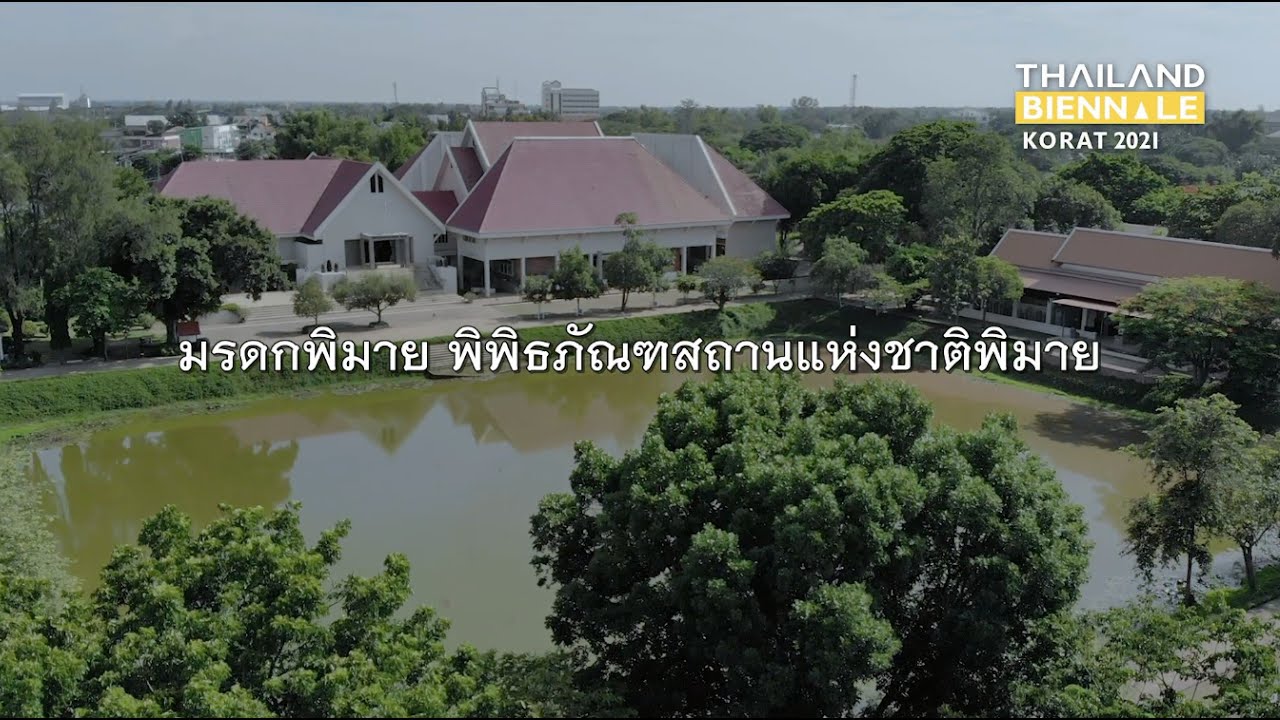
 Click to Access the Navigation Map GPS
Phimai National Museum Map
Recommend

 Historical Sites and Monuments(20)
 Landmarks and Memorials(5)
 Art, Craft Centres, Tradition(7)
Museums(6)
Art, Craft Centres, Tradition(7)
Museums(6)
 Art Gallery(1)
 Educational Places
 Educational Gardens, Farm(4)
 Places of Worship
 Temple(29)
 Mosque(1)
 Other Sacred Sites(6)
 Research and Development
 Royal Project(3)
 Suburban Living
 Village, Community(6)
 Local Market(4)
 Floating Market(1)
 Nature and Wildlife
 National Parks and Marine Reserves(3)
 Mountain (Doi)(5)
 Dam, Reservoir, Lake(8)
 Waterfalls(9)
 Hot Springs(1)
 Caves(2)
 Flower Field(1)
 River, Canal(8)
 Bays and Beaches(2)
 Other natural attractions(3)
 Entertainment and Agricultural
 Zoos and Aquariums(2)
 Animal camps and shows(1)
 Farms, Parks and Ecotourism(21)
 Waterpark(4)
 Outdoor and Adventure Activities(6)
 Shopping
 Shopping and Night Market(2)
 Travel Articles, Recipes
 Travel Review, Food Review(6)


