
lovethailand home >Northeastern Travel Attractions >Nakhon Ratchasima Travel Attractions >Wang Nam Khieo >Thai Samakkhi > Huai Yai Waterfall
TL;DR: Huai Yai Waterfall is located at Thap Lan National Park, Wang Nam Khiao District, Nakhon Ratchasima Province, Thailand, open Daily, hours 08.00 – 18.00.

Huai Yai Waterfall
Open Days: Daily
Opening Hours: 08.00 – 18.00
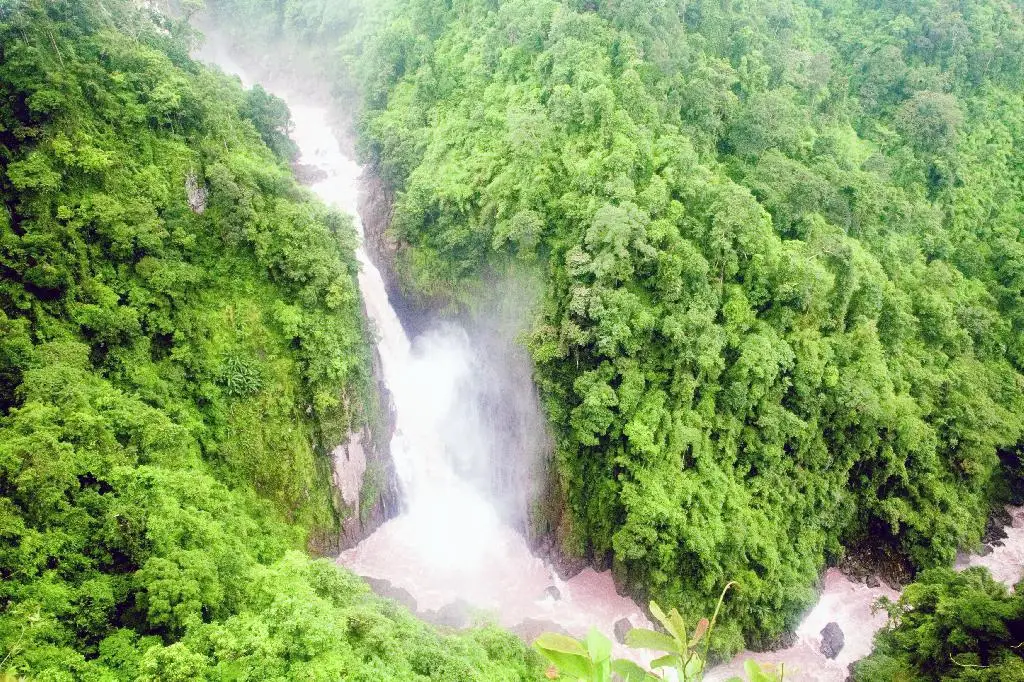
Huai Yai Waterfall in Nakhon Ratchasima is a seasonal waterfall inside Thap Lan National Park, located in Wang Nam Khiao District. It is part of the Suan Hom waterfall area and is connected with Suan Hom Waterfall and Man Fa Waterfall. The waterfall has the most water during the rainy season, especially from July to October. Travelers access the area via Highway 304, the Nakhon Ratchasima-Kabin Buri route, entering through the Km. 79 market area for about 6 km. From the access point, a short sloping walk of about 20 meters leads to a small stream where water flows through 2 large rocks. The site is suitable for nature travelers, rainy-season waterfall trips, camping, and quiet forest exploration in Wang Nam Khiao.
Huai Yai Waterfall in Nakhon Ratchasima is a natural waterfall destination in Wang Nam Khiao District, located within Thap Lan National Park. It belongs to the same forest-waterfall landscape as Suan Hom Waterfall and Man Fa Waterfall, making it part of a wider seasonal stream system rather than a stand-alone roadside attraction. The site is best appreciated by travelers who enjoy protected forests, natural streams, rocks, seasonal water flow, and quieter nature routes away from the more commercial tourism areas of Wang Nam Khiao. Its value lies in the real forest atmosphere and the way the waterfall changes with rainfall.
Huai Yai Waterfall is reached from Highway 304, the Nakhon Ratchasima-Kabin Buri route. Travelers enter through the Km. 79 market area and continue for approximately 6 km toward the waterfall area. From the access point, the walking route slopes gently, and after about 20 meters visitors reach a small waterfall stream flowing through 2 large rocks. This first approach gives a simple but clear impression of the site: a stream, rocks, forest shade, and seasonal water moving through a protected landscape. It is not a heavily developed tourist attraction, and that natural character is the main reason many nature-focused travelers find it meaningful.
Information about the site identifies Huai Yai Waterfall as part of Thap Lan National Park in Wang Nam Khiao District. The waterfall is described as having a broader waterfall system with 5 levels and a connection with Suan Hom Waterfall in the same Wang Nam Khiao area. This means visitors should understand Huai Yai at 2 levels. The first is the easily reached front section, where the short walk leads to a stream and 2 large rocks. The second is the wider waterfall and stream system, where multiple waterfall levels are associated with the surrounding forest and nearby Suan Hom area.
The most important factor in planning a visit is the season. Huai Yai Waterfall has water mainly during the rainy season, especially from July to October. During these months, rainfall feeds the forest streams, the surrounding vegetation becomes green and humid, and the waterfall area is at its most active. Outside the rainy season, especially during dry periods, water levels can drop significantly. Travelers who want to see flowing water should time their trip with the rainy-season period rather than assuming the waterfall will look the same all year.
The landscape around Huai Yai Waterfall reflects the natural rhythm of Thap Lan National Park. The waterfall is not only a scenic stop but also part of a watershed system. Rainwater from the forested highlands feeds the stream, moves across rocks, forms shallow pools, and continues through the lower terrain. The stream supports plants along the banks, insects, small animals, and the wider forest environment. For this reason, a visit to Huai Yai is also a chance to observe how water, rocks, forest, and rainfall interact in one protected ecological area.
Thap Lan National Park is one of Thailand’s important protected areas, covering parts of Nakhon Ratchasima and Prachin Buri. It is known for forest landscapes, watersheds, wildlife habitat, viewpoints, seasonal waterfalls, and its connection with the larger Dong Phayayen-Khao Yai forest complex. Huai Yai Waterfall is one small but meaningful element of this larger protected landscape. Visitors should therefore treat the site as part of a national park, not as a casual picnic ground. Quiet behavior, waste control, and respect for park rules are essential.
Getting There is most practical by private car. From Highway 304, enter through the Km. 79 market area and continue approximately 6 km toward the waterfall route. This is the same general access corridor used for the Suan Hom waterfall area. The road includes local and natural sections, and conditions can change quickly during the rainy season. A vehicle in good condition is necessary. During wet periods, a high-clearance or 4-wheel-drive vehicle is the best choice because the road may become slippery, muddy, or uneven in some sections.
One convenient aspect of Huai Yai Waterfall is that the walking distance from the access point to the first stream area is short. The gently sloping path takes visitors about 20 meters to reach the stream and rock area. This makes the destination accessible for people who do not want a long forest trek. However, a short walk does not mean the site is risk-free. Wet soil, slippery stones, roots, and seasonal water flow still require care. Visitors should wear shoes with good grip and avoid flat sandals, especially during or after rain.
Huai Yai can be visited as a day trip or combined with an overnight stay in the Suan Hom area. Day visitors should arrive in the morning so they have enough time to enter the natural route, explore the waterfall, take photographs, and leave before dark. Overnight visitors can use the camping and national park accommodation areas opened by Thap Lan National Park, including the Suan Hom campsite and park bungalow zone when available. Staying overnight offers a slower experience of the forest, but it also requires following park rules strictly.
The Suan Hom campsite area is closely connected with Huai Yai Waterfall in terms of route planning. Travelers who camp in the area can visit Huai Yai, Suan Hom, and Man Fa waterfalls more conveniently than those making a short day trip. Camping in the national park is a simple nature experience, not a luxury camping setup. Visitors should keep noise low, use lights only when needed, store food securely, avoid leaving food scraps, and keep the campsite clean. These practices are important because the surrounding forest is habitat for wildlife and small animals.
The best time of day to visit Huai Yai Waterfall is from morning to early afternoon. Daylight makes it easier to drive, walk, assess road surfaces, and return safely. Morning after rainfall often gives the area a fresh atmosphere, cool air, and stronger stream flow. However, heavy rain should be treated seriously. Water levels in forest streams can rise quickly, even if the rain falls upstream rather than directly at the waterfall. Visitors should observe the color and speed of the water and follow ranger instructions.
Visitors who want to touch the water or stay near the stream should only use safe areas that are open on the actual day of travel. Seasonal waterfalls can change quickly. Rocks may be covered with algae, stream edges may be unstable, and water may become strong after rain. Climbing on large rocks for photographs is not recommended. Children should be supervised closely at all times. The safest way to enjoy Huai Yai Waterfall is to treat it as a nature-viewing and streamside relaxation area rather than a risky swimming site.
Huai Yai Waterfall is a useful place for families and general travelers to learn about natural water systems. During the rainy season, visitors can see how water flows from the forest, moves through the rocks, forms small channels, and continues through the landscape. During lower-water periods, the exposed rocks and stream marks reveal where the water moves when rainfall returns. This seasonal change helps visitors understand that a natural waterfall is alive with the weather and does not remain constant throughout the year.
The atmosphere around Huai Yai is very different from the more commercial zones of Wang Nam Khiao. The area is quieter, more forested, and less predictable. Travelers may encounter muddy sections, limited phone signal, or lower water levels depending on the season. Those who expect cafes, shops, and fully paved paths at every step may need to adjust expectations. Those who enjoy real forest experiences will find the place more rewarding because of its natural soundscape, wet-earth smell after rain, streamside rocks, and shaded green surroundings.
Useful items for a visit include grippy shoes, quick-dry clothing, light rain protection, drinking water, snacks, insect repellent, personal medicine, a trash bag, and a waterproof pouch for a phone or camera. Visitors planning to camp should prepare tent equipment, a flashlight, spare batteries, food, and proper waste-storage items. Every visitor should take their trash back out. Streams and waterfalls are sensitive areas, and even small food scraps or plastic waste can affect water quality and wildlife behavior.
Huai Yai, Suan Hom, and Man Fa waterfalls can be combined into a rainy-season nature route if road and weather conditions are suitable. Travelers can enter the Suan Hom area in the morning, visit Huai Yai first, and continue to nearby waterfall or campsite areas afterward. This route should not be rushed. Rain, natural roads, walking time, and safety checks can take longer than expected. A flexible itinerary works better than trying to cover too many places in limited time.
Suan Hom Waterfall is closely related to Huai Yai in both geography and travel planning. Suan Hom has a campsite, national park accommodation, and a quiet ranger-station atmosphere, while Huai Yai is known for its seasonal waterfall structure and stream approach. Visiting both sites gives travelers a clearer understanding of the Suan Hom area as a whole. It shows how water, forest, camping, and national park management exist together in one Wang Nam Khiao landscape.
Man Fa Waterfall is another nearby site that can be added when seasonal water levels are suitable. In the rainy season, Man Fa gives an additional view of the waterfall system in this part of Thap Lan. The combination of Huai Yai, Suan Hom, and Man Fa is best for travelers who are comfortable with natural roads, changing weather, and simple forest conditions rather than travelers seeking highly developed tourist services.
Pha Chom Tawan and Pha Kep Tawan can add viewpoint scenery to a waterfall-focused trip. While Huai Yai represents the stream and forest floor, these viewpoints give wider views of hills, forest, and sky. A practical itinerary can focus on waterfall areas in the morning and viewpoint areas later in the day, provided weather and road conditions allow. During the rainy season, visitors should always allow extra driving time and return before dark.
For photographers, Huai Yai Waterfall is best suited to forest-stream images rather than huge panoramic waterfall shots. Interesting subjects include the stream flowing through 2 large rocks, wet stones, leaves after rain, a short sloping forest path, and layered waterfall areas when water is strong. Soft morning light and overcast post-rain conditions help bring out the green tones of the forest and reduce glare on water. Photographers should protect equipment from moisture and avoid unsafe climbing for a better angle.
Foreign travelers interested in the natural side of Wang Nam Khiao will find Huai Yai more authentic than many roadside attractions. It is not designed around photo props, cafes, or resort-style comfort. It is a national park waterfall route shaped by rain, forest, rocks, and access conditions. Travelers without local experience should go with a suitable vehicle and, ideally, a driver familiar with the area. Carrying cash, drinking water, and basic supplies is recommended because services inside forest areas are limited.
Families can also benefit from a visit when conditions are safe. Children can learn how rain creates streams, how rocks shape water flow, and why national parks protect forests and watersheds. Parents should supervise children closely and avoid letting them run near water or climb rocks. A good family visit can focus on observation: the sound of insects, shapes of leaves, water direction, rock surfaces, and the difference between wet and dry seasons.
Responsible behavior is essential at Huai Yai Waterfall. Visitors should keep noise low, avoid playing loud music, avoid feeding wildlife, avoid collecting plants, avoid touching animals, and stay on the routes allowed by park staff. Food should be eaten only in appropriate areas and all waste should be removed. The waterfall and stream are not only for visitors; they are also part of a living ecosystem used by plants, insects, small animals, and the surrounding forest.
Compared with easier attractions in Wang Nam Khiao, Huai Yai requires more preparation but offers a deeper natural experience. The route from the Km. 79 market area into the forest allows travelers to pass from local community space into protected nature. With enough time, the trip can include local food, coffee, viewpoints, camping, and other waterfalls. This balance makes Huai Yai a strong choice for travelers who want to see the genuine natural character of Wang Nam Khiao rather than only its developed tourist side.
Huai Yai is also suitable for visitors seeking a quieter experience. Even during the rainy season, the area generally feels more natural and less polished than commercial tourist zones. This quietness should be protected. Travelers should speak softly, avoid unnecessary noise, and allow the forest to remain the main experience. The value of the site comes from water, stone, shade, and seasonal change, not from artificial entertainment.
From a conservation perspective, Huai Yai Waterfall is a place that depends heavily on visitor understanding. It has water only during the right season, access roads can change with rain, and safety conditions can shift quickly. Accepting these natural limits makes the visit more meaningful. Travelers who come at the right time, use a suitable vehicle, prepare properly, and respect park regulations will find a refreshing waterfall landscape that reflects the real nature of Thap Lan National Park.
In conclusion, Huai Yai Waterfall in Nakhon Ratchasima is a worthwhile rainy-season nature destination for travelers who want to experience Wang Nam Khiao and Thap Lan National Park beyond the usual cafes and viewpoints. Its highlights include seasonal water, a short sloping walk, a stream passing through 2 large rocks, a wider 5-level waterfall system, links with Suan Hom Waterfall, and access to nearby camping and forest areas. With good timing, proper preparation, and respect for the national park environment, Huai Yai offers a quiet and genuine encounter with the protected forest landscape of Wang Nam Khiao.
| Name | Huai Yai Waterfall |
| Location | Thap Lan National Park, Wang Nam Khiao District, Nakhon Ratchasima Province, Thailand |
| Address | Wang Nam Khiao Subdistrict, Wang Nam Khiao District, Nakhon Ratchasima 30370, Thailand |
| Highlights | Seasonal waterfall in Thap Lan National Park, with a stream flowing through 2 large rocks, a wider 5-level waterfall system, and a natural connection with Suan Hom Waterfall |
| History / Importance | Part of the waterfall group in Thap Lan National Park and an important nature attraction connected with streams, watershed forest, and seasonal tourism in Wang Nam Khiao |
| Name Origin | The name Huai Yai is connected with the stream and water system flowing through the forest and waterfall area of Wang Nam Khiao |
| Distinctive Features | A short gently sloping walk of about 20 meters leads to a small waterfall stream flowing through 2 large rocks. The waterfall system has 5 levels, is about 50 meters high and 30 meters wide, and has the most water from July to October. |
| Travel Information | Use Highway 304, the Nakhon Ratchasima-Kabin Buri route. Enter through the Km. 79 market area for about 6 km. The route is shared with Suan Hom Waterfall and Man Fa Waterfall. A well-prepared vehicle is required, and a 4-wheel-drive vehicle is recommended during the rainy season. |
| Current Status | Open for tourism and overnight stays in the Suan Hom and Huai Yai waterfall area during periods when Thap Lan National Park opens the service zone |
| Open Days | Daily |
| Opening Hours | 08.00 – 18.00 |
| Fees | Thap Lan National Park entrance fee: Thai adults 20 baht, Thai children 10 baht / Foreign adults 100 baht, foreign children 50 baht / Motorcycle 20 baht, car 30 baht |
| Camping Fee | 30 baht/person/night for campsite areas officially opened by the national park |
| Best Time To Visit | July to October, especially during sustained rainfall when the waterfall has strong seasonal water flow |
| Facilities | Suan Hom campsite, national park bungalows, toilets, parking area, ranger service point, and overnight-stay areas in the Suan Hom zone |
| Main Areas / Zones | Gently Sloping Walking Route To The Waterfall, About 20 Meters Stream And 2 Large Rocks Zone Multi-Level Waterfall Zone Streamside Forest Zone Connection Zone To Suan Hom Waterfall Suan Hom Campsite Zone Thap Lan National Park Ranger Station 13 Service Zone |
| Caretaker | Thap Lan National Park, Department of National Parks, Wildlife and Plant Conservation / Head of Thap Lan National Park: Mr. Prawatsart Chanthep |
| Main Contact Number | Thap Lan National Park Tel. 09-2550-0172 / Suan Hom Ranger Station Tel. 097-287-1355 |
| Official Website / Official Page | Thap Lan National Park Official Page / National Park Accommodation Booking System nps.dnp.go.th |
| Nearby Tourist Attractions | 1. Suan Hom Waterfall, about 4 km 2. Man Fa Waterfall, about 5 km 3. Suan Hom Campsite, about 4 km, Tel. 097-287-1355 4. Pha Chom Tawan, Ban Huai Yai Tai, about 14 km 5. Pha Kep Tawan, about 25 km, Thap Lan National Park Tel. 09-2550-0172 6. Wang Nam Khiao Farm / Mr.Mushroom, about 27 km 7. Wang Nam Khiao Coffee Roastery, about 30 km, Tel. 089-054-6619 |
| Nearby Restaurants | 1. Restaurants In Wang Nam Khiao Town Area, about 20 km 2. Krua Ton Sai Wang Nam Khiao, about 24 km 3. Wang Nam Khiao Coffee Roastery, about 30 km, Tel. 089-054-6619 4. Patta Wang Nam Khiao Restaurant, about 31 km, Tel. 065-945-5168 5. Na Siri Wang Nam Khiao, about 25 km, Tel. 088-354-0980 6. Bucolic Khaoyai, about 48 km, Tel. 065-669-5497 |
| Nearby Accommodations | 1. Suan Hom Campsite, about 4 km, Tel. 097-287-1355 2. Thap Lan National Park Bungalows, Zone 2 Suan Hom, about 4 km, Tel. 097-287-1355 3. Wang Nam Khiao Good View Resort, about 26 km, Tel. 081-441-9833 4. Netdao Resort Wang Nam Khiao, about 27 km, Tel. 091-782-4249 5. Phupraewprow Resort, about 29 km, Tel. 094-826-9782 6. Veravian Resort Khao Yai - Wang Nam Khiao, about 34 km, Tel. 083-111-5678, 083-111-6789 7. Village Farm & Winery, about 32 km, Tel. 081-877-3711 |
Frequently Asked Questions (FAQ)
Q: Where is Huai Yai Waterfall located?
A: Huai Yai Waterfall is located inside Thap Lan National Park in Wang Nam Khiao District, Nakhon Ratchasima Province, Thailand.
Q: Is Huai Yai Waterfall currently open?
A: Yes. It is open during the service periods of the Suan Hom and Huai Yai waterfall area under Thap Lan National Park. The listed opening hours are 08.00 to 18.00.
Q: When is the best time to visit Huai Yai Waterfall?
A: The best time to visit is from July to October, when rainfall brings the strongest water flow and the surrounding forest becomes green and humid.
Q: How do travelers get to Huai Yai Waterfall?
A: Use Highway 304, the Nakhon Ratchasima-Kabin Buri route, enter through the Km. 79 market area for about 6 km, then walk about 20 meters along a gently sloping path to the stream area.
Q: Is a 4-wheel-drive vehicle required for Huai Yai Waterfall?
A: During the rainy season, a well-prepared vehicle is essential, and a 4-wheel-drive vehicle is recommended because some road sections can be slippery, muddy, and affected by rain.
Q: Is there an entrance fee for Huai Yai Waterfall?
A: Yes. Visitors pay the Thap Lan National Park entrance fee. Thai adults pay 20 baht and Thai children pay 10 baht. Foreign adults pay 100 baht and foreign children pay 50 baht. Vehicle fees are charged separately.
Q: What nearby places can be included in the same trip?
A: Nearby places include Suan Hom Waterfall, Man Fa Waterfall, Suan Hom Campsite, Pha Chom Tawan, Pha Kep Tawan, Wang Nam Khiao Farm, and Wang Nam Khiao Coffee Roastery.
Q: Who should visit Huai Yai Waterfall?
A: It is ideal for nature travelers, rainy-season waterfall lovers, campers, families who want a forest-learning trip, and visitors seeking the protected nature of Thap Lan National Park.
 Category: ●Nature and Wildlife
 Group: ●Waterfalls
Last Update : 4 WeekAgo
 Last Update : 4 WeekAgo
 Click to Access the Navigation Map GPS
Huai Yai Waterfall Map
Recommend

 Art, Culture and Heritage
 Historical Sites and Monuments(20)
 Landmarks and Memorials(5)
 Art, Craft Centres, Tradition(7)
 Museums(6)
 Art Gallery(1)
 Educational Places
 Educational Gardens, Farm(4)
 Places of Worship
 Temple(29)
 Mosque(1)
 Other Sacred Sites(6)
 Research and Development
 Royal Project(3)
 Suburban Living
 Village, Community(6)
 Local Market(4)
 Floating Market(1)
 National Parks and Marine Reserves(3)
 Mountain (Doi)(5)
 Dam, Reservoir, Lake(8)
Waterfalls(9)
Dam, Reservoir, Lake(8)
Waterfalls(9)
 Hot Springs(1)
 Caves(2)
 Flower Field(1)
 River, Canal(8)
 Bays and Beaches(2)
 Other natural attractions(3)
 Entertainment and Agricultural
 Zoos and Aquariums(1)
 Animal camps and shows(1)
 Farms, Parks and Ecotourism(21)
 Waterpark(2)
 Outdoor and Adventure Activities(6)
 Shopping
 Shopping and Night Market(2)
 Travel Articles, Recipes
 Travel Review, Food Review(5)


