
lovethailand home >Northeastern Travel Attractions >Nakhon Phanom Travel Attractions >Muang Nakhon Phanom >Nai Muang > Nakhon Phanom National Library
TL;DR: Nakhon Phanom National Library is located at Apiban Bancha Road, Nai Mueang Subdistrict, Mueang Nakhon Phanom District, Nakhon Phanom Province, open Tuesday – Saturday; closed on Sunday, Monday and public holidays, hours 09:00 – 17:00.

Nakhon Phanom National Library
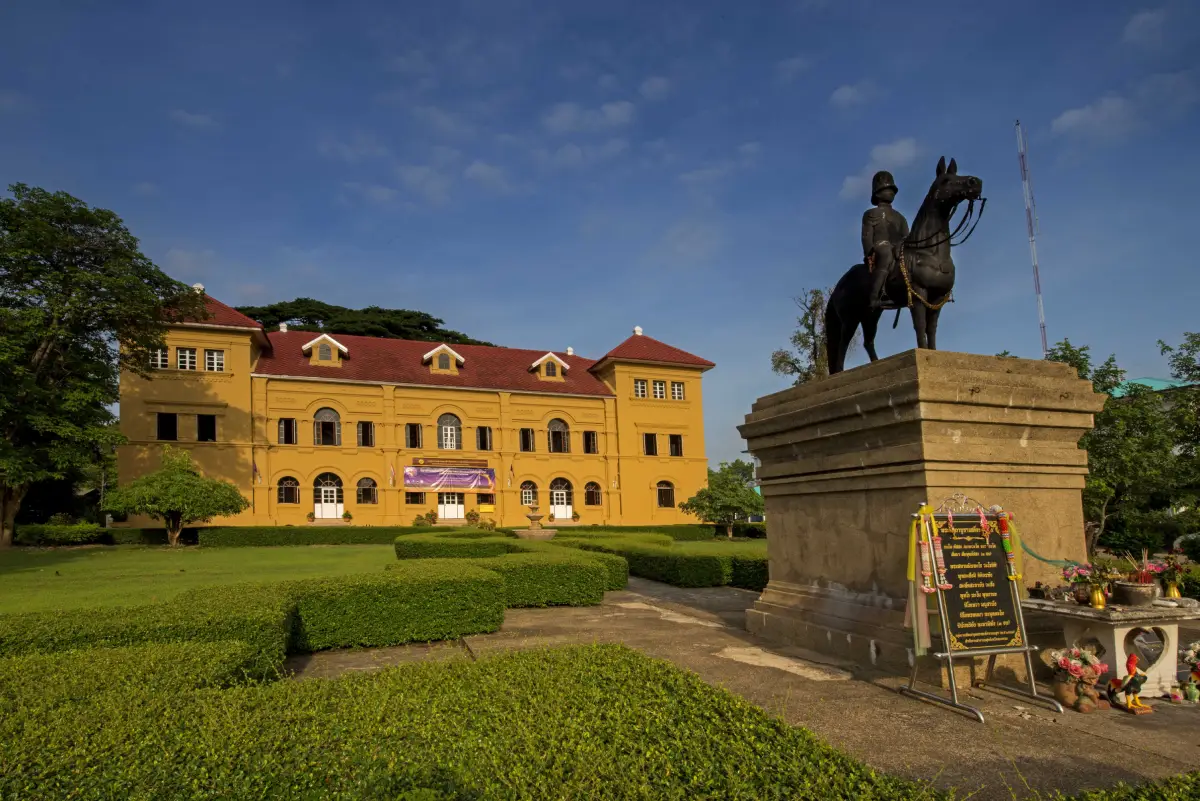
Open Days: Tuesday – Saturday; closed on Sunday, Monday and public holidays
Opening Hours: 09:00 – 17:00
The Nakhon Phanom National Library in Honor of Her Majesty Queen Sirikit stands on Apiban Bancha Road in Nai Mueang Subdistrict, Mueang Nakhon Phanom District. It occupies the former Nakhon Phanom Provincial Hall, one of the most important historic buildings in the old Mekong riverfront city. Constructed between 1915 and 1919, the Western-influenced colonial building originally served as the administrative center of the province. It survived artillery damage during the Franco-Thai conflict, was later registered as a historic site, restored and adapted as a regional branch of the National Library of Thailand.
Essential Information: The former provincial hall was constructed during the administration of Phraya Phanom Nakhon Anurak, also known as Ui Nakhonthap. Sumang Pathumchat supervised construction, while a Vietnamese master builder named Kai led the building work. Prisoners from the nearby provincial prison provided part of the labor. The main structure has two storeys and 17 rooms, while its northern and southern corner wings rise to a third level. The building has served as the Nakhon Phanom National Library since June 1994. It is open Tuesday to Saturday from 09:00 to 17:00 and admission is free.
The property combines several layers of significance. It is an administrative monument that records the modernization of provincial government, a major example of Western-influenced Mekong architecture, an award-winning conservation project and an active public library. Its collections include books, reference materials, local information, historic documents, palm-leaf manuscripts and audiovisual resources. Visitors can therefore study the history of Nakhon Phanom through both the library’s collections and the architecture surrounding them.
The location on Apiban Bancha Road places the library within the former government quarter. The provincial hall, prison, administrative offices and institutions connected with the justice system once stood close to one another. The district is also within walking distance of old commercial communities, temples, the Mekong promenade and several major urban landmarks. A visit can therefore be combined with a broader exploration of the historical development of central Nakhon Phanom.
The former provincial hall was built between 1915 and 1919 during the reign of King Vajiravudh. Thailand was then expanding and standardizing its provincial administrative system. Permanent government buildings were constructed in regional centers to accommodate officials, records and public services. A provincial hall was not merely an office; it represented state authority, administrative organization and the transition from older tributary towns to a centralized system of provincial government.
Phraya Phanom Nakhon Anurak, or Ui Nakhonthap, was governor during the construction period. Completing a large government building in early twentieth-century Nakhon Phanom required complex arrangements for financing, materials, transportation and skilled labor. Roads were limited, and many supplies moved through local routes or along the Mekong River. The project therefore depended on regional craftsmen and a carefully organized workforce.
The design was connected with the architectural plan used for the Chiang Rai Provincial Hall, originally prepared by an American doctor associated with the American Presbyterian mission in 1900. Reusing and adapting a provincial hall design reflected the development of standardized government architecture. The Western model was modified through the use of local materials, wide openings, shading and ventilation appropriate to the tropical climate.
Sumang Pathumchat, a former district official, supervised the construction. The master builder was Kai, a Vietnamese craftsman. Vietnamese builders played a major role in the construction of temples, churches, private houses, commercial buildings and government structures throughout Mekong towns. They were particularly skilled in masonry, carpentry and the adaptation of French-influenced forms to regional building conditions.
Prisoners from the nearby Nakhon Phanom Provincial Prison were used as construction labor. Such labor was employed in several public works projects during earlier periods of Thai administration. Prisoners would have assisted with the movement of materials, preparation of the site and labor-intensive building tasks. This history directly connects the former provincial hall with the nearby old prison compound, now known as Chom Khong Park.
The involvement of prisoners also adds a social dimension to the history of the building. Architectural beauty was partly produced by people who had limited control over their work and living conditions. Remembering these workers prevents the historical narrative from focusing exclusively on governors, administrators and designers. It also encourages visitors to consider changes in correctional practice and labor rights over time.
The building is generally classified as colonial architecture combining Western forms with climate-responsive construction. Its rectangular plan extends into projecting wings at the northern and southern corners. The principal façade faces east toward the Mekong River. This orientation connected the provincial administration with the city’s most important historic transportation corridor and allowed the interior to benefit from river breezes and natural light.
The structure was built with load-bearing brick masonry without a reinforced-concrete frame. Thick walls provide stability and reduce the transfer of daytime heat into the rooms. This construction method required precise foundations and careful distribution of structural weight. Removing or altering a load-bearing wall without understanding the original system could affect the stability of the entire building.
A hipped roof covered with red clay tiles protects the structure. Wide eaves help shield the walls from direct sunlight and heavy rain. Timber was used extensively for the roof structure, floors and architectural details. All storeys have wooden boards laid over timber joists. Visitors can still experience the sound and slight movement characteristic of historic timber floors and should walk carefully.
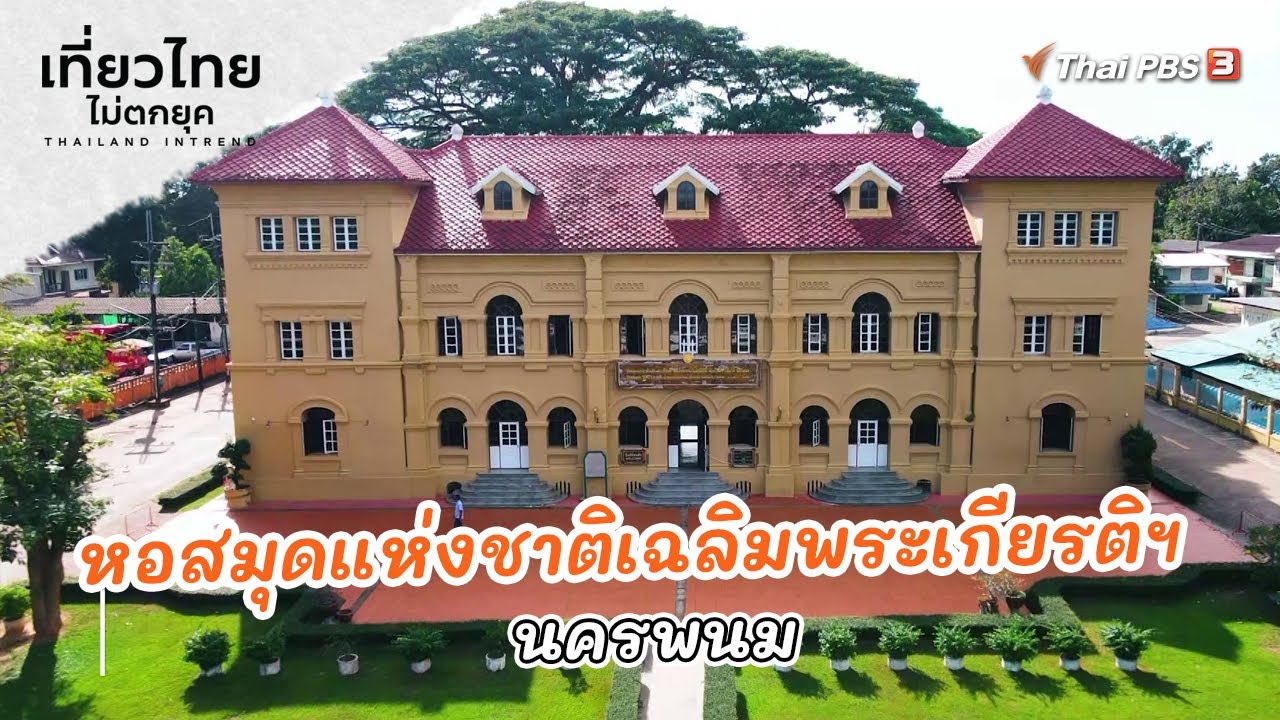
The principal section has two storeys and contains 17 rooms. The northern and southern corner wings include an additional third level. For this reason, the property is sometimes described as a three-storey building even though most of its main floor area is arranged over two levels. The varying height strengthens the visual importance of the two corner wings.
There are three entrances at the front and two at the rear. Multiple entrances reflected the administrative organization of the original provincial hall, including formal access for officials and the public and service access for staff. A central hall contains a timber staircase decorated with wooden balusters, dividing into left and right flights leading to the upper rooms.
The central staircase is one of the building’s most important interior features. It functions as circulation and as a formal architectural statement. The divided arrangement distributes movement toward different parts of the upper floor while giving the entrance hall a dignified appearance. Its balustrade demonstrates the craftsmanship and decorative approach used in early modern government buildings.
Numerous doors and tall windows encourage air to move through the interior. High ceilings allow warm air to rise, while projecting roofs and wings provide shade. These elements reduced dependence on mechanical cooling before electricity and air-conditioning became widely available. Modern library systems have been introduced, but the original climate-responsive principles remain visible.
The warm exterior color and red-tiled roof create a strong contrast with the surrounding green space. Repeated windows, balanced proportions and projecting corner wings give the building a dignified appearance without excessive decoration. Much of its beauty comes from form, scale, materials and changing shadows rather than elaborate ornament.
When the property served as the provincial hall, its rooms housed the governor, officials and administrative departments. Residents came here to submit requests, obtain documents and communicate with the provincial government. Decisions concerning development, budgets, public order and daily administration were processed within these rooms for several decades.
The provincial hall also served as a symbolic center. Official meetings, visits by important guests and major public announcements were connected with the building. Visitors today can imagine the entrance hall and offices filled with civil servants, paper records and residents who had traveled from distant districts at a time when transportation and communication were much slower.
In 1940, the building became directly involved in the Franco-Thai conflict. Nakhon Phanom faces Thakhek in present-day Laos, which was then governed as part of French Indochina. French forces fired artillery across the Mekong toward Nakhon Phanom, and the second floor of the provincial hall was damaged.
The artillery attack demonstrates that Nakhon Phanom was not always a peaceful riverfront city. The Mekong could connect trade, families and culture, but it could also become an international boundary and a military front. The building therefore links local history with regional diplomacy, colonial politics and conflict in mainland Southeast Asia.
After the attack, the building was repaired and returned to administrative use. Repairing a load-bearing masonry structure with timber floors required careful work so that new materials could function with the surviving historic fabric. Its continued use after the conflict contributes to its significance as a witness to political and social change.
The provincial government remained in the building until 1980, when its offices moved to a larger modern complex. The former hall was transferred to the Fine Arts Department. This transfer was essential because it allowed the property to be treated as architectural heritage rather than as an obsolete office building available for demolition.
The former provincial hall had already been registered as a historic site in the Royal Gazette on 18 September 1979. Its protected area covers approximately 6 rai and 92 square wah. Registration means that repairs, alteration and development must follow historic-preservation law and professional conservation principles.
After the government offices moved, the building required a suitable new function. Empty historic buildings are vulnerable to roof leaks, humidity, termites, decaying timber and structural cracking. Adaptive reuse is an effective form of conservation because regular occupation, maintenance and public value give a historic property a stronger chance of long-term survival.
In 1990, General Mana Rattanakoset, then a Nakhon Phanom member of parliament and Minister of Education, supported the establishment of a regional National Library branch. The objective was to create a learning center serving students, scholars and residents of Nakhon Phanom and neighboring provinces. The proposal provided an appropriate new role for the unused provincial hall.
The library was established as part of the national projects commemorating the fifth-cycle birthday of Queen Sirikit on 12 August 1992. Royal permission was granted for the official name “Nakhon Phanom National Library in Honor of Her Majesty Queen Sirikit.” The institution continues to use this commemorative name.
Because there was insufficient funding for a completely new library building, the Ministry of Education and Nakhon Phanom Province decided to restore and adapt the former provincial hall. The decision preserved the city’s architectural heritage while creating a public educational service. It is a significant Thai example of adaptive reuse.
The initial restoration received 7,973,000 baht from the Green Isan Project during 1991 and 1992. Work included structural repair, electrical installation and preparation of library spaces. An additional 1,936,000 baht was allocated in 1993 for a cafeteria and restrooms behind the historic building, replacing an earlier deteriorated timber facility.
The library opened to the public in June 1994 after staff were transferred from other regional branches. Books, shelves, reading tables, registration systems and office equipment had to be fitted into the historic rooms without damaging significant walls, floors or architectural details.
In 1995, General Chavalit Yongchaiyudh, then Deputy Prime Minister and Minister of Defence, donated 5 million baht for furnishings and audiovisual equipment. This support expanded the library beyond printed books and allowed it to provide additional forms of information media.
In 1997, the building received an Outstanding Conserved Building Award from the architectural conservation commission of the Association of Siamese Architects under Royal Patronage. The award recognized the successful preservation of architectural character together with the practical reuse of the building as a public library.
The award also demonstrated that active use can strengthen conservation. Readers, students, staff and activity participants keep the property connected with daily urban life. Regular occupation also allows problems such as leaks, timber movement or insect damage to be identified before they become severe.
Further repairs were required over time. The roof was repaired with a 2006 budget, and the whole building received another major improvement project in 2007. Roof maintenance is especially important because water can damage the timber structure, floors, books and manuscripts simultaneously.
The institution is currently administered by the National Library of Thailand under the Fine Arts Department, Ministry of Culture. Laddawan Thipsing serves as head of the library. Staff members are responsible not only for public services and collections but also for coordinating the care of a large registered historic building.
The library surveys, acquires, organizes and stores information resources. Materials are classified, catalogued and entered into databases so that readers can locate them systematically. The collection includes books, periodicals, reference works, regional information, historic documents and different forms of media.
The general collection covers history, social sciences, religion, languages, literature, art, science, education and youth knowledge. Visitors can read inside the building and ask staff for assistance with catalogues, reference materials and the conditions attached to particular services.
A major strength of the Nakhon Phanom branch is its local information collection. Subjects include the history of Nakhon Phanom, ethnic communities, religious sites, the illuminated fire-boat tradition, Phra That Phanom, Vietnamese migration, Thai–Lao relations, regional languages, literature and local knowledge. These resources are important for teachers, students, researchers and cultural-content producers.
The Si Khotrabun Room is an important space for local information and historic-document research. Its name refers to the historical identity of Nakhon Phanom and older Mekong settlements. The room supports research into communities, temples, legends, traditions and social change beyond the information normally available in tourism publications.
Palm-leaf manuscripts and other historic documents are among the library’s most valuable resources. Palm leaves were used to record Buddhist teachings, medicine, astrology, literature and community knowledge in regional scripts. Individual manuscripts may be several generations old and require protection from humidity, light, dust, insects and unnecessary handling.
Researchers wishing to consult historic documents should contact the library in advance and explain their subject. Fragile materials may not be available for direct handling. Staff may provide photographs, digital copies or supervised access. These restrictions protect the original manuscripts so that they remain available for future generations.
Document conservation includes condition inspection, careful cleaning, damage recording, protective storage and environmental management. Mold, insects and brittle materials cannot be treated like ordinary modern books. Specialist knowledge is required to avoid damaging fibers, ink and bindings.
The library also supports research in library science, information science, books, writing systems and historic documents. This work improves cataloguing, preservation and regional access for collections written in Thai, local scripts and languages connected with neighboring countries.
Another role is coordination with the central National Library concerning International Standard Book Numbers and International Standard Serial Numbers. Authors, publishers, institutions and periodical producers in the region can request information about ISBN and ISSN procedures.
Reading areas have been fitted into the former government offices. Shelves, tables and equipment must be installed without damaging important walls, floors and architectural elements. Readers therefore work among tall windows, timber floors and spaces more than a century old, creating an atmosphere very different from a modern purpose-built library.
The principal service areas include reception and information, general reading rooms, reference and research collections, local information, the Si Khotrabun Room, historic documents and palm-leaf manuscripts, audiovisual resources, activity and exhibition rooms, staff areas and the exterior architectural grounds.
Room arrangements can change according to conservation work, collection growth and events. Visitors seeking particular materials or restricted rooms should speak with staff. Cabinets should not be opened, old books should not be moved without permission and staff work areas should remain private.
The library organizes reading-promotion activities for children, students and the public, including group visits, book exhibitions, local-history learning and training. Using a historic building as an educational venue allows participants to learn from both the program and the physical surroundings.
Temporary exhibitions may present important documents, historic figures, cultural heritage, rare books or royal commemorations. Themes and schedules vary. Visitors can check the library’s current announcements before traveling to see whether a special exhibition or activity is taking place.
Architecture enthusiasts should begin outside. Observe the rectangular plan, corner wings, hipped roof, red clay tiles, three front entrances and rhythm of the windows. Walking around the property reveals the contrast between the formal façade and the service buildings behind it.
Inside the central hall, visitors should examine the timber floor, thick walls, openings and divided staircase. These details reveal the original structure and circulation better than a single photograph of the façade. Walking slowly also reduces vibration and respects people using the library.
Voices and mobile phones should be kept quiet. Food and drinks should not be placed near books, manuscripts or timber floors because moisture, stains and insects can cause damage. Eating should take place only in designated areas.
Exterior photography is possible provided that entrances and other visitors are not obstructed. Permission should be requested before photographing the interior, manuscripts, historic documents or library activities. Flash, tripods, commercial filming and large equipment may require advance approval.
The upper levels are reached by timber stairs. Older visitors, people with limited mobility and wheelchair users should contact the library before arrival to discuss accessible areas and assistance. The exterior and ground floor are generally easier to reach, while historic thresholds and level changes remain in parts of the building.
Shortly after opening is an excellent time for quiet reading and architectural photography. Morning light emphasizes the east-facing façade, while afternoon light reveals different shadows around the wings and windows. Researchers should arrive at least one or two hours before closing.
November to February offers comfortable weather for walking between attractions in Nakhon Phanom. Midday outdoor walks can be hot from March to May. Rainy-season visitors should carry an umbrella and keep wet objects away from timber floors, shelves and documents.
Getting There from the Mekong riverfront or central Nakhon Phanom is straightforward. Follow Apiban Bancha Road toward the City Pillar Shrine and Chom Khong Park. The library is accessible by car, local taxi, bicycle or on foot from accommodation in the old city. Drivers should use designated parking and avoid blocking historic-site entrances.
From Nakhon Phanom Airport, travelers can take a taxi, rental car or hotel transfer for approximately 17 kilometers into the city. Visitors concentrating on central attractions can leave their vehicle at their accommodation and continue by walking, cycling or local transport.
Parking may be limited during working hours and public events because Apiban Bancha Road contains government offices, businesses and residential communities. Vehicles should not be left on pedestrian areas, in front of gates or in restricted zones.
A heritage walk can begin at the library and continue to the City Pillar Shrine and Chom Khong Park, the former provincial prison. From there, visitors can walk toward the Vietnamese Memorial Clock Tower, Walking Street, Wat Okat Si Bua Ban and the Phaya Si Sattanakharat monument. The route combines administration, justice, migration, religion and Mekong culture.
The City Pillar Shrine represents civic identity and auspicious belief. Its position near the historic government quarter demonstrates the connection between political administration and traditional ideas concerning the spiritual center of a city.
Chom Khong Park preserves parts of the former provincial prison. Its history is directly connected with the provincial hall because prisoners from that institution contributed labor during construction. Visiting both properties provides a fuller understanding of the earlier administrative and justice system.
The Vietnamese Memorial Clock Tower records the history of the local Vietnamese community and complements the story of Vietnamese builders involved in the provincial hall. Restaurants, cafés and evening activities around the clock tower make it a convenient destination after the library closes.
Wat Okat Si Bua Ban houses Phra Tio and Phra Thiam, revered Buddha images of Nakhon Phanom. The Phaya Si Sattanakharat monument represents contemporary devotion to the naga and the Mekong. Together, these sites show how administration, religion and river culture developed close to one another.
Restaurants near the library serve Vietnamese, Isan and Thai cuisine as well as Mekong fish. Popular dishes include pan-fried eggs, filled bread, Vietnamese sausage, naem nueang, Vietnamese rice-noodle soup and northeastern Thai food. Opening times should be checked because breakfast restaurants and evening riverfront venues follow different schedules.
Nearby accommodation includes small city hotels, boutique properties and Mekong riverside hotels. Staying in the old city is convenient for early walks, cycling, sunrise views and evening visits to Walking Street without relying on a car.
A half-day itinerary can begin when the library opens at 09:00. Allow one or two hours for the architecture and collections, continue to the City Pillar Shrine and Chom Khong Park, and have lunch in the old city. The afternoon can be used for the former governor’s residence or Saint Anna Nong Saeng Catholic Cathedral.
Travelers with a full day can return to the clock-tower district in the evening, explore Walking Street, eat beside the Mekong and continue to the Phaya Si Sattanakharat monument. This route progresses naturally from the historic government quarter to religious and contemporary public spaces.
For families, the building provides an opportunity to combine books with architectural learning. Children can compare brick walls and timber floors with modern concrete buildings and consider how a provincial hall was converted into a library.
School groups should contact the library in advance, especially when requesting a guide. Study themes can include architecture, the Franco-Thai conflict, prisoner labor, historic-building conservation, manuscript preservation and local information.
Researchers should prepare subjects, dates, personal names and search terms before arrival. Providing detailed information helps librarians identify relevant materials. Some documents require preparation or supervised access and should not be requested immediately before closing.
The library’s value to the community extends beyond the number of books on its shelves. Local publications, photographs, documents and palm-leaf manuscripts preserve memories of families, temples, communities and traditions. The former provincial hall gives those records a physical connection with the city’s history.
As a tourist attraction, the library expands the image of Nakhon Phanom beyond temples and river views. It introduces provincial administration, Western-influenced architecture, international conflict and heritage conservation. Reading local history before exploring the city helps visitors recognize connections among surrounding buildings and communities.
Conservation must continue because timber and masonry are vulnerable to humidity, insects, vibration and temperature changes. Roofs, gutters and drainage require regular inspection. Electrical systems and modern services must be installed without damaging historic fabric or increasing fire risk.
Visitor numbers must also be balanced with the structural capacity of timber floors and stairs. Large activities require careful planning. Visitors can assist by following barriers, avoiding contact with windows and walls, not moving furniture and reporting visible damage to staff.
The library is open Tuesday to Saturday from 09:00 to 17:00 and is closed on Sunday, Monday and public holidays. Admission is free. Maintenance, official activities or exceptional circumstances can affect the schedule, so long-distance travelers and organized groups should confirm arrangements in advance.
At least one to two hours is recommended for the architecture, exhibitions and general collections. Researchers using local information or historic documents should reserve more time and contact staff before traveling. A slow visit reveals far more than a brief stop for exterior photography.
The Nakhon Phanom National Library is a major example of preserving heritage through active use. A building that served as the center of provincial government, survived wartime damage and stood unused after the government moved has been given a new life as a public institution of knowledge.
Looking back at its red roof, corner wings, windows and historic walls, visitors can see more than Western architectural beauty. Each element is connected with governors, Vietnamese craftsmen, prisoners, residents, international conflict and the work of conservation professionals. The property brings together more than a century of human experience.
For travelers seeking a deeper understanding of Nakhon Phanom, the library is an ideal starting point. It combines knowledge contained in books, evidence preserved in documents and history embodied in architecture. After visiting, nearby parks, temples, clock towers, former residences and riverfront communities become connected chapters in the same urban story.
| Name | Nakhon Phanom National Library in Honor of Her Majesty Queen Sirikit |
| Other Names | Queen Sirikit Commemorative National Library, Former Nakhon Phanom Provincial Hall and Old Nakhon Phanom City Hall |
| Location | Apiban Bancha Road, Nai Mueang Subdistrict, Mueang Nakhon Phanom District, Nakhon Phanom Province |
| Address | 350 Apiban Bancha Road, Nai Mueang, Mueang Nakhon Phanom, Nakhon Phanom 48000, Thailand |
| Site Type | Regional National Library, registered historic site, former government building and local-history learning center |
| Former Use | Nakhon Phanom Provincial Hall |
| Construction Period | 1915 – 1919 during the administration of Phraya Phanom Nakhon Anurak, also known as Ui Nakhonthap |
| Architectural Plan | Connected with the Chiang Rai Provincial Hall plan designed by an American Presbyterian missionary doctor in 1900 |
| Construction Supervisor | Sumang Pathumchat, a former district official |
| Master Builder | Kai, a Vietnamese craftsman |
| Construction Labor | Prisoners from the Nakhon Phanom Provincial Prison contributed labor to the construction |
| Architectural Style | Western-influenced colonial architecture adapted to the tropical climate of the Mekong region |
| Building Features | Load-bearing brick masonry without reinforced concrete, red-clay hipped roof, timber floors, a two-storey main section with 17 rooms and three-storey northern and southern wings |
| Major Historical Event | French artillery fired from Thakhek across the Mekong in 1940, damaging the second floor |
| Historic Registration | Registered and protected on 18 September 1979, with a historic-site area of approximately 6 rai and 92 square wah |
| Library Establishment | Restored between 1991 and 1993 and opened as a National Library branch in June 1994 |
| Award | Outstanding Conserved Building Award, 1997, from the architectural conservation commission of the Association of Siamese Architects under Royal Patronage |
| Main Areas and Zones | 1. Reception and information area 2. General reading rooms 3. Reference and research section 4. Local information area 5. Si Khotrabun Room 6. Historic documents and palm-leaf manuscripts 7. Audiovisual resources 8. Activity and exhibition rooms 9. Central hall and historic timber staircase 10. Exterior architecture and garden area |
| Important Resources | Books, periodicals, reference works, Nakhon Phanom local information, historic documents, palm-leaf manuscripts, audiovisual media and information databases |
| Caretaker | National Library of Thailand, Fine Arts Department, Ministry of Culture |
| Head of Library | Laddawan Thipsing |
| Open Days | Tuesday – Saturday; closed on Sunday, Monday and public holidays |
| Opening Hours | 09:00 – 17:00 |
| Admission Fee | Free admission |
| Facilities | Reading tables, research services, activity areas, restrooms, a rear cafeteria and outdoor resting space |
| Accessibility | Upper floors are reached by a timber staircase. Older visitors and wheelchair users should contact the library before traveling. |
| Recommended Visit Duration | Approximately 1 – 2 hours, with additional time required for specialist research |
| Travel Information | Located on Apiban Bancha Road near the City Pillar Shrine and Chom Khong Park. Accessible by car, local taxi, bicycle or on foot from the old city. |
| Current Status | Operating as a regional National Library, registered historic site and public learning center |
| Main Contact Numbers | 042-512200, 042-516246 |
| nl_nakonpanom@finearts.go.th | |
| Official Website | https://www.finearts.go.th/nakhonphanomlibrary |
| Nearby Tourist Attractions | 1. Nakhon Phanom City Pillar Shrine, 0.2 km 2. Chom Khong Park and Former Provincial Prison, 0.4 km 3. Vietnamese Memorial Clock Tower, 0.8 km 4. Nakhon Phanom Walking Street, 1 km 5. Wat Okat Si Bua Ban, 1 km 6. Phaya Si Sattanakharat Monument, 2 km 7. Nakhon Phanom Governor’s Residence Museum, 2 km |
| Nearby Restaurants | 1. Sabaidee@Nakhon Phanom, 1 km, Tel. 042-064200 2. Prung Suk Nakhon Phanom, 1 km, Tel. 061-5323924, 098-2496953 3. Nang Naem Nueang, 2 km, Tel. 042-512424 4. Ruen Rim Nam, 2 km, Tel. 088-6807609 5. Kitchen Khong The River Front, 2 km, Tel. 085-9247898 |
| Nearby Accommodations | 1. NP Residence, 0.5 km, Tel. 042-513500 2. Porpiang Hotel Nakhon Phanom, 1 km, Tel. 042-515444, 099-6698992 3. Landmark Nakhon Phanom Hotel, 2 km, Tel. 091-7403001 4. Boondara Boutique Hotel, 3 km, Tel. 042-530946 5. Fortune View Khong Hotel Nakhon Phanom, 3 km, Tel. 042-513564 |
Frequently Asked Questions (FAQ)
Q: On which days is the Nakhon Phanom National Library open?
A: It is open Tuesday to Saturday from 09:00 to 17:00 and is closed on Sunday, Monday and public holidays.
Q: Is there an admission or library-use fee?
A: No. Visitors may enter the historic building and use regular reading areas without an admission fee.
Q: Why is the building historically important?
A: It was built between 1915 and 1919 as the provincial hall, used prisoner labor during construction and was damaged by French artillery in 1940.
Q: What can visitors see inside the library?
A: The library contains general books, reference materials, Nakhon Phanom local information, the Si Khotrabun Room, historic documents, palm-leaf manuscripts, audiovisual resources and the preserved architecture of the former provincial hall.
Q: Can visitors study palm-leaf manuscripts and historic documents?
A: Visitors can ask staff about available resources. Fragile materials may require advance permission, supervised access or the use of digital copies.
Q: Is photography permitted inside the building?
A: Visitors should request permission before photographing interiors, manuscripts, historic documents or exhibitions. Flash and large professional equipment may be restricted.
Q: Is the historic building wheelchair accessible?
A: The exterior and ground floor are easier to access, while upper floors are reached by timber stairs. Wheelchair users should contact the library before traveling.
Q: Which nearby attractions can be included in the same itinerary?
A: The City Pillar Shrine, Chom Khong Park, Vietnamese Memorial Clock Tower, Walking Street, Wat Okat Si Bua Ban and the Phaya Si Sattanakharat monument are convenient nearby destinations.
 Category: ●Educational Places
 Group: ●Library
Last Update : 3 MonthAgo
 Last Update : 3 MonthAgo
 Click to Access the Navigation Map GPS
Nakhon Phanom National Library Map
Recommend

 Art, Culture and Heritage
 Historical Sites and Monuments(3)
 Landmarks and Memorials(2)
 Art, Craft Centres, Tradition(3)
 Museums(3)
Library(1)
 Places of Worship
 Temple(23)
 Church(1)
 Other Sacred Sites(11)
 Suburban Living
 Village, Community(5)
 Nature and Wildlife
 National Parks and Marine Reserves(1)
 Dam, Reservoir, Lake(5)
 Waterfalls(2)
 River, Canal(3)
 Bays and Beaches(3)
 Other natural attractions(2)
 Entertainment and Agricultural
 Zoos and Aquariums(1)
 Farms, Parks and Ecotourism(2)
 Shopping
 Shopping and Night Market(1)
 Travel Articles, Recipes
 Travel Review, Food Review(1)


