
lovethailand home >Northeastern Travel Attractions >Mukdahan Travel Attractions >Muang Mukdahan >Mukdahan > Opening of the Waters Ceremony
TL;DR: Opening of the Waters Ceremony is located at Mukdahan Subdistrict, Mueang Mukdahan District, Mukdahan Province 49000, Thailand.
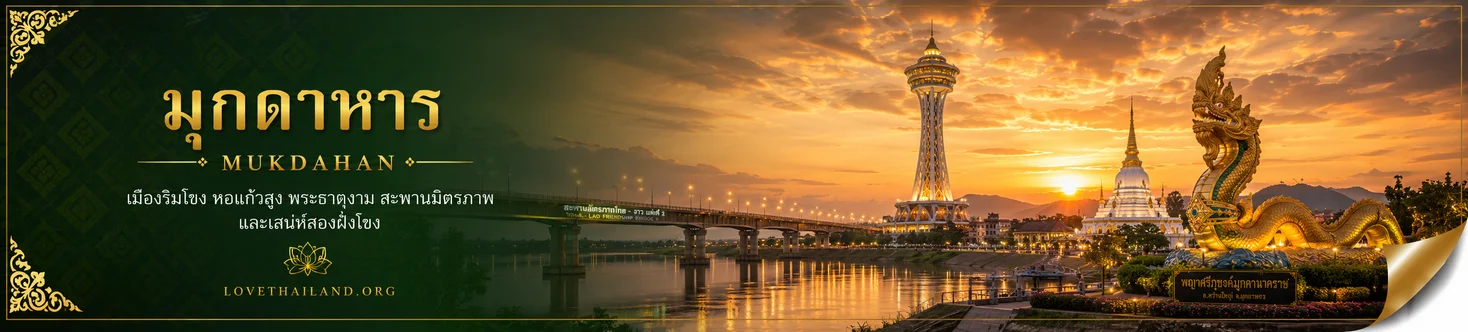
Opening of the Waters Ceremony
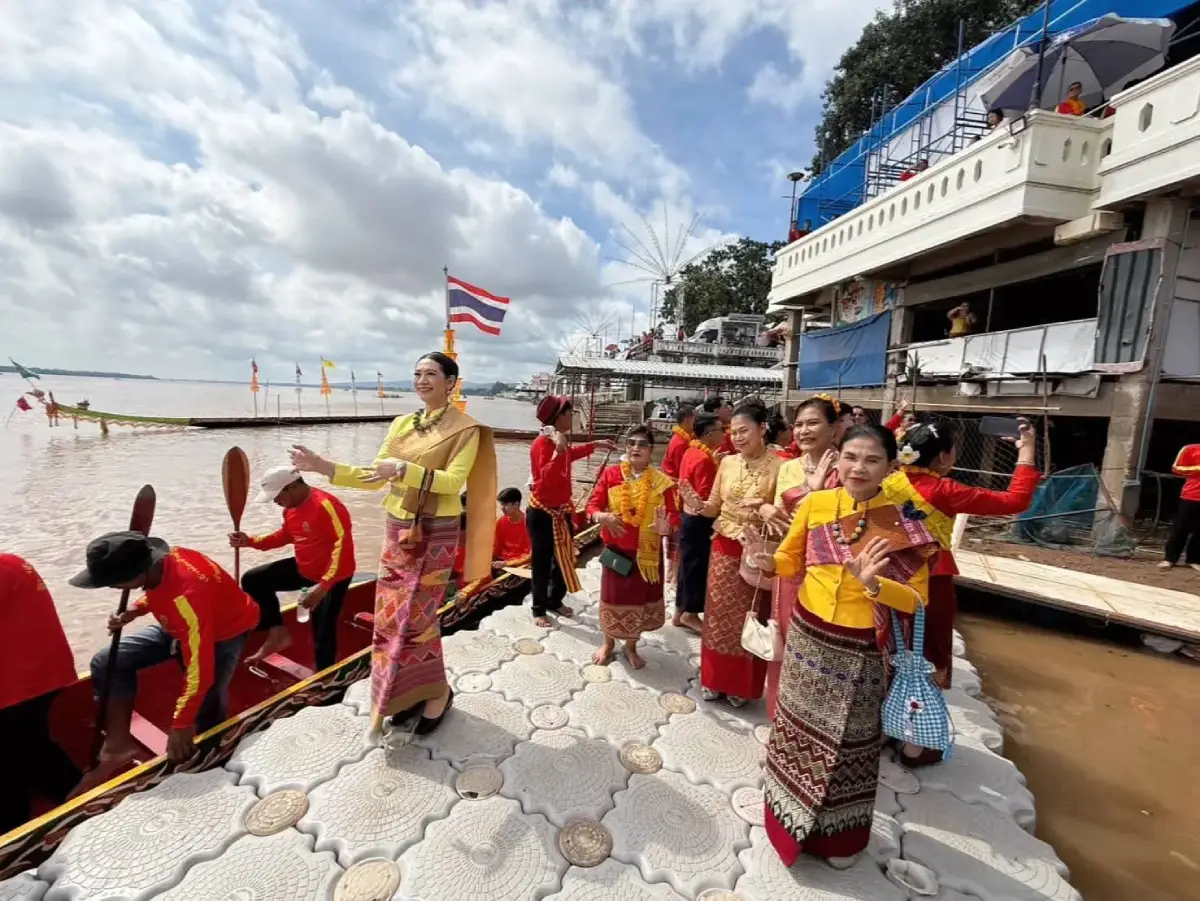
Event Days: Held once a year during the Ok Phansa, or End of Buddhist Lent, festival on the full moon of the 11th lunar month. In 2026, Ok Phansa falls on 26 October 2026. The exact dates of the Mukdahan boat-racing festival and the Opening of the Waters Ceremony are announced annually by Mukdahan Town Municipality.
Event Hours: There are no fixed daily opening hours. The ceremonial procession, Opening of the Waters Ceremony, and boat races follow an annual timetable that may be adjusted according to the Mekong River level, weather conditions, and public-safety requirements.
The Opening of the Waters Ceremony in Mukdahan, known in Thai as “Boek Nan Nam,” is a sacred ceremony conducted before the annual longboat races during the Ok Phansa festival. It serves as a formal request for permission to enter and use the Mekong River, an invocation of the guardian spirits of Mukdahan, and a communal prayer for safe, orderly, and auspicious races. The ceremony brings together an ancient ceremonial boat, spirit shrines, traditional processions, women paddlers in local dress, peacock-tail dancing, Isan–Lao folk songs, poetic phaya verses, and communities from both Mukdahan in Thailand and Savannakhet in the Lao People’s Democratic Republic. It is therefore much more than the opening ritual of a sporting competition. It is a living expression of the relationship among people, water, spiritual belief, and the shared culture of the Mekong River basin.
The ceremony is traditionally associated with the full moon of the 11th lunar month, which marks Ok Phansa, the conclusion of the three-month Buddhist Rains Retreat. For Buddhist communities, the day is a major religious occasion connected with merit-making and temple activities. For communities along the Mekong, it also marks a season of public celebration, family gatherings, boat traditions, and gratitude to the river that has sustained local life throughout the year. The Mekong is not viewed merely as a waterway or an international boundary. It is a source of food, a historic transportation route, a trading corridor, a ceremonial landscape, and a living link between related communities on opposite banks.
Mukdahan stands on the western bank of the Mekong River, directly opposite Kaysone Phomvihane City in Savannakhet Province, Laos. This geography has shaped the identity of the city. People on both sides share closely related languages, food traditions, music, textile styles, religious practices, river knowledge, and family histories. The Ok Phansa boat races provide an occasion for paddling teams to demonstrate skill and discipline, for local communities to display their cultural identity, and for Thai and Lao participants to meet in a spirit of hospitality and friendship.
The Thai expression “Boek Nan Nam” can be understood as opening, clearing, or ceremonially authorizing the waters for an important activity. The meaning operates on both practical and spiritual levels. Practically, the ceremony signals that the river procession and the races are about to begin and that paddlers, officials, and spectators must follow the order established by the organizers. Spiritually, it requests consent from the sacred beings associated with the city and the river, asks that the current remain favorable, and seeks protection for everyone involved. These two dimensions allow the ritual to remain relevant even as racing regulations, safety equipment, and event-management systems evolve.
Local belief associates the boat-racing tradition with reverence for seven lineages of naga, the serpent beings closely connected with rivers, the subterranean world, fertility, and guardianship in Mekong cultures. Naga imagery appears in Buddhist art, temple architecture, local legends, and ceremonies involving water throughout northeastern Thailand and Laos. Within the boat festival, naga belief does not concern victory alone. It reminds participants that the river is a powerful natural environment that must be treated with respect. Every racing crew, regardless of its community or nationality, enters the same water and is subject to the same current.
Before the racing boats enter the Mekong, offerings are presented to important guardian spirits of Mukdahan, particularly at the Chao Fa Mung Mueang Shrine and the Chao Mae Song Nang Phi Nong Shrine. These sacred places are central to local belief concerning the protection of the city and its riverside population. Ceremonial offerings are arranged, invocations are recited, and blessings are requested before the procession moves toward the river. The sequence connects the spiritual centers of the city with the water on which the festival depends.
The Chao Fa Mung Mueang Shrine has a leading role because Chao Fa Mung Mueang is revered as a guardian of Mukdahan. On the ceremonial day, communities traditionally associated with local temples organize a procession to invite the guardian spirit to board the first boat. Preparing the procession requires cooperation among offering bearers, musicians, dancers, paddlers, costume makers, ritual practitioners, municipal officers, and residents responsible for the route. The dignity of the ceremony depends on all these groups working together.
The Chao Mae Song Nang Phi Nong Shrine is another major center of faith in Mukdahan. The Two Sister Goddesses are regarded as protective spirits closely connected with the city and its people. Their inclusion in the pre-race offerings represents a request for compassion and protection for paddlers, steersmen, officials, and spectators along the riverbank. The ceremony therefore combines several strands of local spirituality rather than separating belief from everyday community life.
The first ceremonial boat is known as Chao Fa Mukda Sawan, often shortened to Mukda Sawan. It leads the procession onto the Mekong. The ritual party and paddlers take their assigned positions, while Chao Fa Mung Mueang is represented through a local ritual medium known as a “cham” or “jam,” who sits at the bow. The bow is symbolically the point that opens the route for the boats following behind. The moment when Chao Fa Mukda Sawan moves away from the bank is therefore one of the most significant scenes of the ceremony.
In this cultural context, the ritual medium is a person recognized by the community as a link between human participants and the guardian spirit. The possession or embodiment of Chao Fa Mung Mueang is treated as a sacred act rather than a performance staged for entertainment. Visitors should remain quiet, avoid obstructing the procession, and refrain from moving into the ritual space without permission. Close-up photography of the medium, elders, or ceremonial objects should be undertaken only with sensitivity and consent.
The primary purpose of opening the waters is to ask that the races proceed safely and smoothly, that the occasion bring good fortune, and that all obstacles be removed. Beginning with the proper ritual strengthens the confidence of the paddlers and reminds every participant that racing on a major international river requires discipline and respect for regulations. Sacred belief and modern safety management operate together; the ceremony does not replace life jackets, rescue teams, river monitoring, or instructions from officials.
After Chao Fa Mukda Sawan leads the way, traditional community boats follow in an ordered procession. These boats are not presented primarily for speed. They display community identity through costume, paddling rhythm, music, dance, and decoration. Most paddlers in the traditional boats are women dressed in coordinated local clothing. In the customary arrangement described by the community, two men are positioned near the bow and three near the stern to help direct the boat, maintain balance, and coordinate its movement.
The presence of women paddlers demonstrates the central role of women in maintaining and transmitting local culture. They are not simply decorative participants. They train to paddle, memorize rhythms and songs, prepare costumes, and represent their temple communities. The visual harmony of the women’s paddling is the result of repeated practice and collective discipline. Each boat consequently acquires its own character while expressing the pride of the neighborhood it represents.
A young woman traditionally performs a peacock-tail dance at the bow of a ceremonial boat. Her controlled and graceful movements correspond with the rhythm of the paddles and the movement of the hull. The peacock-tail costume or prop creates a vivid moving form against the river and sky. Performing on a narrow boat requires balance, timing, and complete trust between the dancer and the paddling crew.
As the boats travel along the river, the paddlers sing, perform serng-style folk rhythms, and recite phaya. Serng is an energetic form of northeastern Thai and Lao song and movement that creates excitement and helps coordinate the group. Phaya refers to traditional poetic language, proverbs, courtship verses, and improvised expressions of wisdom. On the boats, phaya may praise the river, celebrate the community, welcome visitors, offer humorous exchanges, or express affection. Language thus becomes a living performance rather than a fixed text.
The traditional river route includes a section in which the boats paddle upstream from the area in front of Wat Si Bun Rueang toward Wat Si Mongkhon Tai, stopping to receive offerings from residents along the bank. The precise starting point, direction, and final destination can be modified from year to year according to the river level, the racecourse, and safety planning. Visitors should therefore use the current municipal event map rather than assuming that a route followed in an earlier year will remain unchanged.
Offerings presented by local residents traditionally include rice liquor, flowers, incense, candles, and marigolds. Each item belongs to the context of local spirit ritual. Liquor is used as a customary offering to guardian beings, flowers and marigolds convey respect and auspicious intention, while incense and candles signify veneration. By presenting offerings directly from the riverbank, households participate in the ceremony rather than leaving it entirely to government agencies or ritual specialists.
When a boat pauses to receive an offering, the relationship between those on land and those on the river becomes visible. Residents extend the ceremonial objects, paddlers receive them carefully, and ritual practitioners continue the prescribed sequence. Homes, temples, roads, shrines, boats, and the Mekong temporarily form a single cultural space. The ceremony is not confined to a stage because the city itself becomes part of the ritual landscape.
The Ok Phansa festival also features a distinctive water performance known as “Ti Chang Nam Nong.” During this display, participating crews strike and throw water in a synchronized manner, producing spray and powerful sounds that evoke a herd of elephants entering and playing in deep water. The display emphasizes strength, rhythm, and collective energy. It is related to the same river festival but should not be confused with the Opening of the Waters Ceremony. Boek Nan Nam requests permission and protection before the races, whereas Ti Chang Nam Nong is a spectacular communal performance conducted as a separate part of the program.
The longboat races form the sporting center of the festival. Every crew must develop physical endurance, timing, communication, and trust. A fast boat is not created by the strength of a single paddler. It moves efficiently only when every paddle enters and leaves the water in response to the same rhythm. If one participant accelerates or falls behind, the entire boat loses balance. The race consequently provides a clear metaphor for community solidarity: individuals have different positions, but progress requires a shared direction.
Historically, boats were essential to settlements along the Mekong. They carried people, fish, agricultural produce, trade goods, and messages between riverside communities. Knowledge of currents, seasonal water levels, navigation, paddling, and boat construction was necessary for everyday survival. A post–Rains Retreat competition transformed these practical abilities into a festive display. As roads and motor vehicles became dominant, the annual races assumed an additional role by preserving collective memory of a river-based way of life.
The connection between Mukdahan and Savannakhet is one of the defining themes of the festival. Lao crews and cultural representatives have joined activities in Mukdahan, while spectators and communities recognize the event as a celebration shared across the river. The participation of Savannakhet is more meaningful than the presence of a foreign racing team. The two populations share closely related speech, cuisine, music, beliefs, and family histories. A modern international border has not erased the cultural landscape created over generations.
In this sense, the festival operates as a cultural bridge alongside the Second Thai–Lao Friendship Bridge, which provides the principal road connection between Mukdahan and Savannakhet. The physical bridge supports travel and trade, while the boat festival renews social and emotional relationships. Competition takes place within an ethic of hospitality: crews seek victory, but the larger success of the event is measured by safe participation, mutual respect, and strengthened friendship between the two banks.
The processions organized by local temple communities reveal the social structure of Mukdahan. A temple neighborhood links households, religious institutions, elders, youth, and shared public space. During the festival, each community contributes dancers, musicians, paddlers, offerings, food, costumes, and organizational labor. Elders transmit ritual knowledge and oral poetry, working-age residents coordinate resources, and younger participants learn by dancing, singing, paddling, and observing. The weeks of preparation are therefore as important to cultural transmission as the public performance itself.
In 2025, the Opening of the Waters Ceremony within Mukdahan’s Suang Huea boat tradition was announced as an item on the provincial preliminary inventory of intangible cultural heritage. This recognition acknowledges that the tradition contains specialized knowledge, recognized practitioners, cultural spaces, and a continuing system of transmission. It does not require the ceremony to become frozen in a single form. Living heritage must respond to environmental and social change while retaining its principal meanings and community ownership.
Safeguarding the ceremony therefore requires attention to local experts, ritual mediums, boat builders, paddlers, musicians, dancers, phaya performers, temple communities, and event officers. Preserving only attractive photographs would be insufficient if younger generations no longer understood the offerings, the role of Chao Fa Mukda Sawan, or the etiquette of entering sacred space. Transmission must continue through practical training, local education, documentation, and respectful opportunities for young people to ask questions and assume responsibility.
For visitors, the most rewarding aspect of the ceremony is the ability to see multiple cultural elements operating together. The experience begins with faith at the guardian shrines, continues through community processions and local dress, and reaches the river through the ancient ceremonial boat, women paddlers, peacock-tail dance, serng songs, and phaya poetry. The Mekong and the opposite bank of Savannakhet provide a powerful geographic setting. Visitors who arrive only for a race final may enjoy the excitement of sport, but those who observe the preceding ceremony gain a much deeper understanding of its cultural context.
Spectators should use the official viewing areas along the Mekong embankment and near the municipal ferry terminal. The area adjoins the Indochina Market, making it convenient to reach local restaurants, shops, and other sites in central Mukdahan. Certain sections of the riverbank may be reserved for ritual practitioners, paddlers, emergency access, or boat launching. Barriers should never be crossed, and visitors should not stand on unprotected embankment edges.
The Mekong’s water level directly affects event management. In years of high water or strong currents, the organizers may move the opening ceremony, alter the launching point, shorten a route, or use the safer plaza in front of the municipal ferry-terminal building. Such changes demonstrate responsible river management rather than a break with tradition. Travelers should check the latest announcement from Mukdahan Town Municipality even when they have attended the festival in a previous year.
Ok Phansa occurs during the transition from the late rainy season toward the cooler months. Conditions on the riverfront may shift quickly from intense sun to rain. Visitors should carry drinking water, sun protection, a compact raincoat, and footwear that remains secure on wet surfaces. Large umbrellas should be used carefully in a dense crowd so that they do not block views or strike other spectators. Cameras and mobile phones should be protected from rain and river spray.
Families with children must remain well back from the water and keep young children under constant supervision. Drums, amplified announcements, cheering, and boat signals can be loud, so hearing protection may be useful for infants or noise-sensitive visitors. Elderly travelers and people with limited mobility should arrive early enough to select an accessible viewing position and avoid moving through the crowd at the moment boats are launched or the races finish.
Visitors should distinguish between the sacred and entertainment portions of the program. During offerings, invocations, or the embodiment of Chao Fa Mung Mueang, conversation should be reduced, mobile phones silenced, and the route kept clear. Ceremonial objects, offerings, costumes, and boat equipment should not be touched. Permission should be requested before photographing people at close range, particularly ritual mediums, elders, and participants engaged in prayer.
Spirit possession and the offering of liquor should not be treated as jokes or exotic spectacles. These practices have meaning for the communities that maintain them. Cultural respect does not require visitors to adopt the same beliefs, but it does require recognition of the community’s right to interpret the river and its guardians through its own cultural framework. This attitude turns tourism into an equitable exchange rather than an act of observing local people as entertainment.
Respect for the Mekong must also be expressed through environmental responsibility. Large festivals produce food containers, beverage packaging, and other waste. Spectators should use designated collection points, reduce disposable plastic, and never throw objects into the river. A ceremony that expresses gratitude to the water is best honored by behavior that does not burden the river ecosystem.
The wider festival normally contains several activity areas, including exhibitions of ancient boats, local-food and food-truck zones, music stages, community performances, youth activities, and traditional floating events. A traveler can therefore spend much of the day in the riverside district: attending the morning ceremony, visiting the Indochina Market, eating local food, watching scheduled races, and returning for evening performances according to the program announced for that year.
Mukdahan’s food culture reflects interaction among Thai, Lao, Vietnamese, and other communities. Visitors will find Isan dishes, Mekong fish, Vietnamese cuisine, khao piak sen noodle soup, Vietnamese sausage, naem nueang, and local riverside specialties. Eating at local businesses during the festival supports the host community, although restaurants close to the embankment may be busy and advance planning is advisable.
A one-day visit can begin near the Chao Fa Mung Mueang Shrine or the Chao Mae Song Nang Phi Nong Shrine, depending on the announced procession route. The visitor can then walk toward the embankment for the Opening of the Waters Ceremony, explore the Indochina Market in the late morning, have lunch in central Mukdahan, and return for racing or water performances in the afternoon. The evening can be spent watching the Mekong and attending cultural performances. When the program extends across several days, staying overnight makes it possible to attend both the principal ceremony and important race rounds without rushing.
Travelers with additional time can include Mukdahan Tower, Wat Roi Phra Phutthabat Phu Manorom, and the viewpoint near the Second Thai–Lao Friendship Bridge. Wat Roi Phra Phutthabat Phu Manorom offers a high viewpoint over the city and the Mekong plain, while Mukdahan Tower provides another perspective on the urban landscape. Combining these places with the boat festival allows visitors to understand the city both from the level of the river and from the surrounding heights.
Getting There is straightforward because the principal festival area lies within central Mukdahan, around the Mekong embankment, Indochina Market, and the municipal cross-river ferry terminal. Drivers can enter the city and approach through Samran Chai Khong Road or Song Nang Sathit Road. Vehicles should be left only in parking areas designated for the festival because road closures and traffic restrictions may operate during processions and racing sessions.
Travelers arriving by interprovincial bus can disembark at Mukdahan Bus Terminal and take a local taxi or other public transport to the Indochina Market and riverfront. Telling the driver “Talat Indochina,” “the Mekong embankment,” or “the Mukdahan municipal ferry terminal” will identify the general destination. Additional travel time should be allowed during the festival because processions, checkpoints, pedestrian zones, and crowds affect traffic in the city center.
Mukdahan Town Municipality is the principal coordinating body, working with Mukdahan Province, the Mukdahan Provincial Administrative Organization, cultural agencies, temple communities, paddling crews, residents, and partners from Savannakhet. Their responsibilities include determining the racecourse, managing public safety, preparing processions, supporting local markets, and welcoming cross-border delegations. The municipality’s current announcement should be treated as the primary reference for dates, hours, routes, and access restrictions.
The Opening of the Waters Ceremony demonstrates how spirituality, sport, performing arts, community economy, and international relations can exist within a single event. Chao Fa Mukda Sawan carries sacred belief onto the Mekong. Traditional boats carry local color, dance, and poetry behind it. Racing boats bring the discipline and power of the paddling teams. When these elements meet, the river ceases to be merely a backdrop and becomes the principal space through which Mukdahan tells its story.
The value of the ceremony lies not only in its age but also in the fact that communities continue to practice it. Children see elders prepare offerings, train crews, recite phaya, and decorate boats. Older residents retain a meaningful role as teachers, while visitors learn that a river can function simultaneously as an international boundary and a bridge between related peoples. Cultural transmission occurs through participation rather than through information signs alone.
For the people of Mukdahan and Savannakhet, the festival confirms that the relationship between the two Mekong banks remains active through hospitality, friendly competition, and shared cultural expression. Winning brings pride to a crew, but the deeper success of the festival is achieved when every boat returns safely, the public enjoys the event, and cross-border friendship is strengthened. This principle reflects the purpose of Boek Nan Nam: to bring order, good fortune, happiness, and freedom from obstacles to everyone involved.
Visitors should therefore look beyond the bright boats and exciting race finishes. Behind them are systems of river knowledge, boat construction, paddling technique, guardian-spirit belief, temple-community organization, dance, music, and oral poetry. Understanding these layers transforms a spectator into a respectful learner and gives the event a depth that cannot be gained from watching the competition alone.
The Opening of the Waters Ceremony is ultimately a cultural heritage tradition capable of explaining Mukdahan’s identity in a single unfolding sequence. The city grew beside the Mekong, honors its local guardians, uses boats to create solidarity, welcomes neighbors from Laos, and turns the End of Buddhist Lent into a moment when the entire community reconnects with the river. As long as Chao Fa Mung Mueang is invited aboard Chao Fa Mukda Sawan, paddles continue to strike the water, peacock-tail dancers balance at the bow, and serng songs and phaya verses travel across the Mekong, the story of the two riverbanks will continue to pass from one generation to the next.
| Tradition Name | Opening of the Waters Ceremony at the Mukdahan Ok Phansa Boat-Racing Festival |
| Related Names | Boek Nan Nam, Mukdahan Suang Huea Tradition, Mukdahan Ok Phansa Boat-Racing Festival |
| Main Location | Mekong River embankment around Indochina Market and the municipal cross-river ferry terminal, Mukdahan Town Municipality |
| Address | Mukdahan Subdistrict, Mueang Mukdahan District, Mukdahan Province 49000, Thailand |
| Event Period | Held annually around the full moon of the 11th lunar month and the Ok Phansa festival. Ok Phansa in 2026 falls on 26 October 2026, while the exact ceremony and race dates follow the municipal program. |
| Event Hours | No fixed daily hours. Processions, ceremonies, and races are scheduled annually according to the river level, weather, and safety requirements. |
| Cultural Significance | Ceremonially opens the river before the races, honors sacred guardians, requests safety and good fortune, preserves Mekong river culture, and strengthens friendship between Mukdahan and Savannakhet, Laos. |
| Associated Beliefs | Reverence for seven naga lineages, Chao Fa Mung Mueang, Chao Mae Song Nang Phi Nong, and guardian beings associated with the city and the Mekong River. |
| Main Ceremonial Boat | Chao Fa Mukda Sawan, the leading boat in which Chao Fa Mung Mueang is represented through a ritual medium seated at the bow. |
| Associated Shrines | Chao Fa Mung Mueang Shrine and Chao Mae Song Nang Phi Nong Shrine |
| Procession Features | Chao Fa Mukda Sawan leads traditional community boats with women paddlers in local clothing, male crew members at the bow and stern, peacock-tail dancing, serng performances, and phaya poetry. |
| Traditional Offerings | Rice liquor, flowers, incense, candles, and marigolds presented by residents along the riverbank. |
| Traditional Route | The community tradition includes an upstream section from the area in front of Wat Si Bun Rueang toward Wat Si Mongkhon Tai. The operational route may be adjusted each year. |
| Cultural Heritage Status | Announced as an item on Thailand’s provincial preliminary inventory of intangible cultural heritage for 2025. |
| Main Festival Activities | Opening of the Waters Ceremony, community processions, longboat races, Ti Chang Nam Nong water performance, ancient-boat exhibitions, traditional performances, music, youth activities, local-food stalls, and food trucks. |
| Main Areas / Zones | 1. Shrine-offering and invitation-procession area 2. River-opening and boat-launching area 3. Official spectator areas along the Mekong embankment 4. Ancient-boat and cultural-exhibition zone 5. Local-food, vendor, and food-truck zone 6. Music, community-performance, and youth stage |
| Admission Fee | The ceremonies, processions, and races can be viewed free of charge from the public areas designated by the organizers. |
| Facilities | Official riverfront viewing areas, event-service points, food and shopping around Indochina Market, municipal parking areas, and businesses in central Mukdahan. |
| Visitor Guidelines | Respect ceremonial areas, do not cross the procession, do not touch offerings, remain away from the water’s edge, follow officials’ instructions, and check for venue or route changes before traveling. |
| Travel Information | Drivers can enter central Mukdahan and use Samran Chai Khong Road or Song Nang Sathit Road toward Indochina Market and the municipal ferry terminal. Bus passengers can take local transport from Mukdahan Bus Terminal. |
| Organizer / Caretaker | Mukdahan Town Municipality in cooperation with Mukdahan Province, the Mukdahan Provincial Administrative Organization, cultural agencies, temple communities, residents, paddling teams, and partners from Savannakhet, Laos. |
| Main Contact Number | Mukdahan Town Municipality: +66 42 611 227 |
| Official Website / Official Page | Mukdahan Town Municipality website: www.muangmuk.go.th; official Facebook page: Mukdahan Municipality |
| Current Status | An active annual tradition. The latest fully published official festival took place from 4–7 October 2025. The 2026 program should be confirmed through Mukdahan Town Municipality. |
| Nearby Tourist Attractions | 1. Indochina Market, approximately 0.3 km 2. Chao Mae Song Nang Phi Nong Shrine, approximately 0.5 km 3. Wat Si Mongkhon Tai, approximately 1 km 4. Mukdahan Tower, approximately 3 km 5. Wat Roi Phra Phutthabat Phu Manorom, approximately 9 km |
| Nearby Restaurants | 1. Goodmook Mukdahan, approximately 1 km 2. Krua Vietnam Mukdahan, approximately 1 km, Tel. +66 42 614 120 3. Ban Lao Yuan Na Rim Khong, approximately 2 km, Tel. +66 42 611 111 4. Nut Pob Rim Khong, approximately 2 km, Tel. +66 86 459 6263 5. Bao Pradit Restaurant, approximately 2 km, Tel. +66 83 290 0884 |
| Nearby Accommodations | 1. Submukda Grand Hotel, approximately 0.5 km, Tel. +66 42 633 444 2. Riverfront Hotel Mukdahan, approximately 0.5 km, Tel. +66 42 612 948–9 3. Hotel de Ladda, approximately 1 km, Tel. +66 42 611 499 4. B2 Mukdahan Boutique & Budget Hotel, approximately 1 km, Tel. 1328 within Thailand 5. Ploy Palace Hotel, approximately 2 km, Tel. +66 42 614 988 |
Frequently Asked Questions (FAQ)
Q: When is the Mukdahan Opening of the Waters Ceremony held?
A: It is held once a year around Ok Phansa on the full moon of the 11th lunar month, before the boat races begin. The exact date and time must be confirmed through the annual program issued by Mukdahan Town Municipality.
Q: What does the Opening of the Waters Ceremony mean?
A: It ceremonially requests permission to use the river, honors local guardian spirits, and asks for safe, orderly, obstacle-free, and auspicious boat races.
Q: What is the name of the main ceremonial boat?
A: The leading boat is called Chao Fa Mukda Sawan. Chao Fa Mung Mueang is represented through a ritual medium seated at the bow during the opening ceremony.
Q: Which shrines are associated with the ceremony?
A: Offerings and invocations are connected particularly with the Chao Fa Mung Mueang Shrine and the Chao Mae Song Nang Phi Nong Shrine, both of which are important sacred places in Mukdahan.
Q: Are Boek Nan Nam and Ti Chang Nam Nong the same activity?
A: No. Boek Nan Nam is the ritual that opens the waters and requests protection before racing. Ti Chang Nam Nong is a separate synchronized water performance in which paddlers create powerful splashes resembling elephants playing in water.
Q: Is there an admission fee to watch the ceremony and races?
A: No admission fee is charged for viewing from the public riverfront areas designated by the organizers. Visitors must remain outside restricted ritual, launching, and emergency-access zones.
Q: Can the ceremony venue and boat route change?
A: Yes. The venue, launching point, direction, and racecourse may be adjusted according to the Mekong River level, weather, crowd management, and public-safety requirements. Visitors should check the current municipal event map.
Q: How should foreign visitors behave during the ceremony?
A: Visitors should remain quiet during invocations, keep the procession route clear, avoid touching offerings or ceremonial objects, ask before taking close-up photographs, stay away from the water’s edge, and follow all instructions from event officials.
 Category: ●Art, Culture and Heritage
 Group: ●Art, Craft Centres, Tradition
Last Update : 3 MonthAgo
 Last Update : 3 MonthAgo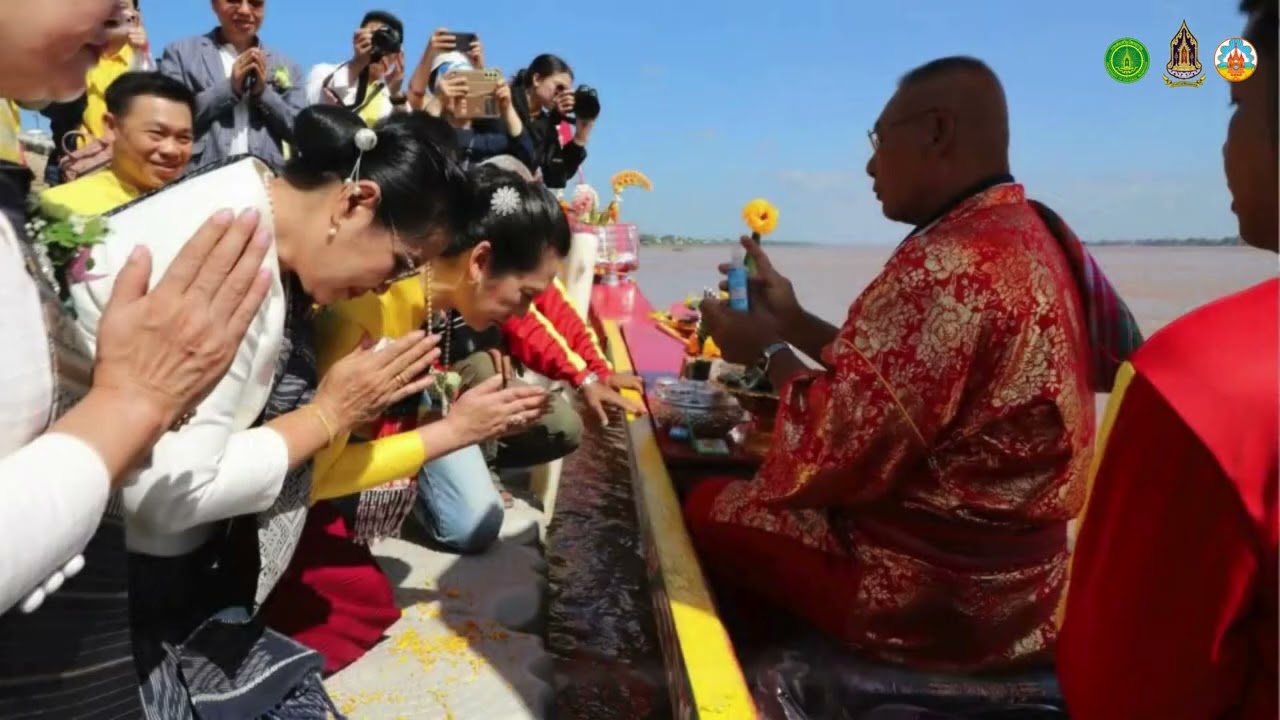

 Historical Sites and Monuments(2)
 Landmarks and Memorials(3)
Art, Craft Centres, Tradition(2)
Landmarks and Memorials(3)
Art, Craft Centres, Tradition(2)
 Museums(1)
 Places of Worship
 Temple(17)
 Other Sacred Sites(3)
 Suburban Living
 Village, Community(4)
 Local Market(2)
 Nature and Wildlife
 National Parks and Marine Reserves(4)
 Mountain (Doi)(5)
 Dam, Reservoir, Lake(3)
 Waterfalls(5)
 Caves(2)
 River, Canal(2)
 Bays and Beaches(1)
 Other natural attractions(1)
 Entertainment and Agricultural
 Farms, Parks and Ecotourism(1)
 Travel Articles, Recipes
 Travel Review, Food Review(1)


