
lovethailand home >Northeastern Travel Attractions >Mukdahan Travel Attractions >Wan Yai >Cha Not > Manorom Beach
TL;DR: Manorom Beach is located at Ban Chanot, Chanot Subdistrict, Wan Yai District, Mukdahan Province, open Open seasonally when the Mekong River level falls. The official 2026 festival, hours 09:00–18:00 during the officially announced beach season.
Manorom Beach
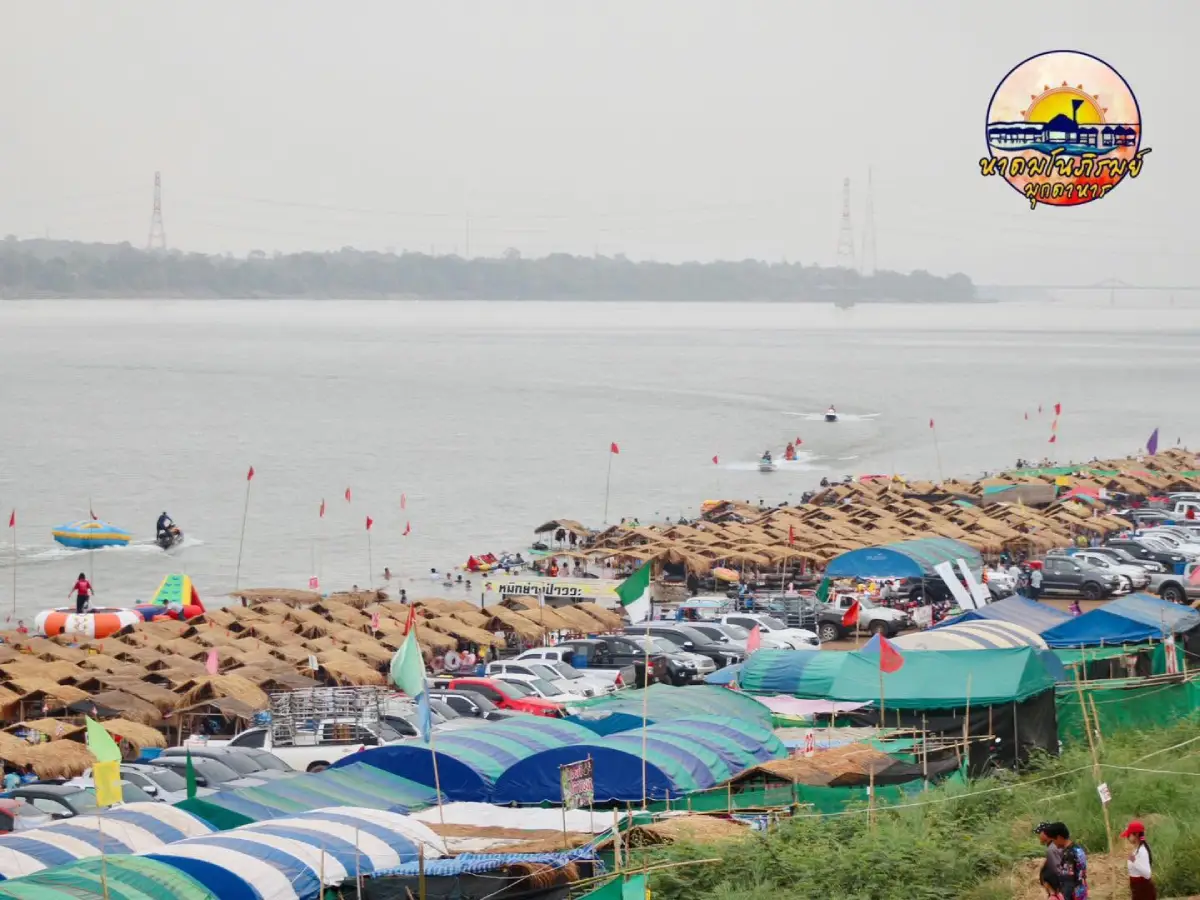
Open Days: Open seasonally when the Mekong River level falls. The official 2026 festival was held from April 8–15, 2026.
Opening Hours: 09:00–18:00 during the officially announced beach season
Manorom Beach, also widely known as Chanot Beach, is a natural seasonal sandbar on the Mekong River at Ban Chanot, Chanot Subdistrict, Wan Yai District, Mukdahan Province. As the river level falls during the dry season, a broad bank of sand gradually emerges from the water and extends from the Thai shore toward the middle of the river. The exposed area becomes a temporary recreational beach where visitors can walk on the sand, swim within designated zones, enjoy local food, play beach sports, take photographs, and admire views across the Mekong toward Laos. During years when the water level falls significantly, the beach may extend for approximately 2–3 km, although its shape, width, and length change annually according to the current, water volume, and movement of river sediment.
Manorom Beach is not a permanent seaside beach and it does not remain visible throughout the year. It is a seasonal natural feature created by the annual cycle of the Mekong River. During the rainy season and periods of high water, most or all of the sandbar is submerged. The beach normally becomes most prominent during the hotter and drier months, broadly between March and May. Travelers should therefore confirm the official opening announcement before leaving for the site, particularly when traveling from another province. Photographs showing a wide sandy beach do not guarantee that the same landscape will be present on a particular date, because access depends entirely on the river level and local safety conditions.
For the 2026 tourism season, Mukdahan provincial and local authorities organized the “Water and Sand Summer Festival at Manorom Beach” from April 8 to April 15, 2026. The event coincided with Songkran and the hottest period of the year in northeastern Thailand. The sandbar may sometimes remain visible after the formal festival if the Mekong is still low, but staffed safety points, buoy lines, food huts, entertainment, and water activities may no longer operate at the same level. As of July 2026, the official annual festival period has already ended. Travelers planning to swim should contact Chanot Subdistrict Municipality or check its latest announcement before making the journey.
The principal appeal of Manorom Beach is that visitors can experience the Mekong from a perspective that is very different from an ordinary riverside viewpoint. Instead of remaining on the riverbank, travelers can walk across a broad expanse of exposed sand that reaches into the river during the operating season. The pale sand contrasts with the wide channel of the Mekong, while the opposite bank of the Lao People’s Democratic Republic can be seen across the water. The open horizon, river breeze, and rural surroundings create a relaxed atmosphere. Although the beach is only about 17 km from central Mukdahan, the route passes through riverside communities, agricultural areas, and quiet local roads that give the journey a distinctly rural Isan character.
The physical appearance of the beach is never exactly the same from one season to another. In some years, the sandbar connects clearly with the shore and provides enough space for food huts, sports areas, event stages, and large numbers of visitors. In other years, channels of water may divide sections of sand or the beach may emerge later than expected. Older photographs and reviews should therefore be treated as general illustrations rather than guarantees. This continual change is a natural characteristic of the Mekong, a major international river influenced by rainfall, upstream water conditions, sediment transport, and seasonal currents. The changing landscape is part of the identity of Manorom Beach rather than a flaw.
The alternative name Chanot Beach comes from Ban Chanot and Chanot Subdistrict, where the attraction is located. The name Manorom is associated with the long-established local identity of Wat Manorom, an important Buddhist temple situated in the same riverside community. Both names appear in travel information, maps, and local publicity. When using a navigation application, visitors can search for “Manorom Beach,” “Hat Manophirom,” or “Chanot Beach,” but should confirm that the destination is in Chanot Subdistrict, Wan Yai District, Mukdahan Province.
Although the beach is best known as a place to cool down during the hot season, its importance extends beyond swimming. Manorom Beach demonstrates the close relationship between the Mekong River and the surrounding community. For generations, local people have depended on the river for food, fishing, transport, and daily life. When the sandbar appears, the community transforms the temporary natural landscape into a seasonal recreation area with food stalls, huts, sports, parking, and visitor services. Revenue from the beach supports small restaurants, families renting seating areas, local drivers, activity operators, and other community-based businesses.
Early morning is a suitable time for travelers who prefer a quieter experience. Temperatures are lower, the light is soft, and the sand is more comfortable to walk on before it becomes heated by the midday sun. Visitors can photograph patterns left by the water, observe small fishing boats, and enjoy the broad river view with fewer people around. Morning is also more comfortable for families with young children and older travelers. Even at this time, visitors should remain within clearly used areas and follow signs or instructions, because soft sand, shallow channels, and changes in ground level may not be obvious from a distance.
Late morning and afternoon are generally the busiest times, especially on weekends and during Songkran. Visitors swim, relax in shaded huts, order local food, and participate in seasonal activities. The combination of river water and a breeze can make the area feel refreshing, but the exposed sand receives intense sunlight. Shade from trees is limited once visitors move away from the mainland bank. A hat, sunglasses, sunscreen, drinking water, light long-sleeved clothing, and suitable footwear are strongly recommended. Walking barefoot across hot sand for an extended period can cause discomfort or burns.
Evening offers a different atmosphere as the temperature drops and the light becomes warmer. The sandbar, boats, river surface, and Lao horizon provide attractive subjects for sunset photography. Many visitors prefer to have an early dinner or sit beside the river before returning to Mukdahan. Swimming should end within the announced operating period. Entering the river after dark is unsafe because visibility is poor, channels and sudden drops are more difficult to identify, and staffed safety services may have finished for the day.
The beach consists of sediment deposited by the Mekong and may include fine sand, damp compacted areas, gravel, driftwood, and natural debris. Parents should inspect the ground before allowing children to run or sit, while water shoes or secure sandals can protect against sharp objects carried in by the river. Mats should be placed on ground above the immediate waterline and should not block public paths. Large groups planning sports or organized activities should use the areas designated by local staff rather than occupying swimming access points or food service routes.
Water beside the exposed sand often appears shallow, but the Mekong remains a large river with changing currents, depths, and underwater channels. Calm-looking water should never be assumed to be safe everywhere. Swimming must remain inside the buoyed zone established during the official season. Visitors should not swim toward the main navigation channel, attempt to cross deeper water, hold onto passing boats, or follow the sandbar beyond the supervised area. Weak swimmers should wear life jackets, and children must remain within immediate reach of an adult even when the water appears only knee-deep.
During the officially organized season, Chanot Subdistrict Municipality coordinates buoy lines, safety personnel, public assistance, and emergency support. These arrangements reduce risk but do not replace personal responsibility. Visitors must follow warning signs, leave the water when staff give instructions, and stop activities when wind, currents, or weather conditions change. Swimming after drinking alcohol should be avoided. People with heart conditions, mobility limitations, or medical sensitivity to heat should assess their health carefully, rest in the shade, and drink water regularly.
The classic Manorom Beach experience combines swimming with relaxing in a riverside or beach hut. Seasonal vendors commonly offer Thai and Isan food such as som tam, grilled chicken, larb, spicy soups, fried river fish, sticky rice, cold drinks, and ice. The number of operating stalls changes according to the date and visitor volume. Travelers should not assume that every stall seen in a festival photograph will operate on an ordinary weekday or after the main event. Groups should contact a restaurant in advance or bring sufficient drinking water and light snacks as a backup.
Fish and freshwater produce from the Mekong form an important part of the local dining experience. Depending on availability, restaurants may serve spicy fish soup, herb-fried fish, fish larb, or other northeastern dishes accompanied by sticky rice. Guests with seafood or freshwater-fish allergies should ask about ingredients before ordering. Prices should be confirmed in advance, particularly when fish is sold by weight. Supporting local vendors helps income remain within the community, but visitors should dispose of containers properly and never throw food waste into the river.
Beach sports give the destination an additional role beyond recreation in the water. The wide sand surface can accommodate beach volleyball, beach football, community games, and youth activities. During festivals, temporary courts or competitions may be arranged, providing opportunities for local children and young people to exercise and participate in community events. Visitors bringing their own ball or sports equipment should choose an open area away from food huts, pedestrian routes, and the water access zone so that games do not disturb or endanger other guests.
Motorized activities such as jet skis and banana boats may be available in certain seasons when licensed local operators are present. Before participating, travelers should examine the life jackets, equipment condition, passenger limit, route, and safety explanation. Young children, pregnant travelers, older people, and anyone with spinal, heart, or joint conditions should avoid high-impact rides. Swimmers must remain outside the operating route. Water activities are charged separately and may be suspended immediately when wind, currents, or visibility become unsuitable.
Manorom Beach does not have permanently fixed zones because the usable landscape changes with the river each year. During an organized season, the principal areas usually include the entrance and parking zone, the open sand used for walking and photography, the shallow-water swimming area inside the buoy line, food and seating huts, beach-sports or event space, and riverside viewpoints. The position of each area can change according to channels and sediment. Visitors should follow the layout established for the current year rather than relying on an older map.
Seasonal facilities may include parking, food stalls, shaded huts, toilets or temporary sanitation points, a staffed information area, buoy lines, and safety equipment. The facilities should not be expected to match those at a large permanent coastal resort. Much of the site consists of natural sand and temporary structures. Wheelchair users, older visitors, and people with walking difficulties may need assistance because movement across loose sand is challenging. Staff should be asked which entrance provides the shortest and most accessible route.
There is no general admission-ticket system for entering the beach, but visitors may need to pay separately for parking, huts, food, drinks, life jackets, or water activities. Charges are set by individual operators or annual arrangements and may change during festival periods. Prices should be confirmed before using a service. Vehicles must be left in the designated parking area rather than beside houses, agricultural entrances, or emergency access routes.
Preparation should begin by checking the official beach announcement, the weather forecast, and recent river conditions. Useful items include a hat, sunglasses, sunscreen, spare clothing, a towel, a waterproof bag for wet garments, secure sandals or water shoes, drinking water, personal medication, and a modest amount of cash. Although some vendors may accept mobile payments, network congestion or payment-system interruptions can occur when visitor numbers are high. Small cash denominations remain practical for parking, food, and community-operated services.
Swimwear should allow easy movement and should not become excessively heavy when wet. Light colors reduce heat absorption, but transparent fabric should be avoided. Children should use correctly fitted life jackets rather than depending solely on inflatable rings. Phones, cameras, vehicle keys, and wallets should be kept in waterproof pouches or left with a trusted companion who remains on land. Valuable items should not be left unattended in an open hut during busy periods.
The beach offers a wide variety of photographic opportunities, including broad landscapes, reflections on the Mekong, family activities, boats, food huts, and scenes of community life. Morning provides softer light and fewer crowds, while late afternoon is better for warm backlighting and sunset images. Drone operators must follow aviation regulations, avoid flying over crowds, respect privacy, and never cross the international boundary over the river. Close-up photographs of residents, workers, or children should be taken only with permission.
The seasonal landscape also provides an opportunity to observe the river environment. Visitors may notice waterbird tracks, driftwood, riverside plants, and patterns formed by currents across the sand. These features can help children learn about river ecology, but wildlife should not be captured, nests should not be disturbed, and living organisms should not be removed. Soap, shampoo, and cleaning chemicals should never be used in the river because they enter the aquatic ecosystem directly.
Waste management is particularly important at a temporary seasonal attraction where large numbers of people arrive within a short period. Plastic containers, bags, drink cups, and food scraps can easily be carried into the Mekong by wind or water. Visitors should separate waste, use the bins provided, and take rubbish away if collection points are full. Reusable bottles and reduced use of disposable packaging help lessen the burden on the community. A clean beach protects aquatic life and preserves the quality of a river shared by communities across several countries.
The principal local authority responsible for the site is Chanot Subdistrict Municipality, working with Wan Yai District, provincial agencies, village leaders, safety personnel, and local operators. Mr. Samniang Chaisuk, Mayor of Chanot Subdistrict Municipality, has been involved in the annual opening and promotion of the beach. Management during the operating season includes preparing access routes, arranging activity areas, coordinating safety buoys, maintaining cleanliness, and supporting public events. Groups planning an organized visit should contact the municipality directly.
Seasonal tourism at Manorom Beach creates supplementary income for local families who operate food stalls, rent huts, sell drinks, manage parking, transport visitors, or provide approved activities. Travelers support the community most effectively by using local services fairly, confirming prices respectfully, and avoiding damage to equipment. Purchasing food and services locally also gives visitors a more direct experience of regional ingredients, hospitality, and everyday life than bringing every item from outside the district.
Supporting local businesses should be accompanied by sensible food-safety decisions. Guests should observe the cleanliness of stalls, the storage of fresh ingredients, access to handwashing, and whether cooked food is served promptly. Freshly prepared dishes are preferable to food left in direct heat for a long period. Vegetarian travelers and guests with allergies to peanuts, shrimp, fish, or fermented fish sauce should explain their requirements clearly, as these ingredients may be used in Isan dishes even when they are not visually obvious.
For families, Manorom Beach offers children an opportunity to experience sand, shallow water, and outdoor recreation without traveling to the coast. Parental supervision must nevertheless remain constant. Adults should establish a clear play boundary, identify the location of safety staff, remember what children are wearing, and place a parent’s telephone number in a pocket or wristband. A missing child should be reported immediately rather than searched for alone across the entire beach.
Older travelers may enjoy the beach most during the morning or late afternoon, when temperatures are lower. A hut close to the entrance reduces the need to walk across loose sand. Walking aids, secure footwear, drinking water, and regular shade breaks are useful. Visitors with heart disease, high blood pressure, or heat sensitivity should avoid the middle of the day. Swimming is not essential to appreciate the destination; sitting beside the Mekong and observing activity on the sand can be equally rewarding.
Solo travelers should tell someone their planned route and expected return time, avoid entering deep water, and keep valuables secured. Sitting near a staffed point or an established restaurant provides greater security. Photographers seeking quieter locations should remain within sight of the main visitor area and return before dusk. Walking far along an isolated sandbar is not advisable because the route, channels, and water level may change without being obvious from a distance.
Groups of friends should appoint a driver who does not drink alcohol and agree on a meeting point before separating for activities. Hut-rental periods, equipment return times, and activity fees should be confirmed in advance. Music should be kept at a level that does not disturb families, local businesses, or nearby religious areas. Manorom Beach is a shared public and community space, so considerate behavior directly affects the quality of the experience for everyone.
A one-day itinerary can begin in central Mukdahan before traveling north to Wat Manorom in the morning. After visiting the temple, travelers can enter the beach during the late morning, have lunch in a local hut, swim or relax, and continue to Kaeng Kabao in the afternoon. The route combines Buddhist heritage, a seasonal sandbar, local food, and Mekong scenery in a single day. Visitors may return to Mukdahan for the Indochina Market or dinner beside the river.
Wat Manorom is the closest cultural attraction and should be included in the same route. The temple is important to the local Mekong community and contains architectural features associated with the Lan Xang cultural tradition. Visitors should dress modestly, remove shoes before entering religious buildings, keep their voices low, and avoid touching historic objects. Visiting the temple provides valuable context, showing that the beach is part of a long-established riverside settlement rather than an isolated recreational site.
The Nouhak Phoumsavanh Memorial is another attraction in Wan Yai District. It commemorates the former president of the Lao People’s Democratic Republic, who had historical connections with the Ban Paluka area. The memorial offers insight into the shared history and relationships of people on both sides of the Mekong. Visitors interested in Lao and Mukdahan history can combine it with a beach trip, although opening arrangements should be checked because a small memorial may not have staff present throughout the day.
The Shrine of Our Lady of the Martyrs of Thailand at Song Khon is an important Christian heritage site in Wan Yai District. It is notable for its architecture and for the history of the Seven Blessed Martyrs of Thailand. Travelers should dress respectfully and maintain silence in worship areas. Combining Manorom Beach, Wat Manorom, and the Song Khon shrine reveals the religious and cultural diversity of the Mekong communities in Mukdahan.
Kaeng Kabao and the white Naga landmark, Phaya Si Phuchong Mukdanakarat, are located farther north along the Mekong and are frequently included in the same journey. Kaeng Kabao has riverside viewpoints and restaurants, while the large white Naga sculpture is both a spiritual landmark and a popular photography site. The area is approximately 15 km from Manorom Beach, making it possible to continue north without returning to Mukdahan city first.
Accommodation immediately beside the beach is limited. Baan Kiang Sawan is a riverside property in the Chanot area and is among the closest established options. Larger hotels with more extensive facilities are concentrated in central Mukdahan, approximately 18–20 km from the beach. Staying in the local area suits travelers seeking quiet surroundings and early access to the beach, while staying in the city provides easier access to markets, restaurants, convenience stores, and transportation services.
Rooms should be reserved well in advance for the Songkran period. Before payment, guests should verify the property’s location, cancellation conditions, check-in time, parking, and telephone number. Travelers without their own vehicle should ask whether the accommodation can arrange transport to Manorom Beach. Regular public transport does not operate directly to the sandbar throughout the day, and arranging a return vehicle from the beach at short notice may be difficult.
Getting There from central Mukdahan involves traveling approximately 17 km north along the Mekong toward Wan Yai District and Chanot Subdistrict. A private or rental car is the most convenient option because travelers can carry spare clothing and water equipment and visit surrounding attractions. Navigation applications should be set to “Manorom Beach, Ban Chanot,” with the destination checked carefully to ensure that it is in Wan Yai District. Near the site, drivers should follow local entrance and parking signs rather than selecting an informal riverside track.
Travelers arriving by interprovincial bus can get off at Mukdahan Bus Terminal and continue by hired vehicle, rental car, or prearranged transport. The fare, waiting period, and return pickup time should be agreed upon before leaving the city, because vehicles may not wait at the beach throughout the day. Saving the driver’s telephone number and choosing an easy meeting point are advisable. For groups, a van with a driver allows Manorom Beach, Song Khon, Kaeng Kabao, and central Mukdahan to be combined efficiently.
Visitors coming from Nakhon Phanom can travel south along the Mekong corridor, passing the That Phanom and Kaeng Kabao areas before reaching Wan Yai District. This route is suitable for a multi-province Mekong journey. Travelers coming from Sakon Nakhon, Kalasin, Amnat Charoen, or Ubon Ratchathani will generally find it simpler to approach Mukdahan first and then continue to Chanot. Extra travel time should be allowed during Songkran because the entrance road and parking area may become congested.
Drivers should reduce speed inside the community and watch for motorcycles, children, domestic animals, and local agricultural traffic. Vehicles must not block houses, farm entrances, or emergency routes. If designated parking is full, instructions should be requested from staff rather than parking along a narrow road. Traffic discipline is particularly important during festivals, when local roads must remain accessible to ambulances, rescue vehicles, and fire services.
The appropriate length of a visit depends on the planned activities. Travelers stopping only for photographs may need 1–2 hours, while families swimming, eating, and relaxing in a hut may spend half a day. Visitors should alternate outdoor activity with rest in the shade, drink water regularly, and watch for dizziness, headache, nausea, confusion, or unusually hot skin. These can be warning signs of heat exhaustion or heatstroke and require immediate rest and assistance.
Weather can change rapidly toward the end of the hot season. When thunder, strong wind, dark clouds, or an official warning occurs, everyone should leave the water immediately and move away from exposed open ground. Temporary structures that appear unstable and electrical poles are not suitable shelter. Visitors should allow enough time to walk back from the sandbar to the parking area before heavy rain begins, as the distance may be greater than it appears from the mainland.
Manorom Beach is best suited to travelers who appreciate simple natural attractions, families seeking summer recreation, groups interested in beach sports, photographers, cultural travelers, and visitors following the Mekong route. It may not satisfy travelers expecting a luxury resort, permanent changing facilities, or services comparable with a major coastal destination. Understanding its community-based and seasonal character makes it easier to appreciate what the site genuinely offers.
The most important planning point is that Manorom Beach is seasonal. A photograph of a broad sandbar does not mean that the beach will be available on every date. During the rainy season or after the Mekong rises, the sand can be partly or completely submerged and swimming access may be closed. Checking the latest announcement from Chanot Subdistrict Municipality should therefore be the first step in planning. Outside the beach season, travelers can still visit Wat Manorom, Song Khon, Kaeng Kabao, and other attractions in Wan Yai District, but should not enter an unapproved riverside area.
Manorom Beach presents the Mekong in a landscape that transforms with the seasons—from a broad river during high water to an open sandbar and community recreation area during the dry months. Its appeal comes not from large permanent structures but from nature, local life, Mekong cuisine, beach sports, and the lively atmosphere created by residents and visitors. By choosing the correct season, following water-safety rules, supporting responsible local businesses, and leaving no waste behind, travelers can enjoy a distinctive Mukdahan experience while helping preserve the river environment and the community that cares for it.
| Name | Manorom Beach, also known as Chanot Beach |
| Location | Ban Chanot, Chanot Subdistrict, Wan Yai District, Mukdahan Province |
| Navigation Address | Manorom Beach, Ban Chanot, Chanot Subdistrict, Wan Yai District, Mukdahan 49150, Thailand |
| Distance from Mukdahan City | About 17 km |
| Attraction Type | Seasonal natural sandbar on the Mekong River |
| Highlights | Wide Mekong sandbar, designated swimming area, beach sports, community food huts, sunset views, and views toward Laos |
| Approximate Beach Length | The sandbar may extend approximately 2–3 km in years of very low water; its width and length change annually |
| Travel Season | Generally March–May, subject to the annual river level and official opening announcement |
| Current Status | Seasonal attraction and not open for swimming throughout the year. The official 2026 event ran from April 8–15, 2026, and had ended by July 2026. |
| Open Days | Open seasonally after the Mekong level falls and the municipality announces access |
| Opening Hours | 09:00–18:00 during the officially organized beach season |
| Fees | No general beach admission ticket. Parking, huts, food, drinks, life jackets, and water activities are charged separately. |
| Caretaker | Chanot Subdistrict Municipality, led by Mr. Samniang Chaisuk, Mayor of Chanot Subdistrict Municipality, in cooperation with Wan Yai District, provincial agencies, community leaders, and local operators |
| Main Areas / Zones | 1. Beach entrance and parking area 2. Sandbar walking and photography area 3. Shallow swimming area inside the buoy line 4. Food and seating huts 5. Beach-sports and event area 6. Mekong and Laos viewpoint The layout changes according to the annual river level. |
| Activities | Swimming within the designated zone, walking, photography, sunset viewing, local dining, beach sports, and approved seasonal water activities |
| Facilities | Parking, food stalls, shaded huts, service points, toilets or temporary sanitation facilities, safety buoys, and staff during the official season |
| Safety | Swim only inside the buoyed zone, avoid the main channel, supervise children continuously, wear a life jacket when appropriate, and follow staff instructions |
| Travel Information | Travel north from Mukdahan city along the Mekong toward Wan Yai District and Chanot Subdistrict. A private or rental car is most convenient. Bus travelers should arrange hired transport and a return pickup from Mukdahan Bus Terminal. |
| Main Contact Number | Chanot Subdistrict Municipality: +66 (0)42-049-752 ext. 3 |
| Official Website | https://chanod.go.th/ |
| Nearby Tourist Attractions | 1. Wat Manorom, about 1 km 2. Nouhak Phoumsavanh Memorial, about 7 km 3. Shrine of Our Lady of the Martyrs of Thailand, Song Khon, about 11 km 4. Kaeng Kabao, about 15 km 5. Phaya Si Phuchong Mukdanakarat at Kaeng Kabao, about 15 km |
| Nearby Restaurants | 1. Krua Rim Khong Manorom Beach, about 1 km, Tel. 092-494-8217 2. Khrour Wan Yai Cafe, about 9 km, Tel. 093-514-9569, 094-291-5979 3. Sirichai Roasted Pork at Kaeng Kabao, about 15 km, Tel. 081-260-7358, 042-643-552 4. Mum Sabai Rim Khong Mukdahan, about 17 km, Tel. 081-739-9189, 099-176-3668 5. Baan Lao Yuan Na Rim Khong, about 18 km, Tel. 063-247-9654 |
| Nearby Accommodations | 1. Baan Kiang Sawan Mukdahan, about 1 km, Tel. 088-855-5464, 087-546-5335 2. Pakse Resort, about 5 km 3. Hotel de Ladda, about 18 km, Tel. 042-611-499 4. Riverfront Hotel Mukdahan, about 18 km, Tel. 042-612-948–9, 081-703-1705 5. Ploy Palace Hotel Mukdahan, about 19 km, Tel. 042-614-988 |
Frequently Asked Questions (FAQ)
Q: Which months are best for visiting Manorom Beach?
A: The beach is seasonal and is generally most visible between March and May. Visitors must check the annual opening announcement from Chanot Subdistrict Municipality.
Q: What are the opening hours of Manorom Beach?
A: During the officially organized beach season, visitor and safety services generally operate from 09:00 to 18:00. Swimming after the announced closing time is not recommended.
Q: Is there an admission fee for Manorom Beach?
A: There is no general beach admission ticket. Parking, huts, food, drinks, life jackets, and water activities may be charged separately.
Q: Can travelers swim at Manorom Beach throughout the year?
A: No. The sandbar appears only when the Mekong level falls. During high water or the rainy season, the beach may be submerged and swimming access may be closed.
Q: Is Manorom Beach suitable for children?
A: Children may swim only inside the designated shallow-water zone and must remain within immediate reach of an adult. A correctly fitted life jacket is recommended.
Q: How can travelers reach Manorom Beach from Mukdahan city?
A: The beach is approximately 17 km from central Mukdahan. A private or rental car is the most convenient option, following the Mekong route toward Wan Yai District and Chanot Subdistrict.
Q: Are restaurants and accommodations available near Manorom Beach?
A: Seasonal food stalls and huts operate at the beach during the official period. A small number of accommodations are available in Chanot, while larger hotels are concentrated in Mukdahan city, approximately 18–20 km away.
 Category: ●Nature and Wildlife
 Group: ●Bays and Beaches
Last Update : 3 MonthAgo
 Last Update : 3 MonthAgo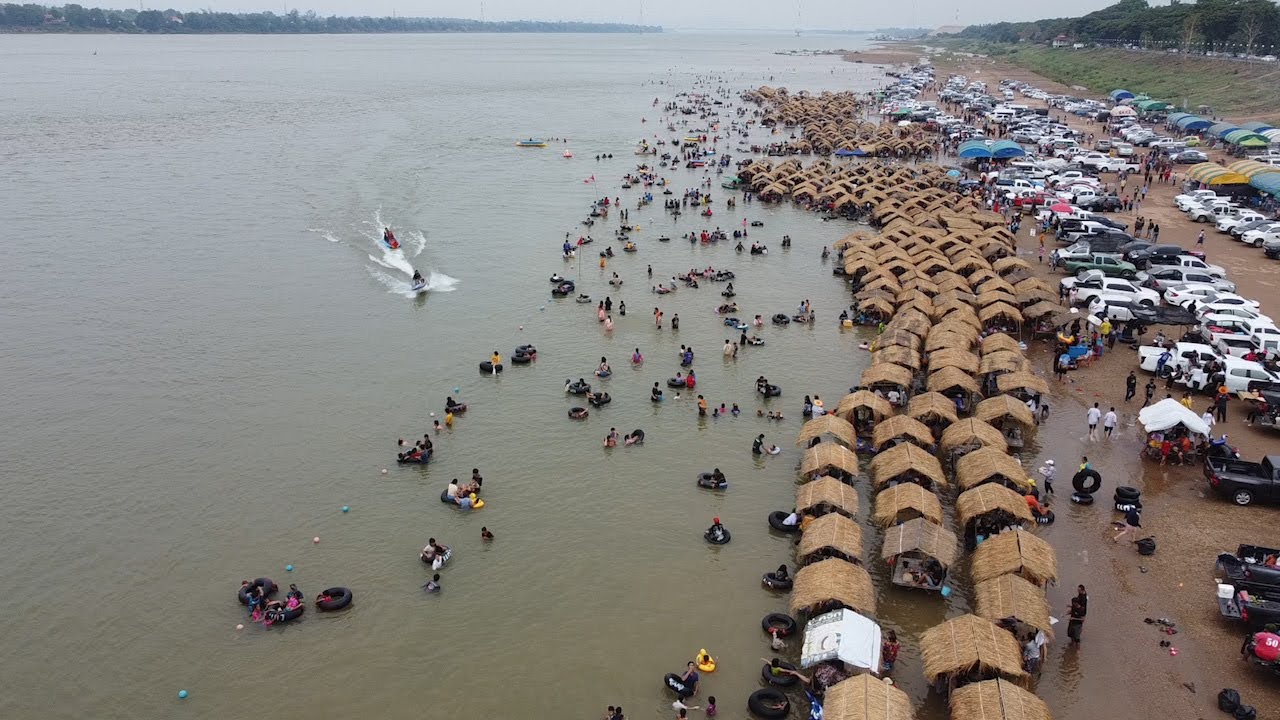
 Click to Access the Navigation Map GPS
Manorom Beach Map
Recommend

 Art, Culture and Heritage
 Historical Sites and Monuments(2)
 Landmarks and Memorials(3)
 Art, Craft Centres, Tradition(2)
 Museums(1)
 Places of Worship
 Temple(17)
 Other Sacred Sites(3)
 Suburban Living
 Village, Community(4)
 Local Market(2)
 National Parks and Marine Reserves(4)
 Mountain (Doi)(5)
 Dam, Reservoir, Lake(3)
 Waterfalls(5)
 Caves(2)
 River, Canal(2)
Bays and Beaches(1)
River, Canal(2)
Bays and Beaches(1)
 Other natural attractions(1)
 Entertainment and Agricultural
 Farms, Parks and Ecotourism(1)
 Travel Articles, Recipes
 Travel Review, Food Review(1)


