
lovethailand home >Northeastern Travel Attractions >Mukdahan Travel Attractions >Khamcha-i >Khamcha-i > Wat Tham Pha Daeng Phutthakhun
TL;DR: Wat Tham Pha Daeng Phutthakhun is located at Nong Hi Community, Ban Kaeng Chang Niam, Kham Cha-i Subdistrict, Kham Cha-i District, Mukdahan Province, open Daily, hours 08.00 – 17.00.
Wat Tham Pha Daeng Phutthakhun
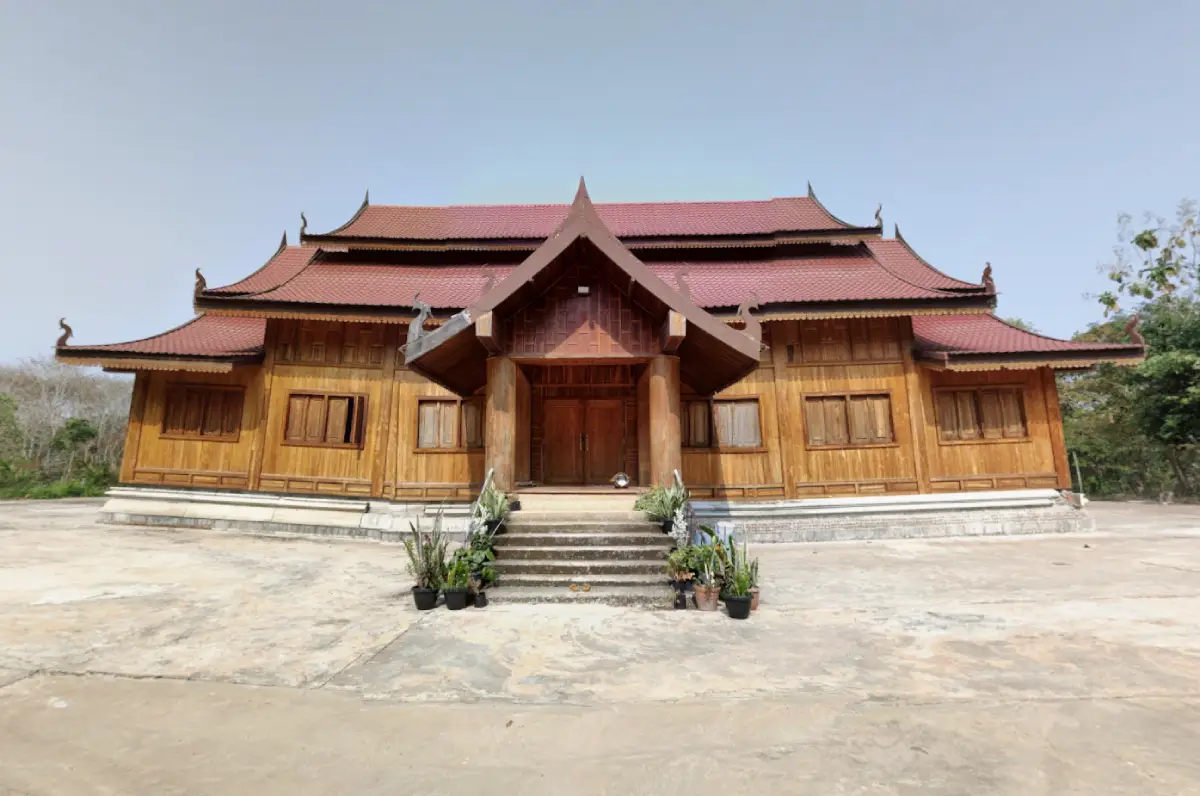
Open Days: Daily
Opening Hours: 08.00 – 17.00
Wat Tham Pha Daeng Phutthakhun in Mukdahan Province is a forest monastery located at the foot of a mountain in the Nong Hi community of Ban Kaeng Chang Niam, Moo 10, Kham Cha-i Subdistrict, Kham Cha-i District. The monastery is surrounded by wooded hills, green vegetation, and a quiet rural landscape that naturally separates it from the noise of urban areas. It is suitable for travelers who wish to make merit, pay respect to the Buddha, rest the mind, practice mindfulness, meditate, and experience the simplicity of an active Thai forest monastery. Several areas within the grounds offer views of the surrounding hills, forest, farmland, and local communities.
Wat Tham Pha Daeng Phutthakhun is not a commercial attraction designed around entertainment, shops, or staged activities. It is an active religious site where monks live and follow a daily monastic schedule. The monastery’s main purposes are Buddhist worship, Dhamma study, meditation, and the continuation of forest-monastery discipline. Its peaceful atmosphere comes from the limited amount of disturbance, the careful use of space, and the close relationship between the religious grounds and the mountain environment.
The monastery is located in Ban Kaeng Chang Niam, an area connected with the wooded landscape of Kham Cha-i District and the wider Phu Si Than forest region. The local terrain includes hills, dry evergreen and mixed forest, seasonal streams, and natural water sources. Forest remains important to the surrounding communities as a source of water, food, cultural identity, and places suitable for spiritual practice. On entering the temple, visitors will notice that the tree cover reduces heat and outside noise, creating favorable conditions for meditation and quiet reflection.
The name “Wat Tham Pha Daeng Phutthakhun” reflects the natural character of the foothill landscape. “Tham” means cave, while “Pha Daeng” refers to a red-colored cliff or rock formation associated with the locality. “Phutthakhun” refers to the virtues of the Buddha, particularly wisdom, purity, and great compassion. Together, the name suggests a natural mountain setting used for remembering the Buddha’s qualities and developing calmness, awareness, and compassion.
The monastery was officially established on 30 August 2013. Although its formal registration is comparatively recent, the surrounding community had long been connected with forest, mountain, and Buddhist traditions. Official temple status allowed the monastic community to organize religious activities, maintain facilities for resident monks, conduct merit-making events, and provide a more structured environment for meditation and Dhamma practice.
On 29 June 2016, the temple received a royal grant of Wisungkhamsima, the officially recognized boundary used for formal Sangha ceremonies, including Buddhist ordination. Receiving this status reflects the monastery’s growing institutional stability and its ability to serve as a religious center for the surrounding community.
Wat Tham Pha Daeng Phutthakhun is a public monastery belonging to the Dhammayut Buddhist order. Its practice therefore emphasizes observance of the monastic code, restraint, simplicity, and meditation. Daily life in a forest monastery normally includes morning and evening chanting, alms rounds, the communal meal, Dhamma study, cleaning, walking meditation, and sitting meditation. These activities are not separate from spiritual practice because every movement and responsibility can be performed with mindfulness.
The current abbot is Phra Anan Wisesaguno. He is responsible for the monastic community, religious buildings, Buddhist activities, and the natural environment within the monastery. Information from the 2025 Kathina season recorded five resident monks. This confirms that the site remains an active monastery rather than an abandoned religious monument. Visitors must therefore respect periods of chanting, meals, rest, and meditation and should never enter monks’ huts or private areas without permission.
The work of the abbot and resident monks extends beyond ceremonies on Buddhist holidays. They receive merit-makers, provide basic guidance on Dhamma practice, maintain the temple grounds, and cooperate with the surrounding community. A small forest monastery depends on support from monks, villagers, and disciples who help prepare food, repair buildings, clean paths, and protect trees. This participation creates a direct connection between Buddhist practice and community life.
The most immediate feature of the monastery is its foothill forest atmosphere. The terrain rises and falls naturally, with trees growing between open ground, stone surfaces, paths, and temple buildings. Tree shade provides several places for quiet rest. Morning visitors encounter cooler temperatures and clear natural sounds, while late-afternoon sunlight passes through the trees and reveals the form of the surrounding hills.
The scenery is attractive without being monumental or heavily developed. From open sections of the grounds, visitors can see forest, low hills, farmland, and the Ban Kaeng Chang Niam community. These views reveal the relationship between the temple and its surroundings. The monastery is secluded enough for meditation but remains supported by villagers who participate in its religious and practical activities.
Photography of the mountain landscape, trees, and temple architecture is possible when it does not disturb worshippers. Visitors should not stage disrespectful poses, block paths used by people paying respect, or create excessive noise for photographs and videos. Drone operation requires prior permission from the monastery because the sound can disturb monks, meditators, and wildlife.
Nature within the monastery serves more than an aesthetic purpose. Trees and hills allow practitioners to observe changes in season, light, temperature, and living conditions. These changes correspond with the Buddhist teaching of impermanence. Leaves grow and fall, rain changes the surface of paths, and heat gives way to cool weather. Observing these processes with awareness can become a direct lesson in the changing character of all conditioned things.
The monastery is suitable for Vipassana meditation because its environment reduces unnecessary stimulation. Vipassana does not require forcing the mind to become completely empty. It involves observing the body, feelings, and mental states as they arise. When birds, wind, or thoughts appear, the practitioner learns to recognize them without immediately rejecting or following them. This develops a clearer understanding of emotion and reduces impulsive reactions.
Beginners can start with a meditation period of approximately 10 to 15 minutes in an area permitted by the monastery. The sitting position should be stable but should not cause unnecessary pain. Practitioners may observe the natural breath or the movement of the abdomen. When the mind moves to another subject, simply recognize that thinking has occurred and return to the breath. Repeating this process is part of practice rather than evidence of failure.
Walking meditation is also well suited to a forest monastery. A safe and level path should be selected, and the practitioner walks back and forth while observing the lifting, moving, and placing of each foot. Those who find very slow walking uncomfortable may walk at a normal pace while maintaining awareness. Walking practice reduces drowsiness and demonstrates that mindfulness can be developed during movement, not only while sitting.
Anyone wishing to practice for an extended period or stay overnight should contact the monastery in advance. The temple is not a commercial accommodation provider. Overnight stays require permission and compliance with the monastic schedule. Participants should bring modest clothing, personal necessities, and essential medication and should be prepared to assist with communal duties. Facilities in forest monasteries are generally basic because simplicity supports the reduction of unnecessary needs.
The temple grounds can be understood through several functional areas: the principal worship area, the communal hall, meditation spaces, the natural foothill zone, the monks’ residential area, and the reception and parking area. A visit should begin at the worship area, where travelers can pay respect, settle the mind, and become familiar with temple etiquette before exploring other sections.
The main hall is used for chanting, Dhamma talks, offerings, meals for monks, and community activities. Shoes must be removed before entering. Mobile phones should be silenced, and clothing must be appropriate. If monks are chanting or teaching, visitors may sit quietly without taking part verbally. Walking repeatedly in front of the principal Buddha image or taking continuous photographs should be avoided.
Meditation areas include quiet ground, walking paths, and places where visitors can sit. Voices, music, and videos from mobile devices must be kept off. People who are meditating should not be interrupted. Some practitioners may be maintaining continuous mindfulness for several hours, and respect for silence is essential.
The natural foothill zone gives the monastery its distinctive character but requires care. Some paths may be sloping or covered with stone, gravel, leaves, or slippery surfaces after rain. Visitors should remain on established routes, avoid climbing cliffs or rocks not designated for public access, and should not enter isolated caves or forest areas alone. Warning signs and barriers must always be respected.
The monks’ residential area is private. Visitors should not walk among the huts without permission. Anyone wishing to meet the abbot should ask a monk or attendant near the communal hall and wait in a designated location. Avoiding interruption during rest and meditation periods demonstrates respect for forest-monastery life.
Facilities are provided according to the needs of an active temple and may include parking, a communal hall, toilets, paths, and shaded resting spaces. They are not comparable with the facilities of a large commercial attraction. Visitors should bring their own drinking water and carry all rubbish away. Food packaging and waste must not be left in forest areas, where they can attract animals and create additional work for the monastery.
The most comfortable visiting periods are between 08.00 and 10.30 and again from approximately 15.30 to 17.00. Morning weather is cooler and suitable for walking through the foothill areas. Late-afternoon light is attractive and temperatures are lower than at midday. Visitors should return to the principal area before closing and should not remain on forest paths after dark, where lighting is limited and wildlife may be active.
The cool season from approximately November to February is especially suitable for walking and meditation. Morning and evening temperatures are comfortable. During the hot season, midday walking should be avoided, and a hat or umbrella is useful. The rainy season creates lush green scenery but also increases the risk of slippery paths. Footwear with good grip and an updated weather forecast are important.
Ban Kaeng Chang Niam lies close to the Phu Si Than Wildlife Sanctuary landscape. Visitors should not collect plants, break branches, capture animals, or feed wildlife. Feeding changes natural behavior and may attract animals too close to people. Snakes, monitor lizards, or other wildlife should be observed from a safe distance and reported to a temple attendant when necessary.
Wildfire prevention is essential during the dry season. Smoking and discarded cigarette ends are prohibited in forest areas. Candles and incense should be used only where the monastery permits them. Rubbish must never be burned. A small flame can spread rapidly across a dry mountain landscape. Protecting the forest preserves shade, water sources, wildlife habitat, and the meditation environment used by monks and visitors.
Namtok Saksit, also known as Kaeng Chang Niam Waterfall, is an important natural site in the same locality and within the Phu Si Than Wildlife Sanctuary area. The waterfall is associated with one of Mukdahan Province’s sacred water sources and has been used in important state ceremonies. Combining the temple with the waterfall helps travelers understand the relationship among mountain, forest, water, community, and local belief. Access should always be confirmed according to season, wildlife-sanctuary regulations, and current route conditions.
Important temple activities include merit-making on Buddhist observance days, Makha Bucha, Visakha Bucha, Asalha Bucha, the Buddhist Lent period, the end of Lent, and the annual Kathina ceremony. These occasions attract more visitors than ordinary days. Participants should arrive early, dress conservatively, and follow instructions from the monastic community. Loud personal equipment and entertainment activities are inappropriate.
Kathina is particularly significant for a monastery where monks have completed the rains retreat. It allows the community and disciples to offer robes and support temple activities. Villagers also prepare food, clean the grounds, organize facilities, and welcome visitors. The event demonstrates the continuing relationship between the monastery and the social life of the community.
Merit-making may include offering food, dry goods, medicine, useful supplies, or contributions to temple maintenance. Large quantities of goods should not be brought without asking what is genuinely needed. Food should arrive before the monks’ meal and should be presented in clean containers. Practical giving reduces waste and reflects the Buddhist principle of moderation.
There is no admission fee. Voluntary donations may be made through official donation boxes or channels provided by the monastery. Money should not be given to unauthorized individuals requesting contributions. The value of merit is not determined by the size of a donation. Respecting rules, maintaining cleanliness, and protecting nature are also meaningful forms of support.
Clothing must cover the shoulders and knees. Tight garments, sleeveless tops, short trousers, short skirts, and clothing with inappropriate messages should be avoided. Footwear should be easy to remove but should have good grip for natural paths. Those planning to meditate should choose loose, breathable, and modest clothing.
Women should not touch monks or hand objects directly to them. Offerings may be placed on a receiving cloth or passed through a male companion. Male visitors must also maintain respectful distance and should not enter monks’ huts without permission. Conversations should be polite and should not interrupt meals, rest, or meditation.
Families should explain to children that the monastery requires quiet behavior. Children must not run, climb religious structures, or approach steep ground without supervision. Older travelers and people with knee conditions should remain in flatter areas and rest when needed. Wheelchair users should be accompanied because parts of the grounds have natural and uneven surfaces.
A visit of at least one to two hours allows time for worship, walking, and quiet rest. Those wishing to meditate should allow two to three hours or half a day. A visit limited to a few photographs may miss the monastery’s principal value, which lies in slowing down, observing the mind, and experiencing the quiet of the natural environment.
Getting There from Mukdahan city, follow Highway 12 toward Kham Cha-i District. From Kham Cha-i, continue toward Ban Kaeng Chang Niam and the Nong Hi community. The monastery is located in Moo 10, Kham Cha-i Subdistrict. It can be found using the name “Wat Tham Pha Daeng Phutthakhun” or the location code G7QX+XC5. The final section follows local roads near the foothills, where drivers should reduce speed and observe signs carefully.
A private car, rental vehicle, or motorcycle is the most convenient form of transportation because public transport to Ban Kaeng Chang Niam is limited. Travelers without a vehicle can first reach Kham Cha-i town and arrange local transport. Fare, return time, and pickup point should be agreed upon before departure, particularly in the afternoon when return transport may be difficult to find.
Drivers should carry sufficient fuel, check tires and brakes, and avoid speeding through village roads. During the rainy season, water, soil, and leaves may affect road conditions. Weather and route information should be checked before departure. Natural trails and waterfall routes should not be attempted alone after prolonged heavy rain.
A one-day itinerary can begin at Wat Tham Pha Daeng Phutthakhun in the morning, allowing approximately two hours for merit-making and meditation. Travelers may then visit Kaeng Chang Niam Sacred Waterfall when access and weather conditions are suitable. In the afternoon, the route can continue to Wat Pa Suphattharam and Phra That Phothiyan or to Wat Pa Wiwek Watthanaram, where visitors can study the history of Luang Pu Mun and Luang Pu Jam, before returning to Kham Cha-i for food or accommodation.
Travelers interested in meditation can connect three forest monasteries: Wat Tham Pha Daeng Phutthakhun, Wat Pa Suphattharam, and Wat Pa Wiwek Watthanaram. The route should not be rushed. Spending one to two hours at each monastery provides time to worship, read available information, and sit quietly. This is more meaningful than stopping briefly for photographs.
Most nearby restaurants are located along the route back to the communities and central Kham Cha-i. Breakfast or snacks should be prepared before departure. Some cafés and family businesses adjust their hours according to the day, so travelers should telephone before visiting, especially when traveling in a large group or during a public holiday.
Nearby accommodation consists mainly of small resorts around Kham Cha-i and neighboring subdistricts. These are suitable for travelers staying overnight before visiting temples, waterfalls, and rural communities the following day. Room availability, check-in times, facilities, and exact locations should be confirmed by telephone because some properties have limited rooms and no comprehensive online booking system.
Wat Tham Pha Daeng Phutthakhun is valuable as a place where Buddhism, nature, and community remain closely connected. Its calm atmosphere is created by the foothill landscape and the disciplined life of the monastic community. Its shade comes from forest protected by the temple and local people. A visit should therefore be understood not only as tourism but as an opportunity to learn that preserving a forest monastery requires respect for rules, reduction of waste, and protection of the surrounding ecosystem.
Sitting under a tree or quietly observing the hills can become a simple form of mindfulness practice. Previous meditation experience is not required. A visitor can observe the breath, surrounding sounds, and physical sensations without immediate judgment. Remaining in the present even briefly can reveal tiredness, anxiety, and the constant movement of thought.
The calm experienced at the monastery becomes more valuable when applied to ordinary life. Visitors may begin with five minutes of silence each day, reduce telephone use during meals, or pause for a breath before reacting in anger. These actions transform a temple visit into practical habits that reduce suffering and improve relationships.
Before leaving, visitors should ensure that no rubbish or personal belongings remain. Water and lights should be turned off after use, and stones, leaves, and other natural objects should not be taken as souvenirs. Leaving the grounds in the same or better condition is a direct expression of respect for the monastery, the monks, the community, and future visitors.
Wat Tham Pha Daeng Phutthakhun is suitable for faith-based travelers, students of forest Buddhism, meditation practitioners, nature lovers, and visitors seeking a peaceful destination in Mukdahan Province. It does not provide the extensive facilities or entertainment of a large attraction, but simplicity is its central value. Travelers who arrive respectfully and allow sufficient time will gain a deeper experience than those who make only a brief sightseeing stop.
| Name | Wat Tham Pha Daeng Phutthakhun |
| Location | Nong Hi Community, Ban Kaeng Chang Niam, Kham Cha-i Subdistrict, Kham Cha-i District, Mukdahan Province |
| Address | Moo 10, Kham Cha-i Subdistrict, Kham Cha-i District, Mukdahan 49110, Thailand |
| Coordinates | 16.53989, 104.29861 or location code G7QX+XC5 |
| Temple Type | Public monastery belonging to the Dhammayut Buddhist order |
| History And Current Status | Officially established on 30 August 2013 and granted Wisungkhamsima on 29 June 2016. The monastery remains active with resident monks. |
| Current Abbot | Phra Anan Wisesaguno |
| Resident Monks | Five monks according to the 2025 Kathina information |
| Highlights | Foothill forest monastery, peaceful and shaded environment, mountain scenery, green natural areas, and spaces suitable for meditation and quiet reflection |
| Main Areas / Zones | 1. Principal worship area and main hall 2. Chanting and communal religious area 3. Sitting and walking meditation spaces 4. Natural foothill zone 5. Scenic viewing areas 6. Monks’ residential zone 7. Visitor reception and parking area |
| Suitable Activities | Merit-making, worship, chanting, sitting meditation, walking meditation, Dhamma study, nature observation, and quiet relaxation |
| Facilities | Parking, communal hall, toilets, paths, and shaded resting areas |
| Open Days | Daily |
| Opening Hours | 08.00 – 17.00 |
| Fees | No admission fee; voluntary donations are welcome |
| Recommended Visit Duration | Approximately 1–3 hours depending on walking and meditation activities |
| Travel Information | From Mukdahan city, follow Highway 12 to Kham Cha-i District and continue toward Ban Kaeng Chang Niam and the Nong Hi community. Private car, rental vehicle, or motorcycle is the most convenient option. |
| Visitor Etiquette | Dress modestly, speak quietly, avoid monks’ residential areas without permission, remain on established paths, do not climb cliffs or rocks, and request permission before photographing monks or operating a drone |
| Nearby Tourist Attractions | 1. Namtok Saksit or Kaeng Chang Niam Waterfall, approximately 5 km 2. Wat Pa Suphattharam and Phra That Phothiyan, approximately 9 km 3. Wat Pa Wiwek Watthanaram or Wat Luang Pu Jam, approximately 12 km 4. Mae Chi Kaew Sianglam Nunnery, approximately 14 km 5. Huai Khi Lek Yai Reservoir, approximately 16 km |
| Nearby Restaurants | 1. DNN Factory, approximately 10 km, Tel. 096-907-0793 2. PunThai Coffee PTF Kham Cha-i, approximately 16 km, Tel. 085-008-9112 3. Thidarat Fresh Seafood, approximately 17 km, Tel. 061-227-2274 4. Cafe Seosulla Mukdahan, approximately 19 km, Tel. 091-867-0604, 087-218-1447 5. Nong Khian Homestay Café, approximately 21 km, Tel. 096-828-7747, 089-812-1378 |
| Nearby Accommodations | 1. Phasan Village Resort, approximately 15 km, Tel. 098-947-0714 2. Chonthan Resort Kham Cha-i, approximately 17 km, Tel. 087-855-7564, 083-284-3088 3. PT Resort Kham Cha-i, approximately 18 km, Tel. 093-518-8327 4. Ban Yai Nan, approximately 19 km, Tel. 084-428-7235, 090-587-9966 5. Mayu Resort, approximately 24 km, Tel. 093-251-2699, 061-134-2924 |
Frequently Asked Questions (FAQ)
Q: Where is Wat Tham Pha Daeng Phutthakhun located?
A: The monastery is located in Moo 10, Nong Hi Community, Ban Kaeng Chang Niam, Kham Cha-i Subdistrict, Kham Cha-i District, Mukdahan Province. The location code G7QX+XC5 can be used for navigation.
Q: Who is the current abbot of Wat Tham Pha Daeng Phutthakhun?
A: The current abbot is Phra Anan Wisesaguno, who supervises the monastic community, religious facilities, and Buddhist activities.
Q: On which days and at what times is the monastery open?
A: The monastery is open to merit-makers and visitors daily from 08.00 to 17.00.
Q: Is there an admission fee?
A: There is no admission fee. Visitors may make voluntary donations through the official donation points provided by the monastery.
Q: Is the monastery suitable for meditation?
A: Yes. Its quiet, shaded foothill setting is suitable for sitting meditation, walking meditation, and mental rest. Visitors should use areas permitted by the monastery and avoid disturbing other practitioners.
Q: What can visitors see inside the monastery?
A: Important areas include the main worship hall, chanting and Dhamma spaces, meditation areas, walking paths, natural foothill scenery, and viewing areas overlooking forest and surrounding communities.
Q: What is the best way to reach the monastery?
A: A private car, rental vehicle, or motorcycle is the most convenient option because public transportation to Ban Kaeng Chang Niam is limited.
Q: What precautions should visitors take?
A: Visitors should dress modestly, remain quiet, wear suitable footwear, avoid climbing cliffs and rocks, stay out of monks’ residential areas without permission, and take additional care during the rainy season.
 Category: ●Places of Worship
 Group: ●Temple
Last Update : 2 MonthAgo
 Last Update : 2 MonthAgo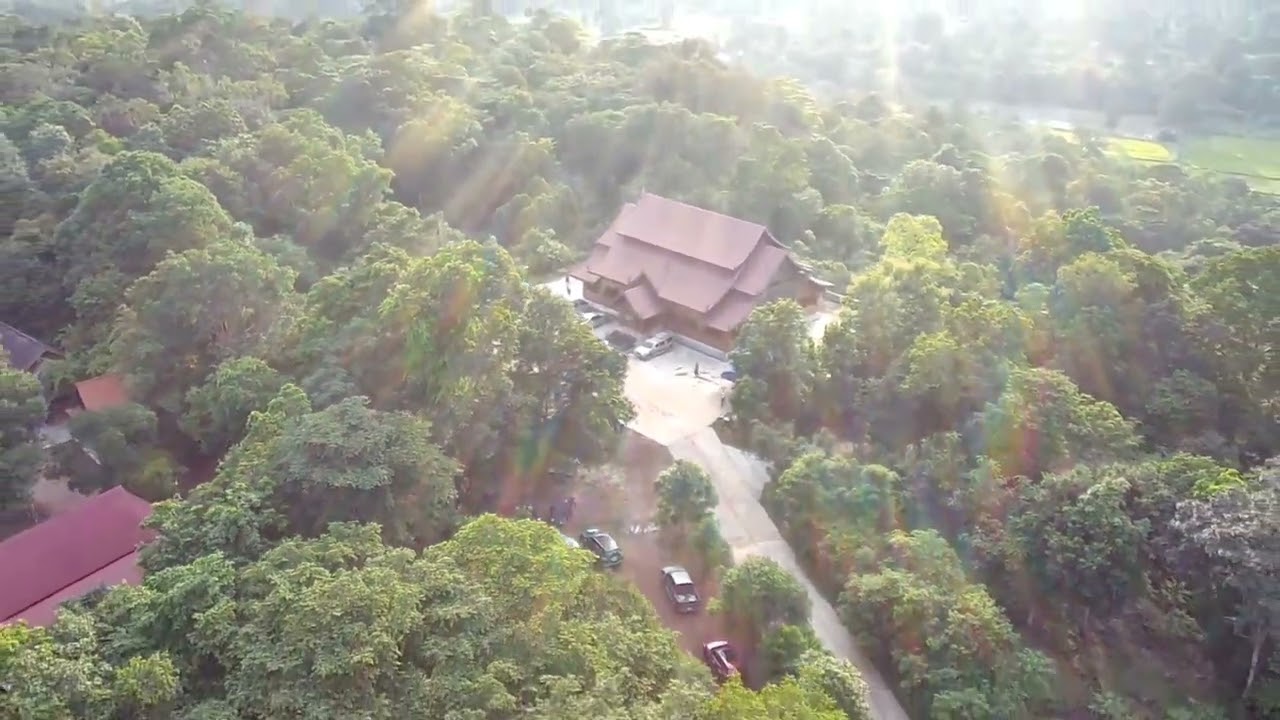
 Click to Access the Navigation Map GPS
Wat Tham Pha Daeng Phutthakhun Map
Recommend

 Art, Culture and Heritage
 Historical Sites and Monuments(2)
 Landmarks and Memorials(3)
 Art, Craft Centres, Tradition(2)
 Museums(1)
Temple(17)
Museums(1)
Temple(17)
 Other Sacred Sites(3)
 Suburban Living
 Village, Community(4)
 Local Market(2)
 Nature and Wildlife
 National Parks and Marine Reserves(4)
 Mountain (Doi)(5)
 Dam, Reservoir, Lake(3)
 Waterfalls(5)
 Caves(2)
 River, Canal(2)
 Bays and Beaches(1)
 Other natural attractions(1)
 Entertainment and Agricultural
 Farms, Parks and Ecotourism(1)


