
lovethailand home >Northeastern Travel Attractions >Mukdahan Travel Attractions >Khamcha-i >Khamcha-i > Wat Pa Wiwek Watthanaram
TL;DR: Wat Pa Wiwek Watthanaram is located at Ban Huai Sai, Kham Cha-i Subdistrict, Kham Cha-i District, Mukdahan Province, open Daily, hours 08.00 – 17.00.
Wat Pa Wiwek Watthanaram
Open Days: Daily
Opening Hours: 08.00 – 17.00
Wat Pa Wiwek Watthanaram in Mukdahan Province, commonly known as “Wat Luang Pu Jam,” is an important Thai Forest Tradition monastery associated with Luang Pu Mun Bhuridatta and several respected meditation masters. The temple is located in Ban Huai Sai, Kham Cha-i Subdistrict, Kham Cha-i District, Mukdahan Province. Its principal attractions include the Buthong Kitti Chedi, which enshrines relics of the Buddha and revered Buddhist disciples, the Ho Kham heritage hall containing monastic requisites associated with Luang Pu Jam Mahapunyo, and displays explaining his life, teachings, and place in the lineage of Thailand’s forest meditation tradition.
The monastery is suitable for travelers who wish to pay respect to sacred relics, learn about the history of Thai forest monks, make merit, meditate, or experience the quiet atmosphere of an active Buddhist temple. Wat Pa Wiwek Watthanaram is not simply a historical tourist attraction. Monks continue to live, study, perform religious duties, and practice meditation within the grounds. Visitors should therefore dress modestly, speak quietly, respect restricted monastic areas, and avoid treating the temple as an entertainment venue or a photography set.
An important factual correction concerns the present leadership of the temple. Luang Pu Jam Mahapunyo is not the current abbot. He passed away on 19 January 2013 at the age of 104 after spending many decades as a respected meditation master and spiritual leader. The present abbot is Phra Khru Wiwek Thammathari, whose monastic name is Phuangphit Dhammadharo and who is widely known as Khruba Jaew. He oversees the monastery, its religious activities, the preservation of its heritage, and work connected with the Luang Pu Jam Mahapunyo Foundation.
The temple stands in the rural community of Ban Huai Sai in Kham Cha-i District, an area closely connected with Phu Thai culture and the agricultural life of Mukdahan Province. The surrounding district contains farming communities, reservoirs, wooded hills, meditation monasteries, and religious sites associated with prominent forest monks. This landscape is well suited to a form of monastic life that values simplicity, solitude, and direct observation of the mind. On entering the grounds, visitors encounter a setting that encourages a slower pace. Buildings are distributed across a spacious compound, and the natural surroundings help separate the experience from the noise and urgency of urban life.
The history of Wat Pa Wiwek Watthanaram can be traced to 1935. The original religious residence stood south of Ban Huai Sai and was known as Wat Nong Nong or the Nong Nong monastic residence. Luang Pu Mun Bhuridatta stayed in the area and served as the leader of the early monastic community. Other major forest monks, including Luang Pu Thes Thetsarangsi and Luang Pu Fan Ajaro, also practiced in the locality. These connections gave the monastery an important place within the network of forest retreats and pilgrimage routes through which the Thai Forest Tradition expanded across northeastern Thailand.
Luang Pu Mun’s association with the site is one of the main reasons the temple attracts students of Buddhist and monastic history. Luang Pu Mun played a central role in revitalizing rigorous meditation practice in modern Thailand. His teaching emphasized strict observance of the Vinaya, continuous mindfulness, investigation of body and mind, contentment with few possessions, and direct experience gained through disciplined practice. Places where he stayed are therefore significant not only because of his personal reputation but also because they preserve evidence of his journeys, his teaching activities, and the formation of a generation of disciples who carried the forest tradition throughout the country.
The original site was low-lying and affected by standing water, making long-term residence and religious activity difficult. In 1950, Luang Ta Maha Bua Nanasampanno, one of Luang Pu Mun’s leading disciples, moved the monastic residence westward to higher and more suitable ground. The new location provided greater quiet, healthier conditions, and an environment more conducive to meditation. The monastery was subsequently named Wat Pa Wiwek Watthanaram, a name that expresses both the physical character of the place and its purpose as a center for inner development.
The Thai and Pali-derived term “wiwek” refers to seclusion, withdrawal from disturbance, and the conditions needed for careful contemplation. “Watthanaram” conveys the idea of a flourishing monastery devoted to moral and spiritual cultivation. Together, the name may be understood as a monastery where spiritual growth is supported by seclusion. In the forest tradition, solitude does not mean escaping responsibility. It creates a setting in which practitioners can observe desire, fear, attachment, restlessness, and changing mental states without the usual distractions of daily life.
Wat Pa Wiwek Watthanaram represents a link between several generations of forest masters. Its story begins with Luang Pu Mun and monks of his period, continues through major disciples such as Luang Ta Maha Bua, and extends to Luang Pu Jam and the present monastic community. This continuity is preserved in written histories, religious buildings, monastic requisites, photographs, recorded teachings, annual ceremonies, and the living routines of the monastery. The temple is therefore more than a memorial to respected figures from the past. It remains a place where their teachings are interpreted and applied to present-day Buddhist life.
Luang Pu Jam Mahapunyo was born on 19 May 1910 in Ban Huai Sai, in an area that is now part of Mukdahan Province. His childhood was closely connected with rural life and with forest monks traveling through northeastern Thailand. At approximately six years of age, he encountered Luang Pu Sao Kantasilo and Luang Pu Mun Bhuridatta. The meeting helped establish a strong interest in monastic life. As he grew older, he assisted visiting meditation monks and became familiar with a way of life based on patience, simplicity, restraint, and sustained mental training.
As a young man, Luang Pu Jam spent a period serving and studying under Luang Pu Mun before entering the monastic life more fully. He was ordained as a novice in 1927 and spent a rains retreat studying with Luang Pu Mun. Training in the forest tradition involved far more than listening to formal sermons. It included walking meditation, sitting meditation, mindfulness during ordinary duties, moderation in food and sleep, care of communal property, and the willingness to endure discomfort without allowing discouragement to dominate the mind.
Luang Pu Jam received full ordination as a Buddhist monk on 19 May 1939 at Wat Pho Somphon in Udon Thani Province. His preceptor was Phra Thepkawi, later known as Phra Tham Chedi Jum Phanthulo. Following ordination, Luang Pu Jam traveled to study and practice with several senior masters and spent extended periods in forests and mountainous areas in the manner of a wandering meditation monk. These experiences strengthened his discipline and connected him with many teachers in the lineage of Luang Pu Mun. He came to be regarded as one of the important later-generation direct disciples who preserved the practical teachings of the Thai Forest Tradition.
According to the recorded succession of abbots, Luang Pu Jam served as abbot of Wat Pa Wiwek Watthanaram from 1971 until 2013. His leadership of more than four decades caused his name to become inseparable from the monastery, which explains why local residents and devotees frequently call it Wat Luang Pu Jam. His teachings emphasized meditation, moral discipline, patience, responsibility, and awareness of impermanence. He encouraged laypeople to fulfill their duties honestly, restrain harmful speech and conduct, and practice without becoming attached to reputation or supernatural expectations.
Luang Pu Jam passed away on 19 January 2013 at the age of 104. His death was mourned by disciples and devotees from many provinces, yet his teachings and example continue through books, recordings, photographs, monastic objects, and educational displays inside the temple. Visitors can therefore learn more than a simplified story about a famous monk. By examining the historical material carefully, they can understand the demanding conditions of pilgrimage, the discipline of forest life, and the decades of practice that formed the basis of his reputation.
The present abbot, Phra Khru Wiwek Thammathari, or Phuangphit Dhammadharo, is commonly known as Khruba Jaew. He is responsible for the monastic community, maintenance of the temple, religious observances, the preservation of objects associated with Luang Pu Jam, and the reception of devotees. He is also connected with the Luang Pu Jam Mahapunyo Foundation. Contemporary stewardship of the monastery therefore includes both traditional monastic responsibilities and the careful management of an important body of historical and religious heritage.
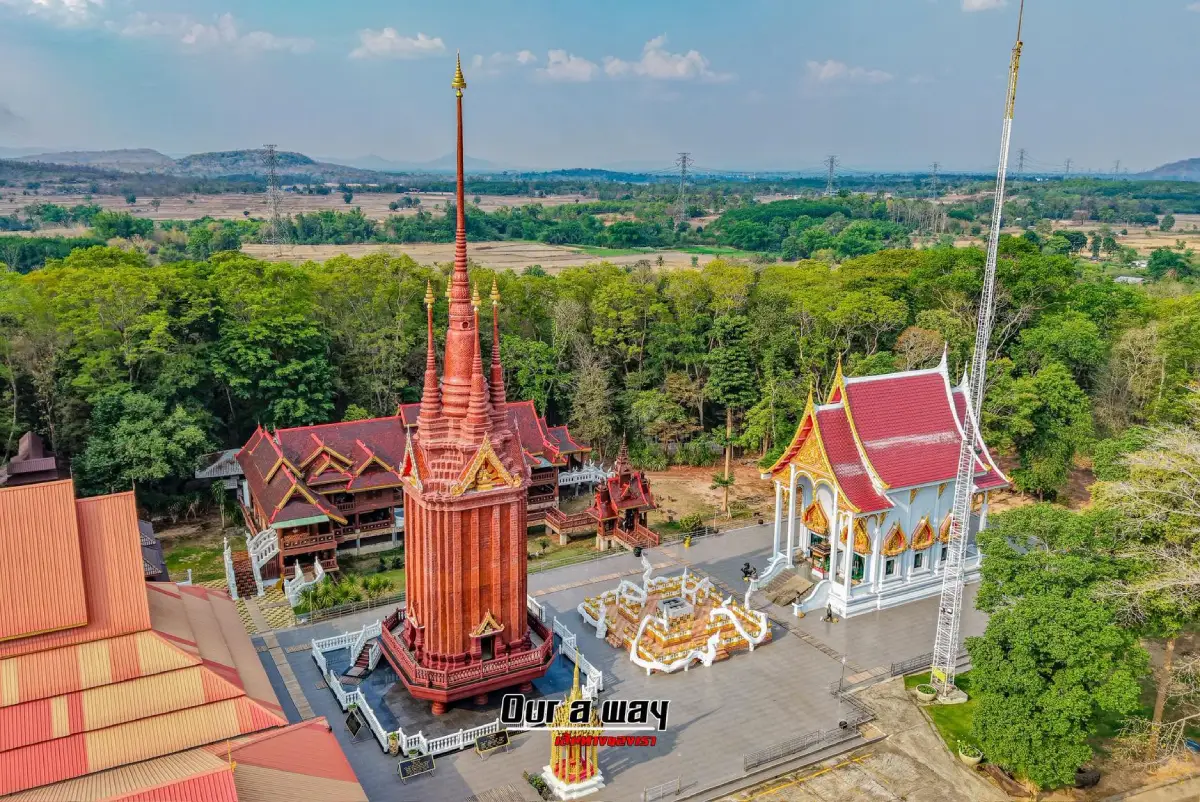
One of the most important structures within the temple is the Buthong Kitti Chedi. The monument has five spires, stands on a base measuring approximately 13 by 13 meters, and rises to a height of approximately 45 meters. Construction began in 1987. The chedi was created to enshrine relics of the Buddha together with relics venerated by the temple as belonging to distinguished Buddhist disciples, including Sivali, Upagupta, and Angulimala. Its height and distinctive silhouette make it a visual focal point within the monastery.
The importance of the chedi extends beyond its architectural dimensions. The presence of Buddha relics makes it a place where Buddhists recollect the Buddha and the path he taught. Visitors commonly pay respect, calm the mind, and make resolutions connected with ethical conduct and spiritual improvement. In Buddhist practice, venerating relics is not intended solely as a way of requesting worldly favors. It is also an opportunity to remember the qualities of the Buddha and to renew a commitment to morality, concentration, and wisdom.
The area around the chedi is used for important ceremonies, including the bathing of the relics on Makha Bucha Day and Visakha Bucha Day. These observances bring together monks, local residents, and devotees from other provinces for merit-making, offerings, chanting, and Dhamma teachings. Travelers visiting during a major Buddhist festival should arrive early, dress conservatively, follow the directions of temple organizers, and avoid obstructing ceremonial routes. Festival days provide a valuable opportunity to observe living religious practice, although they are considerably busier than ordinary days.
Another significant area is the Ho Kham heritage hall, whose design combines Phu Thai and Lanna architectural influences. The building preserves and displays monastic requisites associated with Luang Pu Jam. Such objects may include robes, an alms bowl, and other items required for the daily life of a monk. Their importance lies not in luxury or monetary value but in the evidence they provide of a disciplined life based on few possessions. Seeing these objects enables visitors to understand the ideal of simplicity in a direct and tangible way.
The monastery also contains displays presenting Luang Pu Jam’s biography, teachings, photographs, and historical context. The material allows visitors to follow his life from childhood and his early encounters with forest masters through novice and full ordination, pilgrimage, meditation training, and his years as abbot. Reading the displays carefully reveals that his standing was grounded in decades of disciplined practice and adherence to the Vinaya rather than in a reputation based only on miraculous stories.
Sala Phu Mak Mi Bun, a hall whose name may be understood as the “Hall of the Highly Meritorious One,” accommodates religious gatherings, communal offerings, meals for monks, meetings, and ceremonies involving the monastic community and disciples. During major events, the hall demonstrates the close relationship between the temple and the surrounding community. Residents help prepare food, organize facilities, maintain cleanliness, and welcome visitors. The building is therefore both a functional religious space and a symbol of collective participation in Buddhist life.
For practical orientation, the principal areas of the monastery may be understood as the Buthong Kitti Chedi zone, the Ho Kham and monastic-requisite display area, the biographical and teaching exhibition, Sala Phu Mak Mi Bun, ceremonial spaces, and the monks’ residential area. Each serves a different purpose. Visitors should observe signs and physical boundaries, particularly around the residential quarters, which should not be entered without permission. Moving through the temple in a considered sequence helps explain how architecture, historical memory, worship, and contemporary monastic life are connected.
A suitable visit can begin by paying respect at the principal religious area and allowing the mind to settle after the journey. Visitors may then proceed to the Buthong Kitti Chedi before exploring the biographical displays and Ho Kham hall. After viewing the exhibits, it is useful to spend a short period sitting quietly or reflecting on one of Luang Pu Jam’s teachings. A visit of approximately one to two hours allows sufficient time to see the major areas without rushing. Anyone intending to stay for formal meditation practice should contact the temple and follow its specific regulations.
The distinctive quality of Wat Pa Wiwek Watthanaram lies in its ability to communicate the meaning of seclusion through the atmosphere of the place itself. The grounds are not designed around entertainment or commercial activity. Natural sounds, temple bells, chanting, and ordinary monastic routines shape the experience. For visitors arriving from busy cities, even a brief period of silence can reveal accumulated fatigue and habitual restlessness. The temple offers an opportunity to slow down, observe the mind, and reconsider personal priorities.
Merit-making may include offering appropriate supplies, contributing to the maintenance of religious buildings, supporting temple activities, or providing food at the proper time. Offerings should be useful, of reasonable quality, and suitable for monastic life. Large quantities of unnecessary goods should not be brought merely for display or photography. This approach is consistent with forest-tradition teachings that emphasize intention, moderation, and freedom from attachment rather than the public appearance of generosity.
Visitors should wear clothing that covers the shoulders and knees and avoid tight garments or clothing with offensive images or language. Shoes must be removed before entering buildings or areas where signs require it. Feet should not be pointed toward Buddha images, relics, or monks, and visitors must not climb onto the base of the chedi or other structures for photographs. Anyone wishing to speak with a monk should wait for an appropriate moment and use respectful language. Women should not touch monks or hand objects directly to them; items may be placed on a receiving cloth or passed through a male companion.
Foreign travelers do not need to perform every Thai gesture perfectly, but a calm and respectful manner is expected. When sitting in a shrine hall, legs should be folded to the side or positioned so that the feet do not face the principal Buddha image. Permission should be requested before photographing monks, ceremonies, or objects inside the heritage hall. Flash photography should not be used where prohibited. Conversations and mobile-phone sounds should be kept to a minimum when others are chanting or meditating.
The most comfortable visiting periods are shortly after opening in the morning or during the later part of the afternoon. Morning temperatures are generally more pleasant and the grounds are often quieter. Late-afternoon light is suitable for observing and photographing the architecture without interfering with religious activities. During the hot season, visitors should carry drinking water, a hat, and an umbrella, while avoiding food and drink in sacred areas. During the rainy season, surfaces may be wet, making footwear with good grip and easy removal particularly useful.
Families traveling with children should explain before arrival that the monastery is a quiet place where running and loud play are inappropriate. Older travelers may wish to walk slowly and rest between the principal areas because the buildings are distributed across the grounds. Anyone using a wheelchair or experiencing limited mobility should travel with a companion who can check changes in surface level and access conditions before entering individual buildings. A slower schedule allows every member of the group to participate without disturbing those engaged in religious practice.
Photography of the chedi and exterior architecture should be conducted without blocking entrances or interrupting worshippers. Poses that are disrespectful to Buddha images, sacred monuments, or monks should be avoided. Drone use requires prior permission from the temple because aerial equipment can disrupt the quiet environment and intrude on the privacy of the monastic community. The most meaningful photographs are often those that document architecture, atmosphere, and the relationship between religious faith and community life rather than staged social-media poses.
Getting There from Kham Cha-i town, follow Highway 12 on the Kham Cha-i–Somdet route toward Ban Huai Sai. After passing the Wat Luang Pu Jam School area, continue for approximately one kilometer. The entrance to the monastery is on the right. The total distance from central Kham Cha-i is approximately seven kilometers. The route is suitable for private cars and motorcycles. Drivers should reduce speed in residential areas and watch carefully for local direction signs.
Travelers coming from Mukdahan city can follow Highway 12 toward Kham Cha-i District and then continue to Ban Huai Sai according to local signs. A private car or rental vehicle is the most convenient option and makes it possible to combine the monastery with several nearby attractions in one day. Travelers without private transportation can first reach Kham Cha-i town and arrange a local vehicle. The route, return time, and fare should be agreed upon in advance because direct public transportation to the temple is limited.
A one-day cultural itinerary can begin at Wat Pa Wiwek Watthanaram in the morning, allowing one to two hours for the chedi, Ho Kham, and historical displays. The journey can then continue to the Mae Chi Kaew Sianglam Nunnery, another site connected with the meditation heritage of Kham Cha-i, followed by Wat Pa Suphattharam and Phra That Photthiyan. After lunch in Kham Cha-i town, travelers may visit Huai Khi Lek Yai Reservoir or Wat Tham Luang Pu Sao before returning to Mukdahan city.
A second route is suitable for travelers especially interested in natural landscapes and meditation sites. It begins at Wat Pa Wiwek Watthanaram before continuing to Wat Tham Luang Pu Sao and the Phu Pha San monastic retreat. This route illustrates the relationship between wooded hills, caves, and the traditional life of wandering forest monks. Travelers should start early, carry water, and ensure that their vehicle is in good condition, particularly during the rainy season. Restaurants, cafés, and small resorts are available around Kham Cha-i for meals or an overnight stay.
Wat Pa Wiwek Watthanaram is valuable as a cultural attraction because it helps travelers understand Thai Buddhism beyond decorative architecture. Visitors learn about pilgrimage, the relationship between monasteries and rural communities, the preservation of monastic requisites, and the role of relics as reminders of Buddhist teachings. The monastery also connects Kham Cha-i District with the national history of the Thai Forest Tradition, giving an area outside Mukdahan’s principal tourism corridor a distinctive and meaningful identity.
The temple’s significance is also sustained by the people of Ban Huai Sai. Local residents participate in merit-making events, food preparation, maintenance, and the reception of visitors. This relationship between monastery and community has long been central to northeastern Thai society. During important ceremonies, former residents, disciples, and devotees from other provinces return to participate, allowing memories of Luang Pu Jam and the forest masters to connect several generations.
Preserving Wat Pa Wiwek Watthanaram requires more than repairing physical buildings. It also requires protection of the quiet atmosphere, accurate historical interpretation, responsible care of monastic objects, and presentation of the forest tradition without allowing commercial activity to overwhelm its essential message. Visitors can contribute by avoiding litter, not touching displayed objects, never writing on buildings, following temple rules, and making appropriate contributions through authorized channels.
There is no admission charge. Visitors may make voluntary donations according to their means. Contributions should be placed at official donation points or made through channels clearly announced by the temple. Money should not be given to individuals making unauthorized approaches. Flowers, incense, and other offerings should be used in moderation, with consideration for smoke and waste. Maintaining cleanliness, respecting silence, and avoiding disruption are meaningful forms of merit in their own right.
Makha Bucha Day, Visakha Bucha Day, and commemorative events associated with Luang Pu Jam attract more visitors than ordinary days. Travelers should arrive early, allow additional time for parking, and review current announcements from the temple or provincial authorities before traveling. An ordinary weekday is better for quiet historical study, while a festival day provides an opportunity to observe ceremonies and community participation. Each type of visit offers a different but equally valuable experience.
Those interested in Luang Pu Jam’s teachings should spend more than a few moments reading the displays. His guidance emphasizes self-awareness, patience, responsibility, moral conduct, and constant reflection on impermanence and death. Applying even one teaching to daily life is a more meaningful form of remembrance than simply photographing a statue. A visitor might begin by strengthening one moral precept, reducing harmful speech, or establishing a short daily mindfulness practice.
A visit to Wat Pa Wiwek Watthanaram combines the veneration of Buddha relics, the historical path of Luang Pu Mun and the forest masters, the life and teachings of Luang Pu Jam, and the cultural setting of Kham Cha-i. The monastery’s importance does not arise from one building or one famous individual alone. It is created by the relationship between place, teachers, architecture, ceremony, disciplined practice, and community memory. Travelers who arrive with respect and a willingness to learn will gain an experience far deeper than a brief sightseeing stop.
| Name | Wat Pa Wiwek Watthanaram, also known as Wat Luang Pu Jam |
| Location | Ban Huai Sai, Kham Cha-i Subdistrict, Kham Cha-i District, Mukdahan Province |
| Address | Moo 9, Ban Huai Sai, Kham Cha-i, Kham Cha-i District, Mukdahan 49110, Thailand |
| Coordinates | 16.54184, 104.38202 |
| Current Status | Active Thai Forest Tradition monastery, religious center, and educational site dedicated to the history and teachings of Luang Pu Jam Mahapunyo |
| History | Founded in 1935 and originally known as Wat Nong Nong. In 1950, Luang Ta Maha Bua Nanasampanno moved the monastic residence to its present location, which became Wat Pa Wiwek Watthanaram. |
| Connection With Luang Pu Mun | Luang Pu Mun Bhuridatta stayed at and led the original monastic residence. Several important forest monks also practiced in the area. |
| Current Abbot | Phra Khru Wiwek Thammathari, also known as Phuangphit Dhammadharo or Khruba Jaew |
| Important Former Abbot | Luang Pu Jam Mahapunyo served as abbot from 1971 to 2013 and passed away on 19 January 2013 at the age of 104. |
| Highlights | Buthong Kitti Chedi, Buddha relics, Thai Forest Tradition history, Ho Kham heritage hall, monastic requisites, and Luang Pu Jam biographical displays |
| Buthong Kitti Chedi | Five-spired chedi on a 13-by-13-meter base, approximately 45 meters high. Construction began in 1987 to enshrine Buddha relics and relics venerated as belonging to Buddhist disciples. |
| Main Areas / Zones | 1. Buthong Kitti Chedi 2. Ho Kham heritage hall and monastic-requisite display 3. Luang Pu Jam biography and teaching exhibition 4. Sala Phu Mak Mi Bun 5. Ceremonial and monks’ residential areas |
| Important Traditions | Relic-bathing ceremonies on Makha Bucha Day and Visakha Bucha Day, together with merit-making and commemorative activities associated with Luang Pu Jam |
| Open Days | Daily |
| Opening Hours | 08.00 – 17.00 |
| Fees | No admission fee; voluntary donations are welcome |
| Recommended Visit Duration | Approximately 1–2 hours |
| Travel Information | From Kham Cha-i town, follow Highway 12 toward Somdet and Ban Huai Sai. Continue approximately 1 kilometer beyond the Wat Luang Pu Jam School area. The temple entrance is on the right, approximately 7 kilometers from central Kham Cha-i. |
| Visitor Etiquette | Dress modestly, keep voices low, remove shoes where required, do not enter monks’ residential areas without permission, and request permission before photographing monks or displayed objects. |
| Nearby Tourist Attractions | 1. Mae Chi Kaew Sianglam Nunnery, approximately 2 km 2. Wat Pa Suphattharam and Phra That Photthiyan, approximately 4 km 3. Huai Khi Lek Yai Reservoir, approximately 5 km 4. Wat Tham Luang Pu Sao, approximately 7 km 5. Phu Pha San Monastic Retreat, approximately 14 km |
| Nearby Restaurants | 1. Nong Khian Homestay Café, approximately 8 km, Tel. 096-828-7747, 089-812-1378 2. Thidarat Seafood Restaurant, approximately 8 km, Tel. 061-227-2274 3. Pha Yat Café and Son, approximately 10 km, Tel. 092-171-8998 4. Cafe Seosulla Mukdahan, approximately 12 km, Tel. 091-867-0604, 087-218-1447 5. Lan Khun Ta Mukda Café, approximately 15 km, Tel. 061-447-8533 |
| Nearby Accommodations | 1. Ban Yai Nan Resort, approximately 7 km, Tel. 090-587-9966, 084-082-5832 2. Chonthan Resort Kham Cha-i, approximately 8 km, Tel. 083-284-3088, 096-592-3806 3. PT Resort, approximately 10 km, Tel. 093-518-8327, 081-729-8459 4. Nong Ian Suan Pa Resort, approximately 14 km, Tel. 082-288-4464 5. Mayu Resort, approximately 15 km, Tel. 065-317-4573 |
Frequently Asked Questions (FAQ)
Q: Where is Wat Pa Wiwek Watthanaram located?
A: The temple is located at Moo 9, Ban Huai Sai, Kham Cha-i Subdistrict, Kham Cha-i District, Mukdahan Province 49110, approximately 7 kilometers from central Kham Cha-i.
Q: Did Luang Pu Mun Bhuridatta stay at this temple?
A: Yes. Luang Pu Mun stayed at and led the original monastic residence known as Wat Nong Nong before the monastery was moved and developed as Wat Pa Wiwek Watthanaram.
Q: Is Luang Pu Jam still the abbot of Wat Pa Wiwek Watthanaram?
A: No. Luang Pu Jam Mahapunyo passed away on 19 January 2013. The current abbot is Phra Khru Wiwek Thammathari, also known as Phuangphit Dhammadharo or Khruba Jaew.
Q: What is enshrined inside the temple’s chedi?
A: The Buthong Kitti Chedi was built to enshrine relics of the Buddha together with relics venerated by the temple as belonging to distinguished Buddhist disciples.
Q: On which days and at what times is the temple open?
A: The temple is open daily from 08.00 to 17.00. Visitors attending major Buddhist festivals should allow additional time because ceremonies attract larger numbers of devotees.
Q: Is there an admission fee?
A: There is no admission fee. Visitors may make voluntary donations through the official donation points provided by the temple.
Q: What should visitors not miss inside the temple?
A: Important areas include the Buthong Kitti Chedi, the Ho Kham heritage hall, Luang Pu Jam’s biographical and teaching displays, and Sala Phu Mak Mi Bun.
Q: How much time should travelers allow for a visit?
A: A visit of at least one to two hours is recommended for paying respect at the chedi, viewing the displays, and learning about the Thai Forest Tradition without rushing.
 Category: ●Places of Worship
 Group: ●Temple
Last Update : 2 MonthAgo
 Last Update : 2 MonthAgo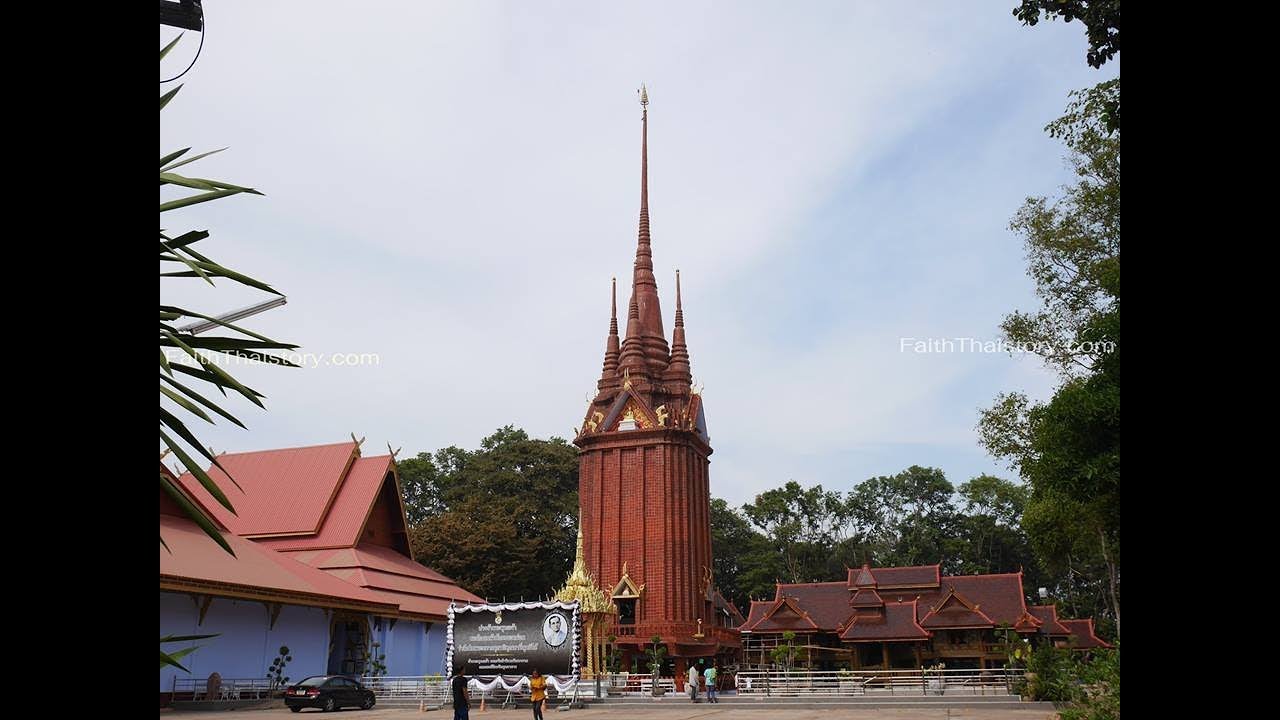
 Click to Access the Navigation Map GPS
Wat Pa Wiwek Watthanaram Map
Recommend

 Art, Culture and Heritage
 Historical Sites and Monuments(2)
 Landmarks and Memorials(3)
 Art, Craft Centres, Tradition(2)
 Museums(1)
Temple(17)
Museums(1)
Temple(17)
 Other Sacred Sites(3)
 Suburban Living
 Village, Community(4)
 Local Market(2)
 Nature and Wildlife
 National Parks and Marine Reserves(4)
 Mountain (Doi)(5)
 Dam, Reservoir, Lake(3)
 Waterfalls(5)
 Caves(2)
 River, Canal(2)
 Bays and Beaches(1)
 Other natural attractions(1)
 Entertainment and Agricultural
 Farms, Parks and Ecotourism(1)


