
lovethailand home >Northeastern Travel Attractions >Mukdahan Travel Attractions >Don Tan >Don Tan > Mekong River Dam
TL;DR: Mekong River Dam is located at Mekong riverfront beside Indochina Market in Mukdahan Town Municipality, open Daily, hours The public riverfront has no gated opening or closing hours. Shops at Indochina.
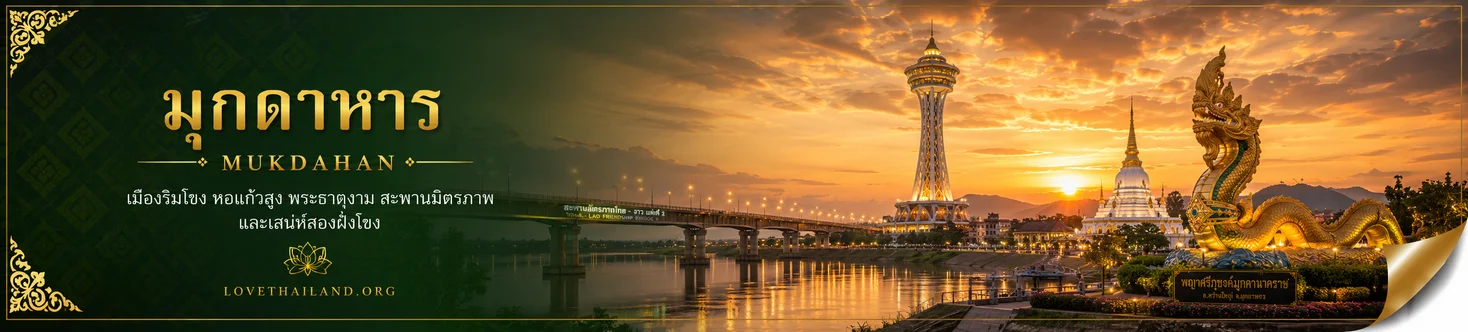
Mekong River Dam
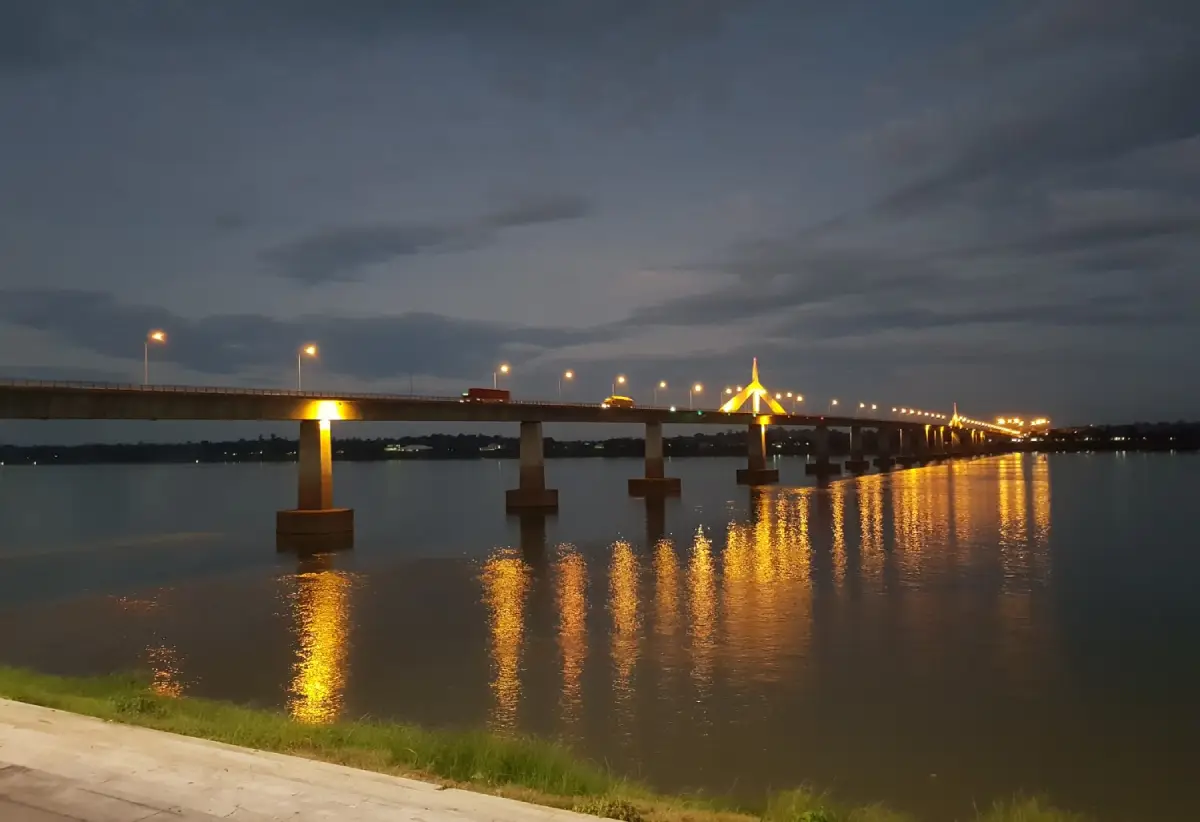
Open Days: Daily
Opening Hours: The public riverfront has no gated opening or closing hours. Shops at Indochina Market generally operate from 08.00–17.00, although individual business hours may vary.
Mekong Riverside Embankment in Mukdahan: River Views, Indochina Market, and the Laos Skyline Essential travel summary: The Mekong Riverside Embankment in Mukdahan is a public riverfront area beside Indochina Market in central Mukdahan. It consists of an open concrete plaza, a riverside walking area, and a stone revetment built to protect the riverbank from erosion. From the promenade, visitors can look directly across the Mekong River toward Savannakhet in the Lao People’s Democratic Republic. The area is suitable for sunrise viewing, photography, casual walks, local shopping, dining, and exploring the cultural landscape of a Thai–Lao border city. There is no admission fee.
The place commonly known in Thai as Khuean Rim Khong Mukdahan, or the Mukdahan Mekong riverside embankment, should not be confused with a reservoir dam or hydroelectric dam. In this context, the Thai word “khuean” refers to an engineered riverbank protection structure. The stone and reinforced sections help absorb the force of the current, reduce soil erosion, and protect the urban area behind the riverbank. The upper section has been developed as a concrete promenade and public viewing space, combining essential flood and erosion protection with recreation and tourism.
The riverfront runs along Samran Chai Khong Road in Si Bun Rueang Subdistrict, Mueang Mukdahan District. It lies beside Indochina Market and within a short walk of Wat Si Mongkhon Tai, the Two Sisters Shrine, local shops, restaurants, and the historic commercial quarter. Standing on the promenade, visitors have an unobstructed view across the broad Mekong River. On clear days, houses, buildings, riverfront structures, and the urban outline of Savannakhet can be seen without binoculars.
The location is distinctive because it occupies the geographical and cultural heart of a border city. The Mekong is an international boundary, but it has never functioned solely as a line separating Thailand and Laos. For generations, it has been a route for transport, trade, fishing, communication, migration, and cultural exchange. The communities of Mukdahan and Savannakhet share closely related food traditions, languages, religious practices, festivals, and ways of life. Looking across the water therefore offers more than a view of another country; it reveals a living cultural landscape connecting both banks.
The physical riverfront includes a broad concrete surface, pedestrian areas, occasional resting points, nearby shelters, and large stones arranged along the lower riverbank. These stones form part of the revetment system that disperses the energy of waves and currents, helping prevent rapid erosion of the soil behind them. The structure becomes especially important during the rainy season, when the Mekong can rise significantly. Visitors should remain on the upper public area and should not climb onto the rocks, which may be slippery, uneven, and separated by deep gaps.
The promenade offers a wide field of view with very few tall structures blocking the river. The colour and appearance of the Mekong change with the weather, water level, season, and time of day. In the morning, warm sunlight from the east reflects across the water from the direction of Laos. Later in the day, softer light falls on the Savannakhet riverfront and reveals more details of the opposite bank. Fishing boats, small working vessels, and everyday riverside activity occasionally pass through the scene, adding movement without overwhelming the peaceful atmosphere.
For sunrise enthusiasts, this is one of the most accessible places in central Mukdahan. The first light appears above the Lao side before spreading across the river in gold, orange, and pale pink. Local residents often arrive early to walk or exercise, while the roads remain relatively quiet and the temperature is comfortable. Travelers can watch the sunrise, take a gentle walk, and continue to a nearby breakfast restaurant or coffee shop without making a long journey outside the city.
Late afternoon and early evening are also rewarding. Although the sun sets behind the Thai side rather than over Laos, the low light illuminates the opposite bank and colours the sky above the Mekong. The conditions are suitable for portraits, riverscape photography, and candid images of local life. Residents come to walk, exercise, relax, meet friends, or buy food nearby, transforming the quiet morning promenade into a social public space.
The embankment is closely connected to Indochina Market, one of Mukdahan’s best-known trading areas. The market developed from small-scale border commerce around 1980, when local vendors sold food, snacks, agricultural products, and everyday goods near the river. As cross-border trade expanded, the market became known for products originating from Laos, Vietnam, China, and other countries, together with handicrafts and locally produced goods from Mukdahan.
Typical products include clothing, woven textiles, mudmee fabric, silk, household items, accessories, ornaments, packaged food, snacks, souvenirs, and imported consumer goods. The attraction of the market is not limited to price. Its merchandise and commercial atmosphere express Mukdahan’s role as a gateway on the East–West Economic Corridor and as Thailand’s principal city opposite Savannakhet. The Second Thai–Lao Friendship Bridge, located north of the central riverfront, reinforces this regional connection.
Indochina Market and its supporting infrastructure have undergone substantial renovation to address deterioration, improve safety, update utilities, and reorganise trading spaces. During 2026, vendors began moving merchandise back into the underground section, and businesses gradually reopened in available zones. Not every shop necessarily operates on the same schedule, so travelers primarily interested in shopping should visit between late morning and mid-afternoon, when the greatest number of businesses are likely to be active.
The public riverfront remains useful even when individual market sections are quiet or undergoing organisation. Visitors can still walk along the river, photograph Savannakhet, experience the city atmosphere, and visit nearby religious and cultural sites. Travelers wishing to explore the market should allow time for both the upper commercial area and the underground shop zone, following the entrances and passages available on the day of the visit.
The principal visitor area begins on the upper concrete promenade. This open section provides the clearest river view and sufficient space for walking, pausing, and photography. Below it lies the erosion-control structure and stone revetment. Behind the promenade are Samran Chai Khong Road, Indochina Market, food businesses, temples, and residential neighbourhoods. The compact arrangement allows visitors to move from an international river view to a market, shrine, temple, or restaurant within a few minutes.
Sala Rao Rak Mukdahan, a pavilion associated with the riverfront area, provides a recognisable meeting and resting point and is sometimes used in connection with public activities. Nearby signs and photographic landmarks refer to Mukdahan as a gateway to Indochina and to its position on Thailand’s eastern border. These features help visitors create location-specific photographs while also explaining the strategic role of Mukdahan in regional trade and transport.
The underground market is an unusual component of the site. Commercial space was incorporated behind and beneath parts of the riverfront structure, creating sheltered shop units and connecting walkways. Renovation work has focused on improving the structure, electrical systems, services, and overall usability. Travelers with limited mobility should check which entrances are open, as access conditions may include ramps, stairs, changes in level, or temporarily redirected routes.
Wat Si Mongkhon Tai, located next to the market area, adds a religious and historical dimension to a riverfront visit. Travelers can pay respect to the Buddha, observe local temple architecture, and consider the traditional relationship between Buddhist temples and Mekong communities. The proximity of the temple, market, homes, and river reflects a settlement pattern common throughout the Mekong Basin, where religious centres, trade routes, and residential life developed together.
The Two Sisters Shrine is another important place nearby. According to local tradition, the sacred sisters are respected as protectors of Mukdahan and its residents. Visitors may enter respectfully, dress appropriately, avoid loud behaviour, and allow space for worshippers performing rituals. Combining the shrine, temple, market, and river promenade in one walking route reveals the religious and cultural diversity of the city more effectively than visiting the viewpoint alone.
During the end of Buddhist Lent, the riverfront becomes an important festival space, particularly for the traditional longboat races involving communities from both sides of the Mekong. The races, ceremonies, performances, food stalls, and cultural activities demonstrate the region’s deep relationship with the river. Festival dates vary each year. Travelers planning to attend should check the current programme and expect road controls, temporary event zones, limited parking, and significantly larger crowds.
The promenade also supports other municipal activities, including food events, local product fairs, cultural performances, exercise programmes, and community gatherings. Its broad, adaptable concrete surface allows the area to function as more than a scenic stop. It is an active civic space where recreation, cultural identity, tourism, and the local economy overlap.
Weekdays are suitable for travelers seeking a quiet atmosphere and unobstructed photography. Weekends and public holidays generally bring more shoppers and domestic visitors, creating a livelier market but greater demand for parking. A practical time for a balanced visit is before the late-morning heat or between approximately 15.30 and 17.30, when the temperature begins to fall while many market businesses are still open.
The cool season, generally from November to February, offers the most comfortable conditions for walking along the river. Mornings and evenings can be pleasantly mild, the sky is often clear, and the opposite bank may be sharply visible. Thin mist sometimes forms over the water, giving sunrise photographs a softer appearance. The Christmas and New Year holiday period can be busy, so additional travel and parking time should be allowed.
The hot season from March to May brings strong sunlight, particularly around midday. Shade on the open riverside plaza is limited, so visitors should carry drinking water, wear a hat, apply sun protection, and plan outdoor activity for the morning or after 16.00. Lower seasonal water levels can expose sandbanks and more of the riverbank landscape, producing a view very different from the high-water months.
During the rainy season, generally from May to October, the Mekong carries more water and the current can become visibly stronger. The river may take on a deeper brown colour, while the air after rain is cooler and fresher. Concrete surfaces, steps, edges, and rocks can become slippery. Visitors should remain within safe pedestrian areas, respect barriers, avoid open spaces during thunderstorms, and supervise children continuously.
A slow riverside walk is the simplest and most rewarding activity. Travelers can observe changing water conditions, watch boats, study the Savannakhet skyline, and feel the breeze moving across the river. The central section can be explored without a demanding hike, making it suitable as a short stop between temples, museums, restaurants, and other attractions in Mukdahan.
Photography is popular because the site offers several strong visual elements: the long lines of the concrete promenade, the broad surface of the Mekong, buildings on the Lao bank, boats, and a large changing sky. Sunrise photographs should generally face east toward Laos. In the late afternoon, side lighting is useful for portraits and market scenes. Tripods should be positioned without blocking pedestrian routes, shops, roadways, or emergency access.
Travelers interested in local life should look beyond the principal viewpoint. Morning exercise groups, vendors preparing their stalls, residents resting by the river, workers moving goods, and visitors purchasing food all form part of the experience. This everyday activity distinguishes the embankment from a purpose-built observation platform. The place continues to function as part of Mukdahan’s daily social and economic life.
Shopping at Indochina Market is an opportunity to support local traders and community producers. Woven textiles, mudmee cloth, regional handicrafts, processed foods, and locally designed souvenirs provide stronger connections to Mukdahan than generic imported products. Travelers should examine quality, price, size, ingredients, and transport restrictions before purchasing, particularly when carrying food or imported goods onward to another country.
The surrounding district has restaurants serving Vietnamese, Isan, Thai, and Mekong-influenced cuisine, as well as cafés and hotel restaurants. Dishes commonly associated with the city include Vietnamese-style rice noodle soup, naem nueang, kuai chap yuan, som tam, freshwater fish dishes, and spicy northeastern specialities. Eating locally after a riverfront walk gives visitors a more complete understanding of Mukdahan through both landscape and flavour.
A one-hour visit is sufficient for a short walk, photographs of Laos, and a quick look at the market. With two or three hours, travelers can add Wat Si Mongkhon Tai, the Two Sisters Shrine, more extensive shopping, and a meal. A half-day itinerary can continue to Ho Kaeo Mukdahan Tower or Wat Roi Phra Phutthabat Phu Manorom, where elevated viewpoints provide a broader perspective over the city and the Mekong corridor.
For a sunrise itinerary, arrive at approximately 05.45–06.00, watch the first light over Laos, and spend about an hour walking or photographing the river. Continue to breakfast in the city, then return to the market after more shops begin opening. The late morning can include Wat Si Mongkhon Tai and Ho Kaeo Mukdahan, followed by an afternoon visit to Phu Manorom.
An afternoon itinerary can begin at Ho Kaeo Mukdahan or another city attraction before reaching Indochina Market at approximately 15.00. After shopping, walk to the riverfront as the heat decreases, photograph the Savannakhet skyline, and finish with dinner nearby. This schedule is particularly suitable for families and older travelers who prefer not to begin before dawn.
Getting There is straightforward because the embankment lies beside Indochina Market on Samran Chai Khong Road in central Mukdahan. Visitors can arrive by private car, rental car, local transport, or hired vehicle from Mukdahan Bus Terminal. Digital navigation works best when searching for “Indochina Market Mukdahan” rather than using only the English word “dam,” which may produce unrelated reservoir destinations.
Drivers entering the city from Highway 212 should follow signs toward the Mekong riverfront and Samran Chai Khong Road. Indochina Market is close to Wat Si Mongkhon Tai and the Two Sisters Shrine. Parking is available in permitted roadside and surrounding areas, subject to traffic controls and special events. Vehicles should not obstruct shop entrances, ramps, residential access, pedestrian routes, or emergency lanes.
Travelers arriving by intercity bus can take a hired vehicle or local transport from Mukdahan Bus Terminal. Agree on the fare before departure and keep the Thai name “ตลาดอินโดจีน มุกดาหาร” available on a phone for the driver. Return transport should be arranged in advance when staying late, because public transport availability may decrease after the market closes.
Mukdahan Province does not have a commercial passenger airport. Air travelers commonly fly to Nakhon Phanom or Sakon Nakhon and continue by road. A rental car is practical for groups planning to combine the riverfront with Phu Manorom, the Second Thai–Lao Friendship Bridge, and attractions outside the city centre. Travelers who do not drive should ask their hotel about transfers or reserve a vehicle with a driver.
Most of the upper concrete promenade is suitable for ordinary walking, but wheelchair access can vary according to the entrance, ramp, parking position, and any ongoing market organisation. Older travelers should wear secure footwear and avoid the riverbank edge. Young children should remain beside an adult. When entering the underground market, use an accessible entrance where available or request assistance from local staff.
The Mekong riverfront is not a swimming area. The river can be deep, fast-moving, and unpredictable, with water levels changing between seasons. Climbing onto the lower rocks for photographs presents a significant fall and drowning risk. Visitors should use the upper viewing area, follow warning signs, and remain in well-lit, populated sections after dark. Closed renovation areas should not be entered.
Responsible behaviour helps protect the riverfront and supports the community. Dispose of waste properly, reduce single-use packaging, never pour food or liquid into the river, and do not move rocks or municipal property. Shops and stalls are working spaces, so visitors should avoid blocking entrances and should request permission before taking close photographs of vendors or residents.
Foreign travelers should understand that the promenade is a viewpoint, not an international border checkpoint. Travel from Mukdahan to Savannakhet must use an authorised immigration crossing, normally via the Second Thai–Lao Friendship Bridge. Passengers require a valid passport and must meet the visa or visa-exemption requirements applying to their nationality. Local boats or informal riverbank points must not be used to cross the international boundary.
Nearby attractions that fit easily into the same itinerary include Wat Si Mongkhon Tai, the Two Sisters Shrine, the Mukdahan Teckka Ji Mok Ko Charity Foundation, Mukdahan Municipal Golden Jubilee Park, and Ho Kaeo Mukdahan Tower. With private transport, visitors can continue to Wat Roi Phra Phutthabat Phu Manorom and the area near the Second Thai–Lao Friendship Bridge within the same day.
The importance of the Mukdahan embankment extends far beyond its concrete surface and erosion-control structure. Geography, border commerce, religious belief, daily community life, and international relations are visible in one compact area. Visitors can simultaneously experience the Mekong, the Savannakhet skyline, a border market, temples, shrines, and an active Thai city.
For first-time visitors, the riverfront provides one of the clearest introductions to Mukdahan. The river explains the city’s growth as a trading centre. The market demonstrates ongoing commercial and cultural exchange. Nearby temples and shrines reveal the spiritual traditions of local communities. Together, these elements make the area more informative than a conventional scenic viewpoint.
Whether arriving at dawn for sunrise, during the day for shopping, or in the early evening for a riverside walk, the Mekong Riverside Embankment offers a simple but meaningful experience. No expensive ticket or complicated preparation is required. By slowing down, observing the river, respecting the working community, and looking across two countries, travelers can understand the character of Mukdahan and the wider Mekong region.
| Name | Mekong Riverside Embankment at Indochina Market, Mukdahan |
| Thai Name | เขื่อนริมโขง บริเวณตลาดอินโดจีน จังหวัดมุกดาหาร |
| Location | Mekong riverfront beside Indochina Market in Mukdahan Town Municipality |
| Address | Samran Chai Khong Road, Si Bun Rueang, Mueang Mukdahan, Mukdahan 49000, Thailand |
| Coordinates | 16.541675, 104.731842 |
| Place Type | Riverbank protection structure, public promenade, Mekong viewpoint, and border-market district |
| Highlights | Views of the Mekong and Savannakhet in Laos, sunrise photography, riverside walking, local shopping, dining, and border-city culture |
| Distinctive Features | Open concrete plaza, stone riverbank revetment, broad international river view, and direct connections to a market, temple, shrines, and an urban community |
| History And Significance | Developed alongside Mukdahan’s Mekong border-trading district and Indochina Market, which grew from local riverside commerce around 1980 and became an important economic, cultural, and tourism area. |
| Opposite Riverbank | Savannakhet Province, Lao People’s Democratic Republic |
| Main Areas And Connected Zones | 1. Upper concrete riverside promenade 2. Stone revetment and erosion-control structure 3. Upper Indochina Market area 4. Underground Indochina Market shop zone 5. Sala Rao Rak Mukdahan and photographic landmarks 6. Connected area around Wat Si Mongkhon Tai and the Two Sisters Shrine |
| Recommended Activities | Walking, exercise, sunrise viewing, photography, observing local life, souvenir shopping, dining, and attending scheduled cultural events |
| Major Tradition | The annual Mekong longboat races and end-of-Buddhist-Lent festival, held according to the provincial event schedule |
| Best Visiting Times | 05.45–08.00 for sunrise and 15.30–18.30 for cooler walking conditions and evening photography |
| Open Days | Daily |
| Opening Hours | The public riverfront has no gated opening hours. Indochina Market shops generally operate from 08.00–17.00, although individual hours vary. |
| Admission Fee | Free admission. Food, merchandise, transport, and other services are charged separately. |
| Facilities | Riverside walking area, shops, food and drink outlets, shelters, surrounding parking, and toilets within the market or nearby businesses during operating hours |
| Travel Information | Accessible by private car, rental car, hired vehicle, or local transport to Indochina Market on Samran Chai Khong Road. Hired transport is available from Mukdahan Bus Terminal. |
| Parking | Use permitted roadside and surrounding parking areas near the market and Wat Si Mongkhon Tai. Do not block shop entrances, ramps, homes, or emergency access. |
| Safety | Do not swim or climb onto the riverbank rocks. Surfaces can be slippery during rain, and children should remain under close supervision. |
| Current Status | The public riverfront is accessible. Indochina Market has undergone renovation, and vendors have gradually returned to available areas. Individual businesses may follow different schedules. |
| Caretaker | Mukdahan Town Municipality |
| Main Contact Number | Mukdahan Town Municipality: +66 42 611 227 |
| Official Website | https://muangmuk.go.th/public/ |
| Nearby Tourist Attractions | 1. Wat Si Mongkhon Tai, 0.2 km 2. Two Sisters Shrine, 0.3 km 3. Mukdahan Teckka Ji Mok Ko Charity Foundation, 0.5 km 4. Mukdahan Municipal Golden Jubilee Park, 1 km 5. Ho Kaeo Mukdahan Tower, 3 km |
| Nearby Restaurants | 1. Café Amazon, Indochina Market Branch, 0.1 km, Tel. +66 62 912 2662 2. Krua Saigon Mukdahan, 0.2 km, Tel. +66 81 320 1318 3. Somkhwan Phochana, 0.5 km, Tel. +66 83 142 3668 4. Goodmook Cafe, 1 km, Tel. +66 85 841 2185 5. De Paris Restaurant at Hotel de Ladda, 1 km, Tel. +66 42 611 499 |
| Nearby Accommodations | 1. Riverfront Hotel Mukdahan, 0.2 km, Tel. +66 42 612 949 2. Hotel de Ladda, 0.8 km, Tel. +66 42 611 499 3. Ploy Palace Hotel, 1 km, Tel. +66 42 614 988 4. B2 Mukdahan Boutique & Budget Hotel, 1.2 km, Tel. +66 42 040 123 5. HOP INN Mukdahan, 2.2 km, Central Reservations: +66 2 080 2222 |
Frequently Asked Questions (FAQ)
Q: Is the Mukdahan Mekong embankment a reservoir dam?
A: No. It is a riverbank protection structure rather than a water-storage or hydroelectric dam. Its upper section has been developed as a public concrete promenade and viewpoint.
Q: What time is the Mukdahan riverfront open?
A: The public promenade has no gated opening or closing hours. Shops at Indochina Market generally open daily from 08.00 to 17.00, although individual schedules vary.
Q: Is there an admission fee?
A: No admission fee is charged. Visitors pay only for food, merchandise, transport, or other services they choose to use.
Q: Can visitors see Laos from the promenade?
A: Yes. Savannakhet in the Lao People’s Democratic Republic is directly across the Mekong and can be seen clearly in good weather.
Q: What is the best time to visit?
A: Visit from 05.45 to 08.00 for sunrise over Laos, or from 15.30 to 18.30 for cooler walking conditions and soft evening light.
Q: Is the riverfront suitable for children and older travelers?
A: Most of the upper concrete area is easy to walk, but visitors should remain away from the riverbank edge and rocks. Children require close supervision, and wheelchair users should choose an entrance with a suitable ramp.
Q: Can visitors swim or climb onto the riverbank rocks?
A: No. The Mekong is deep and fast-moving, while the rocks can be slippery and contain dangerous gaps. Visitors should remain on the upper promenade.
Q: Which attractions can be combined with the riverfront?
A: A practical same-day route can include Wat Si Mongkhon Tai, the Two Sisters Shrine, Ho Kaeo Mukdahan Tower, Wat Roi Phra Phutthabat Phu Manorom, and the Second Thai–Lao Friendship Bridge area.
 Category: ●Nature and Wildlife
 Group: ●Dam, Reservoir, Lake
Last Update : 3 MonthAgo
 Last Update : 3 MonthAgo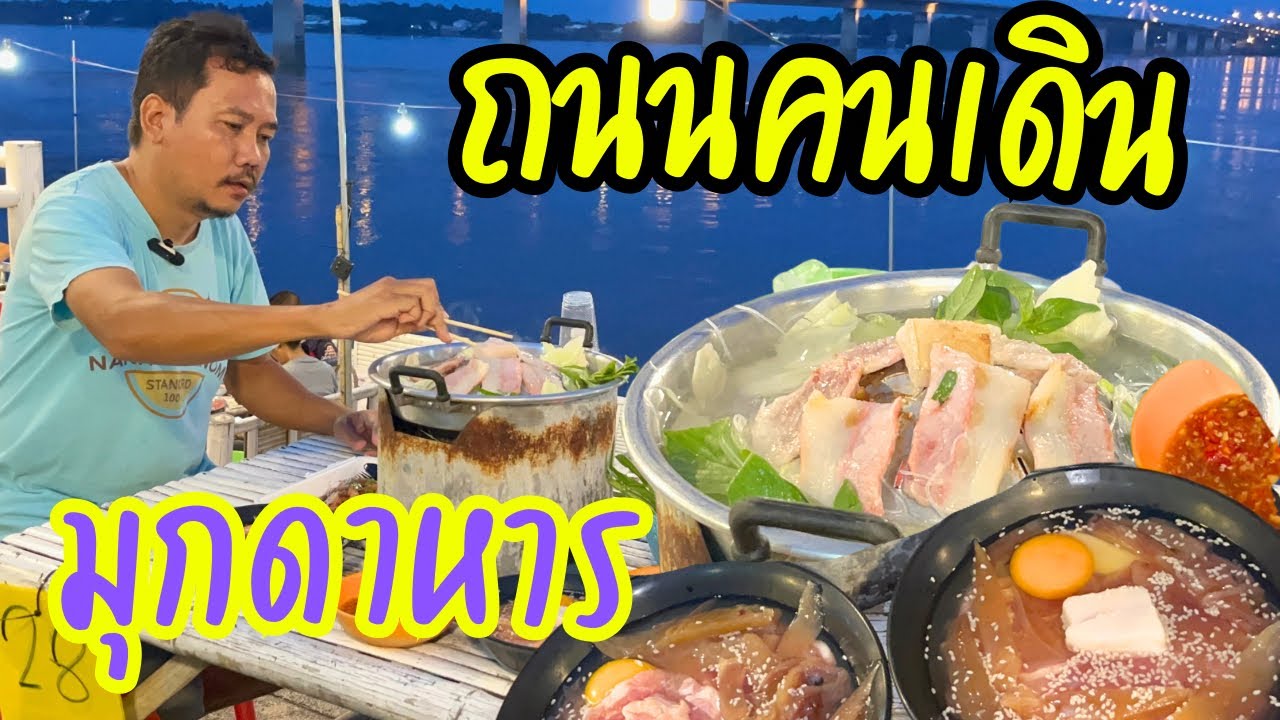
 Click to Access the Navigation Map GPS
Mekong River Dam Map
Recommend

 Art, Culture and Heritage
 Historical Sites and Monuments(2)
 Landmarks and Memorials(3)
 Art, Craft Centres, Tradition(2)
 Museums(1)
 Places of Worship
 Temple(17)
 Other Sacred Sites(3)
 Suburban Living
 Village, Community(4)
 Local Market(2)
 National Parks and Marine Reserves(4)
 Mountain (Doi)(5)
Dam, Reservoir, Lake(3)
Mountain (Doi)(5)
Dam, Reservoir, Lake(3)
 Waterfalls(5)
 Caves(2)
 River, Canal(2)
 Bays and Beaches(1)
 Other natural attractions(1)
 Entertainment and Agricultural
 Farms, Parks and Ecotourism(1)
 Travel Articles, Recipes
 Travel Review, Food Review(1)


