
lovethailand home >Northeastern Travel Attractions >Mukdahan Travel Attractions >Muang Mukdahan >Mukdahan > Mukdahan Night Market
TL;DR: Mukdahan Night Market, Mukdahan attractions : Suburban Living, Local Market.
Mukdahan Night Market
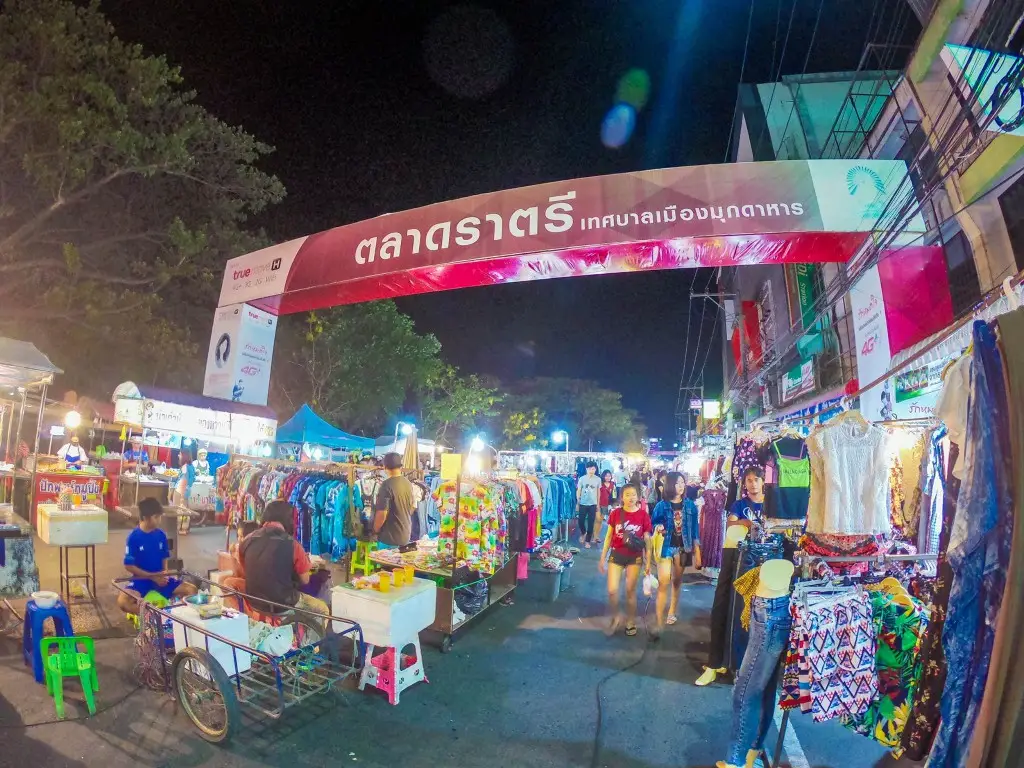
Open Days: Daily
Opening Hours: 16.00 – 21.00. Vendors begin setting up in the late afternoon, the market is busiest from approximately 17.00 to 20.00, and individual stalls may close at different times.
Mukdahan Night Market, commonly called the Mukdahan Municipal Market by local residents, is an evening street market and food destination in the center of Mukdahan city. It is located along Song Nang Sathit Road, in front of the provincial administrative district and close to the Mukdahan City Pillar Shrine. During the late afternoon, vendors bring carts, tables, tents, cooking equipment, and merchandise into the area. The ordinary urban road gradually changes into a busy food and shopping street used by local families, workers, students, and visitors throughout the evening.
The market is one of the places where Mukdahan residents regularly buy dinner after work, purchase prepared dishes for their families, meet friends, or collect snacks before returning home. Its importance comes from its continuing role in everyday local life rather than from tourism alone. Many customers know their preferred vendors, favorite dishes, and the times at which particular foods become available. International visitors therefore encounter a functioning local market that serves the community rather than a souvenir market created exclusively for tourists.
The Thai name Talat Ratri means an evening or night market. Although the word ratri can suggest a market operating late into the night, the principal hours are approximately 16.00–21.00. Many food stalls are fully prepared by 16.30 or 17.00, and activity increases through the early evening. Around 20.00, vendors who have sold most of their food may begin packing. By approximately 21.00, a large part of the street market is closing, although permanent restaurants and a few food businesses in the surrounding district may remain open later.
The informal name Municipal Market is widely understood because Mukdahan Town Municipality organizes and supervises the area. Municipal responsibilities include allocating trading spaces, coordinating road use, maintaining public order, managing waste, and supporting cleanliness. The market entrance sign also displays the name of the municipality. Travelers searching online or using navigation services should nevertheless enter “Mukdahan Night Market” or “Talat Ratri Mukdahan,” as these names are more likely to identify the correct visitor location.
The market extends along Song Nang Sathit Road, an important street in Mukdahan’s old urban district. The trading route begins near the Wivitsurakan Road intersection, also known locally as the police-box junction, passes the Mukdahan Meteorological Station intersection, and continues toward the three-way junction behind Mukdahan Hospital. The exact road closure and arrangement of stalls can change according to traffic management, vendor numbers, festivals, and municipal instructions. Drivers must follow barriers and signs rather than relying entirely on a navigation application.
The market area can accommodate approximately 300 vendors when it is operating at full scale. The actual number changes according to weather, day of the week, season, ingredient availability, and each trader’s circumstances. Friday, Saturday, Sunday, and public-holiday evenings are usually busier than ordinary weekdays. Heavy rain can lead some stalls to open late, carry less food, or remain closed. Visitors should therefore expect the market to vary naturally from one evening to another.
The main attraction is the diversity of food. Isan cuisine, Vietnamese-influenced dishes, Central Thai food, one-plate meals, grilled items, fried snacks, desserts, seasonal fruit, drinks, and prepared household dishes are sold close together. The selection is not identical every day because many vendors work with fresh ingredients obtained from local markets and producers. Walking from one end of the market to the other before buying a full meal allows visitors to compare the available dishes, portion sizes, and prices.
For residents, the market functions as a large communal dinner kitchen. People without time to cook can buy steamed rice, sticky rice, curries, soups, stir-fries, fried food, chili dips, vegetables, and several ready-made dishes in one place. Prepared-food vendors often divide dishes into portions suitable for small households. A customer can purchase two or three different foods and combine them with rice at home, making the market convenient for both daily meals and family gatherings.
Travelers intending to eat at the market should first examine the available space. Some stalls provide a few tables or standing areas, but there is no large common food court with extensive seating. Buying many dishes before finding a place to sit may be inconvenient during busy periods. A practical approach is to choose portable food, share several small portions, or take the meal back to a hotel or another permitted dining area. All packaging should be collected and placed in designated waste containers.
Isan food appears throughout the market. Typical choices may include som tam, spicy cucumber or long-bean salads, larb, nam tok, grilled chicken, grilled catfish, grilled pork, fermented Isan sausage, jaew bong chili paste, sticky rice, and fresh vegetables. Each som-tam vendor has a different balance of chili, salt, lime, sugar, and fermented fish. Travelers who cannot eat spicy food should specify the number of chilies, while those avoiding fermented fish should make the request before the dish is prepared.
The smell of charcoal and grilled food is an essential part of the early-evening atmosphere. Chicken, pork, beef, fish, sausages, meatballs, and skewered food are cooked in view of customers. This allows buyers to observe the cooking process and select freshly prepared pieces. A good stall keeps uncooked ingredients away from cooked food, uses separate utensils, and stores raw meat under appropriate temperature control. Grilled food should be eaten while hot or refrigerated promptly if taken away.
Mukdahan Night Market is also popular with travelers seeking Vietnamese food at accessible prices. The city’s Vietnamese culinary culture is connected with the settlement of Thai residents of Vietnamese ancestry and long-standing travel through the Mekong region. Recipes have been adjusted to local ingredients and preferences over several generations. Visitors can therefore taste food with Vietnamese roots and a distinctive Mukdahan character without ordering a large restaurant meal.
Vietnamese-influenced dishes that may be found at the market or nearby include steamed rice-skin dumplings, khanom niao, Vietnamese-style crispy pancakes, fried or fresh spring rolls, nem nuong, Vietnamese pork sausage, khao piak sen noodle soup, filled baguettes, and food served with fresh herbs and vegetables. Not every dish is available from every vendor or on every evening. Anyone seeking a particular item should arrive before 19.00 because popular products may sell out early.
Thai-Vietnamese steamed rice-skin dumplings are made by spreading a thin rice batter over cloth stretched above boiling water. The wrapper is filled with seasoned pork, mushrooms, spring onions, or ingredients used in the vendor’s recipe and served with pork sausage, fried shallots, and dipping sauce. The dish is best eaten hot. When carrying it away, leaving the container slightly ventilated prevents excess steam from making the wrappers overly wet and sticky.
Vietnamese-style pancakes are made from a yellow batter cooked until crisp or semi-crisp and filled with pork, prawns, bean sprouts, or other ingredients. They are served with vegetables and dipping sauce. The dish should be eaten soon after cooking because moisture from the filling and takeaway packaging softens the pancake. People with seafood allergies must ask about prawns, dried shrimp, and fish-based ingredients in the sauce.
Nem nuong is among the most widely recognized Vietnamese dishes in northeastern Thailand. A serving usually contains seasoned grilled pork, rice-paper sheets, herbs, vegetables, selected fruit, and a rich dipping sauce. Takeaway customers should check that the meat, vegetables, rice paper, and sauce are packed separately. The dish contains fresh vegetables and cooked meat and should not be left in a hot vehicle for a long journey without appropriate cooling.
Khao piak sen, also described as Vietnamese-style rice-noodle soup, is a satisfying hot meal for the evening. The thick, soft noodles may be served with Vietnamese pork sausage, pork bones, minced pork, chicken, spring onions, and fried shallots. Recipes vary significantly between cooks. Travelers managing their sodium intake should taste the soup before adding seasoning because the stock, sausage, and condiments can already provide considerable salt.
Vietnamese pork sausage is sold both as ready-to-eat food and as a popular Mukdahan gift. Versions include steamed sausage, fried sausage, black-pepper sausage, and sausage containing strips of pork skin. Buyers should check production dates, packaging, and refrigeration requirements. Fresh sausage is unsuitable for a long trip without a cooler. Food intended for immediate eating should be selected from a stall that keeps cooked and uncooked products separate.
The market also provides familiar one-plate Thai meals such as fried rice, basil stir-fry with rice, fried pork or chicken over rice, chicken rice, braised pork-leg rice, noodles, rad na, and pad see ew. Seating may be limited. Customers should state their preferred level of chili and mention ingredients they cannot eat before cooking begins, particularly eggs, peanuts, seafood, soy, and wheat, which are common allergens in Thai street food.
Fried food includes chicken, pork, meatballs, sausages, tofu, spring rolls, bananas, sweet potatoes, and various snacks. Buyers should choose stalls where the oil does not smell rancid and where the fryer does not produce unusually dark smoke. Food that has remained on display for a long time can lose crispness and absorb additional oil. Waiting briefly for a fresh batch generally provides a better result.
Desserts and drinks provide lighter choices for people who do not want a full dinner. Products may include Thai sweets, sticky rice with mango, bananas in coconut milk, bua loi, khanom khrok, roti, crêpes, ice cream, fruit juice, tea, coffee, herbal drinks, and blended beverages. The selection follows seasons and current food trends. Customers controlling sugar intake can request less sweetness where the recipe allows or choose fresh fruit instead of a syrup-based drink.
Seasonal fruit may include watermelon, pineapple, mango, guava, oranges, longan, rambutan, or durian according to the agricultural calendar. Fruit is sold whole or cut into ready-to-eat portions. Cut fruit should be kept in a covered container and chilled with ice or refrigeration. Buyers should avoid pieces with an unusual smell, cloudy accumulated liquid, or signs that they have remained unrefrigerated for an extended period.
Prepared local dishes introduce visitors to food that may not appear on tourist-restaurant menus. Seasonal options can include bamboo-shoot curry, mushroom curry, om soup, local vegetables, steamed fish mixtures, fish chili dips, and boiled or steamed greens. These foods often use fermented fish, fish sauce, and strongly seasoned ingredients. First-time diners may prefer a small portion and can ask the vendor to explain the dish before buying.
Street-market dining makes it possible to control spending by selecting the number of skewers, bags, or boxes required. Customers are not obliged to order several restaurant-size dishes. Prices and portions nevertheless vary among vendors. The cost should be confirmed before ordering an item without a visible price, particularly seafood, seasonal fruit, or food sold by weight. Agreeing on the price before preparation prevents misunderstanding.
Cash and Thai bank QR payments are widely used. International visitors should carry Thai baht in small denominations because most roadside stalls do not process credit cards, and Thai QR systems may not accept foreign banking applications. A large banknote can be difficult for a vendor to change immediately after opening. Customers using a QR payment should check the amount carefully and show the completed transaction screen to the seller.
There is no admission fee. Anyone can browse the market without purchasing an entrance ticket. Expenses are limited to food, merchandise, selected parking, and personal services. Free entry makes the market suitable for travelers of all budgets. Visitors who enjoy the atmosphere without making a large purchase can still support the local economy by buying a useful item, a drink, or a modest meal from a community vendor.
Some sections also sell clothing, footwear, bags, accessories, toys, household goods, mobile-phone accessories, and general merchandise. Stock changes according to vendors and customer demand. Clothing should be checked for size, seams, zippers, and condition before leaving. Electrical or phone accessories should be tested where possible, and the buyer should ask about exchanges or warranties because the stall may not operate at the same time on a return visit.
The market’s zones are functional rather than permanently divided by formal signs. Ready-to-eat food stalls are identified by grills, fryers, and cooking carts. Prepared-meal vendors display curries and household dishes in bags or containers. Vietnamese food stalls may offer dumplings, pork sausage, pancakes, or noodles. Seasonal fruit and agricultural products are positioned where deliveries are convenient. Clothing, household goods, and accessories are distributed along different parts of the route.
First-time visitors should begin at one end and walk the full length before returning to selected stalls. This reduces unnecessary repetition and provides an overview of the choices. Groups should select a recognizable meeting point such as the market sign, the City Pillar Shrine, or a nearby public building. Mobile service is generally available, but noise and crowds can make phone conversations difficult.
The best time for the widest food selection is approximately 17.00–19.00, when most vendors are operating and meals have recently been prepared. The period from 19.00 to 20.00 is usually the busiest, especially on weekends. After 20.00, crowds begin to decrease, but certain popular foods may no longer be available. Arriving after 21.00 is unsuitable for anyone seeking the complete market experience because many traders are already packing their stalls.
Weekdays reveal the ordinary rhythm of the city. Many customers stop after work or after collecting children from school. Traffic becomes active for a limited period, but the market is usually less crowded than on a weekend. Monday through Thursday is practical for travelers who want to speak with vendors or photograph food without interrupting heavy business. Friday and Saturday provide a more energetic atmosphere and generally a larger number of stalls.
During the hot season, the road retains heat from the afternoon and the air near grills can be uncomfortable. Lightweight clothing, drinking water, and regular breaks are recommended. Older travelers, young children, and people sensitive to heat may prefer to arrive after 17.30 when direct sunlight has weakened, while still allowing enough time before food begins to sell out.
Rain affects an outdoor street market more than an indoor food hall. Vendors normally have tents or plastic covers, but walkways become wet and rain can blow onto merchandise. A compact umbrella or rain jacket, waterproof bag, and footwear with reliable grip are useful. Strong rain may delay the opening of some stalls or lead vendors to close early, so checking the weather before leaving the hotel is advisable.
November through February generally provides the most comfortable conditions. Cooler evening air makes it easier to walk and sample food. A light jacket can be useful on windy nights, particularly when the itinerary also includes the Mekong riverfront. This period overlaps with the main domestic travel season and New Year holidays, so central accommodation should be reserved in advance.
Food hygiene requires attention. A suitable vendor covers prepared food, uses utensils or gloves appropriately, keeps uncooked meat chilled, and cooks food thoroughly. Seafood, dairy products, coconut milk, meat, and egg dishes should not remain at warm outdoor temperatures for long periods. Takeaway meals should be eaten promptly or refrigerated at the accommodation.
Travelers with food allergies must communicate clearly. Small street-food workspaces frequently use shared pans, knives, grills, oil, and serving utensils. Peanuts, prawns, fish, eggs, milk, soy, sesame, and wheat can therefore be present through cross-contact even when they are not a visible part of the main dish. Anyone with a severe allergy should carry medication and a Thai-language allergy card.
Vegetarian travelers should ask about fish sauce, oyster sauce, shrimp paste, stock, and seasoning powder. A meal without visible meat may still contain animal ingredients. Thai jay food follows rules that differ from general vegetarian food and also excludes certain strong-smelling plants. Certified jay options are easier to find during the annual vegetarian festival, while the ordinary nightly selection can be limited.
Muslim visitors should ask about meat, oil, and shared cooking equipment. Mukdahan Night Market is not entirely halal, and the absence of pork from a visible dish does not prove halal preparation. Travelers following strict requirements should choose a clearly certified vendor or visit a recognized halal restaurant. Whole fruit, plant-based food, sticky rice, and labelled packaged products can be easier to assess.
Families must supervise children around hot grills, boiling oil, wooden skewers, food carts, traffic, and motorcycles near the market perimeter. Children should not handle food or fragile merchandise without permission. Parents of children with allergies should bring a safe alternative meal when ingredients cannot be confirmed. A written contact number can be placed in a child’s pocket in case the group becomes separated.
Older visitors can enjoy the market but should be aware of uneven surfaces, drains, electrical cables, tents, and narrow passages. Stable shoes and occasional rest are important. Wheelchairs may be used along parts of the road, although movement becomes difficult during the peak period between 19.00 and 20.00. A companion should inspect the route and choose an earlier arrival time.
As an outdoor market, the site does not provide air conditioning, extensive shared seating, or toilets beside every section. Toilets and additional facilities are available through nearby public buildings, municipal areas, businesses, and service locations according to their operating times. Anyone requiring an accessible toilet should ask a municipal officer or vendor near an entrance before beginning the walk.
General photography is possible, but close portraits of vendors, children, customers, or cooking procedures require permission. Some traders do not permit detailed photographs of recipes, products, or prices. Photographers should not block the route, place food on a vendor’s working surface without asking, or use intrusive flash beside hot grills and fryers. Purchasing an item and making a polite request creates a more respectful interaction.
Reducing waste is important because street food often uses disposable bags, boxes, cups, straws, and cutlery. Visitors may carry reusable bags or containers when a vendor can accept them safely. Several purchases can be combined into fewer bags, and unnecessary cutlery can be declined. All waste should be placed in municipal bins rather than left beside a stall or pushed into a roadside drain.
Fair support for vendors includes asking prices politely, preparing payment, and avoiding aggressive bargaining over inexpensive food. The price reflects ingredients, fuel, transport, stall costs, and preparation time. A modest multi-item discount may be requested for general merchandise, but the vendor’s answer should be accepted without pressure.
Personal belongings require attention during busy periods. Bags should remain closed and positioned in front of the body. Phones should not be left on counters while choosing food. Excessive cash is unnecessary and should be divided between secure locations. Lost items should be reported immediately to nearby vendors, municipal personnel, or the market coordination point.
Parking is limited because part of the road becomes the trading area. Drivers should arrive before 17.30 and use only clearly permitted spaces. Vehicles must not block public offices, hospital access, houses, ramps, or vendor locations. When the nearest parking is full, using a public space elsewhere in the central district and walking a short distance is more practical than repeatedly circling the market.
Motorcycles are popular with residents because they require less parking space. They must still be parked in an orderly manner without obstructing pedestrians or stalls. Helmets and personal property should be secured. Pedestrians should watch for motorcycles entering the market perimeter during setup and closing periods, when traders’ vehicles return to collect equipment.
The Mukdahan City Pillar Shrine is immediately nearby, allowing travelers to combine a cultural visit with dinner. Visitors should dress appropriately, keep their voices low, and follow posted religious instructions. Beginning at the shrine at approximately 16.30 and entering the market when vendors open is an effective plan for avoiding the busiest crowd.
The Chao Mae Song Nang Phi Nong Shrine is approximately half a kilometre away and is connected with Mukdahan’s founding traditions. Visitors can walk through the old central district to the shrine, subject to its operating hours. Food should not be eaten in ceremonial areas, and shopping bags must not be placed among offerings.
Wat Si Mongkhon Tai and Indochina Market are approximately half a kilometre away near the Mekong River. A traveler can spend the afternoon at Indochina Market, walk beside the river, pay respect to Phra Chao Ong Luang at the temple, and then continue to the night market for dinner. Religious spaces should be visited in modest clothing and kept separate from the handling and consumption of food.
Mukdahan Tower is approximately 2 km from the market and provides provincial exhibitions and elevated city views during its operating periods. Visiting the tower in the afternoon and returning before 18.00 creates a convenient sequence. Drivers should re-enter the Song Nang Sathit district before road closures become extensive.
Wat Roi Phra Phutthabat Phu Manorom is approximately 4.8 km away and is known for its elevated viewpoint and the large Phaya Si Mukda Maha Muni Nilapala Naga image. Visitors can spend the afternoon at the temple and descend to the city for dinner at the night market. Modest temple clothing and comfortable market footwear can both be prepared in advance.
Nearby Vietnamese restaurants provide seated alternatives to the street market. Khu Faed Naem Nueang, Or Aem Vietnamese Food, and Krua Saigon offer broader menus for travelers who want a full meal. Visitors can sample a snack at the market and eat their main meal in a restaurant, or dine first and use the market for dessert, fruit, and takeaway purchases.
Goodmook Traveller Cafe is located on Song Nang Sathit Road in the old-town area. It is suitable for coffee, dessert, and a seated break before the night market opens. Because parking in the old district is limited, using the café as a meeting point and walking to the market can be easier than moving a car several times.
Ban Lao Yuan Na Rim Khong combines Thai, Lao, and Vietnamese dishes with a Mekong riverside setting. It suits visitors seeking a seated meal and river atmosphere. The restaurant is approximately 1.8 km from the market, making a hired vehicle appropriate for older travelers or during rain.
Accommodation near the market ranges from central hotels within walking or short driving distance to riverside properties. Staying within 0.5–1.5 km reduces parking concerns and makes it practical to carry dinner back to the room before it cools. Travelers should choose according to transport, accessibility needs, and preferred service level.
Ploy Palace Hotel is near the market and administrative district and suits travelers wanting a larger central hotel. Riverfront Hotel Mukdahan and Hotel de Ladda are positioned toward the Mekong riverfront. Hotel Muq and HOP INN Mukdahan are convenient for road transport and the bus-terminal area. Each property should be contacted directly for current rates and room availability.
A compact 2-hour visit can begin at the City Pillar Shrine at 16.30, followed by the market at 17.00. Travelers can walk the full route, choose one or two main foods, a snack, and a drink, and purchase dessert before leaving around 19.00. This schedule is practical for families and older visitors because it avoids a prolonged stay during the busiest period.
A half-day itinerary can begin at Indochina Market and Wat Si Mongkhon Tai, continue along the Mekong, include the Chao Mae Song Nang Phi Nong Shrine and City Pillar, and reach the night market by 17.30. After dinner, visitors can return to their hotel or continue to a permanent café or restaurant in the city.
A 2-day, 1-night stay can use the first day for Mukdahan Tower, Indochina Market, Wat Si Mongkhon Tai, and the night market. The second day can include Phu Manorom, the Second Thai–Lao Friendship Bridge, or Phu Pha Thoep National Park. Visiting the night market on the first evening provides an immediate introduction to the city’s food and daily rhythm.
Getting There by private car: enter Mukdahan Municipality from Chayangkun Road or Highway 212 and continue toward Song Nang Sathit Road, the City Pillar Shrine, or Mukdahan Town Municipality. The market coordinates are approximately 16.542970, 104.725890. In the evening, follow road closures and municipal officers rather than attempting to drive through the vendor area.
From Mukdahan Bus Terminal, travelers can use a motorized tricycle, local hired vehicle, or available ride-hailing service. Tell the driver “Talat Ratri, Song Nang Sathit Road, near the City Pillar” to avoid confusion with Indochina Market or another municipal market. A fare should be agreed upon before departure when the vehicle has no meter.
Mukdahan Province has no commercial airport. Common air gateways are Nakhon Phanom, Sakon Nakhon, and Ubon Ratchathani airports, followed by a rental car, van, or bus. Travelers arriving in Mukdahan after 19.00 can still visit, but luggage should be left at the hotel and arrival at the market should be before 20.00.
Mukdahan has no railway station. Rail passengers can arrive at Ubon Ratchathani and continue by road. The combined journey takes several hours, making at least one overnight stay in Mukdahan advisable. An afternoon arrival allows time to check in and rest before walking through the market.
The market clearly reflects Mukdahan’s cultural diversity. Isan dishes appear beside Vietnamese food, ordinary Thai meals, and products influenced by Mekong trade. This diversity developed through migration, settlement, and contact between communities rather than through a tourism display. Eating in the market is therefore a way to learn about the city through flavor, ingredients, and conversations with vendors.
The market also provides an accessible starting point for small entrepreneurs. Vendors can test recipes, develop regular customers, and sell products without investing in a large permanent restaurant. Repeat customers encourage improvement in food, packaging, and production. Supporting the market therefore contributes to household businesses, older food producers, and independent workers.
As a street market, its appearance changes from night to night. A stall shown in an old photograph may move, close temporarily, or change its menu, while a new vendor may take its place. This flexibility is part of the market’s character. Travelers should choose from what is genuinely available on the evening of their visit rather than expecting every reviewed dish to remain permanently in one position.
International visitors can explore the market even when English signs are limited. Food photographs, calculators, and translation applications help communication. Useful Thai phrases include “mai phet” for not spicy, “mai sai pla ra” for no fermented fish, “mai sai thua” for no peanuts, “kin thi ni” for eating here, and “sai thung klap” for takeaway. A greeting and a simple Thai thank-you create a friendly exchange.
Mukdahan Night Market is therefore more than a place to buy an inexpensive evening meal. It is a shared urban space used daily by workers, families, students, older residents, traders, and visitors. Vietnamese food, Isan culture, and the everyday life of a Mekong border city are visible in a natural setting. Travelers who explore patiently, sample several foods, respect vendors, manage their waste, and combine the market with nearby cultural sites will gain a close and meaningful introduction to Mukdahan.
| Name | Mukdahan Night Market / Mukdahan Municipal Night Market |
| Thai Name | ตลาดราตรี มุกดาหาร หรือ ตลาดเทศบาล |
| Location | Song Nang Sathit Road, in front of the Mukdahan provincial administrative district and near the City Pillar Shrine, Mueang Mukdahan District, Mukdahan 49000, Thailand |
| Coordinates | 16.542970, 104.725890 |
| Attraction Type | Night market, street-food market, community market, and central evening dining area |
| Main Character | A major night market with space for approximately 300 vendors, offering Isan, Vietnamese, and Thai food, fruit, clothing, accessories, and household goods |
| Importance | An everyday dinner market for residents, an income source for small vendors, and a public space reflecting Mukdahan’s Isan and Vietnamese food cultures |
| Current Status | Open daily; the number of operating stalls and individual closing times vary according to weather and vendor availability |
| Open Days | Daily |
| Opening Hours | 16.00 – 21.00; busiest from approximately 17.00 to 20.00; selected vendors may continue after 21.00 |
| Admission Fee | Free admission |
| Caretaker | Mukdahan Town Municipality |
| Caretaker Contact | +66 42 611 227, Monday–Friday, 08.30–16.30 |
| Market Route | Song Nang Sathit Road from the Wivitsurakan Road intersection, past the Mukdahan Meteorological Station intersection, toward the junction behind Mukdahan Hospital; the traffic arrangement may change |
| Main Areas / Zones | 1. Ready-to-eat food and one-plate meals 2. Isan food and grills 3. Vietnamese food and pork sausage 4. Prepared household dishes 5. Fried snacks and desserts 6. Seasonal fruit and produce 7. Drinks 8. Clothing, footwear, and accessories 9. Household and mobile-phone goods 10. Passenger pickup and rest areas around the market |
| Food Highlights | Som tam, grilled chicken, larb, nam tok, Isan sausage, Vietnamese steamed rice-skin dumplings, khanom niao, Vietnamese pancakes, nem nuong, pork sausage, khao piak sen, one-plate meals, prepared curries, fried food, desserts, and seasonal fruit |
| Facilities | Waste points, designated parking, toilets in nearby public or service buildings, convenience stores, pharmacies, ATMs, local transport, and ride-hailing services |
| Payment | Cash and Thai bank QR payment; most stalls do not accept credit cards, and international travelers should carry small Thai-baht notes |
| Recommended Time | 17.00–19.00 for the widest food choice, or after 20.00 for smaller crowds, although some stalls begin closing |
| Recommended Duration | Approximately 1–2 hours, or a half day when combined with the City Pillar Shrine, Indochina Market, Wat Si Mongkhon Tai, and the Mekong riverfront |
| Getting There | Located in central Mukdahan on Song Nang Sathit Road. Accessible by car, motorcycle, motorized tricycle, hired vehicle, or ride-hailing service. Some roads are closed or controlled during market hours. |
| Parking | Use public parking and municipality-approved spaces around the market. Do not obstruct public offices, hospital access, houses, ramps, or vendor areas. |
| Accessibility | The market occupies an outdoor street with some uneven surfaces. Older visitors should arrive before peak crowds, wear stable shoes, and have assistance when using a wheelchair. |
| Precautions | Watch for hot grills, boiling oil, carts, motorcycles, and slippery rainy-season surfaces. Protect personal belongings, communicate food allergies, and eat fresh takeaway food promptly. |
| Nearby Tourist Attractions | 1. Mukdahan City Pillar Shrine, about 0.1 km 2. Chao Mae Song Nang Phi Nong Shrine, about 0.5 km 3. Wat Si Mongkhon Tai and Phra Chao Ong Luang, about 0.5 km 4. Indochina Market and Samran Chai Khong Road, about 0.5 km, Tel. +66 42 611 227 5. Mukdahan Tower, about 2 km 6. Wat Roi Phra Phutthabat Phu Manorom, about 4.8 km |
| Nearby Restaurants | 1. Khu Faed Naem Nueang, about 0.5 km, Tel. +66 42 612 252 or +66 98 681 6474 2. Or Aem Vietnamese Food, about 0.6 km, Tel. +66 82 787 2360 3. Krua Saigon Mukdahan, about 0.8 km, Tel. +66 42 615 303 or +66 81 320 1318 4. Goodmook Traveller Cafe, about 0.8 km, Tel. +66 42 042 198 5. Ban Lao Yuan Na Rim Khong, about 1.8 km, Tel. +66 65 142 3915 or +66 42 611 111 |
| Nearby Accommodations | 1. Ploy Palace Hotel, about 0.5 km, Tel. +66 42 614 988 2. Riverfront Hotel Mukdahan, about 1.2 km, Tel. +66 42 612 948-9 or +66 81 703 1705 3. Hotel Muq, about 1.5 km, Tel. +66 63 787 5555, +66 42 040 888, or +66 42 040 999 4. HOP INN Mukdahan, about 1.6 km, Tel. +66 92 258 7318 or Reservation Center +66 2 080 2222 5. Hotel de Ladda, about 2.5 km, Tel. +66 42 611 499 or +66 42 611 497 |
Frequently Asked Questions (FAQ)
Q: Are Mukdahan Night Market and Mukdahan Municipal Market the same place?
A: Yes. The tourism name is Mukdahan Night Market or Talat Ratri. Residents commonly call it the Municipal Market because Mukdahan Town Municipality established and manages the market area.
Q: Which days and hours is Mukdahan Night Market open?
A: The market opens daily from approximately 16.00 to 21.00. Most stalls are operating after 17.00, and many begin packing between 20.00 and 21.00.
Q: Is there an admission fee?
A: No. Entry is free. Visitors pay only for food, merchandise, selected parking, or services they choose to use.
Q: Which Vietnamese foods can visitors find?
A: Depending on the evening, visitors may find steamed rice-skin dumplings, khanom niao, Vietnamese pancakes, nem nuong, pork sausage, spring rolls, khao piak sen, and filled baguettes. Popular items may sell out before closing.
Q: What is the best time to visit?
A: Arrive between 17.00 and 19.00 for the widest selection and freshly prepared food. Crowds decrease after 20.00, but some vendors begin closing.
Q: Is parking available?
A: Municipality-approved parking is available around the market, but there is no single large car park for all visitors. Arriving before 17.30 or parking elsewhere in the central district and walking is recommended.
Q: Can international travelers pay by credit card?
A: Most stalls accept cash and Thai bank QR payments but not credit cards. International visitors should carry Thai baht in small denominations.
Q: Who manages Mukdahan Night Market?
A: Mukdahan Town Municipality manages the market. The municipal office can be contacted at +66 42 611 227 from Monday to Friday, 08.30–16.30.
 Category: ●Suburban Living
 Group: ●Local Market
Last Update : 2 MonthAgo
 Last Update : 2 MonthAgo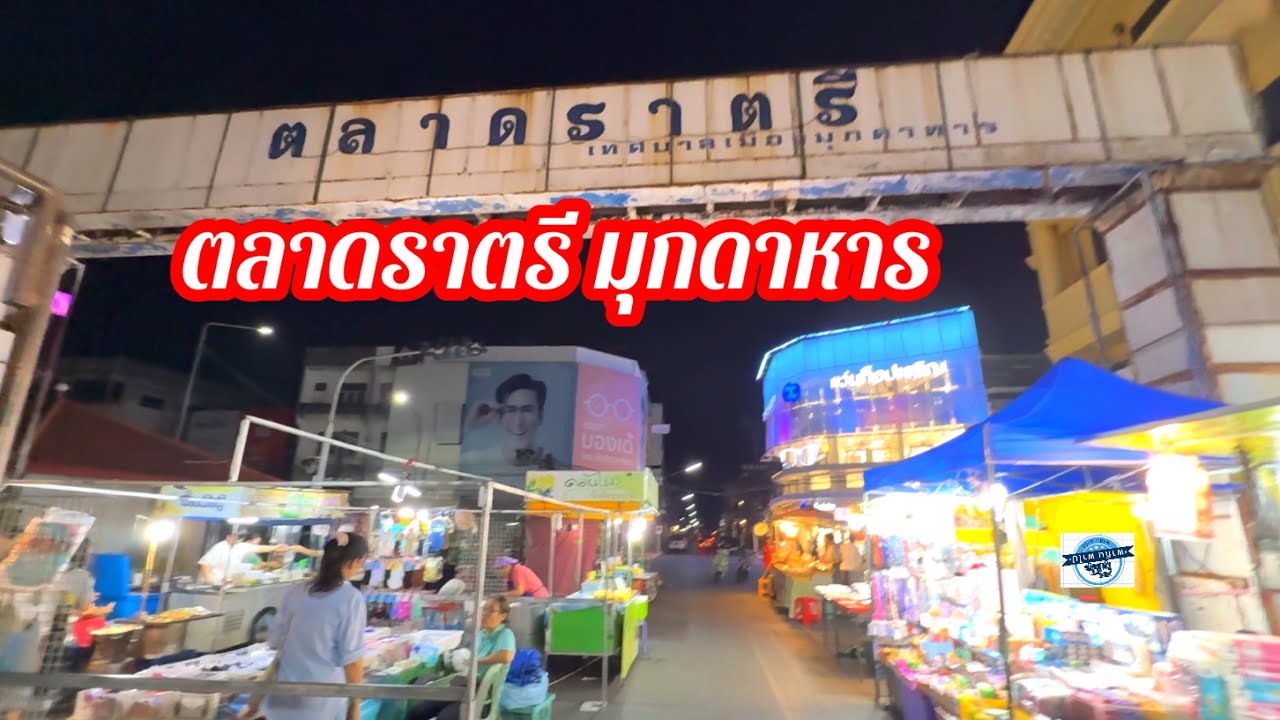
 Click to Access the Navigation Map GPS
Mukdahan Night Market Map
Recommend

 Art, Culture and Heritage
 Historical Sites and Monuments(2)
 Landmarks and Memorials(3)
 Art, Craft Centres, Tradition(2)
 Museums(1)
 Places of Worship
 Temple(17)
 Other Sacred Sites(3)
 Village, Community(4)
Local Market(2)
Village, Community(4)
Local Market(2)
 Nature and Wildlife
 National Parks and Marine Reserves(4)
 Mountain (Doi)(5)
 Dam, Reservoir, Lake(3)
 Waterfalls(5)
 Caves(2)
 River, Canal(2)
 Bays and Beaches(1)
 Other natural attractions(1)
 Entertainment and Agricultural
 Farms, Parks and Ecotourism(1)


