
lovethailand home >Northeastern Travel Attractions >Maha Sarakham Travel Attractions >Phayakha Phum Phisai >Lan Sakae > Yasothon Rocket Festival
TL;DR: Yasothon Rocket Festival, Maha Sarakham attractions : Art, Culture and Heritage, Art, Craft Centres, Tradition.
Yasothon Rocket Festival
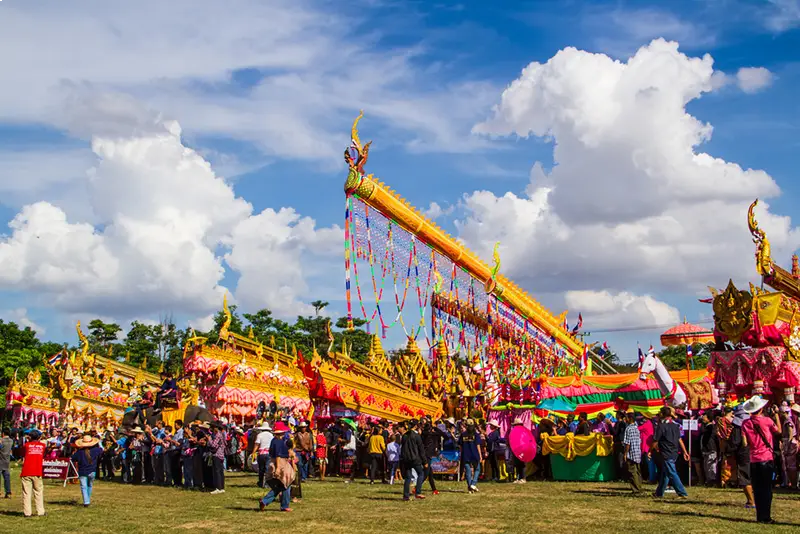
Open Days: The Maha Sarakham Bun Bang Fai Festival is held annually around the 6th lunar month of the Isan traditional calendar, usually between May and June. In 2026, Maha Sarakham Town Municipality scheduled its festival on 30 May 2026 at Wat Uthai Thit, Talat Subdistrict, Mueang Maha Sarakham District, Maha Sarakham Province.
Opening Hours: Wat Uthai Thit and public areas in Maha Sarakham city are accessible during normal public visiting hours. The 2026 municipal festival activities began around 13.00 onward. Exact times for each annual event should follow the official schedule announced by the local organizer.
The Bun Bang Fai Festival in Maha Sarakham Province is an important Isan cultural tradition that reflects the deep relationship between people, sky, rain, soil, rice, and community life. It is part of Heet Sip Song, the twelve traditional monthly customs of northeastern Thailand, and is usually held around the 6th lunar month before the rice-planting season. The festival is dedicated to Phaya Thaen, the celestial rain deity in Isan belief, and expresses the community’s wish for seasonal rainfall, fertile fields, and a successful agricultural year. For visitors, Bun Bang Fai is not merely a rocket festival. It is a living ritual that combines local faith, Buddhist merit-making, folk performance, traditional music, community procession, craftsmanship, and the shared identity of Maha Sarakham.
Maha Sarakham is located in the heart of northeastern Thailand, where agriculture, rice fields, seasonal rain, and village life have shaped local culture for generations. Before the rainy season begins, communities traditionally gather to hold Bun Bang Fai as a way to communicate with the sky. The handmade rocket, or bang fai, becomes a symbolic message sent upward to Phaya Thaen. It asks for rain to fall at the right time, for the soil to become fertile, and for rice seedlings to grow strongly. This makes the festival both spiritual and practical: it expresses faith while also reflecting the real needs of farming communities.
The importance of Bun Bang Fai in Maha Sarakham lies in its role as a community ritual. It brings together children, young people, elders, monks, local artisans, municipal officers, and residents from different neighborhoods. Young participants join dance groups and folk performances. Adults prepare floats, music, costumes, and community activities. Elders pass on legends and ritual meanings. Temples and local authorities provide public spaces for merit-making and cultural participation. Through this cooperation, the festival becomes a social mechanism that strengthens unity and keeps Isan heritage alive.
In Maha Sarakham city, the festival has a close connection with old communities and important religious sites, especially Wat Uthai Thit in Talat Subdistrict. Wat Uthai Thit is one of the significant temples in the municipal area and has long been associated with the history of Maha Sarakham city. In 2026, Maha Sarakham Town Municipality scheduled the annual Bun Bang Fai event at Wat Uthai Thit, making the temple the main focus for this version of the festival. The use of a historic temple as the venue gives the festival a stronger connection with local history, Buddhism, and community identity.
The form of Bun Bang Fai in Maha Sarakham varies from place to place. Some communities emphasize beautifully decorated rocket processions, while others include contests, folk dance, Phadaeng-Nang Ai performances, chanting, community merit-making, or rocket-launching activities under local safety regulations. In Phayakkhaphum Phisai District, the 2026 festival was scheduled from 9 to 11 May and included a ritual at the city guardian shrine, rocket processions, decorated rocket contests, Phadaeng-Nang Ai contests, and traditional rocket launching. In Bo Yai Subdistrict of Borabue District, local communities also organized procession and rocket-launching activities in June. These examples show that Bun Bang Fai remains active across many parts of Maha Sarakham Province.
The main legend behind the festival is the story of Phaya Khankhaak and Phaya Thaen. According to Isan folklore, the human world once suffered from severe drought because Phaya Thaen withheld the rain. Phaya Khankhaak, a toad-like heroic figure, led animals to battle Phaya Thaen in the heavens. After being defeated, Phaya Thaen agreed to send seasonal rain if humans launched rockets into the sky each year as a reminder and offering. This legend gives the rocket a powerful cultural meaning: it is not simply a firework, but a sacred signal sent from earth to sky.
Rocket making is an important form of local craftsmanship. A bang fai is not built casually. Skilled makers must understand structure, balance, weight, tail design, propulsion, direction, and safety. In the past, knowledge was passed down through experience, observation, and practical testing within communities. Today, rocket-related activities must also follow safety rules and local regulations. This combination of inherited knowledge and modern safety control allows the tradition to continue while reducing risk for participants and spectators.
Different types of rockets and festival objects may appear in the tradition. Bang Fai Ae, or decorative rockets, focus on beauty, design, and parade presentation. High-flying rockets focus on performance and height when local competitions are permitted. Fantasy rockets or creative rockets emphasize unusual design and visual appeal. In Maha Sarakham, the procession and dance components are especially important because they allow communities to display folk art, local music, costumes, and collective creativity.
The rocket procession is one of the most colorful parts of the festival. Floats are often decorated with Thai patterns, Isan motifs, naga designs, Phaya Thaen symbols, Phaya Khankhaak figures, auspicious patterns, flowers, fabrics, and bright colors. Participants wear traditional Isan textiles, festive costumes, or creative performance outfits. The procession is accompanied by the sounds of khaen, drums, local songs, and seung dance rhythms. For foreign visitors, this is one of the clearest ways to experience Isan identity through movement, sound, color, and public celebration.
Seung Bang Fai, the folk dance associated with the rocket festival, is another essential element. Its rhythm is lively, and the lyrics often refer to rain, Phaya Thaen, community joy, and playful local humor. The dance gives the festival emotional warmth. It turns a rainmaking ritual into a shared celebration. Before the hard work of the farming season begins, the community gathers to sing, dance, laugh, and build collective energy.
The story of Phadaeng and Nang Ai is also commonly connected with Isan rocket festival culture. This well-known folk tale brings together human love, naga belief, supernatural power, and the moral imagination of northeastern Thailand. When represented through costumes, contests, floats, or performances, the story helps preserve local literature in public space. Young people can see and perform the tale instead of only hearing it from older generations, keeping oral tradition visible and alive.
The word “bun” in Bun Bang Fai means merit. This reminds visitors that the festival is also linked with Buddhism. In many communities, the event begins with religious activities at a temple, such as merit-making, offering food to monks, listening to sermons, or holding ceremonial blessings. The joyful procession and rocket-related activities then follow. This blend of Buddhist merit-making and local rainmaking belief is a defining feature of Isan cultural life.
For Maha Sarakham Town Municipality, the festival also serves as a way to present local history. In 2025, the municipal festival was held under the theme of the 160th anniversary of Maha Sarakham city, connecting the celebration with the legend of Kut Nang Yai and the Uthai Thit community. This shows that Bun Bang Fai in Maha Sarakham is not only about rain. It is also a cultural stage where the city tells its own story through neighborhood memory, local legend, and public participation.
Wat Uthai Thit is particularly meaningful in this context. The municipal tourism development plan identifies the temple as one of the important tourist and historical sites in Maha Sarakham city. Its history is associated with early city leaders and the development of the old urban community. When Bun Bang Fai is held at Wat Uthai Thit, the festival connects the seasonal rainmaking tradition with the historical roots of Maha Sarakham. This makes the site especially appropriate for travelers who want to understand the city’s cultural identity.
On the festival day, visitors should begin by observing the temple area and the Uthai Thit community. This helps provide context before watching the opening ceremony, dance performances, local music, processions, and community activities. If the annual program includes activities at the district office field or other city areas, travelers should plan their movement between zones in advance because traffic may be controlled and some roads may be temporarily closed during processions.
Getting There is convenient by private car, bus, or local transport. Travelers arriving at Maha Sarakham Bus Terminal can continue by local taxi, songthaew, or hired vehicle to Wat Uthai Thit in Talat Subdistrict. Visitors driving from Khon Kaen, Roi Et, Kalasin, or Yasothon can enter Maha Sarakham city via the regional road network. Those flying from other provinces may use Khon Kaen or Roi Et airports and continue by road to Maha Sarakham.
Visitors should prepare for a hot and possibly rainy outdoor event. The festival is usually held in May or June, when the weather can be humid and changeable. Bring drinking water, a hat, an umbrella, light rain protection, and comfortable walking shoes. Before traveling, check the official annual schedule from the municipality or provincial public relations office because dates, routes, activity times, and safety arrangements may change. If any rocket launching is included, spectators must stay only in designated viewing areas and follow instructions from officials.
Main visitor zones include Wat Uthai Thit, the Uthai Thit community area, the Mueang Maha Sarakham District Office field, annual procession routes in the city, folk performance areas, local food and market zones, public service points, and parking areas. Understanding these zones helps visitors plan the day more efficiently and avoid confusion during crowded periods.
Nearby attractions in Maha Sarakham city can be combined with the festival. These include the city clock tower, the night market, Maha Sarakham City Pillar Shrine, Phra Prathan Kantharawichai, Khlong Somthawin, Queen Sirikit Health Park, and Maha Sarakham City Museum. Most of these places are in or near the municipal area, making them suitable for a short cultural city route before or after the festival. Travelers with extra time can also visit Wat Pa Wang Nam Yen, Kaeng Loeng Chan, or the Kae Dam Wooden Bridge.
Food is another reason to enjoy the festival. Maha Sarakham has Isan restaurants, local markets, hot-pot restaurants, som tam stalls, grilled chicken, larb, sticky rice, local desserts, cafes, and family restaurants. During festival periods, popular places may be busy, especially those near the city center. Visitors should allow extra time for meals and may also enjoy local food stalls around the festival area.
Accommodation in Maha Sarakham city includes hotels, daily apartments, resorts, budget hotels, and places near the university zones. Staying in Talat Subdistrict or the city center is convenient for visiting Wat Uthai Thit, the district office area, the night market, and nearby city attractions. During festival periods, it is best to book accommodation early, especially for travelers who want to stay close to the main event areas.
Proper behavior is important when attending the festival. Visitors should dress respectfully, especially when entering temple grounds. Do not block processions, touch rockets or festival equipment without permission, enter restricted areas, or disturb performers. Keep the area clean and respect local people who are participating in a community ritual. The festival is not just a tourist performance; it is a living tradition of the people of Maha Sarakham.
Symbolically, the rocket represents human hope rising toward the sky. Its sound expresses the community’s wish for rain, rice, fertility, and a good agricultural season. The flame suggests energy and determination. The procession expresses unity. The temple merit-making expresses moral beginning. Together, these elements show how deeply human life in Isan has depended on nature and seasonal balance.
The Bun Bang Fai Festival in Maha Sarakham is therefore an excellent cultural experience for travelers who want to understand northeastern Thailand beyond ordinary sightseeing. It combines sacred belief, joyful performance, folk craftsmanship, city history, and village identity. It shows that Maha Sarakham is not only an educational city, but also a province where living Isan traditions continue through music, dance, faith, and community cooperation.
In summary, Maha Sarakham’s Bun Bang Fai tradition connects sky, rain, soil, rice, and people in a powerful cultural form. The municipal event at Wat Uthai Thit highlights the city’s community and historical roots, while festivals in districts such as Phayakkhaphum Phisai and Borabue show the continuing strength of the tradition at village and district levels. For travelers who want to witness an authentic Isan festival with deep agricultural and spiritual meaning, Bun Bang Fai in Maha Sarakham is a memorable experience.
| Name | Bun Bang Fai Festival, Maha Sarakham Province |
| Alternative Names | Bun Duean Hok, Isan Rocket Festival, Bun Bang Fai, Rocket Festival |
| Main Location | Wat Uthai Thit, Talat Subdistrict, Mueang Maha Sarakham District, Maha Sarakham Province, and community festival areas across the province |
| Address | Wat Uthai Thit, Talat Subdistrict, Mueang Maha Sarakham District, Maha Sarakham 44000, Thailand |
| Coordinates | 16.17611, 103.31700 |
| Highlights | Decorated rocket procession, Seung Bang Fai dance, Isan folk music, Phadaeng-Nang Ai performance, community merit-making, procession contests, and Heet Sip Song cultural activities |
| Festival Period | Around the 6th lunar month of the Isan calendar, usually May to June, before the rainy season and rice-planting period |
| 2026 Example Schedule | Maha Sarakham Town Municipality scheduled its event on 30 May 2026 at Wat Uthai Thit, beginning around 13.00. Phayakkhaphum Phisai District held its festival from 9 – 11 May 2026, while Bo Yai Subdistrict in Borabue District held procession and rocket-launching activities in June 2026. |
| Importance | A rainmaking festival honoring Phaya Thaen, encouraging farmers before the rice season, preserving Heet Sip Song customs, and strengthening community unity |
| History | Rooted in Isan Heet Sip Song customs and the legend of Phaya Khankhaak and Phaya Thaen, in which rockets are launched toward the sky to request seasonal rainfall before cultivation begins |
| Name Origin | “Bang Fai” means a handmade traditional rocket, while “Bun Bang Fai” refers to a merit-making and community festival that uses the rocket as a symbolic offering to Phaya Thaen |
| Distinctive Features | Combines temple merit-making, rainmaking belief, decorated rocket processions, Isan dance, folk music, Phadaeng-Nang Ai storytelling, and community participation |
| Travel Information | From Maha Sarakham Bus Terminal, take local transport or a hired vehicle to Wat Uthai Thit in Talat Subdistrict. Drivers can enter Maha Sarakham city and continue toward Nakhon Sawan Road and the Uthai Thit community area. |
| Current Status | Still held annually in many parts of Maha Sarakham Province at community, municipal, subdistrict, and district levels |
| Fees | No admission fee for general festival areas |
| Facilities | Temple area, activity viewing areas, community stage, local food stalls, public service points, toilets, nearby parking areas, and safety officers during the festival |
| Main Areas / Zones | Wat Uthai Thit zone, Uthai Thit community zone, Mueang Maha Sarakham District Office field zone, annual city procession route, folk performance zone, local food zone, public service zone, and parking zone |
| Caretaker / Related Authorities | Maha Sarakham Province, Maha Sarakham Town Municipality, Maha Sarakham Provincial Cultural Office, local authorities in each district, Wat Uthai Thit, and participating local communities |
| Abbot Of Wat Uthai Thit | Phra Khru Siri Sarakowit |
| Main Contact Number | Maha Sarakham Town Municipality, Tel. 043-725573-8; Wat Uthai Thit, Tel. 043-777561 |
| Official Website / Official Page | Maha Sarakham Town Municipality, Maha Sarakham Public Relations Office, Maha Sarakham Provincial Cultural Office |
| Nearby Tourist Attractions | 1. Maha Sarakham Clock Tower, about 0.7 km 2. Maha Sarakham Night Market, about 1 km 3. Maha Sarakham City Pillar Shrine, about 1 km 4. Phra Prathan Kantharawichai, about 1.5 km 5. Khlong Somthawin, about 1.5 km 6. Queen Sirikit Health Park, about 2 km 7. Maha Sarakham City Museum, about 2 km |
| Nearby Restaurants | 1. Maha Sarakham Night Market, about 1 km 2. Jaew Hon Tha Khon Yang, about 12 km, Tel. 095-6636969, 098-6632826, 085-1175511 3. Farmsook Cafe Restaurant, about 8 km, Tel. 064-9966414 4. Suan Ahan Jaew Hon, Huai Aeng Subdistrict, about 10 km, Tel. 089-0109097 5. Tawan Ok Chiang Nuea, about 2 km 6. Local restaurants in Maha Sarakham city, about 1 – 3 km |
| Nearby Accommodations | 1. Wichaya Place, about 1 km, Tel. 043-712355, 093-4250808 2. Your Place Hotel Mahasarakham, about 3 km, Tel. 082-0188242, 043-710888 3. Top Inn Hotel Mahasarakham, about 3 km, Tel. 062-5455622, 043-711979 4. Ketsara Hotel, about 3 km, Tel. 083-4004040, 081-9545999 5. Taksila Hotel, about 2 km 6. Debua Mahasarakham, about 3 km |
Frequently Asked Questions (FAQ)
Q: When is the Bun Bang Fai Festival in Maha Sarakham held?
A: It is generally held around the 6th lunar month of the Isan calendar, usually between May and June before the rainy season. In 2026, Maha Sarakham Town Municipality scheduled its event on 30 May at Wat Uthai Thit.
Q: Where is the main festival area in Maha Sarakham city?
A: The main municipal event in 2026 was scheduled at Wat Uthai Thit in Talat Subdistrict, Mueang Maha Sarakham District. In some years, activities may also take place at the Mueang Maha Sarakham District Office field and other city areas.
Q: Why is Bun Bang Fai important?
A: It is a rainmaking festival that honors Phaya Thaen before the rice-planting season. It reflects Isan agricultural life, the legend of Phaya Khankhaak, and the unity of local communities.
Q: What activities are included in Maha Sarakham’s Bun Bang Fai Festival?
A: Activities may include temple merit-making, decorated rocket processions, Seung Bang Fai dance, folk music, local performances, Phadaeng-Nang Ai storytelling, procession contests, and rocket-related activities in areas where they are officially permitted.
Q: Is there an entrance fee?
A: No. General festival areas usually have no admission fee.
Q: How should visitors prepare for the festival?
A: Visitors should check the official annual schedule, bring drinking water, a hat, an umbrella or light rain protection, wear comfortable shoes, and follow all safety instructions, especially if rocket launching is included.
Q: Why is Wat Uthai Thit important to this festival article?
A: Wat Uthai Thit is an important temple in Maha Sarakham city and was the scheduled venue for the 2026 municipal Bun Bang Fai Festival. It also has historical significance within the old urban community.
Q: What nearby places can visitors combine with the festival?
A: Visitors can also explore Maha Sarakham Clock Tower, the night market, Maha Sarakham City Pillar Shrine, Phra Prathan Kantharawichai, Khlong Somthawin, Queen Sirikit Health Park, and Maha Sarakham City Museum.
 Category: ●Art, Culture and Heritage
 Group: ●Art, Craft Centres, Tradition
Last Update : 2 MonthAgo
 Last Update : 2 MonthAgo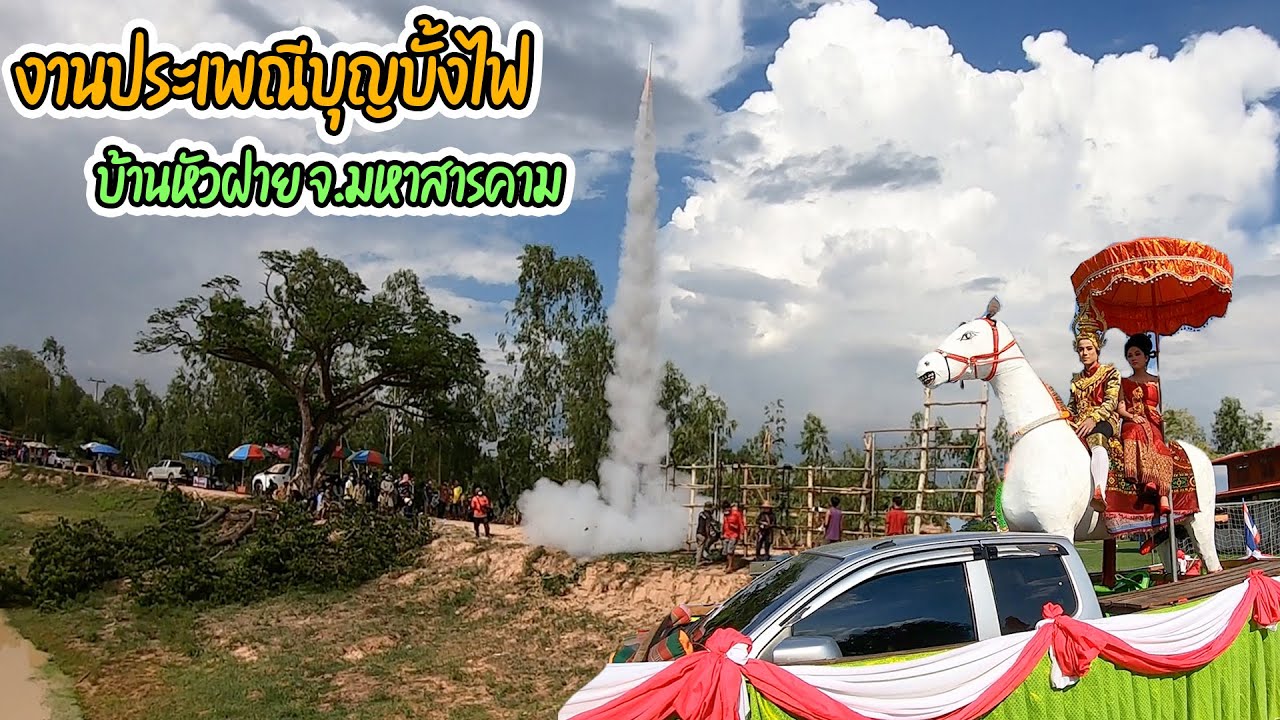
 Click to Access the Navigation Map GPS
Yasothon Rocket Festival Map

 Historical Sites and Monuments(4)
Art, Craft Centres, Tradition(5)
Historical Sites and Monuments(4)
Art, Craft Centres, Tradition(5)
 Museums(3)
 Places of Worship
 Temple(17)
 Other Sacred Sites(7)
 Research and Development
 Royal Project(2)
 Suburban Living
 Village, Community(5)
 Nature and Wildlife
 National Parks and Marine Reserves(3)
 Dam, Reservoir, Lake(10)
 River, Canal(2)
 Bays and Beaches(2)
 Other natural attractions(2)
 Entertainment and Agricultural
 Farms, Parks and Ecotourism(3)
 Travel Articles, Recipes
 Food Menu, Northeastern Recipes(1)


