
lovethailand home >Northeastern Travel Attractions >Maha Sarakham Travel Attractions >Muang Maha Sarakham >Khe Wa > Ban Chiang Hian Museum
TL;DR: Ban Chiang Hian Museum, Maha Sarakham attractions : Art, Culture and Heritage, Museums.
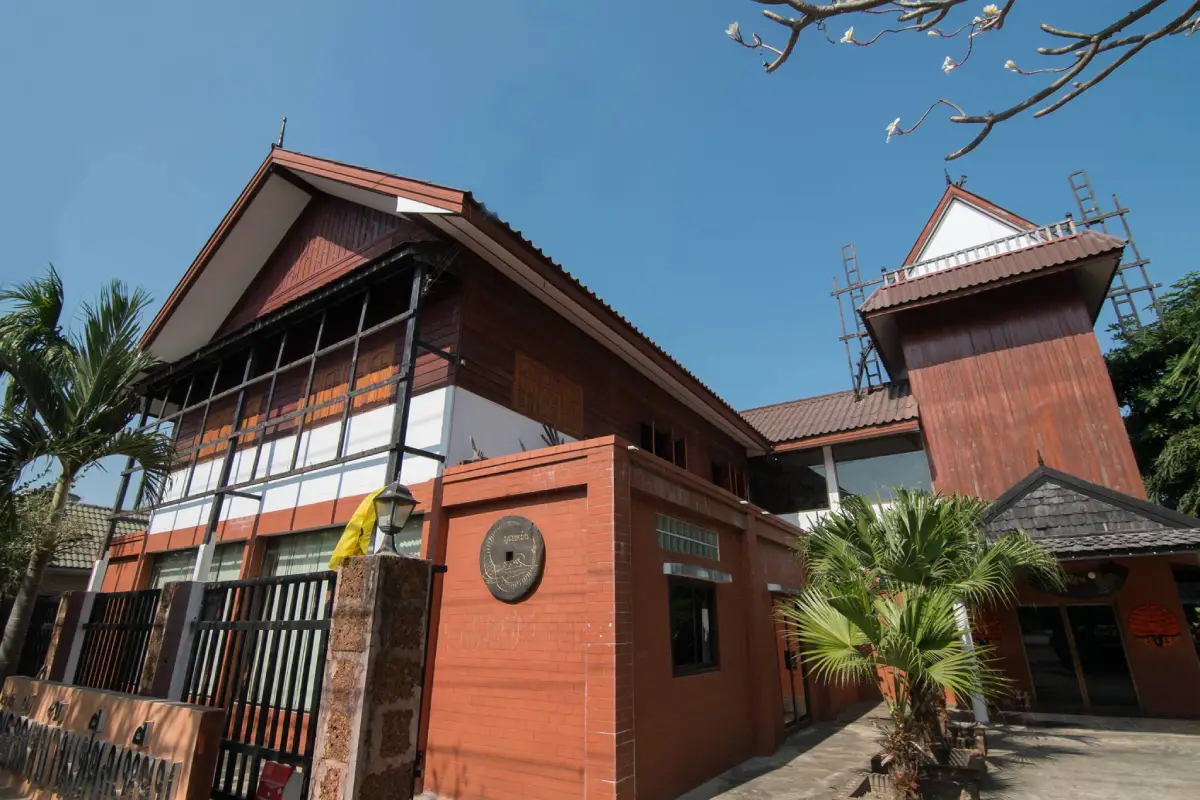
Ban Chiang Hian Museum
Open Days: Visitors should contact the museum in advance before visiting.
Opening Hours: There are no fixed public opening hours for general walk-in visitors. Advance appointment is recommended.
Ban Chiang Hian Museum is an important local cultural learning site in Maha Sarakham Province. It is located at Ban Chiang Hian, Khwao Subdistrict, Mueang Maha Sarakham District, about 7 to 8 km from Maha Sarakham city along the Maha Sarakham-Roi Et route, also known as Chaeng Sanit Road. The museum was created from the lifelong dedication of Ajarn Boonman Kham Sa-ard, who spent more than 50 years collecting cultural objects, folk tools, local artifacts, artworks, and materials related to the way of life of northeastern Thailand. His son, Santiphap Kham Sa-ard, continued this intention by developing the collection into a museum for younger generations and visitors who want to understand the roots of Ban Chiang Hian and Isan culture.
The charm of Ban Chiang Hian Museum lies in its character as a privately managed local museum. It did not begin as a large official project or a state museum building. It grew out of a home, a personal collection, and the determination of one family to preserve objects that many people might have overlooked. Inside the museum, visitors can find old jars, ancient pots, ploughing tools, harrows, farming tools, fishing equipment, weaving tools, bamboo basketry, household objects, local artworks, and materials connected with Isan folk literature. These objects are not merely collectibles. They are evidence of everyday life, agricultural knowledge, local belief, craftsmanship, creativity, and the relationship between Isan people and their environment.
Ban Chiang Hian is historically and archaeologically significant. The community is known as an ancient settlement with traces of moats and earthen embankments, and archaeological objects have been found in the area, including stone boundary markers, jars, beads, bracelets, and other artifacts. The cultural landscape around the community still reflects a semi-rural environment, with agricultural land surrounding the settlement. A visit to the museum is therefore not only a visit to an exhibition space, but also a visit to a living community built upon layers of history.
The story of Ban Chiang Hian is also connected with local legends and Isan folk literature, including the legends of Chiang Hian, Nong Han, and Fa Daet Sung Yang. The name Chiang Hian appears in local narratives and Isan literary traditions, giving the community both archaeological and literary significance. This combination is important for understanding northeastern Thailand, where legend, landscape, ritual memory, and material evidence often coexist. Ancient towns are not only defined by moats and artifacts, but also by stories remembered by local people.
The museum officially opened in 1998 and has continued to serve as a community learning space. According to museum records, it is located at No. 1, Moo 18, Ban Chiang Hian, Khwao Subdistrict, Mueang Maha Sarakham District, Maha Sarakham 44000. The museum is privately managed, has no admission fee, and requires visitors to contact in advance before visiting. This reflects the nature of a local private museum. It is not a commercial tourist attraction with fixed walk-in operating hours, but a cultural place best visited with advance arrangement and genuine interest.
The museum includes several learning areas. The Boonman Building contains old objects, Isan wisdom, the history of Ban Chiang Hian, animal skulls, cattle and buffalo horns, and other collected materials. The lower level functions as Boonman Contemporary Art Gallery, displaying the artwork of Ajarn Boonman Kham Sa-ard as well as works by artists, students, and other creative participants. Another area, Ho Raka Duean, introduces nearby cultural attractions, community history, and places of interest along the Isan Silk Route. Together, these zones make the museum both a heritage space and a creative community space.
The upper exhibition area can be understood as a memory room of old Isan life. It contains tools and objects that show how people farmed, fished, cooked, wove cloth, stored food, and lived in rural communities. The lower gallery connects the past with the present through contemporary art. This is important because cultural preservation does not mean freezing the past. At Ban Chiang Hian Museum, old objects and new artistic expression exist together, showing that heritage can continue to inspire creativity.
Farming tools are among the most meaningful objects in the collection. Ban Chiang Hian and its surrounding area have long been connected with rice agriculture. Tools such as ploughs, harrows, sickles, baskets, and other rice-farming equipment help visitors imagine the hard work of Isan farmers in the past. These tools represent labor, knowledge, patience, seasonal timing, and adaptation to the environment of the Khorat Plateau. Seeing the tools directly makes the history of rice farming more tangible than reading about it from a textbook.
Weaving tools and bamboo basketry reveal another side of local wisdom. In many Isan communities, women played an important role in preparing fibers, weaving cloth, dyeing yarn, and creating textile patterns. Basketry, meanwhile, was essential for everyday life. It produced containers for sticky rice, fishing equipment, storage baskets, kitchen tools, and household objects. These items show that Isan wisdom was not limited to formal rituals or grand architecture. It existed in ordinary objects designed with practical intelligence and local materials.
Ancient jars, old pots, and pottery in the museum connect visitors with settlement history and daily life. Pottery is one of the most important forms of archaeological evidence because it can reveal food storage, water use, ritual practice, trade, production technology, and household patterns. When these objects are considered together with the archaeological background of Ban Chiang Hian, the museum becomes a bridge between academic archaeology and public understanding.
In local memory, some old objects are not seen merely as artifacts. They may carry spiritual or ancestral meaning. In some communities, ancient jars are remembered with respect and referred to as ancestral objects. This helps visitors understand that local people may relate to artifacts emotionally and spiritually, not only historically. A museum object can therefore be evidence, memory, and a symbolic connection with ancestors at the same time.
Fishing tools displayed in the museum show the close relationship between the community and local water resources. Traps, nets, hooks, bamboo devices, and other handmade equipment reflect the intelligence of people who used natural materials to work with rivers, ponds, and seasonal water systems. These tools demonstrate sustainable local design long before modern manufactured products became common. They show how people made useful objects from bamboo, wood, fiber, and materials available around them.
The artwork of Ajarn Boonman Kham Sa-ard gives the museum another distinctive dimension. He was not only a collector, but also an artist and teacher who used art to interpret his homeland, old objects, history, and Isan life. The collected artifacts tell stories through traces of use, while the artworks tell stories through imagination, emotion, and personal vision. Together, they make the museum a place of both historical evidence and artistic feeling.
Boonman Contemporary Art Gallery shows that the museum is not limited to preserving the past. By offering space for artists, students, and creative people, the gallery turns the museum into a living cultural platform. It allows local heritage to inspire new forms of expression. This makes Ban Chiang Hian not only an ancient community, but also a place where contemporary cultural meaning continues to be created.
Ho Raka Duean expands the visitor’s perspective from the museum to the surrounding cultural landscape. It presents local attractions, community history, and information connected with the Isan Silk Route. This helps visitors understand that Ban Chiang Hian is part of a wider network of cultural sites, ancient settlements, handicrafts, community products, local legends, and living traditions across northeastern Thailand.
Village products are another reason to pay attention when visiting Ban Chiang Hian. The community is not only a site of ancient history and museum collections; it also continues to produce local goods and handmade products. These products reflect skill, adaptation, and the economic creativity of local people. Supporting village products, when available, helps connect cultural tourism with the local economy.
Visitors should walk through Ban Chiang Hian Museum slowly. Many objects may appear simple at first glance, but each has a story. A farming tool can explain rice cultivation. A pot can reveal food storage or household life. A woven object can show the knowledge of local makers. A painting can express the artist’s feeling toward his homeland. If visited too quickly, the museum may look like a large collection of old things. If observed carefully, it becomes a detailed portrait of Isan life.
For students, researchers, and people interested in local history, Ban Chiang Hian Museum is especially valuable. It connects archaeology, anthropology, local history, folk art, Isan literature, handicraft, and community-based museum work. It can serve as a case study of how one family and one village can preserve cultural memory outside the framework of a large formal museum.
For general travelers, the museum offers a deeper way to experience Maha Sarakham. Many visitors know the province as an educational city, but Ban Chiang Hian Museum reveals another layer: an ancient settlement, a rural community, a private collection, a folk art space, and a place where village memory remains visible. The museum is suitable for travelers who enjoy history, local life, quiet places, handmade objects, and cultural stories that are not overly commercialized.
Getting There is easiest by private car. From Maha Sarakham city, follow the Maha Sarakham-Roi Et route or Chaeng Sanit Road for about 7 to 8 km to Ban Chiang Hian in Khwao Subdistrict. Travelers without a private vehicle can first reach Maha Sarakham city or the provincial bus terminal, then continue by hired local transport. Since the museum requires advance contact, visitors should call before traveling so that the caretaker can prepare for the visit.
The best time to visit is in the morning or afternoon when the weather is not too hot. Because Ban Chiang Hian is a semi-rural community and some areas are outdoors, visitors should prepare for local weather conditions. A half-day trip works well: start at Ban Chiang Hian Museum, explore the ancient community and local products, then return to Maha Sarakham city to visit Wat Mahachai Museum, the clock tower, the night market, the city pillar shrine, or other central landmarks.
Visitors should behave respectfully because the museum is privately managed and closely connected with the home and community of the caretakers. Dress appropriately, speak politely, do not touch or move objects without permission, do not open storage areas or display cases, and respect private spaces. This respectful approach helps preserve the museum and maintains a good relationship between visitors and the local community.
Most importantly, Ban Chiang Hian Museum should be understood as a monument to personal dedication. Ajarn Boonman Kham Sa-ard spent decades collecting cultural objects that others might not have considered important at the time. Over the years, those objects became valuable evidence of local life and memory. The museum teaches us that heritage preservation can begin with one person who sees value in what others overlook.
In the context of Maha Sarakham Province, Ban Chiang Hian Museum adds depth to the image of the province as an educational and cultural center. It shows that Maha Sarakham is not only a city of universities and urban landmarks, but also a province with ancient communities, living traditions, local craftsmanship, and strong cultural memory. The museum connects past and present through objects, art, and community storytelling.
In summary, Ban Chiang Hian Museum is a worthwhile cultural destination for visitors interested in ancient communities, Isan ways of life, local wisdom, art, and community history. It brings together old tools, household objects, farming equipment, fishing tools, weaving materials, artworks, village products, and the story of Ban Chiang Hian in a warm and personal setting. A visit here allows travelers to experience the ancient town of Ban Chiang Hian, the legends of Chiang Hian, Nong Han, and Fa Daet Sung Yang, and the dedication of local people who continue to preserve the memory of Isan for future generations.
| Name | Ban Chiang Hian Museum |
| Location | Ban Chiang Hian, Khwao Subdistrict, Mueang Maha Sarakham District, Maha Sarakham Province |
| Address | No. 1, Moo 18, Ban Chiang Hian, Khwao Subdistrict, Mueang Maha Sarakham District, Maha Sarakham 44000, Thailand |
| Coordinates | Ancient Ban Chiang Hian community area, approximately 16.1551850402, 103.371647333 |
| Distance From Maha Sarakham City | About 7 – 8 km along the Maha Sarakham-Roi Et route, also known as Chaeng Sanit Road |
| Highlights | Ancient Ban Chiang Hian community, legends of Chiang Hian, Nong Han, and Fa Daet Sung Yang, Isan folk tools, more than 50 years of collected objects, artworks by Ajarn Boonman Kham Sa-ard, and village products |
| History / Importance | A privately managed museum developed from the cultural collection of Ajarn Boonman Kham Sa-ard, who spent more than 50 years collecting local objects. The museum officially opened in 1998 as a learning site for Isan cultural roots. |
| Name Origin | Named after Ban Chiang Hian, an old community and ancient settlement connected with Isan legends and folk literature |
| Community Features | An ancient settlement on high ground with surrounding moats and agricultural land, where archaeological objects such as stone boundary markers, jars, beads, and bracelets have been found |
| Main Objects | Old jars, ancient pots, ploughs, harrows, farming tools, fishing tools, weaving equipment, bamboo basketry, household objects, local literature, and local artworks |
| Travel Information | From Maha Sarakham city, follow the Maha Sarakham-Roi Et route or Chaeng Sanit Road for about 7 – 8 km. Travelers without private transport should first reach Maha Sarakham city and continue by hired local vehicle to Ban Chiang Hian. |
| Current Status | Open as a local museum and Isan cultural learning site by advance contact |
| Open Days | Visitors should contact the museum in advance before visiting. |
| Opening Hours | There are no fixed public opening hours for general walk-in visitors. Advance appointment is recommended. |
| Fees | No Admission Fee |
| Facilities | Museum exhibition areas, art gallery space, community tourism information area, nearby parking area, and village product area when available |
| Main Areas / Zones | Boonman Building, Isan folk tools exhibition zone, Ban Chiang Hian history zone, antiquities and collected objects zone, Boonman Contemporary Art Gallery, Ho Raka Duean, village product zone, and ancient Ban Chiang Hian community zone |
| Caretaker / Related Authorities | Privately managed museum continuing the intention of Ajarn Boonman Kham Sa-ard, carried forward by Santiphap Kham Sa-ard and the Kham Sa-ard family, with cultural information support from community and heritage databases |
| Main Contact Number | 09-8246-5622 |
| Information Channels | Museum Database in Thailand by Princess Maha Chakri Sirindhorn Anthropology Centre, Tourism Authority of Thailand, Thailand Tourism Directory, and Ban Chiang Hian Wikicommunity |
| Nearby Tourist Attractions | 1. Ancient Ban Chiang Hian Community, about 0.1 km 2. Wat Ban Chiang Hian Pho Si, about 1 km 3. Ban Chiang Hian Pottery Village / Local Product Area, about 1 km 4. Wat Mahachai Museum, about 7.8 km 5. Wat Pa Wang Nam Yen, about 8 km 6. Maha Sarakham City Pillar Shrine, about 8.9 km 7. Maha Sarakham Night Market, about 9 km |
| Nearby Restaurants | 1. Kai Op Ong Ban Chiang Hian, about 1 km, Tel. 081-120-4248 2. In Mahasarakham, about 8 km, Tel. 083-265-6646, 095-624-6649 3. Oksang Food Food Station by Mum Aroi, about 8 km, Tel. 082-596-6544 4. Yaowarat, about 9 km, Tel. 089-571-6969 5. Farmsook Cafe & Restaurant Maha Sarakham, about 10 km, Tel. 064-996-6414 |
| Nearby Accommodations | 1. Top Inn Hotel Mahasarakham, about 7.7 km, Tel. 062-545-5622, 043-711-979 2. Taksila Hotel Maha Sarakham, about 8 km, Tel. 043-719-999 3. Wichaya Place, about 8 km, Tel. 043-712-355, 093-425-0808 4. Ketsara Hotel, about 9 km, Tel. 095-236-2395 5. HOP INN Mahasarakham, about 11 km, Tel. 065-950-4683, 02-080-2222 |
Frequently Asked Questions (FAQ)
Q: Where is Ban Chiang Hian Museum located?
A: Ban Chiang Hian Museum is located at No. 1, Moo 18, Ban Chiang Hian, Khwao Subdistrict, Mueang Maha Sarakham District, Maha Sarakham Province, about 7 to 8 km from Maha Sarakham city along the Maha Sarakham-Roi Et route.
Q: What are the opening days and hours of Ban Chiang Hian Museum?
A: The museum does not have fixed public opening hours for general walk-in visitors. Visitors should contact the museum in advance before traveling.
Q: Is there an admission fee?
A: No. Ban Chiang Hian Museum does not charge an admission fee, but advance contact is recommended before visiting.
Q: What can visitors see inside Ban Chiang Hian Museum?
A: Visitors can see old Isan tools, ancient jars, pottery, farming equipment, fishing tools, weaving equipment, bamboo basketry, local literature, artworks, and displays about the history of Ban Chiang Hian.
Q: Who founded Ban Chiang Hian Museum?
A: The museum developed from the cultural collection of Ajarn Boonman Kham Sa-ard and was continued by his son, Santiphap Kham Sa-ard.
Q: Why is Ban Chiang Hian historically important?
A: Ban Chiang Hian is an ancient community with moats and archaeological evidence, including stone boundary markers, jars, beads, and bracelets. It is also connected with local legends and Isan folk literature.
Q: Who should visit Ban Chiang Hian Museum?
A: The museum is suitable for travelers interested in local history, ancient communities, Isan ways of life, folk art, students, researchers, and visitors who want to understand the cultural roots of Maha Sarakham.
Q: What nearby places can visitors combine with the museum?
A: Visitors can also explore the ancient Ban Chiang Hian community, Wat Ban Chiang Hian Pho Si, local product areas, Wat Mahachai Museum, Wat Pa Wang Nam Yen, Maha Sarakham City Pillar Shrine, and Maha Sarakham Night Market.
 Category: ●Art, Culture and Heritage
 Group: ●Museums
Last Update : 2 MonthAgo
 Last Update : 2 MonthAgo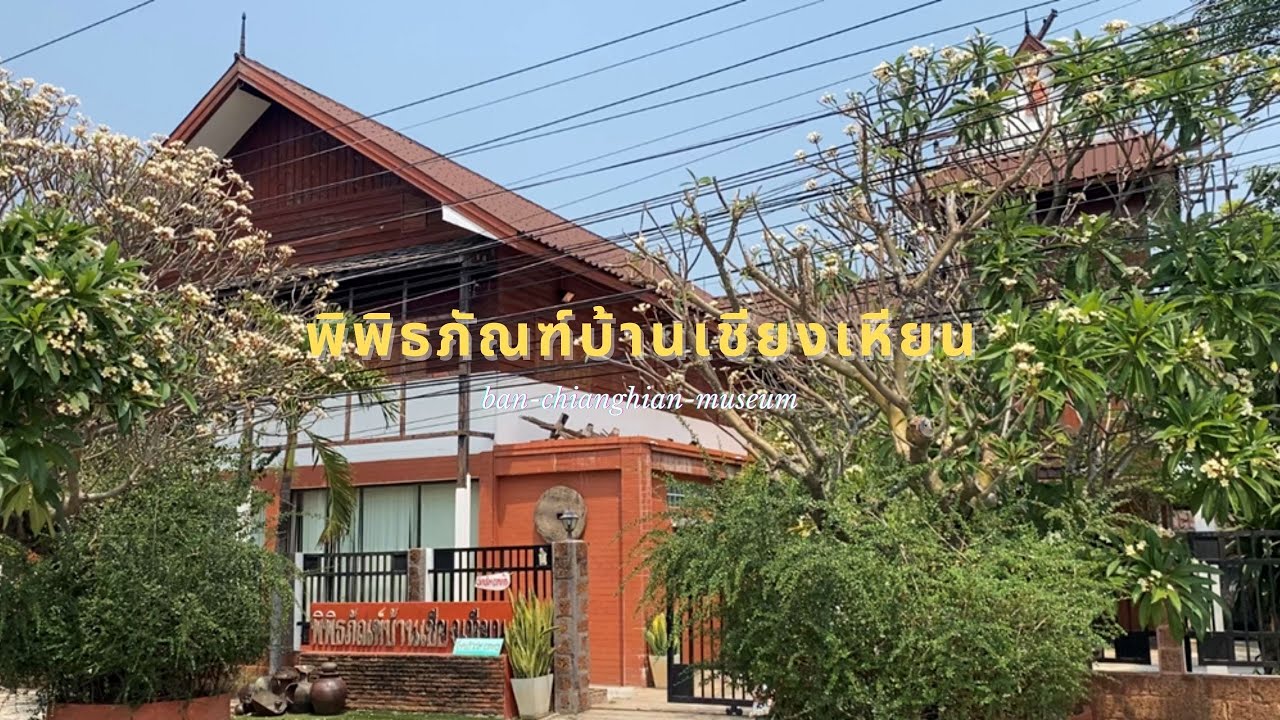
 Click to Access the Navigation Map GPS
Ban Chiang Hian Museum Map

 Historical Sites and Monuments(4)
 Art, Craft Centres, Tradition(5)
Museums(3)
Art, Craft Centres, Tradition(5)
Museums(3)
 Places of Worship
 Temple(17)
 Other Sacred Sites(7)
 Research and Development
 Royal Project(2)
 Suburban Living
 Village, Community(5)
 Nature and Wildlife
 National Parks and Marine Reserves(3)
 Dam, Reservoir, Lake(10)
 River, Canal(2)
 Bays and Beaches(2)
 Other natural attractions(2)
 Entertainment and Agricultural
 Farms, Parks and Ecotourism(3)
 Travel Articles, Recipes
 Food Menu, Northeastern Recipes(1)


