
lovethailand home >Northeastern Travel Attractions >Maha Sarakham Travel Attractions >Muang Maha Sarakham >Talat > Isan Art and Culture Center
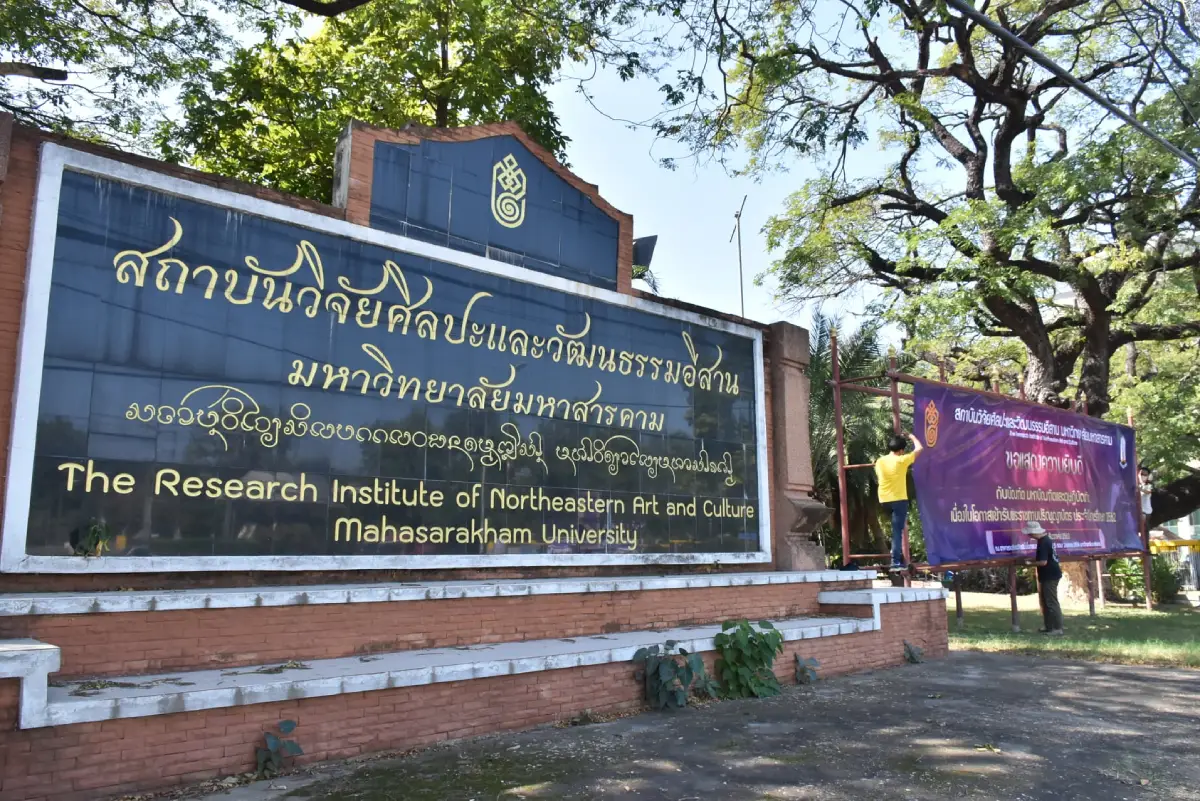
TL;DR: Isan Art and Culture Center is located at Rajabhat Maha Sarakham University, Talat Subdistrict, Mueang Maha Sarakham District, Maha Sarakham Province, open Monday – Friday, hours 08.30 – 16.30.
Isan Art and Culture Center
Open Days: Monday – Friday
Opening Hours: 08.30 – 16.30
The Isan Art and Culture Center in Maha Sarakham, located within the Office of Arts and Culture at Rajabhat Maha Sarakham University, is an important cultural learning center for understanding the artistic heritage, local wisdom, and traditional way of life of northeastern Thailand. The center presents the story of Isan art through local crafts, textiles, weaving traditions, fabric patterns, household tools, basketry, palm-leaf manuscripts, Isan literature, and visual media related to the culture and traditions of Isan communities. For foreign travelers, it is one of the most useful places in Maha Sarakham to understand what “Isan” means beyond geography.
The center is located at Rajabhat Maha Sarakham University, 80 Nakhon Sawan Road, Talat Subdistrict, Mueang Maha Sarakham District, Maha Sarakham Province. Its urban location makes it easy to visit together with other attractions in Maha Sarakham city, such as the Maha Sarakham City Pillar Shrine, Wat Mahachai Royal Monastery, the local museum at Wat Mahachai, Sermthai Complex, and Wat Pa Wang Nam Yen. Because the center is part of a university, the atmosphere is calm, academic, and suitable for visitors who want to learn rather than simply sightsee.
The importance of the Isan Art and Culture Center comes from the role of Rajabhat Maha Sarakham University in preserving local culture. Rajabhat institutions developed from teacher-training colleges that played an important role in regional education. Alongside their academic mission, they also became important places for collecting, preserving, and transmitting local knowledge. The Isan Art and Culture Center reflects this mission clearly. It brings together objects, stories, and cultural practices from Isan communities and presents them in a way that connects local wisdom with education.
The center helps visitors understand that Isan culture is not a single subject but a living system. It includes textiles, agriculture, literature, Buddhism, rituals, oral tradition, music, crafts, seasonal festivals, and daily household knowledge. Each object in the exhibition represents a relationship between people and their environment. A woven cloth reflects family, gender, design, and community memory. A bamboo basket reflects practical intelligence and the use of local natural materials. A farming tool reflects the agricultural cycle, rice cultivation, and the rhythm of rural life. A palm-leaf manuscript reflects religious knowledge, literacy, and the intellectual life of temples and communities.
One of the most valuable sections is the display of Isan textiles and weaving traditions. Textile culture is central to the identity of many northeastern communities. Traditional woven cloth is not only beautiful but also meaningful. Patterns may reflect beliefs, local identity, family tradition, ethnic heritage, or ritual use. Some textiles were made for daily life, while others were reserved for ceremonies, merit-making, weddings, or important social occasions. By studying these textiles, visitors can understand how color, pattern, fiber, and weaving technique became part of Isan cultural expression.
Fabric patterns in Isan are especially rich in meaning. Geometric designs, plant-inspired motifs, animal forms, sacred symbols, and inherited family patterns all carry cultural value. These patterns are a form of visual language. They reveal how local weavers turned memory, belief, and environment into design. For travelers interested in fashion, design, craft, or community-based tourism, the textile section offers an excellent introduction to the roots of Isan fabric culture. It also helps visitors appreciate handmade cloth as cultural knowledge rather than just a souvenir.
The center also displays handicrafts and everyday tools that show the practical creativity of Isan communities. Bamboo, rattan, palm leaves, reed, and other local materials were used to make baskets, containers, fishing tools, rice-related tools, household objects, and ritual items. These objects demonstrate how local people designed things that were functional, durable, and suited to the environment. The beauty of Isan craft often lies in this balance between simplicity and intelligence. The shape, weave, and material of each object were developed through generations of trial, use, and improvement.
Traditional agricultural tools are another important part of the learning experience. Isan society has long been closely connected with rice farming, seasonal rainfall, soil conditions, and community labor. Tools for planting, harvesting, carrying, pounding, storing, and preparing rice help visitors understand the agricultural foundation of Isan life. These objects show that rural knowledge was not abstract. It was built through direct experience with land, water, animals, crops, and the cycle of the year. To understand these tools is to understand how Isan people lived with their environment.
A particularly rare and important part of the center is its connection with palm-leaf manuscripts and Isan literature. Palm-leaf manuscripts were used to preserve Buddhist texts, local stories, medicinal knowledge, laws, chronicles, rituals, and moral teachings. Before modern printing became widespread, these manuscripts were among the most important ways of recording knowledge in Isan. They were usually kept in temples and read or copied by monks and scholars. Seeing palm-leaf manuscripts allows visitors to understand that Isan has a deep written tradition, not only an oral one.
Palm-leaf manuscripts are also closely connected with ancient scripts used in the region, including Tham Isan script. The process of making and writing a palm-leaf manuscript required skill, patience, and respect for knowledge. Leaves had to be prepared, inscribed, pierced, tied, and stored carefully. The tools and process reveal a disciplined culture of learning. For foreign visitors, this section is valuable because it shows how religion, language, medicine, law, and literature were preserved in material form long before modern books and digital archives.
The center also helps visitors understand Isan traditions and seasonal festivals. Isan culture follows a yearly rhythm of community rituals, merit-making, agricultural ceremonies, Buddhist events, and ancestral beliefs. These traditions are often explained through the concept of Hit Sip Song and Khong Sip Si, the traditional code of twelve monthly customs and fourteen social principles. Festivals in Isan are not only celebrations. They are systems that bring people together, renew social relationships, connect communities with Buddhism, and mark important moments in the agricultural year.
Visual media, slides, photographs, and educational materials related to Isan traditions make the exhibitions more meaningful. They help visitors understand how objects were used in real life. A basket is easier to understand when seen together with farming or food preparation. A textile becomes more meaningful when seen in the context of ceremonies or dress. A palm-leaf manuscript becomes more meaningful when connected with temple learning and Buddhist teaching. This combination of objects and context makes the center an effective cultural introduction for both Thai and international visitors.
The center is also relevant to the study of Isan music, performing arts, and oral tradition. Although exhibitions may vary depending on activities and the university calendar, the Office of Arts and Culture plays an important role in preserving and promoting local performing arts. These may include long drum traditions, pong lang music, mor lam singing, local dance, ritual performance, and cultural demonstrations. This makes the center more than a static museum. It is part of an active cultural institution where knowledge is collected, taught, performed, and transmitted to younger generations.
For general travelers, the Isan Art and Culture Center is a useful first stop before exploring the rest of Maha Sarakham. After learning about textiles, tools, manuscripts, and traditions, visitors will better understand temples, local museums, weaving communities, festivals, and historical sites throughout the province. The center provides cultural background that helps make later travel experiences more meaningful. It turns sightseeing into cultural understanding.
The center is also suitable for students and school groups. It can function as an outdoor classroom for social studies, history, Thai language, art, anthropology, folklore, textile design, and cultural tourism. Teachers can use the exhibitions to connect classroom lessons with real objects. Students can learn how cloth patterns relate to community identity, how palm-leaf manuscripts relate to writing and religious education, how agricultural tools relate to geography, and how festivals relate to social structure. Learning in this way makes culture visible, concrete, and easier to discuss.
For researchers, the center provides a valuable starting point for studying local wisdom and cultural change. Objects in the exhibition can inspire questions about the transformation of textile patterns, the preservation of palm-leaf manuscripts, the role of basketry in rural ecology, or the relationship between universities and local cultural preservation. The center therefore supports not only tourism but also academic inquiry, community research, and cultural documentation.
Designers and creative professionals can also gain insight from the center. Many traditional Isan objects demonstrate principles of practical design: lightness, durability, material efficiency, proportion, rhythm, and suitability for use. A basket may reveal a refined understanding of structure. A textile may reveal a balanced sense of pattern and color. A tool may show how form follows human movement and local labor. These lessons can inspire contemporary design that respects cultural roots while creating new possibilities.
The atmosphere of the center is calm and educational. Visitors should allow about 1 to 2 hours to explore the exhibitions properly. Reading labels, observing details, and connecting objects with their cultural context will make the visit much more rewarding. Group visitors should contact the Office of Arts and Culture in advance so that the visit can be arranged smoothly. Advance contact is especially useful for schools, universities, research groups, or cultural tour groups.
Getting There is easy from central Maha Sarakham. The center is located inside Rajabhat Maha Sarakham University on Nakhon Sawan Road. Visitors can travel by private car, motorcycle, local taxi, or hired vehicle. From the City Pillar Shrine or Sermthai Complex, the trip takes only a short time. Travelers coming from outside the city should first head toward Mueang Maha Sarakham and then continue to Rajabhat Maha Sarakham University. The center is located within the Office of Arts and Culture at Banburi Building.
Because the center is in the city, it can be combined easily with nearby attractions. A good half-day route may begin at the Isan Art and Culture Center, continue to the Maha Sarakham City Pillar Shrine, visit Wat Mahachai Royal Monastery, explore the local museum at Wat Mahachai, and end with a meal or coffee near Sermthai Complex. Visitors with more time can continue to Wat Pa Wang Nam Yen or Kaeng Loeng Chan. This route gives a balanced view of Maha Sarakham as a city of education, faith, local history, and culture.
For international travelers, the center is one of the clearest places to begin understanding Isan. Isan is not only a region on a map. It is a cultural world with its own language, food, music, textiles, religious practices, festivals, and knowledge systems. Seeing real tools, real cloth, real manuscripts, and images of real traditions makes Isan culture easier to understand. The experience also helps travelers appreciate other provinces in the Northeast, such as Roi Et, Khon Kaen, Kalasin, Surin, and Ubon Ratchathani, with greater cultural awareness.
Visitors should observe museum etiquette while inside the center. Do not touch exhibition objects unless permission is given. Do not move tools, textiles, manuscripts, or display items. Avoid using flash near fragile materials. Ask staff before taking photographs for educational or publication purposes. Palm-leaf manuscripts, textiles, and handmade objects can be sensitive to light, moisture, and handling. Careful behavior helps preserve them for future students, researchers, and visitors.
The value of the Isan Art and Culture Center lies not only in the number of objects it displays, but in the relationships those objects reveal. Textiles connect with family and ceremony. Palm-leaf manuscripts connect with temples and learning. Agricultural tools connect with land and seasons. Basketry connects with forests and local materials. Festivals connect with Buddhism, community, and social harmony. When viewed together, these elements show Isan as a sophisticated cultural system with depth, creativity, and resilience.
The center is therefore an excellent starting point for cultural travel in Maha Sarakham. It helps visitors see the province not only as a university city, but also as a place where local knowledge has been collected, preserved, and shared. A visit here reveals that what may appear to be simple village objects are in fact records of experience, design, belief, and community memory. For travelers who want to understand Maha Sarakham through art, culture, and Isan wisdom, the Isan Art and Culture Center is a meaningful and rewarding destination.
By the end of a visit, travelers will have gained more than basic information about exhibits. They will understand how Isan people lived with nature, used local materials wisely, created beauty from everyday life, preserved knowledge through writing, and kept communities connected through tradition. This makes the center valuable for Thai visitors and foreign travelers alike. It is a place where culture is not presented as something distant or decorative, but as a living form of knowledge that continues to shape the identity of northeastern Thailand.
| Name | Isan Art And Culture Center |
| Current Administrative Unit | Office Of Arts And Culture, Rajabhat Maha Sarakham University |
| Location | Rajabhat Maha Sarakham University, Talat Subdistrict, Mueang Maha Sarakham District, Maha Sarakham Province |
| Address | Banburi Building, 80 Nakhon Sawan Road, Talat Subdistrict, Mueang Maha Sarakham District, Maha Sarakham 44000, Thailand |
| Highlights | Cultural learning center featuring Isan textiles, fabric patterns, basketry, local tools, palm-leaf manuscripts, Isan literature, and media about Isan traditions |
| Distinctive Features | University-based cultural center connecting academic knowledge with local wisdom, folk crafts, traditional documents, and the everyday life of Isan communities |
| Recommended Visitors | Travelers, students, teachers, researchers, designers, textile enthusiasts, and visitors interested in Isan culture, palm-leaf manuscripts, and local wisdom |
| Main Areas / Zones | 1. Local Museum And Folk Wisdom Exhibition 2. Isan Textile And Fabric Pattern Zone 3. Basketry And Traditional Tool Zone 4. Palm-Leaf Manuscript And Isan Literature Zone 5. Visual Media And Isan Tradition Zone 6. Cultural Activity And Academic Service Area |
| Travel Information | From central Maha Sarakham, follow Nakhon Sawan Road to Rajabhat Maha Sarakham University. The center is located inside the Office of Arts and Culture at Banburi Building and is accessible by private car, motorcycle, local taxi, or hired vehicle. |
| Current Status | Open as a cultural learning center for Isan art, culture, and local wisdom under Rajabhat Maha Sarakham University |
| Open Days | Monday – Friday |
| Opening Hours | 08.30 – 16.30 |
| Facilities | Indoor exhibition space, university learning area, group-visit support space, and parking within the university area |
| Caretaker | Office Of Arts And Culture, Rajabhat Maha Sarakham University |
| Main Contact Number | 043-721839 |
| Nearby Tourist Attractions | 1. Sermthai Complex, about 1 km 2. Maha Sarakham City Pillar Shrine, about 2 km 3. Wat Mahachai Royal Monastery, about 2 km 4. Northeastern Local Museum At Wat Mahachai, about 2 km 5. Wat Pa Wang Nam Yen, about 6 km |
| Nearby Restaurants | 1. prattle. Near Rajabhat Maha Sarakham, about 1 km, Tel. 089-9496266, 096-9946992 2. PunThai Coffee, Si Sawat Damnoen Road, about 1 km, Tel. 093-5763853 3. In Maha Sarakham, about 2 km, Tel. 083-2656646, 095-6246649 4. Tam Kratoei Maha Sarakham, about 2 km, Tel. 061-4300922 5. Black Canyon, Sermthai Complex, about 1 km, Tel. 043-743786 |
| Nearby Accommodations | 1. HOP INN Mahasarakham, about 1 km, Tel. 065-9504683 2. Phattharawarit Place, about 1 km, Tel. 084-2790002, 083-5156178 3. sita@home, about 1 km, Tel. 087-8155126 4. Sataya Apartment, about 3 km, Tel. 084-4034880 5. Taksila Hotel, about 3 km, Tel. 043-719999 |
Frequently Asked Questions (FAQ)
Q: Where is the Isan Art and Culture Center located?
A: It is located inside the Office of Arts and Culture at Rajabhat Maha Sarakham University, Banburi Building, 80 Nakhon Sawan Road, Talat Subdistrict, Mueang Maha Sarakham District, Maha Sarakham Province.
Q: What are the opening days and hours?
A: The center is open Monday to Friday from 08.30 to 16.30. Group visitors should contact the Office of Arts and Culture in advance.
Q: What can visitors see inside the center?
A: Visitors can see exhibitions on Isan textiles, fabric patterns, basketry, traditional tools, palm-leaf manuscripts, Isan literature, and visual media about Isan culture and traditions.
Q: Who should visit the Isan Art and Culture Center?
A: It is suitable for travelers, students, teachers, researchers, designers, textile enthusiasts, and anyone interested in Isan culture, local wisdom, and traditional manuscripts.
Q: How much time should visitors spend at the center?
A: Visitors should allow about 1 to 2 hours to explore the exhibitions, read the information, and understand the textile, manuscript, craft, and cultural sections properly.
Q: How can travelers get to the center?
A: From central Maha Sarakham, follow Nakhon Sawan Road to Rajabhat Maha Sarakham University. The center is located at Banburi Building within the Office of Arts and Culture and can be reached by private car, motorcycle, local taxi, or hired vehicle.
Q: What nearby attractions can be visited on the same trip?
A: Nearby places include Sermthai Complex, Maha Sarakham City Pillar Shrine, Wat Mahachai Royal Monastery, the local museum at Wat Mahachai, and Wat Pa Wang Nam Yen.
Q: What should visitors keep in mind during the visit?
A: Visitors should not touch exhibits without permission, should not move objects, should avoid flash near fragile materials, and should ask staff before taking photographs for educational or publication purposes.
 Category: ●Art, Culture and Heritage
 Group: ●Art, Craft Centres, Tradition
Last Update : 2 MonthAgo
 Last Update : 2 MonthAgo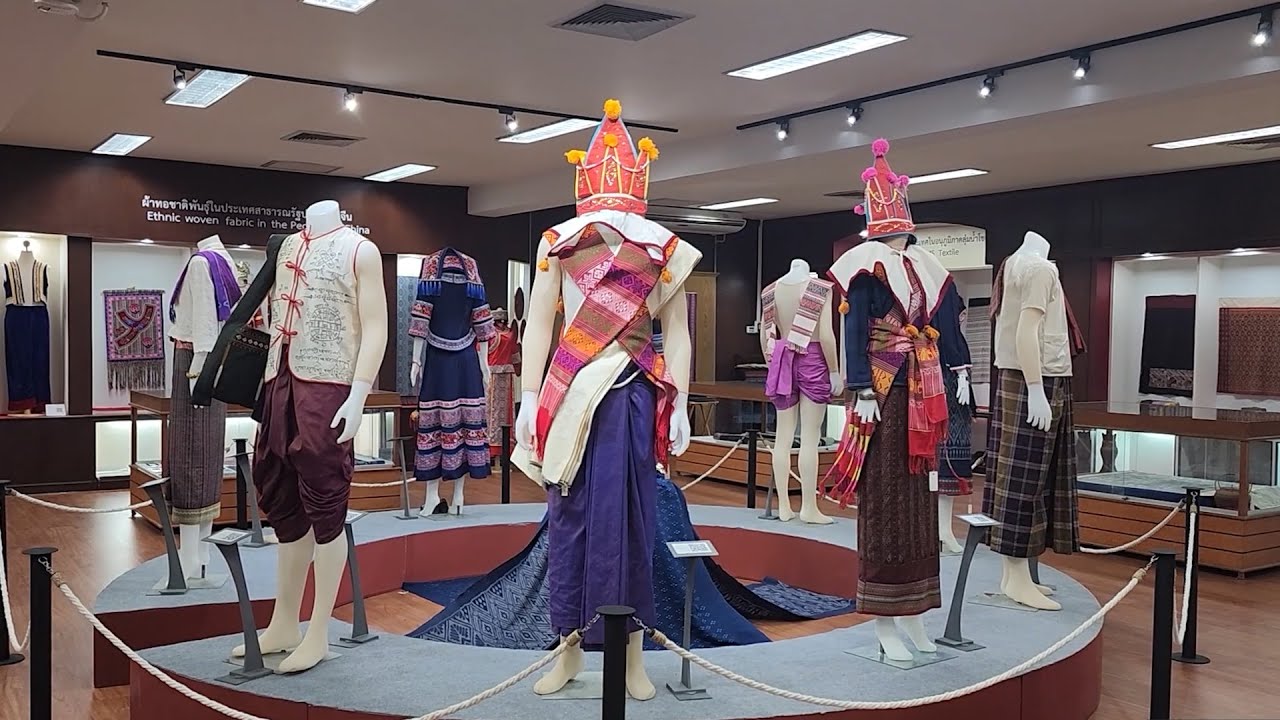
 Click to Access the Navigation Map GPS
Isan Art and Culture Center Map

 Historical Sites and Monuments(4)
Art, Craft Centres, Tradition(5)
Historical Sites and Monuments(4)
Art, Craft Centres, Tradition(5)
 Museums(3)
 Places of Worship
 Temple(17)
 Other Sacred Sites(7)
 Research and Development
 Royal Project(2)
 Suburban Living
 Village, Community(5)
 Nature and Wildlife
 National Parks and Marine Reserves(3)
 Dam, Reservoir, Lake(10)
 River, Canal(2)
 Bays and Beaches(2)
 Other natural attractions(2)
 Entertainment and Agricultural
 Farms, Parks and Ecotourism(3)
 Travel Articles, Recipes
 Food Menu, Northeastern Recipes(1)


