
lovethailand home >Northeastern Travel Attractions >Maha Sarakham Travel Attractions >Kosum Phisai >Phaeng > Ban Paeng Reed
TL;DR: Ban Paeng Reed is located at Village No. 1, 9, 11, 13, 14, Paeng Subdistrict, Kosum Phisai District, Maha Sarakham Province, open Daily, hours 24 Hours.
Ban Paeng Reed
Open Days: Daily
Opening Hours: 24 Hours
Ban Paeng Reed Mat Weaving Village in Maha Sarakham Province is an important traditional craft community in Paeng Subdistrict, Kosum Phisai District. The village is well known for reed mat weaving and the transformation of locally grown reeds into practical and contemporary products. Local people mainly work in rice farming, while reed mat weaving serves as a major supplementary occupation that generates income for households and strengthens the local economy. Ban Paeng is therefore not only a place to buy OTOP products; it is a living craft village where natural resources, household labor, traditional skill, and community identity are woven together.
The village is located near Bueng Paeng, a large local wetland surrounded by rice fields and rural settlement. This landscape has shaped the life of the community for generations. Water, fields, reeds, and seasonal work all contribute to the local way of life. After the rice-growing season, many villagers use their time to prepare reeds and weave mats. This makes reed mat weaving closely connected with the agricultural calendar of the community. It is not an isolated craft, but a seasonal and household-based livelihood that grew naturally from the environment of Ban Paeng.
The name Ban Paeng comes from the paeng tree, which once grew abundantly around the community. Villagers adopted the name of this local plant as the name of the village, and the tree became part of the community’s identity. Like many Isan villages, Ban Paeng carries its environmental memory in its name. Place names in northeastern Thailand often come from trees, wetlands, fields, animals, or local landscape features, and these names help preserve how earlier generations understood their home environment.
The history of Ban Paeng dates back to around 1826 during the reign of King Rama III. One group of settlers migrated from Ban Ngio and Ban Non in the present-day Wapi Pathum area, while another group was connected with migration from the Lao side and Luang Prabang. These groups settled around the present Ban Paeng area and established important community temples, including Wat Chai Mongkhon and Wat Chai Prasit. This layered history gives Ban Paeng cultural depth beyond its craft identity. It is both an old settlement and a living handicraft community.
Ban Paeng includes several village clusters in Paeng Subdistrict, especially Village No. 1, 9, 11, 13, and 14. The people maintain a rural Isan community structure based on kinship, farming, temple life, local enterprise, and mutual support. Rice farming remains the main occupation, while supplementary occupations include reed mat weaving, product processing, trade, wage labor, service work, and folk performance. Ban Paeng is also known for the famous mor lam troupe Sao Noi Phet Ban Paeng, showing that the community has strong cultural capital not only in craft but also in performing arts.
The reed mat craft of Ban Paeng developed from local natural resources. Reeds grow naturally in wetland areas and are well suited for weaving because their stems are long, light, flexible, and durable. Once split, dried, dyed, and woven properly, reeds can become strong and attractive mats. The craft transforms a simple local plant into a product of cultural and economic value. This is one of the clearest examples of how rural Isan communities use local materials creatively and efficiently.
The production process begins with selecting mature reed stems of suitable size. The reeds are split into thin strips, dried under the sun, dyed in different colors, and prepared for weaving. The weaving stage requires careful control of tension, spacing, color rhythm, and pattern. If the weaving is too loose, the mat will not be durable. If it is too tight, the reed strips may twist or break. The skill of Ban Paeng weavers lies in balancing strength, beauty, and comfort in every finished piece.
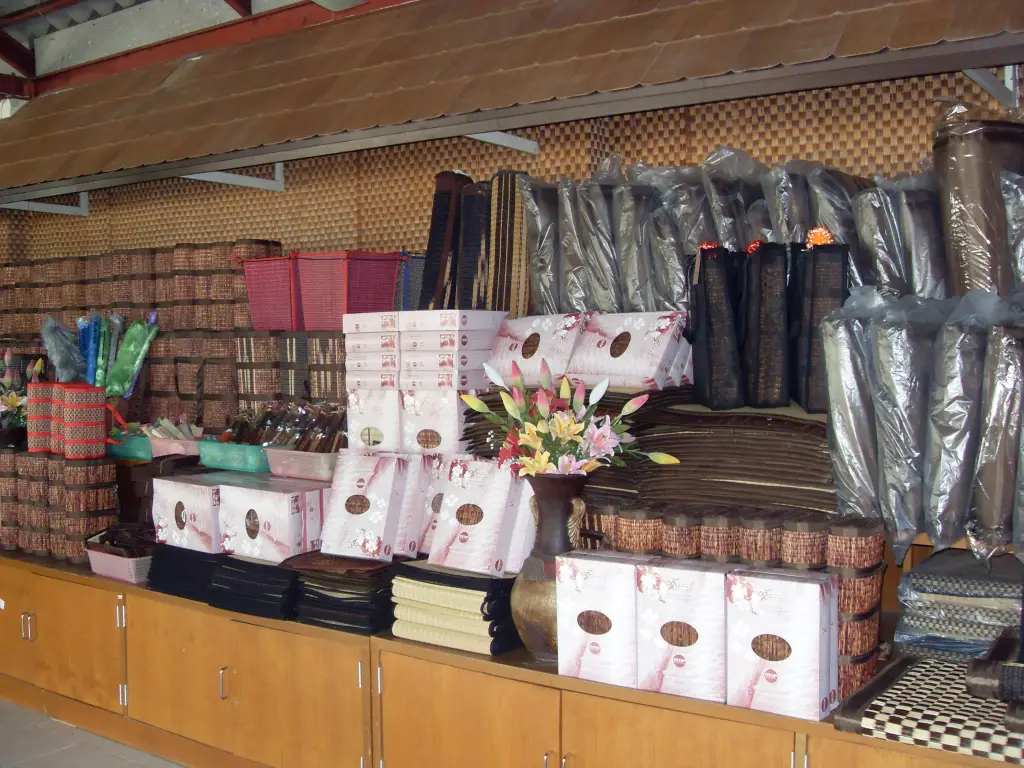
The patterns of Ban Paeng reed mats are one of their most distinctive qualities. Some mats are simple and practical for everyday household use, while others use colorful patterns, applied designs, or mat-mi-inspired visual rhythm. This development allows Ban Paeng products to move beyond ordinary floor mats. Today, the community produces foldable mats, yoga mats, bags, cushions, decorative items, storage products, and souvenirs. These products make the old craft relevant to modern homes and contemporary lifestyles.
In the past, reed mats were essential household items in Isan. They were used for sitting, sleeping, receiving guests, eating meals, resting at temples, joining merit-making ceremonies, weddings, funerals, and community gatherings. A reed mat was present in many stages of local life. It connected the house, temple, field, and village hall. Ban Paeng’s ability to produce high-quality reed mats in large quantities made the village one of the best-known reed mat communities in Maha Sarakham Province.
Ban Paeng reed mats have been recognized as a five-star OTOP product of Maha Sarakham Province. Several product showrooms and sales points have been established in the village so visitors can see and purchase mats directly from the source. Some products are sold locally, while others are distributed to wider markets. This has turned reed mat weaving into a serious community economy, not merely a small after-harvest pastime.
In recent years, Ban Paeng reeds have also been promoted toward geographical indication recognition. This is important because a community product with a strong reputation should have its identity and standards protected. When buyers understand that Ban Paeng reed products come from a specific place, local material, and inherited skill, they can better appreciate the value behind the product. This helps weavers and community enterprises receive fair recognition for their work.
Reed mat weaving is also closely connected with women’s roles in rural Isan communities. Much of the work can be done at home or within the village, allowing women to earn supplementary income while remaining close to their families. Income from weaving can support household expenses, education, and daily needs. Supporting Ban Paeng reed products therefore supports grassroots income, household craft labor, and the continuation of skills held by local women and families.
Visitors should approach Ban Paeng as a living craft village rather than as a simple souvenir stop. The village contains homes, working spaces, reed preparation areas, looms, showrooms, and artisan families. When visitors walk through the community respectfully, they can see how local wisdom continues in real life. The craft is not only displayed in a museum; it is practiced by people who live and work in the village every day.
For school groups, university groups, study tours, or travelers who want to observe demonstrations, advance contact with the weaving group or Paeng Subdistrict Administrative Organization is recommended. With proper arrangement, visitors can learn more about reed selection, reed splitting, drying, dyeing, weaving, product design, and processing. This type of visit is more meaningful because it connects the finished product with the people and knowledge behind it.
Ban Paeng also has cultural significance through mor lam performance. The community is associated with Sao Noi Phet Ban Paeng, a well-known mor lam troupe. This means that Ban Paeng has two strong cultural identities: reed mat weaving and Isan folk performance. One reflects patience, hand skill, and household labor; the other reflects music, entertainment, storytelling, and community celebration. Together, they show the richness of Ban Paeng’s cultural life.
Bueng Paeng is an important natural asset of the community. It is not only a water body but also part of local memory, livelihood, and the surrounding landscape. Being close to the wetland and rice fields gives Ban Paeng the atmosphere of a rural Isan village where houses, temples, water, fields, and craft production remain closely connected. Visitors interested in photography and local life can experience both craft activity and rural scenery in the same trip.
Nearby places can easily be combined with a visit to Ban Paeng. Kosamphi Forest Park is one of the main attractions of Kosum Phisai District, known for its forest area, macaques, and location near the Chi River. Kaeng Tat is another local riverside recreation area, especially popular during hot weather. Travelers with more time can continue to Phra Buddha Ming Mueang in Kantharawichai District or to Maha Sarakham city for Wat Mahachai, the City Pillar Shrine, and local museums.
Food, cafés, and small accommodations are available along the Kosum Phisai route and around the district. Travelers can stop at local restaurants after visiting the weaving village. Accommodation options include resorts, café-homestay style places, and small local lodging in Kosum Phisai. Visitors who prefer a wider range of services can stay in Maha Sarakham city or Khon Kaen and visit Ban Paeng as a half-day cultural trip.
The best time to visit Ban Paeng is in the morning or afternoon. Although the community area is accessible every day and listed as open 24 hours, product purchasing, weaving observation, and conversation with local artisans are best done during the daytime. Visitors who want to photograph craft activities should come during working hours and ask permission before taking close-up photos of people or private work areas.
Getting There from Maha Sarakham city is straightforward. Take Highway 208 on the Maha Sarakham – Kosum Phisai – Khon Kaen route, then turn left onto the Kosum Phisai – Khon Kaen section around kilometer marker 20 – 21. Ban Paeng is about 9 km from Kosum Phisai District center and about 38 km from Maha Sarakham city. Private car is the most convenient option because visitors can stop at weaving product showrooms, cafés, restaurants, and nearby attractions along the route.
Travelers coming from Khon Kaen can use the Tha Phra – Kosum Phisai route to reach Paeng Subdistrict. Ban Paeng is a good stop between Khon Kaen and Maha Sarakham because it does not require a long visit but offers a meaningful cultural experience. A simple visit may take about 1 hour, while a demonstration or structured learning visit may take 2 to 3 hours.
Respectful behavior is important because Ban Paeng is a real village. Visitors should not enter private homes or working spaces without permission, should not touch unfinished reed materials or products, and should avoid bargaining in a way that undervalues handmade work. Buying a reed mat or processed product directly from local producers supports the weavers, reed preparers, processors, and the community economy.
For international travelers, Ban Paeng can be described as a traditional reed mat weaving village in Maha Sarakham. It is not a staged museum or a large industrial factory. It is a community-based craft village where rural craft heritage, handmade reed products, local ecology, and Isan livelihood remain connected. Understanding this context helps foreign visitors see a reed mat not simply as a souvenir, but as the result of local plants, household labor, inherited skill, and community adaptation.
Overall, Ban Paeng in Paeng Subdistrict is one of Maha Sarakham’s most meaningful cultural craft destinations. It brings together the history of an old village founded around 1826, the meaning of the paeng tree, rice farming, Bueng Paeng wetland, reed mat weaving, five-star OTOP products, modern craft processing, and mor lam cultural identity. Anyone who wants to understand Maha Sarakham beyond temples and city landmarks should visit Ban Paeng at least once, because a single reed mat from this village can express the relationship between nature, skill, household economy, and Isan community pride.
| Name | Ban Paeng / Ban Paeng Reed Mat Weaving Village |
| Location | Village No. 1, 9, 11, 13, 14, Paeng Subdistrict, Kosum Phisai District, Maha Sarakham Province |
| Address | Paeng Subdistrict, Kosum Phisai District, Maha Sarakham 44140, Thailand |
| Coordinates | 16.27391157, 102.9770274 |
| Highlights | Major reed mat weaving and reed product processing community of Maha Sarakham Province, known for five-star OTOP reed mat products |
| History / Background | An old rural community founded around 1826 during the reign of King Rama III, with migration histories connected to Wapi Pathum and Lao-Luang Prabang cultural roots |
| Name Origin | The name Ban Paeng comes from the paeng tree, which once grew abundantly around the community and became a local symbol. |
| Distinctive Features | Local reeds are split, dried, dyed, and woven into durable mats, foldable mats, yoga mats, bags, cushions, decorative products, and contemporary souvenirs. |
| Main Activities | Walking through the craft village, purchasing reed products, learning about reed preparation, dyeing, weaving, product processing, and arranging study visits with the community group |
| Cultural Value | Preserves Isan reed mat weaving wisdom, rice-farming rhythm, household craft labor, local plant use, and grassroots community economy |
| Community Assets | Bueng Paeng wetland, reed mat weaving wisdom, mor lam cultural heritage, Ban Paeng weaving group, and Sao Noi Phet Ban Paeng mor lam troupe |
| Travel Information | From Maha Sarakham city, take Highway 208 on the Maha Sarakham – Kosum Phisai – Khon Kaen route, then turn left around kilometer marker 20 – 21. Ban Paeng is about 9 km from Kosum Phisai District center and about 38 km from Maha Sarakham city. |
| Current Status | Open as a living craft community and reed mat product learning destination in Maha Sarakham Province |
| Open Days | Daily |
| Opening Hours | 24 Hours For Community Access / Product Purchasing And Demonstrations Are Best During Daytime |
| Fees | No general admission fee for walking through the community and purchasing products. Study groups or demonstration activities should contact the community in advance. |
| Facilities | Village road access, reed product sales points, product showrooms, artisan houses, weaving areas, local temples, and nearby restaurants and cafés |
| Main Areas / Zones | Ban Paeng reed mat weaving group, reed product showrooms, product sales points, artisan houses, reed preparation areas, weaving areas, Bueng Paeng, Wat Chai Mongkhon, Wat Chai Prasit, and surrounding Ban Paeng community area |
| Caretaker / Related Authority | Ban Paeng reed mat weaving group, Ban Paeng community, and Paeng Subdistrict Administrative Organization, Kosum Phisai District, Maha Sarakham Province |
| Contact Number | Paeng Subdistrict Administrative Organization, Tel. 043-776-373 Ban Paeng Women’s Reed Mat Weaving Group, Tel. 043-777-351 Original Ban Paeng OTOP Reed Mat Producer, Tel. 099-523-0311, 086-641-2612 |
| Official Website / Official Page | Paeng Subdistrict Administrative Organization, WikiCommunity by Princess Maha Chakri Sirindhorn Anthropology Centre, Thailand Tourism Directory, and Ban Paeng reed product community groups |
| Nearby Tourist Attractions | 1. Bueng Paeng, about 1 km 2. Wat Chai Mongkhon, Ban Paeng, about 1 km 3. Wat Chai Prasit, Ban Paeng, about 1 km 4. Wat Pa Nong Mu, Ban Non Mueang, Paeng Subdistrict, about 5 km 5. Kosamphi Forest Park, about 12 km 6. Kaeng Tat, Chi River, about 13 km 7. Sunflower Field At Bueng Kui Sadue Isan, about 15 km 8. Phra Buddha Ming Mueang At Wat Suwannawat, about 32 km |
| Nearby Restaurants | 1. Jungle Cafe Ban Paeng Kosum Phisai Branch, about 1 km, Tel. 066-009-4443 2. NANA FARM, about 1 km, Tel. 061-025-3555 3. Ban Paeng Rot Det, about 2 km, Tel. 089-618-2994 4. Ban Paeng Pla Phao, about 8 km, Tel. 085-463-5707 5. Je Noi Made-To-Order, Kosum Phisai, about 9 km, Tel. 084-600-5914 6. Jungle Cafe Kosum Phisai Hua Khwang Branch, about 10 km, Tel. 086-755-9085 7. Baan Na Khok Khao, about 18 km, Tel. 061-929-4623 |
| Nearby Accommodations | 1. Hugchee Grand Coffee & Resort, about 9 km, Tel. 094-262-9939 2. Suan Ahan Sawan Banna & Homestay, about 13 km, Tel. 084-006-0399 3. Baan Na Khok Khao Homestay, about 18 km, Tel. 061-929-4623 4. Morocco Blue Cafe By Chilong River Farm Resort, about 18 km 5. Baan Charnchol Resort Maha Sarakham, about 45 km, Tel. 094-929-6201 6. Top Inn Hotel Maha Sarakham, about 46 km, Tel. 043-711-979 |
Frequently Asked Questions (FAQ)
Q: Where is Ban Paeng Reed Mat Weaving Village located?
A: Ban Paeng is located in Paeng Subdistrict, Kosum Phisai District, Maha Sarakham Province, about 38 km from Maha Sarakham city.
Q: What is Ban Paeng famous for?
A: Ban Paeng is famous for reed mat weaving and reed product processing. Its reed mats are recognized as five-star OTOP products of Maha Sarakham Province.
Q: What are the opening hours of Ban Paeng?
A: The community area is accessible daily for 24 hours, while product purchasing, demonstrations, and conversations with artisans are best during daytime.
Q: Is there an admission fee?
A: There is no general admission fee for walking through the community and purchasing products. Study groups or demonstration activities should contact the local group in advance.
Q: What products can visitors buy at Ban Paeng?
A: Visitors can buy reed mats, foldable mats, mat-mi-style mats, yoga mats, reed bags, cushions, home decorative items, and processed reed souvenirs.
Q: How can travelers get from Maha Sarakham city to Ban Paeng?
A: Take Highway 208 on the Maha Sarakham – Kosum Phisai – Khon Kaen route, then turn into Ban Paeng around kilometer marker 20 – 21. The distance from the city is about 38 km.
Q: Is Ban Paeng suitable for foreign travelers?
A: Yes. It is suitable for foreign travelers interested in local crafts, rural Isan life, handmade community products, and the use of local plants in traditional livelihoods.
Q: What nearby places can travelers visit after Ban Paeng?
A: Travelers can continue to Bueng Paeng, Kosamphi Forest Park, Kaeng Tat, the sunflower field at Bueng Kui Sadue Isan, and Phra Buddha Ming Mueang at Wat Suwannawat.
 Category: ●Suburban Living
 Group: ●Village, Community
Last Update : 2 MonthAgo
 Last Update : 2 MonthAgo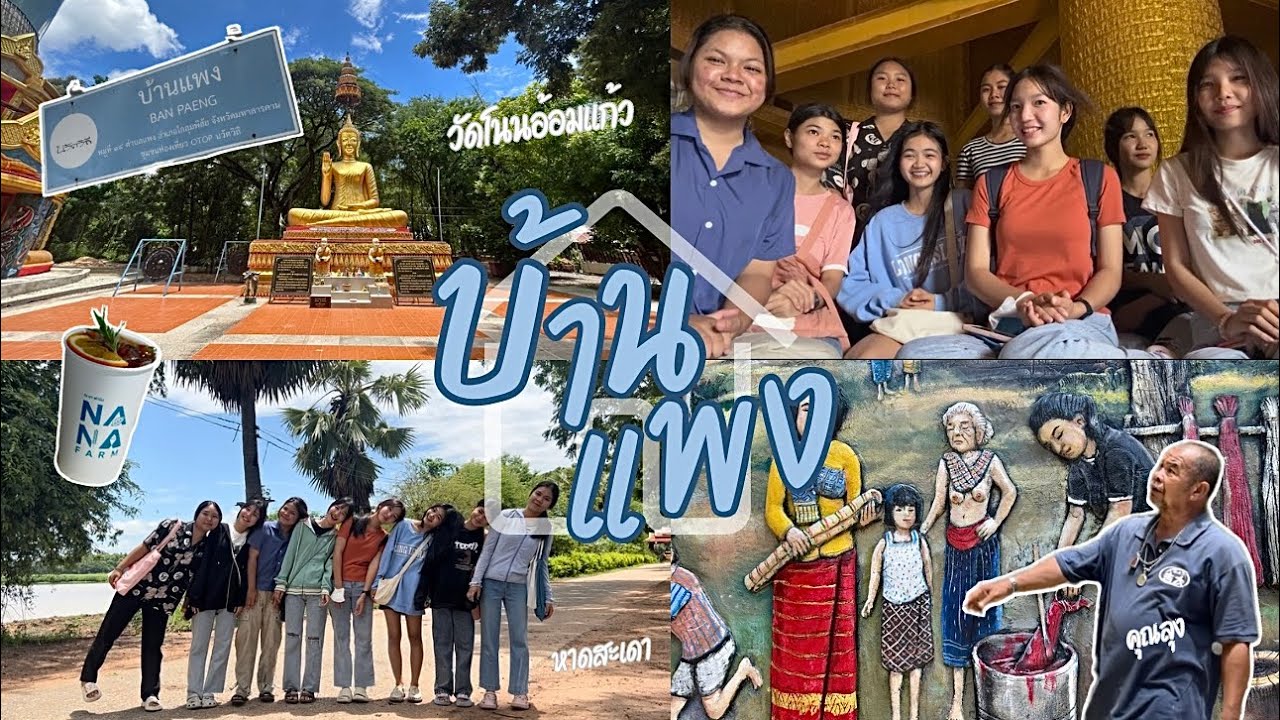
 Click to Access the Navigation Map GPS
 Art, Culture and Heritage
 Historical Sites and Monuments(4)
 Art, Craft Centres, Tradition(5)
 Museums(3)
 Places of Worship
 Temple(17)
 Other Sacred Sites(7)
 Research and Development
 Royal Project(2)
Village, Community(5)
Royal Project(2)
Village, Community(5)
 Nature and Wildlife
 National Parks and Marine Reserves(3)
 Dam, Reservoir, Lake(10)
 River, Canal(2)
 Bays and Beaches(2)
 Other natural attractions(2)
 Entertainment and Agricultural
 Farms, Parks and Ecotourism(3)
 Travel Articles, Recipes
 Food Menu, Northeastern Recipes(1)


