
lovethailand home >Northeastern Travel Attractions >Loei Travel Attractions >Na Haeo >Saeng Pha > Wat Si Pho Chai
TL;DR: Wat Si Pho Chai is located at Ban Saeng Pha, Mu 1, Saeng Pha Subdistrict, Na Haeo District, Loei Province, open Daily, hours 06.00 – 17.00.
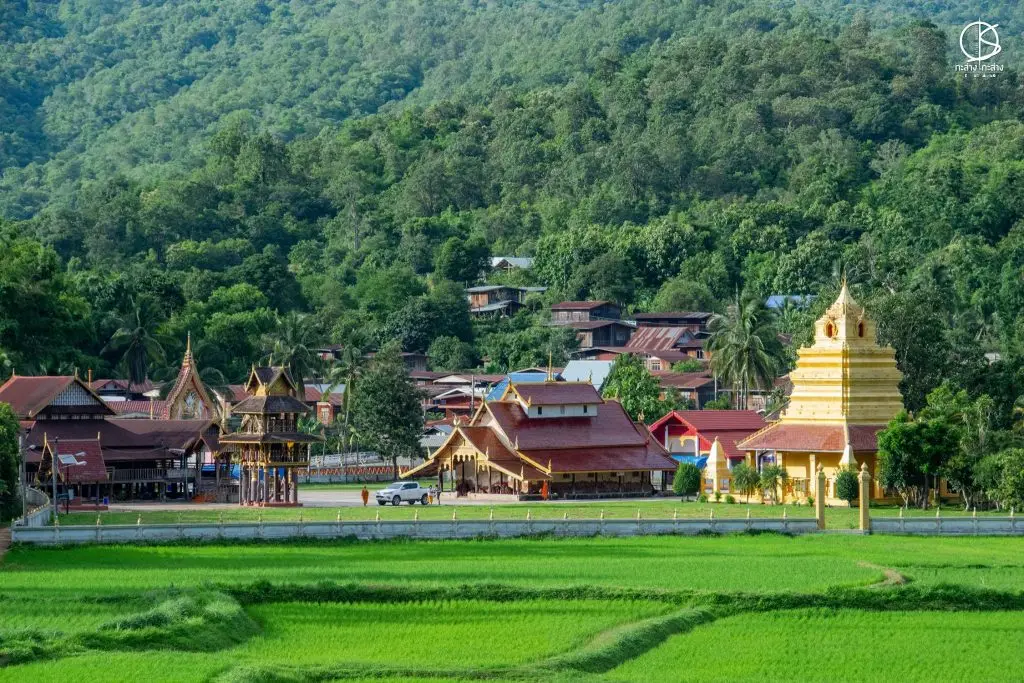
Wat Si Pho Chai
Open Days: Daily
Opening Hours: 06.00 – 17.00
Wat Si Pho Chai, Ban Saeng Pha in Saeng Pha Subdistrict, Na Haeo District, Loei Province, is one of the most culturally distinctive temples in northeastern Thailand. It is known for its old Lan Xang-style ordination hall, its strong connection with the Thai-Lao border community, and the spectacular Flower Tree Procession held during Songkran every year. For international travelers, this temple offers a rare opportunity to experience Buddhist architecture, local faith, community-based tradition, and the peaceful mountain atmosphere of Na Haeo in one meaningful visit.
Wat Si Pho Chai stands in Ban Saeng Pha, a quiet village surrounded by mountains, rice fields, and rural landscapes near the Thai-Lao cultural frontier. The temple serves as a spiritual center for local residents and remains closely connected with daily religious life, annual ceremonies, and community identity. Unlike a large urban temple designed mainly for visitors, Wat Si Pho Chai still functions as a living village temple. Its value lies not only in its age or architecture but also in the way local people continue to use the temple as a place of worship, merit-making, cultural learning, and collective memory.
The history of Wat Si Pho Chai is linked to the early settlement of Ban Saeng Pha. According to local accounts and tourism records, the temple was first built in 1547 and was officially established as a temple in 1832. It was founded by a group of hunters who migrated from Vientiane, led by a man known as Nai Pha or Chiang Pha. After the community became more settled, the temple was built as a religious and social center. This history explains why the temple is deeply connected with the origin of Ban Saeng Pha and why local people often refer to it as the temple of their village.
The name Saeng Pha is associated with the memory of Nai Pha, the leader of the migrant group who helped establish the community. This connection between personal memory, village identity, and religious space gives Wat Si Pho Chai a strong cultural role. The temple is not simply an old Buddhist site; it is a physical reminder of migration, settlement, faith, and the formation of a borderland community in Loei Province.
The most remarkable architectural feature of Wat Si Pho Chai is its old ordination hall, locally known in Isan as a sim. The building shows a clear influence of Lan Xang art, a style historically associated with the cultural world of Laos and the Mekong region. The long, low, sweeping roof spreads outward with a graceful rhythm, creating a silhouette often compared to Wat Xieng Thong in Luang Prabang, Laos. Decorative elements such as the roof finials, tail-like ornaments, and carved details reflect a blend of Lan Xang and northeastern Thai craftsmanship.
When seen from the side, the ordination hall has a calm yet powerful appearance. It does not overwhelm visitors with size, but it impresses through proportion, balance, and harmony with the surrounding landscape. The roofline appears to extend like wings, while the body of the building sits quietly in the temple compound. This gives the temple a distinctive visual identity and makes it one of the most memorable cultural attractions in Na Haeo District.
Inside and around the temple, visitors can pay respect to important Buddha images revered by the local community. These sacred images are not merely decorative objects; they form part of the religious life of Ban Saeng Pha. Local people come to the temple for Buddhist observances, merit-making, and annual ceremonies. For travelers, visiting the temple with this understanding helps transform the experience from sightseeing into a deeper encounter with local belief and community heritage.
Wat Si Pho Chai is also the center of the famous Flower Tree Procession of Ban Saeng Pha, one of the most remarkable Songkran traditions in Loei Province. The main event is held on April 14 every year. On this day, local neighborhoods work together to create large flower trees, finish them within a single day, and carry them to Wat Si Pho Chai in the evening. The decorated flower trees are then paraded around the ordination hall as an offering to the Triple Gem: the Buddha, the Dharma, and the Sangha.
The Flower Tree Procession has been passed down for hundreds of years. In 2002, the Loei Provincial Cultural Council declared it an annual traditional festival of Na Haeo District. The event is not a staged performance created only for tourists. It is a living local tradition rooted in Buddhist faith, agricultural belief, and community cooperation. This is one of the main reasons why the festival has become an important cultural identity of Ban Saeng Pha.
The flower trees of Ban Saeng Pha are especially impressive because of their size and craftsmanship. The structure is usually made from bamboo, then decorated with colorful local flowers such as golden shower flowers, peacock flowers, and seasonal blossoms. Some flower trees rise more than 10 meters high. During the 2024 event, the largest flower tree reached about 18 meters in height and more than 3 meters in width, making it one of the largest flower tree processions in Thailand and widely recognized as an outstanding cultural attraction.
The making of the flower tree reflects the unity of the community. Men from each neighborhood collect bamboo and build the structure. Women, children, and young people prepare and arrange flowers. By afternoon, villagers work together to decorate the tree, often accompanied by music, water play, and the joyful atmosphere of Songkran. By evening, the completed flower trees are carried to Wat Si Pho Chai, where they are placed around the ordination hall before the procession begins.
At night, candles are lit inside the flower trees, creating a glowing scene of light, flowers, music, and devotion. The procession circles the ordination hall 3 times as an offering to the Buddha, the Dharma, and the Sangha. As the trees are carried, the bearers gently swing and rotate them in rhythm with traditional music, making the flower trees appear almost alive. For many visitors, this is the most unforgettable moment of the festival.
The meaning of the Flower Tree Procession is closely tied to Buddhist worship and the agricultural worldview of the community. Local people believe that offering flowers during the Thai New Year brings auspiciousness, happiness, seasonal rainfall, fertile rice fields, and harmony among villagers. The tradition is therefore both a religious ceremony and a social expression of unity. It shows how faith, nature, agriculture, and community life are interwoven in Ban Saeng Pha.
In addition to the main event on April 14, the Flower Tree Procession may also be held on Buddhist holy days later in April, depending on the annual local schedule. Travelers who plan to attend the festival should check the latest announcement before visiting, as the dates after April 14 can vary each year. During the festival period, the village can be crowded, and visitors should respect the ceremony, avoid blocking the procession, and follow local guidance.
Ban Saeng Pha itself adds greatly to the experience of visiting Wat Si Pho Chai. The village is located in a peaceful mountain setting, with rice fields, winding roads, and forested hills. Na Haeo is often admired for its slow pace and borderland charm. Many Thai travelers compare its atmosphere to a small Bhutan-like mountain town because of the quiet village scenery, traditional temples, cool weather, and strong local culture.
Visitors should allow enough time to appreciate both the temple and the village landscape. Wat Si Pho Chai is not a place to rush through. Its beauty is best experienced slowly: walking around the ordination hall, observing the roofline, paying respect to the Buddha images, looking at the village setting, and imagining how the temple compound becomes filled with flower trees and candlelight during the Songkran procession.
For travelers interested in architecture, Wat Si Pho Chai is an important example of Lan Xang influence in a Thai border province. Its resemblance to Wat Xieng Thong in Luang Prabang reflects a shared cultural world across the Mekong region rather than a simple copy of one building. The temple shows how communities in present-day Thailand and Laos have long exchanged artistic forms, religious ideas, craftsmanship, and local beliefs.
For travelers interested in Thai traditions, the Flower Tree Procession offers a particularly valuable experience. It is not merely a colorful festival but a community ritual involving people of all ages. Elders pass on knowledge, adults organize the work, young people help decorate the structures, and children observe and participate. This living transmission is what keeps the tradition meaningful and authentic.
The best time to visit Wat Si Pho Chai depends on the purpose of the trip. For a quiet temple visit, the cool season and the late rainy season are especially pleasant. The weather is comfortable, the surrounding hills are green, and the village atmosphere is peaceful. For visitors who want to witness the Flower Tree Procession, April is the most important month, especially April 14 and the Buddhist holy days that follow within the same month.
Visitors attending the festival should dress politely, as the event takes place within a Buddhist temple. They should avoid touching the flower tree structures without permission, avoid standing in the path of the procession, and be mindful when taking photographs during candle lighting and chanting. Respectful behavior helps preserve the dignity of the ceremony and supports sustainable community tourism.
Getting There is easiest by private car or rental car because Na Haeo is a mountainous district and public transport options are limited. From Dan Sai District, travelers can take Highway 2113 toward Na Haeo and then continue to Saeng Pha Subdistrict. The road includes curves and mountain sections, so careful driving is important, especially during rain, fog, or after dark. Travelers should start early, check the vehicle condition, and make sure there is enough fuel before entering the mountain route.
For those starting from Loei town, the journey passes through Dan Sai before entering Na Haeo District. The distance is long enough to require careful planning, especially if visiting during the festival. A good itinerary is to visit Wat Si Pho Chai in the morning, continue to Saeng Pha Viewpoint, Phra That Din Than, and nearby community attractions, then stay overnight in Na Haeo if planning to visit Phu Suan Sai National Park, Phu Hua Hom, or Tat Hueang Waterfall the next day.
Wat Si Pho Chai is suitable for cultural travelers, photographers, temple visitors, and anyone interested in slow travel in rural Thailand. It offers a different side of Loei Province from the better-known mountain viewpoints. Here, the main attraction is the relationship between architecture, local belief, village life, and long-standing tradition. The temple allows visitors to understand Na Haeo through its history, faith, and people.
Although tourism has brought more attention to Ban Saeng Pha, Wat Si Pho Chai remains a genuine community temple. It continues to serve Buddhist functions, host local ceremonies, and preserve the annual Flower Tree Procession. This authenticity is what makes the temple special. It is not just a beautiful place to photograph, but a cultural site where travelers can see how tradition continues to live within the daily life of a village.
For photography, morning and late afternoon provide the most attractive light on the ordination hall and surrounding landscape. During the rainy season, the hills and rice fields around Ban Saeng Pha are especially green. During the cool season, the air is fresh and the temple is pleasant to walk around. During Songkran, the temple becomes a vibrant center of community activity, flower offerings, candlelight, music, and devotion.
Wat Si Pho Chai, Ban Saeng Pha, is therefore more than an old temple in Na Haeo. It is a cultural landmark that connects history, Lan Xang architecture, Buddhist faith, community identity, and one of Thailand’s most distinctive Songkran traditions. For international visitors who want to explore Loei beyond mainstream attractions, this temple deserves a place on any cultural travel itinerary in northeastern Thailand.
| Name | Wat Si Pho Chai, Ban Saeng Pha |
| Location | Ban Saeng Pha, Mu 1, Saeng Pha Subdistrict, Na Haeo District, Loei Province |
| Address | No. 51, Ban Saeng Pha, Mu 1, Saeng Pha Subdistrict, Na Haeo District, Loei Province 42170, Thailand |
| Coordinates | Search Google Maps for “Wat Si Pho Chai, Saeng Pha, Na Haeo, Loei” |
| Highlights | Historic village temple with a Lan Xang-style ordination hall resembling Wat Xieng Thong in Luang Prabang and the large Flower Tree Procession during Songkran |
| History | First built in 1547 and officially established as a temple in 1832; associated with a group of hunters from Vientiane led by Nai Pha or Chiang Pha |
| Name Origin | The name Ban Saeng Pha is linked to Nai Pha or Chiang Pha, the leader connected with the early settlement of the community |
| Distinctive Features | Old ordination hall with Lan Xang influence, a long sloping roofline, wing-like roof form, and traditional decorative elements |
| Key Tradition | The Flower Tree Procession of Ban Saeng Pha, held on April 14 every year and on selected Buddhist holy days later in April according to the annual local schedule |
| Travel Information | From Dan Sai District, take Highway 2113 toward Na Haeo and continue to Saeng Pha Subdistrict. Private car or rental car is recommended because the route is mountainous. |
| Current Status | Active village temple and cultural attraction for religious, architectural, and traditional tourism in Na Haeo District |
| Open Days | Daily |
| Opening Hours | 06.00 – 17.00; during the Flower Tree Procession, evening ceremonies follow the annual local schedule |
| Facilities | Worship area, temple courtyard, religious ceremony space, and community area for annual traditions |
| Main Areas / Zones | Old ordination hall, revered Buddha images, courtyard around the ordination hall for the Flower Tree Procession, and community religious areas |
| Abbot / Caretaker | Phra Khru Phothichariyaphivat |
| Main Contact Number | 082-835-3341 |
| Official Website / Official Page | Facebook page: Wat Si Pho Chai, Saeng Pha Subdistrict, Na Haeo District, Loei Province |
| Nearby Tourist Attractions | 1. Ban Saeng Pha Viewpoint, about 1 km 2. Phra That Din Than, about 4 km 3. Wat Pho Chai, Ban Na Phueng, about 13 km 4. Phu Suan Sai National Park, about 16 km 5. Reforest Coffee Nahaeo / Route to Phu Suan Sai National Park, about 17 km 6. Phu Hua Hom, about 34 km 7. Tat Hueang Waterfall, about 35 km |
| Nearby Restaurants | 1. Lek Mee Sen Noodle Shop, about 11 km, Tel. 085-925-9065 2. Stamp Restaurant, about 11 km, Tel. 042-897-072 3. Reforest Coffee Nahaeo, about 17 km, Tel. 095-849-7427 4. Mac Loei Fineness Macadamia Product, about 18 km, Tel. 091-935-4926 5. Coffee View Cafe, about 8 km 6. Rim Hueang Thai-Lao Border Restaurant, about 20 km |
| Nearby Accommodations | 1. Bansuansutdhinan Homestay, about 6 km 2. Na Haeo Resort, about 14 km, Tel. 081-826-7369 3. Baan Mok Pieng Din Na-Haeo Resort, about 18 km, Tel. 082-111-6166 4. Phu Ing Mok Resort, about 18 km, Tel. 087-190-8887 5. Rai Lung Nueng Mist View Accommodation, about 30 km, Tel. 064-275-4888 |
Frequently Asked Questions (FAQ)
Q: Where is Wat Si Pho Chai located?
A: Wat Si Pho Chai is located in Ban Saeng Pha, Mu 1, Saeng Pha Subdistrict, Na Haeo District, Loei Province, northeastern Thailand.
Q: What is Wat Si Pho Chai famous for?
A: The temple is famous for its old Lan Xang-style ordination hall, which resembles Wat Xieng Thong in Luang Prabang, and for the Flower Tree Procession held during Songkran.
Q: When is the Flower Tree Procession at Ban Saeng Pha held?
A: The main event is held on April 14 every year. Additional processions may take place on Buddhist holy days later in April according to the annual local schedule.
Q: Why is the Flower Tree Procession important?
A: The flower trees are Buddhist offerings made by the community to honor the Triple Gem during the Thai New Year. The tradition represents faith, unity, auspiciousness, seasonal fertility, and community identity.
Q: What are the opening hours of Wat Si Pho Chai?
A: The temple is generally open daily from 06.00 to 17.00. During the Flower Tree Procession, evening ceremonies follow the annual local schedule.
Q: How can travelers get to Wat Si Pho Chai?
A: The most convenient way is by private car or rental car. From Dan Sai District, take Highway 2113 toward Na Haeo, then continue to Saeng Pha Subdistrict. The route is mountainous, so careful driving is recommended.
Q: What is the best time to visit Wat Si Pho Chai?
A: April is best for the Flower Tree Procession, especially April 14. For a peaceful temple visit and scenic village atmosphere, the cool season and late rainy season are also excellent choices.
Q: What attractions can be visited near Wat Si Pho Chai?
A: Nearby attractions include Ban Saeng Pha Viewpoint, Phra That Din Than, Wat Pho Chai Ban Na Phueng, Phu Suan Sai National Park, Phu Hua Hom, and Tat Hueang Waterfall.
 Category: ●Places of Worship
 Group: ●Temple
Last Update : 2 MonthAgo
 Last Update : 2 MonthAgo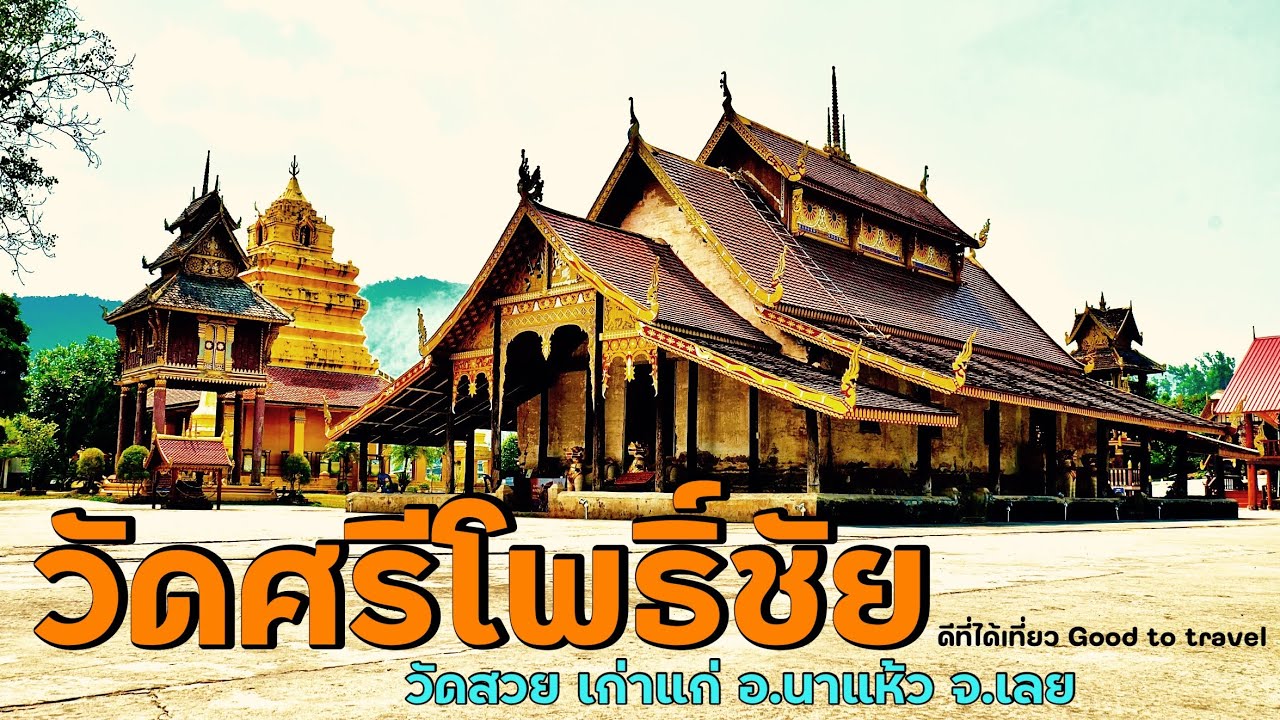
 Click to Access the Navigation Map GPS
Wat Si Pho Chai Map
Recommend

 Art, Culture and Heritage
 Historical Sites and Monuments(2)
 Landmarks and Memorials(3)
 Art, Craft Centres, Tradition(2)
 Museums(4)
 Art Gallery(1)
 Educational Places
 Educational Gardens, Farm(2)
Temple(16)
Educational Gardens, Farm(2)
Temple(16)
 Other Sacred Sites(8)
 Research and Development
 Royal Project(3)
 Suburban Living
 Village, Community(3)
 Local Market(1)
 Nature and Wildlife
 National Parks and Marine Reserves(5)
 Mountain (Doi)(10)
 Dam, Reservoir, Lake(7)
 Waterfalls(21)
 Caves(3)
 River, Canal(5)
 Bays and Beaches(1)
 Other natural attractions(1)
 Entertainment and Agricultural
 Farms, Parks and Ecotourism(8)
 Waterpark(1)
 Outdoor and Adventure Activities(2)


