
lovethailand home >Northeastern Travel Attractions >Khon Kaen Travel Attractions >Waeng Noi >Lahan Na > Bueng Lahan Na
TL;DR: Bueng Lahan Na is located at Ban Lahan Na, Lahan Na Subdistrict, Waeng Noi District, Khon Kaen Province, open Daily, hours 24 Hours.
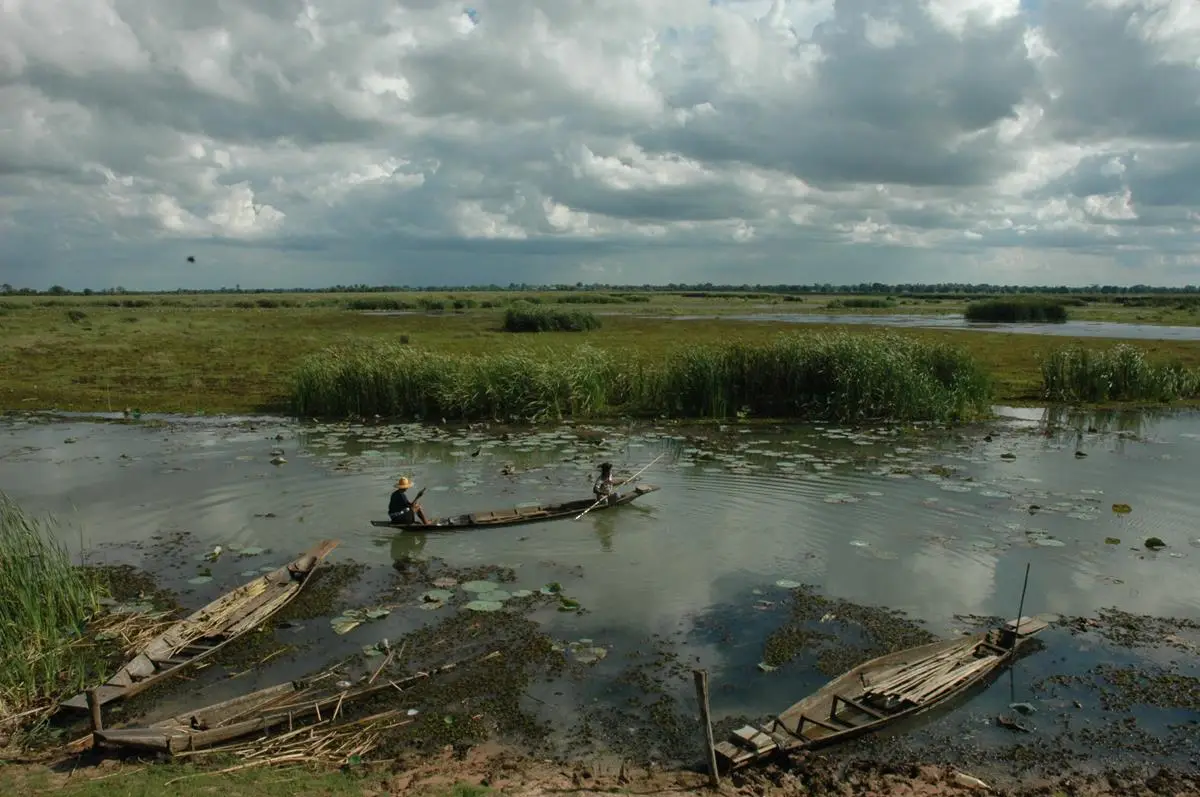
Bueng Lahan Na
Open Days: Daily
Opening Hours: 24 Hours
Bueng Lahan Na in Khon Kaen Province is a large freshwater wetland in Lahan Na Subdistrict, Waeng Noi District, covering approximately 7,000 rai. It is more than a scenic lake; it is a vital community water source that supports agriculture, traditional fishing, local livelihoods, cultural activities, and nature-based tourism. The main appeal of Bueng Lahan Na lies in its wide open water, peaceful rural atmosphere, sunset views, and the everyday life of local fishing communities. For travelers who want to experience a quieter side of Khon Kaen beyond the city, this wetland offers a meaningful glimpse into the relationship between water, rice fields, and Isan village life.
Bueng Lahan Na is located around Ban Lahan Na in Lahan Na Subdistrict, Waeng Noi District, Khon Kaen Province. The area is a broad natural wetland surrounded by villages, farmland, and open rural landscapes. Its size gives visitors the feeling of standing beside an inland lake, with water stretching toward the horizon and the sky reflected on the surface. Around the wetland, travelers may see small fishing boats, aquatic plants, local paths, and the gentle rhythm of community life. This is not a heavily commercialized attraction; its charm comes from authenticity, simplicity, and the natural role it continues to play for people living nearby.
The importance of Bueng Lahan Na comes from the way it supports local livelihoods. For generations, the wetland has served as a source of food, water, and income. Villagers use the area for small-scale fishing, collecting freshwater resources, and supporting agricultural activities in the surrounding lowland areas. Visitors who spend time along the edge of the wetland can observe a landscape where people and nature remain closely connected. The sight of small boats, fishing tools, and villagers moving quietly along the water makes Bueng Lahan Na different from an ordinary park or reservoir. It is a living landscape rather than a purely recreational space.
The name “Bueng Lahan Na” reflects the geography of the area. In Thai, “bueng” refers to a marsh, lake, or natural water body, while “na” is associated with rice fields. Together, the name evokes a large wetland surrounded by agricultural land. This connection between water and rice fields defines the identity of the place. The wetland is not separate from the village; it is part of the local cultural landscape, shaping how people farm, fish, travel, celebrate, and remember their community.
For travelers, the most beautiful moments at Bueng Lahan Na are usually in the early morning and late afternoon. In the morning, the air is cooler, the light is soft, and the atmosphere is quiet. In the evening, the water reflects the changing color of the sky, creating one of the most photogenic sunset scenes in Waeng Noi District. The horizon, small boats, and warm light over the water make the area ideal for landscape photography. Travelers do not need elaborate facilities to enjoy the place; simply sitting by the water, feeling the breeze, and watching the sky change is already the core experience.
The wetland changes with the seasons. During the rainy season, water levels rise, the surrounding landscape becomes greener, and the wetland appears full and lively. From the late rainy season into the cool season, the weather is more comfortable and the sky is often clearer, making it a good period for photography and slow travel. During the dry season, the role of the wetland as a community water source becomes even more visible, especially for agriculture and local livelihoods. Each season gives Bueng Lahan Na a different character, so repeat visitors may see a changing landscape throughout the year.
Bueng Lahan Na also has ecological value. The combination of open water, wetland vegetation, and surrounding rural land provides habitat and feeding areas for fish, aquatic life, and birds. Nature lovers can enjoy quiet observation without disturbing the local environment. The best way to experience the wetland is to move slowly, keep noise low, and respect both wildlife and community activities. This type of visit allows travelers to understand the area as an ecosystem, not merely a place to take photographs.
In terms of water management, Bueng Lahan Na has been recognized for its potential as a water-retention area. It is connected to local discussions and development related to water storage and the Kaem Ling, or “monkey cheek,” concept, which helps retain water during high-water periods and improve water availability during drier months. This role adds another layer of importance to the wetland. Bueng Lahan Na contributes not only to tourism but also to environmental balance, agricultural resilience, and local water security.
The Lahan Na Subdistrict Administrative Organization has developed Bueng Lahan Na as a community attraction while keeping its natural and local character. The development approach focuses on the existing strengths of the area: the large water body, rural scenery, traditional fishing, and community culture. As a result, travelers still experience a calm and genuine local atmosphere rather than a crowded commercial tourist site. This makes Bueng Lahan Na suitable for visitors who appreciate quiet places and slow, observation-based travel.
Photographers will find many possible compositions around Bueng Lahan Na. The wide water surface, fishing boats, aquatic plants, reflected sky, and silhouettes at sunset create simple but powerful images. Morning light is suitable for soft landscape shots, while evening light is ideal for dramatic reflections and warm colors. The area is particularly appealing to travelers who enjoy rural scenery, natural textures, and photographs that tell a story of place rather than staged tourist scenes.
Visitors interested in local life will find Bueng Lahan Na especially meaningful. Traditional fishing remains an important part of the wetland’s identity. Depending on the time of day and season, travelers may see villagers using small boats or preparing fishing gear along the water. These scenes show a practical, everyday relationship with the wetland. For foreign travelers, this is a valuable opportunity to understand how rural communities in Northeast Thailand depend on natural water resources in ways that are both economic and cultural.
Bueng Lahan Na is also connected with local belief and ritual. One of the important community traditions associated with the wetland is the Bun Duean Hok ceremony and the ritual honoring Chao Pho Uppahat of Bueng Lahan Na. This annual cultural activity reflects local faith, gratitude, and the community’s deep attachment to the water source. It shows that the wetland is not only a physical resource but also a spiritual and cultural center for people in Lahan Na Subdistrict. Travelers who are interested in Isan culture can appreciate the place more deeply by understanding this relationship between water, belief, and community identity.
Planning a visit to Bueng Lahan Na is straightforward, but travelers should consider the rural setting. The area is best reached by private car, rental car, or local transport arranged from nearby districts. Shops and restaurants are not as concentrated as in the city, so visitors should prepare drinking water, sun protection, comfortable footwear, and enough time for onward travel. For a short scenic stop, 1–2 hours is usually enough. For sunset photography, it is better to arrive earlier and stay until the last light reflects on the water.
Bueng Lahan Na is suitable for families, photographers, nature lovers, cultural travelers, and anyone seeking a quiet stop in southern Khon Kaen Province. It can be included in a route that connects Waeng Noi District with nearby attractions such as Wat Chumphon, the Chao Pho Muen Si Lak Mueang Shrine, Phu Tham-Phu Kratae Forest, Nam Sap Yen, Khon Kaen Botanical Garden in Waeng Yai District, and destinations around Phon District. This route gives travelers a broader view of rural Khon Kaen, combining nature, temples, local communities, and lesser-known landscapes.
The atmosphere at Bueng Lahan Na is calm rather than busy. It is not designed for loud entertainment or large-scale commercial activity. Instead, it offers open space, fresh air, water views, and a slower pace of travel. This makes the wetland especially appealing to visitors who want to rest their eyes, slow down, and experience a natural setting that still belongs strongly to the local community. The beauty of the place is subtle: wind over the water, small boats in the distance, and the feeling of space under the wide Isan sky.
Responsible travel is important here. Visitors should not leave litter, disturb fishing equipment, walk into private or working areas without permission, or move too close to unstable banks. As a natural wetland, water levels and ground conditions can change with the season. Travelers should stay aware of their surroundings, especially near the water’s edge. Respecting the area helps preserve both the environment and the local livelihoods that depend on it.
Travelers coming from Khon Kaen city can drive south toward Ban Phai and Phon District before continuing to Waeng Noi District and Lahan Na Subdistrict. The route is most convenient by private car or rental car. Public transport may reach nearby district centers, but reaching the lakeside area directly is easier with a car or locally arranged transport. Travelers coming from Chaiyaphum or Nakhon Ratchasima can also plan a cross-provincial rural route, as Bueng Lahan Na lies in the broader border landscape of southern Khon Kaen and neighboring provinces.
Getting There is easiest by private car, rental car, or local hired vehicle. From Waeng Noi District, head toward Lahan Na Subdistrict and Ban Lahan Na, then follow local roads to the wetland area. Because Bueng Lahan Na is large and can be approached from different community-side roads, using a navigation map together with local signs is recommended. Daytime travel is the most convenient. If visiting for sunset, allow enough time to return before it gets too dark, especially if you are unfamiliar with rural roads.
Bueng Lahan Na is valuable because it remains a real community landscape. Its beauty does not depend on large structures or decorative attractions. It comes from water, fields, boats, wind, and the lives of local people. For travelers who enjoy simple nature and cultural depth, the wetland offers a quiet but memorable experience. It is a place where visitors can see how a natural water source supports food, farming, fishing, traditions, and everyday life.
From a tourism perspective, Bueng Lahan Na adds diversity to Khon Kaen Province. Many visitors know Khon Kaen for its city, temples, museums, and transport connections, but places like Bueng Lahan Na reveal another side of the province: rural wetlands, community-based landscapes, and local ecological knowledge. The wetland is ideal for travelers who want to go beyond mainstream attractions and explore how people in Northeast Thailand live with water and land.
For overnight planning, the closest choices include local accommodation in Waeng Noi District, while a wider range of hotels and resorts can be found in Phon District. Staying in Phon and driving to Bueng Lahan Na in the morning or late afternoon is a practical option for travelers who want more convenience. This approach also works well for those planning a broader route through southern Khon Kaen, Waeng Noi, Phon, and nearby provincial border areas.
Nearby food options include cafés, Thai restaurants, Isan-style restaurants, and local eateries in Waeng Noi and Phon. Travelers should check operating hours before visiting, especially on weekdays or in the evening, because rural restaurants may have different schedules from those in major cities. Combining a visit to the wetland with a local meal is a good way to complete the trip while supporting community businesses around the area.
What makes Bueng Lahan Na worth visiting is its authenticity. The wetland has many roles at the same time: it stores water, supports agriculture, provides fish, hosts local traditions, and offers travelers a peaceful place to rest. When these layers are seen together, Bueng Lahan Na becomes more than a scenic stop. It becomes a window into the relationship between nature and rural life in Isan.
The best time to visit is in the morning or late afternoon. Morning visits offer cool air and a quiet atmosphere, while sunset visits provide the most beautiful light over the water. Travelers should check the weather, prepare sun protection, and plan the return route carefully. Bueng Lahan Na is not a place to rush through. Its value is best appreciated slowly, by watching the water, the sky, and the small details of local life around the wetland.
| Name | Bueng Lahan Na |
| Location | Ban Lahan Na, Lahan Na Subdistrict, Waeng Noi District, Khon Kaen Province |
| Address | Lahan Na Subdistrict, Waeng Noi District, Khon Kaen 40230, Thailand |
| Highlights | Large freshwater wetland of about 7,000 rai, wide water views, traditional fishing scenes, and sunset photography |
| History / Importance | An important natural water source for Lahan Na Subdistrict, supporting agriculture, local fishing, recreation, and community-based tourism |
| Name Origin | The name reflects a large wetland closely connected with rice fields and the local settlement of Ban Lahan Na |
| Distinctive Features | Open wetland scenery, peaceful rural atmosphere, traditional fishing life, and natural lakeside viewpoints |
| Travel Information | Best reached by private car or rental car from Khon Kaen city via Ban Phai and Phon District, then onward to Waeng Noi District and Lahan Na Subdistrict |
| Current Status | Open as a community natural attraction and remains an important local water source |
| Open Days | Daily |
| Opening Hours | 24 Hours |
| Fees | Free Admission |
| Facilities | Lakeside viewpoints, resting areas, community access roads, and parking areas at designated local points |
| Main Areas / Zones | Lakeside viewpoints, traditional fishing areas, wetland vegetation zones, agricultural surroundings, and community activity areas |
| Related Tradition | Bun Duean Hok ceremony and ritual honoring Chao Pho Uppahat of Bueng Lahan Na |
| Caretaker | Lahan Na Subdistrict Administrative Organization, Waeng Noi District, Khon Kaen Province |
| Main Contact Number | Lahan Na Subdistrict Administrative Organization, Tel. 043-499477 |
| Official Website / Official Page | Official website and Facebook page of Lahan Na Subdistrict Administrative Organization |
| Nearby Tourist Attractions | 1. Wat Chumphon, Waeng Noi District, about 15 km 2. Chao Pho Muen Si Lak Mueang Shrine, about 16 km 3. Phu Tham-Phu Kratae Forest, about 24 km 4. Nam Sap Yen, Waeng Noi District, about 25 km 5. Khon Kaen Botanical Garden, Waeng Yai District, about 32 km 6. Laloeng Wai Public Park, Phon District, about 36 km |
| Nearby Restaurants | 1. Na-I-Mae Organic Farm, about 8 km, Tel. 083-144-8174 2. Pla Yai @ Waeng Noi, about 14 km, Tel. 098-931-4544 3. Jungle Cafe Waeng Noi Khon Kaen, about 15 km, Tel. 095-612-3927 4. Nok Noi Restaurant, about 15 km 5. Pornthip Wild Food Restaurant, Phon Branch, about 38 km, Tel. 084-400-6088 |
| Nearby Accommodations | 1. Baan Khao Resort, Waeng Noi District, about 17 km, Tel. 096-763-3035 2. Raintree Cafe & Homestay, Waeng Noi District, about 18 km, Tel. 081-266-5110 3. The Himna Resort, Phon District, about 40 km, Tel. 061-692-0928 4. Dee Dee Resort, Phon, about 42 km, Tel. 080-001-4247 5. Subanan Apartment, Phon, about 39 km, Tel. 043-414491, 089-279-3895 |
Frequently Asked Questions (FAQ)
Q: Where is Bueng Lahan Na located?
A: Bueng Lahan Na is located in Ban Lahan Na, Lahan Na Subdistrict, Waeng Noi District, Khon Kaen Province, Thailand.
Q: What are the opening days and hours of Bueng Lahan Na?
A: Bueng Lahan Na is open daily for 24 hours, although the best times to visit are early morning and late afternoon.
Q: Is there an admission fee for Bueng Lahan Na?
A: No. Admission to Bueng Lahan Na is free.
Q: What makes Bueng Lahan Na special?
A: Its highlights include a large freshwater wetland of about 7,000 rai, peaceful rural scenery, traditional fishing life, and beautiful sunset views.
Q: When is the best time to visit Bueng Lahan Na?
A: The best times are in the morning for cool air and quiet scenery, and in the evening for sunset photography. The late rainy season and cool season are especially pleasant.
Q: How can travelers get to Bueng Lahan Na?
A: The most convenient way is by private car or rental car from Khon Kaen city via Ban Phai and Phon District, then onward to Waeng Noi District and Lahan Na Subdistrict.
Q: Who should visit Bueng Lahan Na?
A: It is ideal for nature lovers, photographers, slow travelers, families, and visitors who want to experience the rural wetland landscape of Khon Kaen.
Q: Is there a local tradition connected with Bueng Lahan Na?
A: Yes. The wetland is associated with the Bun Duean Hok ceremony and the ritual honoring Chao Pho Uppahat of Bueng Lahan Na, reflecting the community’s faith and connection with the water source.
 Category: ●Nature and Wildlife
 Group: ●River, Canal
Last Update : 2 MonthAgo
 Last Update : 2 MonthAgo
 Click to Access the Navigation Map GPS
Bueng Lahan Na Map
Recommend

 Art, Culture and Heritage
 Historical Sites and Monuments(7)
 Landmarks and Memorials(3)
 Art, Craft Centres, Tradition(2)
 Museums(4)
 Educational Places
 Museum for Study(2)
 Places of Worship
 Temple(27)
 Other Sacred Sites(5)
 Suburban Living
 Village, Community(3)
 Local Market(1)
 National Parks and Marine Reserves(5)
 Mountain (Doi)(1)
 Dam, Reservoir, Lake(4)
 Waterfalls(8)
 Caves(9)
River, Canal(10)
Caves(9)
River, Canal(10)
 Bays and Beaches(3)
 Islands(1)
 Other natural attractions(5)
 Entertainment and Agricultural
 Zoos and Aquariums(1)
 Animal camps and shows(2)
 Farms, Parks and Ecotourism(7)
 Waterpark(2)


