
lovethailand home >Northeastern Travel Attractions >Khon Kaen Travel Attractions >Muang Khon Kaen >Nai Muang > Wat Sri Chan
TL;DR: Wat Sri Chan is located at Sri Chan Road, Nai Mueang Subdistrict, Mueang Khon Kaen District, Khon Kaen Province, open Daily, hours Open daily; daytime visits around 08.00 – 17.00 are recommended.
Wat Sri Chan
Open Days: Daily
Opening Hours: Open daily; daytime visits around 08.00 – 17.00 are recommended.
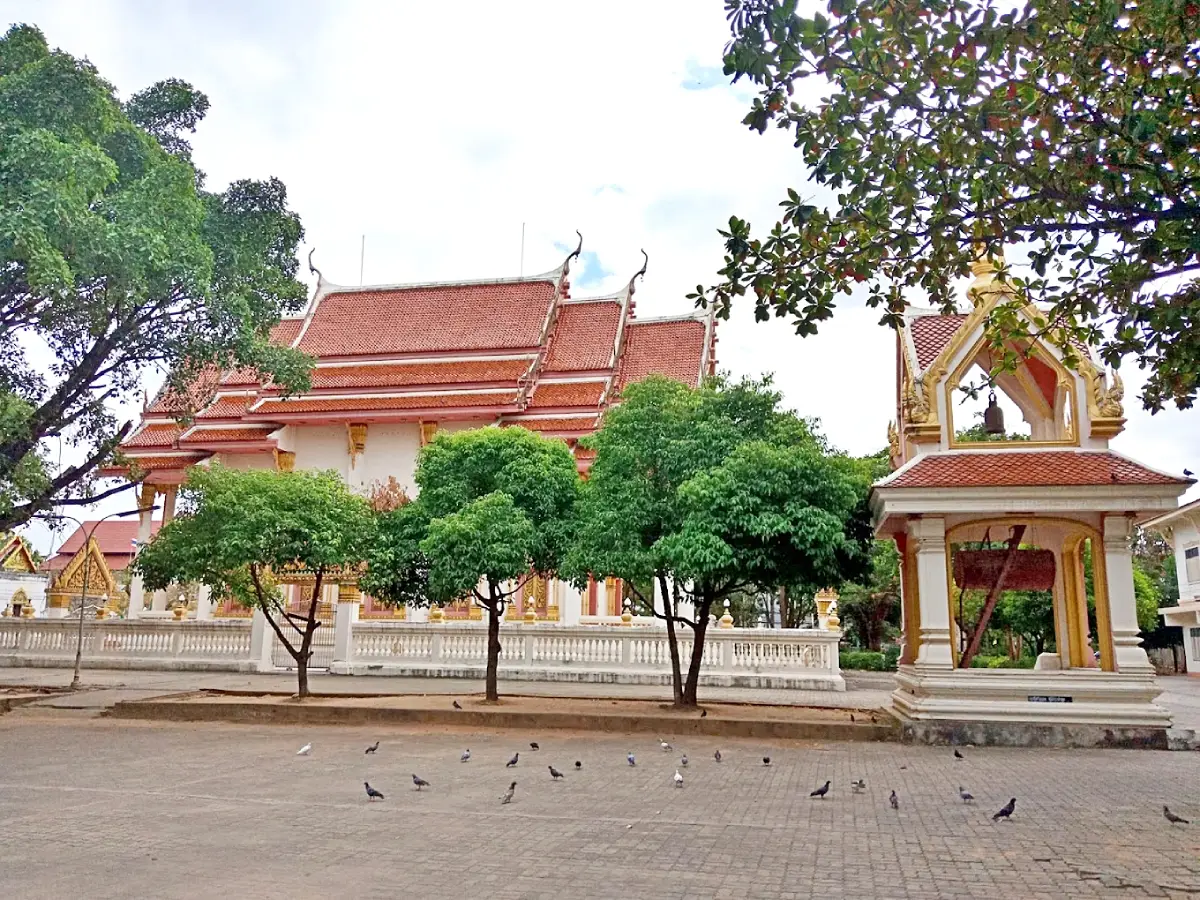
Wat Sri Chan in Khon Kaen Province is one of the most meaningful Buddhist temples in the heart of Khon Kaen city. Located at 681 Sri Chan Road, Nai Mueang Subdistrict, Mueang Khon Kaen District, this royal temple combines local faith, Buddhist education, urban history, and refined temple architecture in one accessible site. It is officially a third-class royal temple of the ordinary type under the Dhammayut order, and its history dates back to 1825. The most memorable feature for visitors is its graceful ordination hall, built and supported through the shared devotion of local residents and Buddhist followers who contributed their resources, labor, and faith to create a beautiful sacred space for the community.
Wat Sri Chan is not simply a place for making merit or paying respect to the Buddha. It is also a living cultural landmark that helps visitors understand the development of Khon Kaen from an old community into a modern provincial city. Within the temple grounds are the ordination hall, a principal Buddha image in the Subduing Mara posture, a sermon hall, monks’ residences, merit-making halls, a drum tower, a bell tower, and areas connected with Buddhist education. The temple also houses the Office of the Provincial Ecclesiastical Governor of Khon Kaen for the Dhammayut order, which gives it importance not only to the local community but also to the wider monastic administration of northeastern Thailand.
For cultural travelers, Wat Sri Chan is an excellent place to experience a historic temple in an urban setting without having to travel far from the city center. The temple is close to major roads, local restaurants, hotels, shopping areas, and other attractions. Visitors can pay respect to the principal Buddha image, admire the ordination hall, learn about the story behind the temple’s name, and continue their route to Khon Kaen City Pillar Shrine, Bueng Kaen Nakhon, Phra Mahathat Kaen Nakhon, Wat Nong Waeng, Ton Tann Market, or Khon Kaen National Museum within the same day.
The history of Wat Sri Chan begins with Ya Khu Lak Kham, also known as Phim, who became the first abbot of the temple. He had previously resided at Wat Sri Nuan before identifying the area of Khok Pa Chot near Nong Sabaeng as a peaceful and shaded location suitable for establishing a monastery. The area was once surrounded by large trees and had a calm atmosphere. With the support of local villagers, he gathered the community’s faith and built a temple that would serve as a spiritual center. This origin reflects a common pattern in many Thai communities, especially in Isan, where temples were built not only as religious structures but as shared spaces created by collective local devotion.
The name “Wat Sri Chan” carries a poetic local story. According to the temple’s history, on a full-moon night the moonlight shone upon the trees and leaves of the old forested area, creating a beautiful glow as if the radiance of the moon had descended upon the site. Ya Khu Lak Kham regarded this as an auspicious sign and named the temple Wat Sri Chan, associating it with brightness, prosperity, and dignity. The name also has a connection with Wat Sri Nuan, the temple where the first abbot had previously stayed. Local people often called Wat Sri Chan “Wat Nok,” meaning the outer temple, while Wat Sri Nuan was called “Wat Nai,” meaning the inner temple, because of their locations in relation to the old residential area.
As Khon Kaen grew, Wat Sri Chan became increasingly important. What began as a temple in a quiet area outside the old community is now a significant temple in the city center, surrounded by neighborhoods, commercial areas, roads, and public institutions. The temple was elevated to the status of a third-class royal temple of the ordinary type on 31 May 1978. This status reflects its religious and social significance. Wat Sri Chan also has a long connection with Buddhist education, including Dhamma studies, Pali studies, and other religious learning programs. Because of this, the temple is more than a place of worship; it is also a center of learning for monks, novices, and lay Buddhists.
The ordination hall of Wat Sri Chan is the highlight that deserves careful attention. It represents the faith and cooperation of the local community. The building has a graceful Thai-style roof, balanced proportions, and refined decorative details that create an atmosphere of dignity and calm. Its beauty is not based only on size, but on harmony, cleanliness, and the quiet spiritual impression visitors feel when entering the temple grounds. For travelers who enjoy Buddhist architecture, the ordination hall offers an opportunity to observe how local craftsmanship, community faith, and royal temple status come together in one sacred building.
Inside the ordination hall is the principal Buddha image in the Subduing Mara posture. This posture refers to the moment in the Buddha’s life when he overcame Mara before enlightenment. It symbolizes mental strength, perseverance, and victory over inner defilements. Visitors commonly pay respect to the Buddha image for blessings and peace of mind. The calm interior of the hall makes it suitable for quiet reflection, whether one is a Buddhist pilgrim, a cultural traveler, or a foreign visitor interested in Thai religious traditions.
The temple layout reflects its role as a community and monastic center. The ordination hall is used for important monastic ceremonies. The sermon hall supports religious gatherings, Dhamma talks, and community activities. The monks’ residences provide living quarters for the monastic community, while the merit-making halls support ceremonies connected with family life, remembrance, and Buddhist merit. The drum tower, bell tower, and Dhammachakra symbol complete the atmosphere of a traditional Thai Buddhist temple and help visitors understand how different temple structures serve different functions.
Wat Sri Chan is also important in terms of monastic administration. It serves as the location of the Office of the Provincial Ecclesiastical Governor of Khon Kaen for the Dhammayut order. The current abbot is Phra Thammawachirasarasudhi, also known as Santi Chutindharo, who has served as abbot from 2010 onward. Under this leadership, the temple continues to function as a place of worship, Buddhist education, monastic administration, and community service. This makes Wat Sri Chan a living religious institution rather than a monument separated from daily life.
One of the reasons Wat Sri Chan is meaningful for both Thai and international travelers is that it stands in the middle of the city while preserving the memory of an older community. Sri Chan Road is one of Khon Kaen’s important urban roads. The temple’s location on this road shows how Buddhist temples remain connected to everyday urban life. Wat Sri Chan is surrounded by movement, commerce, transportation, and local activity, yet inside the temple grounds visitors can still find a sense of calm and continuity.
For travelers interested in Khon Kaen’s history, Wat Sri Chan is a good starting point for understanding how communities expanded from older settlement areas into the modern city. The old distinction between Wat Nok and Wat Nai is more than a simple nickname. It is a cultural clue showing how local people once understood space, settlement, and identity. Through this story, visitors can see how temples helped define community boundaries and how Buddhist institutions became part of local memory.
A recommended visit begins at the ordination hall, where travelers can pay respect to the principal Buddha image and observe the architectural details. After that, visitors can walk around the temple grounds to see the sermon hall, drum tower, bell tower, and other religious areas. Moving slowly through the temple allows one to appreciate that Wat Sri Chan is quiet but deeply meaningful. Different buildings reflect different stages of development and different functions, including monastic ceremony, education, and community support.
Visitors should dress respectfully. Since Wat Sri Chan is a royal temple and an active religious site, clothing should cover the shoulders and knees. Loud behavior should be avoided near the ordination hall, and photography should be done with respect. If a ceremony is taking place, visitors should give priority to monks and local worshippers. These simple manners help make a temple visit more meaningful and ensure that tourism does not disturb religious life.
The best time to visit is in the morning or late afternoon, when the weather is more comfortable and the light is suitable for viewing the ordination hall. Morning visits are especially peaceful and appropriate for paying respect to the Buddha image. Late-afternoon visits can be combined with nearby places such as Bueng Kaen Nakhon or Khon Kaen City Pillar Shrine. Travelers who need to contact the temple or ask about ceremonies should do so during daytime hours when temple staff or monks are more likely to be available.
Wat Sri Chan is not a large commercial-style tourist attraction. Its value lies in its history, royal temple status, monastic role, and community faith. Visitors should see it as a place of learning and reflection rather than only a photo stop. By taking time to understand the origin of its name, the role of the ordination hall, and its importance to Khon Kaen’s Buddhist community, travelers will gain a deeper appreciation of the temple and the city around it.
Getting There is straightforward because the temple is located on Sri Chan Road in central Khon Kaen. Travelers can use a private car, taxi, local transport, or ride-hailing service. From Khon Kaen Railway Station, the city center, and major hotels, the trip is convenient. The temple can easily be included in a half-day itinerary with Khon Kaen City Pillar Shrine, Central Khon Kaen, Khon Kaen National Museum, Bueng Kaen Nakhon, Wat Nong Waeng, and Ton Tann Market.
A practical half-day route can begin at Wat Sri Chan in the morning, followed by Khon Kaen City Pillar Shrine or Khon Kaen National Museum. After lunch in the city, travelers can continue to Bueng Kaen Nakhon and Wat Nong Waeng to see Phra Mahathat Kaen Nakhon. In the evening, Ton Tann Market or a local walking-street area can be added if operating on that day. This route is suitable for Thai visitors and foreign travelers who want to understand Khon Kaen through temples, civic landmarks, museums, lakeside scenery, and local food culture.
Architecturally, Wat Sri Chan has the charm of an urban Isan temple that has developed over time. It does not rely on overwhelming scale, but on proportion, cleanliness, and quiet beauty. Visitors can observe the roof form, gable details, decorative elements, colors, and the spatial rhythm around the ordination hall. These details help show that local Buddhist architecture in northeastern Thailand has its own identity and should be appreciated on its own terms.
The temple also expresses the meaning of community cooperation. Its development was not the work of one person alone, but the result of villagers and supporters who saw the importance of having a temple as a spiritual center. The beautiful ordination hall is therefore not just a religious building. It is also evidence of unity, donation, care, and the passing of Buddhist faith from one generation to another. This gives a visit to Wat Sri Chan an emotional depth beyond architecture.
On major Buddhist holy days such as Makha Bucha Day, Visakha Bucha Day, Asalha Bucha Day, Buddhist Lent, and the end of Buddhist Lent, Wat Sri Chan serves as a place where Buddhists can make merit, listen to Dhamma talks, join candlelight processions, and participate in temple activities. During these occasions, the temple becomes especially meaningful as a center of faith for the city. Visitors should remain respectful, as many people come for genuine religious practice.
For foreign visitors, Wat Sri Chan is a good place to understand the broader meaning of a Thai temple. A wat is not only a ritual building. It is also a learning space, a place for merit-making, a community meeting point, and a container of local memory. Wat Sri Chan represents all of these roles. It is a historic temple that remains active in modern Khon Kaen, making it valuable for travelers who want to see Thai Buddhism as part of living culture.
Families visiting the temple can use the trip as a simple cultural lesson. Children can learn about the origin of the temple’s name, the story of moonlight, and the way villagers helped build the temple through faith. Older visitors can appreciate the convenience of a calm temple in the city center. The site is easy to include in a city itinerary, making it suitable for visitors of different ages and travel styles.
A typical visit takes around 30 minutes to 1 hour for paying respect to the Buddha image and viewing the ordination hall. Travelers who want to read the history, walk around the grounds, and take respectful photographs should allow at least 1 hour. Because the temple is easy to reach and close to many city attractions, it works well as either the first stop of a Khon Kaen city trip or a quiet pause between other destinations.
In summary, Wat Sri Chan in Khon Kaen Province is a historically important and spiritually meaningful temple. Its highlights include the elegant ordination hall, the principal Buddha image in the Subduing Mara posture, the story of its moonlit name, and its status as a third-class royal temple in the heart of Khon Kaen. Visitors who come here will see both the calmness of a Buddhist temple and the life of the city around it, making Wat Sri Chan a worthwhile stop for anyone who wants to understand Khon Kaen more deeply.
| Name | Wat Sri Chan, Khon Kaen Province |
| Location | Sri Chan Road, Nai Mueang Subdistrict, Mueang Khon Kaen District, Khon Kaen Province |
| Address | 681 Sri Chan Road, Nai Mueang Subdistrict, Mueang Khon Kaen District, Khon Kaen 40000, Thailand |
| Type | Third-Class Royal Temple of the Ordinary Type, Dhammayut Order |
| Highlights | Elegant ordination hall, principal Buddha image in the Subduing Mara posture, historic temple name linked to moonlight, and strong community faith |
| History | Established in 1825 by Ya Khu Lak Kham, or Phim. Elevated to third-class royal temple status on 31 May 1978 and granted Visungkhamsima on 27 December 2002. |
| Name Origin | The name is linked to moonlight shining upon the old forested site and was also chosen to correspond with Wat Sri Nuan, the former temple of the first abbot. |
| Distinctive Features | Historic urban temple with a refined ordination hall, strong local faith, Buddhist education roles, and monastic administrative importance. |
| Sacred Objects | Principal Buddha image in the Subduing Mara posture and bronze Buddha images. |
| Travel Information | Accessible by private car, taxi, local transport, or ride-hailing service from central Khon Kaen, Khon Kaen Railway Station, and nearby hotels. |
| Current Status | Open and active as an important temple in central Khon Kaen and as the location of the Office of the Provincial Ecclesiastical Governor of Khon Kaen for the Dhammayut order. |
| Open Days | Daily |
| Opening Hours | Open daily; daytime visits around 08.00 – 17.00 are recommended. |
| Facilities | Ordination hall, sermon hall, merit-making halls, monks’ residences, religious activity areas, and monastic office areas. |
| Main Areas / Zones | Ordination Hall Sermon Hall Monks’ Residences Merit-Making Halls Drum Tower and Bell Tower Office of the Provincial Ecclesiastical Governor of Khon Kaen, Dhammayut Order Buddhist Education Areas |
| Abbot / Caretaker | Phra Thammawachirasarasudhi (Santi Chutindharo) |
| Main Contact Number | Wat Sri Chan 043-237-756 Office of the Provincial Ecclesiastical Governor of Khon Kaen, Dhammayut Order 086-868-5428 |
| Official Website / Official Page | Facebook: Wat Sri Chan Royal Temple Khon Kaen |
| Nearby Tourist Attractions | 1. Khon Kaen City Pillar Shrine, about 1 km 2. Central Khon Kaen, about 2 km 3. Khon Kaen National Museum, about 3 km 4. Bueng Kaen Nakhon, about 3 km 5. Wat Nong Waeng Royal Temple and Phra Mahathat Kaen Nakhon, about 4 km 6. Ton Tann Market, about 4 km |
| Nearby Restaurants | 1. Sattha Cafe Wat Sri Chan Khon Kaen, about 0 km 2. Srichan Nomsod Khon Kaen, about 1 km, Tel. 092-592-4694 3. Garlic Made-to-Order Restaurant, Sri Chan 29, about 2 km, Tel. 089-622-7106 4. Bualuang Restaurant, about 3 km, Tel. 086-451-4117 5. Krua Supanniga by Khunyai Somsie, about 5 km, Tel. 063-424-1665 |
| Nearby Accommodations | 1. B2 Khon Kaen Boutique & Budget Hotel, about 1 km, Tel. 1328 2. Kosa Hotel Khon Kaen, about 1 km, Tel. 043-320-320 3. Charoen Thani Khon Kaen Hotel, about 1 km, Tel. 043-220-400 4. OMG Hotel Khon Kaen, about 2 km, Tel. 043-239-060 5. Avani Khon Kaen Hotel & Convention Centre, about 2 km, Tel. 043-209-888 |
Frequently Asked Questions (FAQ)
Q: Where is Wat Sri Chan in Khon Kaen located?
A: Wat Sri Chan is located at 681 Sri Chan Road, Nai Mueang Subdistrict, Mueang Khon Kaen District, Khon Kaen 40000, Thailand. It is in the city center and easy to reach from hotels, the railway station, and nearby attractions.
Q: Why is Wat Sri Chan important?
A: Wat Sri Chan is a third-class royal temple under the Dhammayut order. It dates back to 1825 and serves as the location of the Office of the Provincial Ecclesiastical Governor of Khon Kaen for the Dhammayut order.
Q: What are the main highlights of Wat Sri Chan?
A: The main highlights are the elegant ordination hall, the principal Buddha image in the Subduing Mara posture, the moonlight story behind the temple’s name, and the temple’s strong connection with local community faith.
Q: Who is the current abbot of Wat Sri Chan?
A: The current abbot is Phra Thammawachirasarasudhi, also known as Santi Chutindharo.
Q: What should visitors wear when visiting Wat Sri Chan?
A: Visitors should dress respectfully, covering shoulders and knees. Since this is an active royal temple, quiet and respectful behavior is expected, especially near the ordination hall.
Q: Which nearby attractions can be combined with a visit to Wat Sri Chan?
A: Nearby places include Khon Kaen City Pillar Shrine, Khon Kaen National Museum, Bueng Kaen Nakhon, Wat Nong Waeng, Phra Mahathat Kaen Nakhon, Central Khon Kaen, and Ton Tann Market.
Q: How long should travelers spend at Wat Sri Chan?
A: A short visit usually takes 30 minutes to 1 hour. Travelers who want to read the history, walk around the grounds, and take respectful photos should allow at least 1 hour.
 Category: ●Places of Worship
 Group: ●Temple
Last Update : 3 MonthAgo
 Last Update : 3 MonthAgo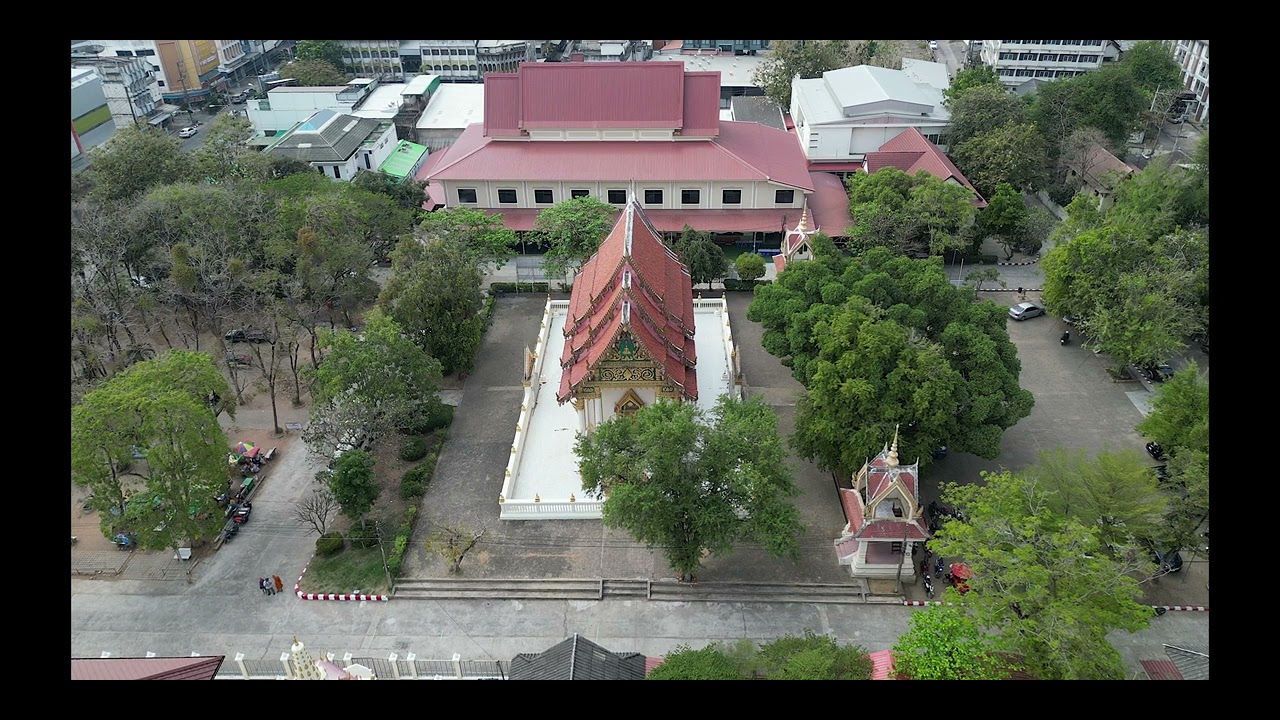
 Click to Access the Navigation Map GPS
Wat Sri Chan Map
Recommend

 Art, Culture and Heritage
 Historical Sites and Monuments(7)
 Landmarks and Memorials(3)
 Art, Craft Centres, Tradition(2)
 Museums(4)
 Educational Places
 Museum for Study(2)
Temple(27)
Museum for Study(2)
Temple(27)
 Other Sacred Sites(5)
 Suburban Living
 Village, Community(3)
 Local Market(1)
 Nature and Wildlife
 National Parks and Marine Reserves(5)
 Mountain (Doi)(1)
 Dam, Reservoir, Lake(4)
 Waterfalls(8)
 Caves(9)
 River, Canal(10)
 Bays and Beaches(3)
 Islands(1)
 Other natural attractions(5)
 Entertainment and Agricultural
 Zoos and Aquariums(1)
 Animal camps and shows(2)
 Farms, Parks and Ecotourism(7)
 Waterpark(2)


