
lovethailand home >Northeastern Travel Attractions >Khon Kaen Travel Attractions >Phra Yun >Kham Pom > Wat Sa Non
TL;DR: Wat Sa Non is located at Moo 1, Ban Kham Pom, Kham Pom Subdistrict, Phra Yuen District, Khon Kaen Province 40320, Thailand, open Every Day, hours 08:00-17:00.
Wat Sa Non
Open Days: Every Day
Opening Hours: 08:00-17:00
Wat Sra Non in Khon Kaen Province is an old Buddhist temple in Ban Kham Pom, Phra Yuen District. Its local history dates back to 1876, and the temple is best known for its ancient Isan-style sim, or ordination hall, its local folk museum, and its connection with Phra Khru Yanasan Sophit, the first ecclesiastical district chief of Phra Yuen. This is a valuable cultural site for visitors interested in old temples, vernacular Isan architecture, Buddhist heritage, and community-based travel in Khon Kaen.
Wat Sra Non, Khon Kaen Province is located in Ban Kham Pom, Kham Pom Subdistrict, Phra Yuen District, Khon Kaen Province. It is a long-established community temple whose local history dates back to 1876. The temple remains closely connected with the spiritual and cultural life of the local community. What makes Wat Sra Non especially important is not monumental scale or decorative grandeur, but its authentic character as an old Isan village temple. Within the temple grounds stands an ancient sim, the Isan term for a Buddhist ordination hall, which reflects local building knowledge, traditional materials, and the deeply rooted faith of the community that built and preserved it.
The atmosphere of Wat Sra Non is quiet, grounded, and deeply local. This is not a tourist site designed primarily for crowds. Instead, it offers visitors a more meaningful view of Khon Kaen’s cultural landscape. The temple functions as a place of worship, a memory archive of the community, and a local learning space. Visitors can experience how a village temple in Isan has historically served many roles at once: a religious center, a gathering place, a moral guide, a cultural classroom, and a space where community identity is preserved through architecture, objects, rituals, and oral memory.
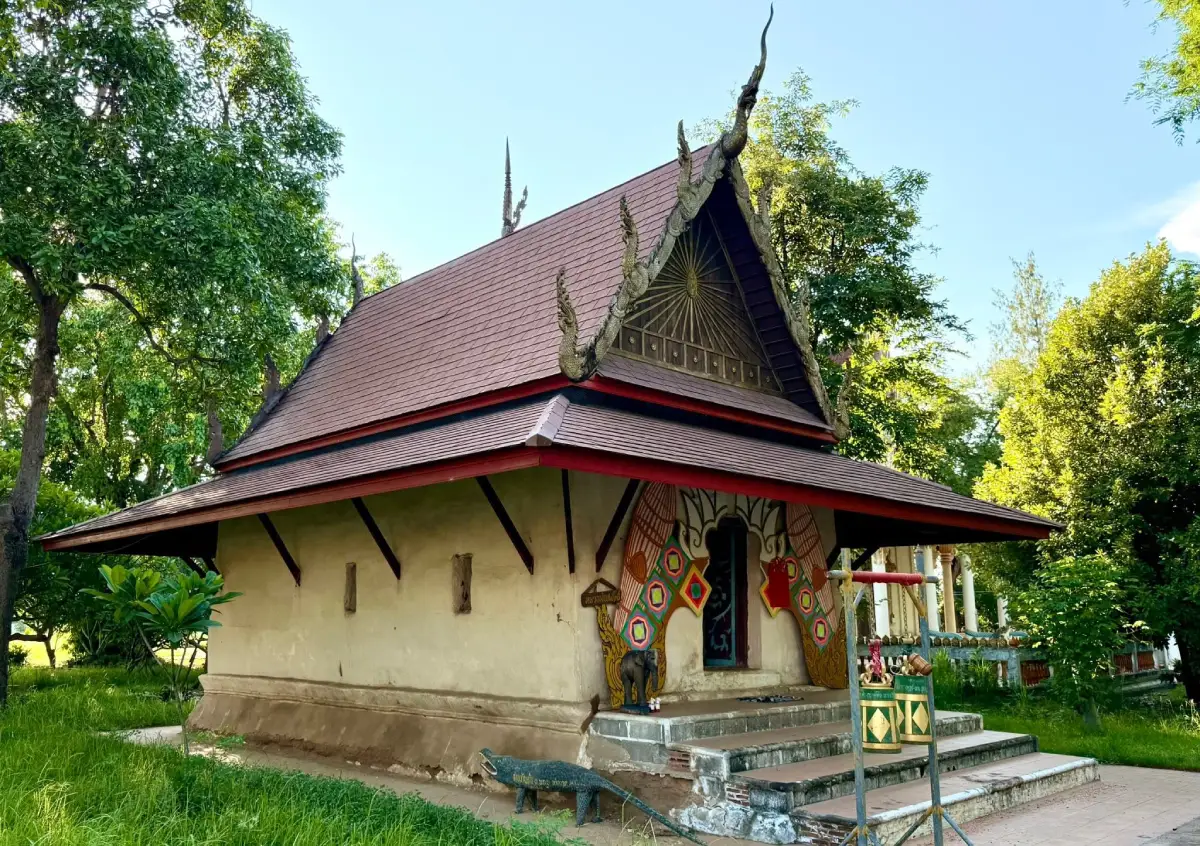
The ancient sim of Wat Sra Non is the most important architectural feature of the temple. In Isan and Lao cultural contexts, a sim is an ordination hall used for important Buddhist ceremonies. Sim buildings in the Northeast are often more modest in size than large central Thai ubosot halls, but they are rich in cultural meaning. The sim at Wat Sra Non is known for its vernacular construction and the use of local materials. Its simplicity is part of its value. The building expresses restraint, humility, self-reliance, and the practical wisdom of rural Isan communities. Rather than presenting beauty through luxury, the sim presents beauty through proportion, function, and harmony with its surroundings.
For travelers interested in architecture, Wat Sra Non provides a strong example of how Buddhist buildings in Isan developed from the resources and needs of local communities. The ancient sim is small and plain, but its form carries a powerful message. It shows how local craftsmen created sacred space using what was available around them, including earth, wood, local labor, and collective faith. This type of architecture helps visitors understand that the history of Thai temples is not only about royal temples and major monuments. It is also about village temples where community members expressed their devotion through modest but meaningful craftsmanship.
Wat Sra Non is also closely associated with Phra Khru Yanasan Sophit, also known as Luang Pu Phra Khru Yanasan Sophit, the first ecclesiastical district chief of Phra Yuen. He is remembered as an important monk in the local Buddhist community and as a spiritual figure connected with the development of Wat Sra Non and Ban Kham Pom. A shrine hall dedicated to Luang Pu Phra Khru Yanasan Sophit stands within the temple grounds, allowing visitors and local residents to pay respect and remember his contributions. In the context of Isan village temples, monks often play roles beyond religious ceremonies. They guide moral life, support education, preserve local culture, and help organize community development.
Another significant feature of Wat Sra Non is its folk museum. The Wat Sra Non Folk Museum was developed to preserve objects related to traditional Isan life. As local lifestyles changed and modern tools replaced handmade implements, many everyday objects were at risk of disappearing from homes and memory. The museum preserves agricultural tools, household utensils, weaving equipment, old objects, and materials that show how people in the community once lived, worked, cooked, farmed, and produced textiles. For visitors, these objects help transform local history from abstract information into something visible and tangible.
The museum is valuable because it does not simply display old objects. It tells the story of self-reliance. Traditional Isan communities made use of local knowledge, local materials, and shared labor to build their homes, cultivate rice fields, prepare food, weave cloth, and organize community life. Each object in the museum represents practical intelligence developed through generations. For students, researchers, cultural travelers, and families, the museum provides a meaningful opportunity to understand rural Isan life through real material culture rather than through simplified descriptions.
A visit to Wat Sra Non should be taken slowly. Visitors may begin by paying respect in the main religious area, then walk to the ancient sim to observe its form, materials, and atmosphere. The shrine of Luang Pu Phra Khru Yanasan Sophit can then be visited for quiet reflection. When the folk museum is open, it is worth spending time with the displayed objects because they help explain the relationship between the temple and the community. Wat Sra Non is best appreciated through details: old wood, earthen textures, simple architectural lines, tools once held by farmers and weavers, and the calm rhythm of a temple that still belongs to its community.
The sermon hall, or sala kan parian, is another important part of the temple. In a village temple, this type of hall often serves as a place for religious gatherings, community meetings, Buddhist teachings, merit-making events, and local ceremonies. At Wat Sra Non, the sermon hall helps show that the temple remains a living space rather than a static historical site. It continues to support religious and community activities, linking present-day residents with the memory of earlier generations. This continuity is one of the reasons the temple is culturally important.
Traveling to Wat Sra Non is easiest by private car. From Khon Kaen city, drive toward Phra Yuen District and continue to Kham Pom Subdistrict and Ban Kham Pom. Navigation apps can be used by searching for Wat Sra Non, Kham Pom Subdistrict, Phra Yuen District, Khon Kaen. Travelers coming from Bangkok can follow Mittraphap Road through Nakhon Ratchasima, Phon, and Ban Phai before turning toward Phra Yuen. Visitors staying in Khon Kaen city can plan a half-day or full-day cultural route that includes Wat Sra Non, Wat Chedi Ban Chat, Ban Chat community attractions, and major city landmarks such as Phra Mahathat Kaen Nakhon and Bueng Kaen Nakhon.
The best time to visit is in the morning or late afternoon when the weather is more comfortable. The listed visiting hours are 08:00-17:00. Visitors should dress modestly when entering the temple grounds. Shoulders should be covered, and trousers or skirts should be appropriate for a religious site. Inside worship areas, visitors should keep their voices low, avoid touching old structures unnecessarily, and ask for permission before photographing people or ceremonies. These simple practices help protect both the physical heritage and the spiritual atmosphere of the temple.
For travelers seeking deeper cultural experiences in Khon Kaen, Wat Sra Non is highly meaningful. It reveals a side of the province that is quieter and more rooted than urban landmarks. The temple shows how Buddhism, vernacular architecture, community memory, local craftsmanship, and everyday life are connected. Its ancient sim, folk museum, shrine hall, and community setting make it a valuable destination for cultural tourism, educational visits, and responsible travel in Phra Yuen District.
In summary, Wat Sra Non is an old and culturally important temple in Khon Kaen Province. Its value lies in authenticity, continuity, and local meaning. The ancient Isan sim shows traditional architecture and Buddhist philosophy through simplicity. The folk museum preserves the memory of local life. The connection with Phra Khru Yanasan Sophit adds spiritual and historical significance. For foreign visitors who want to understand Khon Kaen beyond major attractions, Wat Sra Non offers a thoughtful and rewarding experience of Isan heritage.
| Place Name | Wat Sra Non, Khon Kaen Province |
| Location | Moo 1, Ban Kham Pom, Kham Pom Subdistrict, Phra Yuen District, Khon Kaen Province 40320, Thailand |
| Highlights | An old community temple with an ancient Isan sim, a folk museum, the shrine hall of Luang Pu Phra Khru Yanasan Sophit, and local cultural learning areas |
| History / Period | A traditional old temple whose local history dates back to 1876, with an ancient sim that reflects vernacular Isan Buddhist architecture |
| Key Evidence | Ancient sim, Wat Sra Non Folk Museum, traditional tools, old household objects, shrine hall of Luang Pu Phra Khru Yanasan Sophit, and the sermon hall |
| Abbot / Caretaker | Phra Khru Preecha Thammaphiwat (Boonthueng Kassapawongso) |
| Connection With Phra Khru Yanasan Sophit | The temple is associated with Phra Khru Yanasan Sophit, the first ecclesiastical district chief of Phra Yuen. A shrine hall dedicated to him is located within the temple grounds. |
| Temple Zones | 1. Ancient Sim / Earthen Isan Ordination Hall 2. Wat Sra Non Folk Museum 3. Shrine Hall Of Luang Pu Phra Khru Yanasan Sophit 4. Sermon Hall 5. Main Buddhist Worship Area 6. Temple Grounds And Community Activity Area |
| Open Days | Every Day |
| Opening Hours | 08:00-17:00 |
| Admission Fee | Free Admission |
| Facilities | Parking area, resting pavilion, worship area, folk museum, and community activity space |
| Coordinates | 16.2982465, 102.6779300 |
| Travel | From Khon Kaen city, drive toward Phra Yuen District, continue to Kham Pom Subdistrict and Ban Kham Pom, then use navigation to Wat Sra Non. From Bangkok, follow Mittraphap Road through Ban Phai before entering the route to Phra Yuen District. |
| Nearby Tourist Attractions | 1. Wat Chedi Ban Chat, Kham Pom Subdistrict, Approximately 3 Km, Tel. 043-266-216 2. Ban Chat OTOP Nawatwithi Tourism Community, Approximately 4 Km, Tel. 085-461-8461 3. Chao Pu Kham Shrine, Kham Pom Subdistrict, Approximately 5 Km 4. Nong Pan Nam, Kham Pom Subdistrict, Approximately 6 Km 5. Phra Mahathat Kaen Nakhon, Wat Nong Waeng, Approximately 32 Km 6. Bueng Kaen Nakhon, Approximately 33 Km 7. Khon Kaen National Museum, Approximately 37 Km 8. Phra That Kham Kaen, Wat Chetiyaphum, Approximately 60 Km |
| Nearby Restaurants | 1. Kuai Tiao Kham Yai Kham Pom, Approximately 1 Km, Tel. 063-198-8729 2. Jungle Cafe, Phra Yuen Branch, Approximately 2 Km, Tel. 081-456-1767 3. Goodday Cafe Phra Yuen, Approximately 6 Km, Tel. 095-868-2879 4. PunThai Coffee Phra Yuen 3, Approximately 6 Km, Tel. 098-270-6582 5. Baan Suan Klang Na Cafe @ Phra Yuen, Approximately 7 Km, Tel. 062-162-9897 6. Luk Chin Parinya, Nong Waeng, Phra Yuen, Approximately 10 Km, Tel. 061-264-4795 |
| Nearby Accommodations | 1. PB Resort, Phra Yuen District, Approximately 6 Km, Tel. 098-088-8422, 092-969-5844, 043-266-246 2. Praewa Resort Hotel, Phra Yuen, Approximately 7 Km, Tel. 091-010-5458 3. Srisuk Resort, Approximately 13 Km 4. Baan Rim Nam Resort Khon Kaen, Approximately 21 Km 5. Marumchang Resort, Approximately 25 Km, Tel. 083-544-2929 6. Nature Grand Resort Khon Kaen, Approximately 28 Km |
| Temple / Museum Contact Number | 085-744-0729, 043-266-241 |
Frequently Asked Questions (FAQ)
Q: Where Is Wat Sra Non Located?
A: Wat Sra Non is located in Moo 1, Ban Kham Pom, Kham Pom Subdistrict, Phra Yuen District, Khon Kaen Province 40320, Thailand.
Q: What Is Wat Sra Non Known For?
A: Wat Sra Non is known for its ancient Isan sim, its folk museum, its connection with Phra Khru Yanasan Sophit, and its role as a cultural learning center for Ban Kham Pom community.
Q: How Old Is Wat Sra Non?
A: According to local history, Wat Sra Non dates back to 1876. The temple preserves important evidence of old Isan Buddhist architecture and community heritage.
Q: What Are The Opening Hours Of Wat Sra Non?
A: Wat Sra Non and its folk museum are listed as open every day from 08:00 to 17:00.
Q: Is There An Admission Fee?
A: No. Admission is free.
Q: Who Was Phra Khru Yanasan Sophit?
A: Phra Khru Yanasan Sophit, also known as Luang Pu Phra Khru Yanasan Sophit, was an important monk associated with Wat Sra Non and the first ecclesiastical district chief of Phra Yuen. A shrine hall dedicated to him is located inside the temple.
Q: How Can Visitors Get To Wat Sra Non?
A: The easiest way is by private car. From Khon Kaen city, drive toward Phra Yuen District, then continue to Kham Pom Subdistrict and Ban Kham Pom. Navigation apps can guide visitors directly to Wat Sra Non.
Q: What Places Can Be Visited Near Wat Sra Non?
A: Nearby places include Wat Chedi Ban Chat, Ban Chat OTOP Nawatwithi Tourism Community, Chao Pu Kham Shrine, Nong Pan Nam, Phra Mahathat Kaen Nakhon, Bueng Kaen Nakhon, Khon Kaen National Museum, and Phra That Kham Kaen.
 Category: ●Places of Worship
 Group: ●Temple
Last Update : 2 MonthAgo
 Last Update : 2 MonthAgo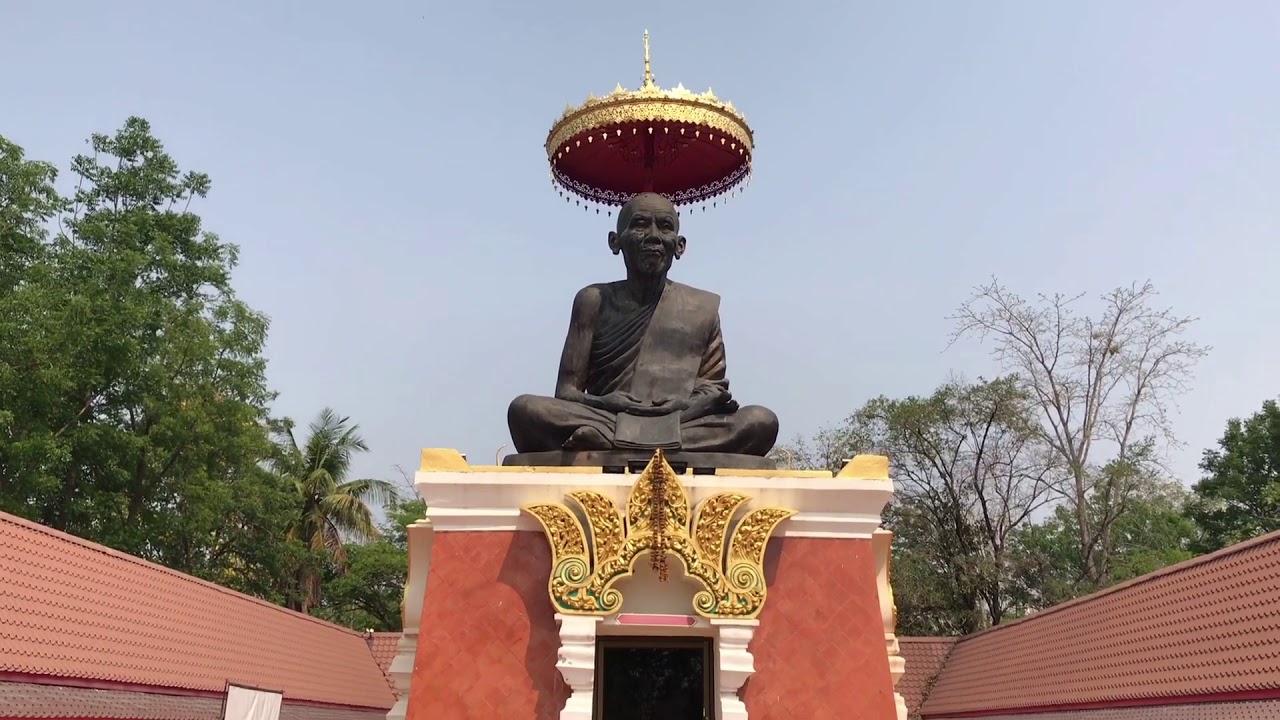
 Click to Access the Navigation Map GPS
Wat Sa Non Map
Recommend

 Art, Culture and Heritage
 Historical Sites and Monuments(7)
 Landmarks and Memorials(3)
 Art, Craft Centres, Tradition(2)
 Museums(4)
 Educational Places
 Museum for Study(2)
Temple(27)
Museum for Study(2)
Temple(27)
 Other Sacred Sites(5)
 Suburban Living
 Village, Community(3)
 Local Market(1)
 Nature and Wildlife
 National Parks and Marine Reserves(5)
 Mountain (Doi)(1)
 Dam, Reservoir, Lake(4)
 Waterfalls(8)
 Caves(9)
 River, Canal(10)
 Bays and Beaches(3)
 Islands(1)
 Other natural attractions(5)
 Entertainment and Agricultural
 Zoos and Aquariums(1)
 Animal camps and shows(2)
 Farms, Parks and Ecotourism(7)
 Waterpark(2)


