
lovethailand home >Northeastern Travel Attractions >Khon Kaen Travel Attractions >Mancha Khiri >Suan Mon > Turtle Village Ban Kok
TL;DR: Turtle Village Ban Kok is located at Ban Kok, Suan Mon Subdistrict, Mancha Khiri District, Khon Kaen Province, open Daily.
Turtle Village Ban Kok
Open Days: Daily
Recommended Visiting Hours: 08.30 – 17.00
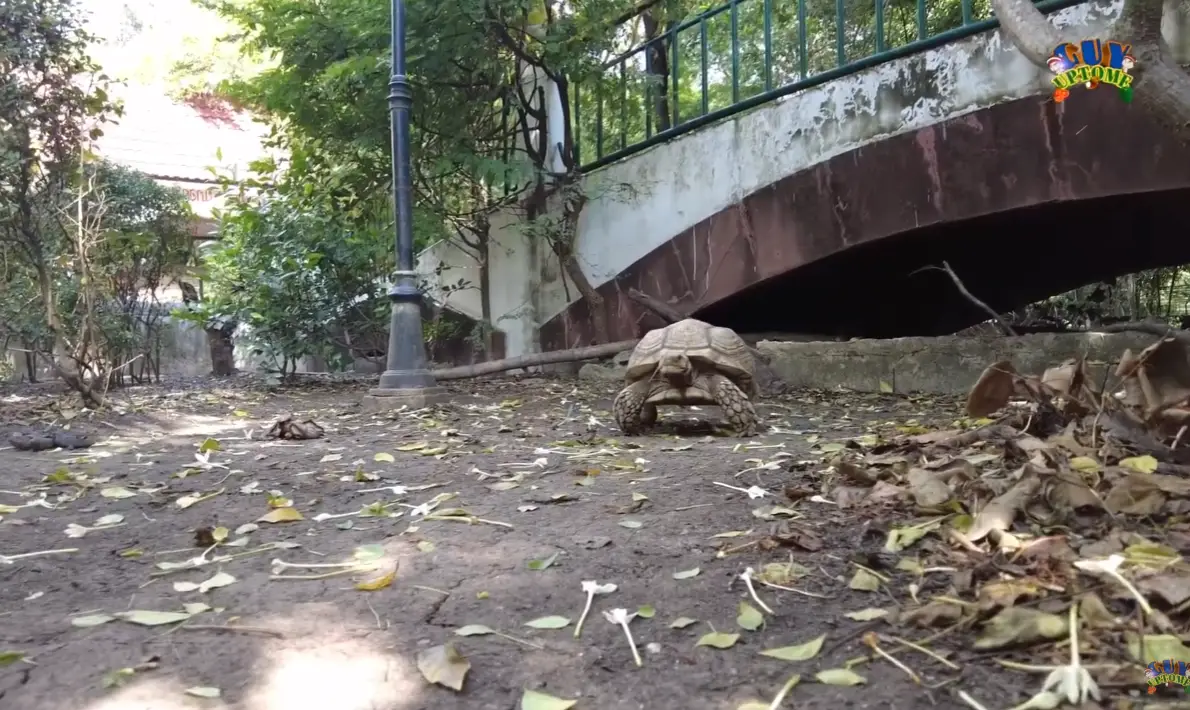
Turtle Village Ban Kok, or Ban Kok Turtle Village, is one of the most distinctive community-based attractions in Khon Kaen Province. Located at Ban Kok, Suan Mon Subdistrict, Mancha Khiri District, the village is about 50 kilometers from Khon Kaen city and around 2 kilometers before reaching Mancha Khiri town. What makes this village remarkable is the peaceful coexistence between local residents and a land tortoise locally known as “tao phek,” or the elongated tortoise. These tortoises have yellowish-brown shells and can often be seen under houses, around the turtle garden, on village roads, and in shaded areas near local homes. This is not a zoo or a staged animal display. It is a living village where people and tortoises have shared the same space for generations.
The charm of Turtle Village lies in its simplicity and authenticity. Visitors entering Ban Kok will find an Isan village atmosphere with homes, small roads, a temple, a turtle garden, a local shrine, and everyday community life. Some tortoises rest under traditional houses while waiting for food from villagers. Some slowly cross the road. Others hide near bamboo clusters or under fallen leaves in the turtle area. These scenes make the village different from conventional wildlife attractions. The tortoises are part of the community, respected by villagers, cared for through local belief, and treated as living companions of Ban Kok.
The tortoise found in Ban Kok is the elongated tortoise, known locally as tao phek or tao lueang. It is a land tortoise, not a freshwater turtle. Its shell is high and rounded, with yellowish-brown coloration and darker markings. In northeastern Thailand, this tortoise is also known by other local names such as tao thian or tao khi phueng. Because it is a land tortoise, it cannot live in water like aquatic turtles. It prefers shaded, humid, and cool environments such as bamboo groves, leaf litter, spaces under houses, and quiet corners of the turtle garden. Visitors should understand its natural behavior before entering the area so that they do not disturb or frighten the animals.
Ban Kok is an old community with stories passed down through generations. Local people believe that the village is protected by Chao Pu Fa Ra-nguem, also known as Chao Pu Mahesak, a guardian spirit associated with the tortoises. According to local belief, the tortoises are not ordinary animals to be captured, harmed, or eaten. They are sacred companions of the guardian spirit and have lived with the village since the time of the ancestors. This belief has become an unwritten rule of the community. Villagers do not harm the tortoises and drive carefully through the village to avoid injuring them. In this way, local faith has become a powerful form of wildlife conservation.
The most important area in the village is Don Tao, or the turtle garden. This area contains trees, bamboo clusters, leaf litter, shaded spaces, and small tortoise shelters built by villagers to help the tortoises escape the heat. Don Tao is located near the village temple and the shrine of Chao Pu Fa Ra-nguem, giving it both ecological and spiritual meaning. Visitors can usually observe tortoises more easily here than by walking randomly through the village. The area allows travelers to learn about the tortoises in a more appropriate way. Visitors should walk slowly, watch their steps, keep noise low, and never pick up or play with the tortoises.
One of the most memorable sights in Ban Kok is tortoises walking freely along village roads. For this reason, villagers and visitors must drive slowly and carefully, especially in the evening and at night when the tortoises are more active. The tortoises like to eat fruits and vegetables such as ripe papaya, jackfruit, pineapple, cucumber, and leafy vegetables. Some households prepare food for them near the house or under the raised floor. The image of tortoises calmly waiting for food from local people has become one of the strongest symbols of the village.
Visitors should remember that tortoises may not be visible throughout the entire day. During hot daytime hours, they often hide in shaded areas, under leaves, or inside small shelters. The best chances to see active tortoises are in the morning and especially in the late afternoon, when the weather becomes cooler. Around 17.00 onward, more tortoises may come out to search for food. Travelers who arrive during midday can still visit the turtle garden, the shrine, and the village area, but those who wish to see many tortoises moving around should allow time for the late afternoon period.
Turtle Village is more meaningful than a place to see tortoises. It is a living example of how humans and wildlife can coexist in a community setting. The tortoises need a quiet, shaded, and safe environment. The villagers need to continue their normal daily lives. Coexistence has become possible through respect, adaptation, and shared understanding. Villagers are familiar with tortoises moving through their homes and roads, while the tortoises are accustomed to using the village as habitat and food space. This relationship gives Ban Kok a unique identity and makes it one of Khon Kaen’s most memorable cultural attractions.
The shrine of Chao Pu Fa Ra-nguem, or Chao Pu Mahesak, is the spiritual center of the village. Local people believe that the guardian spirit protects the village and that the tortoises are connected with him. Paying respect at the shrine is therefore part of understanding the village. Visitors should behave respectfully, keep their voices low near the shrine, and avoid treating the tortoises as entertainment. For the community, the tortoises are not objects for amusement. They are sacred animals connected with local memory, faith, and identity.
Every year on 14 April, during the Songkran period, the village holds an important ceremony honoring Chao Pu, bathing the tortoises, and paying respect to elders. The event includes local worship, ritual bathing, and community activities. This annual tradition combines respect for the guardian spirit, care for the tortoises, Thai New Year blessings, and gratitude toward elderly people in the village. Visitors who come during this period can see Ban Kok as a living community with active traditions, not merely a sightseeing spot.
Ban Kok also offers homestay accommodation for visitors who want to stay overnight and experience village life more closely. Staying in a homestay gives travelers a better chance to observe the tortoises during suitable hours, learn from local people, enjoy home-style food, and hear stories about Chao Pu Fa Ra-nguem, tao phek, and village conservation practices. This experience is best suited to travelers who value slow, simple, and community-based travel rather than quick photo stops.
In addition to observing tortoises, Ban Kok has local occupations and community crafts such as bamboo basketry, sticky rice basket making, weaving, silk weaving, and handmade products. These activities show that Turtle Village is not only about tortoises. It is also a community with local wisdom, Isan handicrafts, and household skills passed down through generations. Visitors with enough time can learn about these community products and support local income by purchasing handmade goods.
For families with children, Turtle Village is a valuable outdoor learning site. Children can see land tortoises in a real village environment and learn that animals should not be grabbed, carried, teased, or fed inappropriate food. They can also learn to walk carefully, speak softly, and observe wildlife with respect. A visit to Ban Kok can help children understand responsibility toward animals and nature in a simple and memorable way.
Responsible travel is essential at Turtle Village. Visitors should never take tortoises home, buy or sell tortoises, feed them processed or unsuitable food, leave trash in the turtle area, drive fast inside the village, or use loud noises near the animals. The best visit begins with respect for both the community and the tortoises. These animals are living beings with their own behavior, not display objects. Good visitor behavior helps keep the village safe for both people and tortoises.
Getting There from Khon Kaen city is straightforward by private car. Take Highway 12 on the Khon Kaen-Chum Phae route for about 10 kilometers, then turn left onto Highway 2062 toward Mancha Khiri. Continue for about 44 kilometers, or until you reach Ban Kok, about 2 kilometers before Mancha Khiri town. The entrance to Turtle Village is on the left. A useful landmark is a pair of large turtle statues on a stone platform about 2 meters high, located opposite Wat Si Sumang. Turn left beside the temple and continue about 50 meters into Ban Kok to reach the turtle village and turtle garden.
A private car is the most convenient way to visit because it allows travelers to control timing and combine the village with nearby attractions. Public transport users can travel to Mancha Khiri or Ban Kok first, then arrange local transport into the village. Visitors who want to stay at a homestay should contact the community in advance so that accommodation, food, and activities can be prepared properly. Advance contact is also useful for learning the best time to see tortoises and participate in community activities.
Turtle Village can be visited as a half-day or full-day trip from Khon Kaen city. A short visit can include the turtle garden, the shrine, local stories, and community products. A longer visit can be combined with Wat Sa Thong Ban Bua, Mancha Khiri town, Kaeng Lawa, Chonnabot District, or other cultural destinations nearby. Planning the route in advance helps travelers avoid rushing and makes the visit more meaningful.
For homestay visitors, Ban Kok offers a simple and authentic rural experience. The accommodation is community-based rather than hotel-style. Guests should respect house rules, keep noise low at night, keep the area clean, use water and electricity responsibly, and treat the host family with courtesy. A good homestay experience is not about luxury. It is about mutual respect and learning from everyday local life.
Turtle Village is also suitable for documentary-style photography. Interesting scenes include tortoises under houses, tortoises walking on village roads, villagers feeding them, the turtle garden, the guardian shrine, Isan houses, and slow village life. However, visitors should ask permission before photographing people or private homes. They should never move or pose tortoises for photos. Good photography records the natural character of the place without disturbing people or animals.
From an environmental perspective, Ban Kok is a fascinating example of wildlife conservation through local belief. In many places, wild tortoises are threatened by hunting, trade, and habitat loss. In Ban Kok, the belief in Chao Pu Fa Ra-nguem has encouraged villagers to protect the tortoises rather than exploit them. This has allowed the tortoises to remain part of the community in large numbers. The village shows how culture and conservation can work together in a real local setting.
Turtle Village Ban Kok is therefore a destination with many layers of value. It offers the unusual sight of many elongated tortoises living in a village, the spiritual story of Chao Pu Fa Ra-nguem, community homestay experiences, local handicrafts, and lessons in responsible tourism. Visitors who come here can discover a quieter and deeper side of Khon Kaen, where local belief, animals, and everyday village life continue to exist together. For travelers seeking a slow, meaningful, and culturally sensitive journey in northeastern Thailand, Ban Kok Turtle Village is a place worth including in the itinerary.
| Name | Turtle Village Ban Kok / Ban Kok Turtle Village |
| Location | Ban Kok, Suan Mon Subdistrict, Mancha Khiri District, Khon Kaen Province |
| Address | Ban Kok, Moo 14, Suan Mon Subdistrict, Mancha Khiri District, Khon Kaen 40160, Thailand |
| Coordinates | 16.156800, 102.555500 |
| Type | Community-based attraction, human-tortoise coexistence learning site, homestay village, and cultural tourism destination in Mancha Khiri District |
| Highlights | Many elongated tortoises, Don Tao turtle garden, Chao Pu Fa Ra-nguem Shrine, Ban Kok Homestay, village life with tortoises, and the annual tortoise bathing tradition on 14 April |
| History / Importance | An old community where villagers have lived together with tao phek tortoises for generations, connected with the local belief in Chao Pu Fa Ra-nguem or Chao Pu Mahesak |
| Tortoise Species | Tao phek, or elongated tortoise, scientific name Indotestudo elongata. It is a land tortoise with a yellowish-brown shell and is not an aquatic turtle. |
| Name Origin | The village is called Turtle Village because large numbers of tao phek tortoises live together with villagers around Don Tao, under houses, and along village roads. |
| Distinctive Features | An Isan village where people and tortoises coexist peacefully, with a turtle garden, bamboo groves, guardian shrine, village homes, and community homestay accommodation |
| Main Areas / Zones | 1. Don Tao / Turtle Garden 2. Chao Pu Fa Ra-nguem Shrine / Chao Pu Mahesak Shrine 3. Tortoise shelters and shaded areas 4. Village roads where tortoises may walk 5. Areas under houses and feeding spots 6. Ban Kok Homestay 7. Community craft groups such as basketry, silk weaving, and sticky rice basket making |
| Tradition / Ritual | Annual ceremony honoring Chao Pu, bathing tortoises, and paying respect to elders on 14 April during the Songkran period |
| Caretaker / Related Authority | Suan Mon Subdistrict Administrative Organization, Ban Kok community leaders, Ban Kok Homestay group, and local villagers caring for Don Tao |
| Open Days | Daily |
| Recommended Visiting Hours | 08.30 – 17.00; late afternoon is the best time to see tortoises coming out to feed |
| Fees | No general admission fee |
| Facilities | Parking area, restroom, food shops, service center, turtle garden, Ban Kok Homestay, youth guides according to community arrangements, and local product areas |
| Travel Information | From Khon Kaen city, take Highway 12 toward Chum Phae for about 10 km, then turn left onto Highway 2062 for about 44 km. About 2 km before Mancha Khiri town, the entrance to Ban Kok is on the left. Look for two large turtle statues on a stone platform opposite Wat Si Sumang, then turn left beside the temple and continue about 50 meters. |
| Main Contact Number | Suan Mon Subdistrict Administrative Organization, Tel. 043-040-023 |
| Homestay Contact | Ban Kok Homestay, Tel. 043-381-275, 086-237-0310 |
| Current Status | Open as a community-based attraction and learning site for coexistence between villagers and tao phek tortoises in Mancha Khiri District, Khon Kaen Province |
| Nearby Tourist Attractions | 1. Wat Si Sumang, about 0.1 km 2. Wat Sa Thong Ban Bua, about 5 km 3. Mancha Khiri Town, about 2 km 4. Kaeng Lawa, about 28 km 5. Chonnabot District, Mudmee Silk Area, about 30 km 6. Wat Pa Phu Pha Daeng / Wat Tham Phu Pha Daeng, about 34 km 7. Khon Kaen City, about 50 km |
| Nearby Restaurants | 1. Na Hao Due Cafe Mancha Khiri, about 4 km, Tel. 087-937-8491 2. Khiri-Mancha Cafe, about 3 km 3. Restaurants in Mancha Khiri town area, about 2-4 km 4. Ta Wat-Mae Pranee Noodle Shop, Mancha Khiri, about 3 km 5. Local food shops in Ban Kok and Ban Bua, about 1-5 km 6. Restaurants along the Mancha Khiri-Ban Thum route, about 5-10 km |
| Nearby Accommodations | 1. Ban Kok Homestay, about 0 km, Tel. 043-381-275, 086-237-0310 2. U-Sabai Place Mancha Khiri, about 3 km, Tel. 061-959-7152, 065-552-9517 3. Khwan Khiri Resort, about 4 km, Tel. 084-031-5777 4. Mancha Khiri Apartment, about 3 km, Tel. 098-564-2324 5. Nakhon Khwae Hotel & Resort, about 8 km, Tel. 043-289-222, 099-459-7398 6. Waep Resort, about 6 km, Tel. 088-310-9835 7. Accommodations in Khon Kaen City, about 50 km |
Frequently Asked Questions (FAQ)
Q: Where is Turtle Village Ban Kok located?
A: Turtle Village Ban Kok is located at Ban Kok, Suan Mon Subdistrict, Mancha Khiri District, Khon Kaen Province, about 2 km before Mancha Khiri town.
Q: What kind of tortoise lives in the village?
A: The tortoise is locally called tao phek. It is the elongated tortoise, scientific name Indotestudo elongata, a land tortoise with a yellowish-brown shell.
Q: What are the recommended visiting hours?
A: The village can be visited daily. The recommended visiting time is 08.30 to 17.00, with late afternoon being the best time to see active tortoises.
Q: Is there an admission fee?
A: There is no general admission fee. Visitors can explore the turtle garden and village area respectfully.
Q: Is homestay accommodation available?
A: Yes. Ban Kok Homestay is available for visitors who want to stay overnight and experience village life with the local community.
Q: What should visitors be careful about?
A: Visitors should drive slowly, watch for tortoises on the road, avoid touching or lifting the tortoises, avoid unsuitable food, and keep noise low.
Q: When is the village’s important annual tradition?
A: The annual ceremony honoring Chao Pu, bathing the tortoises, and paying respect to elders is held on 14 April during the Songkran period.
Q: What nearby places can be visited on the same trip?
A: Nearby places include Wat Sa Thong Ban Bua, Mancha Khiri town, Kaeng Lawa, Chonnabot District, Wat Pa Phu Pha Daeng, and Khon Kaen city.
Tel : 072227859
 Tel : 072227859
Mobile : 0895743480
 Mobile : 0895743480
 Category: ●Suburban Living
 Group: ●Village, Community
Last Update : 2 MonthAgo
 Last Update : 2 MonthAgo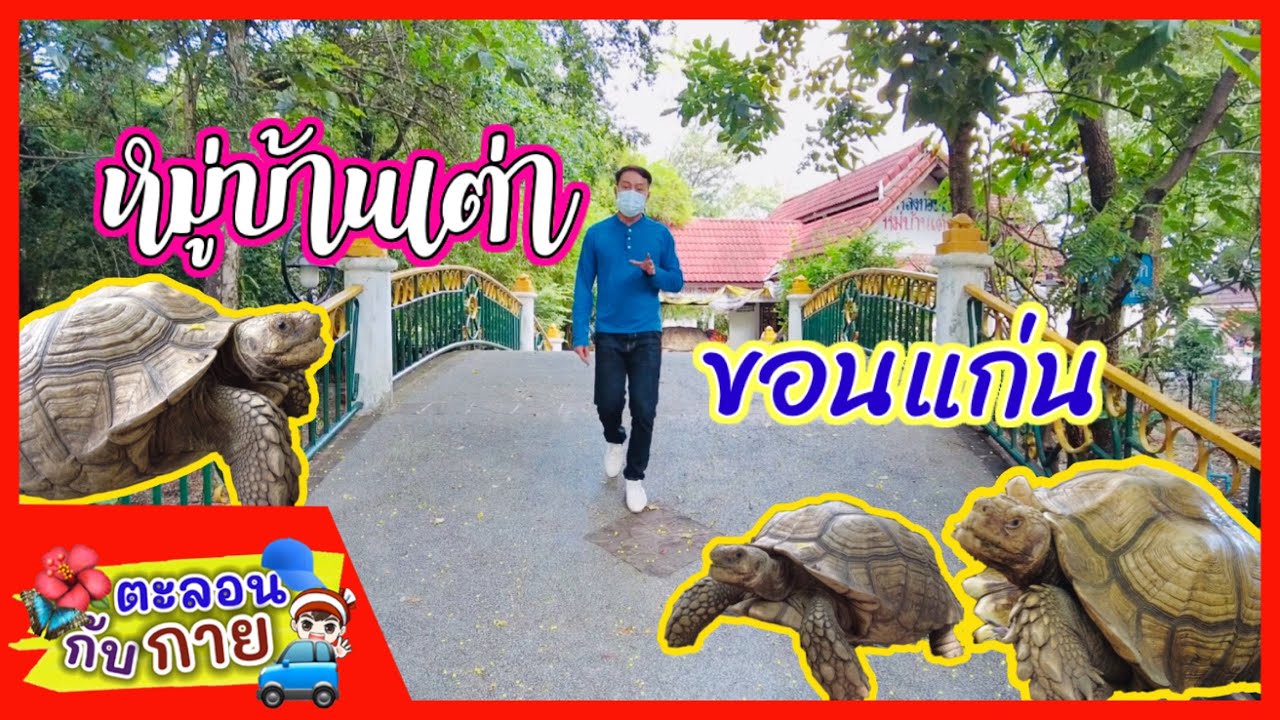
 Click to Access the Navigation Map GPS
Turtle Village Ban Kok Map
Recommend

 Art, Culture and Heritage
 Historical Sites and Monuments(7)
 Landmarks and Memorials(3)
 Art, Craft Centres, Tradition(2)
 Museums(4)
 Educational Places
 Museum for Study(2)
 Places of Worship
 Temple(27)
 Other Sacred Sites(5)
Village, Community(3)
Other Sacred Sites(5)
Village, Community(3)
 Local Market(1)
 Nature and Wildlife
 National Parks and Marine Reserves(5)
 Mountain (Doi)(1)
 Dam, Reservoir, Lake(4)
 Waterfalls(8)
 Caves(9)
 River, Canal(10)
 Bays and Beaches(3)
 Islands(1)
 Other natural attractions(5)
 Entertainment and Agricultural
 Zoos and Aquariums(1)
 Animal camps and shows(2)
 Farms, Parks and Ecotourism(7)
 Waterpark(2)


