
lovethailand home >Northeastern Travel Attractions >Khon Kaen Travel Attractions >Ban Phai >Ban Phai > Khon Kaen Science Centre for Education
TL;DR: Khon Kaen Science Centre for Education is located at Mittraphap Road, km 44 – 45, Ban Phai Subdistrict, Ban Phai District, Khon Kaen Province, open Monday – Friday; Closed on Saturday – Sunday, hours 08.30 – 16.30.
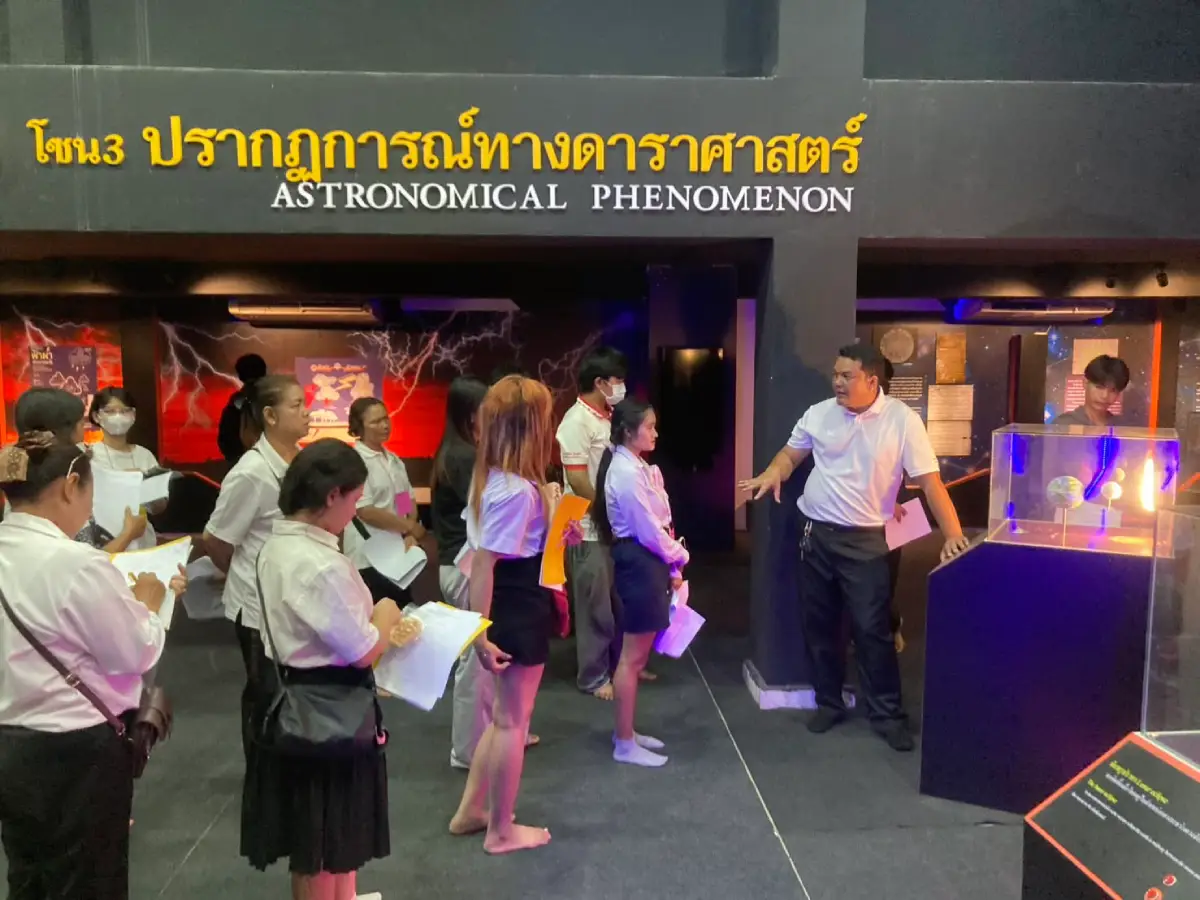
Khon Kaen Science Centre for Education
Open Days: Monday – Friday; Closed on Saturday – Sunday
Opening Hours: 08.30 – 16.30
Khon Kaen Science Centre for Education is located at 39/12 Moo 2, Mittraphap Road, km 44 – 45, Ban Phai Subdistrict, Ban Phai District, Khon Kaen Province. Covering an area of 51 rai, 3 ngan, and 99.6 square wah, it is one of the most important science and technology learning centers in the southern part of Khon Kaen Province. The center is designed for children, young people, students, teachers, families, and the general public who want to learn science through exhibitions, activities, hands-on displays, outdoor learning areas, and educational programs that make science easier to understand.
The centre is especially valuable because it turns science into a practical learning experience. Instead of only reading from textbooks, visitors can observe, explore, ask questions, and connect scientific ideas with everyday life. Inside the two-storey exhibition building and surrounding outdoor areas, visitors can learn about astronomy, space, dinosaurs, fossils, petroleum, energy, insects, environmental science, natural agriculture, hydroponics, changing technology, local wisdom, and scientific experiments. This makes the centre suitable for both family travel and school field trips.
Khon Kaen Science Centre for Education is operated under the Department of Learning Encouragement, Ministry of Education. Its role is not limited to being a local attraction. It also serves as a regional science education center that supports schools, teachers, learners, and communities. Its location in Ban Phai District is important because it helps expand access to quality learning outside Khon Kaen city. Children and students from surrounding districts can visit the centre without having to travel far into the provincial capital.
The content of the centre covers much more than basic science. It connects science with the real world through themes such as energy, petroleum, environment, ecosystems, astronomy, technology, careers, innovation, local wisdom, and prehistoric life. These themes help visitors understand that science is not only a school subject. It is related to food, water, air, energy, agriculture, transportation, health, technology, and the future of society.
One of the most meaningful exhibition areas is the Princess Scientist Room. This room presents the royal biography and scientific work of Professor Dr. Her Royal Highness Princess Chulabhorn Walailak. The exhibition helps young visitors see science as a field that can improve life, support medical knowledge, and contribute to society. It is an inspirational space for students who may later become interested in science, medicine, chemistry, health sciences, research, or public service.
The prehistoric world exhibition is one of the most exciting areas for children and families. It presents dinosaurs, fossils, and ancient life through displays that encourage curiosity and imagination. Learning about prehistoric life helps visitors understand that Earth has changed over millions of years and that fossils are important evidence for studying the history of life. This section also connects naturally with geology, evolution, ecosystems, and the changing environment of the planet.
The astronomy and space exhibition expands the visitor’s view beyond Earth. It introduces the solar system, planets, the moon, celestial movement, and the relationship between Earth and the universe. Astronomy is a strong topic for children because it begins with simple but powerful questions: why do day and night happen, how does Earth move, why are planets different, and how do humans study space? These questions help build scientific thinking and curiosity.
The petroleum and energy exhibition explains how energy resources are formed, explored, produced, and used. It also encourages visitors to think about energy consumption and environmental effects. This subject is important for modern learners because energy is connected to transportation, electricity, industry, daily life, and future development. Understanding energy helps children and adults think more carefully about resource use, conservation, and sustainable alternatives.
The environmental and natural agriculture exhibitions connect science with the local context of northeastern Thailand. Ban Phai and Khon Kaen are areas where urban life, agriculture, transportation, and community development meet. Environmental knowledge is therefore practical and close to everyday life. Visitors can learn about water, soil, air, waste, plants, animals, and human behavior. These displays help children understand that environmental care can begin with small actions at home, school, and in the community.
The hydroponics exhibition introduces a modern approach to growing plants without soil. Visitors can learn about nutrients, water systems, light, plant growth, and food production in limited space. This is a useful topic for families and students because it connects science with food safety, modern agriculture, and self-reliance. It also shows that technology is not always complicated machinery; it can also be a smart system that helps people produce food more efficiently.
The insect world exhibition helps visitors appreciate small living creatures that play important roles in ecosystems. Some insects pollinate plants, some help break down organic matter, some indicate environmental quality, and some affect human health. This exhibition encourages children to see that even small organisms have important functions in nature. It also introduces the idea of biodiversity, which is essential for a balanced environment.
The science garden and prehistoric garden extend learning beyond the indoor building. Outdoor learning areas allow children to walk, explore, observe, and rest between exhibitions. For families with young children, these spaces make the visit more relaxed and enjoyable. Outdoor learning also helps connect scientific knowledge with real surroundings, making it easier for young learners to remember what they see.
In addition to permanent exhibitions, the centre provides science camps, exhibition services, educational activities, and academic services. These activities may include science shows, water rocket competitions, science project contests, Children’s Day activities, National Science Week activities, basic astronomy training, teacher training, and science outreach for schools. These programs keep the centre active and allow it to support learners of different ages and backgrounds.
The centre also acts as a bridge between formal education and lifelong learning. Schools can use it as a field trip destination, while families can use it as a place for meaningful learning during weekdays. The general public can visit to explore science and technology without needing an advanced academic background. Because the exhibitions are designed to be approachable and engaging, visitors can learn at their own pace.
For young children and primary school students, the centre introduces basic scientific questions in a friendly way. Why do things move? Why do plants need light? Why do insects have wings? Why did dinosaurs disappear? Why does Earth have day and night? These questions may seem simple, but they are the foundation of scientific thinking. They encourage children to observe, ask, compare, and search for explanations.
For secondary school and university students, the centre can support classroom learning through real examples. Exhibitions on energy, petroleum, astronomy, environment, technology, and innovation can be connected with physics, chemistry, biology, earth science, space science, and career guidance. Seeing real examples helps students understand how scientific knowledge can be used in work, industry, community development, and problem-solving.
For families, Khon Kaen Science Centre for Education is a useful place to spend quality time together. Parents can use the exhibitions as conversation starters with children. They can talk about dinosaurs, planets, insects, energy, plants, or technology while walking through the displays. This kind of shared learning makes science feel natural rather than forced, and it can encourage children to become more curious about the world around them.
The centre is also a convenient stop for travelers using the Khon Kaen – Nakhon Ratchasima route. It is located just beyond the Ban Phai intersection, about 1 km away, near Mittraphap Road. Families traveling with children can stop here to turn a long journey into a learning experience. Ban Phai District also has restaurants, accommodations, local markets, temples, and nearby cultural attractions that can be combined into a half-day or full-day itinerary.
Ban Phai is an important transport town in Khon Kaen Province, with road and railway connections. It is a practical stop for travelers heading toward Chonnabot District, Maha Sarakham, Nakhon Ratchasima, or southern Khon Kaen. Combining the science centre with nearby places such as Big C Ban Phai, Tua No Mueang Phai Walking Street, Wat Khum Chadsan, Wat Pho Klang, Sala Mai Thai in Chonnabot District, and local food shops can create a varied route that includes education, food, local life, and culture.
Visitors should allow about 2 to 3 hours for a meaningful visit. This gives enough time to explore the indoor exhibitions, outdoor garden areas, and additional displays without rushing. School groups should contact the centre in advance to coordinate activities, group arrangements, and suitable learning programs for students. A guided visit or activity-based program can make the learning experience more effective than walking through the exhibitions without explanation.
Visitors should follow basic rules while exploring the centre. Children should not climb on displays, touch equipment incorrectly, or run in exhibition areas. Photography should be done only where allowed and without disturbing other visitors. Some learning tools and displays are designed for demonstration, so following staff instructions helps keep everyone safe and helps preserve the exhibits for future users.
Getting There from Khon Kaen city is straightforward. Take Highway 2, the Khon Kaen – Nakhon Ratchasima route, toward Ban Phai District. After passing the Ban Phai intersection, continue for about 1 km. The centre is located along Mittraphap Road at km 44 – 45 in Ban Phai Subdistrict. Traveling by private car or rental car is the most convenient option because it allows visitors to combine the centre with nearby restaurants, local attractions, and accommodations.
Visitors using public transport can travel by bus or train to Ban Phai District and then continue by local transport or hired vehicle to the science centre. This option is possible, but visitors should plan the return journey in advance, especially families or school groups. Because the centre is close to a main road, it is easier to reach than many rural attractions, but advance planning still makes the trip smoother.
A practical half-day itinerary begins with the science centre in the morning, followed by lunch in Ban Phai. If visiting on a Sunday, travelers can continue to Tua No Mueang Phai Walking Street in the late afternoon. Another option is to continue toward Chonnabot District to visit Sala Mai Thai and learn about mudmee silk. This route is suitable for families who want to combine science learning with local culture and community-based travel.
Khon Kaen Science Centre for Education is therefore more than a roadside stop. It is a meaningful educational attraction where science becomes visible, interactive, and connected to everyday life. Children can see classroom knowledge in real form, parents can spend useful time with their children, teachers can use it as a field-learning destination, and general travelers can discover another side of Ban Phai beyond its role as a transit town on Mittraphap Road.
| Name | Khon Kaen Science Centre for Education |
| Thai Name | ศูนย์วิทยาศาสตร์เพื่อการศึกษาจังหวัดขอนแก่น |
| Location | Mittraphap Road, km 44 – 45, Ban Phai Subdistrict, Ban Phai District, Khon Kaen Province |
| Address | 39/12 Moo 2, Mittraphap Road, Ban Phai Subdistrict, Ban Phai District, Khon Kaen 40110, Thailand |
| Area | 51 rai, 3 ngan, 99.6 square wah |
| Highlights | A science, technology, environment, astronomy, prehistoric world, petroleum, natural agriculture, hydroponics, insects, and science camp learning center for children, students, families, and the general public |
| Distinctive Features | An informal learning center with exhibitions, activities, experiment bases, and academic services in science, technology, and environmental education |
| Main Areas / Zones | 1. Princess Scientist Room 2. Prehistoric World Exhibition and Prehistoric Garden 3. Astronomy and Space Exhibition 4. Petroleum Exhibition 5. Natural Agriculture Exhibition 6. Science Garden Exhibition 7. Hydroponics Exhibition 8. Insect World Exhibition 9. Changing Technology World Exhibition 10. Local Wisdom Innovation Exhibition 11. CenTral LAB Science Laboratory |
| Main Activities | Exhibition services, science camps, educational activities, and academic services for schools and the general public |
| Best For | Children, young people, students, teachers, parents, families, school groups, and general visitors interested in science and technology |
| Travel Information | From Khon Kaen city, take Highway 2 toward Nakhon Ratchasima and Ban Phai District. After passing the Ban Phai intersection, continue for about 1 km. The centre is located along Mittraphap Road at km 44 – 45. |
| Current Status | Open according to the centre’s operating schedule |
| Open Days | Monday – Friday; Closed on Saturday – Sunday |
| Opening Hours | 08.30 – 16.30 |
| Fees | 10 Baht Per Person |
| Facilities | Exhibition building, activity areas, science garden, laboratory, outdoor areas, restrooms, parking area, and group-visit services by advance coordination |
| Caretaker | Khon Kaen Science Centre for Education, Department of Learning Encouragement, Ministry of Education |
| Director | Mr. Chaiwat Odthon |
| Main Contact Number | 043-274155, 043-274154, 086-455-9533 |
| kk.science@kksci.com | |
| Official Website / Official Page | Website: khonkaenscience.com Facebook: Khon Kaen Science Centre for Education |
| Nearby Tourist Attractions | 1. Big C Ban Phai, about 1 km 2. Tua No Mueang Phai Walking Street, about 3 km 3. Wat Khum Chadsan, about 4 km 4. Wat Pho Klang, about 4 km 5. Wat Pa Sumanamai, about 5 km 6. Sala Mai Thai, Chonnabot District, about 15 km 7. Ban Hua Fai Mudmee Silk Community Enterprise, about 23 km |
| Nearby Restaurants | 1. MK Restaurants Big C Ban Phai, about 1 km 2. Ban Khanom Khun Patra The Sweet Factory Ban Phai, about 1 km, Tel. 087-770-7031, 089-569-4394 3. Kai Yang Sabai Dee, about 1 km, Tel. 087-468-2865 4. Mindsweetie Bakehouse Cafe Ban Phai, about 3 km, Tel. 062-354-4164 5. Chuan Ocha Ban Phai, about 3 km, Tel. 083-562-2364 6. Chiang Mai Ocha Ban Phai, about 3 km, Tel. 084-263-0701 |
| Nearby Accommodations | 1. Highway Hotel Khon Kaen, about 2 km 2. Pawa Place By Inpawa, about 3 km 3. Inpawa Hotel Ban Phai, about 4 km, Tel. 043-272-333 4. Jasper Hotel Ban Phai, about 4 km, Tel. 043-274-855 5. Rungreang Hotel Ban Phai, about 5 km, Tel. 099-235-6897, 091-501-7777 |
Frequently Asked Questions (FAQ)
Q: Where is Khon Kaen Science Centre for Education located?
A: Khon Kaen Science Centre for Education is located at 39/12 Moo 2, Mittraphap Road, km 44 – 45, Ban Phai Subdistrict, Ban Phai District, Khon Kaen Province, about 1 km beyond the Ban Phai intersection.
Q: What are the opening days and hours?
A: The centre is open from Monday to Friday, from 08.30 to 16.30, and is closed on Saturday and Sunday.
Q: How much is the admission fee?
A: The admission fee is 10 Baht per person. School groups and organized groups should contact the centre in advance for visit arrangements.
Q: What can visitors see inside the centre?
A: Visitors can see the Princess Scientist Room, Prehistoric World Exhibition, Prehistoric Garden, Astronomy and Space Exhibition, Petroleum Exhibition, Natural Agriculture Exhibition, Hydroponics Exhibition, Insect World Exhibition, Changing Technology World Exhibition, and CenTral LAB science laboratory.
Q: Who is this science centre suitable for?
A: It is suitable for children, young people, students, teachers, families, school groups, and general visitors who want to learn about science, technology, astronomy, energy, and the environment through exhibitions and activities.
Q: How long should visitors spend at the centre?
A: Visitors should allow about 2 to 3 hours to explore the indoor exhibitions, science garden, outdoor areas, and additional learning displays without rushing.
Q: How can visitors get there from Khon Kaen city?
A: From Khon Kaen city, take Highway 2 toward Nakhon Ratchasima and Ban Phai District. After passing the Ban Phai intersection, continue for about 1 km. The centre is located along Mittraphap Road at km 44 – 45.
Q: What nearby attractions can visitors combine with the science centre?
A: Nearby places include Tua No Mueang Phai Walking Street, Wat Khum Chadsan, Wat Pho Klang, Wat Pa Sumanamai, Sala Mai Thai in Chonnabot District, and Ban Hua Fai Mudmee Silk Community Enterprise.
 Category: ●Educational Places
 Group: ●Museum for Study
Last Update : 3 WeekAgo
 Last Update : 3 WeekAgo
 Click to Access the Navigation Map GPS
Khon Kaen Science Centre for Education Map
Recommend

 Art, Culture and Heritage
 Historical Sites and Monuments(7)
 Landmarks and Memorials(3)
 Art, Craft Centres, Tradition(2)
 Museums(4)
Museum for Study(2)
Museums(4)
Museum for Study(2)
 Places of Worship
 Temple(27)
 Other Sacred Sites(5)
 Suburban Living
 Village, Community(3)
 Local Market(1)
 Nature and Wildlife
 National Parks and Marine Reserves(5)
 Mountain (Doi)(1)
 Dam, Reservoir, Lake(4)
 Waterfalls(8)
 Caves(9)
 River, Canal(10)
 Bays and Beaches(3)
 Islands(1)
 Other natural attractions(5)
 Entertainment and Agricultural
 Zoos and Aquariums(1)
 Animal camps and shows(2)
 Farms, Parks and Ecotourism(7)
 Waterpark(2)


