
lovethailand home >Northeastern Travel Attractions >Khon Kaen Travel Attractions >Nam Phong >Bua Yai > Ku Praphachai (Ku Ban Na Kham Noi)
TL;DR: Ku Praphachai (Ku Ban Na Kham Noi) is located at Wat Ku Praphachai, Ban Na Kham Noi, Bua Yai Subdistrict, Nam Phong District, Khon Kaen Province, open Daily, hours 09.00 – 17.00 for the Ku Praphachai Local Museum and Learning Center; advance.
Ku Praphachai (Ku Ban Na Kham Noi)
Open Days: Daily
Opening Hours: 09.00 – 17.00 for the Ku Praphachai Local Museum and Learning Center; advance contact is recommended
Ku Praphachai, also known as Ku Ban Na Kham Noi, is an ancient Khmer sanctuary located within Wat Ku Praphachai in Ban Na Kham Noi, Bua Yai Subdistrict, Nam Phong District, Khon Kaen Province. It is one of the most meaningful Khmer heritage sites in northeastern Thailand because it preserves the plan of an Arogyasala, or ancient hospital sanctuary, associated with the reign of King Jayavarman VII in the 18th Buddhist century. The site consists of a laterite main prang, a library building, an enclosing wall, an eastern gopura, a sacred pond or baray, and a local museum established by the community. For foreign travelers interested in Khmer architecture, Buddhist history, local ritual, and community-based heritage, Ku Praphachai offers a quiet but highly valuable cultural experience.
Ku Praphachai is located in a living temple compound rather than in an isolated archaeological park. This makes the site especially interesting because visitors can experience several layers of meaning in one place. The first layer is the Khmer sanctuary itself, built mainly of laterite with sandstone architectural elements. The second layer is Wat Ku Praphachai, a local Buddhist temple that remains active in the daily religious life of Ban Na Kham Noi. The third layer is the community museum, which preserves artifacts, local memories, and stories connected with the ancient sanctuary. The fourth layer is the living ritual tradition, especially the annual Song Ku Praphachai ceremony, which continues to express the community’s respect for the monument, the sacred pond, and the protective spirits of the area.
The name “Ku Praphachai” is closely connected with both the ancient sanctuary and the temple. In the Isan language, the word “ku” is often used for ancient ruins, stone sanctuaries, or Khmer-style monuments. The alternative name “Ku Ban Na Kham Noi” refers directly to Ban Na Kham Noi, the village where the sanctuary is located. Travelers may also find the site referred to as Wat Ku Praphachai or Wat Ku Ban Na Kham Noi. These names point to the same cultural landscape: an ancient Khmer sanctuary preserved within a Buddhist temple and cared for by the local community.
Historically, Ku Praphachai was built around the 18th Buddhist century, approximately between 1177 and 1237 CE, during the reign of King Jayavarman VII of the Khmer Empire. Jayavarman VII is known for his support of Mahayana Buddhism and for building an extensive network of temples, roads, rest houses, and hospital sanctuaries across the Khmer realm. An Arogyasala was not a hospital in the modern medical sense alone. It was a place where healing, ritual, religion, and public welfare were brought together. The sanctuary at Ku Praphachai therefore reflects the spiritual side of healing in the Khmer world, where illness, protection, merit, and sacred power were closely connected.
The layout of Ku Praphachai follows the standard pattern of an Arogyasala sanctuary. The main prang has a square plan and a projecting front porch. In front and slightly to the right of the main shrine is a rectangular building known as the bannalai, or library. Both buildings are enclosed by a laterite wall. The gopura, or entrance pavilion, is located only on the eastern side. Outside the enclosure, toward the northeastern side, is a laterite-lined pond or baray. These elements make the site easy to read architecturally and help visitors understand how a Khmer hospital sanctuary was organized.
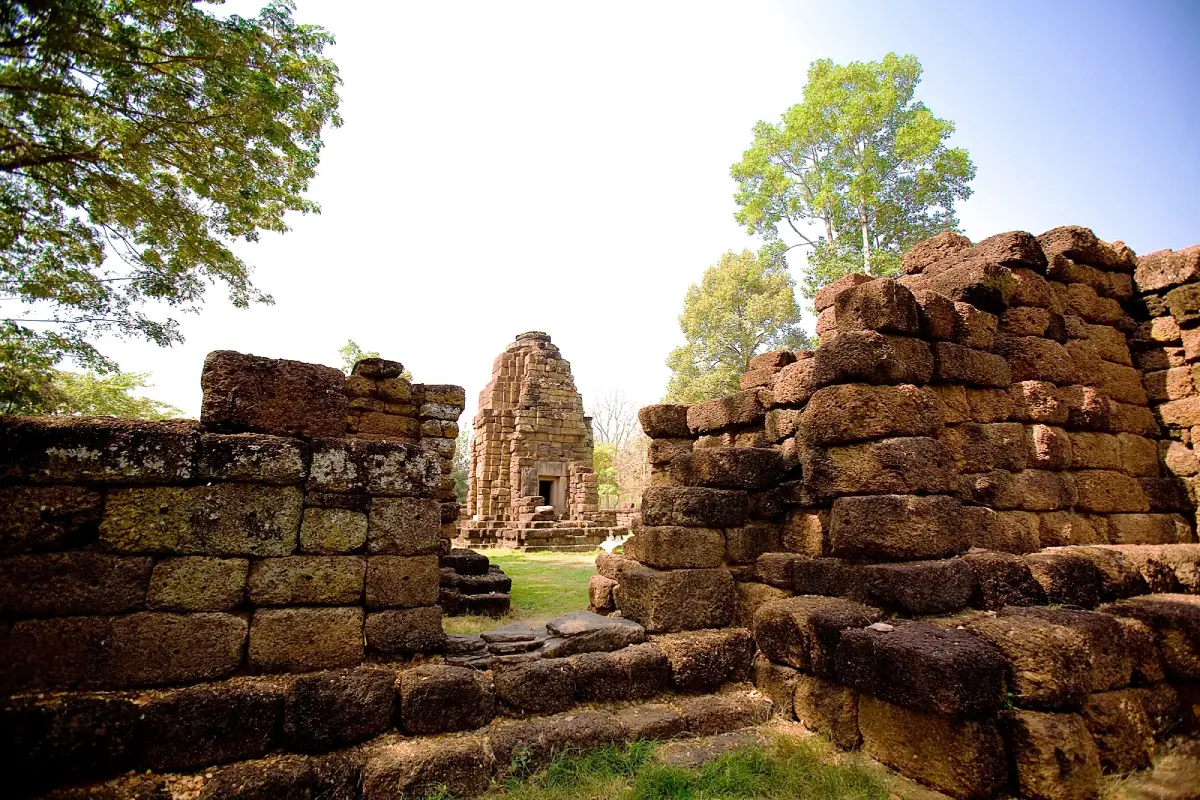
The main construction material at Ku Praphachai is laterite, a reddish-brown porous stone commonly used in Khmer monuments throughout northeastern Thailand. Laterite gives the sanctuary a strong, earthy character. The door pillars and lintel elements were made of sandstone, showing the careful combination of local durability and refined architectural detail. Although parts of the structures have collapsed over time, the remaining walls, foundations, doorway elements, and spatial arrangement still clearly reveal the original plan. The beauty of Ku Praphachai lies not in elaborate decoration but in its historical texture, architectural logic, and connection to the surrounding temple landscape.
The main prang is the sacred center of the site. It stands inside the enclosure and faces east, in accordance with Khmer architectural tradition. The structure has a square plan and a projecting front porch. In the past, it likely housed a sacred image or ritual object associated with healing and protection. Even though the upper structure is damaged, the prang still dominates the site visually and symbolically. When visitors stand at the eastern gopura and look toward the prang, they can still sense the original ceremonial axis of the sanctuary.
The bannalai, or library building, stands slightly in front of and to the right of the main shrine. In Khmer temple architecture, such buildings are often interpreted as places related to sacred texts, ritual objects, or ceremonial functions. At Ku Praphachai, the presence of the library building confirms the formal plan of the sanctuary and helps distinguish it from a simple isolated ruin. Travelers who are interested in architectural history should pay attention to the relationship between the main prang, the library, the eastern entrance, and the enclosing wall, because together they form the complete logic of the site.
The eastern gopura is the only formal entrance through the enclosing wall. It marks the transition from the outer temple area into the sacred inner precinct. In Khmer architecture, movement through space is important. Entering from the east allows visitors to follow the same symbolic direction that may have been used in ancient ritual practice. Walking through the gopura toward the main prang gives the site a clearer meaning than approaching it from the side or rear. The gopura therefore functions not only as a gateway but also as part of the ceremonial order of the sanctuary.
The enclosing wall, built of laterite, defines the sacred boundary of Ku Praphachai. It separates the inner ritual space from the surrounding temple grounds. In Khmer religious architecture, an enclosure wall is more than a physical barrier. It expresses the shift from ordinary space into sacred space. At Ku Praphachai, the wall also helps visitors understand the scale of the monument. The site is compact, but it is carefully organized. The main prang, library, gopura, wall, and baray each have their own role within the overall plan.
The baray, or sacred pond, is one of the most important features at Ku Praphachai. Located outside the northeastern side of the enclosure, the pond is lined with laterite and is connected with local beliefs about sacred water. In the context of an Arogyasala, water carries both practical and symbolic significance. It may relate to purification, healing, ritual use, and community life. For the people of Ban Na Kham Noi, the pond remains spiritually important. Its water is associated with blessing rituals and with the continuing sacred identity of the site.
Ku Praphachai was officially registered as an ancient monument in the Royal Gazette on 8 March 1935, with an additional registration announced on 15 March 1983. The registered ancient monument area covers 3 rai, 1 ngan, and 29 square wah. This official recognition confirms the national importance of the site. At the same time, its preservation also depends greatly on the temple and the local community. The area is well cared for, shaded, and suitable for respectful visits by travelers, students, and cultural groups.
Archaeological restoration and excavation work carried out around 1998 to 2000 uncovered many important artifacts. These included a Vajrasattva head, inscription fragments, silver- and gold-plated Buddha images, and other objects related to the sanctuary’s religious significance. These discoveries show that Ku Praphachai was not merely a laterite structure. It was a living religious site with sacred images, ritual objects, and a wider spiritual context. The discovery of inscription fragments is especially important because inscriptions can provide direct clues about language, belief, and historical connections.
The Ku Praphachai Local Museum and Learning Center was established in 2010 through the effort of the temple and local community. The museum preserves artifacts found at the site, as well as objects connected with local Isan life and community history. It allows visitors to understand the sanctuary in a deeper way. Instead of seeing only the stone structures, visitors can learn how the people of Ban Na Kham Noi have protected their heritage, interpreted local stories, and passed knowledge to younger generations.
The creation of the museum is an important example of community-based heritage conservation. Local leaders and villagers wanted ancient objects to remain close to the place where they were found so that future generations could learn from them. This makes the museum more than a display space. It is a record of local pride, collective memory, and the community’s desire to preserve its own cultural roots. For foreign travelers, this aspect is particularly valuable because it shows how heritage in Thailand is often cared for not only by national agencies but also by monks, village elders, and local residents.
Another sacred feature at the site is Luang Pho Ku, a Buddha image highly respected by local people. The image has been enshrined in the museum building so that visitors and worshippers can pay respect more conveniently. Luang Pho Ku represents the continuation of Buddhist devotion within the same landscape as the ancient Khmer sanctuary. This combination of archaeological heritage and living Buddhist faith gives Ku Praphachai a warm and human atmosphere. Visitors can study the past while also observing how the site remains meaningful in the present.
The site is also known for a sacred stone popularly called Hin Kon Lan, or the “million-baht stone.” Local stories tell of a large stone that villagers and monks refused to sell because it was believed to belong to the sacred landscape of the temple. The story reflects a strong local belief that certain objects should not be removed from the community, no matter how valuable they may appear in monetary terms. The stone has become part of the spiritual identity of Wat Ku Praphachai and is still respected by visitors and local residents.
One of the most important living traditions at Ku Praphachai is the Song Ku Praphachai ceremony, usually held in the fifth lunar month, around April. This annual ritual brings together the people of Ban Na Kham Noi and nearby villages to honor the ancient sanctuary, the sacred pond, the protective spirits, and the community’s ancestors. The ceremony includes Buddhist chanting, Brahmanic ritual elements, sacred water rites, offerings, and the bathing of the Buddha image and the prang. It is a strong expression of community identity and local faith.
The Song Ku Praphachai tradition reflects a distinctive blend of Theravada Buddhism, local spirit belief, ancestral respect, and the sacred status of the baray. Villagers believe that the area is protected by powerful guardian spirits and ancestral forces. The ritual is performed to ask for protection, good rainfall, agricultural fertility, community well-being, and auspiciousness. For travelers who visit during the ritual season, Ku Praphachai becomes more than an archaeological site. It becomes a living ceremonial space where the past continues to shape the present.
The sacred pond plays a central role in this ritual world. Local belief holds that its water is special and spiritually powerful. During the annual ceremony, sacred strings may be placed around the pond, monks chant prayers, and water is ritually used for blessing the Buddha image and the prang. This relationship between water, healing, and sacred space fits closely with the ancient idea of the Arogyasala. The pond therefore connects Khmer history, local ritual, and present-day community faith in one visible place.
The present atmosphere of Wat Ku Praphachai is peaceful and shaded. Large trees, the museum, the sacred pond, the ancient laterite structures, and Buddhist devotional spaces coexist within the temple grounds. Visitors will see not only an ancient monument but also a functioning religious and community space. This makes the site especially rewarding for travelers who prefer quiet cultural places to crowded tourist attractions.
A recommended way to explore Ku Praphachai is to begin at the eastern gopura. From there, walk into the enclosure and observe the main prang and the library building. After viewing the inner structures, walk outside the wall to see the baray. Then visit the local museum to learn about the artifacts, Luang Pho Ku, the sacred stone, and the community’s conservation work. Following this order allows visitors to understand the site first as architecture, then as archaeology, and finally as living heritage.
Ku Praphachai can also be understood together with other Arogyasala-type sites in Khon Kaen, especially Ku Kaew or Ku Ban Don Chang in Mueang Khon Kaen District. Both sites share similar Khmer hospital sanctuary layouts from the Jayavarman VII period. Comparing the two helps visitors understand how standardized yet locally adapted these hospital sanctuaries were. Ku Praphachai, however, has a particularly strong community dimension because of its museum, annual ritual, sacred pond, Luang Pho Ku, and local stories.
Visitors should dress respectfully because Ku Praphachai is located within an active Buddhist temple. Climbing on the ancient structures, moving laterite blocks, touching fragile architectural elements, removing artifacts, or littering should be avoided. The site is both an ancient monument and a sacred community space. Photography is welcome when done respectfully, but visitors should avoid disturbing monks, worshippers, ceremonies, or museum caretakers.
The best time to visit is in the morning or late afternoon, when the light is softer and the laterite surfaces appear richer in color. The rainy season can make the surroundings green and atmospheric, while the hot season requires drinking water, a hat, or an umbrella. Travelers who want to enter the local museum should contact the temple or local caretakers in advance, even though the museum’s stated visiting time is 09.00 to 17.00, because access may depend on the availability of local staff or key holders.
Getting There from Khon Kaen city follows the same general route as Phra That Kham Kaen. Drive toward Nam Phong District. Before reaching the bridge over the irrigation canal from the Nam Phong River, turn left and follow the paved road along the canal. Then turn right across the bridge into Ban Na Kham Noi, where Ku Praphachai is located within Wat Ku Praphachai. Another option is to cross the irrigation canal bridge and continue along the paved road for about 6 kilometers until a sign indicates a left turn. Continue through the village for about 1 kilometer to reach the sanctuary. The route is best suited for private cars, rental cars, or hired vehicles.
Travelers without a private vehicle can first reach Nam Phong District or the Phra That Kham Kaen area and then arrange local transport to Ban Na Kham Noi. It is advisable to agree on the return pickup time in advance because the village road does not have frequent public transport. Families, elderly travelers, and visitors who plan to combine several attractions in one day will find a private car the most convenient option.
Ku Praphachai works well as a half-day or full-day trip from Khon Kaen city. A good route is to visit Phra That Kham Kaen first, then continue to Ku Praphachai to see the ancient sanctuary and local museum. After that, travelers may continue toward Nam Phong or Ubolratana for restaurants, cafés, the dam area, or nature-based attractions. This route combines one of Khon Kaen’s most sacred Buddhist sites with a Khmer hospital sanctuary and the rural atmosphere of the Nam Phong area.
Today, Ku Praphachai is more than a historical attraction. It is a learning site for schools, local communities, cultural groups, and researchers. The museum helps connect younger generations with local history, while the annual ritual keeps the sanctuary spiritually active. The site shows how heritage can remain meaningful when the temple, community, and public institutions work together to care for it.
For photography, Ku Praphachai offers several strong compositions: the main prang framed by laterite walls, the sacred pond reflecting trees and the ancient structures, the reddish-brown surface of laterite in warm light, and the museum area that reflects community effort. Photography should be done respectfully. Drone use or commercial photography should be discussed with the caretakers beforehand.
Ku Praphachai is a layered cultural place. It is at once a Khmer Arogyasala sanctuary from the Jayavarman VII period, an active Buddhist temple, a community museum, a ritual center, and a sacred landscape with a revered pond and local guardian beliefs. Visiting the site is therefore not simply about looking at ancient stones. It is about understanding how history, faith, healing, water, and community identity continue to meet in one place.
In summary, Ku Praphachai or Ku Ban Na Kham Noi is one of Khon Kaen’s most important Khmer archaeological sites. Its laterite main prang, library building, enclosing wall, eastern gopura, and sacred pond clearly illustrate the Arogyasala tradition of King Jayavarman VII. The local museum, Luang Pho Ku, the sacred stone, and the Song Ku Praphachai ceremony add living cultural depth to the monument. For foreign travelers seeking a meaningful historical and spiritual destination in northeastern Thailand, Ku Praphachai is a rewarding place to visit.
| Name | Ku Praphachai, also known as Ku Ban Na Kham Noi |
| Location | Wat Ku Praphachai, Ban Na Kham Noi, Bua Yai Subdistrict, Nam Phong District, Khon Kaen Province |
| Address | No. 114, Ban Na Kham Noi, Mu 1, Bua Yai Subdistrict, Nam Phong District, Khon Kaen 40140, Thailand |
| Coordinates | 16.610996, 102.929944 |
| Highlights | Ancient Khmer Arogyasala sanctuary from the Jayavarman VII period, with a main prang, library building, enclosure wall, gopura, baray, local museum, Luang Pho Ku, and the sacred “million-baht stone” |
| History | Built in the 18th Buddhist century, around 1177–1237 CE, during the reign of King Jayavarman VII of the Khmer Empire as a religious sanctuary associated with an ancient hospital |
| Name Origin | “Ku” is commonly used in Isan for ancient sanctuaries or ruins, while “Ku Ban Na Kham Noi” refers to Ban Na Kham Noi, the village where the monument is located |
| Distinctive Features | Square laterite main prang with a projecting front porch, a library building to the front-right, an enclosing laterite wall, a single eastern gopura, and a sacred baray outside the northeastern side of the wall |
| Key Evidence | Laterite main prang, library building, enclosing wall, gopura, laterite-lined pond, sandstone doorway elements, lintel fragments, Vajrasattva head, inscription fragments, and silver- and gold-plated Buddha images |
| Registration | Registered as an ancient monument in the Royal Gazette on 8 March 1935, with an additional announcement on 15 March 1983 |
| Travel Information | From Khon Kaen city, follow the same route as Phra That Kham Kaen toward Nam Phong District. Before the irrigation canal bridge from the Nam Phong River, turn left along the canal road, then turn right across the bridge into Ban Na Kham Noi. Another route is to cross the bridge, continue about 6 km, then turn left following the village sign for about 1 km. |
| Current Status | Open to visitors as an ancient monument within Wat Ku Praphachai and a community-based historical learning site of Ban Na Kham Noi |
| Open Days | Daily |
| Opening Hours | 09.00 – 17.00 for the Ku Praphachai Local Museum and Learning Center; advance contact is recommended |
| Fees | No admission fee |
| Facilities | Parking area, local museum, Luang Pho Ku worship area, ancient monument viewing area, pavilion, shaded temple grounds, and ritual space for community ceremonies |
| Main Areas / Zones | 1. Main Prang 2. Library Building 3. Enclosing Wall 4. Eastern Gopura 5. Baray or Sacred Pond 6. Ku Praphachai Local Museum and Learning Center 7. Luang Pho Ku Worship Area 8. Sacred “Million-Baht Stone” 9. Wat Ku Praphachai Temple Area |
| Abbot / Caretaker | Phra Khru Si Yanasuwat, Abbot of Wat Ku Praphachai |
| Main Contact Number | Ku Praphachai Local Museum / Abbot of Wat Ku Praphachai Tel. 083-363-4764 Museum Advisor Tel. 087-863-1466 |
| Nearby Tourist Attractions | 1. Phra That Kham Kaen, Wat Chetiyaphum, about 14 km 2. Wat Pa Thamma Utthayan, about 28 km 3. Khon Kaen Zoo, about 33 km 4. Ubolratana Dam, about 39 km 5. Bang Saen 2 and Hat Chom Thong, about 41 km 6. Nam Phong National Park / Hin Chang Si, about 52 km |
| Nearby Restaurants | 1. KIM Cafe’ Nam Phong, about 17 km, Tel. 062-549-2027 2. Vela de Café, about 18 km, Tel. 094-552-2460 3. Khang Ban Nam Phong, about 19 km, Tel. 096-034-0501 4. Intra Garden Khon Kaen, about 27 km, Tel. 088-338-3602 5. Varee Café & Restaurant, about 42 km, Tel. 089-777-1400 |
| Nearby Accommodations | 1. Nana Resort Nam Phong, about 18 km, Tel. 087-544-9944 2. Charoenthong Resort Nam Phong, about 18 km, Tel. 087-490-9899 3. Baan Suan Tan Resort, about 21 km, Tel. 092-513-1127, 087-858-5127 4. Suanphai Resort Nam Phong, about 23 km, Tel. 089-274-7576 5. Paradise Resort Khon Kaen, about 25 km, Tel. 081-965-1088 6. Somphit Resort, about 25 km, Tel. 090-353-2660 |
Frequently Asked Questions (FAQ)
Q: Where is Ku Praphachai or Ku Ban Na Kham Noi located?
A: Ku Praphachai is located within Wat Ku Praphachai in Ban Na Kham Noi, Bua Yai Subdistrict, Nam Phong District, Khon Kaen Province.
Q: Why is Ku Praphachai important?
A: Ku Praphachai is an ancient Khmer Arogyasala sanctuary built during the reign of King Jayavarman VII in the 18th Buddhist century, reflecting the Khmer tradition of hospital sanctuaries in northeastern Thailand.
Q: What can visitors see at Ku Praphachai?
A: Visitors can see the main prang, library building, enclosing wall, eastern gopura, sacred baray, local museum, Luang Pho Ku worship area, sacred “million-baht stone,” and the active temple grounds.
Q: Is there an admission fee for Ku Praphachai?
A: No. There is no admission fee. Visitors who want to see the local museum in detail should contact the temple or museum caretakers in advance.
Q: When is the Song Ku Praphachai ceremony held?
A: The Song Ku Praphachai ceremony is held in the fifth lunar month, around April. It includes Buddhist chanting, Brahmanic ritual elements, sacred water rites, and community worship of the ancient sanctuary.
Q: How can travelers get to Ku Praphachai?
A: From Khon Kaen city, follow the same route as Phra That Kham Kaen toward Nam Phong District. Before the irrigation canal bridge, turn left along the canal road, then turn right into Ban Na Kham Noi, or continue across the bridge for about 6 km and follow the sign into the village.
Q: What nearby attractions can be combined with Ku Praphachai?
A: Travelers can combine Ku Praphachai with Phra That Kham Kaen, Wat Pa Thamma Utthayan, Khon Kaen Zoo, Ubolratana Dam, Bang Saen 2, and Nam Phong National Park.
Q: What should visitors keep in mind when visiting Ku Praphachai?
A: Visitors should dress respectfully, avoid climbing on the ancient structures, avoid moving stones or artifacts, keep the site clean, and respect the temple and local ritual space.
 Category: ●Art, Culture and Heritage
 Group: ●Historical Sites and Monuments
Last Update : 3 MonthAgo
 Last Update : 3 MonthAgo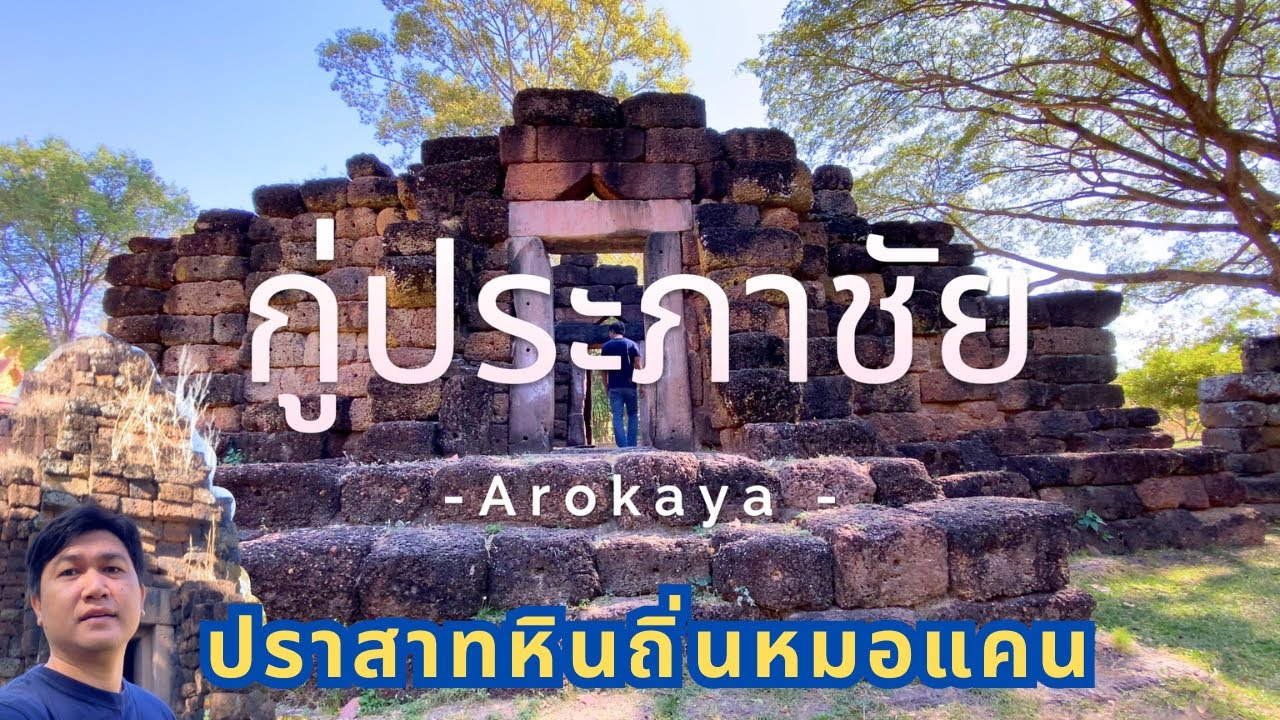
 Click to Access the Navigation Map GPS
Ku Praphachai (Ku Ban Na Kham Noi) Map
Recommend
 Historical Sites and Monuments(7)
 Landmarks and Memorials(3)
 Art, Craft Centres, Tradition(2)
 Museums(4)
 Educational Places
 Museum for Study(2)
 Places of Worship
 Temple(27)
 Other Sacred Sites(5)
 Suburban Living
 Village, Community(3)
 Local Market(1)
 Nature and Wildlife
 National Parks and Marine Reserves(5)
 Mountain (Doi)(1)
 Dam, Reservoir, Lake(4)
 Waterfalls(8)
 Caves(9)
 River, Canal(10)
 Bays and Beaches(3)
 Islands(1)
 Other natural attractions(5)
 Entertainment and Agricultural
 Zoos and Aquariums(2)
 Animal camps and shows(2)
 Farms, Parks and Ecotourism(7)
 Waterpark(3)
 Travel Articles, Recipes
 Travel Review, Food Review(1)


