
lovethailand home >Northeastern Travel Attractions >Kalasin Travel Attractions >Kamalasai >Nong Paen > Muang Fa Daet Song Yang
TL;DR: Muang Fa Daet Song Yang is located at Ban Sema, Tambon Nong Paen, Kamalasai District, Kalasin Province, open Daily, hours 08.00 - 16.30.
Muang Fa Daet Song Yang
Open Days: Daily
Opening Hours: 08.00 - 16.30
Muang Fa Daet Song Yang in Kalasin Province is one of the most important ancient cities in northeastern Thailand. It is located at Ban Sema, Tambon Nong Paen, Kamalasai District, Kalasin Province. Also known as Fa Daet Sung Yang or Mueang Sema, this archaeological site is famous for its large ancient town plan, double earthen ramparts, surrounding moats, Dvaravati-period Buddhist remains, sandstone sema boundary stones, and Phra That Ya Khu, the largest and most complete ancient stupa within the city. For foreign travelers interested in early Buddhist civilization, archaeology, ancient urban planning, and the cultural history of Isan, Muang Fa Daet Song Yang is one of the most valuable places to visit in Kalasin.
The most important thing to understand about Muang Fa Daet Song Yang is that this is not simply a single ruined monument. It is an entire ancient city landscape. The area includes traces of earthen city walls, moats, ancient settlement zones, Buddhist religious sites, sandstone sema stones, community temples, and sacred monuments that have remained meaningful to local people for centuries. Visitors who come with even a basic understanding of the site will see more than old bricks and earth mounds; they will see the structure of a once-flourishing urban community connected with water, religion, art, and regional trade routes.
The name “Fa Daet Song Yang” appears in several forms. Some sources and local traditions call it “Fa Daet Sung Yang,” while others refer to it as “Mueang Sema.” The name Mueang Sema is especially meaningful because the overall layout of the ancient city has often been compared to the shape of a sema stone, the boundary marker used in Buddhist sacred space. This interpretation is closely connected with the large number of sandstone sema stones discovered in and around the ancient city. These stones are among the most important archaeological and artistic evidence at the site.
The city is situated in the lowland area of the Lam Pao River basin, a landscape rich in natural water sources, wetlands, fertile soil, and old waterways. Such an environment was suitable for human settlement from early periods. The presence of water made agriculture possible, supported daily life, and helped the area connect with other communities. This explains why the site developed from prehistoric occupation into a major settlement that later became strongly associated with Dvaravati-period Buddhist culture.
The physical layout of Muang Fa Daet Song Yang is highly distinctive. The ancient city was enclosed by two layers of earthen ramparts, with a moat running between them. The total length around the rampart system is about 5 km. Archaeological descriptions also note that the city stretches roughly 2,000 m from north to south and about 1,150 m from east to west. The upper part of the plan narrows inward, giving the city outline a form that has been compared to a sema stone. This combination of ramparts, moats, and planned settlement makes Muang Fa Daet Song Yang one of the most important examples of ancient urban form in the Isan region.
Inside the ancient city are several important raised mounds and settlement areas. Some are associated with habitation, some with religious activity, and some with the present-day community of Ban Sema. Wat Pho Chai Semaram, the village school, and local houses are located within the broader ancient city area. This creates a special character: Muang Fa Daet Song Yang is both an archaeological site and a living community. Travelers should therefore visit respectfully, avoid disturbing residents, and remember that the ancient city is still part of the everyday life of local people.
Archaeological evidence shows that people had lived in the area since prehistoric times. The city became especially prosperous during the Dvaravati period, around the 13th - 15th Buddhist centuries. This was a period when Buddhism, religious art, and urban communities developed strongly across many parts of central and northeastern Thailand. At Muang Fa Daet Song Yang, this development is visible through sandstone sema stones, Buddhist narrative carvings, ancient stupas, religious foundations, and scattered sacred sites both inside and outside the city walls.
The sandstone sema stones are the most distinctive cultural evidence at Muang Fa Daet Song Yang. Many stones were found within the ancient city, some still in their original positions, some collected and preserved at Wat Pho Chai Semaram, and some displayed at Khon Kaen National Museum. These sema stones are important not only because of their religious function, but also because many of them are carved with scenes from Jataka stories and the life of the Buddha. They show that the people of this ancient city understood Buddhist teachings and used visual art to communicate moral and religious ideas.
The carvings on the sema stones are remarkable for their narrative quality. Figures, gestures, clothing, sacred scenes, and symbolic details were carved into sandstone with great care. Even after more than a thousand years, many stones still communicate a strong sense of religious devotion and artistic skill. For general visitors, the best way to appreciate them is to look slowly at their shape, surface, figures, and storytelling elements. For travelers interested in art history, these sema stones are among the key works that define Dvaravati art in northeastern Thailand.
Wat Pho Chai Semaram, also known as Wat Ban Kom, is another essential stop when visiting Muang Fa Daet Song Yang. The temple is located at Ban Sema, opposite the entrance to the Phra That Ya Khu archaeological area. It has long served as a place where local people gathered and preserved sema stones and ancient objects found in the ancient city. The temple therefore acts as a bridge between the archaeological past and the living community. It shows how local residents have played an important role in protecting the cultural heritage of the site.
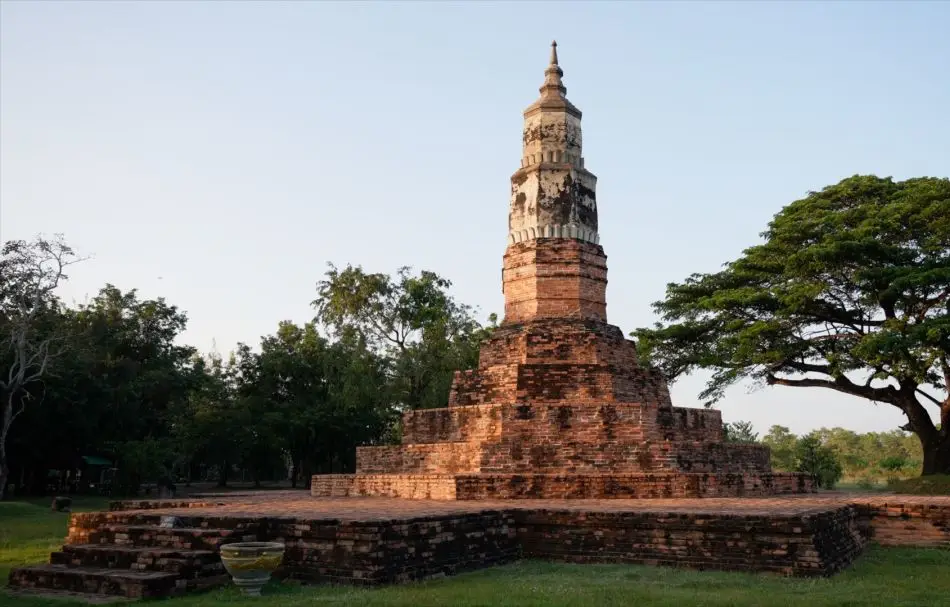
The main landmark of Muang Fa Daet Song Yang is Phra That Ya Khu, also known as Phra That Yai. It is the largest stupa within the ancient city and remains the most visually impressive monument at the site. Local belief connects the stupa with the relics or memory of a highly respected senior monk. In the Isan dialect, “Ya Khu” or “Nya Khu” refers to a senior monk. This makes Phra That Ya Khu both an archaeological monument and a sacred place of worship for local people and visitors.
Phra That Ya Khu is especially interesting because its structure reflects more than one historical period. The lower base is associated with the Dvaravati period, while a later octagonal base belongs to the Ayutthaya period. The upper section and spire were further developed in the Rattanakosin period. This layered construction shows that the monument continued to be respected, repaired, and reinterpreted across different eras. It is one of the clearest examples at the site of how ancient sacred places remained meaningful long after their first construction.
Other archaeological remains are scattered throughout and around the city. These include religious foundations and ancient brick structures at locations such as Non Wat Sung, Non Fa Yat, Non Fa Daet, and other mound areas. Some remains may appear as low brick foundations or earth mounds rather than complete buildings, so they require careful observation and interpretation. Together, these scattered remains reveal that Muang Fa Daet Song Yang was not centered on one monument alone. It was a complex sacred and residential landscape with many interconnected ritual and community spaces.
The Fine Arts Department registered Muang Fa Daet Song Yang as a national ancient monument on September 27, 1936. The protected archaeological area later covered approximately 910 rai, 3 ngan, and 75 square wah. This official protection reflects the national importance of the site in terms of history, archaeology, Buddhist art, and the development of ancient communities in northeastern Thailand. Visitors should help preserve the site by avoiding climbing on monuments, touching sema stones unnecessarily, removing fragments, or disturbing any archaeological features.
The conservation history of Muang Fa Daet Song Yang is also significant. Surveying, photography, mapping, excavation, restoration, and landscape improvement have taken place over many decades. Archaeological work has helped scholars understand that this was a major ancient community in the Dvaravati cultural sphere of Isan. Evidence from the site has contributed to the study of settlement patterns, Buddhist art, religious structures, and the relationship between Fa Daet Song Yang and other ancient communities in the region.
For travelers, Muang Fa Daet Song Yang is best experienced slowly. It is not a site where every ancient structure remains complete above ground. Instead, its value lies in the combination of visible and interpreted evidence: ramparts, moats, a stupa, sema stones, temple collections, earth mounds, and archaeological foundations. Visitors who take time to connect these elements will understand the city much better than those who visit only for a quick photo. A thoughtful visit turns the landscape into a readable historical document.
The best time to visit is in the morning or late afternoon, as many parts of the archaeological area are open and exposed to the sun. Visitors should bring water, a hat, sun protection, and comfortable walking shoes. A short visit to Phra That Ya Khu and nearby areas may take around 1 hour, but a more complete visit including Wat Pho Chai Semaram, the sema stone collections, selected rampart areas, and cultural learning points can take half a day.
Travelers interested in local culture may find the area especially lively during the Magha Puranami Bucha and Isan Tung Festival period. This event is associated with Buddhist devotion and the worship of Phra That Ya Khu. Colorful Isan tung flags are displayed around the sacred area, creating a powerful combination of ancient heritage, living faith, and local creativity. Visiting during this period allows travelers to experience not only archaeology, but also the continuing religious and community life of Kalasin.
Respectful behavior is essential at Muang Fa Daet Song Yang. The area includes sacred Buddhist space, protected archaeological remains, and a local village. Visitors should dress modestly, speak quietly around Phra That Ya Khu and temples, avoid climbing on ruins, avoid touching sema stones, and follow local signs. Nothing should be removed from the site. Responsible travel helps preserve the ancient city while allowing the local community to continue living with and caring for this important cultural landscape.
Getting There is convenient by private car from Kalasin city. Take Highway 214 on the Kalasin - Roi Et route for about 13 km to Kamalasai District. Then turn right onto Highway 2367 and continue for about 6 km before turning right into a local lane for about 400 m to reach the ancient city and Phra That Ya Khu area. The total distance from Kalasin city is about 19 km. When using a navigation app, search for “Phra That Ya Khu” or “Muang Fa Daet Song Yang Kalasin” for the most accurate route.
Travelers without a private car can first reach Kalasin city or Kamalasai District, then continue by local transport or hired vehicle to Ban Sema and Phra That Ya Khu. However, private transportation is the most flexible option, especially for those who want to visit several nearby points such as Wat Pho Chai Semaram, the Fa Daet Sung Yang Cultural Center, local restaurants, and accommodations in Kamalasai or Kalasin city.
A meaningful route should begin at Phra That Ya Khu, the strongest visual and spiritual landmark of the ancient city. After that, travelers can visit Wat Pho Chai Semaram to see the sema stones and ancient objects preserved by the community. If time allows, explore selected parts of the rampart and moat landscape, then continue to the Fa Daet Sung Yang Cultural Center or return to Kalasin city to visit the Kalasin City Museum and other cultural sites. This route is suitable for history lovers, students, families, cultural travelers, and foreign visitors who want to understand Dvaravati heritage in Isan.
Food options near Muang Fa Daet Song Yang are mostly located in Kamalasai District and nearby subdistricts. They include local restaurants, cafés, noodle shops, Isan food, and beverage shops. Visitors who arrive in the morning can explore the ancient site first, then return to Kamalasai for lunch. Those visiting in the afternoon should check restaurant hours and plan the meal before or after the archaeological visit.
Accommodation options are available in Kamalasai and Kalasin city. Staying in Kamalasai is convenient for travelers who want to visit Phra That Ya Khu early in the morning, while staying in Kalasin city provides more choices of restaurants, hotels, and urban facilities. Since Muang Fa Daet Song Yang is only about 19 km from Kalasin city, it can easily be visited as a half-day cultural trip.
Overall, Muang Fa Daet Song Yang is far more than a historical checkpoint. It is a layered cultural landscape where ancient urban planning, Buddhist faith, Dvaravati art, sandstone sema stones, sacred monuments, and local community life remain connected. For travelers who want to understand Kalasin beyond ordinary sightseeing, this ancient city is one of the most important places to include in the journey. It offers a deep and memorable view of Isan’s early Buddhist civilization and the long continuity of cultural memory in northeastern Thailand.
| Name | Muang Fa Daet Song Yang / Fa Daet Sung Yang / Mueang Sema |
| Location | Ban Sema, Tambon Nong Paen, Kamalasai District, Kalasin Province |
| Address | Ban Sema, Tambon Nong Paen, Kamalasai District, Kalasin 46130, Thailand |
| Coordinates | 16.31000, 103.52000 |
| Highlights | Dvaravati-period ancient city, double earthen ramparts, ancient moat system, sandstone sema stones carved with Buddhist narratives, Phra That Ya Khu, and scattered religious remains |
| History / Period | Occupied since prehistoric times and flourishing during the Dvaravati period around the 13th - 15th Buddhist centuries, with later use and restoration in subsequent periods |
| Archaeological Area | Approximately 910 rai, 3 ngan, and 75 square wah within the protected ancient monument boundary |
| Name Origin | The site is also called Fa Daet Sung Yang or Mueang Sema because the city plan resembles a sema stone and many sandstone sema stones were found in the area |
| Distinctive Features | Two layers of earthen ramparts, moat between the ramparts, sema-shaped city plan, Phra That Ya Khu, sandstone sema stones, and multiple religious foundations inside and outside the city |
| Key Evidence | Sandstone sema stones carved with Jataka and Buddha-life scenes, Phra That Ya Khu, ancient religious remains, Non Wat Sung, Non Fa Yat, Non Fa Daet, and objects preserved at Wat Pho Chai Semaram and Khon Kaen National Museum |
| Travel Information | From Kalasin city, take Highway 214 toward Roi Et for about 13 km to Kamalasai District, turn right onto Highway 2367 for about 6 km, then turn right into a local lane for about 400 m. Total distance is about 19 km. |
| Current Status | Open as a protected ancient monument and cultural attraction of Kalasin Province, with the Ban Sema community living within the broader ancient city area |
| Open Days | Daily |
| Opening Hours | 08.00 - 16.30 |
| Fees | No admission fee |
| Facilities | Parking area, walking paths around the archaeological site, worship area at Phra That Ya Khu, nearby temple, sema stone learning points, and local shops in the surrounding community |
| Main Areas / Zones | Phra That Ya Khu Zone Ancient Rampart And Moat Zone Wat Pho Chai Semaram And Sema Stone Zone Ban Sema Community Zone Non Wat Sung Zone Non Fa Yat Zone Non Fa Daet Zone Scattered Religious Remains Outside The City |
| Related Event / Tradition | Magha Puranami Bucha and Isan Tung Festival, associated with the worship of Phra That Ya Khu during important Buddhist festival periods |
| Caretaker / Related Authority | The Fine Arts Department, through the 9th Regional Office of Fine Arts, Ubon Ratchathani, is responsible for ancient monument conservation, working with local authorities and the Ban Sema community. Wat Pho Chai Semaram takes care of the temple area and ancient objects preserved within the temple. |
| Main Contact Number | Tourism information, TAT: 043-854164, 043-854404 |
| Official Website / Official Page | The Fine Arts Department and Tourism Authority of Thailand |
| Nearby Tourist Attractions | 1. Phra That Ya Khu, about 0 km 2. Wat Pho Chai Semaram, or Wat Ban Kom, about 0.4 km 3. Fa Daet Sung Yang Cultural Center, Fa Daet Sung Yang Witthayakhan School, about 1 km 4. Wat Sawang Pho Si Som Hong, about 8 km 5. Kalasin City Museum, about 20 km 6. Phraya Chai Sunthon Monument, about 20 km |
| Nearby Restaurants | 1. Viengna Restaurant, about 5 km 2. Rabbit Milk Tea Cafe, about 7 km 3. Hung Huang OTOP Lifestyle, about 7 km, Tel. 092-423-2986 4. Kuai Tiao Mu Maneekan, about 7 km, Tel. 098-409-4892, 093-329-6594 5. Smile View Café & Restaurant, about 8 km, Tel. 082-216-5946 6. Café Amazon PTT Ban Bo, about 9 km |
| Nearby Accommodations | 1. Suan Rak Resort Kamalasai, about 8 km, Tel. 064-937-7073 2. Phaiboon Hotel Kamalasai, about 7 km, Tel. 043-811661 3. Ingchan Resort Kamalasai, about 8 km, Tel. 081-263-9719 4. Nida Rooms Kamalasai 9, about 8 km 5. Ban Phak Suk Sabai, about 8 km 6. Ruean Phak Rim Pao, about 10 km |
Frequently Asked Questions (FAQ)
Q: Where is Muang Fa Daet Song Yang located?
A: Muang Fa Daet Song Yang is located at Ban Sema, Tambon Nong Paen, Kamalasai District, Kalasin Province, Thailand.
Q: Why is Muang Fa Daet Song Yang important?
A: It is an important Dvaravati-period ancient city in northeastern Thailand, with double earthen ramparts, moats, sandstone sema stones, Phra That Ya Khu, and many Buddhist archaeological remains.
Q: Is Phra That Ya Khu part of Muang Fa Daet Song Yang?
A: Yes. Phra That Ya Khu is the most important and visually prominent ancient stupa within the Muang Fa Daet Song Yang archaeological area.
Q: Is there an admission fee for Muang Fa Daet Song Yang?
A: No. The site does not charge an admission fee.
Q: How long should travelers spend at Muang Fa Daet Song Yang?
A: A short visit to Phra That Ya Khu may take about 1 hour, but a more complete visit including Wat Pho Chai Semaram, sema stones, rampart areas, and nearby cultural points should take at least half a day.
Q: How can travelers get to Muang Fa Daet Song Yang from Kalasin city?
A: Take Highway 214 from Kalasin city toward Roi Et for about 13 km to Kamalasai District, then turn onto Highway 2367 for about 6 km and continue into a local road for about 400 m. The total distance is about 19 km.
Q: Is Muang Fa Daet Song Yang suitable for foreign travelers?
A: Yes. It is especially suitable for travelers interested in Southeast Asian history, Dvaravati art, Buddhism, archaeology, and ancient urban landscapes in northeastern Thailand.
Q: What should visitors wear when visiting Muang Fa Daet Song Yang?
A: Visitors should dress modestly because the site includes sacred Buddhist areas such as Phra That Ya Khu and Wat Pho Chai Semaram. Comfortable walking shoes, a hat, water, and sun protection are also recommended.
 Category: ●Art, Culture and Heritage
 Group: ●Historical Sites and Monuments
Last Update : 2 DayAgo
 Last Update : 2 DayAgo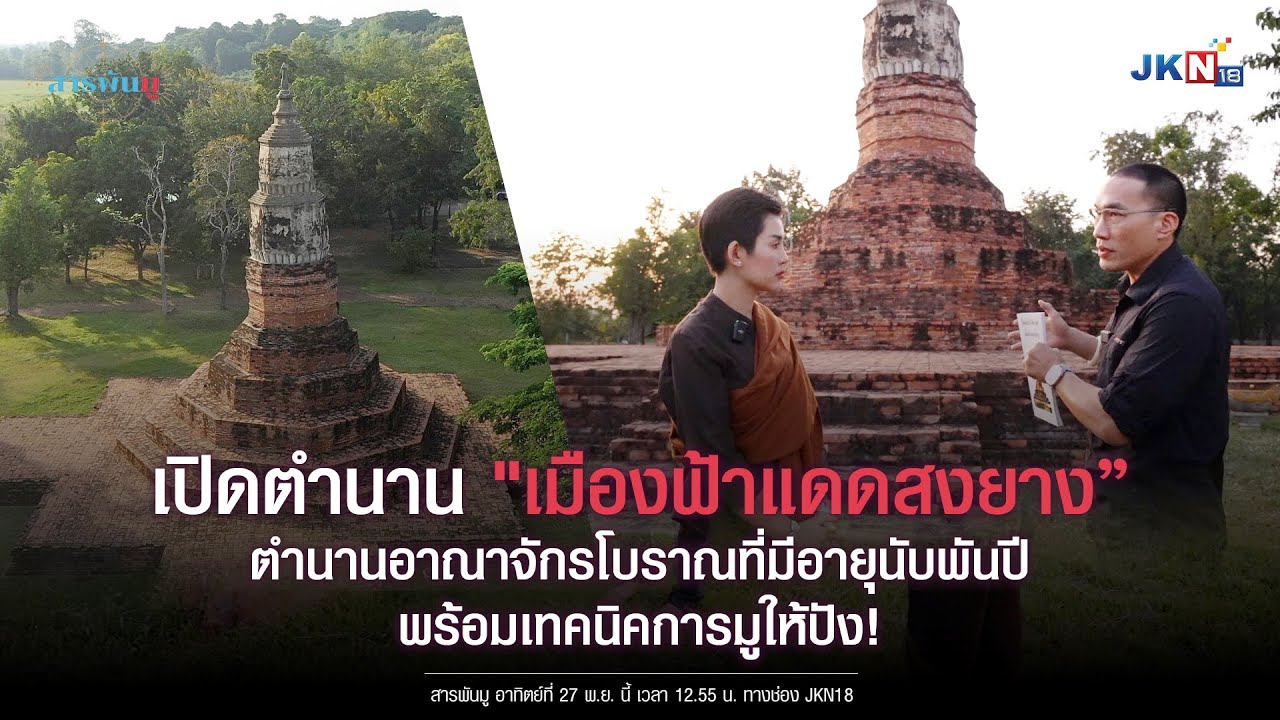
 Click to Access the Navigation Map GPS
Muang Fa Daet Song Yang Map
 Historical Sites and Monuments(2)
 Landmarks and Memorials(3)
 Art, Craft Centres, Tradition(4)
 Museums(3)
 Art Gallery(1)
 Educational Places
 Educational Gardens, Farm(1)
 Places of Worship
 Temple(21)
 Other Sacred Sites(6)
 Suburban Living
 Village, Community(3)
 Nature and Wildlife
 National Parks and Marine Reserves(3)
 Mountain (Doi)(2)
 Dam, Reservoir, Lake(5)
 Waterfalls(4)
 Caves(2)
 River, Canal(3)
 Bays and Beaches(1)
 Other natural attractions(2)
 Entertainment and Agricultural
 Animal camps and shows(1)
 Farms, Parks and Ecotourism(2)


