
lovethailand home >Northeastern Travel Attractions >Kalasin Travel Attractions >Muang Kalasin >Klang Muen > Phraya Chai Sunthon Monument
TL;DR: Phraya Chai Sunthon Monument is located at Kalasin Road, in front of Kalasin Post Office, Tambon Kalasin, Mueang Kalasin District, Kalasin Province, open Daily, hours 24 Hours.
Phraya Chai Sunthon Monument
Open Days: Daily
Opening Hours: 24 Hours
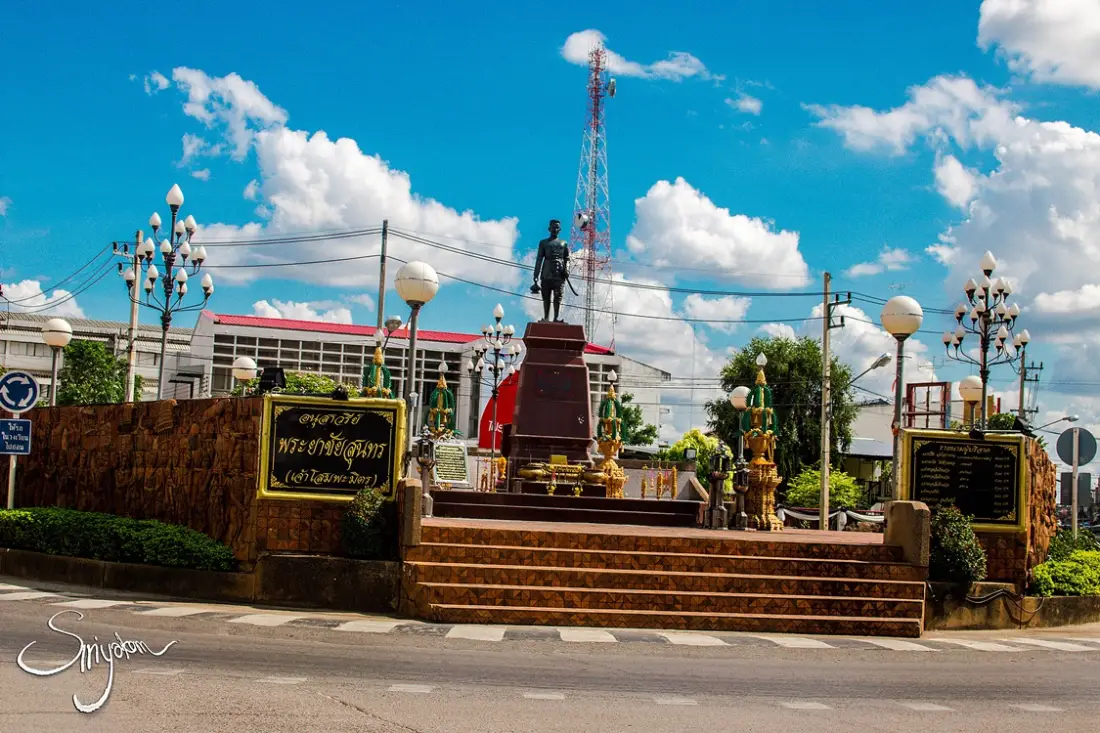
Phraya Chai Sunthon Monument, also known as the Thao Somphamit Monument, is one of the most important historical landmarks in the center of Kalasin Province. Located in front of the Kalasin Post Office on Kalasin Road, in Tambon Kalasin, Mueang Kalasin District, the monument honors the first ruler and founder of Kalasin. For visitors who want to understand the origin of the city before exploring temples, museums, cultural sites, and surrounding attractions, this monument is one of the best starting points in central Kalasin.
The monument is a life-sized bronze statue of Phraya Chai Sunthon, or Thao Somphamit, standing on a raised pedestal. In his right hand, he holds a water kettle, while in his left hand he holds a ceremonial sword of authority. These two objects are not just sculptural details. They are deeply symbolic. The kettle connects with the historical memory of Kalasin, royal tribute, water, and the identity of the city, while the sword represents authority, responsibility, justice, and the role of a ruler who protected and governed the community during the early period of city formation.
Phraya Chai Sunthon Monument is more than a roadside landmark. It is a place of remembrance built through the collective gratitude of Kalasin people. Local residents from many sectors contributed to the construction of the monument as an expression of respect and appreciation toward the person recognized as the founder of the city. Because of this community-based origin, the monument carries emotional and historical importance beyond its physical form.
Thao Somphamit, later known by the title Phraya Chai Sunthon, originally served in the royal court of Vientiane. During the reign of King Rama I of the Rattanakosin Kingdom, he was appointed as the first ruler of Kalasin after Ban Kaeng Samrong was elevated to the status of a town. This event marked a major turning point in the history of Kalasin, giving the settlement a clearer political and administrative status. His name has remained closely associated with the foundation and identity of the province ever since.
In historical context, Phraya Chai Sunthon was not only a ruler but also a pioneer leader. The founding of a town in the past involved more than choosing a location. It required gathering people, organizing communities, maintaining security, managing resources, establishing administrative order, and building confidence among residents. His role therefore represents the early process of transforming a settlement into a functioning town with social, political, and cultural structure.
The name Kalasin is strongly associated with water and the idea of the “black water city,” a phrase still used as part of the province’s identity. This connection between water, settlement, and local memory makes the kettle in the monument especially meaningful. It gives the statue a softer symbolic quality, suggesting nourishment, settlement, continuity, and the life of the community. At the same time, the sword of authority expresses the strength and responsibility of leadership.
The bronze statue is about 175 centimeters tall and was created to provide a permanent place where Kalasin residents could pay respect to the city’s first ruler. The foundation stone for the monument was laid on 13 September 1981, and 13 September has since become an important annual date for the worship ceremony dedicated to Phraya Chai Sunthon. This annual ritual keeps the monument culturally active and prevents it from becoming merely a static public sculpture.
The annual worship ceremony is one of the clearest expressions of local gratitude. The ceremony includes merit-making, almsgiving, floral offerings, ritual prayers, ceremonial offerings, and traditional dance performed by local residents. During the event, people of different ages gather in traditional dress, often connected with Kalasin’s wider cultural identity such as Phu Thai dress and Praewa silk. The monument area becomes a cultural stage where history, faith, local pride, and community identity come together.
For travelers, a visit to Phraya Chai Sunthon Monument should not be treated as a quick photo stop only. The meaning of the place becomes much stronger when visitors understand why Kalasin people continue to honor this figure. The monument represents gratitude toward a founder, respect for local history, and the preservation of collective memory. It is a public space where the story of the city remains visible to both residents and visitors.
The surrounding area is an active part of central Kalasin. The monument stands near the post office, shops, restaurants, roads, government-related areas, and other urban services. This location makes it convenient for visitors to include the monument in a short city route. Early morning and late afternoon are good times to visit because the weather is usually more comfortable and the light is better for photography. A midday stop is also possible, especially for travelers passing through the city center.
Visitors who want to take photos should choose safe roadside areas or pedestrian spots. Because the monument is located near traffic routes in a busy urban area, visitors should not stop vehicles in unsafe places, block traffic, or enter dangerous areas near the road. Good photo details include the full statue on its pedestal, the kettle in the right hand, the ceremonial sword in the left hand, the offering area, and the surrounding city atmosphere.
Those who come to pay respect should do so respectfully. Flowers or garlands should be placed only in appropriate areas. Visitors should avoid climbing onto the pedestal, touching the bronze statue unnecessarily, or leaving litter around the monument. The site is a public landmark, but it is also a meaningful place for local people. Respectful behavior helps preserve the dignity of the monument and the community memory connected with it.
In terms of cultural tourism, Phraya Chai Sunthon Monument is a strong starting point for understanding Kalasin. From here, visitors can connect the city’s founding history with other layers of provincial identity, including pong lang folk music, Praewa silk, Fa Daet Song Yang ancient city, Phu Kum Khao dinosaur fossils, Buddhist temples, and Phu Thai cultural heritage. Understanding the founder of the city helps visitors see these other attractions as parts of one broader historical and cultural landscape.
Nearby attractions in central Kalasin can easily be combined with the monument. Pong Lang Circle represents Kalasin’s identity as the birthplace of the pong lang, a traditional Isan wooden percussion instrument. Wat Klang Royal Temple is an important temple in the city center. Wat Tai Pho Kham is another old temple connected with the local community. Kalasin Museum or Kalasin Art Gallery provides a broader understanding of local culture, and Kut Nam Kin Public Park offers a relaxing green space for residents and visitors.
A half-day cultural route in Kalasin city can begin at Phraya Chai Sunthon Monument. Visitors can first pay respect to the founder of the city, then continue to Pong Lang Circle to learn about Kalasin’s musical identity, followed by Wat Klang Royal Temple and Wat Tai Pho Kham for Buddhist and local community heritage. The route can end at Kalasin Museum or Kalasin Art Gallery, where visitors can learn more about the province’s cultural background. This compact route offers history, faith, music, art, and local identity in a short travel time.
For a full-day itinerary, the monument can be used as the first stop before traveling to major attractions outside the city center. Visitors may continue to Phra That Yakhu in the ancient city area of Fa Daet Song Yang in Kamalasai District, Sirindhorn Museum and Phu Kum Khao Dinosaur Excavation Site in Sahatsakhan District, or Lam Pao Dam in Yang Talat District. Starting the journey at the monument gives the trip a stronger historical foundation before exploring wider layers of Kalasin.
Getting There is simple. The monument is located in central Kalasin in front of the Kalasin Post Office. Travelers can reach it by private car, rental car, local taxi, or city transport. From Kalasin Bus Terminal, the monument is a short ride away. From the provincial administrative area or nearby government zone, visitors can use the main city roads toward Kalasin Road. Local people know the monument well, making it easy to ask for directions.
For travelers staying in the city, Phraya Chai Sunthon Monument can be included as a convenient stop between hotels, restaurants, temples, and other attractions. It does not require a long visit, but spending a little time observing the statue, reading its meaning, and understanding the historical background makes the experience much more valuable than a quick photo stop.
One of the most interesting aspects of the monument is its location. It stands in a living urban environment where past and present meet. On one side is the memory of the city’s founder; on the other is modern daily life, including roads, shops, postal services, local movement, and city administration. This setting allows visitors to see that Kalasin’s history is not separated from the present. It remains part of the city’s everyday landscape.
Artistically, the bronze statue gives a dignified and formal impression. The standing posture suggests leadership and stability. The kettle and sword create a balanced symbolic image: the kettle suggests care, settlement, and continuity, while the sword suggests authority and protection. Together, they present Phraya Chai Sunthon not only as a ruler with power, but also as a leader responsible for the well-being and order of the community.
The kettle in the right hand is especially notable because it makes this monument visually different from many statues of rulers or heroes that focus mainly on weapons. It gives the statue a strong local character and invites visitors to think about the origins of Kalasin, water, tribute, settlement, and prosperity. The sword in the left hand adds another layer of meaning, showing the authority and responsibility required to govern a town in earlier times.
Phraya Chai Sunthon Monument is also connected with major cultural events in Kalasin, including ceremonies held during provincial festivals such as the Pong Lang, Praewa, and Red Cross Fair. During these events, the monument area may become part of ritual and cultural activities, including worship ceremonies and traditional dances. This connection links the monument with several important parts of Kalasin identity: founding history, pong lang music, Praewa silk, and local faith.
Because the monument is located in public space, Kalasin residents encounter it in daily life. People see it while going to work, visiting the post office, traveling through the city, shopping, or guiding visitors around town. It functions as both a geographic marker and an emotional marker. The monument reminds local people that the city has roots, and that those roots continue to matter in contemporary life.
For students, researchers, or visitors interested in local history, the monument can serve as a compact learning site. It opens discussions about the founding of Kalasin, the relationship between local towns and the early Rattanakosin state, the role of regional leaders, the public construction of monuments through community participation, and the use of annual rituals to preserve memory. Learning from an actual site makes history more concrete and easier to understand.
First-time visitors to Kalasin should consider stopping here before exploring other destinations. The monument answers several key questions: Who founded Kalasin? Why is Thao Somphamit important? Why do local people continue to pay respect to the first ruler? How does a city keep memory visible in public space? These questions help travelers understand Kalasin in a deeper way before visiting temples, archaeological sites, museums, cultural villages, or natural attractions.
For international travelers, Phraya Chai Sunthon Monument is a good introduction to the Thai and Isan practice of honoring city founders and respected historical figures. In many Thai provinces, monuments are built for people who protected, founded, or shaped local communities. Paying respect at such places is not only a religious action, but also an expression of respect for local history, leadership, and shared memory.
The monument is easy to visit, free of charge, open all day, and close to services in the city center. It is suitable for solo travelers, families, school groups, and cultural tour groups. When planned properly, it can be included in a Kalasin city route without taking much time, while adding strong historical value to the overall trip.
The atmosphere becomes especially meaningful around the annual worship date and during major cultural events. At such times, the monument area may be filled with ceremonial preparations, traditional dress, offerings, and community participation. Visitors during these periods should take photographs respectfully, avoid disturbing ceremonies, and allow local residents enough space to perform their rituals.
When all elements are considered, Phraya Chai Sunthon Monument is one of the most meaningful public landmarks in Kalasin. It is a memorial to the city’s founder, a worship site for local residents, a location for annual ceremonies, a starting point for cultural travel, and a living lesson in local history. It summarizes the story of Kalasin in a compact but powerful form.
A meaningful visit here requires more than taking a photograph. Visitors should observe the statue, notice the kettle and ceremonial sword, learn the story of Thao Somphamit, and understand why the people of Kalasin joined together to build the monument. With that context, this small but important landmark becomes a gateway to understanding the spirit of the city.
For anyone planning to explore Kalasin with cultural depth, Phraya Chai Sunthon Monument should be included as a key stop. It introduces the province before travelers continue to discover Kalasin as the city of pong lang music, Praewa silk, Fa Daet Song Yang ancient heritage, dinosaur fossils, Buddhist temples, and the enduring memory of the founder who remains honored in the heart of the city.
| Name | Phraya Chai Sunthon Monument (Thao Somphamit Monument) |
| Location | Kalasin Road, in front of Kalasin Post Office, Tambon Kalasin, Mueang Kalasin District, Kalasin Province |
| Address | Tambon Kalasin, Mueang Kalasin District, Kalasin Province 46000, Thailand |
| Highlights | A life-sized bronze statue of Kalasin’s first ruler, holding a kettle in the right hand and a ceremonial sword in the left hand; one of the most important worship landmarks in Kalasin city |
| History | Phraya Chai Sunthon, or Thao Somphamit, originally served in the royal court of Vientiane. He later became the first ruler of Kalasin after Ban Kaeng Samrong was elevated to town status. Kalasin residents contributed to the construction of the monument to express gratitude to the founder of the city. |
| Important Years | Kalasin was elevated to town status in 1793; the foundation stone of the monument was laid on 13 September 1981; 13 September is observed every year as the annual worship ceremony day for Phraya Chai Sunthon Monument |
| Name Origin | Named after the title “Phraya Chai Sunthon” of Thao Somphamit, the first ruler and founder of Kalasin |
| Distinctive Features | A bronze statue about 175 cm tall, standing on a pedestal, holding a kettle and a ceremonial sword, with an offering area and annual worship ceremony space |
| Travel Information | Accessible by private car, rental car, local taxi, or city transport. Use Kalasin Post Office in central Mueang Kalasin as the main landmark. |
| Current Status | A public historical landmark and worship site in central Kalasin, open to residents and visitors every day |
| Open Days | Daily |
| Opening Hours | 24 Hours |
| Fees | No Admission Fee |
| Facilities | Located in the city center near Kalasin Post Office, shops, restaurants, accommodation, main roads, and important attractions in Mueang Kalasin District |
| Main Areas / Zones | Phraya Chai Sunthon Monument Plaza Offering And Garland Area Bronze Statue Pedestal Annual Worship Ceremony Area Safe Roadside Viewing And Photography Points |
| Caretaker | Kalasin Municipality |
| Main Contact Number | Kalasin Municipality Tel. 043-811671; Additional Tourism Information Tel. 043-811620 |
| Official Website / Official Page | Kalasin Municipality And Amazing Thailand, Tourism Authority Of Thailand |
| Nearby Tourist Attractions | 1. Pong Lang Circle, Kalasin Province, about 1 km 2. Kalasin Museum / Kalasin Art Gallery, about 1 km 3. Wat Klang Royal Temple, about 1 km 4. Wat Tai Pho Kham, about 2 km 5. Kut Nam Kin Public Park, about 2 km 6. Kalasin College Of Dramatic Arts, about 2 km |
| Nearby Restaurants | 1. Nong Moyon Coffee&MilkTea Chai Sunthon Road, about 1 km, Tel. 064-6643244 2. Pong Lang Lab & Koi Kalasin, about 2 km, Tel. 063-9187688 3. Tam Krathei Kalasin, about 3 km, Tel. 043-010389 4. Baan Ped Breakfast Restaurant, about 1 km, Tel. 081-2434799 5. Kin Sen Kalasin, about 2 km |
| Nearby Accommodations | 1. Dino Studio Kalasin Hotel, about 1 km, Tel. 095-6634517 2. Supak Hotel, about 1 km, Tel. 043-811315 3. The Moon Kalasin, about 2 km, Tel. 099-4624655 4. QBiZ Hotel Kalasin, about 2 km, Tel. 080-4545929 5. Bunganakorn Village, about 3 km |
Frequently Asked Questions (FAQ)
Q: Where is Phraya Chai Sunthon Monument located?
A: The monument is located in front of Kalasin Post Office on Kalasin Road, Tambon Kalasin, Mueang Kalasin District, Kalasin Province.
Q: Who was Phraya Chai Sunthon or Thao Somphamit?
A: Phraya Chai Sunthon, also known as Thao Somphamit, was the first ruler and founder of Kalasin, and remains deeply respected by local residents.
Q: What makes the monument distinctive?
A: The monument is a life-sized bronze statue standing on a pedestal, with a kettle in the right hand and a ceremonial sword in the left hand, symbolizing leadership, authority, and the founding memory of Kalasin.
Q: Is there an admission fee?
A: No. The monument is a public city landmark and there is no admission fee.
Q: When is the best time to visit?
A: Morning and late afternoon are the best times because the weather is more comfortable and the light is suitable for photography.
Q: Why is 13 September important?
A: 13 September is the anniversary of the foundation stone laying of the monument and is observed annually with a worship ceremony dedicated to Phraya Chai Sunthon.
Q: What nearby attractions can be visited together with the monument?
A: Nearby attractions include Pong Lang Circle, Wat Klang Royal Temple, Wat Tai Pho Kham, Kalasin Museum, Kut Nam Kin Public Park, and Kalasin College of Dramatic Arts.
Q: Should international travelers visit this monument?
A: Yes. It is an easy and meaningful stop for learning about Kalasin’s founding history, local respect for city founders, and the cultural memory of northeastern Thailand.
 Category: ●Art, Culture and Heritage
 Group: ●Landmarks and Memorials
Last Update : 3 MonthAgo
 Last Update : 3 MonthAgo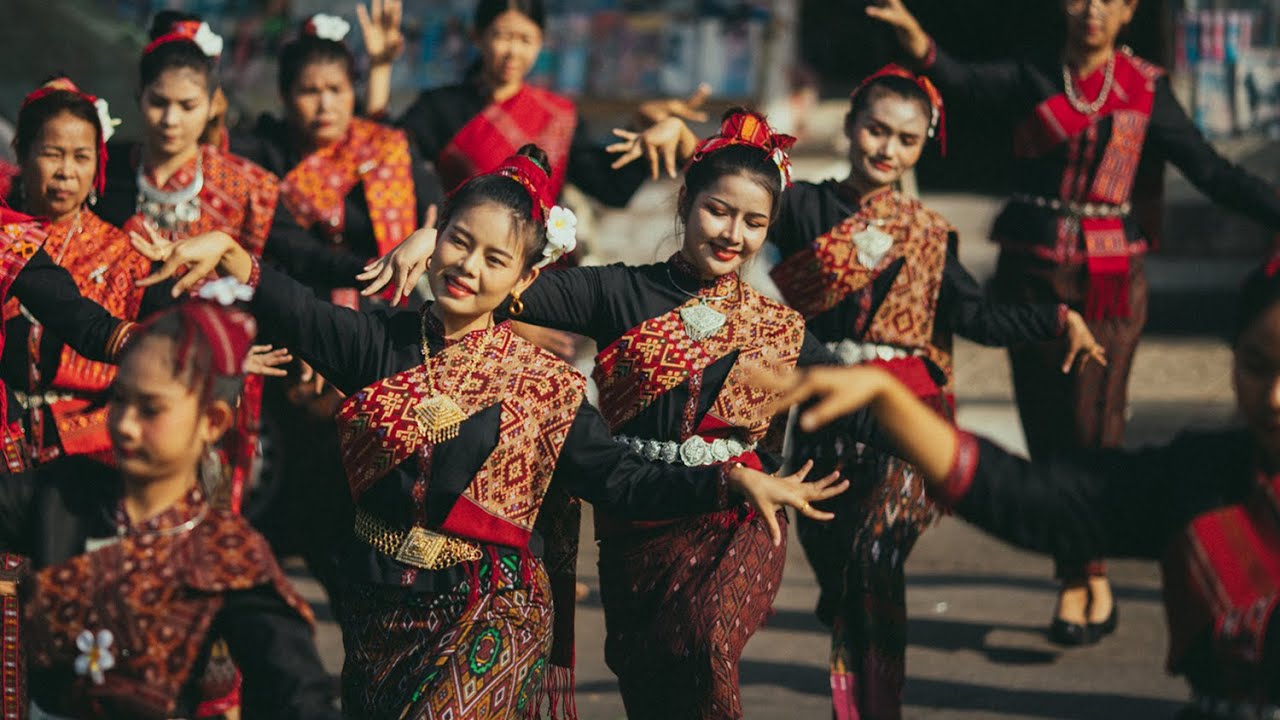
 Click to Access the Navigation Map GPS
Phraya Chai Sunthon Monument Map

 Historical Sites and Monuments(2)
Landmarks and Memorials(3)
Historical Sites and Monuments(2)
Landmarks and Memorials(3)
 Art, Craft Centres, Tradition(4)
 Museums(3)
 Art Gallery(1)
 Educational Places
 Educational Gardens, Farm(1)
 Places of Worship
 Temple(21)
 Other Sacred Sites(6)
 Suburban Living
 Village, Community(3)
 Nature and Wildlife
 National Parks and Marine Reserves(3)
 Mountain (Doi)(2)
 Dam, Reservoir, Lake(5)
 Waterfalls(4)
 Caves(2)
 River, Canal(3)
 Bays and Beaches(1)
 Other natural attractions(2)
 Entertainment and Agricultural
 Animal camps and shows(1)
 Farms, Parks and Ecotourism(2)
 Travel Articles, Recipes
 Travel Review, Food Review(1)


