
lovethailand home >Northeastern Travel Attractions >Kalasin Travel Attractions >Kuchinarai >Kut Wa > Phu Thai Khok Kong Cultural Village
TL;DR: Phu Thai Khok Kong Cultural Village is located at Ban Khok Kong, Moo 5, Kut Wa Subdistrict, Kuchinarai District, Kalasin Province, open Daily, hours 08.30 – 17.00.
Phu Thai Khok Kong Cultural Village
Open Days: Daily
Opening Hours: 08.30 – 17.00
Phu Thai Khok Kong Cultural Village in Kalasin is a small cultural village located at Ban Khok Kong, Moo 5, Kut Wa Subdistrict, Kuchinarai District, Kalasin Province. Set near the foothills of the Phu Phan range, the village is home to a large Phu Thai community that has preserved its ethnic identity, language, clothing, food, weaving, rituals, music, and relationship with the surrounding natural landscape. It was selected as a pilot community for cultural conservation tourism, allowing visitors to experience homestay accommodation, Baisi Su Khwan welcoming ceremonies, Yao healing rituals, traditional Phu Thai dinners known as Pha Laeng, folk performances, local handicrafts, and nature walks to Tad Sung and Tad Yao waterfalls in Phu Pha Wua Forest Park.
The charm of Ban Khok Kong does not come from a staged tourist attraction. It comes from the real life of a Phu Thai village that still carries its cultural roots in daily practice. Villagers live close to agriculture, forest resources, seasonal food, herbal plants, weaving, basketry, and community rituals. The village is surrounded by hills, small streams, fields, and forested areas, giving it a calm rural atmosphere. For foreign travelers, Ban Khok Kong offers a rare opportunity to experience community-based tourism in a way that is personal, respectful, and deeply connected with local culture.
The village motto, often translated in meaning as a land of Phu Thai people, fresh Tad Sung waterfall, beautiful fields and mountains, famous Pha Nang Aen, and graceful local women, captures the identity of the community. It points to the 3 main elements that define Khok Kong: Phu Thai culture, mountain nature, and village hospitality. Unlike destinations that focus only on sightseeing, Khok Kong is best understood as a living cultural landscape where homes, food, rituals, textiles, waterfalls, fields, and forest paths all belong to the same story.
The Phu Thai, also known as Phu Tai, are an ethnic group with a distinctive cultural presence in northeastern Thailand. Their identity is expressed through language, dress, weaving patterns, traditional music, dance, food, and ritual practices related to the spirit, the soul, ancestors, and healing. Ban Khok Kong is one of the villages where these elements remain visible. Visitors do not only read about the culture from displays. They are welcomed into a community setting where cultural knowledge is shared through ceremonies, meals, homes, conversation, and participation.
The Community Cultural Center of Phu Thai Khok Kong Homestay was established in 1998 as a place to present the lifestyle, traditions, and culture of the Phu Thai people. The center displays traditional clothing, household objects, local tools, and community information. However, the true highlight is not the exhibition alone. The center functions as a meeting point where villagers welcome guests, organize wrist-tying ceremonies, arrange homestays, prepare local dinners, demonstrate crafts, and introduce visitors to the cultural rhythm of the village.
Homestay is the core experience of Phu Thai Khok Kong Cultural Village. Staying with a local family allows visitors to see the morning atmosphere of the village, the way food is prepared, the use of shared household space, and the quiet pace of rural life. This is not hotel accommodation in the conventional sense. It is a chance to stay as a guest in a real community home. Visitors should respect the host family, keep shared spaces clean, dress appropriately, speak politely, and understand that hospitality here is based on trust and mutual respect.
The Baisi Su Khwan ceremony is one of the most memorable activities for visitors. In the cultural worldview of Isan and Phu Thai communities, khwan refers to the vital spirit or inner life force that should be protected and strengthened. When guests arrive, villagers may welcome them with a Baisi Su Khwan ceremony, tying white cotton threads around their wrists as a blessing. This gesture expresses goodwill, safety, health, and acceptance into the community. For many travelers, this ceremony creates an immediate sense of warmth and belonging.
The Yao ritual is another important cultural practice of the Phu Thai people. Yao is related to traditional healing and communication with the spiritual world. A ritual specialist, known as Mor Yao, performs the ceremony using inherited knowledge of songs, rhythm, movement, offerings, and spiritual understanding. For foreign visitors, Yao should not be viewed as a performance detached from meaning. It is a living ritual that reveals how the Phu Thai community understands illness, emotional balance, family support, ancestral presence, and the relationship between visible and invisible worlds.
Pha Laeng, the traditional evening meal, is another highlight of a stay in Khok Kong. The meal usually features local and seasonal ingredients such as sticky rice, vegetables, chili dips, fermented fish flavors, herbs, bamboo shoots, mushrooms, wild food, and other Isan dishes prepared in the style of the community. Eating together is not only about food. It is a social and cultural exchange. Guests sit with villagers, listen to stories, taste local flavors, and learn how food reflects the landscape, season, and identity of the Phu Thai people.
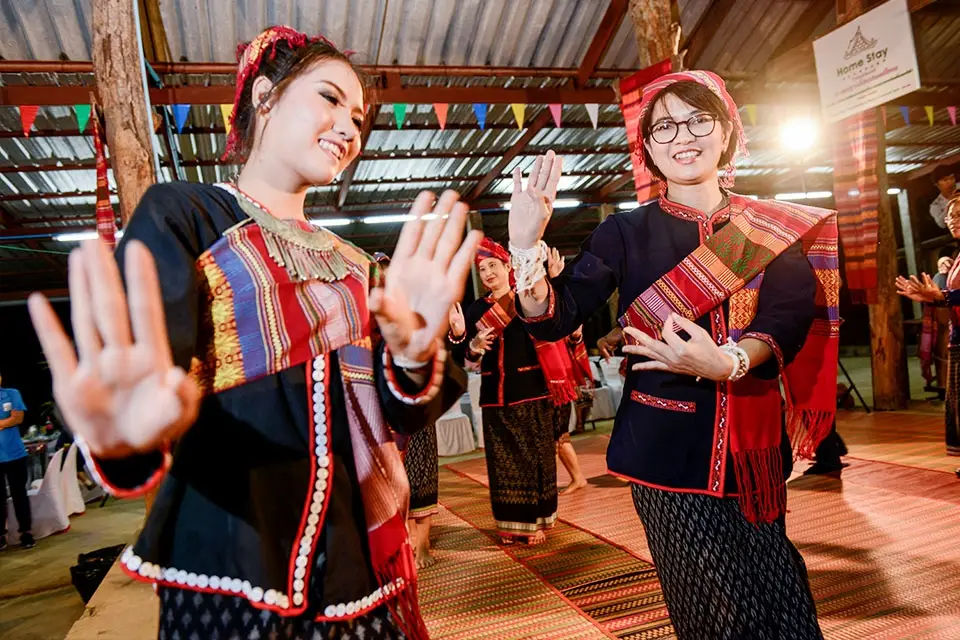
Phu Thai performing arts and textiles are important parts of the village experience. Traditional dancing, music, costumes, and woven fabrics reflect the creativity and skill of the community. Phu Thai women are especially known for weaving local textiles, including patterned cloth, khit designs, cotton textiles, and handwoven products such as scarves, head cloths, bags, and clothing. Visitors may watch weaving demonstrations and buy products directly from the community. These textiles are not simply souvenirs. They are cultural expressions of identity, memory, and craftsmanship.
Phu Thai dress is one of the most recognizable visual elements of Ban Khok Kong. Women often wear dark traditional garments, patterned sinh skirts, colorful shoulder cloths, and silver ornaments. Men may wear local shirts and traditional cloth. These clothes are not merely costumes for visitors. They represent pride in ethnic identity and are used during ceremonies, performances, and community occasions. Seeing the clothing in context helps visitors understand the connection between textile, body, ceremony, and community pride.
The natural setting of Ban Khok Kong is equally important. The village is located close to Phu Pha Wua Forest Park, an area within the Dong Dan Yae National Reserved Forest. The forested mountains, natural streams, waterfalls, cliffs, stone terraces, and herbal plants make the area suitable for nature study. Community-guided walks can introduce visitors to local plants, medicinal herbs, forest knowledge, and the way villagers understand and use natural resources responsibly.
Tad Sung Waterfall is one of the closest natural attractions to the village, located only about 200 meters away. It is a small mountain waterfall where water flows down a rocky channel from the hillside. From Tad Sung, visitors can continue on foot for about 100 meters to Tad Yao Waterfall, a wide sloping rock surface locally associated with a natural slide-like appearance. These 2 waterfalls are ideal for travelers who want to experience nature without traveling far from the village.
The Tad Sung–Tad Yao route should be enjoyed with care. Rocks may be slippery, especially during or after rain, and water conditions can change by season. Visitors are advised to go with a local guide when possible. A local guide not only improves safety but also adds meaning to the walk by explaining plants, forest stories, local names, and how the community relates to the surrounding hills and streams.
Dan Long is another natural feature in the Phu Pha Wua area. It is known as a broad stone terrace with forest plants and unusual landscape features. Standing on the stone terrace gives visitors a sense of the geological and ecological character of the area. For travelers who enjoy slow nature walks, Dan Long adds another dimension to the visit by showing that the village landscape includes more than waterfalls. It includes stone, plants, cliffs, and local stories.
Pha Nang Aen and Pha Nang Khoi are also associated with the natural landscape of Phu Pha Wua and the village motto. These names show how local people connect cliffs and natural places with story, memory, and identity. A walk in this area is therefore not only a walk through forest. It is a journey through a named landscape where each place carries cultural meaning for the community.
Wat Si Phu Khan, also known as Wat Ban Khok Kong, is the village temple and an important religious place for local people. Established in 1914, it has served as a center for Buddhist ceremonies and community life. The presence of the temple shows how Phu Thai culture in Khok Kong exists together with Buddhism, soul beliefs, healing rituals, ancestral respect, and nature-based traditions. This layered belief system is one of the reasons the village is culturally rich.
Community-based tourism at Ban Khok Kong works because villagers take part as hosts, cooks, guides, performers, craft demonstrators, and caretakers of the village experience. The community prepares homes for guests, arranges welcome ceremonies, cooks meals, presents performances, leads nature walks, and maintains the village atmosphere. This form of tourism requires time, listening, and respect from visitors. It is not designed for rushed sightseeing. It is designed for learning through shared experience.
The best way to experience Khok Kong is to stay at least 1 night. An overnight program allows travelers to arrive in the afternoon, walk through the village, join the welcome ceremony, enjoy a Pha Laeng dinner, watch a performance, sleep in a homestay, wake up to the morning village atmosphere, and then continue with weaving, village activities, or a waterfall walk. A short visit is possible, but the experience becomes much richer when visitors give the community enough time.
Visitors should contact the community in advance, especially if they want homestay accommodation, Pha Laeng dinner, Baisi Su Khwan ceremony, Yao ritual, traditional performances, or guided forest walks. These activities require preparation by the host families and community groups. Advance contact helps the village arrange houses, food, performers, guides, and the proper order of activities. It also ensures that visitors receive a more complete and respectful experience.
Getting There from Kuchinarai District is straightforward by private car. Take Highway 2042 for about 12 km to Ban Na Khrai, then turn left and continue for about 3 km on a paved local road to Ban Khok Kong. Travelers coming from Kalasin town should first head toward Kuchinarai District, then continue to Kut Wa Subdistrict and Ban Na Khrai. Private transport is recommended because it allows visitors to combine the village with Tad Sung Waterfall, Wat Si Phu Khan, Phu Pha Wua Forest Park, and restaurants in Kuchinarai town.
Travelers using public transport should first reach Kuchinarai town, then arrange local transport or contact the community for guidance. Because Ban Khok Kong is located away from the main road, return transport should be planned in advance, especially for visitors not staying overnight. Groups may find a hired van or private vehicle more convenient, particularly if they plan to visit both the village and nearby nature sites.
The best season to visit depends on the desired activities. The rainy season and early cool season are suitable for greener forest scenery and better waterfall flow. The cool season is ideal for homestay stays and outdoor activities. Visitors interested in farming, seasonal food, or community activities should ask the village in advance because different seasons offer different ingredients, landscapes, and daily routines.
Respectful behavior is essential in the village. Guests should respect host families, avoid loud behavior at night, ask permission before photographing people, dress modestly during ceremonies, and follow community guidance. During Pha Laeng meals, visitors should approach local food with openness and respect. During rituals such as Baisi Su Khwan or Yao, visitors should observe carefully and avoid treating sacred moments as casual entertainment.
When visiting waterfalls or forest areas, visitors should not collect plants, herbs, or forest products without permission. They should not litter, make excessive noise, or leave marked paths. Walking with a local guide supports the community and helps visitors understand the landscape more deeply. Local guides can explain plants, stories, routes, and seasonal safety conditions better than independent sightseeing can.
For foreign visitors, Ban Khok Kong is a clear example of community-based tourism in Thailand. Visitors are not passive spectators. They are invited to take part respectfully in local life through homestay, food, ceremonies, craft learning, and guided nature walks. The value of the village lies not in luxury, but in sincerity, simplicity, cultural continuity, and the relationship between people, traditions, and landscape.
Phu Thai Khok Kong Cultural Village is suitable for travelers interested in ethnic culture, rural homestay, local food, textiles, rituals, nature walks, and meaningful cultural exchange. It is also suitable for families who want children to learn about village life and traditional culture. The village should not be rushed. It should be experienced slowly, with respect for the people who continue to preserve their heritage in everyday life.
In summary, Phu Thai Khok Kong Cultural Village in Kalasin is a valuable destination for culture, local history, rural life, and nature. It shows that conservation tourism is not only about preserving old objects. It is about supporting communities that continue to live with their heritage. Through homestay, food, weaving, ceremonies, performances, forest walks, and waterfalls, Ban Khok Kong allows visitors to understand the heart of Phu Thai culture in Kalasin with depth and respect.
| Name | Phu Thai Khok Kong Cultural Village / Community Cultural Center of Phu Thai Khok Kong Homestay |
| Location | Ban Khok Kong, Moo 5, Kut Wa Subdistrict, Kuchinarai District, Kalasin Province |
| Address | Ban Khok Kong, Moo 5, Kut Wa Subdistrict, Kuchinarai District, Kalasin Province 46110, Thailand |
| Highlights | Phu Thai cultural village, community homestay, Baisi Su Khwan ceremony, Yao healing ritual, Pha Laeng local dinner, folk performances, Phu Thai textiles, and nature walks to Tad Sung and Tad Yao waterfalls in Phu Pha Wua Forest Park |
| History / Background | A Phu Thai community in Kut Wa Subdistrict, Kuchinarai District. The community cultural center and homestay project were established in 1998 to present Phu Thai lifestyle, traditions, and cultural knowledge to visitors |
| Community Character | A small foothill village where many Phu Thai people live. The community preserves its language, clothing, weaving, food, rituals, farming lifestyle, and relationship with the surrounding forest |
| Community Motto | A motto celebrating Khok Kong as a Phu Thai village with Tad Sung Waterfall, beautiful fields and hills, Pha Nang Aen, and distinctive local identity |
| Main Activities | Homestay, Baisi Su Khwan ceremony, Yao healing ritual, Pha Laeng traditional dinner, folk performances, weaving demonstrations, basketry, nature walks, herbal plant study, and visits to Tad Sung and Tad Yao waterfalls |
| Main Areas / Zones | Community cultural center, visitor welcome area, Baisi Su Khwan ceremony area, folk performance space, homestay houses, weaving group area, Wat Si Phu Khan, Phu Pha Wua nature trail, Tad Sung Waterfall, Tad Yao Waterfall, and local farming landscape |
| Travel Information | From Kuchinarai District, take Highway 2042 for about 12 km to Ban Na Khrai, then turn left and continue for about 3 km on a paved local road to Ban Khok Kong |
| Current Status | Open for cultural visits, community learning, and homestay experiences. Advance contact is recommended for homestay, meals, ceremonies, performances, or guided nature walks |
| Open Days | Daily |
| Opening Hours | 08.30 – 17.00 for general cultural center visits. Homestay and community activities should be booked in advance |
| Admission Fee | No general admission fee for the cultural center. Homestay, Pha Laeng dinner, performances, welcome ceremonies, and guided walks are community services that should be arranged directly with the village |
| Caretaker / Community Contact | Ban Khok Kong Community / Phu Thai Khok Kong Homestay Group, Tel. 084-742-5822, 087-232-6056 |
| Facilities | Homestay houses, visitor welcome area, community activity space, local meals, folk performances, local guides, textile products, community shops, and parking areas according to the village setting |
| Visitor Guidelines | Contact the community in advance, dress respectfully during ceremonies, respect host families, ask before photographing people, do not litter, and follow local guides when walking in forest areas |
| Nearby Tourist Attractions | 1. Tad Sung Waterfall, about 0.2 km 2. Tad Yao Waterfall, about 0.3 km 3. Phu Pha Wua Forest Park, about 1 km 4. Dan Long Stone Terrace, about 2 km 5. Pha Nang Aen / Pha Nang Khoi on the Phu Pha Wua nature route, about 2 km 6. Wat Si Phu Khan, or Wat Ban Khok Kong, about 0.5 km |
| Nearby Restaurants | 1. Saeng Chai Duck Noodle and A La Carte, Kuchinarai, about 16 km, Tel. 081-296-9004 2. Ban Jaew Hon Cher In, about 16 km, Tel. 084-567-8890 3. Paa Charoen Coffee & Rest, about 16 km, Tel. 097-187-7280 4. Hug Coffee, about 16 km, Tel. 095-949-9942 5. Hianhome Salad Cafe, Kuchinarai, about 16 km, Tel. 085-879-5664 6. Alala Cafe, about 16 km, Tel. 093-189-4111 |
| Nearby Accommodations | 1. Phu Thai Khok Kong Cultural Village Homestay, about 0 km, Tel. 084-742-5822, 087-232-6056 2. P2 Natural Boutique Hotel, Kuchinarai, about 17 km, Tel. 082-365-5661 3. Baankoonmae Boulevard Hotel, Kuchinarai, about 17 km, Tel. 043-810-888 4. Wanida Tara Lake View Hotel, Kuchinarai, about 18 km, Tel. 043-851-369, 090-925-6168, 081-496-3021 5. Buarimpao Apartel, Kuchinarai, about 17 km 6. A.J. Pizza and Steakhouse, Huai Phueng, about 30 km, Tel. 099-469-5692 |
Frequently Asked Questions (FAQ)
Q: Where is Phu Thai Khok Kong Cultural Village located?
A: It is located at Ban Khok Kong, Moo 5, Kut Wa Subdistrict, Kuchinarai District, Kalasin Province. The village is a Phu Thai community near the foothills of the Phu Phan range.
Q: What is special about Phu Thai Khok Kong Cultural Village?
A: The village is known for Phu Thai homestay experiences, Baisi Su Khwan ceremonies, Yao healing rituals, Pha Laeng traditional dinners, folk performances, weaving, and nature walks to Tad Sung and Tad Yao waterfalls.
Q: Can visitors stay overnight in the village?
A: Yes. Visitors can stay in community homestays. Advance contact is recommended so the village can prepare accommodation, meals, ceremonies, performances, and local guides.
Q: What does the Baisi Su Khwan ceremony mean?
A: Baisi Su Khwan is a traditional welcoming and blessing ceremony based on the belief in khwan, or life spirit. White cotton threads are tied around the wrists to wish guests safety, health, and good fortune.
Q: What is the Yao ritual?
A: Yao is a traditional Phu Thai healing ritual performed by a ritual specialist. It reflects local beliefs about illness, spirit, family support, and the balance between the physical and spiritual worlds.
Q: Are there waterfalls near the village?
A: Yes. Tad Sung Waterfall is about 0.2 km from the village, and Tad Yao Waterfall is about another 0.1 km farther along the nature route in Phu Pha Wua Forest Park.
Q: How can visitors get to the village?
A: From Kuchinarai District, take Highway 2042 for about 12 km to Ban Na Khrai, then turn left and continue for about 3 km to Ban Khok Kong. Private transport is the most convenient option.
Q: What should visitors prepare before going?
A: Visitors should contact the community in advance, dress respectfully, bring comfortable walking shoes for nature activities, prepare personal items for homestay, and follow local guidance during ceremonies and forest walks.
Tel : 043852003
 Tel : 043852003
Mobile : 0872326056
 Mobile : 0872326056
 Category: ●Suburban Living
 Group: ●Village, Community
Last Update : 4 MonthAgo
 Last Update : 4 MonthAgo
 Click to Access the Navigation Map GPS
Phu Thai Khok Kong Cultural Village Map

 Art, Culture and Heritage
 Historical Sites and Monuments(2)
 Landmarks and Memorials(3)
 Art, Craft Centres, Tradition(4)
 Museums(3)
 Art Gallery(1)
 Educational Places
 Educational Gardens, Farm(1)
 Places of Worship
 Temple(21)
 Other Sacred Sites(7)
Village, Community(3)
Other Sacred Sites(7)
Village, Community(3)
 Nature and Wildlife
 National Parks and Marine Reserves(3)
 Mountain (Doi)(2)
 Dam, Reservoir, Lake(5)
 Waterfalls(4)
 Caves(2)
 River, Canal(3)
 Bays and Beaches(1)
 Other natural attractions(2)
 Entertainment and Agricultural
 Animal camps and shows(1)
 Farms, Parks and Ecotourism(2)
 Travel Articles, Recipes
 Travel Review, Food Review(1)


