
lovethailand home >Northeastern Travel Attractions >Kalasin Travel Attractions >Muang Kalasin >Kalasin > Ban Lung Plueang Chaiyaratsami
TL;DR: Ban Lung Plueang Chaiyaratsami is located at Kaset Sombun Road, Kalasin Subdistrict, Mueang Kalasin District, Kalasin Province, Thailand, open Not Open To General Visitors, hours No Regular Visiting Hours.
Ban Lung Plueang Chaiyaratsami
Open Days: Not Open To General Visitors
Opening Hours: No Regular Visiting Hours
Visitor Status: Closed / Not Available For Public Visits
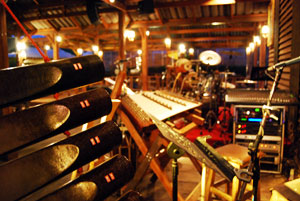
Ban Lung Plueang Chaiyaratsami, also known as the National Artist House of Khru Plueang Chaiyaratsami, is one of the most meaningful cultural memory sites in Kalasin Province. Located on Kaset Sombun Road in Mueang Kalasin District, the house is closely connected with Pong Lang, the iconic northeastern Thai percussion instrument that has become one of Kalasin’s strongest cultural symbols. Although the house is no longer open to the general public as a regular tourist attraction, its historical value remains highly significant. It was once the home, workshop, learning space, and informal music school of Khru Plueang Chaiyaratsami, a National Artist of Thailand in 1986 in the field of performing arts, northeastern folk music, and Pong Lang.
Khru Plueang used this place not only as a residence but also as a living classroom. He built a small rural pavilion, known in Thai as a thiang na, to serve as a folk music school. Inside and around the house, visitors and students once learned how traditional Isan instruments were made and played. Instruments such as the phin, khaen, sor, Pong Lang, metal Pong Lang, bamboo Pong Lang, bass phin, and mak kalong were displayed, demonstrated, produced, repaired, and taught. The house also served as accommodation for students and learners who traveled from other provinces to study directly with the master. For this reason, Ban Lung Plueang was more than a house. It was a center of transmission where music, craftsmanship, discipline, and local identity were passed from teacher to student.
Khru Plueang Chaiyaratsami is one of the most respected figures in Kalasin’s cultural history. He was recognized as a National Artist in 1986 for his outstanding contribution to Isan folk music, especially Pong Lang. His importance lies not only in his performance skill, but also in his ability to research, refine, adapt, teach, and preserve local music. He could play many northeastern instruments, but Pong Lang became his most significant lifelong work. Through decades of experimentation, he transformed a local wooden signal instrument into a refined musical instrument capable of melody, rhythm, ensemble performance, and stage presentation.
The origin of Pong Lang is linked with a traditional wooden percussion object known as kro lo or kho lo. In village life, it was used for communication, calling meetings, warning people, or driving birds away from fields. Its sound was clear and resonant. Khru Plueang recognized the musical potential of this everyday object. He studied the sound, adjusted the arrangement of the wooden pieces, refined the tuning, expanded the number of notes, and developed a form that could be played melodically. Through this process, an object once used for practical communication became a musical instrument associated with beauty, rhythm, and Isan identity.
Ban Lung Plueang therefore represents a major turning point in the history of Pong Lang. It was a place where the instrument moved from rural utility to performing art. The house and the small music pavilion became a workshop where wood was selected, cut, shaped, tuned, drilled, strung, and tested. Students learned that traditional instruments are not merely bought and played. They are created through knowledge of materials, sound, hand skill, patience, and listening. Every piece of wood had to be understood, and every sound had to be adjusted until it carried the right resonance.
The thiang na, or rural pavilion, is one of the most symbolic parts of the story. It represents a form of local education that does not require a large formal building. What mattered most was the presence of the teacher, the willingness of students, the instruments, and the living sound of folk music. Students who came to Khru Plueang did not only learn songs. They learned how to listen, how to make instruments, how to maintain them, how to repeat patterns, how to join an ensemble, and how to respect the cultural background of the music. This was learning through life, not only through instruction.
The house once displayed and demonstrated the making of several northeastern instruments. The phin, a plucked string instrument, carries fast melodic lines and a bright tone. The khaen, a free-reed mouth organ, is one of the deepest sonic symbols of Isan. The sor adds sustained and expressive melodic color. Pong Lang provides clarity, rhythmic energy, and memorable melodic patterns. By teaching these instruments together, Khru Plueang helped students understand the structure of an Isan folk ensemble. The instruments were not isolated objects; they were voices within a living musical system.
Pong Lang as developed by Khru Plueang is known for its clear, bright, and resonant sound. Its wooden bars are arranged by pitch and suspended in a form that allows the player to strike them with precision. Although the instrument appears simple, it requires strong technique. The performer must control timing, force, melodic accuracy, and emotional expression at the same time. In an ensemble, Pong Lang can lead the melody, energize the rhythm, and create a sound immediately associated with northeastern Thailand.
Khru Plueang also created and developed other folk instruments and ensemble ideas. One important example is mak kalong, an instrument made by stringing together cattle bells. Its sound reflects rural life, farming culture, and the creative transformation of everyday objects into music. This shows Khru Plueang’s ability to hear music in the environment around him. In folk culture, instruments often arise from nearby materials such as wood, bamboo, metal, animal hide, seeds, bells, and agricultural objects. Mak kalong is a good example of how rural sound can become performing art.
Khru Plueang’s achievement was built over many decades. He was not only a performer but also a teacher, craftsman, researcher, and cultural transmitter. He taught students to understand the roots of music, not only the technique of playing. He explained how instruments came from local life, how songs were connected to festivals and ceremonies, and how folk music expressed the identity of Isan communities. Studying with him meant studying culture through music, craft, discipline, and lived experience.
One of the most important aspects of Ban Lung Plueang was its role as a residential learning space. Students from other places could stay at the house while learning music. This made the house different from a simple exhibition site. It was a place where students lived close to the teacher, heard music throughout the day, watched instruments being made, practiced repeatedly, and absorbed discipline through daily life. Such transmission is difficult to replace because it carries knowledge through presence, repetition, correction, and relationship.
For the people of Kalasin, Khru Plueang is a source of pride. He helped make Pong Lang widely known and turned it into one of the strongest cultural symbols of the province. Kalasin is often associated with Praewa silk, Phu Thai culture, dinosaur fossils, and Pong Lang music. Among these identities, Pong Lang has a special public presence because it is heard in performances, festivals, cultural competitions, and provincial events. When people speak of Pong Lang, Kalasin is often remembered; and when people speak of Kalasin’s music, Khru Plueang’s name remains central.
The formal opening of Khru Plueang Chaiyaratsami’s National Artist House on 10 August 2006 was an important moment. It recognized the house as a learning center for northeastern folk music and as a place to honor the master’s contribution. Activities included exhibitions about Khru Plueang, displays on Isan folk music, demonstrations of Pong Lang making, and performances by cultural and educational groups. This event expressed an important idea: the house of a National Artist can serve the public as a cultural learning space, not only as a private residence.
After Khru Plueang passed away on 2 December 2007, the house eventually closed and no longer operated as a regular public visitor site. Today, it should be understood primarily as a cultural memory site rather than a tourist attraction with normal opening hours. Travelers interested in Khru Plueang and Pong Lang should learn through Kalasin’s wider cultural landscape, including Pong Lang Roundabout, Kalasin City Art Hall, provincial cultural events, the annual Pong Lang festival, and cultural institutions connected with Isan music.
The closure of the house does not reduce its value. Instead, it reminds us that cultural heritage depends on people, transmission, documentation, and continuity. A building alone cannot preserve music if there are no teachers, students, recordings, instruments, written records, and living performances. Ban Lung Plueang shows why it is important to document the work of folk masters while they are still able to teach, and why communities, families, students, and cultural agencies must work together to carry the knowledge forward.
The meaning of Ban Lung Plueang can be understood on several levels. At the personal level, it was the home of a National Artist and master musician. At the community level, it was a gathering place for students, instrument makers, and people who loved Isan music. At the provincial level, it became part of Kalasin’s identity as the city of Pong Lang. At the national level, it represented the idea of opening a National Artist’s house for cultural learning and heritage transmission.
Musically, Pong Lang is more than a percussion instrument. In an ensemble, it can lead melodies, support rhythm, and create a joyful atmosphere. When combined with khaen, phin, sor, drums, cymbals, and dance, it becomes the center of a lively Isan performance. Pong Lang ensembles are suitable for merit-making festivals, provincial fairs, cultural shows, welcoming ceremonies, and public celebrations. This is why Khru Plueang’s work continues to be heard beyond his own house.
Pong Lang also shapes the modern cultural image of Kalasin. Pong Lang Roundabout in the city center stands as a symbol of Kalasin as the birthplace of the instrument’s modern performing identity. The annual Pong Lang, Praewa Silk and Red Cross Fair uses Pong Lang as a key cultural element. Through performances, competitions, dance, costumes, and public celebration, the sound of Pong Lang has moved from a folk classroom into the shared identity of the province.
For travelers today, visiting the exact house is not the main practical activity because it is not open to general visitors. A more suitable approach is to follow the cultural trail of Pong Lang in Kalasin. Start by learning about Khru Plueang’s life, then visit Pong Lang Roundabout, Kalasin City Art Hall, Wat Klang Royal Temple, Phraya Chaisunthon Monument, and festival spaces when cultural events are held. This route allows travelers to understand how the legacy of Khru Plueang continues in the public life of the city.
Ban Lung Plueang is also an important case study in the conservation of National Artist houses. During the lifetime of a master, such a house can be a powerful learning center because knowledge is transmitted directly. After the artist passes away, the continuity depends on successors, family members, students, local communities, and cultural agencies. Records, instruments, photographs, videos, musical notation, interviews, and exhibitions are essential if the knowledge is to remain accessible to future generations.
For education, the story of Ban Lung Plueang is valuable because it connects music, craftsmanship, local history, science of sound, language, performance, and community identity. Students can learn that folk music is not only entertainment. It is a body of knowledge that includes instrument making, listening, tuning, rhythm, memory, discipline, cultural setting, and social transmission. The house is therefore an example of integrated learning through real life and local wisdom.
For cultural tourism, a Pong Lang route in Kalasin can begin in the area of the former National Artist House on Kaset Sombun Road, then continue to Pong Lang Roundabout, Kalasin City Art Hall, Phraya Chaisunthon Monument, Wat Klang Royal Temple, and festival areas during the annual Pong Lang event. Such a route helps travelers see the development of Pong Lang from a teacher’s house to a city symbol, from rural music to public culture, and from local sound to provincial identity.
Travelers should understand that the former house is not suitable for uncoordinated visits. Its current status is not available for public service. The best way to honor the site is to learn its story respectfully and connect it with accessible cultural places in Kalasin city. When visiting during the annual Pong Lang festival, travelers can see the living continuation of Khru Plueang’s work through modern ensembles, student performers, competitions, and provincial celebrations.
In the memory of Kalasin people, Khru Plueang remains a figure of deep pride. His recognition as a National Artist was based on long-term dedication, teaching, creativity, and the development of Isan folk music. He helped bring local sound to national recognition. As Kalasin continues to present Pong Lang as a cultural symbol, Khru Plueang’s name remains inseparable from the identity of the province.
Ban Lung Plueang also reflects the simplicity and power of folk artistry. A great artist does not always begin from a formal stage. Khru Plueang’s work grew from a house, a rural pavilion, agricultural life, village sounds, wooden tools, and everyday listening. He heard musical possibility in ordinary sound and shaped it into art. This is the essence of folk creativity: transforming daily life into cultural expression.
Getting There to the former area of Ban Lung Plueang Chaiyaratsami begins in central Kalasin. Travel toward Kaset Sombun Road in Mueang Kalasin District, not far from the city center. Nearby reference points include Pong Lang Roundabout, Kalasin City Art Hall, Wat Klang Royal Temple, and main city roads. Travelers by private car can use a map application to search for Kaset Sombun Road or the former National Artist House of Khru Plueang Chaiyaratsami. Travelers arriving by bus can get off at Kalasin Bus Terminal and continue by local transport into the city area.
Although the house is not open as a regular attraction, learning about Khru Plueang can still be part of a meaningful cultural trip. Visitors can explore Pong Lang Roundabout, Kalasin City Art Hall, cultural event areas, and the annual Pong Lang festival when available. They can also learn about Praewa silk, Phu Thai culture, temples, and local museums to understand Kalasin’s broader identity. This allows the story of Khru Plueang to become part of a deeper journey through the cultural landscape of the province.
For travelers interested in traditional music, Kalasin deserves at least half a day of cultural exploration. During the annual Pong Lang festival, the experience becomes even richer because visitors can see performances, dances, costumes, ensemble competitions, and contemporary interpretations of traditional music. Those who want deeper knowledge should continue learning about Isan instruments, Kalasin College of Dramatic Arts, and the role of cultural institutions in preserving local performance traditions.
Overall, Ban Lung Plueang Chaiyaratsami is a place of high cultural memory, even though it is no longer open as a normal tourist site. Its name should be preserved as the home of the master who developed Pong Lang, as a former learning center for Isan folk music, and as a starting point for understanding how Kalasin’s musical identity reached a wider public. To speak of Ban Lung Plueang is to speak of a teacher who heard beauty in wood, bells, breath, and village sound, then shaped those sounds into a musical heritage that still represents Kalasin today.
| Name | Ban Lung Plueang Chaiyaratsami / National Artist House Of Khru Plueang Chaiyaratsami |
| Location | Kaset Sombun Road, Kalasin Subdistrict, Mueang Kalasin District, Kalasin Province, Thailand |
| Address | 229/4 Kaset Sombun Road, Kalasin Subdistrict, Mueang Kalasin District, Kalasin Province 46000, Thailand |
| Reference Area | Kaset Sombun Road area in central Kalasin, near the main city zone |
| Highlights | The former home and learning space of Khru Plueang Chaiyaratsami, National Artist of Thailand in 1986 for performing arts, Isan folk music and Pong Lang |
| History | Opened as a National Artist House on 10 August 2006 to honor Khru Plueang Chaiyaratsami and to serve as a learning space for northeastern folk music and Pong Lang heritage |
| Name Origin | The name comes from Khru Plueang Chaiyaratsami, a respected Kalasin folk musician and National Artist who developed Pong Lang into a major Isan musical instrument |
| Distinctive Features | Formerly a home, folk music school, rural music pavilion, instrument-making demonstration space, and accommodation for students learning Isan folk music from the master |
| Cultural Significance | An important memory site for Kalasin Pong Lang, representing teacher-to-student transmission, folk instrument development, and Kalasin’s identity as the city of Pong Lang |
| Travel Information | From central Kalasin, travel toward Kaset Sombun Road in Mueang Kalasin District, near Pong Lang Roundabout, Kalasin City Art Hall, and Wat Klang Royal Temple |
| Current Status | Closed / Not Available For General Public Visits |
| Open Days | Not Open To General Visitors |
| Opening Hours | No Regular Visiting Hours |
| Fees | No Admission Fee Is Collected Because The House Is Not Open For General Public Visits |
| Facilities | Formerly included an instrument-making demonstration area, folk music learning space, rural music pavilion, and accommodation area for students from other places |
| Main Areas / Zones | Khru Plueang Chaiyaratsami’s House Area Rural Music Pavilion / Thiang Na Learning Space Pong Lang-Making Demonstration Area Display Area For Phin, Khaen, Sor, Pong Lang, And Isan Folk Instruments Learning Area For Mak Kalong And Creative Folk Instruments Accommodation Area For Students And Learners |
| Caretaker / Related Organizations | Listed in cultural information systems related to National Artist Houses. Kalasin Provincial Cultural Office serves as a local cultural contact point, and the Department of Cultural Promotion is connected with National Artist House data |
| Main Contact Number | Kalasin Provincial Cultural Office: 043-815-806 Kalasin Provincial Office: 0-4381-1620 |
| Official Website / Official Page | Cultural Information Center, Ministry of Culture; Kalasin Provincial Cultural Office; Department of Cultural Promotion; Cultural Promotion Fund |
| Nearby Tourist Attractions | 1. Pong Lang Roundabout, about 1 km 2. Kalasin City Art Hall, about 1 km, Tel. 0-4384-0163 3. Wat Klang Royal Temple, about 1 km, Tel. 098-654-5789 4. Phraya Chaisunthon Monument, about 1 km 5. Kut Nam Kin Public Park, about 3 km 6. Fa Daet Song Yang Ancient City And Phra That Ya Khu, about 19 km, Tel. 0-4385-4164, 0-4385-4404 7. Sirindhorn Museum, Sahatsakhan District, about 35 km, Tel. 0-4387-1014, 0-4387-1393-4, 0-4387-1612-6 |
| Nearby Restaurants | 1. Cafe De' Supak, about 1 km, Tel. 088-552-6796, 081-263-1999 2. Singfarm Coffee Roaster, about 2 km, Tel. 089-944-1854 3. Khao Tom Nit Noi Restaurant, about 2 km, Tel. 084-351-4556 4. Proud Authentic Thai Food, about 4 km, Tel. 093-664-6999, 087-822-2274 5. Tam Yua Yeh, about 4 km, Tel. 063-968-3937 6. Huen Kalasin – Suan Don Tham, about 12 km, Tel. 082-801-8885 |
| Nearby Accommodations | 1. Supak Hotel, about 1 km, Tel. 043-811-595 2. TK Residence Hotel, about 2 km, Tel. 095-338-0515 3. Rimpao Hotel, about 2 km, Tel. 043-813-631 4. Cha-Long Boutiques, about 3 km, Tel. 043-811-789 5. Q Biz Hotel Kalasin, about 5 km, Tel. 088-744-4169 |
Frequently Asked Questions (FAQ)
Q: Where Is Ban Lung Plueang Chaiyaratsami Located?
A: It is located at 229/4 Kaset Sombun Road, Kalasin Subdistrict, Mueang Kalasin District, Kalasin Province 46000, Thailand.
Q: Is Ban Lung Plueang Chaiyaratsami Open To Visitors?
A: No. The house is currently closed and not available for general public visits as a regular tourist attraction or operating National Artist House.
Q: Who Was Khru Plueang Chaiyaratsami?
A: Khru Plueang Chaiyaratsami was a Thai National Artist in 1986 in the field of performing arts, northeastern folk music and Pong Lang. He was a master musician, teacher, instrument maker, and key figure in the development of Pong Lang.
Q: What Was Displayed At The House In The Past?
A: The house formerly displayed and demonstrated the making of northeastern folk instruments such as phin, khaen, sor, Pong Lang, metal Pong Lang, bamboo Pong Lang, bass phin, and mak kalong. It also served as a learning and accommodation space for students.
Q: How Is Pong Lang Connected With Khru Plueang?
A: Khru Plueang studied, refined, and developed Pong Lang from an older wooden signal instrument known as kro lo or kho lo into a melodic folk instrument widely used in Isan performance.
Q: Where Can Travelers Learn About Pong Lang If The House Is Closed?
A: Travelers can learn about Pong Lang through Pong Lang Roundabout, Kalasin City Art Hall, the annual Pong Lang, Praewa Silk and Red Cross Fair, and cultural music activities organized by educational and cultural institutions in Kalasin.
Q: Is The Story Of Ban Lung Plueang Suitable For Educational Study?
A: Yes. It is highly suitable as a cultural study topic because it connects local music, instrument making, teacher-student transmission, Kalasin identity, and the preservation of intangible cultural heritage.
Q: What Nearby Places Can Be Visited On A Pong Lang Cultural Route?
A: Nearby places include Pong Lang Roundabout, Kalasin City Art Hall, Wat Klang Royal Temple, Phraya Chaisunthon Monument, Fa Daet Song Yang Ancient City, Phra That Ya Khu, and Sirindhorn Museum.
 Category: ●Art, Culture and Heritage
 Group: ●Art Gallery
Last Update : 3 MonthAgo
 Last Update : 3 MonthAgo
 Historical Sites and Monuments(2)
 Landmarks and Memorials(3)
 Art, Craft Centres, Tradition(4)
 Museums(3)
Art Gallery(1)
Museums(3)
Art Gallery(1)
 Educational Places
 Educational Gardens, Farm(1)
 Places of Worship
 Temple(21)
 Other Sacred Sites(6)
 Suburban Living
 Village, Community(3)
 Nature and Wildlife
 National Parks and Marine Reserves(3)
 Mountain (Doi)(2)
 Dam, Reservoir, Lake(5)
 Waterfalls(4)
 Caves(2)
 River, Canal(3)
 Bays and Beaches(1)
 Other natural attractions(2)
 Entertainment and Agricultural
 Animal camps and shows(1)
 Farms, Parks and Ecotourism(2)
 Travel Articles, Recipes
 Travel Review, Food Review(1)


